Manual Ribbon Cutting vs Automatic Cutting Machines: The Truth About Efficiency
Are you still paying operators to sit at a table with scissors or handheld hot knives, measuring and cutting ribbon one piece at a time? In a competitive manufacturing market, relying on manual labor for simple cutting tasks is a massive drain on your efficiency and profitability.
The difference between manual ribbon cutting and automatic machines is scalability. While manual cutting relies on human skill and is limited to 5-10 cuts per minute, automatic machines can deliver 100-120 cuts per minute with 0.1mm accuracy, operating continuously without fatigue.
What Causes This Problem?
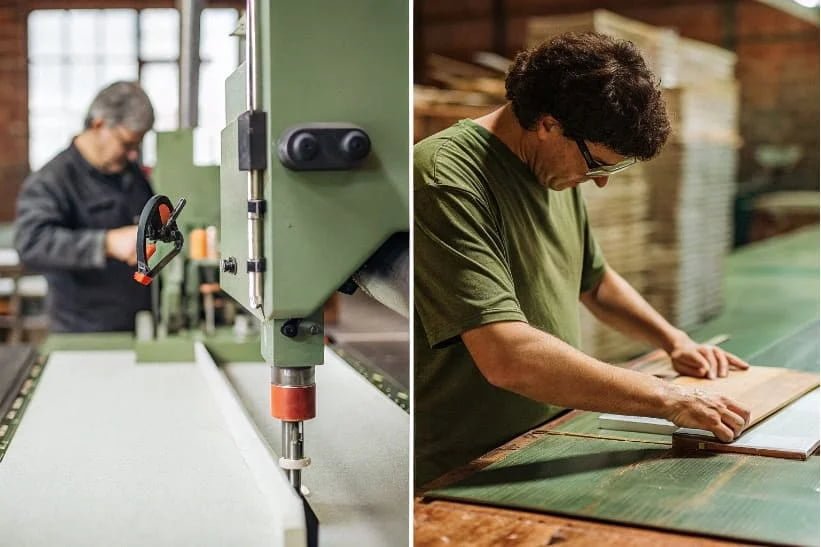
The problem is Human Limitation. No matter how skilled your worker is, they cannot compete with a stepper motor.
- Inconsistency: No human can measure 150mm exactly 1,000 times in a row. You will inevitably have lengths varying from 148mm to 152mm.
- Fatigue: Edge quality drops as the worker gets tired in the afternoon.
- Cost: You are paying a recurring hourly wage for a task that adds no value (just separating material).
💡 Cherry’s Insight:
"I once helped a client in Vietnam who had 10 workers just cutting velcro straps all day. We replaced that entire table with just two Cutopix automatic cutters. Those workers were moved to sewing and assembly, effectively doubling the factory’s total output without firing anyone."
Comparison: Manual vs. Automatic
When looking for equipment, you might wonder what are the best devices to cut ribbon with. Here is a direct breakdown of manual tools versus automation:
| Feature | Manual Cutting (Scissors/Hand Knife) | Automatic Machine (Cutopix) |
|---|---|---|
| Speed | 5-10 pcs/min | 100-120 pcs/min |
| Accuracy | ± 2-5mm (Visual estimate) | ± 0.1mm (Computer control) |
| Labor Cost | High (Recurring Monthly) | Low (One-time investment) |
| Edge Quality | Inconsistent (Depends on hand speed) | Perfectly Uniform (Digital Dwell Time) |
| Operation | Requires 1 person per tool | 1 Person manages 5 machines |
Industrial / Manufacturing Considerations
Many small factory owners hesitate to buy a machine because they think "Labor is cheap" or "My volume isn’t high enough." However, consider the Hidden Costs of manual work:
- Rejection Rate: How much material do you throw away because it was cut too short or the edge was burnt black?
- Bottlenecks: Your sewing or packaging team is waiting for the cutting team to finish. The cutter becomes the slowest part of your factory.
- Flexibility: An automatic machine can cut 10mm pieces or 10-meter pieces with the push of a button. Doing this manually requires re-setting the whole workspace and measuring tools.
How Machines Solve This Problem
Automation changes the workflow from "Worker = Cutter" to "Worker = Supervisor."
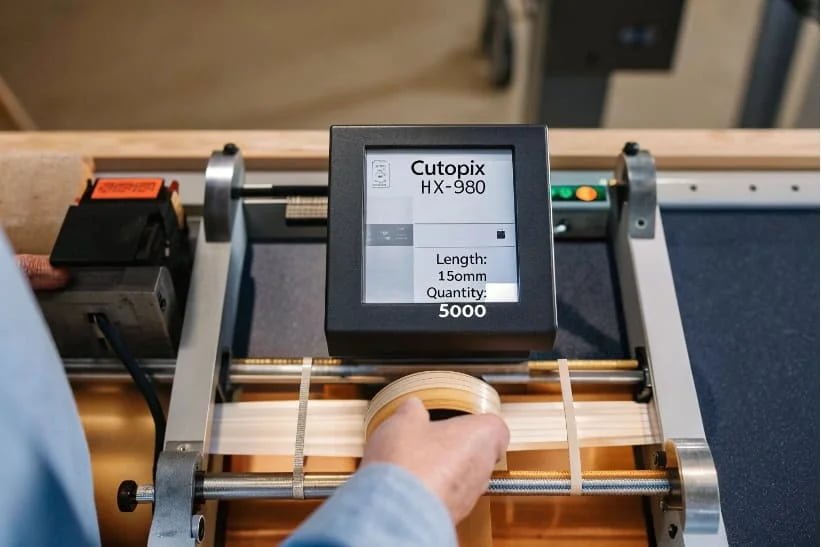
With a machine like the Cutopix HX-980, the operator simply loads the roll, types in "Length: 150mm" and "Quantity: 5000", and presses start. The machine handles the precision feeding, straightness, and sealing. This allows the operator to perform other tasks (like packing or quality checking) while the machine runs. This effectively multiplies your workforce’s output by 500%.
Which Option Should You Choose?
- Stick to Manual: If you cut less than 100 pieces per day or have constantly changing, complex shapes (curves) that require a laser or die cutter.
- Switch to Automatic: If you cut straight lines (squares/rectangles) and process more than 500 pieces per day. The ROI is usually achieved in less than 3 months of labor savings.
Final Recommendation & CTA
Stop wasting skilled labor on repetitive cutting tasks. Automating your cutting line is the easiest, lowest-risk win for improving factory efficiency.
💰 Want to calculate your specific ROI?
Tell us your current daily output and labor cost. We will help you calculate exactly how much money a Cutopix machine will save you in the first 6 months.