Optimizing Auto Parts Packaging with Heavy-Duty Bubble Wrap Cutters
Auto parts packaging is very different from packaging lightweight consumer products. Automotive components are often large, heavy, sharp-edged, or sensitive to scratches. A small mistake during packaging can lead to damaged goods, customer complaints, costly returns, and lost business opportunities.1
I have worked with many manufacturers and distributors who ship everything from bumpers and body panels to wheels, pipes, and precision components. One challenge appears again and again: cutting heavy-duty bubble wrap quickly, accurately, and consistently.
Traditional manual cutting methods often slow down packaging operations. Workers spend time measuring, pulling, and cutting bubble wrap by hand. The result is inconsistent material lengths, wasted packaging materials, and lower throughput.
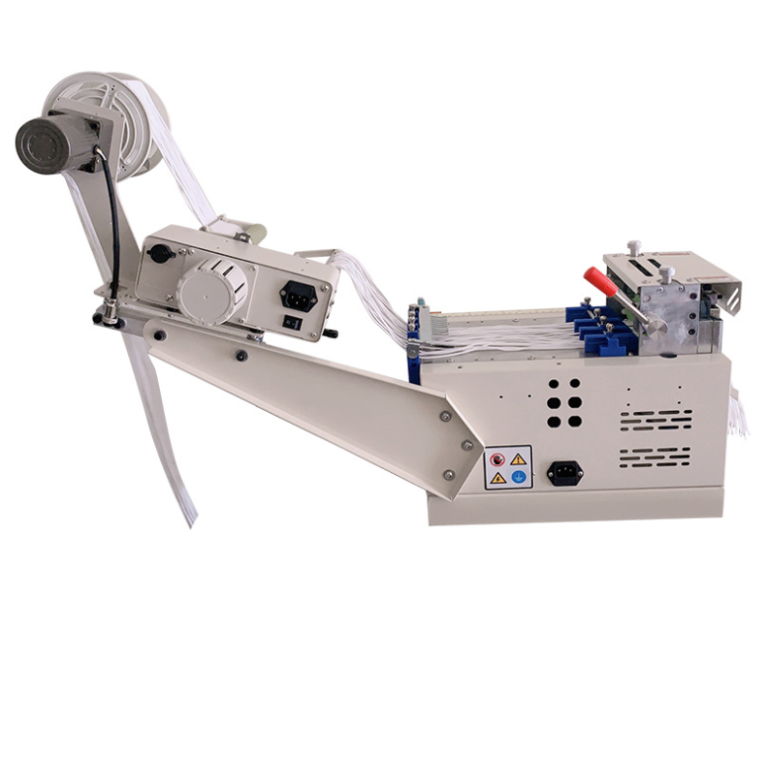
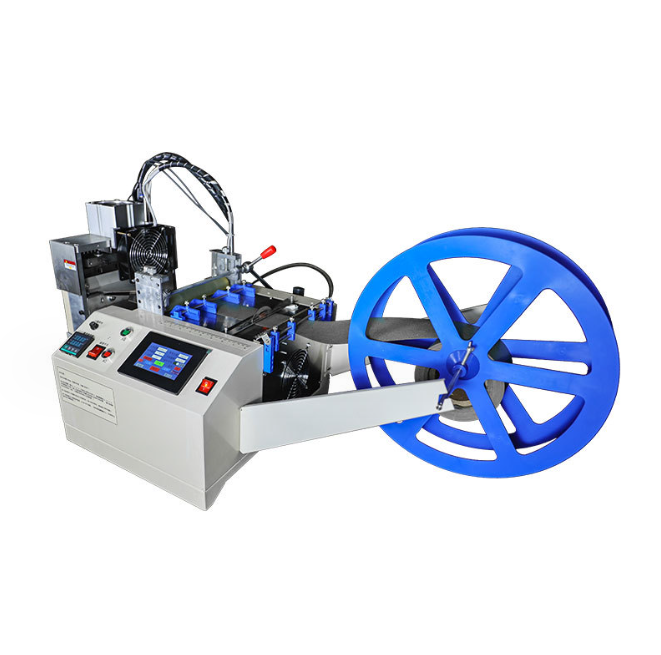
This is where a Bubble Wrap Cutting Machine becomes valuable. Modern automated cutting equipment can process thick cushioning materials with precision while improving productivity and reducing labor requirements.
- A Bubble Wrap Cutting Machine helps automotive manufacturers package large, heavy, and fragile parts with greater speed, precision, and consistency.
- Upgraded blade systems, reinforced rollers, and high-torque drives enable reliable processing of extra-thick bubble wrap, foam, and protective materials.
- Automated feeding and programmable length control reduce labor costs, material waste, and packaging errors.
- Industrial-grade construction ensures long-term performance in demanding automotive production and logistics environments.
- By improving throughput, product protection, and operational efficiency, automated cutting solutions have become essential for modern automotive packaging workflows.
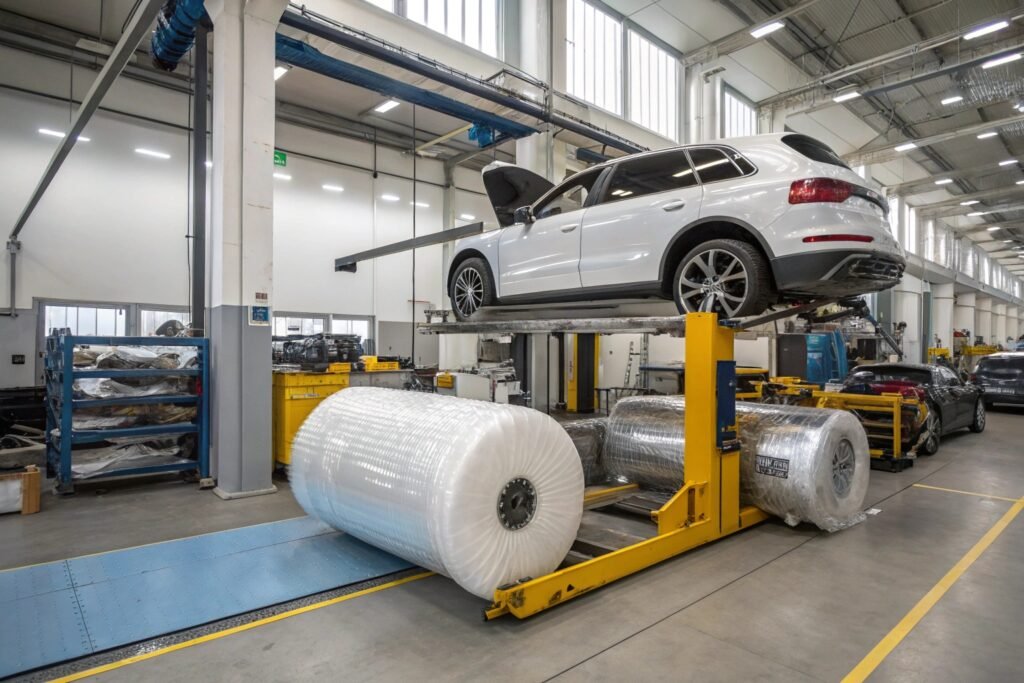
Why Automotive Parts Require Specialized Bubble Wrap Cutting Solutions
Automotive products create unique packaging challenges. Many parts have irregular shapes and require customized protection during transportation.
Examples include:
- Car bumpers
- Side skirts
- Wheels and rims
- Exhaust pipes
- Engine components
- Metal tubes
- Plastic body panels
- Decorative trims
These products often use large sheets of bubble wrap, protective foam, corrugated materials, or multilayer cushioning materials.
A standard cutting system may struggle when processing extra-thick bubble wrap or oversized protective sheets.
Common Packaging Requirements in Automotive Logistics
| Packaging Requirement | Challenge | Solution |
|---|---|---|
| Surface protection | Scratches during shipping | Precision bubble wrap cutting |
| Large dimensions | Difficult manual handling | Automated feeding system |
| Heavy parts | Increased packaging stress | Heavy-duty cutting mechanism |
| High volume production | Labor bottlenecks | Automatic cutting machine |
| Material consistency | Material waste | Computer-controlled cutting |
When automotive suppliers increase production volumes, manual packaging quickly becomes a bottleneck. Automated cutting systems help eliminate this issue.
What Machine Modifications Are Needed to Cut Heavy, Extra-Thick Bubble Wrap?
Heavy-duty bubble wrap differs significantly from standard packaging bubble wrap.2
Many automotive suppliers use:
- Double-layer bubble wrap
- Triple-layer bubble wrap
- Reinforced bubble sheets
- Laminated cushioning materials
- Bubble wrap combined with foam layers
These materials require stronger cutting systems.
Reinforced Blade Systems
The first modification involves upgrading the cutting mechanism.
Heavy-duty materials place greater stress on blades. Standard blades may wear quickly or produce uneven cuts.
Industrial bubble wrap cutting machines often include:
| Feature | Benefit |
|---|---|
| Hardened steel blades | Longer service life |
| Replaceable blade modules | Faster maintenance |
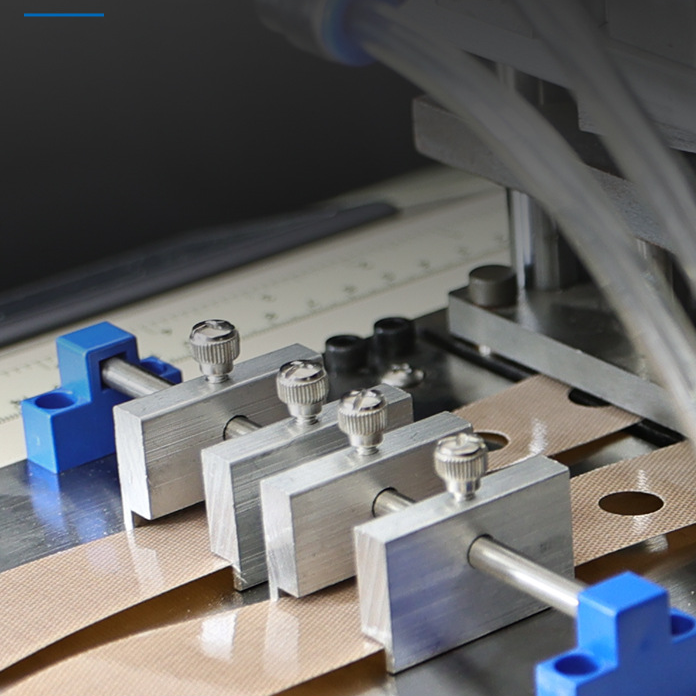
| Precision cutting edges | Cleaner cuts |
| Heavy-duty knife holders | Improved stability |
A stronger blade system helps maintain cutting accuracy even during continuous production.
Enhanced Feeding Rollers
Extra-thick bubble wrap is heavier and more difficult to feed consistently.
Heavy-duty feed rollers improve:
- Material control
- Feeding accuracy
- Tension management
- Cutting consistency
Without upgraded rollers, thick bubble wrap may shift during cutting.
More Powerful Drive Systems
Heavy cushioning materials create additional resistance.
Many automotive packaging facilities choose machines with:
- High-torque servo motors
- Industrial gear systems
- Reinforced transmission structures
These upgrades ensure smooth operation even when processing thick rolls continuously throughout the day.
Intelligent Length Control
Large automotive parts often require specific bubble wrap lengths.
Computer-controlled systems allow operators to:
- Program exact lengths
- Store cutting recipes
- Switch quickly between products
This reduces operator errors and material waste.
Many manufacturers integrate similar automation technologies found in a webbing tape cutting machine, hot and cold cutting machine, and high-speed trademark cutting machine to achieve better accuracy and efficiency.
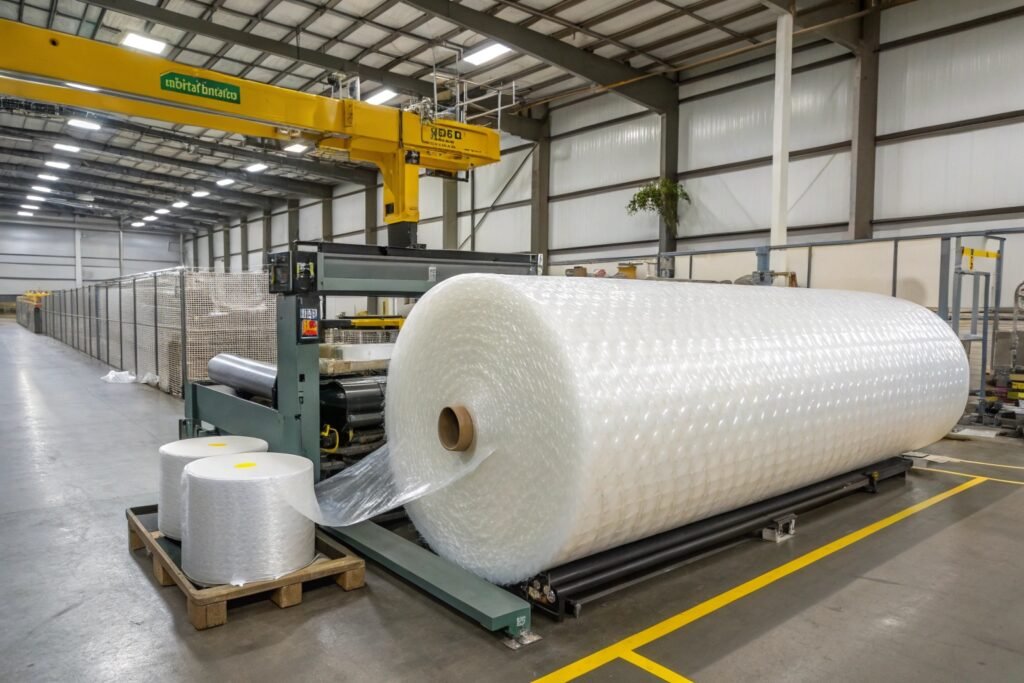
How to Handle Large-Scale Bubble Sheets Used for Wrapping Car Bumpers?
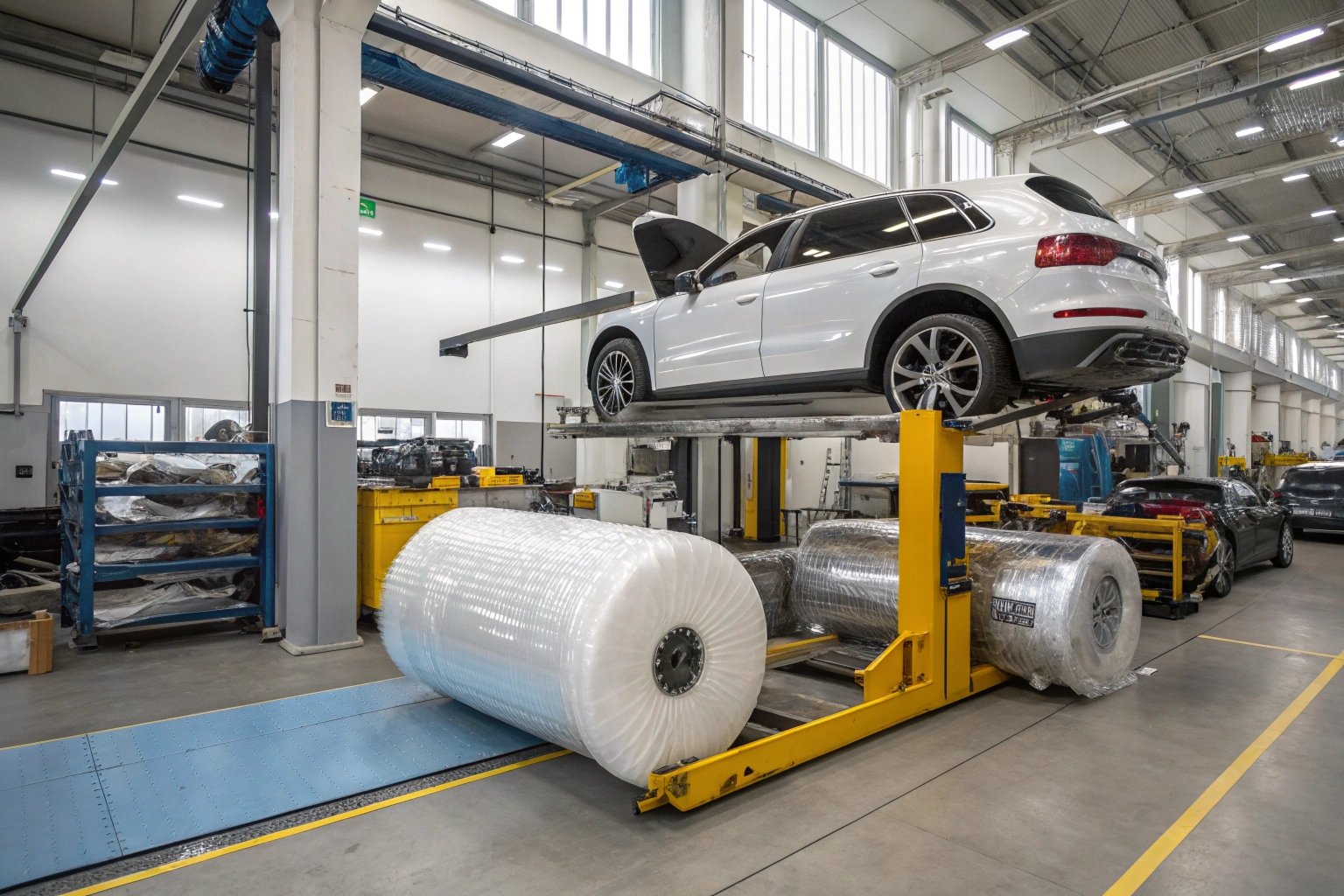
Car bumpers are among the largest products shipped within the automotive industry.3
Their size creates special packaging challenges.
The Problem with Manual Processing
A bumper may require several meters of bubble wrap.
Workers often need to:
- Pull material manually.
- Measure the required length.
- Hold the material in place.
- Cut the sheet.
- Transport it to the packaging station.
This process consumes time and labor.
When hundreds of bumpers must be packaged daily, efficiency drops significantly.
Large-Roll Material Handling Systems
Heavy-duty bubble wrap cutters can be equipped with oversized roll supports.
These systems allow operators to load:
- Wide bubble wrap rolls
- Large-diameter rolls
- High-weight material rolls
The machine performs the feeding automatically.
Extended Cutting Widths
Automotive suppliers frequently use wide bubble wrap sheets.
A heavy-duty cutter may support wider material widths than conventional systems.
Benefits include:
| Advantage | Result |
|---|---|
| Wider cutting area | Accommodates bumper packaging |
| Single-pass processing | Faster operation |
| Reduced repositioning | Better efficiency |
| Improved consistency | Better protection |
Automated Batch Production
Large bumper shipments often require identical packaging dimensions.
Operators can program:
- Sheet length
- Quantity
- Cutting speed
The machine then completes the production automatically.
This automation principle is similar to technologies used in a rotary bevel cutting machine, different shapes cutting machine, and automatic punching cutting machine, where precision and repeatability are critical.
Material Staging Integration
Some advanced packaging lines connect the cutter directly to packaging stations.
This allows:
- Continuous material flow
- Reduced handling time
- Improved packaging speed
As a result, workers spend more time packaging and less time preparing materials.
Can the Machine Withstand the Rugged Environment of an Automotive Plant?
Automotive manufacturing facilities are demanding environments.4
Machines often operate:
- Multiple shifts per day
- Six or seven days per week
- Under dusty conditions
- Near heavy machinery
- In busy logistics centers
Durability becomes a key purchasing factor.
Industrial Frame Construction
Heavy-duty bubble wrap cutters often use reinforced steel frames.
Compared with lightweight commercial machines, industrial structures provide:
| Feature | Benefit |
|---|---|
| Welded steel frame | Higher durability |
| Reinforced support structure | Reduced vibration |
| Industrial bearings | Longer operating life |
| Heavy-duty rollers | Better load handling |
This construction improves machine stability during high-volume production.
Dust and Debris Resistance
Automotive facilities generate:
- Dust
- Plastic particles
- Cardboard fibers
- Packaging residue
Industrial cutting machines often include protected electrical components to reduce contamination risks.
Long-Term Reliability
The best packaging equipment minimizes downtime.
Features that improve reliability include:
- Servo-controlled systems
- Industrial PLC controls
- Easy-access maintenance panels
- Modular component design
These features simplify maintenance and reduce unexpected stoppages.
Multi-Material Capability
Many automotive suppliers package products using multiple materials.
Besides bubble wrap, they may process:
- Foam sheets
- Protective films
- Webbing materials
- Edge protection strips
- Plastic sheets
Machines designed with flexibility can support multiple production needs.
This is one reason many customers also invest in equipment such as a Protective Foam Cutting Machine, PVC Edge Banding Cutting Machine, computer tube cutting machine, and wire cutting and stripping machine to create a fully integrated packaging workflow.
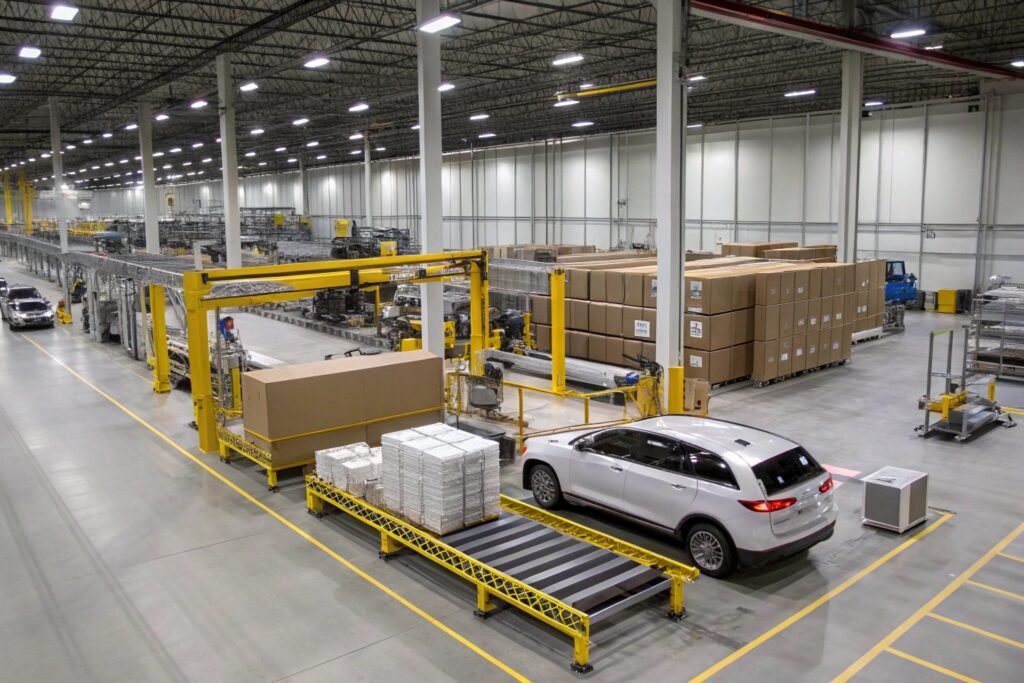
How Does Automated Cutting Improve the Throughput of Heavy Parts Shipping?
Throughput is one of the most important performance indicators in automotive logistics.
Faster packaging directly impacts:
- Shipping speed
- Labor efficiency
- Warehouse productivity
- Customer satisfaction
Reduced Manual Labor
Manual cutting requires constant worker involvement.
Automated cutting allows employees to focus on:
- Product preparation
- Wrapping
- Labeling
- Shipping operations
This improves labor utilization.
Faster Material Preparation
A machine can cut material continuously without stopping to measure each piece manually.
Benefits include:
| Metric | Manual Process | Automated Process |
|---|---|---|
| Material measurement | Manual | Automatic |
| Length consistency | Variable | High |
| Material waste | Higher | Lower |
| Labor requirement | Higher | Lower |
| Throughput | Lower | Higher |
Better Packaging Consistency
Consistent material lengths create standardized packaging.
This helps:
- Improve appearance
- Simplify training
- Reduce mistakes
- Enhance protection
For automotive distributors shipping thousands of parts monthly, consistency becomes a competitive advantage.
Reduced Material Waste
Every extra centimeter of bubble wrap increases packaging costs.5
Automated length control minimizes waste.6
Over a year, even small savings can create substantial cost reductions.
Increased Shipping Capacity
When packaging preparation becomes faster, shipping capacity increases.
Many automotive suppliers discover that packaging bottlenecks disappear after introducing automated cutting equipment.
As a result:
- Orders move faster.
- Warehouse congestion decreases.
- Customer delivery performance improves.
Why Heavy-Duty Bubble Wrap Cutters Are Becoming Essential in Automotive Packaging
The automotive supply chain continues to demand:
- Faster shipping
- Better product protection
- Lower labor costs
- Improved packaging consistency
Heavy-duty bubble wrap cutters help address all of these objectives.
By combining reinforced cutting systems, automated feeding, programmable controls, and industrial-grade construction, manufacturers can process large bubble wrap sheets efficiently while supporting high-volume packaging operations.
For companies shipping bumpers, wheels, body panels, metal pipes, and other heavy automotive products, investing in advanced cutting equipment is becoming less of a luxury and more of a necessity.
Whether integrated alongside a webbing ribbon cutting machine, Bubble Wrap Cutting Machine, Protective Foam Cutting Machine, metal pipe cutting and beveling machine, or other automated material processing equipment, these systems help create a faster, more reliable packaging workflow that supports long-term business growth.
HAOXINHE Insights
At HAOXINHE, I understand that automotive packaging operations require more than just cutting equipment. Customers need reliability, flexibility, and long-term production stability.
Our manufacturing experience covers a wide range of automated cutting solutions, including:
- Webbing Tape Cutting Machine
- Hot and Cold Cutting Machine
- High-Speed Trademark Cutting Machine
- Automatic Punching Cutting Machine
- Round Shape Cutting Machine
- Rotary Bevel Cutting Machine
- Different Shapes Cutting Machine
- Computer Tube Cutting Machine
- Wire Cutting and Stripping Machine
- Metal Pipe Cutting and Beveling Machine
- Bubble Wrap Cutting Machine
- PVC Edge Banding Cutting Machine
- Protective Foam Cutting Machine
Why Automotive Packaging Companies Choose HAOXINHE
| HAOXINHE Advantage | Customer Benefit |
|---|---|
| Factory with multiple production lines | Stable delivery schedules |
| Custom machine configurations | Adaptation to unique materials |
| Industrial-grade components | Longer machine lifespan |
| International export experience | Smooth global support |
| Continuous innovation | Improved production efficiency |
As automotive packaging demands continue to increase, HAOXINHE remains committed to helping manufacturers improve cutting precision, reduce labor costs, and achieve higher packaging throughput through reliable automated cutting technology.
-
"Evaluating the economic impacts of COVID-19 pandemic on … – PMC", https://pmc.ncbi.nlm.nih.gov/articles/PMC9436896/. Industry research indicates that packaging-related damage accounts for a significant portion of product returns and customer complaints in logistics operations, though specific percentages vary by sector and product type. Evidence role: statistic; source type: research. Supports: the economic impact of packaging failures in industrial shipping. Scope note: General logistics data may not isolate automotive parts specifically ↩
-
"Package cushioning", https://en.wikipedia.org/wiki/Package_cushioning. Packaging industry standards classify cushioning materials by thickness, bubble size, layer count, and protective capacity, with heavy-duty variants typically featuring reinforced construction for industrial applications. Evidence role: definition; source type: institution. Supports: the material and structural distinctions between standard and heavy-duty cushioning materials. ↩
-
"49 CFR Part 581 — Bumper Standard – eCFR", https://www.ecfr.gov/current/title-49/subtitle-B/chapter-V/part-581. Automotive bumpers typically measure 1.5-2 meters in length and represent one of the larger single-piece exterior components requiring specialized packaging, though body panels and complete assemblies may exceed these dimensions. Evidence role: general_support; source type: other. Supports: the relative size of bumpers compared to other automotive components in logistics. Scope note: Size rankings vary depending on vehicle type and whether assemblies or individual parts are considered ↩
-
"[PDF] Vehicle Maintenance Shops – NY.Gov", https://extapps.dec.ny.gov/docs/permits_ej_operations_pdf/vehiclemaint.pdf. Automotive manufacturing facilities typically operate continuous or multi-shift schedules with exposure to dust, temperature variations, and vibration, requiring industrial-grade equipment designed for demanding production environments. Evidence role: general_support; source type: institution. Supports: the operational and environmental characteristics of automotive manufacturing facilities. ↩
-
"Environmental Impact of Food Packaging Materials: A Review … – PMC", https://pmc.ncbi.nlm.nih.gov/articles/PMC7664184/. Operations research demonstrates that packaging material costs constitute a measurable component of total product cost, with material waste directly increasing per-unit expenses through both material purchase and disposal costs. Evidence role: general_support; source type: research. Supports: the cost relationship between packaging material consumption and operational expenses. ↩
-
"Research – MINLAB – UW–Madison", https://min.me.wisc.edu/research/. Manufacturing studies indicate that computer-controlled cutting systems reduce material waste compared to manual methods by improving dimensional accuracy and consistency, though actual waste reduction percentages depend on material type and application. Evidence role: statistic; source type: research. Supports: the waste reduction achieved through automated cutting precision. Scope note: Waste reduction varies significantly based on baseline manual cutting accuracy and material characteristics ↩