How Does a Nylon Cutting Machine Work and What Cutting Methods Are Available?
Nylon is one of the most widely used synthetic materials in many industries.1 It is strong, flexible, lightweight, and resistant to wear. Because of these advantages, nylon is commonly used for webbing straps, safety belts, bags, pet products, outdoor equipment, labels, industrial belts, and many other applications.
However, cutting nylon materials is not always simple. Nylon fibers can easily become loose, frayed, or uneven after cutting if the wrong method is used.2
This is why many factories choose a professional nylon cutting machine instead of manual cutting methods.
A modern nylon cutting machine can automatically feed the material, measure the required length, position the cutting point, and complete the cutting process with high accuracy.
For factories producing nylon webbing, ribbons, straps, and textile products, the right cutting method can improve production speed, reduce waste, and maintain product quality.
The two most common cutting methods for nylon materials are:
- Hot knife cutting
- Cold blade cutting
Each method has different advantages. The best choice depends on the nylon type, product requirements, edge quality requirements, and production process.
How does a nylon cutting machine work?
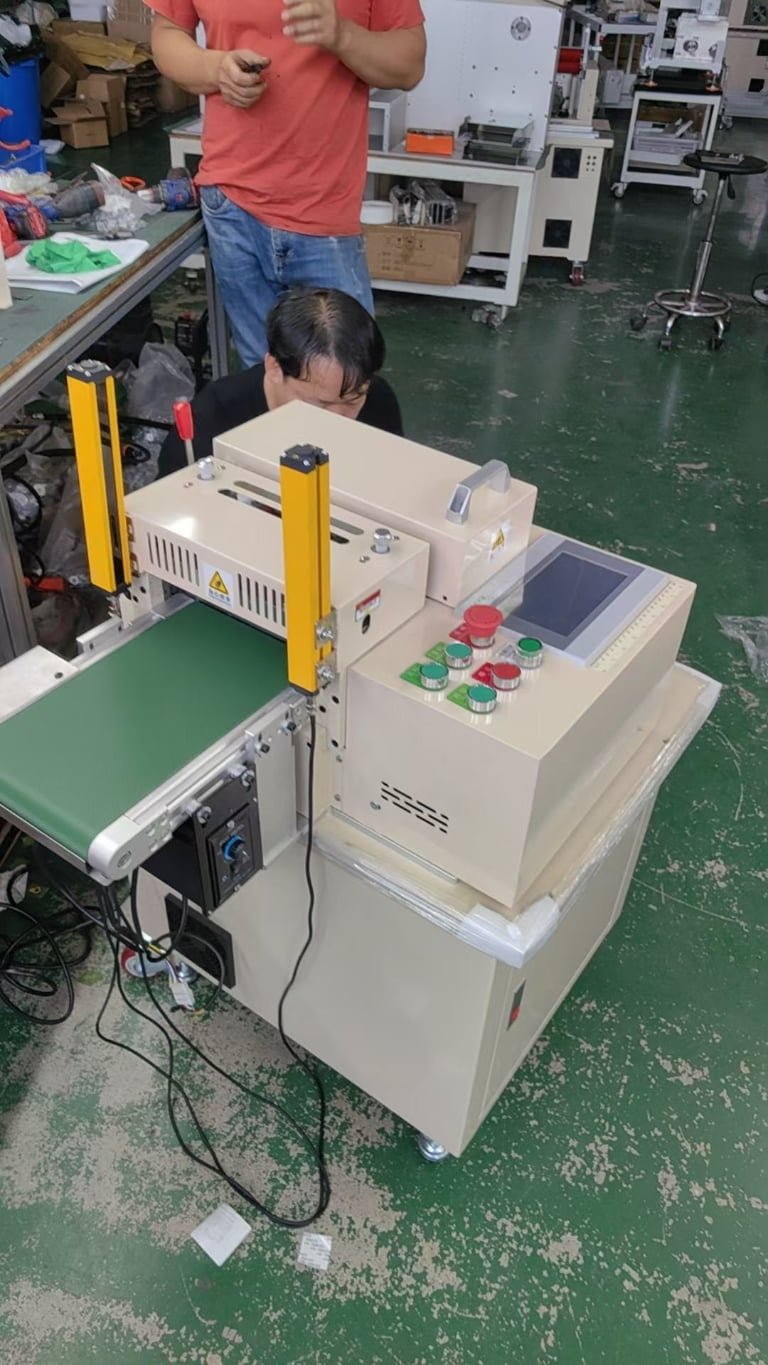
A nylon cutting machine is an automatic device designed to cut nylon materials into specific lengths or shapes.
The basic working process includes:
- Material feeding
- Length measurement
- Material positioning
- Cutting operation
- Finished product collection
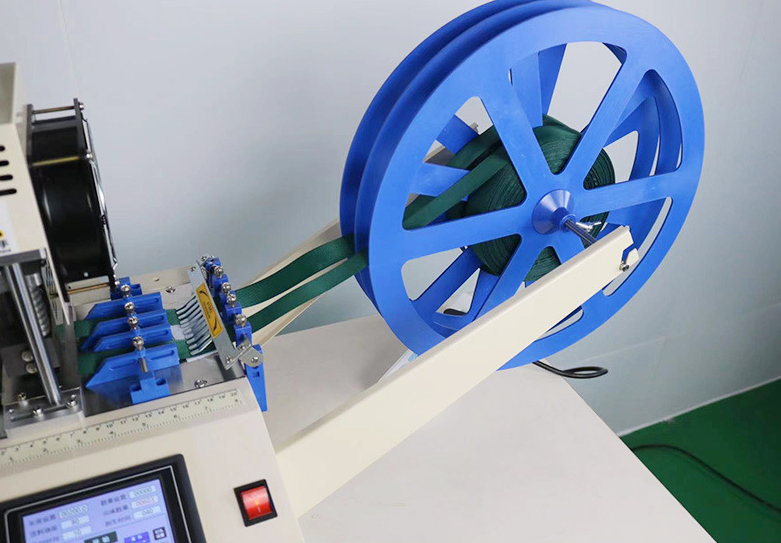
The machine uses rollers or feeding systems to move nylon webbing or ribbon forward. An encoder or sensor measures the feeding distance. When the preset length is reached, the control system activates the cutting unit.
The cutting unit can use different technologies:
- Hot knife cutting
- Cold blade cutting
- Ultrasonic cutting
- Laser cutting
- Die cutting
The machine operator only needs to input parameters such as:
- Cutting length
- Cutting quantity
- Cutting speed
- Cutting angle
- Cutting method
The machine then performs repeated cutting automatically.
Main working components of a nylon cutting machine
| Component | Function |
|---|---|
| Feeding roller | Moves nylon material forward |
| Encoder | Measures material length |
| Control system | Controls cutting parameters |
| Cutting blade | Performs cutting operation |
| Heating system | Provides heat for hot cutting |
| Fixture system | Holds material in position |
A professional automatic nylon cutting machine can maintain stable length accuracy even during long production hours.
This is important for industries that require thousands or millions of identical pieces.
For example:
| Industry | Nylon Cutting Application |
|---|---|
| Bag industry | Nylon straps and handles |
| Pet industry | Pet collars and leashes |
| Safety industry | Safety belts and harnesses |
| Packaging industry | Binding straps |
| Textile industry | Decorative ribbons |
At HAOXINHE, I design and manufacture cutting equipment that helps factories achieve stable and efficient production.
What cutting methods are available for nylon materials?
Different nylon products require different cutting technologies.
The main nylon cutting methods include:
| Cutting Method | Main Feature | Suitable Application |
|---|---|---|
| Hot knife cutting | Cuts and seals edge together | Nylon webbing and straps |
| Cold blade cutting | Cuts without heat | Products requiring natural edges |
| Ultrasonic cutting | Uses vibration energy | Fine textile materials |
| Laser cutting | Creates complex shapes | Thin nylon fabrics |
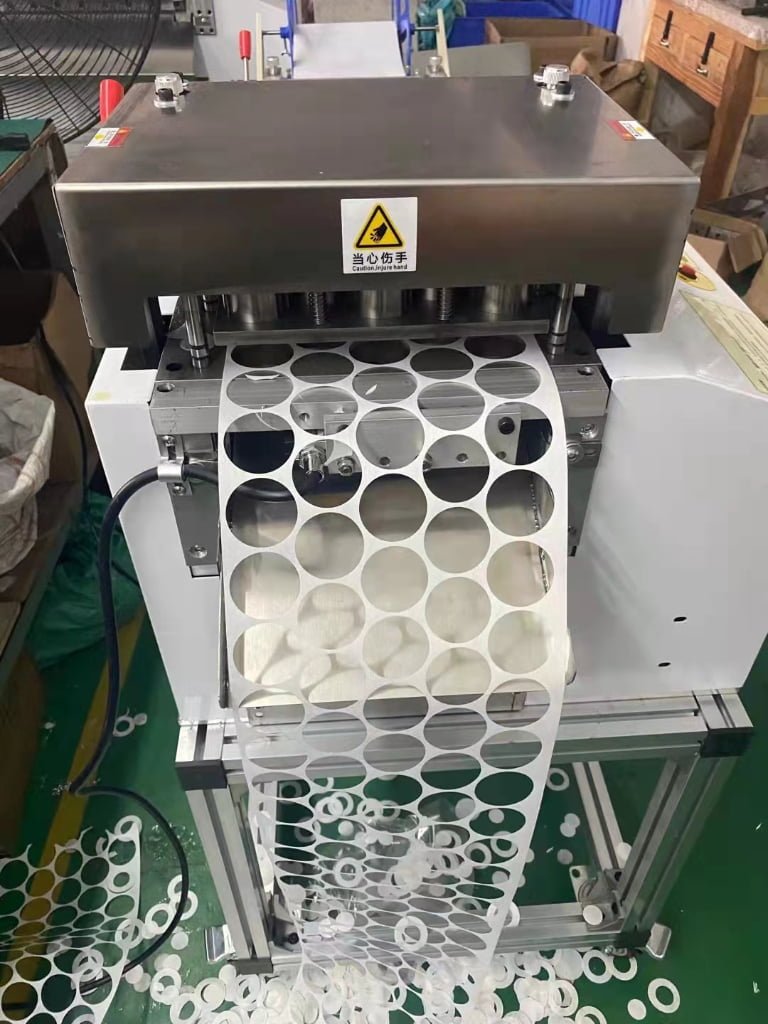
| Die cutting | High-volume shape cutting | Nylon sheets and small parts |
The most common methods for nylon webbing are hot knife cutting and cold blade cutting.
What is hot knife cutting for nylon materials?
Hot knife cutting uses a heated blade to cut nylon materials.3
The blade temperature melts the nylon fibers while cutting. At the same time, the melted edge becomes sealed.
This creates two benefits:
- The material is cut accurately.
- The edge does not easily become loose or frayed.
For nylon webbing, hot knife cutting is one of the most popular solutions.
How hot knife cutting works
| Step | Process |
|---|---|
| 1 | Nylon material enters feeding system |
| 2 | Machine measures preset length |
| 3 | Heating system increases blade temperature |
| 4 | Hot knife cuts through nylon |
| 5 | Edge becomes sealed |
The sealed edge is especially useful for products that need durability.
Examples include:
- Nylon straps
- Safety harnesses
- Luggage belts
- Pet collars
- Outdoor equipment
Advantages of hot knife cutting
| Advantage | Benefit |
|---|---|
| Edge sealing | Prevents nylon fraying |
| Clean cutting | Improves product appearance |
| High efficiency | Suitable for mass production |
| Less extra processing | No additional sealing step needed |
However, hot knife cutting also requires correct temperature control.
If the temperature is too low:
- The edge may not seal completely.
- Nylon fibers may remain loose.
If the temperature is too high:
- The edge may burn.
- The surface may become damaged.
Therefore, temperature stability is important for good cutting quality.
What is cold blade cutting for nylon materials?
Cold blade cutting uses a mechanical blade to cut nylon without heat.4
The blade physically separates the material through pressure.
Common cold cutting systems include:
- Guillotine cutting
- Rotary blade cutting
- Punch cutting
Cold cutting is suitable when customers do not need sealed edges.
Advantages of cold blade cutting
| Advantage | Benefit |
|---|---|
| No heat effect | Material keeps original properties |
| Simple structure | Easy maintenance |
| Lower energy use | Reduced operating cost |
| Suitable for heat-sensitive materials | More application options |
Cold cutting is often used for:
- Cotton tape
- Paper materials
- Some textile products
- Materials that will be sewn afterward
However, nylon has strong synthetic fibers. Without heat sealing, the edge may require additional treatment.
Factories may need:
- Manual sealing
- Additional heat treatment
- Sewing reinforcement
What are the differences between hot knife cutting and cold blade cutting?
Hot knife cutting and cold blade cutting both have advantages.
The correct choice depends on the final product requirements.
Hot knife vs cold blade comparison
| Comparison | Hot Knife Cutting | Cold Blade Cutting |
|---|---|---|
| Cutting method | Heat melting | Mechanical cutting |
| Edge condition | Sealed edge | Open edge |
| Fraying resistance | Excellent | Lower |
| Energy use | Higher | Lower |
| Maintenance | Requires heating system care | Simpler maintenance |
| Best for | Nylon straps and webbing | Materials needing clean separation |
For nylon webbing products, hot knife cutting is usually the preferred choice because preventing fraying is important.
For products that will be sewn immediately after cutting, cold blade cutting may be enough.
What is a hot and cold cutting machine?
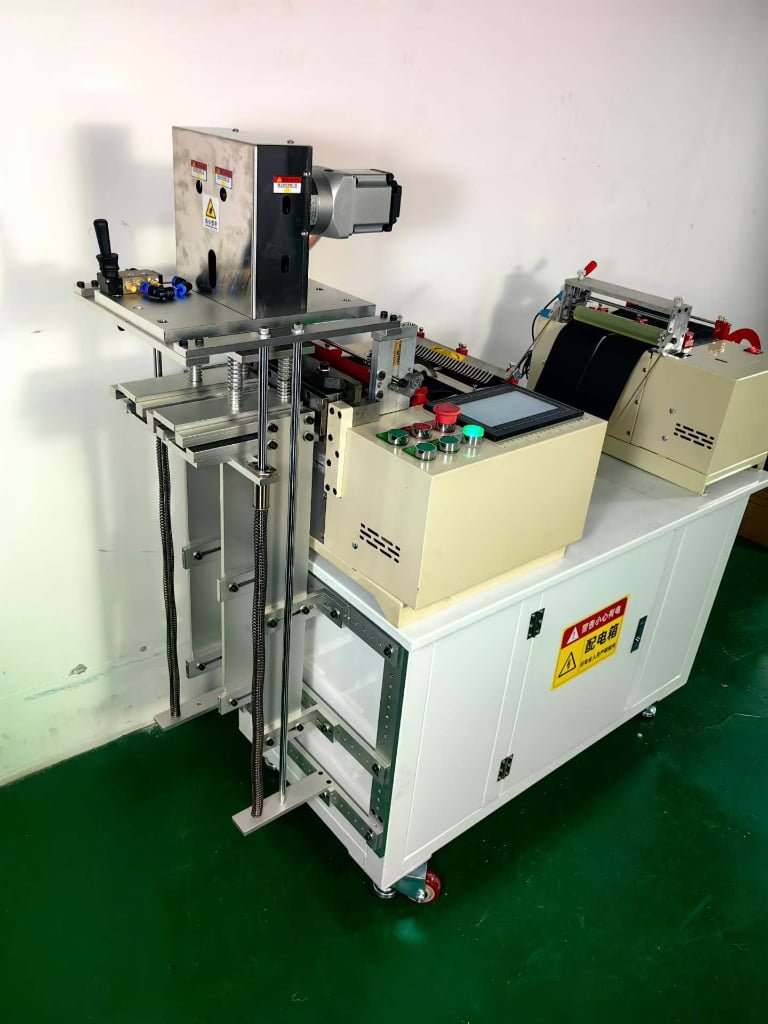
A hot and cold cutting machine combines both cutting technologies into one machine.
This gives factories more flexibility.
Operators can choose:
- Hot cutting mode
- Cold cutting mode
depending on the material and production requirement.
Benefits of hot and cold cutting machines
| Feature | Customer Benefit |
|---|---|
| Two cutting modes | More material options |
| Adjustable settings | Better production flexibility |
| Automatic operation | Lower labor cost |
| Stable accuracy | Better product consistency |
For factories producing different products, a combined machine can reduce equipment investment.
For example, one production line may manufacture:
- Nylon straps
- Cotton ribbons
- Polyester webbing
- Labels
Different materials can require different cutting methods.
Are there other advanced nylon cutting methods?
Besides hot and cold cutting, some industries use advanced cutting technologies.
Ultrasonic cutting
Ultrasonic cutting uses high-frequency vibration to separate materials.5
Benefits include:
- Clean edges
- Reduced fraying
- High precision
It is often used for thin synthetic fabrics and special textile applications.
Laser cutting
Laser cutting uses focused heat energy.
It can create:
- Complex shapes
- Detailed patterns
- Precise cuts
However, laser settings must be controlled carefully because excessive heat can burn nylon.
Die cutting
Die cutting uses specially designed molds to create repeated shapes.6
It is useful for:
- Nylon sheets
- Labels
- Small components
How can factories improve nylon cutting quality?
No matter which cutting method is used, several practices can improve results.
1. Use the correct blade or cutting system
Different nylon materials have different thicknesses and structures.
The machine should match:
- Material type
- Material thickness
- Production speed
- Edge requirements
2. Maintain cutting tools
| Maintenance Task | Purpose |
|---|---|
| Clean blade surface | Maintain cutting quality |
| Replace damaged blades | Avoid rough edges |
| Check heating system | Maintain stable temperature |
| Inspect feeding rollers | Improve length accuracy |
3. Control machine parameters
Important settings include:
- Cutting temperature
- Feeding speed
- Cutting pressure
- Cutting length
Correct settings reduce waste and improve consistency.
How does HAOXINHE help customers choose the right nylon cutting solution?
At HAOXINHE, I understand that every customer has different production requirements.
Some customers need fast nylon strap cutting. Some need special angles. Some need different shapes or automatic production systems.
My factory provides customized cutting solutions, including:
- Webbing tape cutting machine
- Automatic webbing angle cutting machine
- Hot and cold cutting machine
- High-speed trademark cutting machine
- Automatic punching cutting machine
- Round shape cutting machine
- Rotary bevel cutting machine
- Different shapes cutting machine
- Webbing ribbon cutting machine
I have five production lines and focus on helping global customers improve production efficiency.
| HAOXINHE Strength | Customer Benefit |
|---|---|
| Factory production | Stable supply |
| Custom design | Matches different applications |
| Quality control | Reliable machine performance |
| Export experience | Better international cooperation |
| Technical support | Easier machine operation |
I believe the right cutting machine should not only solve today’s production needs. It should also support future business growth.
Conclusion
A nylon cutting machine works by automatically feeding, measuring, positioning, and cutting nylon materials.
The two main cutting methods are hot knife cutting and cold blade cutting.
Hot knife cutting uses heat to cut and seal nylon edges, making it ideal for webbing straps and products that need strong anti-fraying performance.
Cold blade cutting uses mechanical force without heat and is suitable for materials that do not require edge sealing.
For most nylon webbing applications, choosing the correct cutting method can improve product quality, reduce waste, and increase production efficiency.
At HAOXINHE, I continue developing reliable cutting equipment to help customers around the world achieve stable and efficient nylon cutting production.
-
"Nylon", https://en.wikipedia.org/wiki/Nylon. Nylon is widely used in industries such as textiles, automotive, and packaging due to its strength, flexibility, and resistance to wear. However, specific usage statistics may vary by region and application. Evidence role: general_support; source type: encyclopedia. Supports: Nylon’s widespread use across various industries.. Scope note: The source may not provide exact quantitative data for all industries. ↩
-
"Will rip stop nylon be fray proof with hot knife cut?", https://www.facebook.com/groups/41064157503/posts/10161398876737504/. Nylon’s synthetic polymer structure can lead to fraying or uneven edges when cut without proper sealing or precision. This is due to the material’s high tensile strength and fiber arrangement. Evidence role: mechanism; source type: research. Supports: The tendency of nylon fibers to fray or become uneven when cut improperly.. Scope note: The explanation may not cover all types of nylon or cutting methods. ↩
-
"Which hot knife for cutting fabric? : r/myog", https://www.reddit.com/r/myog/comments/12c2ghq/which_hot_knife_for_cutting_fabric/. Hot knife cutting employs a heated blade to simultaneously cut and seal nylon edges, preventing fraying and ensuring durability. Evidence role: mechanism; source type: education. Supports: The use of a heated blade in hot knife cutting for nylon materials.. Scope note: The source may not address temperature control challenges in hot knife cutting. ↩
-
"Cold saw", https://en.wikipedia.org/wiki/Cold_saw. Cold blade cutting relies on mechanical pressure to separate materials, making it suitable for applications where heat effects are undesirable. Evidence role: mechanism; source type: education. Supports: The use of mechanical force in cold blade cutting for nylon materials.. Scope note: The source may not discuss limitations of cold blade cutting for nylon. ↩
-
"Cutting with an ultrasonic knife : r/interestingasfuck", https://www.reddit.com/r/interestingasfuck/comments/3z5p1t/cutting_with_an_ultrasonic_knife/. Ultrasonic cutting employs high-frequency vibrations to create precise cuts in materials, minimizing fraying and ensuring clean edges, particularly in synthetic textiles like nylon. Evidence role: mechanism; source type: education. Supports: The use of high-frequency vibration in ultrasonic cutting to separate materials.. Scope note: The explanation may not detail all technical parameters of ultrasonic cutting. ↩
-
"Nylon Die Cutting Services | Custom Plastic Parts & Gaskets", https://www.americanmicroinc.com/die-cutting/nylon-die-cutting/. Die cutting involves the use of pre-designed molds to produce consistent shapes, making it ideal for high-volume production of nylon components. Evidence role: mechanism; source type: education. Supports: The use of molds in die cutting to create repeated shapes.. Scope note: The explanation may not cover all variations of die cutting technology. ↩