Nylon Cutting Machine vs Laser Cutting Machine: Which Is Better for Synthetic Materials?
When manufacturers need to cut nylon webbing, polyester straps, ribbons, hook-and-loop tapes, or other synthetic materials, one question often comes up:
Should I choose a nylon cutting machine or a laser cutting machine?
Both technologies are widely used in industrial production, but they are designed for different priorities.
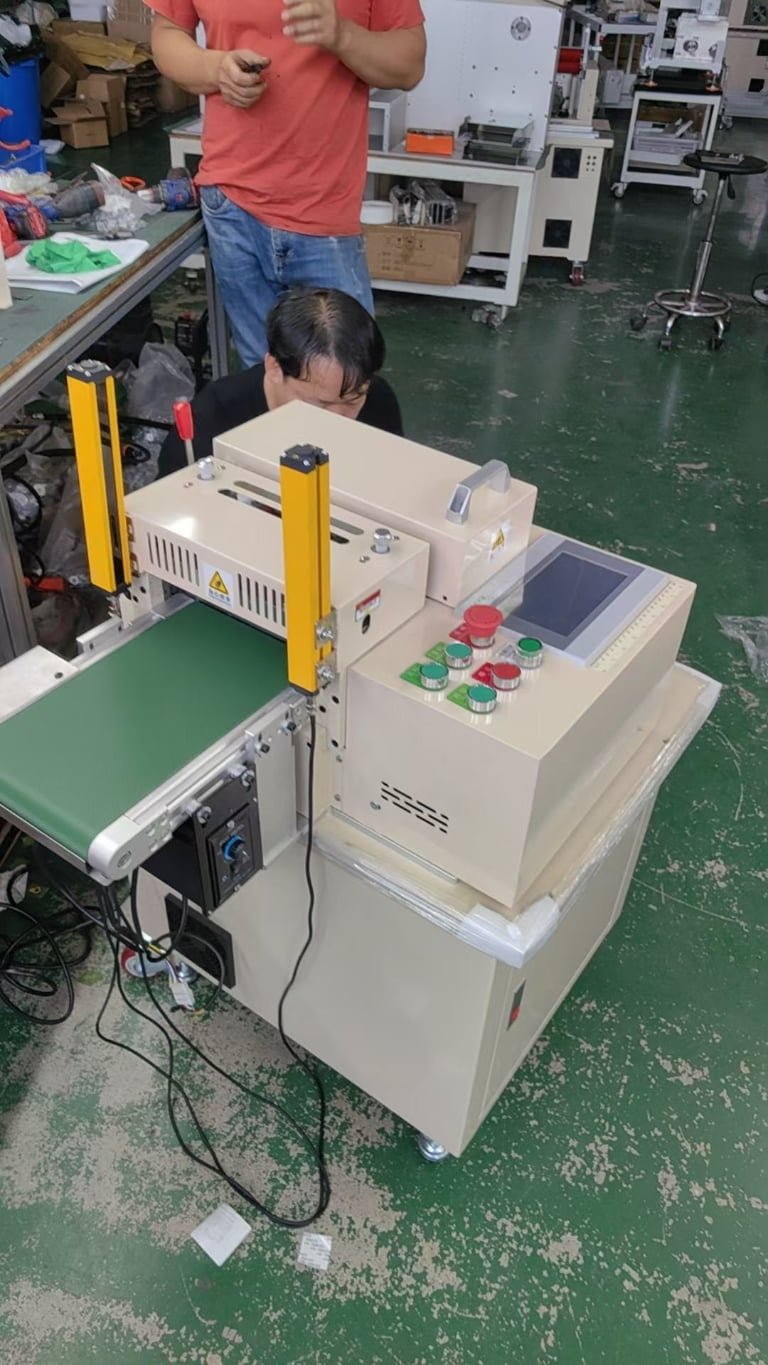
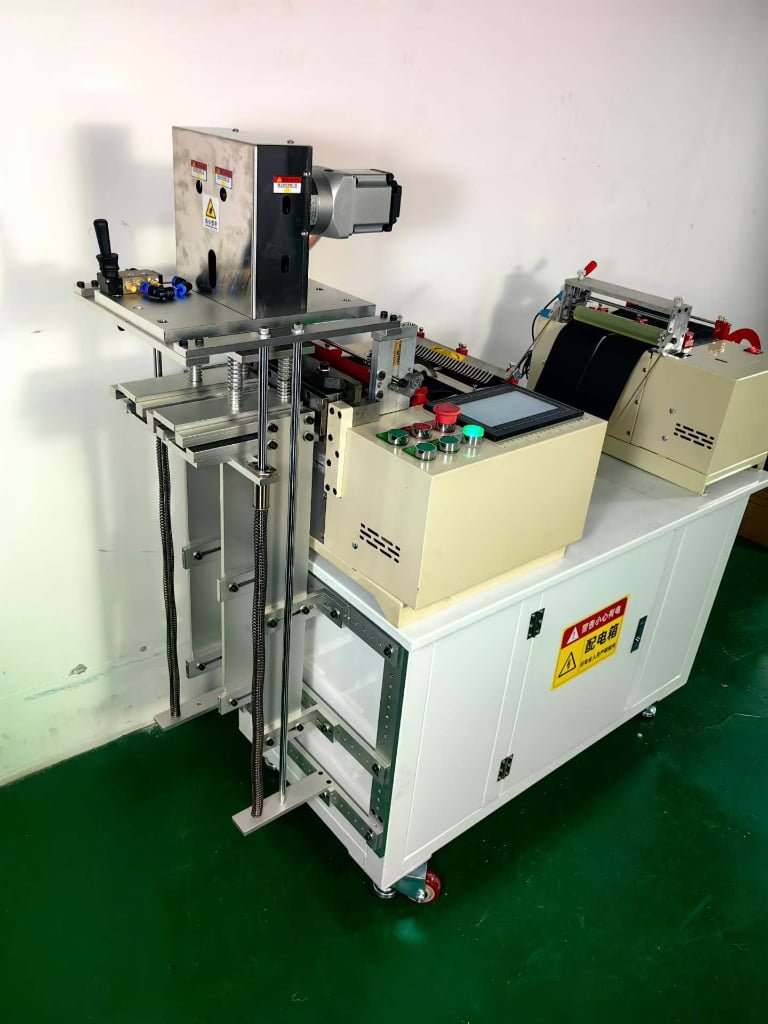
A nylon cutting machine uses a mechanical blade or hot knife to cut materials, while a laser cutting machine uses a focused laser beam to vaporize or melt the material without physical contact.
Neither machine is universally better. The right choice depends on your material type, production volume, edge quality requirements, operating costs, and long-term maintenance expectations.
In this guide, I will compare the two technologies to help you determine which solution best fits your factory.

What Are the Differences in Cutting Quality, Operating Cost, and Maintenance Requirements?
The comparison below summarizes the main differences.
| Feature | Nylon Cutting Machine | Laser Cutting Machine |
|---|---|---|
| Cutting Method | Mechanical blade or hot knife | Non-contact laser beam |
| Edge Sealing | Hot knife models seal edges | Laser seals edges during cutting |
| Suitable Materials | Webbing, straps, belts, ribbons | Thin to medium synthetic fabrics |
| Thick Webbing Performance | Excellent | Moderate |
| Complex Shapes | Limited | Excellent |
| Initial Investment | Lower | Higher |
| Operating Cost | Lower | Higher |
| Maintenance | Simple | More complex |
Both technologies have clear advantages depending on the application.
How Does a Nylon Cutting Machine Work?
A nylon cutting machine cuts material using:
- Hot knife
- Cold knife
- Rotary blade
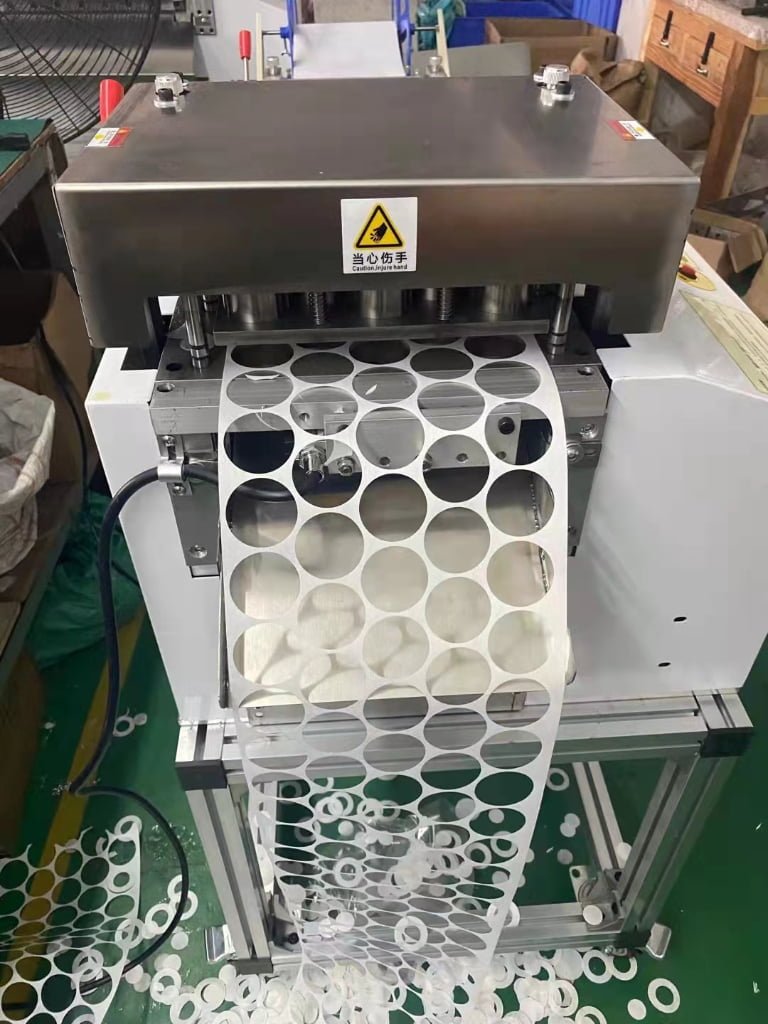
- Punch cutting
- Angle cutting
Most webbing tape cutting machines feed material automatically before cutting it to the programmed length.
When using a hot knife, the blade melts the edge slightly while cutting.
This provides:
- Clean edges
- Sealed fibers
- Reduced fraying
- Stable dimensions
These machines are commonly used for:
- Nylon webbing
- Polyester straps
- PP webbing
- Velcro
- Elastic tape
- Ribbon
- Industrial belts
Their biggest advantage is stable, high-volume production of narrow materials.
How Does a Laser Cutting Machine Work?
A laser cutting machine focuses a high-energy laser beam onto the material.
Instead of using a blade, the laser melts or vaporizes the cutting path.
Since there is no physical contact:
- No blade touches the material.
- No cutting force is applied.
- Mechanical wear during cutting is minimized.
Laser cutting is especially popular for:
- Technical textiles
- Sportswear
- Ripstop nylon
- Ballistic nylon
- Polyester fabrics
- Automotive textiles
Because the laser seals many synthetic fibers during cutting, the finished edge often requires little or no additional processing.
Cutting Quality Comparison
Both machines produce high-quality cuts, but the results are different.
Nylon Cutting Machine
Advantages:
- Straight, clean cuts
- Stable cutting length
- Excellent for thick webbing
- Smooth sealed edges with hot knife
- Minimal distortion on heavy materials
Laser Cutting Machine
Advantages:
- Extremely fine cutting lines
- Excellent for curves
- Smooth sealed edges
- No blade marks
- Very consistent on thin materials
Cutting Quality Comparison
| Feature | Nylon Cutting Machine | Laser Cutting Machine |
|---|---|---|
| Straight Cutting | Excellent | Excellent |
| Complex Shapes | Good | Excellent |
| Thick Webbing | Excellent | Moderate |
| Thin Fabric | Excellent | Excellent |
| Edge Sealing | Excellent | Excellent |
For simple straight cutting, both technologies perform very well.
Laser becomes more attractive when cutting intricate shapes or detailed patterns.
Which Machine Produces Better Edge Sealing?
Synthetic materials such as nylon and polyester fray after cutting unless the edge is sealed.
Both machines can produce sealed edges, but they do so differently.
Hot Knife Cutting
The heated blade seals the fibers only along the cut line.
Advantages include:
- Controlled sealing
- Strong edge
- Minimal discoloration when properly adjusted
Laser Cutting
The laser melts the edge during cutting.
Advantages include:
- Continuous sealed edge
- No additional sealing process
- Smooth finish
However, incorrect laser settings may cause:
- Burn marks
- Excessive melting
- Edge hardening
- Surface discoloration
Proper parameter adjustment is essential for both technologies.
Heat-Sensitive Materials Require Careful Selection
Although lasers work very well with many synthetic fabrics, they are not always the best choice.
Some materials may:
- Discolor
- Shrink
- Smoke
- Warp
Very soft elastic materials may also lose their original stretch characteristics if excessive laser heat is applied.
For thicker webbing and materials where surface appearance is critical, a hot and cold cutting machine often provides better process control.
Which Machine Is More Flexible?
Laser cutting machines are extremely flexible.
Changing from one material to another usually requires only software adjustments.
Laser systems can process:
- Nylon fabric
- Polyester fabric
- Technical textiles
- Sports fabrics
- Automotive textiles
- Decorative fabrics
Mechanical cutting machines also support many materials but may require:
- Blade changes
- Temperature adjustments
- Pressure adjustments
- Feeding parameter changes
Material Compatibility
| Material | Nylon Cutting Machine | Laser Cutting Machine |
|---|---|---|
| Nylon Webbing | Excellent | Good |
| Polyester Webbing | Excellent | Good |
| Elastic Tape | Excellent | Good |
| Ribbon | Excellent | Excellent |
| Technical Fabrics | Good | Excellent |
| Ballistic Nylon | Good | Excellent |
| Ripstop Nylon | Good | Excellent |
If your factory frequently changes products, laser systems generally offer greater flexibility.
Operating Cost Comparison
Many buyers focus only on purchase price.
However, operating cost is just as important.
Nylon Cutting Machine
Typical running costs include:
- Blade replacement
- Routine lubrication
- Basic electrical maintenance
- Occasional hot knife replacement
Laser Cutting Machine
Additional operating costs include:
- Optical lens cleaning
- Laser source maintenance
- Cooling system maintenance
- Exhaust system maintenance
- Protective optics replacement
- Higher electrical consumption
Operating Cost Comparison
| Cost Item | Nylon Cutting Machine | Laser Cutting Machine |
|---|---|---|
| Initial Investment | Lower | Higher |
| Blade Replacement | Yes | No |
| Laser Optics | No | Yes |
| Cooling System | Simple | Required |
| Power Consumption | Lower | Higher |
| Daily Maintenance | Simple | More Complex |
For manufacturers focused on minimizing operating expenses, mechanical cutting equipment often has the advantage.
Maintenance Requirements
Mechanical cutting machines require routine inspection of:
- Blades
- Rollers
- Servo motors
- Bearings
- Pneumatic systems
These maintenance tasks are generally straightforward.
Laser systems require additional attention to:
- Optical lenses
- Mirrors
- Beam alignment
- Cooling units
- Smoke extraction systems
- Laser safety components
Because laser systems contain more specialized components, maintenance is generally more technical and may require trained personnel.
Safety Considerations
Every industrial cutting system requires proper safety procedures.
Mechanical nylon cutting machines should include:
- Blade guards
- Emergency stop buttons
- Safety interlocks
- Temperature protection
Laser cutting systems require additional precautions such as:
- Fully enclosed work areas
- Laser radiation protection
- Eye safety measures
- Smoke and fume extraction
Another important consideration is material compatibility.
Some plastics, especially PVC and chlorine-containing materials, can release hazardous gases when exposed to laser cutting. These materials should only be processed using methods recommended by the equipment manufacturer and appropriate safety standards.
Which Machine Is Better for High-Volume Production?
The answer depends on the products you manufacture.
Nylon Cutting Machine
Best for:
- Nylon straps
- Seat belts
- Webbing
- Velcro
- Elastic tape
- Narrow fabrics
- Continuous roll feeding
Laser Cutting Machine
Best for:
- Complex contours
- Multi-shape cutting
- Thin technical textiles
- High-mix production
- Custom designs
For continuous straight cutting of webbing rolls, a dedicated webbing tape cutting machine usually delivers higher productivity with lower operating costs.
For intricate shapes and flexible production, laser cutting often provides greater efficiency.
Which Machine Should You Choose?
When evaluating equipment, I always begin by asking these questions:
- What materials do I cut most often?
- Are my products mainly straight strips or complex shapes?
- Do I require sealed edges?
- What is my daily production volume?
- How important is operating cost?
- Do I have technicians to maintain laser equipment?
- Will I process PVC or other materials unsuitable for laser cutting?
If most production involves nylon straps, belts, webbing, ribbons, and narrow fabrics, a nylon cutting machine is usually the more practical and economical choice.
If the factory frequently cuts complex patterns from thin synthetic fabrics and values maximum design flexibility, a laser cutting machine may be the better investment.
Whether I choose a webbing tape cutting machine, hot and cold cutting machine, high-speed trademark cutting machine, automatic punching cutting machine, rotary bevel cutting machine, different shapes cutting machine, computer tube cutting machine, Bubble Wrap Cutting Machine, Protective Foam Cutting Machine, PVC Edge Banding Cutting Machine, wire cutting and stripping machine, or metal pipe cutting and beveling machine, I always match the equipment to the actual production process instead of selecting the newest technology simply because it is available.
Conclusion
Both nylon cutting machines and laser cutting machines offer excellent performance for synthetic materials, but they excel in different applications. Laser cutting provides outstanding flexibility, high repeatability, and clean sealed edges for thin-to-medium synthetic fabrics and complex shapes. Nylon cutting machines remain the preferred choice for thicker webbing, straps, belts, and continuous roll-fed materials because they offer lower operating costs, simpler maintenance, stable edge quality, and excellent productivity. The best choice depends on your material types, product designs, production volume, and long-term operating priorities rather than on one technology alone.
HAOXINHE Insights
At HAOXINHE, we help customers select equipment based on real production needs instead of following industry trends. Our webbing tape cutting machines, hot and cold cutting machines, high-speed trademark cutting machines, automatic punching cutting machines, rotary bevel cutting machines, different shapes cutting machines, computer tube cutting machines, Bubble Wrap Cutting Machines, Protective Foam Cutting Machines, PVC Edge Banding Cutting Machines, wire cutting and stripping machines, and metal pipe cutting and beveling machines are engineered for reliable, high-volume production of webbing, straps, ribbons, films, foams, and other industrial materials.
For manufacturers focused on straight cutting, stable dimensions, and low operating costs, our mechanical cutting solutions deliver excellent long-term value. For customers with highly specialized applications, we also provide technical guidance to help evaluate whether laser cutting or mechanical cutting is the better fit, ensuring that every investment supports both current production and future business growth.