How to Program Cutting Length and Angle on an Automatic Webbing Angle Cutting Machine?
Programming is one of the most important steps when operating an automatic webbing angle cutting machine. Even the most advanced machine cannot deliver accurate results if the parameters are entered incorrectly. I have visited many factories where operators blamed the machine for poor cutting quality, but the real problem was incorrect programming.
Modern machines make programming much easier than older manual equipment.1 Most models only require operators to enter a few basic parameters, such as cutting length, cutting angle, quantity, speed, and temperature. Once these values are correct, the machine automatically feeds, cuts, and repeats every cycle with excellent consistency.
In this guide, I will explain how I program cutting length and angle correctly and highlight the most common mistakes that reduce cutting accuracy.
Whether I operate a webbing tape cutting machine, hot and cold cutting machine, high-speed trademark cutting machine, automatic punching cutting machine, or another automatic cutting solution, these programming principles remain the same.
What Programming Mistakes Commonly Affect Cutting Accuracy?
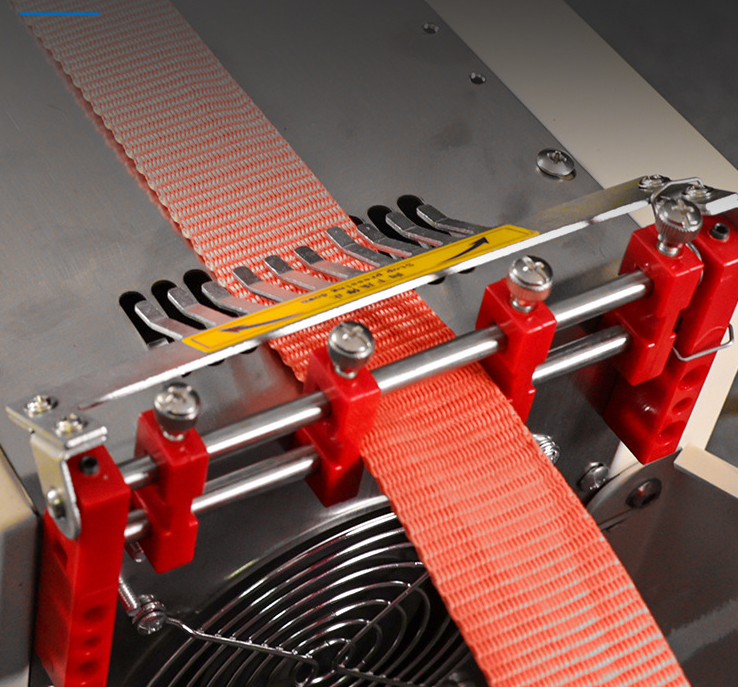
Many cutting problems are not caused by worn parts or poor materials. Instead, they result from simple programming errors.
The good news is that these mistakes are easy to avoid once operators understand the correct setup process.
1. Enter the Cutting Length Correctly
The first parameter I always program is the cutting length.
Most PLC or touchscreen controllers include a Length input field. I simply enter the desired value, such as 120 mm, and confirm the setting.
Once saved, the servo feeding system moves the webbing exactly the programmed distance before every cut.
Example
| Product | Cutting Length |
|---|---|
| Backpack Strap | 250 mm |
| Seat Belt | 500 mm |
| Luggage Strap | 320 mm |
| Pet Collar | 180 mm |
Accurate length programming eliminates manual measuring and greatly improves consistency.2
2. Set Quantity and Cutting Speed
After entering the length, I program the production quantity.
For example:
- Quantity: 2,000 pieces
- Speed: 90 cuts/minute
Once these values are entered, the machine automatically completes the entire batch without manual counting.
Different materials require different cutting speeds.
| Material | Recommended Speed |
|---|---|
| Polyester | High |
| Nylon | Medium |
| Thick Webbing | Medium |
| Elastic Tape | Medium-Low |
Using the correct speed reduces vibration and improves accuracy.
3. Select the Correct Cutting Shape
Many automatic webbing angle cutting machines support several cutting patterns.
Common options include:
- Straight cut
- Single angle
- Double angle
- Trapezoid
- Arrow shape
- Parallelogram
Choosing the correct cutting mode allows the controller to automatically adjust the knife movement.3
This saves setup time and reduces programming mistakes.
4. Enter the Required Cutting Angle
After selecting the cutting shape, I enter the required angle.
Modern touchscreens allow direct input, such as:
- 30°
- 45°
- 60°
- 90°
Some advanced machines also support custom values like 41° or 53°.
Common Angle Applications
| Angle | Typical Product |
|---|---|
| 0° | Straight Strap |
| 30° | Decorative Ribbon |
| 45° | Safety Belt |
| 60° | Sports Equipment |
| 90° | Square End |
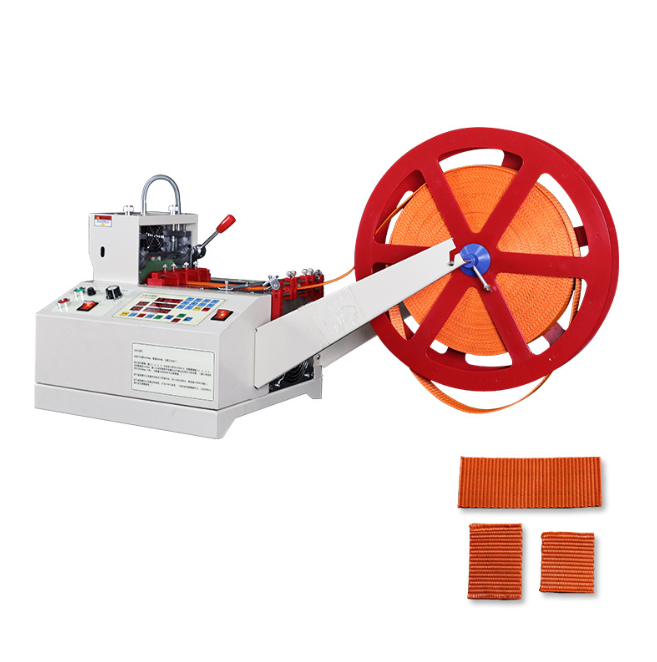
The machine automatically positions the blade according to the programmed angle.
5. Program Different Angles for Both Ends
Some products require different angles at each end.
For example:
- First end: 0°
- Second end: 45°
Instead of cutting both ends manually, advanced machines allow separate angle programming.
This feature is widely used for:
- Safety belts
- Backpack straps
- Outdoor products
- Pet products
Independent angle programming improves productivity and reduces secondary operations.4
6. Combine Length, Quantity, and Angle
One of my favorite features of modern cutting machines is full automatic operation.
After entering:
- Length
- Quantity
- Angle
the machine completes the entire production cycle automatically.
There is no need to reposition the webbing after every cut.
This greatly improves production efficiency.
7. Fine-Tune the Angle Before Mass Production
Even after programming the correct angle, I always perform a few test cuts.
If I notice a slight deviation, I use the machine’s angle adjustment function to fine-tune the blade position.
Quick Inspection Checklist
| Item | Check |
|---|---|
| Length | ✓ |
| Angle | ✓ |
| Edge Quality | ✓ |
| Burrs | ✓ |
| Heat Seal | ✓ |
Making small adjustments early prevents large batches of defective products.
8. Save Frequently Used Programs
Many PLC controllers allow operators to save production recipes.
A recipe may include:
- Length
- Angle
- Quantity
- Speed
- Temperature
Instead of entering parameters every day, I simply recall the saved recipe.
Benefits include:
- Faster setup
- Fewer mistakes
- Consistent quality
- Easier operator training
Recipe management is especially useful for repeat orders.
9. Test in Manual Mode Before Automatic Production
I never begin mass production immediately after entering new parameters.
Instead, I switch to Manual Mode.
I usually cut five to ten samples and check:
- Length
- Angle
- Heat seal
- Appearance
If everything looks correct, I switch to Automatic Mode.
This simple habit prevents unnecessary material waste.
10. Match Programming with Temperature and Feed Settings
Programming is more than entering length and angle.
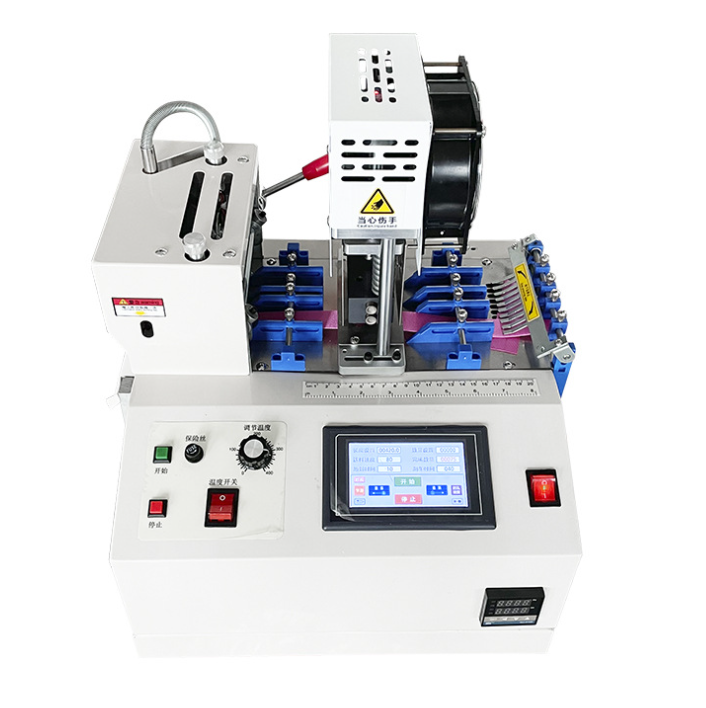
The best cutting quality comes from balancing several parameters together.5
These include:
- Cutting length
- Cutting angle
- Knife temperature
- Feeding speed
- Blade pressure
Recommended Setup Strategy
| Parameter | Why It Matters |
|---|---|
| Length | Product consistency |
| Angle | Accurate shape |
| Temperature | Edge sealing |
| Feed Speed | Stable feeding |
| Quantity | Automatic production |
When all parameters work together, the machine produces accurate and repeatable results.
Common Programming Mistakes
Even experienced operators sometimes make programming errors.
The most common mistakes include:
- Entering the wrong unit (inch instead of millimeter)
- Forgetting to confirm settings
- Selecting the wrong cutting shape
- Using excessive cutting speed
- Ignoring blade temperature
- Skipping sample testing
- Forgetting to save successful recipes
- Running worn feed rollers
- Incorrect sensor calibration
- Not checking the first production pieces
Avoiding these mistakes can significantly improve production quality.
Tips for Better Cutting Accuracy
I recommend following these best practices every day:
- Verify the material specification before programming.
- Clean the feed rollers regularly.
- Calibrate sensors according to the maintenance schedule.
- Save frequently used recipes.
- Replace worn blades promptly.
- Measure the first ten pieces of every production batch.
- Record successful machine settings for future orders.
Small improvements in programming often produce the biggest gains in accuracy and productivity.6
Frequently Asked Questions
How many parameters are normally required?
Most automatic webbing angle cutting machines only require four or five basic settings: length, angle, quantity, speed, and temperature.
Why is my cutting length inconsistent?
Common causes include worn feed rollers, poor sensor calibration, incorrect programming, or material slipping during feeding.
Should I test before automatic production?
Yes. Running several sample cuts in manual mode helps identify problems before full production begins.7
Can I save production programs?
Most modern PLC and touchscreen controllers allow operators to save multiple recipes for different products, making repeat production much faster.
Conclusion
Programming an automatic webbing angle cutting machine is much simpler than many new operators expect. By entering the correct cutting length, angle, quantity, speed, and temperature, I can achieve highly accurate and repeatable production with minimal material waste.
I also believe that careful testing before automatic operation is just as important as entering the correct parameters. A few minutes spent checking sample cuts can prevent hundreds of defective products later.
Whether I use a webbing tape cutting machine, hot and cold cutting machine, high-speed trademark cutting machine, automatic punching cutting machine, round shape cutting machine, rotary bevel cutting machine, different shapes cutting machine, computer tube cutting machine, wire cutting and stripping machine, metal pipe cutting and beveling machine, bubble wrap cutting machine, PVC edge banding cutting machine, or protective foam cutting machine, proper programming remains the foundation of accurate, efficient, and profitable production.
HAOXINHE Insights
At HAOXINHE, we design our automatic cutting machines with user-friendly PLC controllers and intuitive touchscreens that make programming simple, even for new operators. Customers can quickly enter cutting length, angle, quantity, speed, and temperature, then save these settings as reusable recipes for future production runs. This minimizes setup time and improves consistency across every batch.
Our product range includes webbing tape cutting machines, hot and cold cutting machines, high-speed trademark cutting machines, automatic punching cutting machines, round shape cutting machines, rotary bevel cutting machines, different shapes cutting machines, computer tube cutting machines, wire cutting and stripping machines, metal pipe cutting and beveling machines, bubble wrap cutting machines, PVC edge banding cutting machines, and protective foam cutting machines. We provide customized automation solutions that help manufacturers improve cutting accuracy, reduce material waste, and increase production efficiency.
-
"Automatic Webbing Angle Cutting Machine vs Manual Cutting …", https://cutopix.com/automatic-webbing-angle-cutting-machine-vs-manual-cutting-machine-what-are-the-differences/. Research on advancements in automatic cutting machines highlights improvements in user interfaces, such as touchscreens and PLC controllers, which reduce the complexity of programming compared to manual equipment. Evidence role: historical_context; source type: research. Supports: Modern machines simplify programming compared to older manual equipment.. Scope note: The source may focus on specific models or brands, which might not represent all modern machines. ↩
-
"[PDF] Achieving Consistency with Cutting Planes – John Hooker", https://johnhooker.tepper.cmu.edu/IC_v2post.pdf. Studies on automated cutting systems demonstrate that precise programming reduces human error and ensures consistent output by automating repetitive tasks. Evidence role: mechanism; source type: research. Supports: Accurate length programming eliminates manual measuring and improves consistency.. Scope note: The findings may vary depending on the type of cutting machine and material used. ↩
-
"Effects of Hardness, Blade Angle and the Micro-Geometry of …", https://pmc.ncbi.nlm.nih.gov/articles/PMC10420138/. Educational resources on cutting machine programming explain that cutting modes determine the blade’s movement path, optimizing it for specific shapes and materials. Evidence role: mechanism; source type: education. Supports: Selecting the correct cutting mode enables automatic knife movement adjustments.. Scope note: The explanation may vary depending on the machine’s software capabilities. ↩
-
"The Advantages of CNC Tube Plasma Cutting Machines Vs …", https://emiworks.com/the-advantages-of-cnc-tube-plasma-cutting-machines-vs-robotic-systems/. Studies on advanced cutting machines indicate that independent angle programming streamlines production by eliminating the need for manual adjustments, thereby enhancing efficiency. Evidence role: general_support; source type: research. Supports: Independent angle programming improves productivity and reduces secondary operations.. Scope note: The impact may vary based on the complexity of the product design. ↩
-
"Tool balancing and RPM – Sandvik Coromant", https://www.sandvik.coromant.com/en-us/knowledge/machine-tooling-solutions/tooling-considerations/balancing-and-rpm. Studies on cutting machine optimization show that a balanced combination of parameters like speed, angle, and temperature significantly improves cutting precision and edge quality. Evidence role: mechanism; source type: research. Supports: Balancing parameters like length, angle, and speed ensures the best cutting quality.. Scope note: The optimal balance may vary depending on the material and machine type. ↩
-
"Generative AI changes how employees spend their time | MIT Sloan", https://mitsloan.mit.edu/ideas-made-to-matter/generative-ai-changes-how-employees-spend-their-time. Research on manufacturing efficiency suggests that optimizing programming parameters can lead to measurable improvements in accuracy and throughput. Evidence role: general_support; source type: research. Supports: Small programming improvements lead to significant gains in accuracy and productivity.. Scope note: The impact may vary depending on the initial programming quality and machine condition. ↩
-
"Sample Preparation: A Critical Aspect To Successful Testing", https://www.thwingalbert.com/sample-preparation-a-critical-aspect-to-successful-testing/. Research on manufacturing quality control emphasizes the role of sample testing in detecting setup errors and ensuring production accuracy. Evidence role: general_support; source type: research. Supports: Testing sample cuts in manual mode helps identify issues before mass production.. Scope note: The effectiveness of sample testing may depend on the operator’s skill and the machine’s condition. ↩