How Quickly Can a Bubble Wrap Sheeting Machine Pay for Itself?
Modern packaging companies face one simple problem every day. Orders keep growing, but labor costs and material waste also keep growing. Many warehouse owners still cut bubble wrap manually with knives or scissors. This process looks cheap at first. Still, over time, it quietly increases labor cost, slows packing speed, and wastes material.
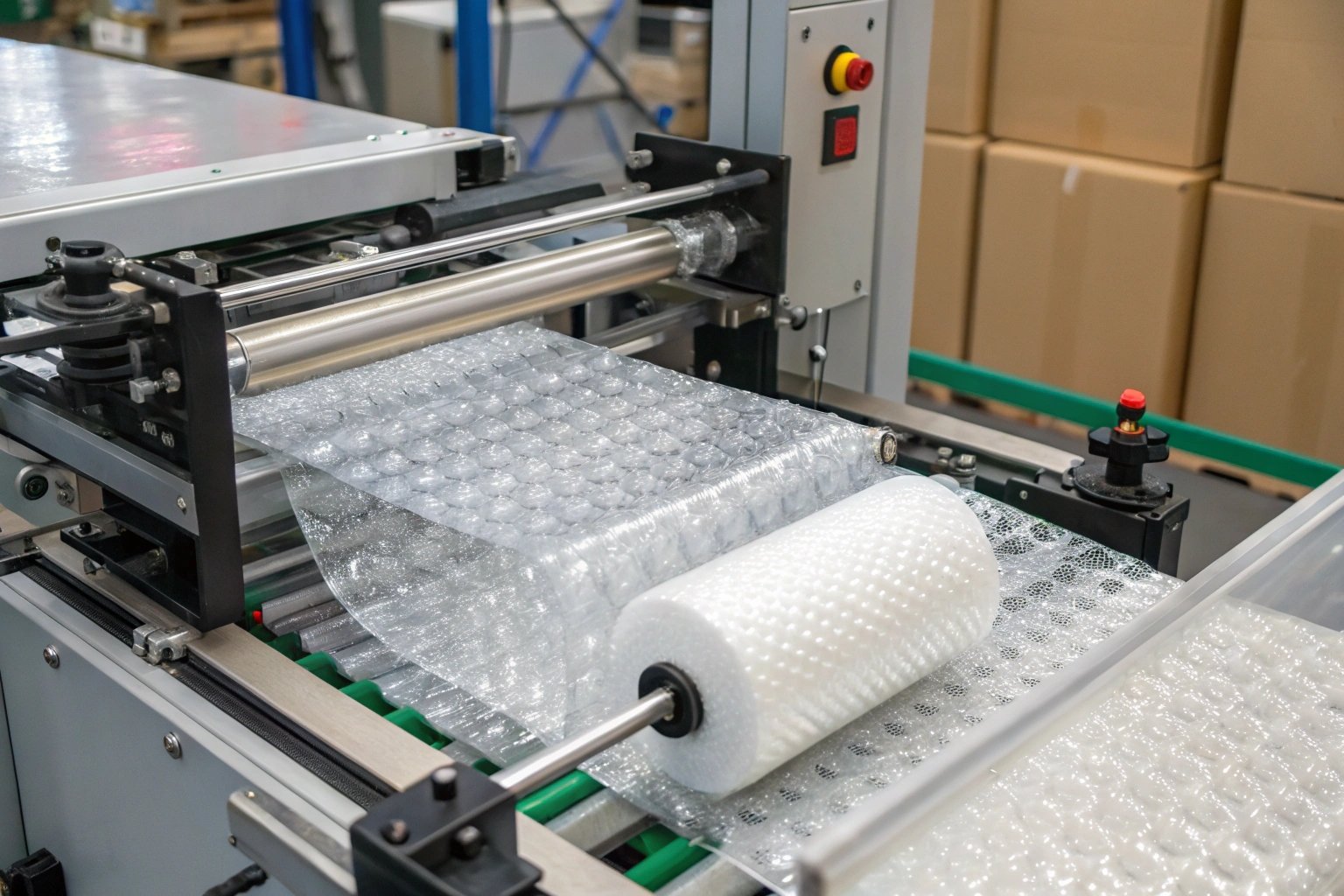
- A bubble wrap sheeting machine reduces labor costs by automating manual cutting work.
- Precise cutting helps reduce bubble wrap material waste and improve usage efficiency.
- Faster packing speed allows warehouses to process more orders in less time.
- Automation lowers dependence on temporary workers during busy seasons.
- Stable packaging quality and lower damage rates help the machine pay for itself faster.
I have worked with many factories and packaging companies that faced this exact issue. Most buyers first asked me one question:
“How long will it take for the machine to pay for itself?”
This is the real question behind every equipment investment. Buyers do not only want a machine. They want better profit, faster packing, lower labor cost, and more stable production.
A bubble wrap sheeting machine can often recover its cost faster than many managers expect. In busy warehouses, the payback period may only take several months. In smaller operations, it may take longer. The key is understanding the real ROI.
What Is the ROI of a Bubble Wrap Sheeting Machine?
ROI means “Return on Investment.” It shows how much money the machine saves compared to how much it costs.
Most packaging companies only look at the machine price. This is a mistake. Real ROI includes:
- Labor savings
- Material waste reduction
- Faster packing speed
- Lower product damage
- Less overtime
- Reduced temporary staffing
- More consistent cutting quality
- Lower training cost
For example, many warehouses use workers to manually measure and cut bubble wrap. Workers often cut extra material “just in case.” This creates hidden waste every single day.
A bubble wrap cutting system solves this problem by producing repeatable lengths automatically.
Many companies that already use:
- webbing tape cutting machine
- hot and cold cutting machine
- high-speed trademark cutting machine
- automatic punching cutting machine
- round shape cutting machine
- rotary bevel cutting machine
- different shapes cutting machine
- computer tube cutting machine
- wire cutting and stripping machine
- metal pipe cutting and beveling machine
already understand the value of automation. A bubble wrap sheeting machine works in the same way. It reduces manual work and improves consistency.
How to Calculate the ROI of an Industrial Packaging Machine
- The basic ROI formula is simple.
-
contentReference[oaicite:0]{index=0}
Still, real packaging operations need a deeper calculation.
Step 1: Calculate Labor Savings
First, measure how many workers currently cut and prepare bubble wrap manually.
| Item | Manual Process | Automated Process |
|---|---|---|
| Workers needed | 3 | 1 |
| Average wage/hour | $20 | $20 |
| Daily hours | 8 | 8 |
| Monthly labor cost | $9,600 | $3,200 |
Monthly labor savings:
$6,400
This alone may already justify the machine.
Step 2: Calculate Material Waste Reduction
Manual cutting usually creates uneven sheet lengths[^1].
Some warehouses waste:
- 8%
- 10%
- even 15%
of bubble wrap material.
A bubble wrap sheeting machine improves cutting precision.
| Item | Manual Cutting | Machine Cutting |
|---|---|---|
| Monthly bubble wrap usage | 10,000 ft | 10,000 ft |
| Waste rate | 12% | 4% |
| Material cost/month | $4,000 | $3,520 |
Monthly material savings:
$480
This number becomes very large over several years.
Step 3: Include Temporary Labor During Peak Season
Sales seasons create serious pressure for warehouses.
Many companies hire temporary workers during:
- Black Friday
- Christmas
- Amazon sales events
- seasonal promotions
Temporary labor is expensive and difficult to manage.
A bubble wrap sheeting machine reduces dependence on temporary staff because:
- cutting becomes automatic
- training becomes easier
- packing speed improves
| Peak Season Cost | Manual | Automated |
|---|---|---|
| Temporary workers | 6 | 2 |
| Weekly cost | $4,800 | $1,600 |
Weekly savings during peak season:
$3,200
This is one of the biggest hidden benefits.
What Monthly Shipping Volume Justifies Buying a Bubble Sheeter?
This depends on three factors:
- Labor cost
- Bubble wrap usage
- Daily shipping volume
Still, I usually see stronger ROI once companies ship more than:
- 300–500 packages per day
- or use bubble wrap continuously throughout the shift
Small warehouses may still benefit, but the payback period becomes longer.
General ROI Benchmark
| Shipping Volume | Recommendation |
|---|---|
| Under 100 packages/day | Manual may still work |
| 100–300 packages/day | ROI should be evaluated carefully |
| 300–500 packages/day | Strong automation potential |
| 500+ packages/day | Bubble sheeter often becomes highly profitable |
The busier the packing station becomes, the faster the machine pays for itself.
Dive Deeper: Why Packing Speed Changes the Entire ROI Equation
Many managers only compare labor headcount. They ignore packing speed. This is a major mistake.
In real warehouse operations, speed affects nearly every cost category.
When workers manually cut bubble wrap, several small delays happen repeatedly:
- measuring
- pulling material
- aligning rolls
- trimming edges
- correcting mistakes
Each delay may only take a few seconds. Still, after thousands of orders, these seconds become many lost labor hours.
Small Delays Become Big Costs
Let us look at a simple example.
| Process | Manual Time | Automated Time |
|---|---|---|
| Prepare bubble wrap | 18 sec | 5 sec |
| Orders/day | 2,000 | 2,000 |
| Total time/day | 10 hours | 2.7 hours |
The difference is huge.
Even if managers do not reduce headcount immediately, workers can process more orders with the same team size.
This improves:
- warehouse throughput
- order turnaround time
- shipping consistency
During peak seasons, this advantage becomes even more valuable.
Faster Packing Also Reduces Worker Fatigue
Manual cutting creates repetitive motion.
Workers repeatedly:
- pull rolls
- stretch material
- use knives
- bend over tables
Fatigue increases mistakes.
Tired workers also move slower later in the shift.
A bubble wrap sheeting machine standardizes the process. Workers simply pull pre-cut sheets and continue packing.
This creates:
- smoother workflow
- less stress
- more stable productivity
Stable Output Helps Warehouse Planning
Managers often struggle with inconsistent packing speed.
Some workers are faster. Some workers waste more material. Some workers cut uneven lengths.
Automation creates predictable performance[^2].
This helps managers:
- schedule labor better
- forecast packaging material usage
- improve shipment timing
- reduce overtime surprises
In many warehouses, these indirect benefits become just as important as direct labor savings.
How Much Can You Save on Hiring Temporary Packing Staff?
Temporary labor looks flexible, but it is expensive.
Most temporary workers:
- require training
- work slower
- make more mistakes
- waste more material
During busy seasons, many warehouses become desperate for labor. Wage rates increase quickly.
A bubble wrap sheeting machine helps stabilize production with fewer workers.
Example Seasonal Savings
| Category | Manual Operation | Automated Operation |
|---|---|---|
| Temporary workers | 10 | 4 |
| Hourly wage | $22 | $22 |
| Weekly hours | 40 | 40 |
| Weekly cost | $8,800 | $3,520 |
Weekly savings:
$5,280
If peak season lasts 8 weeks:
Total seasonal savings:
$42,240
This alone can recover a large part of the machine investment.
Dive Deeper: Why Labor Costs Continue Rising Every Year
Labor cost rarely goes down[^3].
This is one reason more factories invest in:
- webbing ribbon cutting machine
- Bubble wrap cutting machine
- PVC Edge Banding cutting machine
- Protective Foam Cutting Machine
Automation protects long-term profit margins.
Labor Inflation Changes ROI Every Year
Many buyers calculate ROI using current wages only.
This underestimates future savings.
For example:
| Year | Hourly Wage |
|---|---|
| 2025 | $18 |
| 2026 | $19.50 |
| 2027 | $21 |
| 2028 | $23 |
Even small wage increases create large long-term labor expenses.
Example
A warehouse with:
- 5 packing workers
- 8-hour shifts
- 250 working days
may spend tens of thousands of extra dollars over several years.
The machine cost stays mostly fixed. Labor cost keeps increasing.
This means ROI improves every year after installation.
Labor Shortages Also Matter
Many warehouses now struggle to hire reliable workers[^4].
This problem is especially serious during:
- holidays
- sales seasons
- regional labor shortages
Managers often pay overtime simply because there are not enough trained workers available.
Automation reduces this dependence.
A bubble wrap sheeting machine allows:
- faster onboarding
- easier workflow
- less skill requirement
New workers become productive much faster.
Stable Labor Planning Improves Management
Many business owners focus only on direct cost reduction.
Still, stable staffing also matters.
With automation:
- scheduling becomes easier
- overtime becomes lower
- workflow becomes more predictable
This creates operational stability that many warehouses badly need.
What Is the Long-Term Financial Benefit of Upgrading Your Cutting Tools?
Many companies think only about short-term savings. Still, the biggest value often appears over several years.
Modern cutting equipment improves:
- production consistency
- warehouse efficiency
- packaging quality
- labor stability
The same principle applies across many industries using:
- hot and cold cutting machine
- automatic punching cutting machine
- round shape cutting machine
- rotary bevel cutting machine
- computer tube cutting machine
- wire cutting and stripping machine
Upgrading outdated manual tools reduces operational friction everywhere.
Dive Deeper: Why Consistency Matters More Than Many Buyers Expect
Consistency may sound less exciting than labor savings. Still, it creates huge long-term value.
Manual cutting creates variation.
Different workers cut:
- different lengths
- different shapes
- different material tension
This inconsistency creates hidden operational problems.
Packaging Quality Affects Product Protection
Uneven bubble wrap sheets may:
- expose product corners
- create weak protection
- increase shipping damage
Damage claims are expensive.
Even small damage reduction rates can save significant money annually.
| Category | Before Automation | After Automation |
|---|---|---|
| Monthly damaged shipments | 48 | 21 |
| Average claim cost | $35 | $35 |
| Monthly loss | $1,680 | $735 |
Monthly savings:
$945
Many buyers forget to include this in ROI calculations.
Consistency Also Improves Brand Image
Customers notice packaging quality[^5].
Clean and consistent packaging creates:
- better presentation
- stronger professionalism
- improved customer trust
This matters especially for:
- e-commerce companies
- electronics brands
- premium products
Packaging quality directly affects customer experience.
Equipment Life and Maintenance Stability
Modern industrial cutting equipment usually offers:
- stable motors
- programmable controls
- repeatable operation
This reduces:
- emergency downtime
- maintenance surprises
- operational interruptions
Factories using modern systems often experience smoother daily production.
Sample Payback Calculation
Let us combine everything into one example.
Machine Investment
- Bubble wrap sheeting machine cost: $18,000
Monthly Savings
| Source | Savings |
|---|---|
| Labor reduction | $6,400 |
| Material waste reduction | $480 |
| Damage reduction | $945 |
| Lower overtime | $700 |
Total monthly savings:
$8,525
Estimated Payback Period
:contentReference[oaicite:1]{index=1}
Example:
$18,000 ÷ $8,525 ≈ 2.1 months
Even if real-world savings are lower, the ROI can still be very strong.
Insights Related to HAOXINHE
Why HAOXINHE Focuses on Practical ROI
At HAOXINHE, we understand that buyers care about profit first. Most warehouse managers do not buy machines because they look modern. They buy machines because they solve operational problems.
Our equipment is designed to help customers:
- reduce labor dependence
- improve cutting consistency
- reduce material waste
- support high-volume packaging operations
This is why many customers also choose our:
- webbing tape cutting machine
- hot and cold cutting machine
- high-speed trademark cutting machine
- automatic punching cutting machine
- round shape cutting machine
- rotary bevel cutting machine
- different shapes cutting machine
- computer tube cutting machine
- wire cutting and stripping machine
- metal pipe cutting and beveling machine
- Webbing ribbon cutting machine
- Bubble wrap cutting machine
- PVC Edge Banding cutting machine
- Protective Foam Cutting Machine
HAOXINHE Machines Are Built for Long-Term Stability
Many buyers initially compare only machine price. Still, long-term operating stability matters more.
Reliable cutting equipment helps factories:
- maintain output consistency
- reduce unexpected downtime
- improve worker efficiency
- simplify production management
Our factory focuses on:
- stable production quality
- customizable machine solutions
- industrial durability
- long-term customer support
This is especially important for distributors, wholesalers, and large packaging companies.
Final Thoughts
A bubble wrap sheeting machine can pay for itself surprisingly fast when packaging volume is high.
The fastest ROI usually happens when:
- labor cost is high
- packaging demand is stable
- workers currently cut material manually
- temporary labor is heavily used
- material waste is significant
The true value goes beyond labor savings alone.
Real long-term ROI includes:
- waste reduction
- lower damage rates
- more stable operations
- faster packing speed
- reduced labor pressure
- better workflow consistency
For many growing warehouses, automation is no longer optional. It becomes part of staying competitive.