Understanding the Warranty and After-Sales Support for Imported Packaging Machines
When I buy an imported packaging machine, I do not only focus on the machine itself. I also pay close attention to the warranty, technical support, spare parts availability, and after-sales service. A packaging machine is a long-term investment. If the machine stops working, production may stop as well. That means lost orders, delayed shipments, and unhappy customers.
Many buyers focus heavily on price during supplier selection. I understand that concern. However, after working with different equipment suppliers, I have learned that strong after-sales support often creates more value than a small difference in purchase price1.
In this guide, I will explain how warranty coverage works, what kind of technical support manufacturers provide, how replacement parts are delivered, and whether video tutorials are available for troubleshooting and setup.
Why Warranty and After-Sales Support Matter When Importing Packaging Machines
When I import equipment from another country, especially from China, I cannot simply drive to the factory if a problem occurs. Distance creates challenges. Time zones are different. Shipping takes time. Language barriers may exist.
This is why warranty terms and after-sales support should be discussed before placing an order.
A good supplier should provide:
- Clear warranty documents
- Fast technical responses
- Remote troubleshooting
- Spare parts support
- Operator training
- Installation guidance
- Video instructions
- Long-term maintenance support
Many buyers ask detailed questions about machine specifications but forget to ask about service support. In my experience, this can become a costly mistake later.
What Parts Are Typically Covered Under a Standard 1-Year Factory Warranty?
Most imported packaging machines come with a 12-month warranty period2. This warranty usually starts from one of two points:
- The delivery date
- The date the machine successfully completes Site Acceptance Testing (SAT) and begins normal production
The exact starting point depends on the manufacturer and contract terms.
Components Usually Covered
The warranty normally covers manufacturing defects and component failures caused by production quality issues.
| Covered Components | Typical Coverage |
|---|---|
| Machine frame | Manufacturing defects |
| Motors | Electrical or manufacturing defects |
| PLC systems | Product defects |
| Servo drives | Product defects |
| Sensors | Factory defects |
| Electrical wiring | Manufacturing issues |
| Pneumatic systems | Material defects |
| Control panels | Product-related failures |
Components Usually Excluded
Some parts naturally wear out during production. Manufacturers normally exclude these items from warranty coverage.
| Excluded Wear Parts | Reason |
|---|---|
| Belts | Normal wear |
| Rollers | Usage wear |
| Heating elements | Limited service life |
| Sealing jaws | Continuous contact wear |
| Cutting blades | Consumable item |
| Rubber parts | Aging and wear |
| Filters | Maintenance item |
Situations That Usually Void Warranty
Warranty protection does not apply if the problem results from improper machine use.
| Non-Warranty Situations | Explanation |
|---|---|
| Incorrect installation | Not following instructions |
| Unauthorized modifications | Machine altered by customer |
| Power surge damage | External electrical issues |
| Flood or fire damage | Environmental causes |
| Improper maintenance | Service schedule ignored |
| Wrong voltage supply | Electrical mismatch |
Before signing a purchase agreement, I always request a detailed warranty document. This helps avoid disputes later.
Dive Deeper: Understanding Warranty Terms Before You Sign the Contract
Many buyers only ask, "How long is the warranty?" I believe this is the wrong question. The better question is, "Exactly what is covered during the warranty period?"
A 12-month warranty sounds good on paper. However, coverage can vary greatly between suppliers.
Questions I Always Ask
Mechanical Coverage
I ask whether the following items are included:
| Item | Covered? |
|---|---|
| Servo motor | Confirm |
| Gearbox | Confirm |
| Pneumatic cylinder | Confirm |
| PLC controller | Confirm |
| Touchscreen HMI | Confirm |
Labor Costs
Some suppliers provide free replacement parts but charge labor fees.
I ask:
- Is remote diagnosis free?
- Is onsite service available?
- Who pays technician travel expenses?
- Who pays accommodation costs?
Spare Parts Costs
A supplier may provide a replacement part for free but ask the customer to pay shipping.
I always clarify:
| Question | Why It Matters |
|---|---|
| Is the replacement part free? | Avoid unexpected costs |
| Is freight included? | International shipping can be expensive |
| Which courier is used? | Delivery speed varies |
| How fast is dispatch? | Downtime reduction |
Reading the Fine Print
I carefully review warranty exclusions.
Some contracts contain clauses such as:
- Incorrect machine operation
- Failure to perform maintenance
- Installation by non-approved personnel
- Voltage mismatch
- Improper environmental conditions
These exclusions are common. I do not view them as unfair. However, I want to know about them before I buy.
Documentation Requirements
When a machine problem occurs, manufacturers often request evidence.
I prepare:
- Videos
- Photos
- Error codes
- Operating records
Good documentation speeds up the warranty process.
In my experience, suppliers respond much faster when detailed information is available immediately. This reduces machine downtime and helps both sides solve the problem efficiently.
How Do Manufacturers Provide Remote Technical Support Across Time Zones?
Remote support has become one of the most important parts of modern machine service3.
Years ago, technicians often traveled internationally to solve problems. Today, many issues can be fixed remotely.
Common Remote Support Methods
| Support Method | Purpose |
|---|---|
| Video calls | Live troubleshooting |
| Email support | Technical communication |
| Quick assistance | |
| Real-time communication | |
| Zoom meetings | Training sessions |
| Remote software access | PLC diagnosis |
Most Chinese machine suppliers now provide technical support through video calls and online communication platforms.
Benefits of Remote Support
Remote support offers several advantages:
- Faster response times
- Lower service costs
- Immediate troubleshooting
- Reduced production downtime
Many machine issues involve settings adjustments rather than hardware failures.
Examples include:
- Sensor calibration
- Parameter setup
- Product size adjustment
- Feeding alignment
- Temperature settings
These issues can often be solved during a video call.
Dive Deeper: How Effective Remote Support Reduces Downtime
I used to believe that every machine problem required an onsite technician. My experience has shown that this is no longer true.
Modern packaging machines use advanced control systems4. Many issues are software-related or parameter-related rather than mechanical failures.
Typical Remote Troubleshooting Process
Step 1: Initial Contact
The operator contacts the supplier.
Information usually includes:
- Machine model
- Serial number
- Error message
- Video of the problem
Step 2: Technical Evaluation
The supplier’s engineer reviews the information.
They identify whether the issue involves:
| Category | Example |
|---|---|
| Electrical | Sensor failure |
| Mechanical | Loose component |
| Software | Parameter issue |
| Operator error | Incorrect setup |
Step 3: Live Video Support
Engineers often schedule a video meeting.
During the session, they may ask the operator to:
- Open the control cabinet
- Check indicator lights
- Verify wiring
- Adjust settings
- Inspect sensors
Step 4: Solution Verification
After adjustments, production resumes and performance is checked.
Managing Different Time Zones
One concern many buyers have is time zone differences.
I usually ask suppliers:
- What are your service hours?
- Is emergency support available?
- How quickly do engineers respond?
Many professional suppliers now maintain dedicated after-sales teams that respond within 24 hours.
Some larger manufacturers even provide weekend support.
Building Long-Term Relationships
I have found that suppliers are more responsive when a long-term relationship exists.
Instead of treating the supplier as a one-time vendor, I treat them as a long-term partner.
This approach often leads to:
- Faster responses
- Better technical support
- Priority spare parts handling
- Better future cooperation
For expensive equipment investments, these benefits can be significant.
How Are Replacement Parts Shipped Quickly If a Machine Component Fails?
Spare parts support is often the biggest concern for import buyers.
Even the best machine may eventually require replacement components.
The important question is not whether parts will fail. The important question is how quickly replacements can arrive.
Common Spare Parts Shipping Methods
| Shipping Method | Delivery Speed |
|---|---|
| DHL Express | 3-7 days |
| FedEx Express | 3-7 days |
| UPS Express | 3-7 days |
| Air Freight | 5-10 days |
| Sea Freight | Several weeks |
Critical components are usually shipped by express courier.
Parts Commonly Stocked by Suppliers
Good manufacturers keep inventory of:
- Sensors
- PLC modules
- Motors
- Drivers
- Pneumatic components
- Touchscreens
- Relays
This allows rapid shipment when needed.
Recommended Spare Parts Package
I often request a startup spare parts kit.
Typical contents include:
| Spare Part | Purpose |
|---|---|
| Sensors | Fast replacement |
| Belts | Wear item |
| Blades | Consumable |
| Relays | Electrical backup |
| Fuses | Emergency replacement |
This minimizes downtime during the first year.
Are Video Tutorials Available for Basic Troubleshooting and Setup?
Video training has become standard for many machine manufacturers5.
I strongly recommend asking for video resources before shipment.
Typical Training Videos
| Video Topic | Benefit |
|---|---|
| Machine installation | Faster setup |
| Daily operation | Operator training |
| Parameter adjustment | Product changes |
| Sensor calibration | Troubleshooting |
| Routine maintenance | Longer machine life |
| Cleaning procedures | Improved performance |
Advantages of Video-Based Training
Videos allow operators to:
- Learn repeatedly
- Train new staff
- Solve common issues independently
- Reduce support requests
Many suppliers provide:
- USB training packages
- Cloud storage links
- YouTube tutorials
- Private training videos
Dive Deeper: Creating a Complete After-Sales Support System Before the Machine Ships
I believe the best time to discuss after-sales support is before production begins, not after problems occur.
Many buyers focus on machine specifications and overlook service planning.
I create a complete support checklist before approving payment.
Documentation Checklist
I request:
| Document | Purpose |
|---|---|
| User manual | Daily operation |
| Electrical diagram | Troubleshooting |
| Pneumatic diagram | Maintenance |
| Spare parts list | Future ordering |
| Warranty document | Coverage clarity |
Technical Support Checklist
I confirm:
- Response time
- Support channels
- Engineer availability
- Emergency procedures
Training Checklist
I ask for:
- Installation videos
- Maintenance videos
- Troubleshooting videos
- Parameter adjustment videos
Compliance Verification
Before shipment, I also verify:
| Item | Importance |
|---|---|
| CE certification | Safety compliance |
| Voltage compatibility | Prevent damage |
| Factory testing | Reliability |
| Inspection reports | Quality verification |
Voltage compatibility is especially important.
Many Chinese machines are configured for 220V/50Hz. Some countries require different standards.
Incorrect electrical configuration can damage components and may invalidate warranty coverage6.
Long-Term Benefits
When after-sales support is properly organized, several benefits appear:
- Lower downtime
- Faster repairs
- Longer machine lifespan
- Higher productivity
- Better return on investment
I have learned that strong service support often saves more money than negotiating a lower purchase price.
Conclusion
A packaging machine purchase should never be evaluated by machine price alone. Warranty coverage, technical support, spare parts availability, and training resources all affect the true cost of ownership.
Most imported packaging machines include a standard 12-month warranty that covers manufacturing defects in major mechanical and electrical components. Wear parts and damage caused by misuse are usually excluded.
Reliable suppliers provide remote support through video calls, email, messaging apps, and online training resources. They also maintain spare parts inventory and use express shipping services to minimize downtime.
Before importing any equipment, I always verify warranty terms, spare parts policies, response times, training materials, certifications, and voltage compatibility. These steps help protect my investment and ensure stable production for years to come.
HAOXINHE Insights
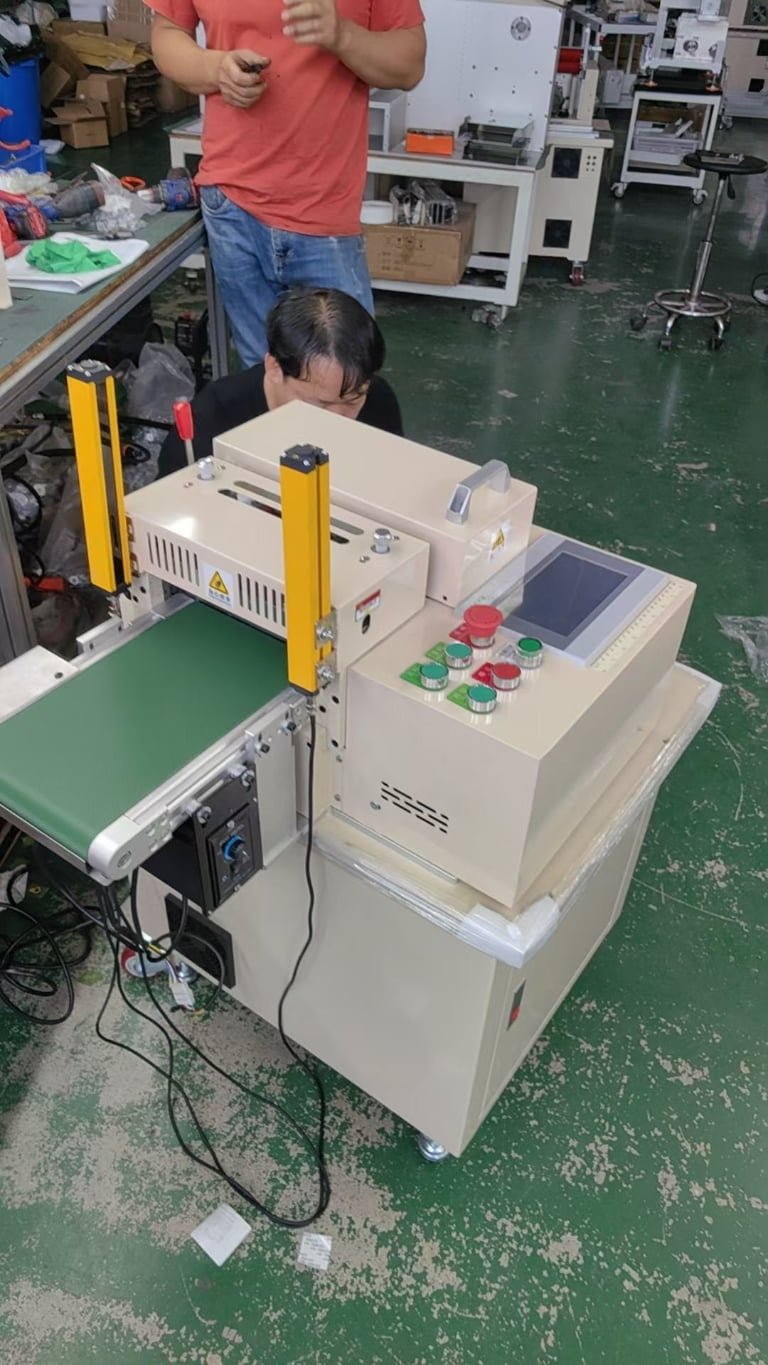
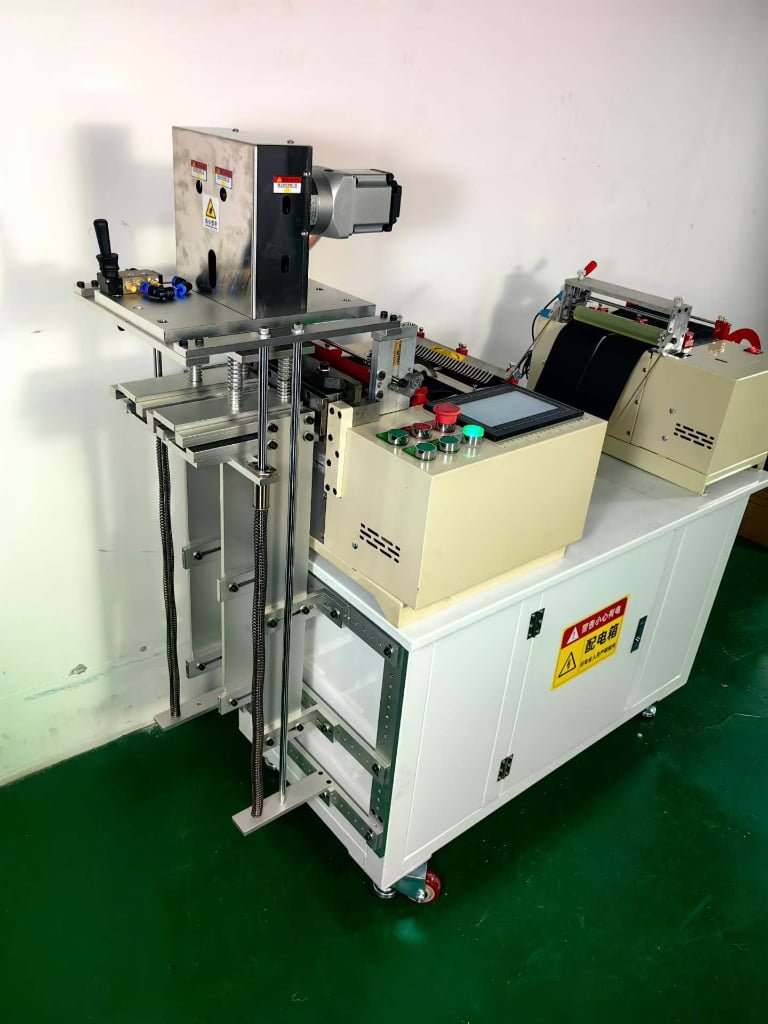
As a manufacturer of industrial cutting equipment, HAOXINHE understands that machine reliability depends not only on manufacturing quality but also on strong after-sales support.
HAOXINHE provides support for equipment such as:
- Webbing tape cutting machine
- Hot and cold cutting machine
- High-speed trademark cutting machine
- Automatic punching cutting machine
- Round shape cutting machine
- Rotary bevel cutting machine
- Different shapes cutting machine
- Computer tube cutting machine
- Wire cutting and stripping machine
- Metal pipe cutting and beveling machine
- Webbing ribbon cutting machine
- Bubble wrap cutting machine
- PVC Edge Banding cutting machine
- Protective Foam Cutting Machine
HAOXINHE Service Advantages
| Service Item | Customer Benefit |
|---|---|
| Remote video support | Fast troubleshooting |
| Spare parts supply | Reduced downtime |
| Operation training | Faster startup |
| Installation guidance | Smooth commissioning |
| Technical consultation | Long-term support |
| Customized solutions | Better production efficiency |
HAOXINHE believes that dependable after-sales service creates long-term partnerships. For buyers importing cutting equipment from China, responsive technical support and reliable spare parts availability are just as important as machine performance itself.
-
"Maintenance Costs and Advanced Maintenance Techniques … – PMC", https://pmc.ncbi.nlm.nih.gov/articles/PMC9890517/. Total cost of ownership analyses for industrial equipment demonstrate that maintenance support quality, spare parts availability, and service response times significantly impact operational costs through their effect on equipment uptime and productivity, often exceeding the impact of moderate purchase price differences over the equipment lifecycle. Evidence role: general_support; source type: research. Supports: how after-sales support affects total cost of ownership for industrial equipment. Scope note: The relative value of after-sales support versus purchase price depends on equipment utilization rates, production criticality, and the magnitude of price differences being compared. ↩
-
"Businessperson’s Guide to Federal Warranty Law", https://www.ftc.gov/business-guidance/resources/businesspersons-guide-federal-warranty-law. Industry practice for imported industrial machinery typically includes warranty periods ranging from 12 to 24 months, with 12 months being common for packaging equipment, though specific terms vary by manufacturer and equipment complexity. Evidence role: general_support; source type: institution. Supports: typical warranty periods for industrial machinery in international trade. Scope note: This represents general industry practice rather than a universal standard, as warranty terms are contractually negotiated. ↩
-
"Remote Technical Assistance for Equipment Manufacturers – Wideum", https://wideum.com/equipment-manufacturers/. Industry analyses show that remote support capabilities have become increasingly critical in industrial equipment service, with digital diagnostic tools and video-based troubleshooting reducing average service response times and minimizing the need for on-site technician visits. Evidence role: expert_consensus; source type: research. Supports: the increasing role of remote support in industrial equipment maintenance. Scope note: The extent of remote support adoption varies by equipment complexity and manufacturer capabilities. ↩
-
"PLC-Based Automatic Packing Machine Design | PDF – Scribd", https://www.scribd.com/document/706763823/131. Contemporary packaging machinery typically incorporates programmable logic controllers (PLCs), human-machine interfaces (HMIs), and sensor networks that enable precise control, real-time monitoring, and remote diagnostics capabilities. Evidence role: general_support; source type: education. Supports: the technological sophistication of control systems in modern packaging equipment. Scope note: The specific level of control system sophistication varies significantly based on equipment class, manufacturer, and price point. ↩
-
"OSHA Videos | Occupational Safety and Health Administration", http://www.osha.gov/video. Industry trends indicate increasing adoption of video-based training materials by industrial equipment manufacturers, driven by the effectiveness of visual learning for technical procedures and the ability to provide consistent training across multiple locations and languages. Evidence role: general_support; source type: research. Supports: the widespread adoption of video training materials by equipment manufacturers. Scope note: The extent and quality of video training materials vary significantly among manufacturers based on company size and resources. ↩
-
"Effects of Voltage Fluctuations on Industrial Machines & Fixes", https://www.northamericaphaseconverters.com/the-effects-of-voltage-fluctuations-on-industrial-machines-and-their-solutions/?srsltid=AfmBOopd7GoqtXSvRJwUrK96kyIeuRhETlWlG0WNKeqRfKxEOtZkBJU9. Operating electrical equipment outside its specified voltage and frequency parameters can cause motor overheating, control system malfunction, and component failure, and such damage resulting from incorrect power supply is typically excluded from manufacturer warranty coverage as it constitutes improper use. Evidence role: mechanism; source type: education. Supports: how electrical configuration mismatches can damage equipment and affect warranty coverage. Scope note: This describes general electrical engineering principles and common warranty exclusions rather than universal warranty terms. ↩