Hot Knife vs. Cold Blade: Which Cutting Method Is Best for Bubble Wrap?
When buyers choose a Bubble Wrap Cutting Machine, one question appears very often:
“Should I use a hot knife or a cold blade for cutting bubble wrap?”
This is an important decision because the cutting method affects:
- Edge quality
- Production speed
- Maintenance cost
- Material waste
- Machine lifespan
- Final packaging appearance
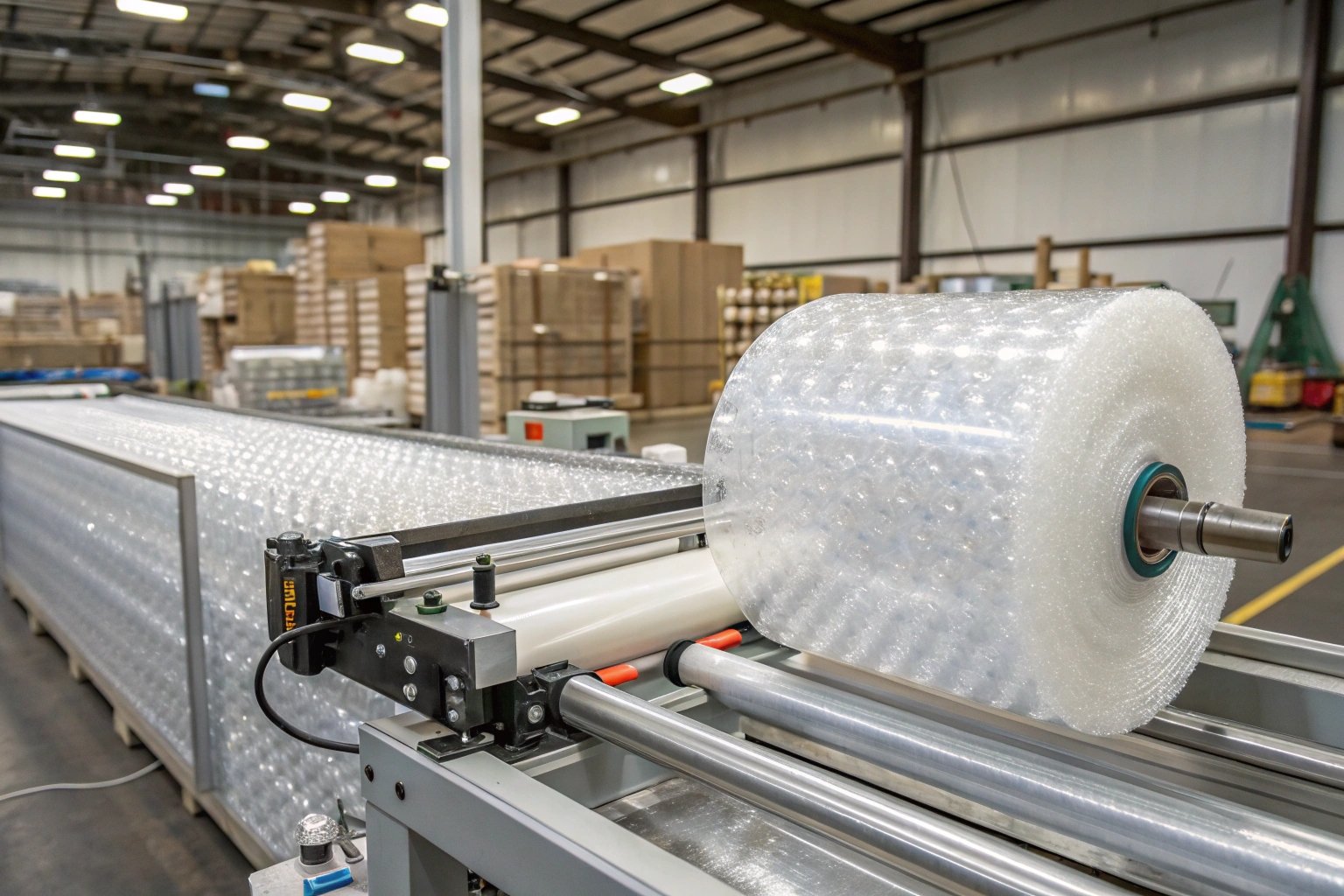
In my experience, most standard bubble wrap applications work better with a cold blade cutting system. A cold blade produces clean edges without melting the plastic. It is simple, fast, and cost-effective.
However, hot knife cutting also has important advantages in some special industrial applications, especially when processing thick plastic packaging materials or layered foam structures.
In this article, I will explain the real differences between hot knife and cold blade cutting systems for bubble wrap and plastic packaging materials.
For most bubble wrap cutting applications, a cold blade cutting system is the better choice because it delivers clean edges, precise dimensions, lower maintenance, and lower operating cost.
- Cold blades mechanically cut bubble wrap without melting the plastic, making them ideal for standard packaging operations.
- Hot knives use heat to seal edges and work better for thick foam, laminated films, or synthetic materials that fray.
- Cold cutting is simpler and more energy-efficient, while hot knife systems require temperature control and more maintenance.
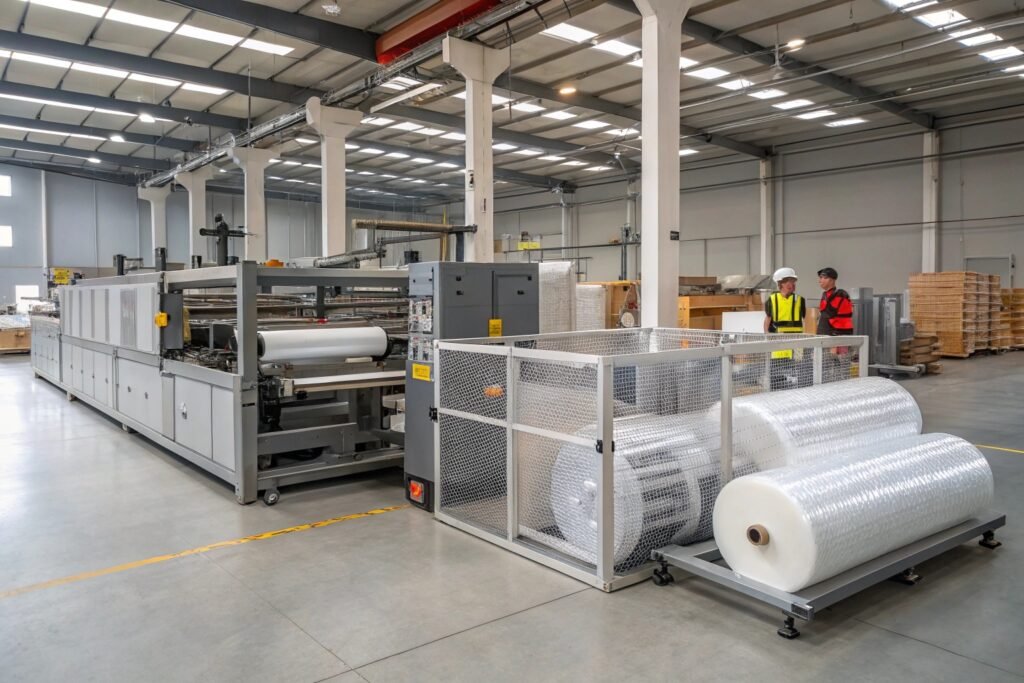
What Is the Difference Between Hot Knife Cutting and Cold Blade Cutting?
The biggest difference is very simple:
- A cold blade cuts material mechanically.
- A hot knife cuts material using heat.
Both systems are widely used in industrial cutting equipment, but they work very differently.
How Cold Blade Cutting Works
A cold blade uses a sharp metal edge to physically slice through the material.
Examples include:
- Utility knives
- Rotary blades
- Shear cutters
- Compression cutters
- Scissor-style systems
The blade stays at normal temperature during cutting.
How Hot Knife Cutting Works
A hot knife uses a heated blade. The heat melts the plastic while the blade moves through the material.
The blade temperature may range from:
| Material Type | Typical Heat Range |
|---|---|
| Thin plastic film | 150°C–250°C |
| Foam materials | 200°C–350°C |
| Thick synthetic fabrics | 300°C+ |
The heat melts synthetic material edges while cutting.
This creates a partially sealed edge.
Why Cold Blade Cutting Is Usually Better for Bubble Wrap
For most bubble wrap applications, a cold blade is usually the best choice.
Bubble Wrap Does Not Usually Need Edge Sealing
Unlike woven fabric or webbing tape, bubble wrap does not fray like textile fibers.
Because of this:
- Heat sealing is often unnecessary
- Melted edges provide little advantage
- Precision matters more than sealing
This is why many industrial bubble wrap machines use:
- Rotary shear cutting
- Compression cutting
- Mechanical blade systems
instead of hot knife systems.
Cold Blade Gives Cleaner Cuts
Cold blades create:
- Straight edges
- Smooth cuts
- Better visual appearance
- More accurate dimensions
This is important in packaging operations where consistency matters.
Cold Blade Prevents Plastic Melting
Hot knives may create:
- Melted edges
- Burn marks
- Plastic odor
- Uneven cut surfaces
Cold blades avoid these problems.
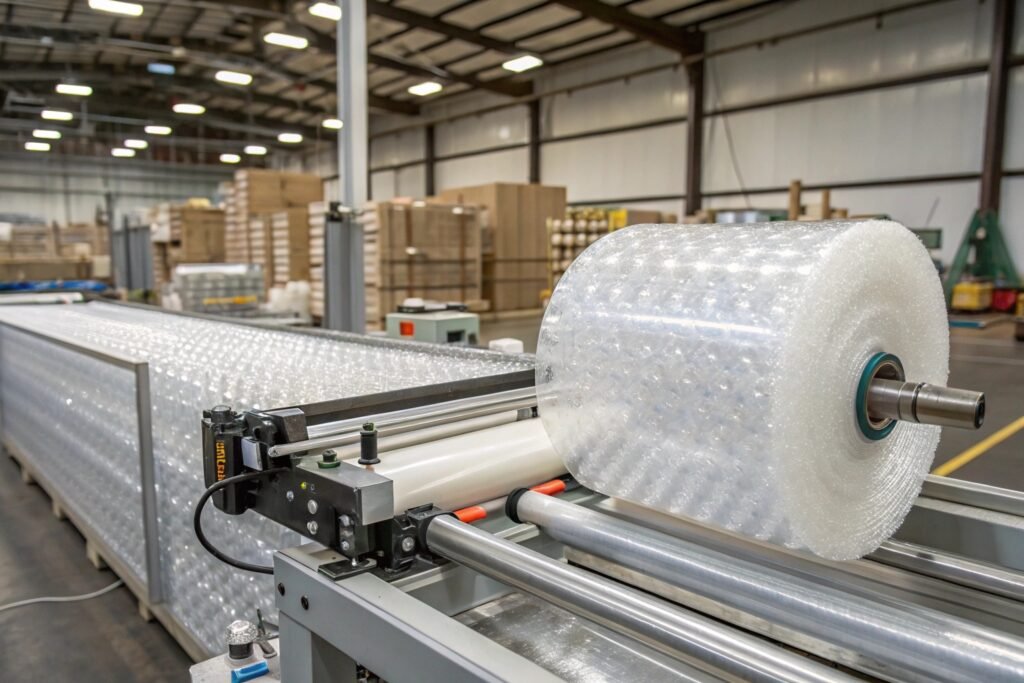
What Is the Main Functional Difference Between Heat Sealing and Cold Cutting?
This is one of the most misunderstood topics in packaging conversion.
Cold Cutting
Cold cutting simply separates the material.
The blade slices through without changing the material structure.
Advantages of Cold Cutting
| Advantage | Benefit |
|---|---|
| Clean appearance | Better product presentation |
| No heat damage | Safer for thin films |
| Lower energy use | Reduced operating cost |
| Faster startup | No heating time |
| Simpler machine structure | Easier maintenance |
Heat Sealing Cutting
Hot knife systems both:
- Cut
- Melt
at the same time.
The melted edge cools and seals itself.
Advantages of Heat Sealing
| Advantage | Benefit |
|---|---|
| Sealed edges | Prevents fiber fraying |
| Easier thick material cutting | Less blade resistance |
| Reduced edge splitting | Better for layered films |
| Cleaner synthetic fabric edges | Improved appearance |
Does a Cold Blade Cause Bubble Wrap Edges to Fray or Split?
Normally, no.
Bubble wrap is made from plastic film with trapped air pockets. It is not a woven material.
Because of this, standard bubble wrap usually does not fray like:
- Fabric
- Ribbon
- Webbing tape
- Textile materials
What Actually Happens During Cold Cutting
A sharp cold blade creates:
- Smooth separation
- Clean bubble rows
- Accurate sheet sizes
Most commercial packaging companies use cold cutting every day without edge problems.
When Splitting May Happen
Edge splitting may occur if:
| Cause | Result |
|---|---|
| Blade becomes dull | Tearing |
| Material is too thick | Uneven cuts |
| Feeding tension is poor | Wrinkled edges |
| Cutting speed is too fast | Edge distortion |
In these situations, the problem is usually:
- Poor blade condition
- Incorrect machine setup
—not the cold cutting method itself.
This is why blade quality matters greatly in industrial cutting systems.
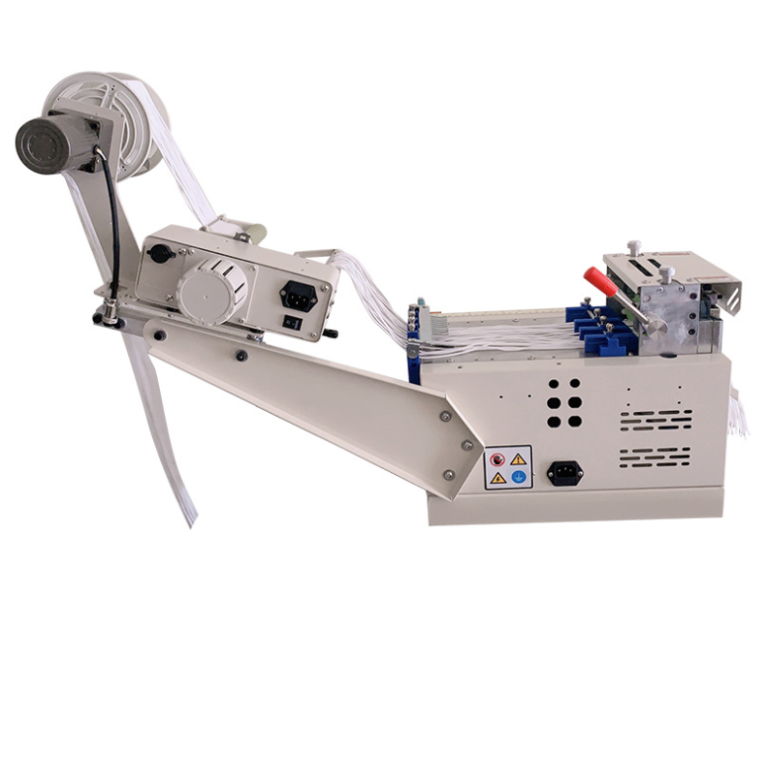
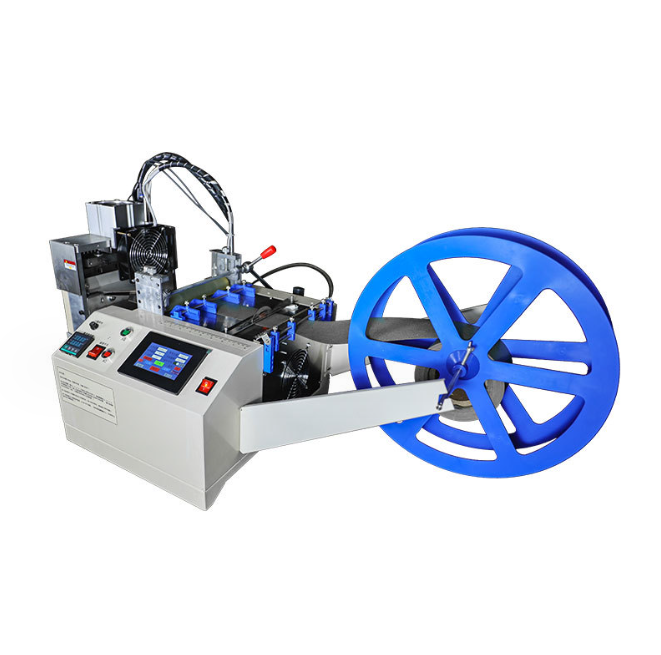
At HAOXINHE, we focus heavily on blade stability and feeding precision in our:
- Bubble Wrap Cutting Machine
- Rotary bevel cutting machine
- Different shapes cutting machine
- Webbing ribbon cutting machine
Stable feeding improves cold cutting performance significantly.
When Is a Hot Knife Necessary for Plastic Packaging Films?
Hot knives become useful when the material needs edge sealing or when the material is difficult to cut mechanically.
Situations Where Hot Knife Cutting Is Better
Thick Bubble Foam Materials
Heavy-duty protective foam may resist standard cold cutting.
Heat helps the blade move more smoothly.
Multi-Layer Laminated Materials
Some packaging films contain:
- Foam layers
- Aluminum layers
- Reinforced plastic
These structures may cut more efficiently with heat.
Synthetic Fabric Materials
Hot knives are widely used for:
- Webbing tape
- Nylon straps
- Polyester ribbons
The heat seals the fibers and prevents fraying.
This is very common in:
- Hot and cold cutting machine systems
- High-speed trademark cutting machine equipment
Irregular Shape Cutting
Complex contours sometimes benefit from heat-assisted cutting.
This is common in:
- Different shapes cutting machine applications
- Foam contour processing
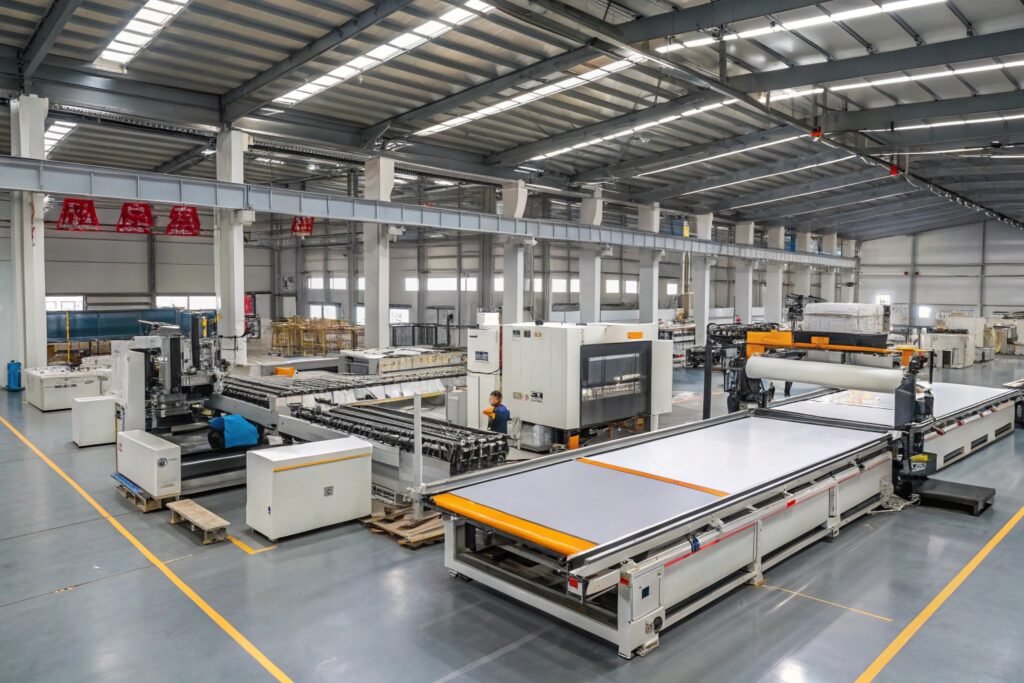
Problems That Can Happen With Hot Knife Cutting
Many buyers think hot knives are always more advanced. This is not always true.
Hot knife systems also create challenges.
Common Hot Knife Problems
| Problem | Cause |
|---|---|
| Burn marks | Excessive heat |
| Rough edges | Overheating |
| Plastic odor | Material melting |
| Smoke generation | High temperature |
| Blade carbon buildup | Melted residue |
| Uneven sealing | Inconsistent temperature |
Heat Control Is Very Important
If the blade temperature is too high:
- Bubble wrap may shrink
- Air pockets may collapse
- Plastic may deform
This is especially important for thin packaging films.
Which Cutting Method Requires Lower Maintenance?
In most bubble wrap applications, cold blade systems usually require lower maintenance overall.
Why Cold Blade Systems Are Simpler
Cold blade machines have:
- Fewer electrical heating parts
- Lower thermal stress
- Simpler control systems
This usually means:
- Lower repair cost
- Easier maintenance
- Faster blade replacement
Hot Knife Systems Need More Attention
Hot knife systems include:
- Heating elements
- Temperature controllers
- Thermal sensors
- Heat-resistant wiring
These components require regular inspection.
Blade Replacement Comparison
| Cutting Method | Blade Life |
|---|---|
| Cold blade | Depends on sharpness and material |
| Hot knife | Affected by heat buildup and residue |
Hot knives may accumulate melted plastic residue, which reduces cutting quality over time.
Cold blades mainly require sharpening or replacement.
Which Cutting Method Has Lower Operating Cost?
Cold blade systems usually cost less to operate.
Cold Blade Advantages
Lower Electricity Use
Cold systems do not need heating energy.
Less Complex Components
Fewer parts reduce repair expenses.
Faster Startup
Operators can start production immediately.
When Hot Knife Systems Can Save Money
In some applications, hot knives reduce waste.
This is especially true for:
- Synthetic fabric cutting
- Foam sealing
- Webbing tape processing
Sealed edges may reduce defective products.
At HAOXINHE, many customers choose hybrid systems that combine:
- Cold blade cutting
- Heat sealing functions
This gives more production flexibility.
Hybrid Cutting Systems: Combining Hot and Cold Technology
Some factories use both methods together.
Example Hybrid Workflow
| Step | Method |
|---|---|
| Rough cutting | Hot knife |
| Precision trimming | Cold blade |
This approach works well for:
- Thick protective foam
- Multi-layer plastic packaging
- Irregular shape products
Hybrid systems are becoming more popular in advanced packaging production lines.
Which Industries Prefer Cold Blade Cutting?
Cold blade cutting dominates many industries.
Common Industries
E-Commerce Packaging
Fast and clean cutting matters most.
Warehouse Packaging
Simple maintenance is important.
Bubble Wrap Sheet Conversion
Precision sheets are needed.
Logistics Centers
High-speed processing requires stable cutting.
This is why cold blade systems are commonly used in:
- Bubble Wrap Cutting Machine equipment
- PVC Edge Banding Cutting Machine systems
- Protective Foam Cutting Machine lines
Which Industries Prefer Hot Knife Cutting?
Hot knife systems are more common in synthetic materials.
Common Applications
| Industry | Material |
|---|---|
| Textile | Webbing tape |
| Apparel | Synthetic ribbon |
| Automotive | Foam insulation |
| Packaging | Laminated plastic film |
| Electronics | Protective foam |
At HAOXINHE, our hot and cold cutting machine systems are often used for these industries because customers need both flexibility and edge sealing capability.
How to Choose the Right Cutting Method
The correct cutting method depends on the material and production goals.
Choose Cold Blade If You Need:
- Clean appearance
- Precise dimensions
- Lower maintenance
- Lower operating cost
- Standard bubble wrap cutting
Choose Hot Knife If You Need:
- Sealed edges
- Thick foam processing
- Synthetic material cutting
- Reduced fiber fraying
- Laminated film cutting
Insights About HAOXINHE Cutting Solutions
We Offer Both Hot and Cold Cutting Technologies
At HAOXINHE, we understand that different industries require different cutting methods.
Because of this, we manufacture:
- Bubble Wrap Cutting Machine
- Hot and cold cutting machine
- Webbing ribbon cutting machine
- High-speed trademark cutting machine
- Different shapes cutting machine
- Protective Foam Cutting Machine
Some customers prioritize precision. Others prioritize edge sealing. We customize solutions based on production needs.
We Focus on Feeding Stability
Many cutting problems actually come from unstable feeding, not the blade itself.
We optimize:
- Servo feeding systems
- Roller pressure
- Material tension control
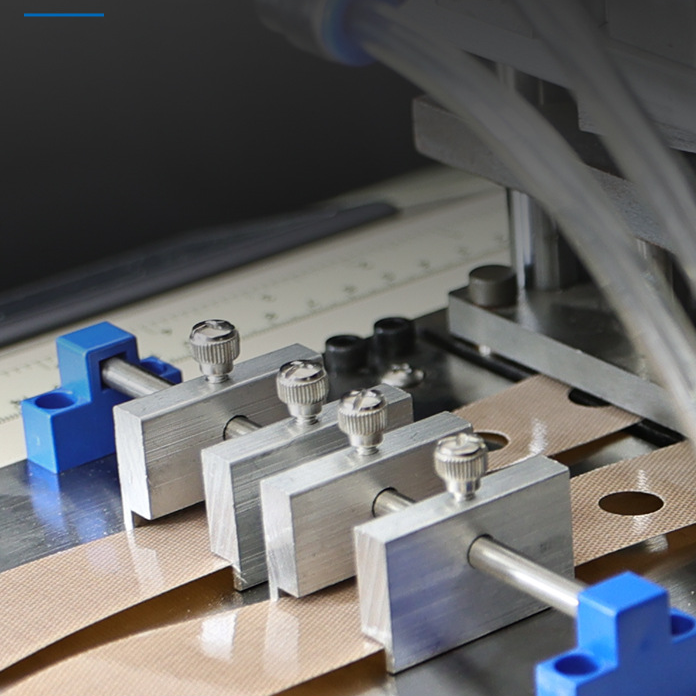
- Blade alignment
This improves both hot and cold cutting performance.
We Support Customized Industrial Applications
Our factory supports custom configurations for:
- Width capacity
- Blade type
- Automation level
- Material thickness
- Roll diameter
This helps customers improve efficiency and reduce downtime.
Conclusion
For most bubble wrap applications, a cold blade cutting system is usually the best choice.
Cold cutting provides:
- Clean edges
- Better precision
- Lower maintenance
- Lower operating cost
- No melted plastic damage
Bubble wrap normally does not require edge sealing, so hot knives are often unnecessary for standard packaging operations.
However, hot knife systems become valuable when processing:
- Thick foam
- Synthetic fabrics
- Laminated films
- Materials that require sealed edges
The best solution depends on:
- Material structure
- Production volume
- Product quality requirements
- Long-term maintenance goals
Choosing the correct cutting technology can improve production efficiency, reduce waste, and extend machine lifespan.