How Do You Choose the Right Automatic Roll to Sheet Cutting Machine?
Selecting the right automatic roll to sheet cutting machine is one of the most important decisions a manufacturer can make. Whether you process paper rolls, PET film, PVC film, bubble wrap, protective foam, webbing, ribbon materials, or laminated products, the machine you choose will directly affect productivity, product quality, labor costs, and long-term profitability.
Many buyers begin by comparing machine prices or looking at maximum cutting speeds. However, these factors alone do not determine whether a machine is suitable for your production environment. A machine that performs well for one company may be completely unsuitable for another because material specifications, production volumes, and quality requirements differ significantly.
I have found that the most successful equipment investments happen when buyers first understand their production needs and then evaluate machine capabilities against those requirements. Instead of asking, "Which machine is the best?" the better question is, "Which machine is best for my application?"
-
Verify material specifications. Confirm roll width, material thickness, and substrate type to ensure compatibility.
-
Evaluate production needs. Match automation level, cutting accuracy, programmable settings, and throughput to current and future volume.
-
Assess long-term value. Prioritize tension control, safety features, maintenance support, and reliability for lower operating costs and higher ROI.
What Evaluation Criteria Should Industrial Buyers Follow Before Purchasing?
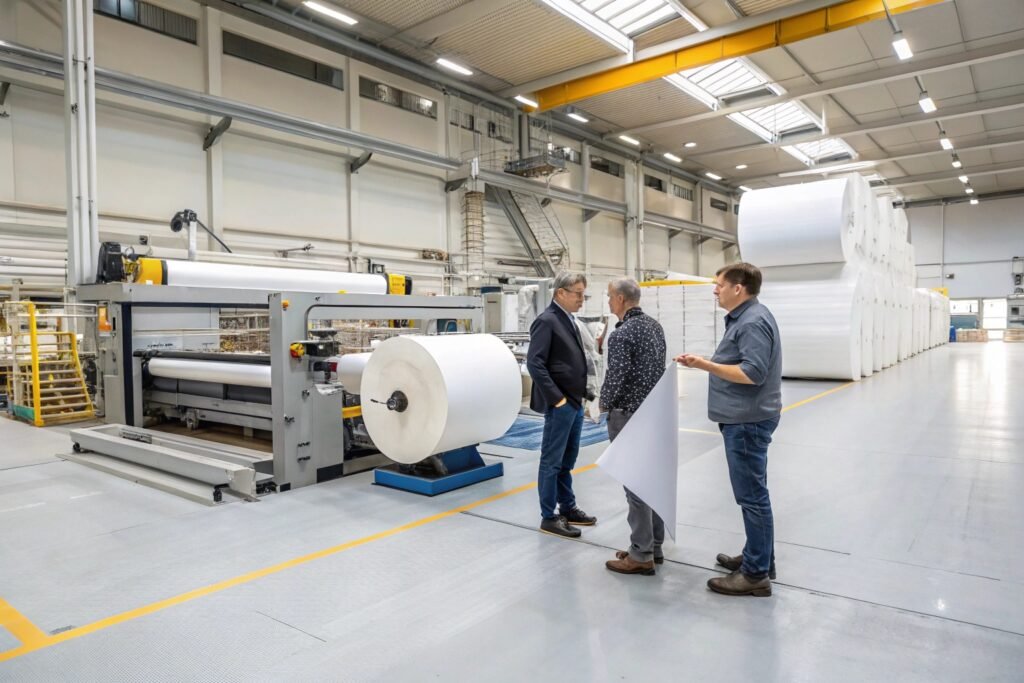
Before requesting quotations from suppliers, industrial buyers should evaluate several critical factors. These include material type, roll width, material thickness, production volume, automation requirements, cutting accuracy, tension control, safety features, and long-term maintenance costs.
Making the right choice requires looking beyond basic specifications and considering how the machine will perform over years of daily production.
Key Evaluation Factors
| Evaluation Criteria | Why It Matters |
|---|---|
| Roll Width | Determines maximum sheet size |
| Material Thickness | Affects cutting capacity |
| Production Volume | Influences automation requirements |
| Cutting Accuracy | Impacts product quality |
| Tension Control | Improves feeding stability |
| Automation Features | Increases productivity |
| Safety Systems | Protects operators |
| Maintenance Requirements | Affects operating costs |
| Supplier Support | Improves long-term reliability |
Why Should Roll Width Be Evaluated First?
The first technical specification every buyer should verify is roll width.
An automatic roll to sheet cutting machine must be capable of processing the widest material used in production. If the machine’s cutting width is smaller than the material width, production becomes impossible regardless of the machine’s other features.
Different industries require different cutting widths.
For example:
- Label manufacturers often process narrow rolls.
- Webbing and ribbon manufacturers typically use medium-width materials.
- Paper converters may process large jumbo rolls.
- Bubble wrap and foam manufacturers often require wider cutting systems.
Roll Width Planning Guide
| Production Requirement | Recommended Approach |
|---|---|
| Current Width Only | Minimum Requirement |
| Current Width + 10% Margin | Better |
| Current Width + Future Expansion | Best Long-Term Option |
Dive Deeper: Think Beyond Today’s Production Requirements
Many buyers focus only on their current production needs. While this may reduce the initial investment, it can create limitations later.
I often ask customers a simple question:
"Will your production requirements be the same three years from now?"
In many cases, the answer is no.
A company processing 800 mm rolls today may begin processing 1200 mm rolls after winning new customers. If the original machine cannot accommodate larger materials, the company may be forced to purchase another machine much sooner than expected.
That is why I usually recommend leaving some room for future growth. The additional investment is often much smaller than the cost of replacing equipment later.
How Does Material Thickness Affect Machine Selection?
Material thickness is just as important as material width.
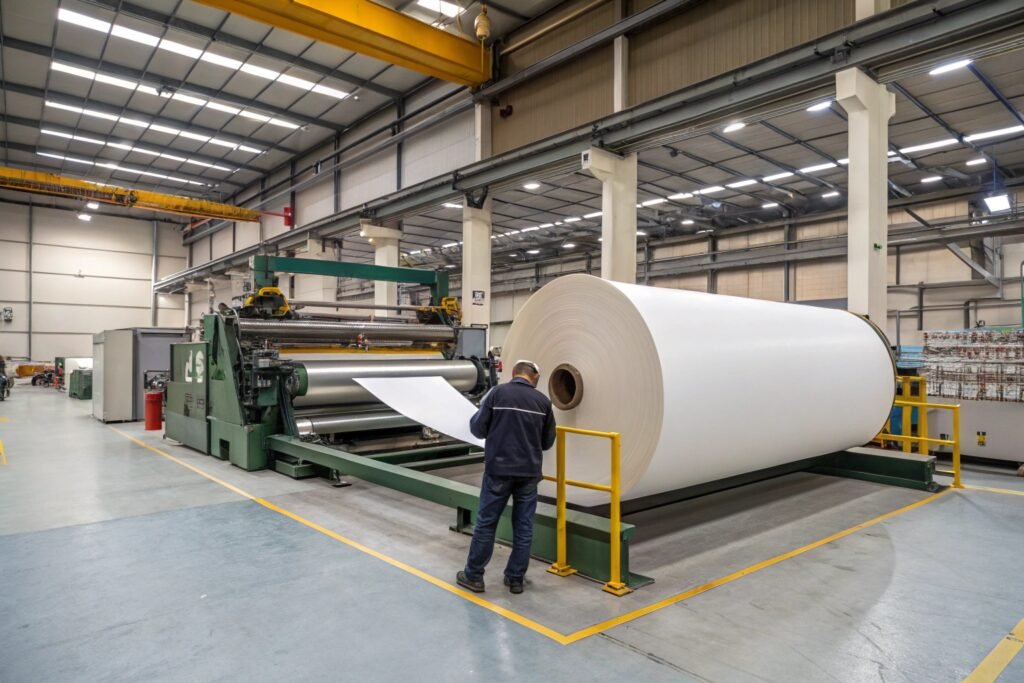
Different automatic roll to sheet cutting machines are designed for different cutting capacities. Some are optimized for thin paper, labels, and films, while others are designed to process thick foam materials, laminated products, and industrial-grade substrates.
Common Material Categories
| Material Type | Typical Thickness Range |
|---|---|
| Paper | Thin to Medium |
| PET Film | Thin |
| PVC Film | Thin to Medium |
| Webbing | Medium |
| Bubble Wrap | Medium |
| Protective Foam | Thick |
Selecting a machine that matches the material thickness helps ensure stable feeding, clean cuts, and long-term reliability.
Dive Deeper: Why Material Thickness Is Frequently Overlooked
Many buyers focus heavily on machine width and production speed because these specifications are easy to compare.
However, material thickness often creates the biggest challenges during actual production.
A machine designed for thin PET film may struggle when processing thick protective foam. Similarly, a heavy-duty machine designed for thick materials may be unnecessarily expensive for lightweight applications.
The goal is not to buy the biggest machine available.
The goal is to buy a machine that matches the material characteristics as closely as possible.
When material thickness is properly matched to machine capability, manufacturers typically experience:
- Better cut quality
- Reduced blade wear
- More stable feeding
- Lower maintenance costs
- Longer machine lifespan
This is why detailed material information should always be shared with the supplier before finalizing equipment specifications.
How Should Production Volume Influence Machine Selection?
Production volume is one of the most important factors affecting automation requirements.
A machine that works well for a small workshop may not be suitable for a factory operating multiple shifts every day.
Automation Level Comparison
| Production Volume | Recommended System |
|---|---|
| Low Volume | Basic Automatic |
| Medium Volume | Servo-Controlled Automatic |
| High Volume | Fully Automatic |
| Continuous Operation | Industrial Production System |
As production volume increases, automation becomes increasingly valuable.
Automatic feeding systems, programmable controls, automatic counting, and stacking functions can significantly reduce labor requirements while increasing output.
Dive Deeper: Buy for Growth, Not Just Current Demand
One purchasing mistake I frequently see is buyers selecting equipment based entirely on current production volume.
This approach often works in the short term but creates limitations later.
Imagine a manufacturer currently producing 10,000 sheets per day. A basic automatic machine may be sufficient today.
However, if production doubles within two years, the machine may become a bottleneck.
At that point, the company faces two choices:
- Accept reduced efficiency
- Purchase another machine
Neither option is ideal.
I generally recommend considering expected business growth over the next three to five years. Investing slightly more today can often eliminate expensive upgrades in the future.
Why Are Programmable Settings Important?
Modern manufacturing environments require flexibility.
Many companies process multiple customer orders every day. Different jobs often require different sheet lengths, quantities, and material specifications.
Machines equipped with programmable controls allow operators to store and recall production settings quickly.
Valuable Automation Features
| Feature | Benefit |
|---|---|
| Programmable Length Control | Faster Setup |
| Quantity Presets | Improved Accuracy |
| Recipe Storage | Quick Changeovers |
| Touchscreen Interface | Easier Operation |
| Automatic Counting | Reduced Labor |
These features become particularly valuable for converters and contract manufacturers handling frequent job changes.
Why Is Tension Control So Important?
Tension control is often overlooked during the purchasing process, but it has a major impact on cutting accuracy and production consistency.
Proper tension control helps prevent:
- Material wrinkles
- Material stretching
- Feeding instability
- Length variation
- Registration errors
Materials That Benefit Most From Tension Control
| Material | Importance of Tension Control |
|---|---|
| PET Film | Very High |
| PVC Film | Very High |
| Paper Rolls | High |
| Laminated Products | High |
| Bubble Wrap | Medium |
| Foam Materials | Medium |
Dive Deeper: Good Tension Control Improves More Than Accuracy
Many buyers think tension control only affects cut length.
In reality, it influences the entire production process.
When material tension remains stable, feeding becomes smoother. Material tracking improves. Registration accuracy improves. Waste decreases.
For companies processing high-value materials, these benefits can create significant cost savings over time.
This is one reason why industrial-grade automatic roll to sheet cutting machines often include automatic tension control systems.
Should Buyers Consider Safety Features?
Absolutely.
Safety should never be treated as an optional feature.
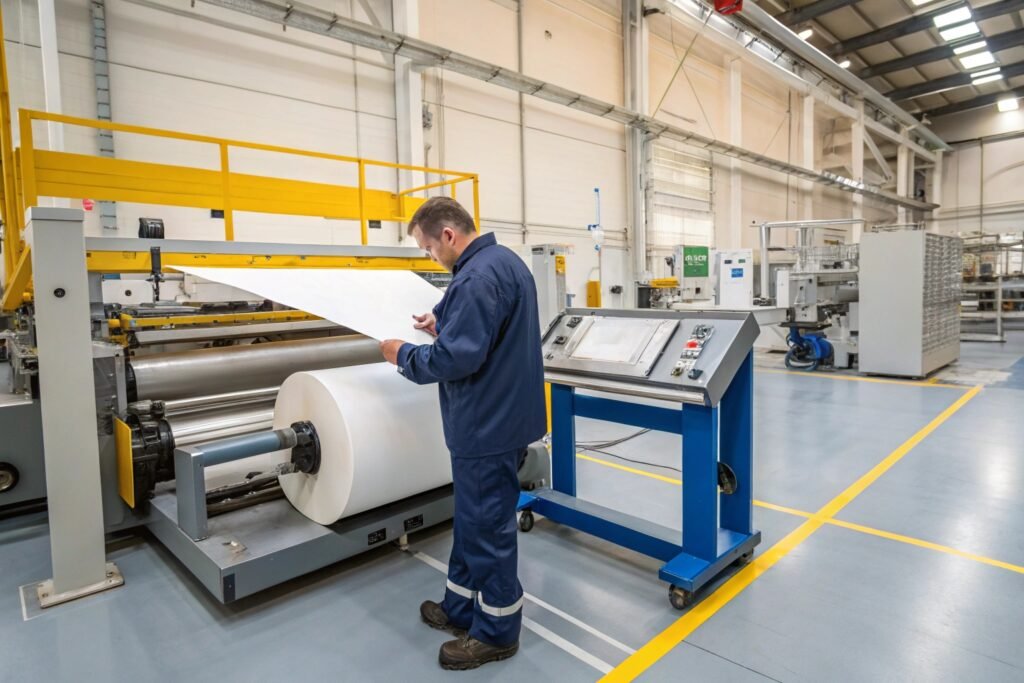
A modern automatic roll to sheet cutting machine should include:
- Emergency stop functions
- Protective guards
- Safety interlocks
- Operator protection systems
Essential Safety Features
| Safety Feature | Purpose |
|---|---|
| Emergency Stop | Immediate Shutdown |
| Safety Guard | Prevents Contact With Moving Parts |
| Interlock System | Prevents Unsafe Operation |
| Safety Sensors | Improves Operator Protection |
A safer machine reduces risk while supporting a more productive workplace.
How Important Is Long-Term Maintenance Cost?
Purchase price is only part of the total investment.
Operating costs continue throughout the machine’s lifespan.
Maintenance Considerations
| Factor | Impact |
|---|---|
| Spare Part Availability | Reduces Downtime |
| Component Quality | Extends Service Life |
| Technical Support | Faster Repairs |
| Preventive Maintenance Requirements | Lower Operating Costs |
A machine with slightly higher upfront cost may ultimately be less expensive if it requires fewer repairs and less maintenance.
My Personal Recommendation
When customers ask me which automatic roll to sheet cutting machine they should buy, I never recommend choosing based solely on price.
The cheapest machine is not always the most economical machine.
I recommend evaluating:
- Material compatibility
- Roll width
- Material thickness
- Production volume
- Automation requirements
- Supplier support
- Long-term maintenance costs
In my experience, the best machine is the one that delivers stable performance year after year.
A reliable machine creates profits every day.
An unreliable machine creates problems every day.
That is why I always encourage buyers to focus on long-term value rather than only the initial purchase price.
Conclusion
Choosing the right automatic roll to sheet cutting machine requires careful evaluation of roll width, material thickness, production volume, automation requirements, tension control, safety systems, and long-term maintenance costs.
The best machine is not necessarily the fastest or the cheapest. It is the machine that matches your production requirements, supports future growth, maintains consistent quality, and delivers reliable performance over many years.
By taking a strategic approach to equipment selection, manufacturers can improve productivity, reduce operating costs, and achieve a stronger return on investment.
Insights: Why HAOXINHE Helps Customers Make Better Purchasing Decisions
At HAOXINHE, we help customers evaluate their production requirements before recommending equipment.
Our product range includes:
- Automatic Roll to Sheet Cutting Machine
- Webbing Tape Cutting Machine
- Webbing Ribbon Cutting Machine
- Bubble Wrap Cutting Machine
- Protective Foam Cutting Machine
- PVC Edge Banding Cutting Machine
- Hot and Cold Cutting Machine
- High-Speed Trademark Cutting Machine
- Automatic Punching Cutting Machine
- Round Shape Cutting Machine
- Rotary Bevel Cutting Machine
- Different Shapes Cutting Machine
- Computer Tube Cutting Machine
- Wire Cutting and Stripping Machine
- Metal Pipe Cutting and Beveling Machine
We believe the right machine should match the customer’s materials, production goals, and future growth plans. Our objective is not simply to supply equipment but to help manufacturers achieve long-term productivity, reliability, and profitability through the right cutting solution.