How to Cut Silicone Smoothly?
Silicone is one of the most widely used flexible materials in modern manufacturing. I often see silicone used in automotive hoses, medical tubing, food-grade products, industrial seals, electronics, and many custom applications. The material offers excellent heat resistance, flexibility, and durability. However, many people discover that silicone is not always easy to cut smoothly.
- Use a sharp cutting tool such as a razor blade or utility knife to achieve clean, precise silicone cuts and prevent tearing.
- Stabilize and mark the material before cutting to improve accuracy, consistency, and overall finish quality.
- Apply steady, controlled pressure and complete the cut in a single pass whenever possible to minimize deformation and rough edges.
- Avoid common mistakes including dull blades, excessive force, fast cutting, and unsupported materials, which often lead to jagged or uneven results.
- For high-volume production, automated silicone cutting machines deliver superior precision, repeatability, reduced waste, and improved manufacturing efficiency.
A rough cut can leave jagged edges, create sealing problems, and reduce the overall appearance of the finished product. This issue becomes even more noticeable when working with silicone hoses, silicone sheets, silicone tubing, or thick silicone rubber components.
The good news is that smooth silicone cutting is not complicated when the correct tools and techniques are used. In this guide, I will explain how to cut silicone smoothly, what tools work best, common mistakes to avoid, and how industrial manufacturers achieve perfect cutting results.
Why Is Silicone Difficult to Cut Smoothly?
Silicone behaves differently from many other materials. It is soft, flexible, and elastic. These properties make it highly useful, but they also create challenges during cutting.
When pressure is applied, silicone often compresses before the blade passes through it. If the cutting tool is dull, the material can stretch, tear, or deform. Instead of producing a clean edge, the cut becomes rough and uneven.
Main Challenges When Cutting Silicone
| Challenge | Effect on Cutting |
|---|---|
| High Elasticity | Material stretches |
| Soft Surface | Blade may wander |
| Compression | Uneven cutting depth |
| Flexible Structure | Difficult to stabilize |
| Thick Walls | Increased cutting resistance |
I learned early in my career that cutting quality depends more on preparation than force. Many people try to push harder when the blade struggles. In reality, the opposite approach usually works better.
Why Smooth Cuts Matter
A clean silicone cut provides several important benefits:
- Better sealing performance
- Improved product appearance
- Easier installation
- Reduced material waste
- More accurate dimensions
For industrial users, clean cuts can also improve production efficiency and reduce rejection rates.
What Is the Best Tool for Cutting Silicone?
Choosing the correct tool is often the most important step.
The ideal cutting tool should be sharp, clean, and capable of slicing through silicone without dragging the material.
Recommended Silicone Cutting Tools
| Tool | Performance | Best Use |
|---|---|---|
| Razor Blade | Excellent | Thin and medium silicone |
| Utility Knife | Excellent | General applications |
| Tube Cutter | Very Good | Silicone hose |
| Craft Knife | Good | Precision work |
| Scissors | Fair | Thin silicone sheets |
I usually recommend a fresh razor blade for manual cutting. A sharp edge slices through the silicone instead of pulling it apart.
Why Sharp Blades Matter
A dull blade often creates more problems than people realize.
When the blade loses its edge:
- Silicone begins to tear
- The cut line becomes uneven
- More force is required
- Material distortion increases
A new blade often produces a dramatic improvement in cutting quality.
How to Cut Silicone Hose Cleanly?
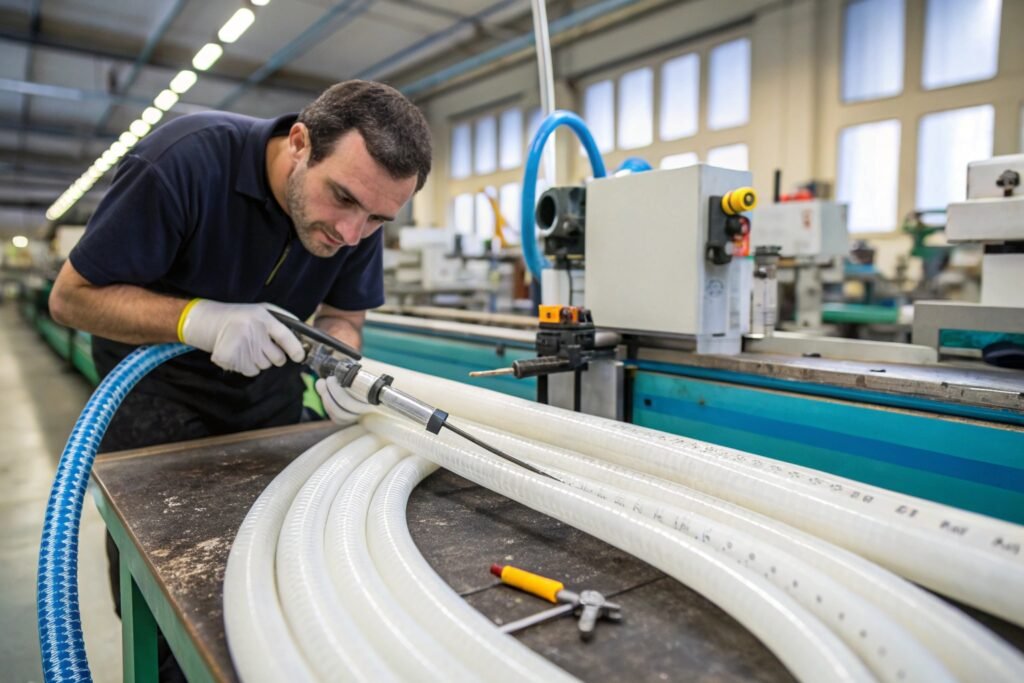
Silicone hose is one of the most common silicone products that requires precise cutting.
Whether I am preparing hoses for automotive systems, medical equipment, or industrial machinery, I always follow the same process.
Step 1: Secure the Hose
The hose should remain stable throughout the cutting process.
A moving hose makes accurate cutting almost impossible.
Step 2: Mark the Cutting Line
Before cutting, I mark the exact position.
A visible guide line improves accuracy and consistency.
Step 3: Use Steady Pressure
I apply slow and controlled pressure.
Forcing the blade through the material often creates rough edges.
Step 4: Complete the Cut Smoothly
Whenever possible, I make the cut in one continuous pass.
Back-and-forth sawing motions can leave visible marks on the cut surface.
Step 5: Inspect the Edge
After cutting, I inspect the hose for:
- Burrs
- Tears
- Surface defects
- Uneven edges
Silicone Hose Cutting Checklist
| Task | Importance |
|---|---|
| Sharp Blade | Very High |
| Stable Surface | Very High |
| Marked Guide | High |
| Controlled Pressure | High |
| Final Inspection | Medium |
How to Cut Thick Silicone Without Tearing?
Thick silicone presents unique challenges because there is more material resistance.
Many people try to compensate by using additional force. Unfortunately, this often causes the material to deform before the blade completes the cut.
Use One Controlled Pass
One of the best methods is making a single continuous cut.
A smooth motion reduces friction and minimizes surface damage.
Support the Material Near the Cut Line
Silicone can stretch during cutting.
Supporting the material close to the cutting area helps maintain dimensional accuracy.
Avoid Sawing Motions
Repeated sawing creates:
- Rough edges
- Material tearing
- Surface marks
Thick Silicone Cutting Comparison
| Method | Result |
|---|---|
| Single Pass | Smooth |
| Sawing Motion | Rough |
| Excessive Force | Distorted |
| Controlled Pressure | Accurate |
Can You Cut Silicone With Scissors?
This is one of the most common questions I hear.
The answer is yes, but only in certain situations.
Scissors work reasonably well on:
- Thin silicone sheets
- Soft silicone films
- Flexible silicone strips
Scissors perform poorly on:
- Thick silicone hose
- Industrial tubing
- Dense silicone rubber
- High-precision applications
Advantages of Scissors
| Advantage | Description |
|---|---|
| Low Cost | Easily available |
| Easy Operation | Simple to use |
| Portable | No setup required |
Limitations of Scissors
| Limitation | Impact |
|---|---|
| Low Accuracy | Uneven cuts |
| Material Compression | Distortion |
| Blade Wear | Reduced quality |
For professional results, I generally prefer a razor blade or utility knife.
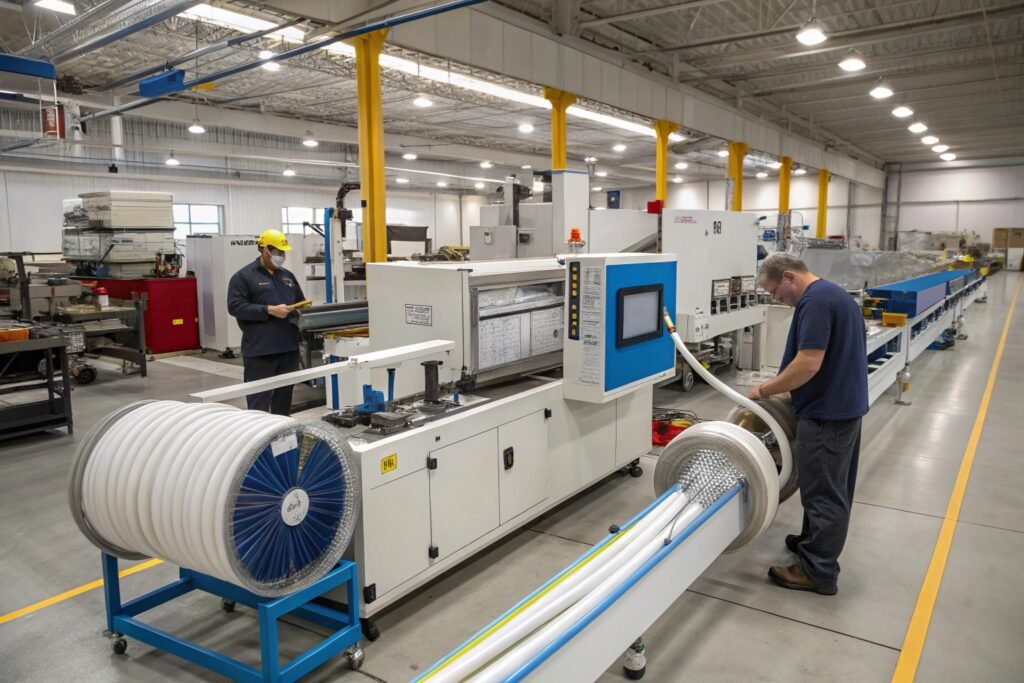
How Do Factories Cut Silicone Accurately?
Manual cutting works well for small projects. However, manufacturers often process thousands of silicone parts every day.
Consistency becomes critical.
This is where automated cutting equipment becomes valuable.
Common Silicone Cutting Machines
Modern factories use:
- Computer tube cutting machine
- Webbing tape cutting machine
- Hot and cold cutting machine
- Automatic punching cutting machine
- Round shape cutting machine
- Rotary bevel cutting machine
- Different shapes cutting machine
These systems improve:
- Speed
- Accuracy
- Repeatability
- Labor efficiency
Benefits of Automated Cutting
| Benefit | Result |
|---|---|
| Precise Length Control | Consistent output |
| High Speed Production | Greater efficiency |
| Reduced Waste | Lower cost |
| Better Quality | Improved customer satisfaction |
A computer tube cutting machine is especially useful for silicone hose production because it automatically feeds, measures, and cuts material with excellent accuracy.
Common Mistakes When Cutting Silicone
Even experienced operators occasionally make mistakes.
The following issues are responsible for most cutting defects.
Using a Dull Blade
This is the most common problem.
Cutting Too Quickly
Rushing usually reduces accuracy.
Not Supporting the Material
Unstable silicone tends to shift during cutting.
Ignoring Guide Lines
Freehand cutting often leads to inconsistent results.
Removing Too Much Material
Small trimming cuts provide much better control.
Mistake Summary
| Mistake | Consequence |
|---|---|
| Dull Blade | Jagged Edge |
| Fast Cutting | Poor Accuracy |
| Material Movement | Crooked Cuts |
| Excessive Force | Distortion |
| Poor Planning | Waste |
Conclusion
Cutting silicone smoothly depends on using the right tools and proper technique. A sharp blade, stable work surface, marked guide line, and steady pressure are the key factors behind clean and accurate cuts. Thick silicone should be cut in one controlled pass whenever possible, while small trimming adjustments can refine the final edge. For industrial production, automated cutting equipment provides the highest level of consistency, speed, and precision.
Insights From HAOXINHE
At HAOXINHE, I have worked with manufacturers that process silicone tubing, rubber strips, foam materials, webbing tape, and many other flexible products. Through years of production experience, I have found that cutting quality depends on both operator skill and equipment precision.
For companies that require high-volume silicone processing, investing in specialized equipment such as a computer tube cutting machine, webbing ribbon cutting machine, hot and cold cutting machine, automatic punching cutting machine, rotary bevel cutting machine, or different shapes cutting machine can significantly improve efficiency and product quality.
The right cutting solution reduces waste, increases consistency, and helps manufacturers maintain a competitive advantage in today’s demanding production environment.