Why Is My Bubble Wrap Machine Not Cutting Cleanly? (And How to Fix It)
A Bubble Wrap Cutting Machine should deliver clean, consistent, and accurate cuts every time. When the machine starts producing ragged edges, incomplete cuts, torn material, or uneven lengths, packaging efficiency drops immediately. These cutting problems not only increase material waste but also slow down production and affect packaging quality.
I often hear customers ask why their bubble wrap cutter suddenly starts performing poorly after months of smooth operation. In most cases, the machine itself is not the problem. The issue usually comes from blade wear, incorrect adjustment, insufficient air pressure, material feeding problems, or poor maintenance practices.
The good news is that most cutting problems can be solved quickly if you follow a logical troubleshooting process.
In this guide, I will explain the most common reasons a bubble wrap machine fails to cut cleanly and show practical solutions that can restore cutting performance.
- A Bubble Wrap Cutting Machine should produce clean, accurate cuts, but issues such as dull blades, misalignment, low air pressure, material feeding errors, and residue buildup can significantly reduce cutting quality.
- Regular blade inspection, proper tension adjustment, and precise alignment are essential for preventing ragged edges, incomplete cuts, and material tearing.
- Pneumatic cutting systems require stable air pressure to maintain consistent cutting force and ensure reliable performance in high-volume production environments.
- Routine cleaning and preventive maintenance help eliminate plastic residue, extend blade life, reduce downtime, and improve overall machine efficiency.
- By following a structured troubleshooting and maintenance process, manufacturers can restore cutting accuracy, minimize material waste, and maximize the long-term performance of their Bubble Wrap Cutting Machine.
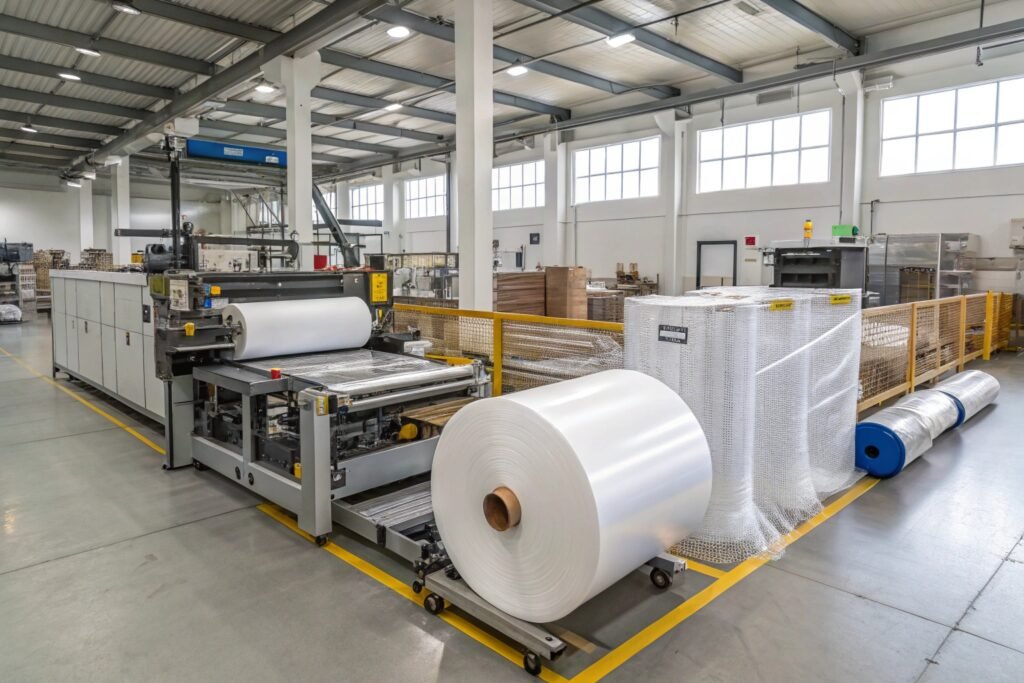
Common Signs That Your Bubble Wrap Machine Has a Cutting Problem
Before identifying the root cause, it is important to understand the warning signs.
Typical Cutting Defects
| Symptom | Possible Cause |
|---|---|
| Ragged cut edges | Dull blade |
| Partial cuts | Blade misalignment |
| Material tearing | Incorrect tension |
| Uneven cut lengths | Feeding issues |
| Plastic stretching | Low cutting force |
| Excessive burrs | Blade damage |
| Incomplete separation | Low air pressure |
Many operators continue production after noticing these symptoms. Unfortunately, the problem usually becomes worse over time.
The best approach is to stop the machine and inspect the cutting system immediately.
How Do You Identify a Dull or Nicked Blade on a Roll Cutter?
The blade is usually the first component to inspect.
A cutting blade gradually loses sharpness during normal operation. Bubble wrap may appear soft, but modern industrial-grade bubble materials often contain multiple layers that slowly wear the cutting edge.1
Visual Inspection
I always begin with a simple visual examination.
Look for:
- Chips on the cutting edge
- Small cracks
- Flat spots
- Visible wear marks
- Uneven blade surfaces
Even a tiny nick can create tearing instead of clean cutting2.
Examine the Cut Edge
The material itself often reveals blade condition.
Signs of a Sharp Blade
- Smooth edge
- Clean separation
- No stretching
- Consistent appearance
Signs of a Dull Blade
- Frayed edge
- Material pulling
- Plastic deformation
- Jagged cuts
Perform a Manual Cutting Test
A simple test can help verify blade condition.
Cut a small piece of bubble wrap manually using the installed blade.
| Result | Blade Condition |
|---|---|
| Cuts easily | Blade likely sharp |
| Requires force | Blade becoming dull |
| Tears material | Blade damaged |
| Leaves rough edges | Blade replacement needed |
Blade Life Depends on Material Type
Different materials affect blade life differently.
| Material | Blade Wear Rate |
|---|---|
| Standard bubble wrap | Low |
| Reinforced bubble wrap | Medium |
| Foam laminate wrap | High |
| Multi-layer protective film | High |
| Heavy-duty packaging materials | Very High |
Many facilities that process thick packaging materials also use equipment such as a Protective Foam Cutting Machine, PVC Edge Banding Cutting Machine, and webbing ribbon cutting machine, where blade condition is equally important.
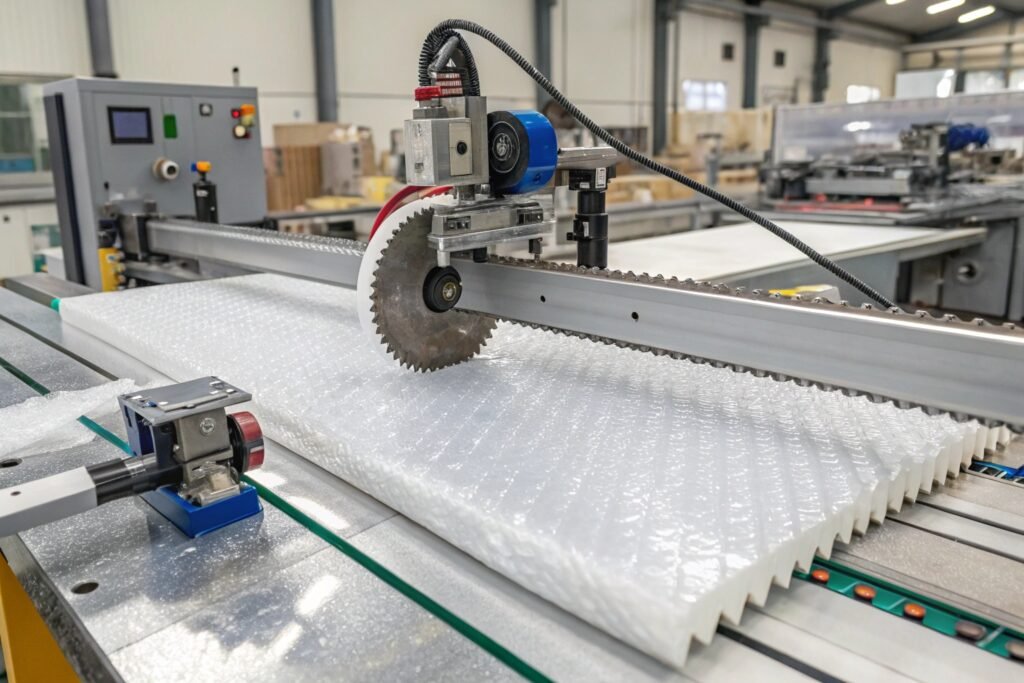
What Is the Correct Blade Tension and Alignment Procedure for Clean Cuts?
A perfectly sharp blade can still produce poor results if alignment is incorrect.
Blade alignment affects the way force is distributed during cutting.
Why Alignment Matters
When the blade contacts the material unevenly:
- One side cuts first
- The opposite side tears
- Material shifts during cutting
- Edge quality becomes inconsistent
This issue is especially common in high-speed production environments.
Step-by-Step Alignment Procedure
Step 1: Power Off the Machine
Always disconnect power before making adjustments.
Safety should always come first.
Step 2: Inspect Blade Position
Verify that the blade sits squarely within the holder.
Check for:
- Loose fasteners
- Worn blade holders
- Bent mounting brackets
Step 3: Check Parallelism
The blade should remain parallel to the cutting surface.
Even a small angle error can affect cut quality.
Step 4: Verify Contact Pressure
Excessive pressure can damage blades.
Insufficient pressure can cause incomplete cuts.
| Blade Pressure Condition | Result |
|---|---|
| Too Low | Incomplete cuts |
| Correct | Clean cuts |
| Too High | Premature wear |
Step 5: Perform Test Cuts
After adjustment:
- Run several samples
- Inspect edge quality
- Measure cut consistency
Repeat adjustments if necessary.
Many automation systems used in a high-speed trademark cutting machine, automatic punching cutting machine, and different shapes cutting machine rely on similar alignment procedures to maintain precision.
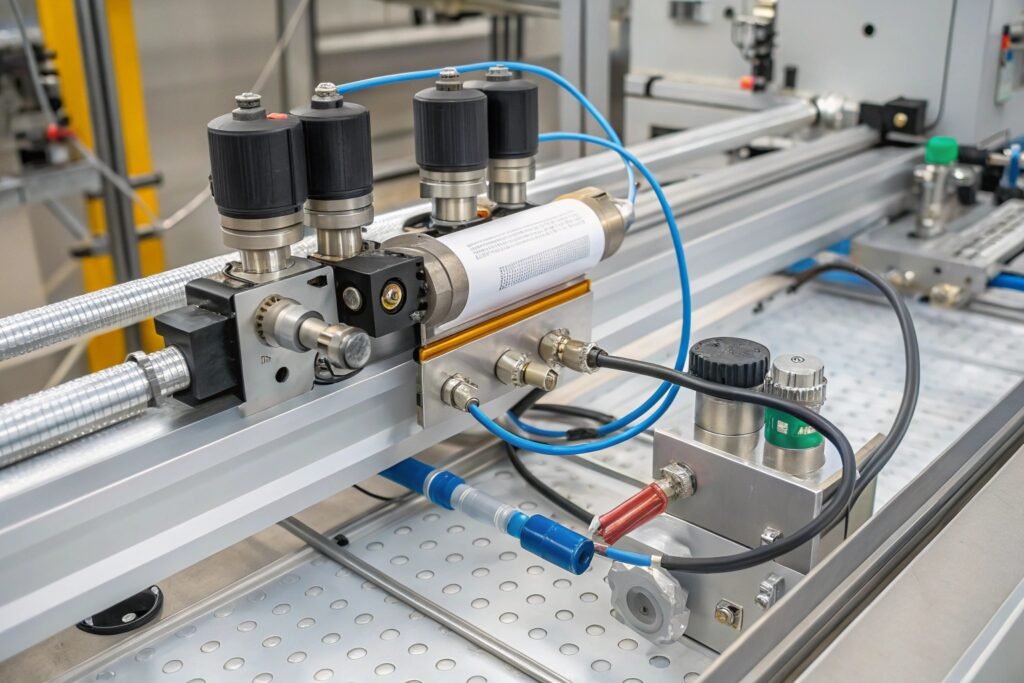
How Does Insufficient Air Pressure Affect Pneumatic Cutting Cleanliness?
Many Bubble Wrap Cutting Machines use pneumatic cylinders to drive the cutting mechanism.
Air pressure directly influences cutting force.
What Happens When Air Pressure Drops?
Low pressure reduces the force applied to the blade.
The result may include:
- Incomplete cuts
- Material pulling
- Wrinkling
- Jagged edges
- Reduced cutting consistency
Common Sources of Air Pressure Problems
Compressor Issues
The compressor may be unable to maintain pressure during peak demand.
Air Leaks
Leaks frequently occur at:
- Fittings
- Tubes
- Connectors
- Valve assemblies
Dirty Filters
Blocked filters restrict airflow.
Faulty Regulators
Pressure regulators may drift out of calibration over time3.
Recommended Inspection Process
| Inspection Item | Check Frequency |
|---|---|
| Air pressure gauge | Daily |
| Pneumatic tubing | Weekly |
| Air filter | Weekly |
| Pressure regulator | Monthly |
| Cylinder performance | Monthly |
Signs of Low Pneumatic Force
You may notice:
- Slower blade movement
- Weak cutting action
- Variable cut quality
- Increased material deformation
Many industrial machines, including a computer tube cutting machine, wire cutting and stripping machine, and rotary bevel cutting machine, depend on stable pneumatic performance for precise operation.
What Cleaning Steps Prevent Plastic Residue Build-Up on the Cutting Edge?
Blade contamination is one of the most overlooked causes of poor cutting performance.
During production, plastic residue gradually accumulates on the blade surface.
The buildup acts like a barrier between the blade and the material.
Common Sources of Blade Contamination
- Plastic particles
- Dust
- Packaging debris
- Adhesive residue
- Static-attracted contaminants4
Why Residue Causes Poor Cuts
Residue can:
- Increase friction
- Reduce sharpness
- Alter blade geometry
- Cause material sticking
The result is often mistaken for blade wear.
Daily Cleaning Procedure
Step 1: Shut Down the Machine
Disconnect all power sources.
Step 2: Remove Loose Debris
Use:
- Soft brush
- Compressed air
- Clean cloth
Step 3: Clean the Blade Surface
Use a suitable industrial cleaner approved for machine blades.
Avoid aggressive chemicals that may damage coatings.
Step 4: Inspect for Residue
Look closely at:
- Blade edge
- Blade sides
- Blade holder
Step 5: Reinstall and Test
Perform several sample cuts before returning to production.
Recommended Maintenance Schedule
| Task | Frequency |
|---|---|
| Visual blade inspection | Daily |
| Blade cleaning | Daily |
| Air system inspection | Weekly |
| Alignment verification | Monthly |
| Blade replacement | As required |
Regular maintenance often extends blade life significantly.
Other Causes of Poor Bubble Wrap Cutting
Although blade issues account for most cutting problems, several additional factors may contribute.
Material Feeding Problems
Poor feeding may cause:
- Material shifting
- Wrinkles
- Inconsistent lengths
Check:
- Feed rollers
- Roller pressure
- Material path
Incorrect Machine Speed
Excessive speed may prevent complete cutting5.
Low speed may increase heat buildup and material sticking.
Material Quality Issues
Not all bubble wrap performs the same.
Low-quality materials may contain:
- Uneven thickness
- Poor plastic formulation
- Inconsistent bubble structure
These variations make clean cutting more difficult.
Timing Synchronization Problems
Automated systems require proper synchronization between:
- Feeding
- Positioning
- Cutting
Timing errors can create intermittent cutting defects that appear difficult to diagnose6.
A Simple Troubleshooting Sequence for Clean Cuts
Whenever I help customers diagnose cutting problems, I recommend following this order:
| Step | Inspection |
|---|---|
| 1 | Clean blade |
| 2 | Inspect blade condition |
| 3 | Verify blade alignment |
| 4 | Check blade pressure |
| 5 | Verify air pressure |
| 6 | Inspect feeding system |
| 7 | Check cutting speed |
| 8 | Evaluate material quality |
This process solves most cutting problems without requiring major repairs.
Why Preventive Maintenance Delivers Better Cutting Performance
The most efficient factories do not wait until cutting quality declines.
Instead, they establish preventive maintenance programs that include:
- Scheduled blade replacement
- Daily cleaning
- Air system inspections
- Alignment checks
- Performance monitoring
These practices reduce downtime and maintain consistent production quality.
For facilities processing bubble wrap, foam, tubes, ribbons, and industrial packaging materials, preventive maintenance is often the difference between stable production and frequent machine stoppages.
HAOXINHE Insights
At HAOXINHE, I frequently help customers solve cutting quality issues across many industries. In my experience, more than 80% of cutting problems originate from blade wear, improper adjustment, contamination, or insufficient maintenance rather than machine defects.
Our cutting equipment portfolio includes:
- Bubble Wrap Cutting Machine
- Webbing Tape Cutting Machine
- Webbing Ribbon Cutting Machine
- Hot and Cold Cutting Machine
- High-Speed Trademark Cutting Machine
- Automatic Punching Cutting Machine
- Round Shape Cutting Machine
- Rotary Bevel Cutting Machine
- Different Shapes Cutting Machine
- Computer Tube Cutting Machine
- Wire Cutting and Stripping Machine
- PVC Edge Banding Cutting Machine
- Protective Foam Cutting Machine
- Metal Pipe Cutting and Beveling Machine
How HAOXINHE Helps Customers Maintain Cutting Quality
| HAOXINHE Support | Customer Benefit |
|---|---|
| Blade optimization guidance | Cleaner cuts |
| Machine adjustment support | Faster troubleshooting |
| Custom machine configurations | Better material compatibility |
| Technical after-sales service | Reduced downtime |
| Industrial-grade components | Longer equipment lifespan |
A clean cut is rarely the result of a single factor. It depends on the combination of sharp blades, correct alignment, stable air pressure, clean machine components, and proper maintenance procedures. When all of these elements work together, your Bubble Wrap Cutting Machine can deliver reliable and consistent performance for years.
-
"Bubble wrap – Wikipedia", https://en.wikipedia.org/wiki/Bubble_wrap. Industrial bubble wrap typically consists of multiple polyethylene layers that create the characteristic air-filled cushioning structure, with material composition affecting wear patterns on cutting equipment. Evidence role: mechanism; source type: research. Supports: the multi-layer construction of industrial bubble wrap materials. Scope note: This describes general bubble wrap construction rather than specifically documenting blade wear mechanisms ↩
-
"Effects of Hardness, Blade Angle and the Micro-Geometry of … – PMC", https://pmc.ncbi.nlm.nih.gov/articles/PMC10420138/. Cutting mechanics research demonstrates that blade edge defects create stress concentrations and uneven force distribution, causing materials to tear through plastic deformation rather than separate cleanly through controlled fracture propagation. Evidence role: mechanism; source type: research. Supports: how blade edge imperfections affect material separation during cutting. ↩
-
"How to Calibrate and Maintain a Precision Air Pressure Regulator", https://www.onlinecontrols.com/feeds/blog/air-pressure-regulator-calibration-maintenance. Pressure regulators can experience calibration drift due to spring fatigue, seal wear, diaphragm degradation, and particulate contamination, necessitating periodic verification and adjustment to maintain setpoint accuracy in industrial pneumatic systems. Evidence role: general_support; source type: education. Supports: the tendency of pressure regulators to experience calibration drift during operational use. ↩
-
"Triboelectric effect – Wikipedia", https://en.wikipedia.org/wiki/Triboelectric_effect. Triboelectric charging occurs when plastic materials are processed or handled, generating static electricity that attracts airborne particles and dust to surfaces including cutting equipment. Evidence role: mechanism; source type: encyclopedia. Supports: the role of static electricity in attracting particulate contamination to plastic materials and cutting surfaces. ↩
-
"Fundamentals of cutting – PMC – NIH", https://pmc.ncbi.nlm.nih.gov/articles/PMC4843621/. In material cutting operations, excessive cutting speeds can reduce dwell time and force application duration, potentially resulting in incomplete material separation when the cutting action occurs faster than the material’s fracture propagation rate. Evidence role: mechanism; source type: research. Supports: the effect of cutting speed on material separation completeness. Scope note: This describes general cutting mechanics rather than specific thresholds for bubble wrap materials ↩
-
"[PDF] On the Detection of Synchronization Errors – CECS", https://cecs.uci.edu/technical_report/TR04-13.pdf. In automated cutting systems, precise synchronization between material feeding, positioning, and cutting actuation is essential for consistent quality, with timing errors causing position-dependent defects that may appear intermittently based on the phase relationship between subsystems. Evidence role: mechanism; source type: education. Supports: how timing synchronization affects cutting quality in automated manufacturing systems. ↩