How to Make a Hole in Nylon Webbing?
Nylon webbing is widely used in backpacks, pet collars, safety harnesses, tactical gear, cargo straps, outdoor equipment, and industrial lifting products[^1]. In many of these applications, holes must be added for rivets, snaps, grommets, buckles, hooks, or fastening systems.
At first glance, making a hole in nylon webbing may seem simple. However, nylon behaves differently from leather, paper, or fabric. Because nylon is a synthetic material, cutting a hole with the wrong method can leave loose fibers, cause fraying, weaken the webbing, or shorten the product’s lifespan[^2].
I have found that the best hole-making method depends on the application. For decorative or low-stress projects, a simple hole may be sufficient. For load-bearing applications such as harnesses, straps, and safety equipment, the hole must remain strong and resist wear over time[^3].
One important fact about nylon is that it is a thermoplastic material. This means it melts when heated. Because of this property, heat-based hole-making methods often produce stronger and cleaner results than cold mechanical cutting methods[^4].
In most cases, creating a sealed hole is better than creating a cut hole because the melted edges fuse together and resist fraying.
- How to Make a Hole in Nylon Webbing effectively starts with understanding that nylon is a thermoplastic material that can fray when cut improperly.
- Heat-based methods such as heated punches, soldering irons, and heated nails create cleaner, sealed holes with greater durability.
- Compared with mechanical punching, heat-sealed openings provide better fraying resistance, appearance, and long-term performance.
- For load-bearing applications, correct hole size, placement, and reinforcement with grommets or eyelets are essential.
- Manufacturers often use automated punching and cutting systems to improve consistency, efficiency, and production quality.
Why Nylon Webbing Requires Special Hole-Making Methods
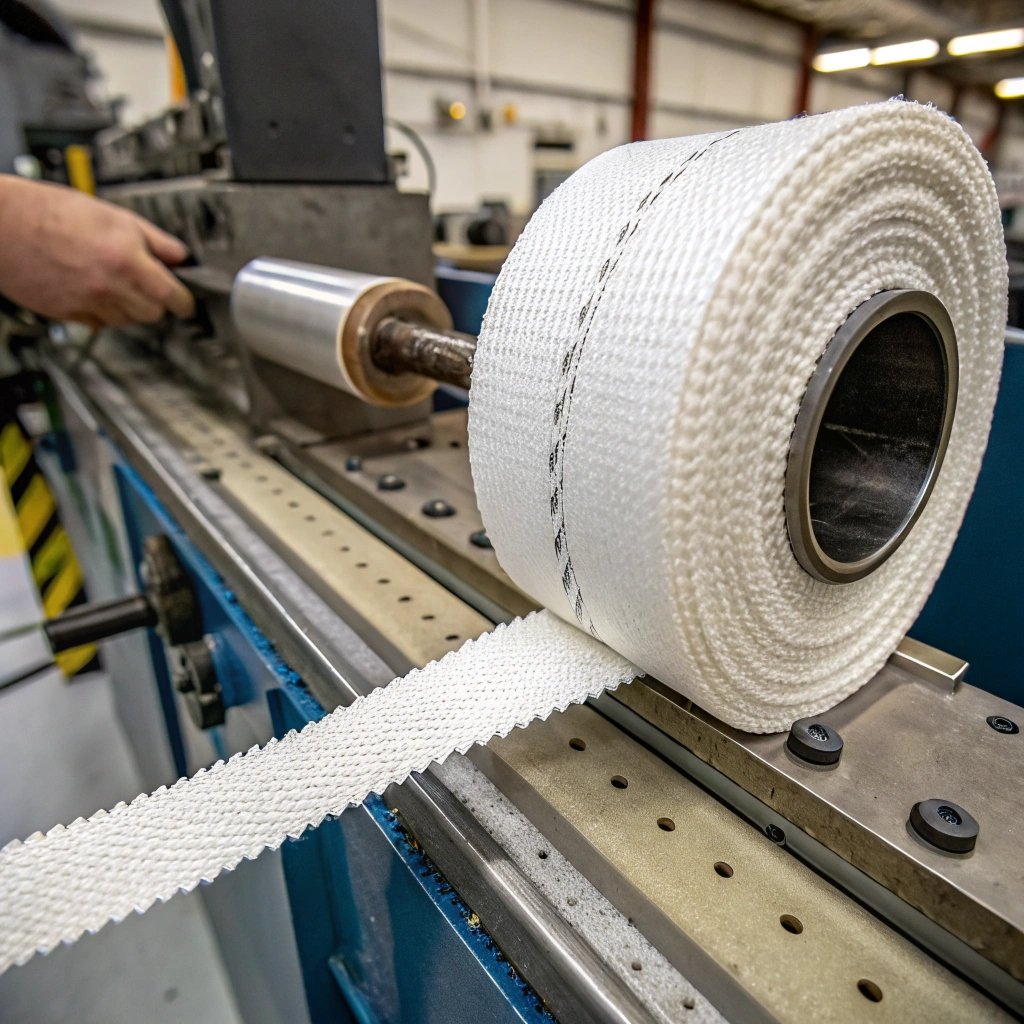
Nylon webbing is woven from many individual synthetic fibers[^5].
When those fibers are cut mechanically, they become exposed.
Over time, the fibers may:
- Fray
- Loosen
- Separate
- Wear faster
This is especially problematic in products that experience:
- Repeated movement
- Heavy loads
- Outdoor exposure
- Frequent adjustments
Common Problems With Poorly Made Holes
| Problem | Result |
|---|---|
| Fraying | Reduced Appearance |
| Fiber Separation | Lower Durability |
| Hole Enlargement | Reduced Strength |
| Uneven Shape | Poor Assembly |
| Material Damage | Product Failure |
Proper hole creation helps prevent these issues.
Why Heat Works Better Than Cold Punching
Many people instinctively reach for a leather punch or standard hole punch.
While these tools can cut a hole, they do not seal the nylon fibers.
Heat-based methods offer several advantages[^6].
Benefits of Heat-Made Holes
| Benefit | Result |
|---|---|
| Sealed Edges | Less Fraying |
| Cleaner Appearance | Better Quality |
| Stronger Hole Perimeter | Improved Durability |
| Reduced Fiber Damage | Longer Service Life |
Because nylon melts and fuses together, heat often creates a more durable opening.
Method 1: Use a Heated Punch
A heated punch is one of the most effective ways to create holes in nylon webbing.
The heated metal melts through the material instead of cutting it.
Advantages
- Clean hole edges
- Minimal fraying
- Consistent results
- Strong perimeter
Process
- Mark the hole location.
- Heat the punch.
- Place the webbing on a safe work surface.
- Press the heated punch through the material.
- Allow the hole to cool.
Results
| Feature | Performance |
|---|---|
| Appearance | Excellent |
| Fraying Resistance | Excellent |
| Durability | High |
This method is commonly used in professional webbing fabrication.
Method 2: Use a Heated Nail
A heated nail can work surprisingly well when specialized tools are unavailable.
Why It Works
The nail melts through the nylon fibers.
As the material cools, the hole edge becomes sealed.
Steps
- Clamp the nail with pliers.
- Heat the nail.
- Position it over the marked location.
- Push through slowly.
- Allow cooling.
Safety Tip
Always use:
- Pliers
- Heat-resistant gloves
- Ventilation
Never hold a heated metal object directly by hand.
Advantages
| Benefit | Result |
|---|---|
| Low Cost | Accessible |
| Easy Setup | Minimal Equipment |
| Sealed Hole | Less Fraying |
For occasional projects, a heated nail is often effective.
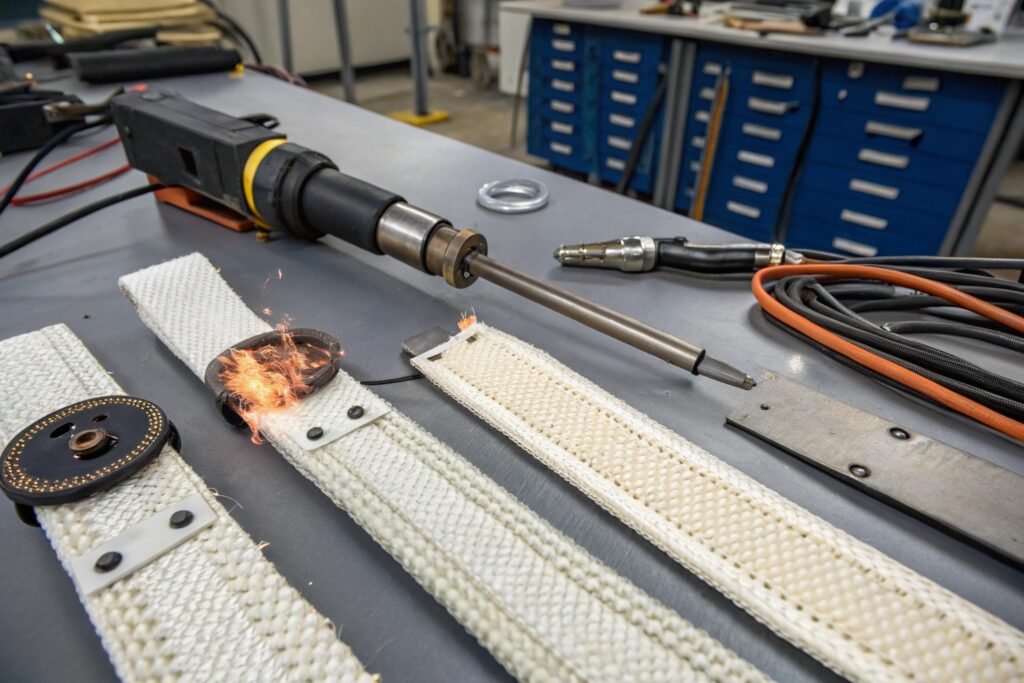
Method 3: Use a Soldering Iron
Many people already own a soldering iron.
This tool can create highly controlled holes in nylon webbing.
Why a Soldering Iron Works Well
The heated tip melts through the nylon while sealing the edge.
Advantages
- Precise control
- Clean edges
- Minimal fraying
- Easy to enlarge holes gradually
Best Practice
Start with a small opening.
Then slowly enlarge it until the desired diameter is reached.
Why Gradual Enlargement Helps
| Benefit | Result |
|---|---|
| Better Control | Higher Accuracy |
| Cleaner Hole | Better Appearance |
| Less Material Damage | Improved Strength |
This method is popular among DIY users and small workshops.
Method 4: Mechanical Hole Punch
Traditional hole punches can also work.
However, they create a cut edge rather than a sealed edge.
Advantages
- Fast
- Simple
- Accurate sizing
Limitations
| Issue | Effect |
|---|---|
| Unsealed Fibers | Fraying Risk |
| Less Durable Edge | Faster Wear |
| Potential Fiber Damage | Reduced Strength |
For nylon webbing, heat-based methods usually provide superior results.
Why Starting Small Is Important
Regardless of the tool used, I generally recommend starting with a smaller hole.
Benefits
- Better positioning
- Easier correction
- Reduced material waste
- Improved accuracy
Hole-Making Strategy
| Approach | Result |
|---|---|
| Small to Large | Better Control |
| Final Size Immediately | Higher Error Risk |
This approach is especially useful for precision applications.
How to Reinforce Holes in Nylon Webbing
In high-stress applications, the hole itself may become a wear point.
Reinforcement can significantly improve durability.
Common Reinforcement Options
Metal Grommets
Provide excellent wear resistance.
Eyelets
Create a finished appearance.
Reinforcement Plates
Used in industrial applications.
Benefits of Reinforcement
| Benefit | Result |
|---|---|
| Increased Strength | Longer Life |
| Better Wear Resistance | Improved Durability |
| Cleaner Appearance | Professional Finish |
For load-bearing applications, reinforcement is highly recommended.
What Can I Use If I Don’t Have a Hole Puncher?
Many people need to create holes but do not own a dedicated punch.
Fortunately, several common tools can work.
Heated Nail
One of the simplest alternatives.
Soldering Iron
Provides excellent control and edge sealing.
Heated Screwdriver
Can create larger openings.
Heated Metal Rod
Useful for custom hole sizes.
Alternative Tool Comparison
| Tool | Cost | Quality |
|---|---|---|
| Heated Nail | Very Low | Good |
| Soldering Iron | Low | Excellent |
| Heated Screwdriver | Very Low | Good |
| Heated Rod | Low | Very Good |
Most of these tools are already available in many workshops.
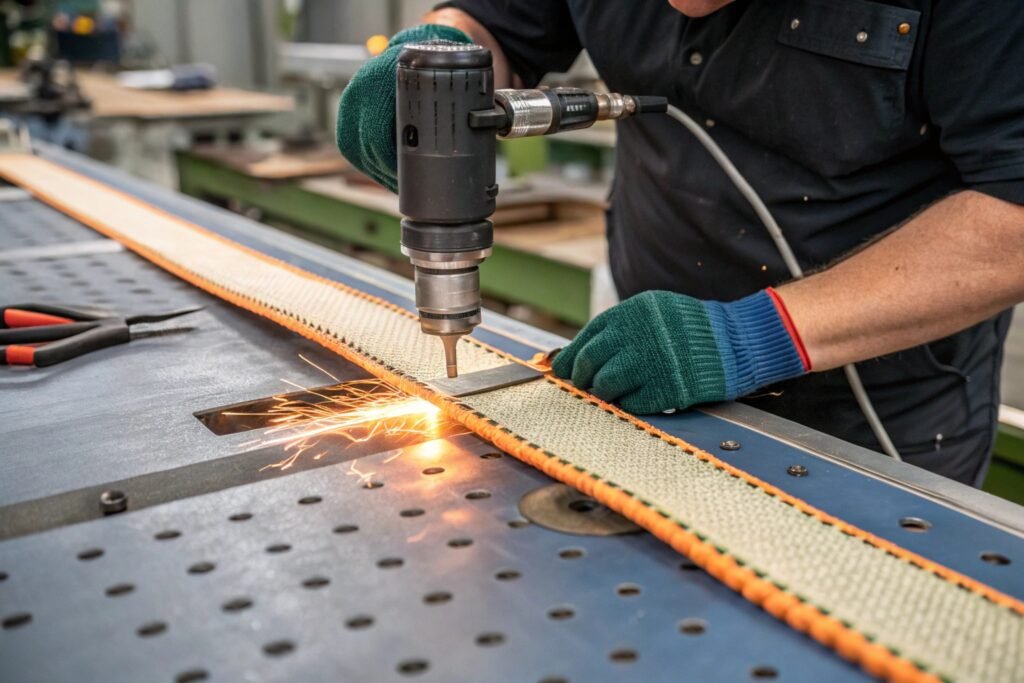
Why Heat Is Better Than Improvised Cold Tools
Some users attempt to create holes with:
- Knives
- Scissors
- Awls
- Drill bits
These methods may work, but they often leave exposed fibers.
Heat vs Cold Hole Making
| Feature | Heated Tool | Cold Tool |
|---|---|---|
| Fraying Resistance | Excellent | Poor |
| Appearance | Excellent | Fair |
| Durability | High | Medium |
| Edge Quality | Smooth | Rough |
For nylon webbing, heat almost always provides the better result.
Considerations for Load-Bearing Webbing
When the webbing carries weight, the hole becomes a critical area.
Examples include:
- Safety harnesses
- Cargo straps
- Dog leashes
- Tactical gear
Important Factors
Hole Size
Oversized holes weaken the material.
Hole Placement
Position affects load distribution.
Reinforcement
Grommets can improve durability.
Edge Quality
Sealed edges resist wear.
Strength Factors
| Factor | Importance |
|---|---|
| Hole Size | High |
| Placement | High |
| Reinforcement | High |
| Cutting Method | High |
In these applications, careful planning is just as important as the hole-making method.
Conclusion
The best way to make a hole in nylon webbing is usually with controlled heat. Heated punches, nails, soldering irons, and heated metal rods create clean openings while sealing the nylon fibers at the same time. Heat-based methods generally outperform cold punching because they reduce fraying and improve durability. If a dedicated hole punch is unavailable, a heated nail or soldering iron can serve as an effective alternative. For load-bearing applications, proper hole size, careful placement, and reinforcement with grommets or eyelets are essential for maintaining long-term strength and reliability.
Insights From HAOXINHE
At HAOXINHE, I frequently work with manufacturers that process nylon webbing, polyester straps, hook-and-loop tape, ribbons, elastic materials, and industrial textiles. One thing I consistently observe is that hole quality has a major impact on product durability and assembly efficiency.
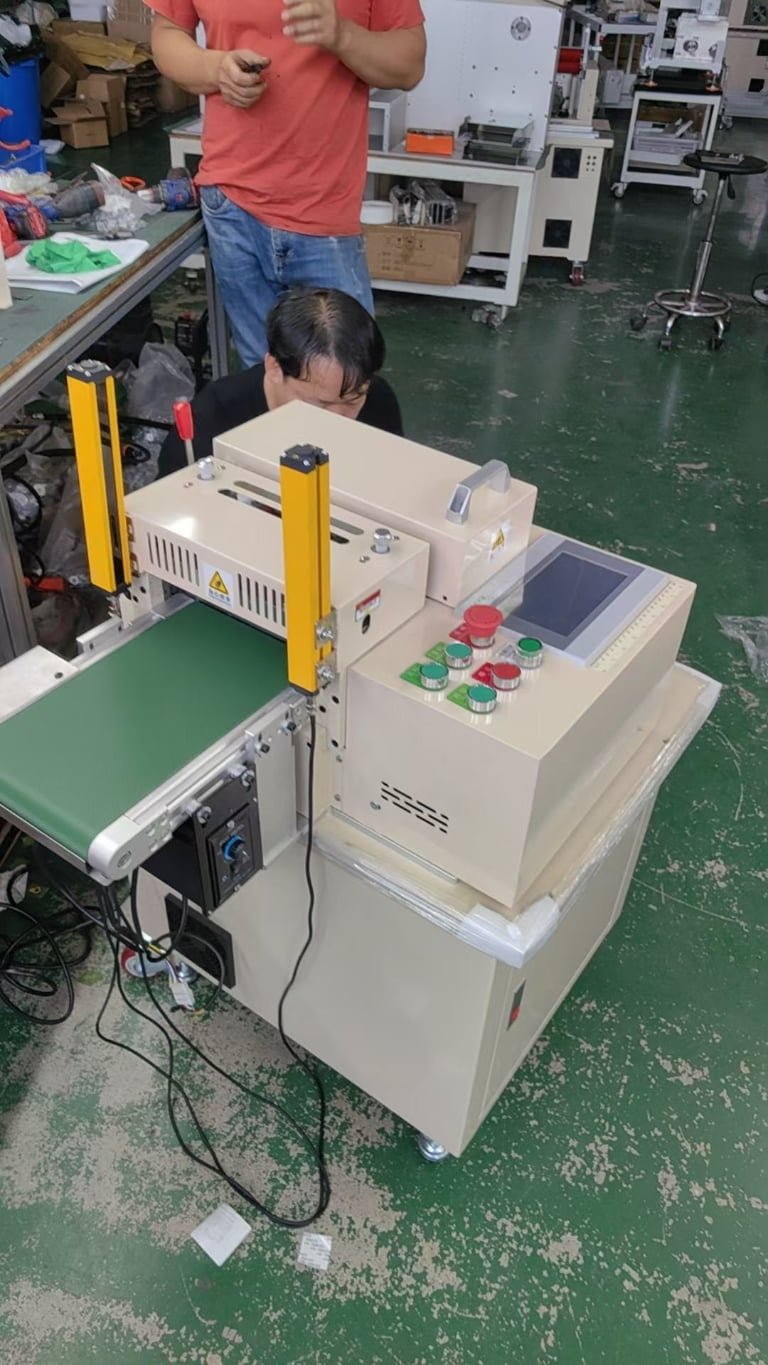
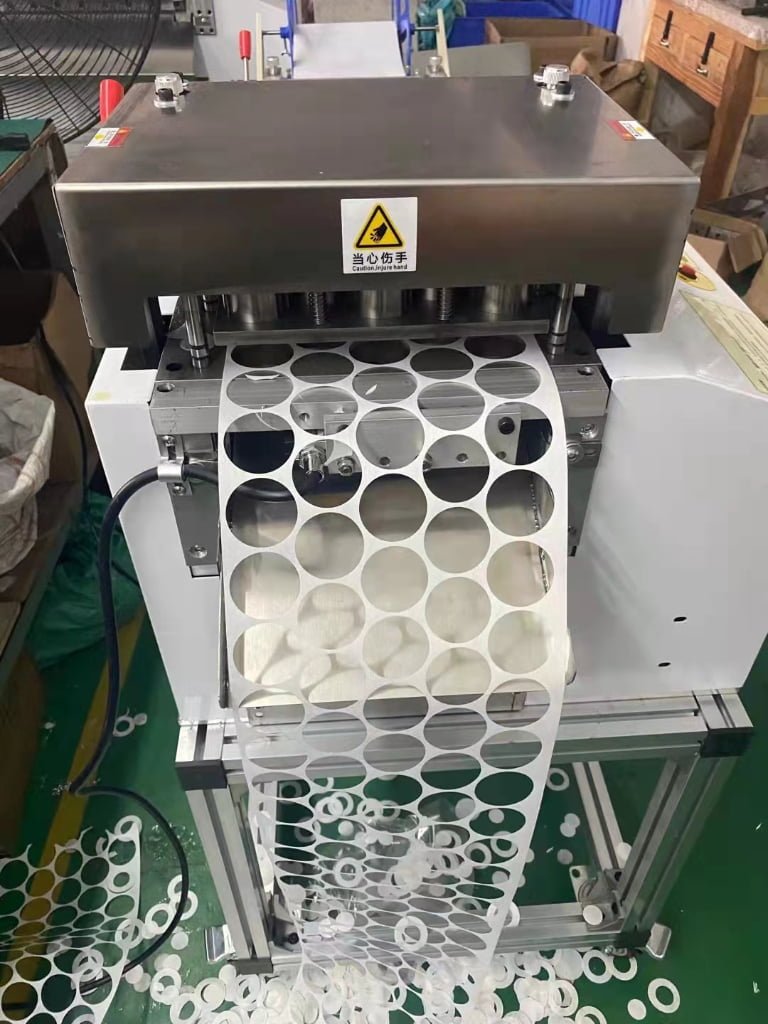
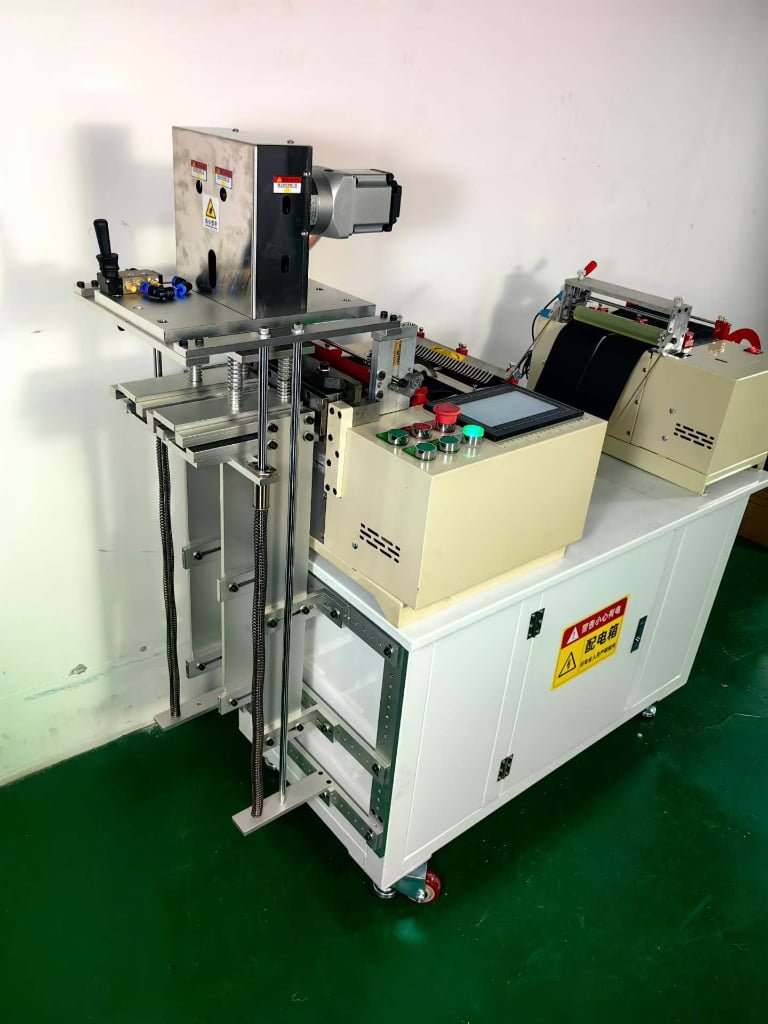
For companies producing webbing products at scale, manual hole-making methods often become slow and inconsistent. This is why many manufacturers choose an automatic punching cutting machine, webbing tape cutting machine, or hot and cold cutting machine. These systems combine measuring, cutting, sealing, and punching into a single automated process, helping manufacturers improve consistency, reduce labor costs, and achieve reliable production quality across large-volume orders.
---

[^1]: "Guidance on Safe Sling Use - Synthetic Web Slings - OSHA", http://www.osha.gov/safe-sling-use/synth-web. Nylon webbing is documented across multiple sectors including outdoor recreation, safety equipment, military applications, and industrial rigging due to its high strength-to-weight ratio and abrasion resistance. Evidence role: general_support; source type: research. Supports: the diverse industrial and consumer applications of nylon webbing. Scope note: Market share data varies by region and specific application category
[^2]: "Experimental Investigation into the Failure Mechanisms of ...", https://pmc.ncbi.nlm.nih.gov/articles/PMC11205530/. Unfinished cut edges in synthetic woven materials allow individual fibers to separate under cyclic loading and abrasion, initiating progressive unraveling that propagates from the cut edge and reduces effective load-bearing cross-section. Evidence role: mechanism; source type: research. Supports: the progressive failure mechanisms at cut edges in synthetic woven materials. Scope note: Failure rate depends on load magnitude, cycle frequency, environmental exposure, and fiber-to-fiber friction
[^3]: "1910.184 - Slings. | Occupational Safety and Health Administration", http://www.osha.gov/laws-regs/regulations/standardnumber/1910/1910.184. Safety standards for fall protection and lifting equipment specify minimum strength requirements for webbing attachment points, with regulations addressing hole reinforcement, edge finishing, and load distribution. Evidence role: expert_consensus; source type: government. Supports: regulatory requirements for attachment points in load-bearing webbing. Scope note: Specific requirements vary by jurisdiction, application type, and relevant standard (OSHA, ANSI, EN, etc.)
[^4]: "Laser Cutting Solutions for Synthetic Textiles - igolden-cnc", https://www.igolden-cnc.com/laser-cutting-solutions-for-synthetic-textiles/. Thermal cutting of thermoplastic materials creates fused edges through localized melting, which can reduce fraying compared to mechanical shearing that leaves cut fibers exposed. Evidence role: mechanism; source type: research. Supports: the edge-sealing advantage of thermal cutting methods on thermoplastic materials. Scope note: Comparative strength depends on specific temperature, dwell time, and material thickness
[^5]: "[PDF] "Cross Shot" Elastic Webbings", https://www2.cs.arizona.edu/patterns/weaving/articles/po_web.pdf. Webbing is typically manufactured through weaving processes where warp and weft yarns are interlaced, with nylon webbing using continuous filament or staple polyamide fibers. Evidence role: definition; source type: education. Supports: the woven fiber structure of webbing materials. Scope note: Some webbing may be braided or knitted rather than woven depending on application requirements
[^6]: "Heat sealing evaluation and runnability issues of flexible paper ...", https://bioresources.cnr.ncsu.edu/resources/heat-sealing-evaluation-and-runnability-issues-of-flexible-paper-materials-in-a-vertical-form-fill-seal-packaging-machine/. Studies of thermal cutting methods for thermoplastic textiles report benefits including reduced fraying through edge fusion, cleaner cut edges, and elimination of loose fiber ends compared to mechanical shearing. Evidence role: general_support; source type: research. Supports: documented advantages of thermal cutting methods for thermoplastic textiles. Scope note: Optimal results require temperature control to prevent excessive melting or polymer degradation
-