What Tool Is Used to Cut Webbing?
Webbing is one of the most common materials used in industries such as safety equipment, outdoor gear, pet products, luggage, military equipment, automotive accessories, and industrial lifting systems. Nylon webbing, polyester webbing, polypropylene webbing, and cotton webbing are all widely used because they are strong, flexible, lightweight, and cost-effective.
However, cutting webbing correctly is not as simple as cutting ordinary fabric. Many webbing materials, especially nylon and polyester, tend to fray after cutting. Loose fibers can reduce product appearance, affect assembly quality, and create additional finishing work. This is why manufacturers and hobbyists often look for the best tool to cut webbing cleanly and efficiently.
- The most effective tool for cutting webbing is a hot knife cutter, which cuts and seals synthetic materials such as nylon and polyester webbing in a single process, preventing fraying and improving edge durability.
- Compared with scissors and utility knives, a hot knife delivers cleaner cuts, smoother edges, and a more professional finish while eliminating the need for separate sealing steps.
- For applications requiring consistent quality, including safety harnesses, pet collars, luggage straps, and outdoor gear, hot-cutting technology helps improve appearance, reliability, and production efficiency.
- Manufacturers handling large production volumes often use automatic webbing cutting machines that integrate measuring, feeding, cutting, and edge sealing to increase accuracy and reduce labor costs.
- Choosing the right webbing cutting solution depends on material type, output requirements, and edge-quality standards, with hot knife cutting remaining the preferred method for most synthetic webbing applications.
The ideal cutting tool depends on several factors, including the type of webbing, production volume, required edge quality, and budget. Some users only need to cut a few pieces occasionally, while manufacturers may process thousands of webbing straps every day.
In most cases, the best cutting tool is one that creates a clean edge while minimizing fraying. For synthetic materials such as nylon and polyester, a hot knife cutter is often considered the industry standard because it cuts and seals the webbing at the same time.
Common Tools Used to Cut Webbing
Several cutting tools can be used for webbing applications. Each has advantages and limitations.
Scissors
Scissors are the simplest option for occasional cutting. They are inexpensive and widely available.
However, scissors often leave unsealed edges on synthetic webbing, which can lead to fraying.
Utility Knives
A sharp utility knife can create cleaner cuts than scissors, especially when used with a cutting mat or guide.
The quality of the cut depends heavily on blade sharpness.
Hot Knife Cutters
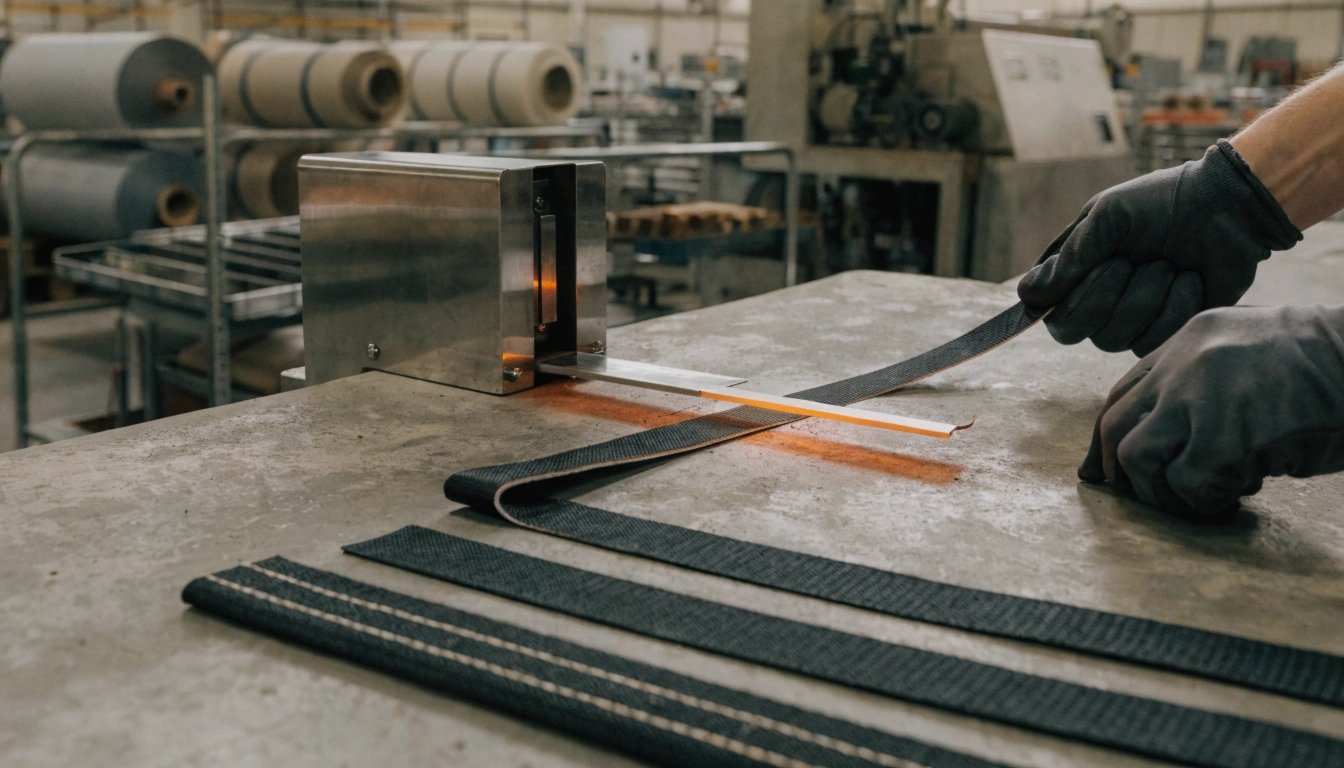
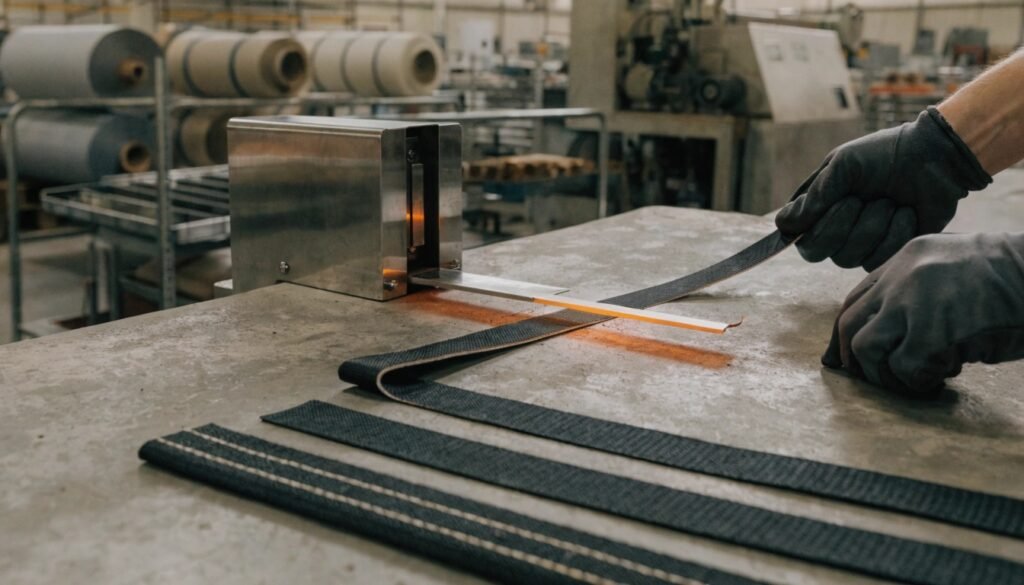
Hot knife cutters use a heated blade that cuts through the material while simultaneously sealing the edge.
This method is particularly effective for nylon and polyester webbing.
Automatic Webbing Cutters
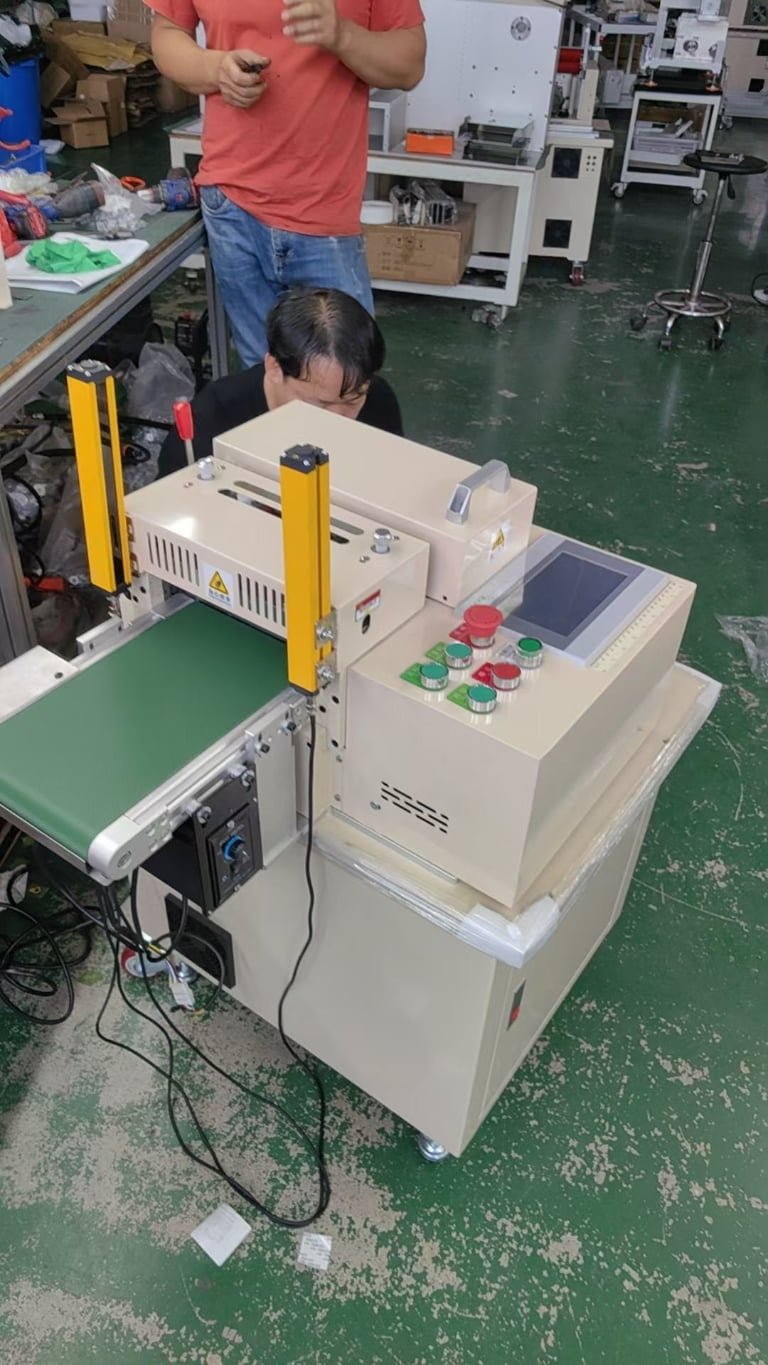
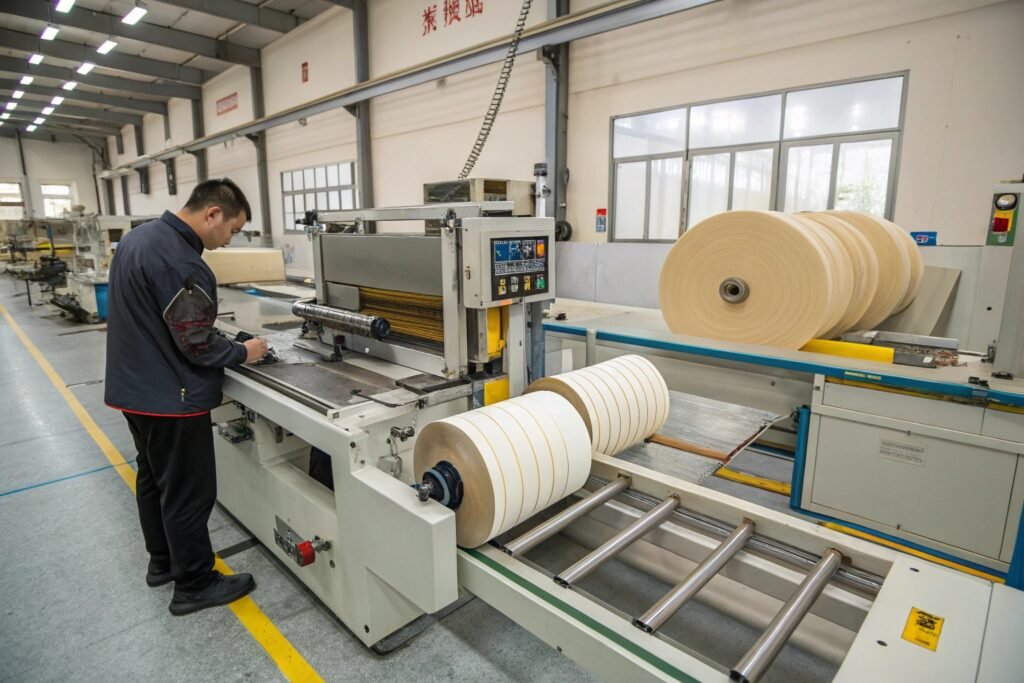
Industrial webbing cutting machines automate feeding, measuring, cutting, and sealing operations.
These systems are designed for high-volume production environments.
Comparison of Webbing Cutting Tools
| Tool Type | Edge Quality | Fraying Resistance | Speed | Production Suitability |
|---|---|---|---|---|
| Scissors | Fair | Low | Medium | Small Jobs |
| Utility Knife | Good | Low | Medium | Small Jobs |
| Hot Knife Cutter | Excellent | High | High | Small to Medium Production |
| Automatic Webbing Cutter | Excellent | High | Very High | Mass Production |
For most synthetic webbing applications, hot cutting provides the best balance of quality and efficiency.
Why Sharp Tools Matter
Regardless of which cutting method is used, sharp cutting edges are important.
Dull tools can:
- Crush webbing fibers
- Create uneven edges
- Increase fraying
- Reduce cutting accuracy
- Require more force
A sharp blade produces smoother and more consistent cuts.
Factors That Determine the Best Tool
The best webbing cutting tool depends on several requirements.
| Requirement | Recommended Tool |
|---|---|
| Lowest Cost | Scissors |
| Occasional Cutting | Utility Knife |
| Clean Sealed Edges | Hot Knife Cutter |
| High-Speed Production | Automatic Webbing Cutter |
| Precision Length Control | Computerized Cutter |
When quality and efficiency are both important, hot cutting systems usually provide the best results.
Does a Hot Knife Cut Better?
In many situations, the answer is yes.
A hot knife cutter is widely considered the best tool for cutting synthetic webbing because it performs two operations simultaneously. The heated blade cuts through the material while also sealing the exposed fibers.
This combination offers significant advantages compared to cold cutting methods.
How a Hot Knife Works
A hot knife uses a heated metal blade that reaches temperatures high enough to melt synthetic fibers.
As the blade passes through nylon or polyester webbing:
- The material separates.
- The edge melts slightly.
- The fibers fuse together.
- Fraying is minimized.
This creates a smooth and sealed edge immediately after cutting.
Benefits of Hot Knife Cutting
Hot cutting provides several important advantages for synthetic webbing.
Reduced Fraying
One of the biggest benefits is preventing loose fibers.
Nylon and polyester webbing naturally fray when cut with ordinary blades. A hot knife seals the edge before fraying can begin.
Better Appearance
Sealed edges create a cleaner and more professional finished product.
This is especially important for:
- Pet collars
- Safety harnesses
- Luggage straps
- Outdoor equipment
- Tactical gear
Faster Production
Since cutting and sealing occur in one step, additional finishing work is often unnecessary.
This reduces labor costs and improves efficiency.
Improved Consistency
When used correctly, hot knife cutters create repeatable results across large production runs.
Hot Cutting vs Cold Cutting
| Feature | Hot Knife Cutting | Cold Blade Cutting |
|---|---|---|
| Edge Appearance | Excellent | Good |
| Fraying Resistance | Excellent | Poor |
| Production Speed | High | Medium |
| Finishing Required | Minimal | Often Required |
| Synthetic Materials | Excellent | Fair |
For nylon and polyester webbing, hot cutting usually delivers superior results.
Why Controlled Heat Is Important
Although heat offers many advantages, excessive heat can create problems.
If the blade becomes too hot:
- The edge may burn.
- The material may discolor.
- Structural strength may decrease.
- Excess melting may occur.
For this reason, professional hot knife systems use controlled temperatures to balance cutting performance and material protection.
Can Open Flames Be Used?
Some people use lighters, torches, or open flames to seal webbing after cutting.
While this method can reduce fraying, it has several disadvantages.
Problems With Open Flame Sealing
| Issue | Impact |
|---|---|
| Uneven Heating | Inconsistent Results |
| Burn Marks | Poor Appearance |
| Safety Risks | Increased Hazard |
| Low Precision | Difficult Control |
A hot knife provides much better precision and repeatability than open flames.
Manual vs Automatic Hot Cutting
Hot cutting systems are available in both manual and automated versions.
Manual Hot Knife Cutters
Manual units are suitable for:
- Small workshops
- Prototype production
- Custom orders
- Low-volume manufacturing
Automatic Webbing Cutters
Automatic systems are designed for:
- High-volume production
- Consistent lengths
- Labor reduction
- Improved efficiency
Many manufacturers choose automatic equipment because it combines measuring, feeding, cutting, and sealing into a single operation.
Benefits of Automatic Webbing Cutters
| Advantage | Result |
|---|---|
| Higher Output | Faster Production |
| Consistent Lengths | Better Quality |
| Reduced Labor | Lower Costs |
| Repeatable Results | Improved Efficiency |
These machines are widely used in industries that process nylon straps, polyester webbing, hook-and-loop tape, elastic bands, and ribbon materials.
Industrial Solutions for Webbing Cutting
Modern factories often use specialized equipment such as:
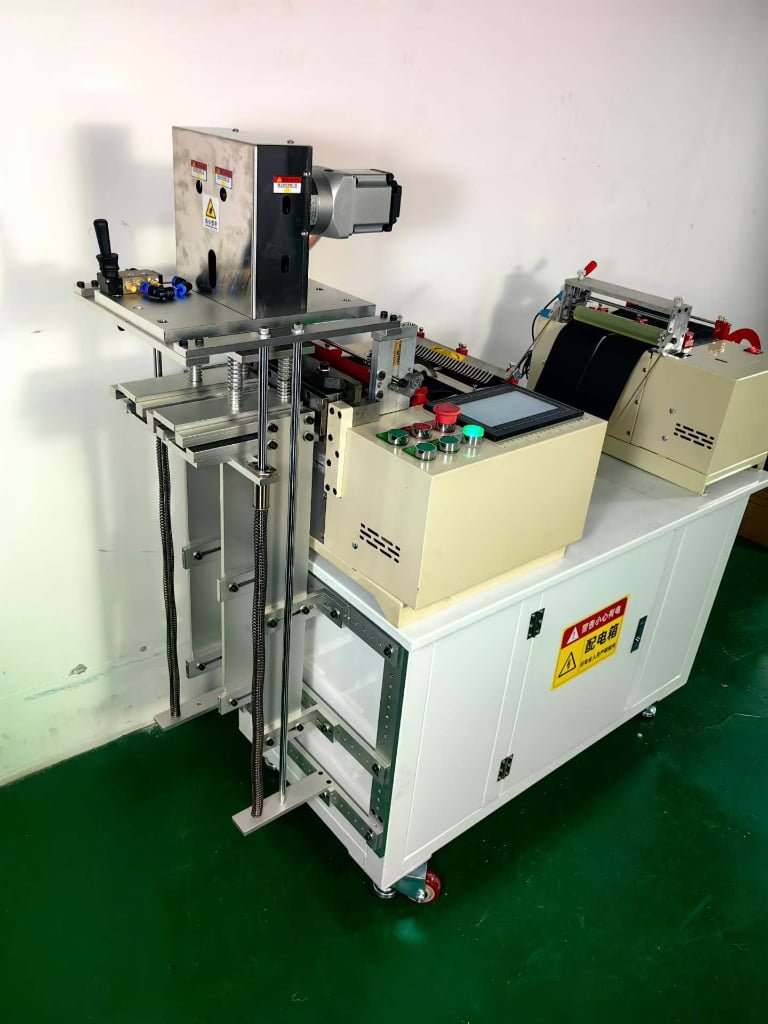
- Webbing tape cutting machine
- Hot and cold cutting machine
- High-speed trademark cutting machine
- Automatic punching cutting machine
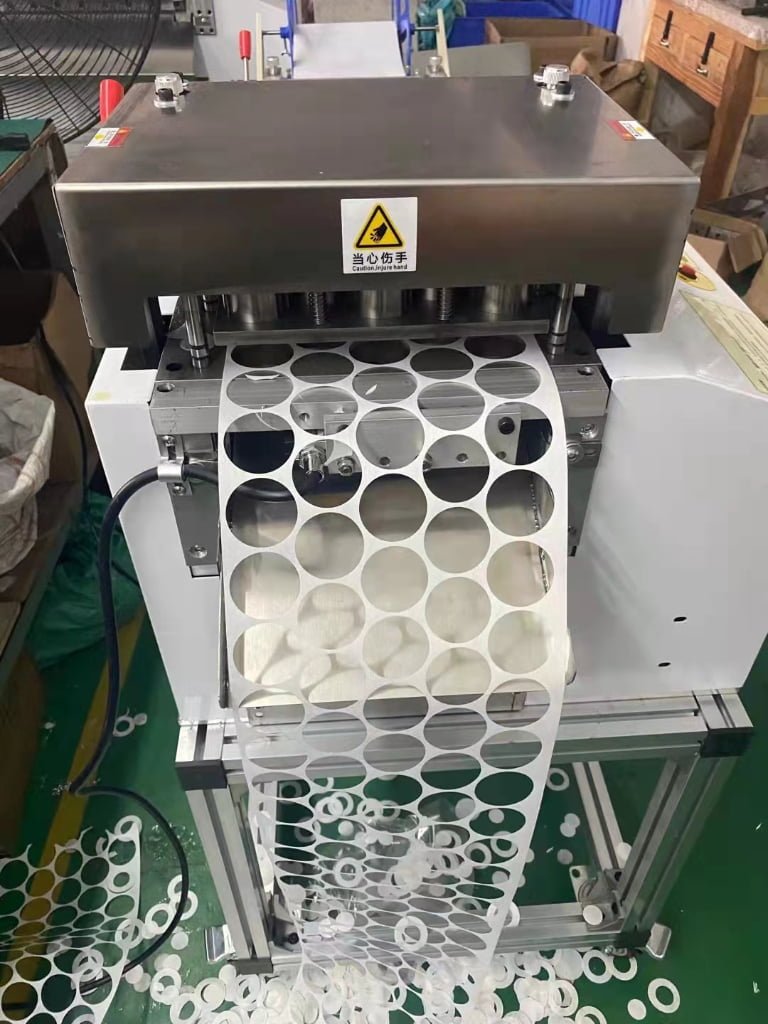
- Round shape cutting machine
- Rotary bevel cutting machine
- Different shapes cutting machine
- Computer tube cutting machine
- Wire cutting and stripping machine
A professional webbing tape cutting machine can automatically cut and seal webbing to precise lengths while maintaining high production efficiency.
For manufacturers handling large quantities of nylon or polyester straps, automated hot cutting systems provide the most reliable combination of speed, precision, and edge quality.
Choosing the Right Cutting Solution
The best cutting tool depends on your specific goals.
| Priority | Recommended Solution |
|---|---|
| Lowest Cost | Scissors or Utility Knife |
| Clean Edges | Hot Knife Cutter |
| No Fraying | Hot Knife Cutter |
| High Production Volume | Automatic Webbing Cutter |
| Maximum Efficiency | Webbing Tape Cutting Machine |
If the material is nylon or polyester webbing, hot cutting is usually the preferred method because it cuts and seals in one step.
Conclusion
The most commonly used tool for cutting webbing is a hot knife cutter because it produces clean cuts while sealing the edges against fraying. Compared with scissors or standard utility knives, hot knives provide better edge quality, improved appearance, and reduced finishing work. For manufacturers processing large volumes of webbing, automated webbing tape cutting machines and hot and cold cutting machines offer the highest levels of speed, consistency, and efficiency.
Insights From HAOXINHE
At HAOXINHE, I have worked with customers that process nylon webbing, polyester straps, hook-and-loop tape, elastic bands, ribbons, and many other flexible materials. One lesson I have learned is that edge quality directly affects product quality. Frayed webbing not only looks unprofessional but can also increase labor costs due to additional trimming and sealing operations.
For companies seeking higher productivity, investing in a professional webbing tape cutting machine or hot and cold cutting machine can significantly improve efficiency. Automated systems provide accurate length control, consistent edge quality, and reliable performance across large production runs. This allows manufacturers to reduce waste, improve product consistency, and meet growing customer demands while maintaining competitive production costs.