What Is the Best Thing to Cut Rope With?
Rope is used in countless industries, including marine applications, construction, outdoor recreation, transportation, agriculture, rescue equipment, industrial lifting, and packaging. Whether I am working with nylon rope, polyester rope, polypropylene rope, paracord, braided rope, or natural-fiber rope, one challenge always appears during cutting: creating a clean end without excessive fraying.
Many people assume that any knife or pair of scissors can cut rope effectively. While that may be true for simple tasks, the quality of the finished cut often depends on the type of rope being processed. Different rope materials respond differently to cutting methods. A technique that works perfectly on nylon rope may perform poorly on cotton or sisal rope.
The best rope-cutting tool depends on several factors:
- Rope material
- Rope diameter
- Cutting frequency
- Desired edge quality
- Production volume
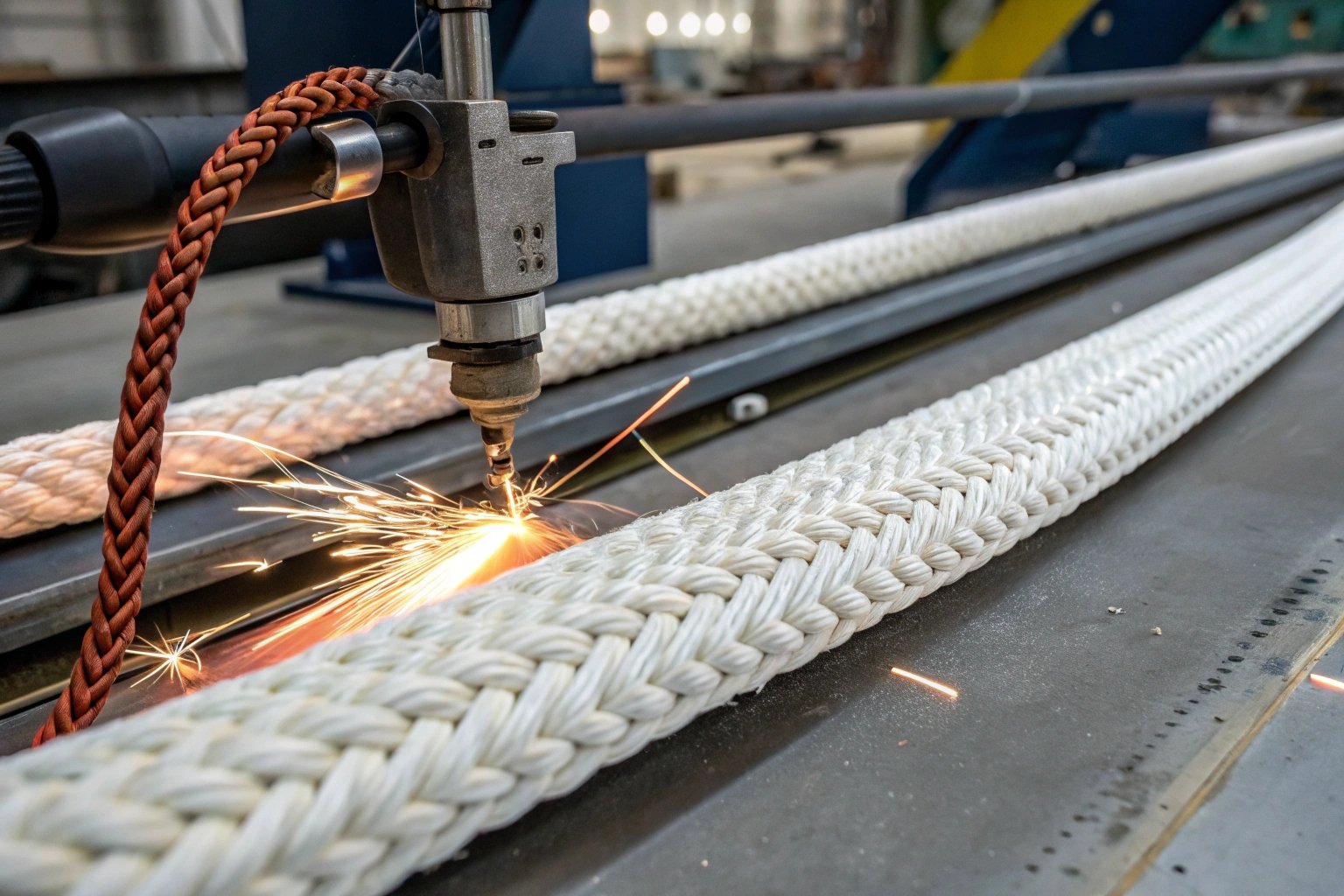
- The best thing to cut rope with depends on the rope material, thickness, and desired finish. For synthetic ropes such as nylon, polyester, and paracord, a hot knife is often the preferred solution because it cuts and seals the fibers simultaneously.
- A hot knife helps prevent fraying, improves durability, and creates clean, professional-looking rope ends while reducing additional finishing work.
- For natural-fiber ropes like cotton, hemp, and sisal, a sharp utility knife or serrated blade delivers better results because these materials do not melt when heated.
- Professional users and manufacturers often rely on dedicated rope cutters and automated cutting machines to achieve higher productivity, consistent quality, and precise cutting performance.
- Choosing the right rope cutting tool ultimately depends on material compatibility, production volume, edge-quality requirements, and operational efficiency goals.
For most synthetic ropes, a hot knife is widely considered the best cutting tool because it cuts and seals the rope simultaneously. For natural-fiber ropes, a sharp blade is usually the better solution because natural fibers burn rather than melt.
Understanding the differences between rope materials is the first step toward choosing the right cutting method.
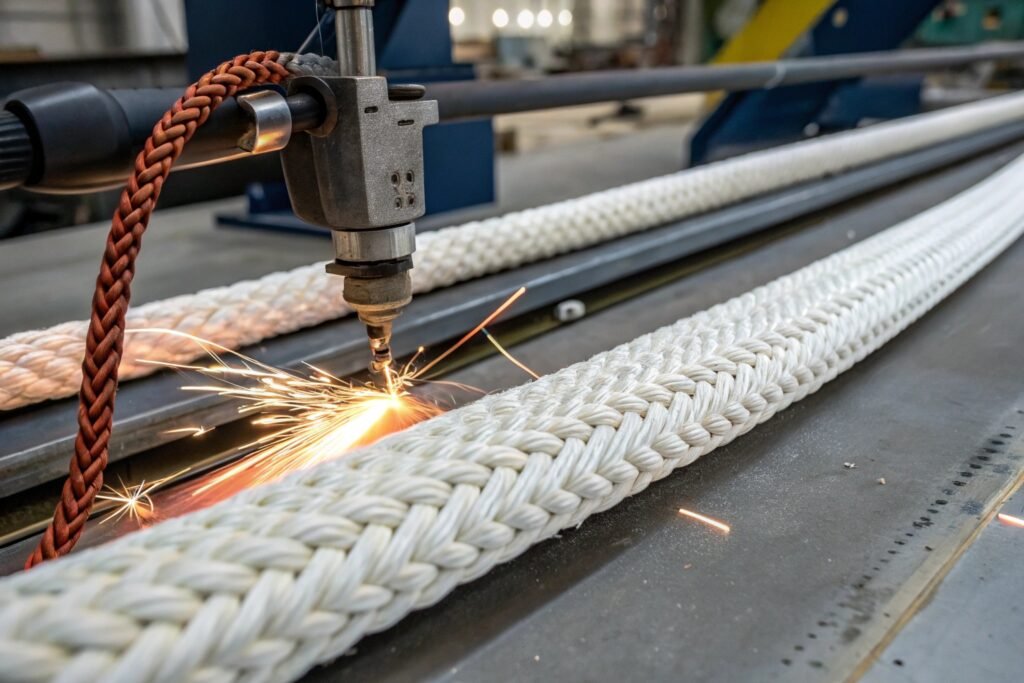
Why Rope Ends Fray After Cutting
Most ropes are constructed from multiple fibers twisted or braided together.
When the rope is cut, these fibers become exposed. Without protection, the strands can begin separating and unraveling.
Common Problems Caused by Fraying
| Problem | Result |
|---|---|
| Loose Fibers | Untidy Appearance |
| Difficult Handling | Poor Usability |
| Reduced Durability | Shorter Lifespan |
| Assembly Issues | Slower Production |
| Material Waste | Increased Cost |
Preventing fraying is often just as important as making the cut itself.
Why Edge Finishing Matters
A properly finished rope end:
- Improves appearance
- Increases durability
- Simplifies handling
- Extends service life
- Reduces maintenance
This is why professional rope processing focuses on both cutting and end treatment.
The Best Tool for Synthetic Rope
Synthetic ropes include:
- Nylon rope
- Polyester rope
- Polypropylene rope
- Paracord
- Braided synthetic rope
These materials are thermoplastic, which means they soften and melt when exposed to heat.
Why a Hot Knife Works Best
A hot knife uses a heated blade that melts through the rope fibers while cutting.
At the same time, the heat fuses the exposed strands together.
Benefits of Hot Knife Cutting
| Benefit | Result |
|---|---|
| Cuts and Seals Together | Faster Processing |
| Prevents Fraying | Cleaner Ends |
| Improves Appearance | Professional Finish |
| Reduces Labor | Less Finishing Work |
| Consistent Results | Better Quality |
This combination makes hot knives the preferred solution for many synthetic rope applications.
Common Synthetic Rope Applications
- Sailing ropes
- Climbing accessories
- Utility cords
- Paracord products
- Marine equipment
- Industrial ropes
For these materials, heat cutting is usually the most efficient method.
The Best Tool for Natural-Fiber Rope
Natural ropes behave differently.
Examples include:
- Cotton rope
- Sisal rope
- Manila rope
- Hemp rope
- Jute rope
These fibers do not melt when heated.
Instead, they tend to burn, char, or discolor.
Recommended Tool
For natural-fiber ropes, I usually recommend:
- Sharp utility knives
- Rope knives
- Serrated blades
- Heavy-duty shears
Why Sharp Blades Work Better
A sharp blade:
- Cuts cleanly
- Minimizes fiber damage
- Reduces fraying
- Preserves rope strength
Natural Rope Tool Comparison
| Tool | Performance |
|---|---|
| Sharp Knife | Excellent |
| Serrated Blade | Very Good |
| Shears | Good |
| Hot Knife | Poor |
Because natural fibers cannot be heat-sealed effectively, mechanical cutting remains the best approach.
Using Masking Tape Before Cutting
One simple technique can significantly improve rope-cutting results.
Before cutting, wrap masking tape tightly around the cut location.
Benefits of Masking Tape
| Benefit | Result |
|---|---|
| Holds Fibers Together | Cleaner Cut |
| Reduces Fraying | Better Finish |
| Improves Accuracy | Straighter Cut |
| Easier Handling | Better Control |
This method works for both synthetic and natural ropes.
Best Practice
Apply tape before cutting and leave it in place until the edge has been finished.
This provides additional stability during the cutting process.
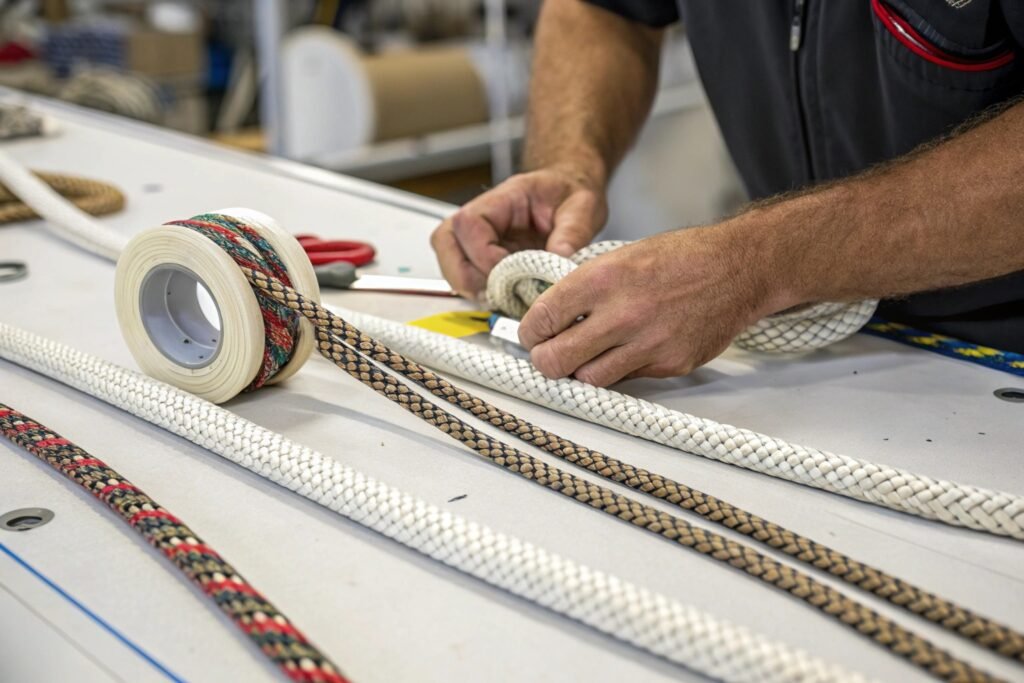
Are Scissors Good for Cutting Rope?
Scissors can cut some ropes, but they are not always the best option.
Advantages of Scissors
- Inexpensive
- Easy to use
- Readily available
Limitations of Scissors
- Struggle with thick rope
- May crush fibers
- Less effective on braided materials
- No edge sealing capability
Scissors vs Other Tools
| Tool | Thick Rope Performance |
|---|---|
| Scissors | Fair |
| Sharp Knife | Good |
| Rope Cutter | Excellent |
| Hot Knife | Excellent |
For occasional use, scissors may be acceptable. For frequent rope cutting, specialized tools are generally better.
Why Hot Cutting Saves Time
One major advantage of hot cutting is efficiency.
Traditional rope processing often involves:
- Cutting the rope.
- Sealing the end.
- Trimming loose fibers.
- Inspecting the finish.
A hot knife combines several of these steps.
Traditional vs Hot Cutting
| Process | Number of Steps |
|---|---|
| Standard Cutting | 3–4 Steps |
| Hot Knife Cutting | 1 Step |
This makes hot cutting especially attractive for production environments.
Additional Advantages
- Faster throughput
- Cleaner edges
- Less labor
- More consistency
For businesses processing rope regularly, these benefits can significantly improve productivity.
Why Rope Cutters Are Popular in Professional Applications
Professional users often prefer dedicated rope cutters.
These tools are specifically designed for rope processing and provide better results than general-purpose cutting tools.
Benefits of Dedicated Rope Cutters
| Benefit | Result |
|---|---|
| Better Accuracy | Cleaner Cuts |
| Higher Speed | Greater Productivity |
| Improved Consistency | Repeatable Results |
| Reduced Waste | Lower Costs |
Professional rope cutters are commonly used in:
- Marine industries
- Safety equipment manufacturing
- Rope fabrication
- Industrial assembly
When cutting rope frequently, dedicated equipment becomes a worthwhile investment.
Additional Protection: Whipping the Rope End
Even after cutting and sealing, some rope applications benefit from additional protection.
One common technique is whipping.
What Is Whipping?
Whipping involves wrapping thread or cord tightly around the rope end.
This creates a protective sleeve that helps prevent unraveling.
Benefits of Whipping
| Benefit | Result |
|---|---|
| Extra Security | Reduced Fraying |
| Better Appearance | Professional Finish |
| Improved Durability | Longer Lifespan |
Whipping is especially useful for marine and outdoor applications.
Choosing the Right Rope Cutting Method
The best method depends on the rope material.
Quick Selection Guide
| Rope Type | Recommended Tool |
|---|---|
| Nylon Rope | Hot Knife |
| Polyester Rope | Hot Knife |
| Polypropylene Rope | Hot Knife |
| Paracord | Hot Knife |
| Cotton Rope | Sharp Knife |
| Sisal Rope | Sharp Knife |
| Hemp Rope | Sharp Knife |
Material compatibility should always guide tool selection.
What Is the Best Cutter Machine?
The best cutter machine depends on the material being processed, production volume, and required precision.
There is no single machine that performs best for every application.
Factors to Consider
Before selecting a cutter machine, I evaluate:
- Material type
- Cutting speed requirements
- Edge quality requirements
- Production volume
- Automation needs
Common Cutter Machine Categories
| Machine Type | Best Application |
|---|---|
| Rope Cutter | Rope Processing |
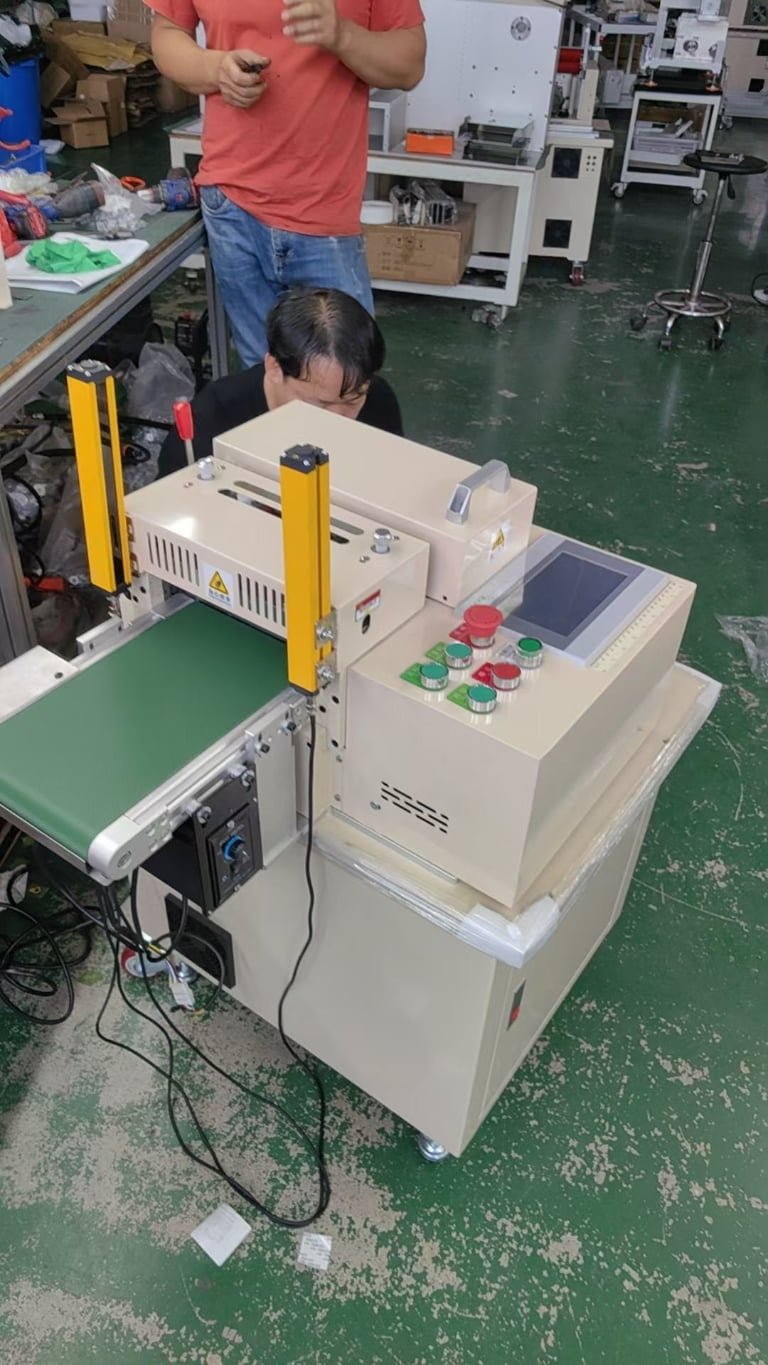
| Webbing Tape Cutting Machine | Webbing and Straps |
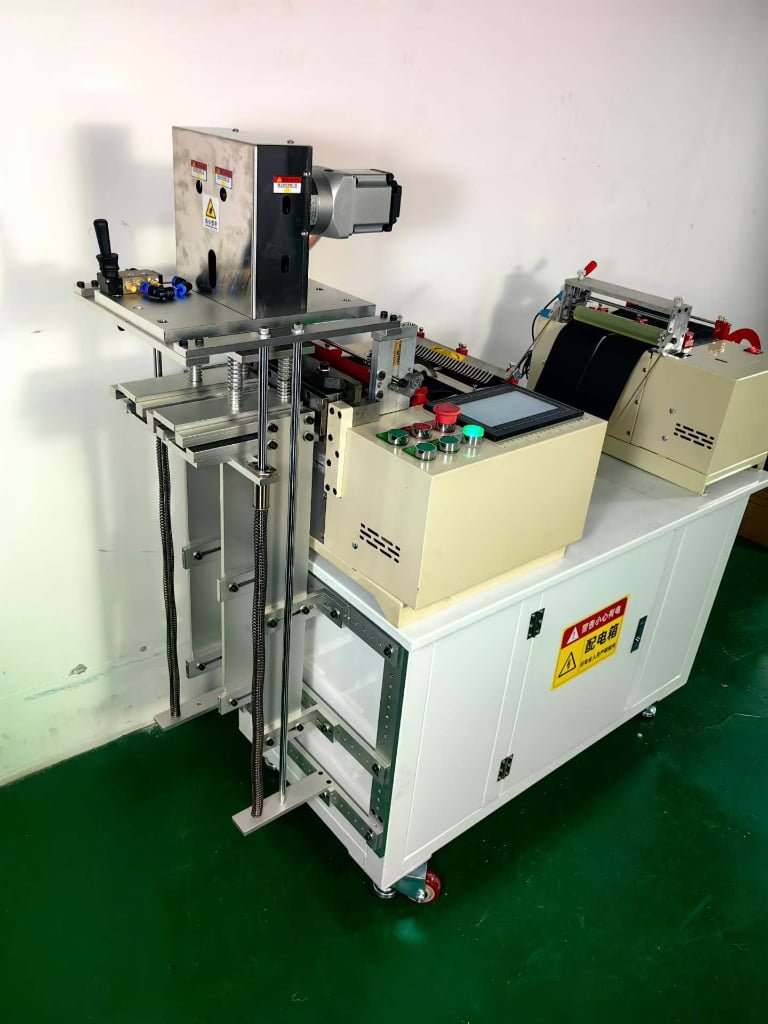
| Hot and Cold Cutting Machine | Synthetic Materials |
| Computer Tube Cutting Machine | Tubing and Hose |
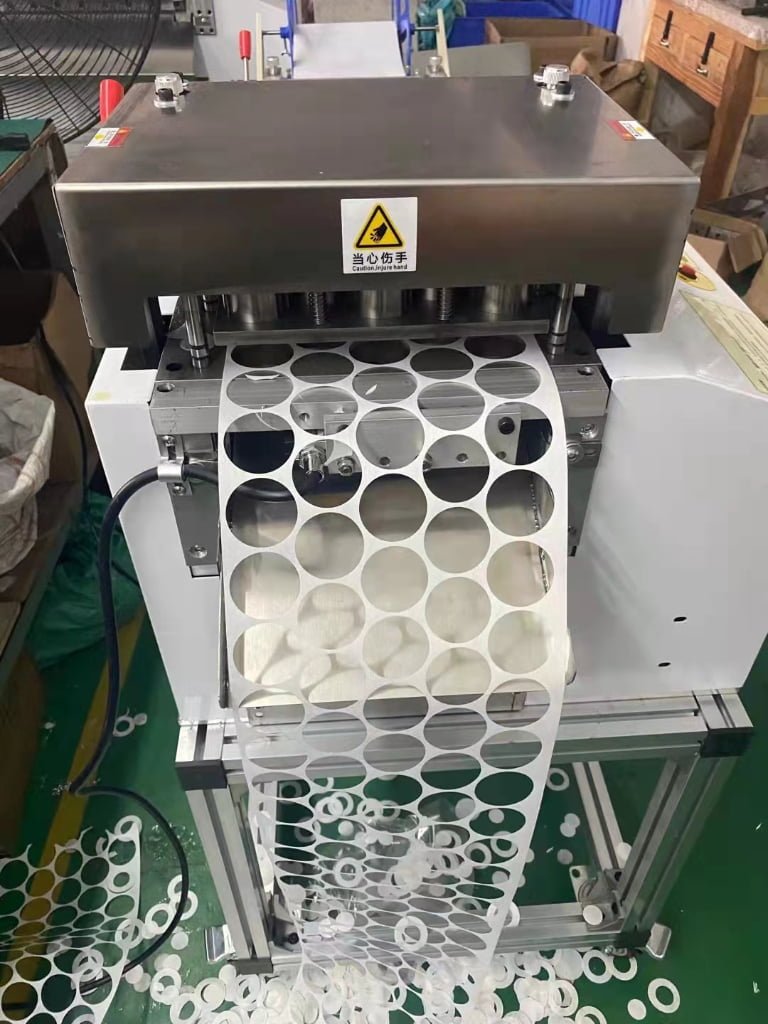
| Automatic Punching Cutting Machine | Precision Components |
| Rotary Bevel Cutting Machine | Angled Cuts |
Each machine is designed for a specific purpose.
Best Cutter Machine for Rope
For synthetic rope production, a hot cutting rope machine is often the preferred solution.
Advantages
- Simultaneous cutting and sealing
- Reduced fraying
- High efficiency
- Consistent lengths
These systems are commonly used in commercial rope fabrication.
Best Cutter Machine for Webbing
For nylon and polyester webbing, a webbing tape cutting machine often delivers the best balance of speed, precision, and edge quality.
Benefits
| Benefit | Result |
|---|---|
| Automatic Feeding | Faster Production |
| Precise Measurement | Better Accuracy |
| Heat Sealing | Reduced Fraying |
| High Output | Lower Costs |
Best Cutter Machine for High-Volume Manufacturing
Factories processing large quantities of flexible materials often use:
- Webbing tape cutting machine
- Hot and cold cutting machine
- High-speed trademark cutting machine
- Automatic punching cutting machine
- Different shapes cutting machine
These systems improve efficiency while maintaining consistent quality.
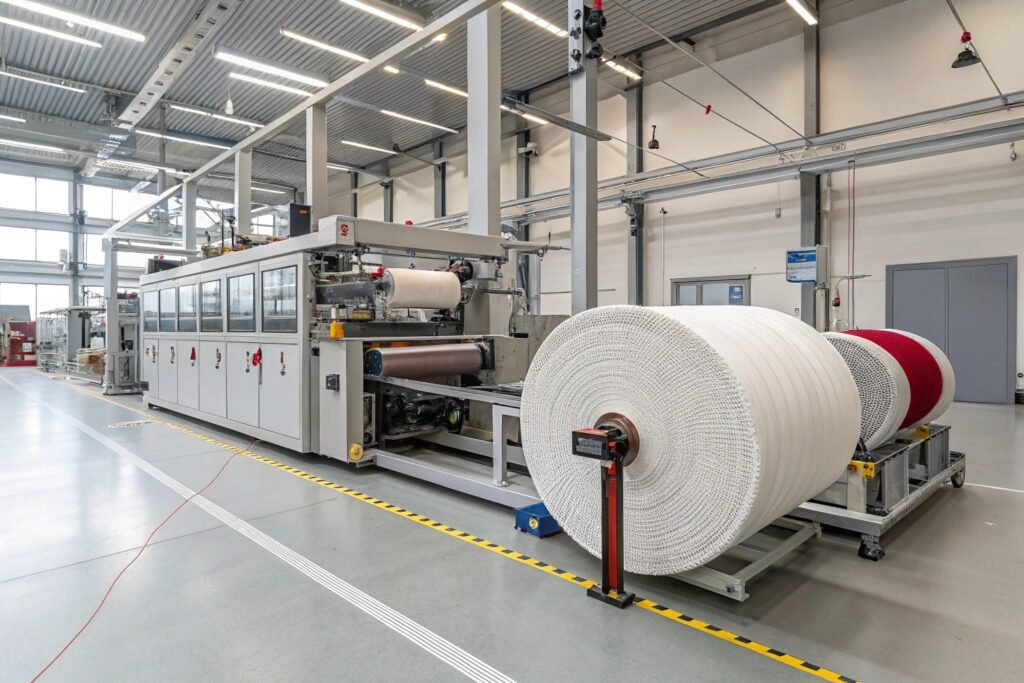
Which Cutter Machine Is Best Overall?
The answer depends entirely on the application.
Quick Machine Selection Guide
| Requirement | Recommended Machine |
|---|---|
| Rope Cutting | Rope Cutter |
| Nylon Webbing | Webbing Tape Cutting Machine |
| Synthetic Materials | Hot and Cold Cutting Machine |
| Tubing | Computer Tube Cutting Machine |
| High-Volume Production | Automated Cutting System |
The best machine is the one that matches the material and production requirements.
Conclusion
The best tool for cutting rope depends primarily on the rope material. For synthetic ropes such as nylon, polyester, and paracord, a hot knife is usually the best option because it cuts and seals the rope simultaneously. For natural-fiber ropes such as cotton, sisal, and hemp, a sharp knife generally provides better results because heat tends to burn rather than seal the fibers. When production volume increases, dedicated rope cutters and automated cutting systems provide superior speed, consistency, and efficiency. The best cutter machine ultimately depends on the material being processed, the desired edge quality, and the level of automation required.
Insights From HAOXINHE
At HAOXINHE, I work with customers who process rope, webbing, ribbons, hook-and-loop tape, tubing, foam materials, and many other flexible products. One lesson I have learned is that choosing the correct cutting technology has a major impact on product quality and manufacturing efficiency.
For synthetic materials that tend to fray, automated equipment such as a webbing tape cutting machine, hot and cold cutting machine, high-speed trademark cutting machine, and different shapes cutting machine can dramatically improve consistency while reducing labor costs. These machines combine measuring, feeding, cutting, sealing, and shaping into one streamlined process, helping manufacturers increase output and maintain reliable quality standards across large production runs.