How Do You Cut Webbing?
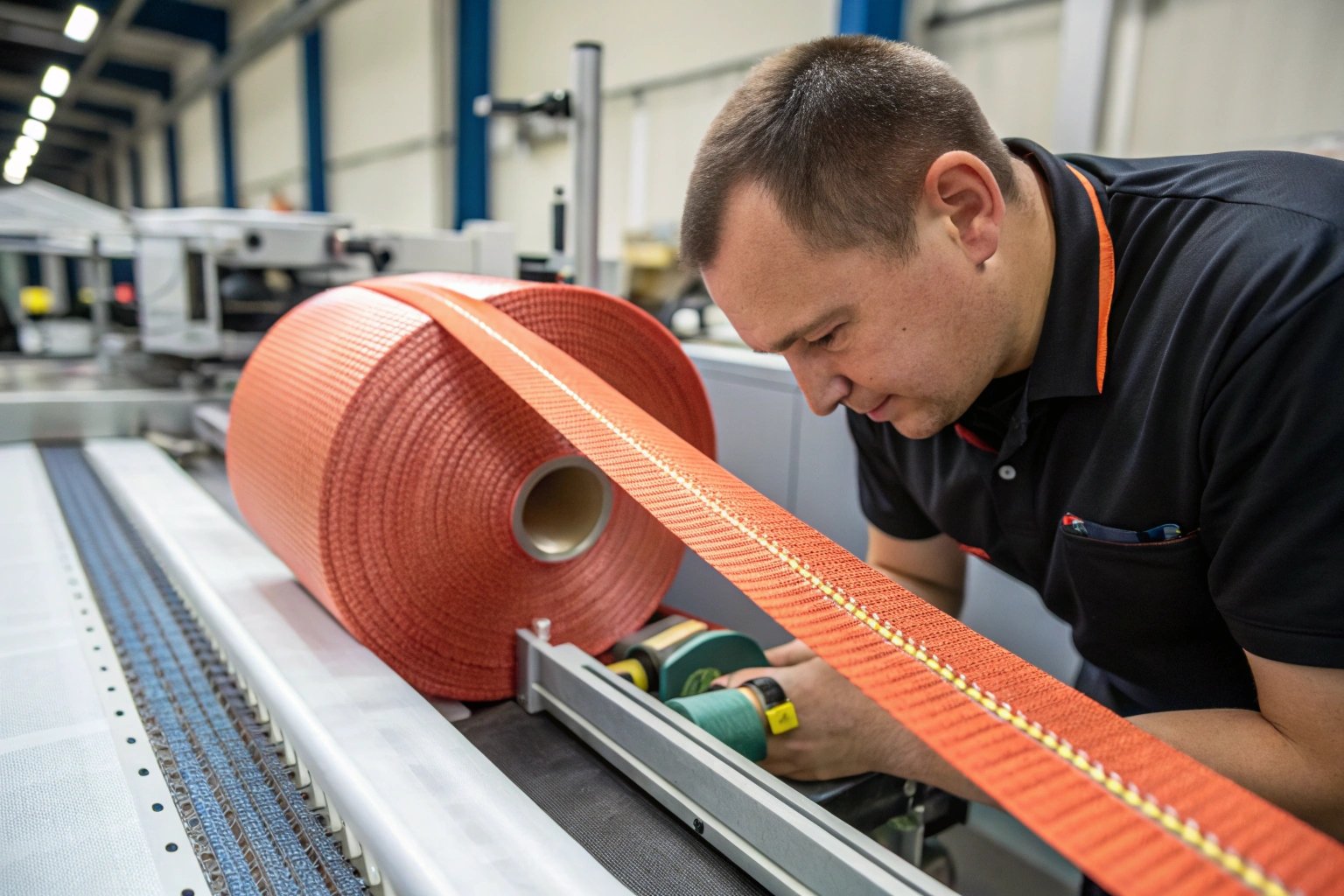
Webbing is used in thousands of products every day. I often see it used in backpacks, pet collars, safety harnesses, luggage straps, military equipment, outdoor gear, cargo restraints, and industrial lifting products. Nylon webbing, polyester webbing, polypropylene webbing, and cotton webbing are all popular because they are strong, flexible, and durable.
However, cutting webbing properly is not as simple as cutting ordinary fabric. Many synthetic webbings begin to fray immediately after cutting. Loose fibers can make products look unprofessional, reduce durability, and create extra finishing work. This is why choosing the correct cutting method is important.
The best way to cut webbing depends on several factors:
- Material type
- Production volume
- Edge quality requirements
- Budget
- Desired production speed
For most synthetic webbing materials such as nylon and polyester, a hot knife is considered the most effective solution because it cuts and seals the material at the same time.
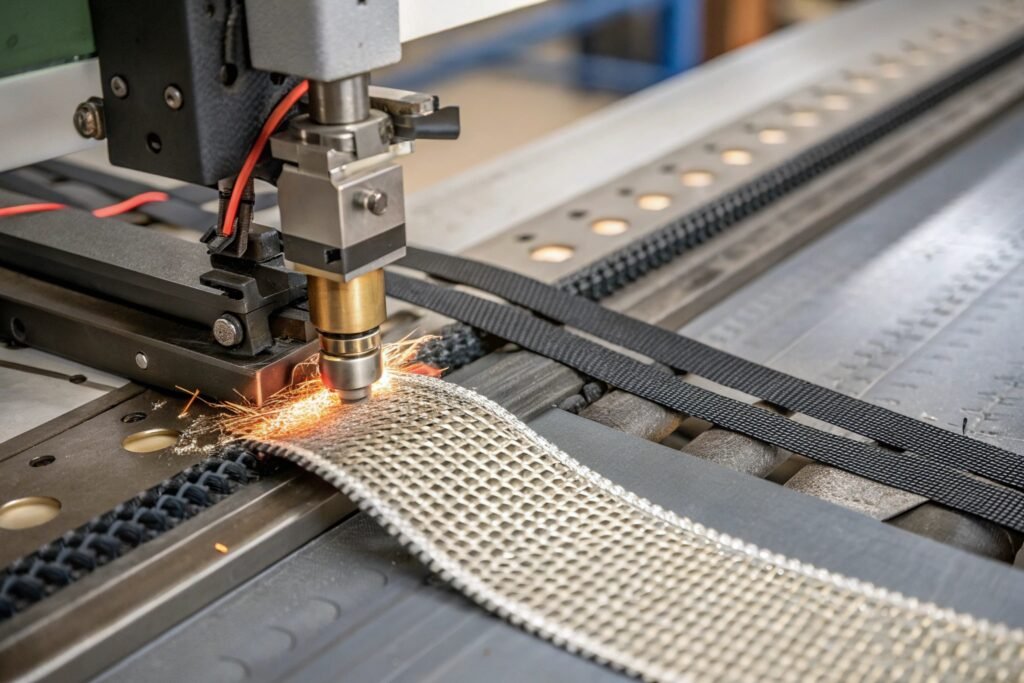
- Cutting webbing correctly requires accurate measuring, a stable cutting surface, a smooth cutting motion, and proper edge sealing to prevent fraying and improve product durability.
- For synthetic materials such as nylon webbing and polyester webbing, a hot knife is widely regarded as the most effective tool because it cuts and seals the fibers in a single operation.
- Heat-sealed edges provide a cleaner appearance, reduce loose fibers, and increase the lifespan of webbing products while minimizing rework and material waste.
- While scissors and utility knives can be used for occasional cutting, professional applications often rely on hot knife cutters and specialized webbing cutting equipment for superior edge quality and efficiency.
- For large-scale manufacturing, automated webbing cutting machines improve precision, consistency, and productivity by combining measuring, feeding, cutting, and sealing functions into a streamlined process.
Why Proper Webbing Cutting Matters
A poor cut can create several problems.
The edge may fray quickly. The strap may look uneven. Assembly may become more difficult. In some applications, a rough edge may even reduce product quality.
Benefits of a Clean Cut
| Benefit | Result |
|---|---|
| Better Appearance | Professional Finish |
| Reduced Fraying | Longer Product Life |
| Easier Assembly | Faster Production |
| Improved Consistency | Better Quality Control |
| Less Waste | Lower Manufacturing Costs |
When webbing is cut correctly, both appearance and performance improve.
Step 1: Mark the Cut Line
Before cutting, I always mark the desired length.
This simple step helps ensure:
- Accurate measurements
- Repeatable results
- Straighter cuts
- Less material waste
Common Marking Methods
| Method | Accuracy |
|---|---|
| Marker Line | Good |
| Measuring Tape | Very Good |
| Stop Block | Excellent |
| Automated Measuring System | Industrial Grade |
A clearly marked cut line reduces errors and improves consistency.
Why Accuracy Matters
In production environments, even small measurement errors can accumulate over hundreds or thousands of pieces.
Accurate marking is the foundation of quality cutting.
Step 2: Stabilize the Webbing
Movement during cutting is one of the main causes of uneven edges.
I always place webbing on a flat, stable work surface before cutting.
Benefits of a Stable Surface
| Benefit | Result |
|---|---|
| Better Blade Control | Cleaner Cut |
| Reduced Movement | Higher Accuracy |
| Improved Safety | Better Handling |
| Consistent Results | Better Quality |
A stable surface makes cutting easier and more predictable.
Work Surface Recommendations
Good cutting surfaces include:
- Cutting mats
- Workbenches
- Flat tables
- Dedicated cutting stations
Proper support improves both safety and cut quality.
Step 3: Make One Smooth Cut
A common mistake is using a sawing motion.
Repeated back-and-forth cutting can:
- Create rough edges
- Pull fibers loose
- Increase fraying
- Reduce accuracy
Instead, I prefer a single smooth cutting motion.
Cutting Method Comparison
| Method | Result |
|---|---|
| Single Smooth Cut | Clean Edge |
| Sawing Motion | Rough Edge |
| Dull Blade | Fiber Damage |
| Sharp Blade | Smooth Finish |
The cleaner the initial cut, the easier it becomes to finish the edge properly.
Step 4: Seal the Edge
For synthetic materials such as nylon and polyester, cutting is only part of the process.
The exposed fibers must also be sealed.
Why Edge Sealing Is Important
Without sealing, synthetic webbing can begin unraveling almost immediately.
Benefits of Sealing
| Benefit | Result |
|---|---|
| Prevents Fraying | Longer Service Life |
| Improves Appearance | Cleaner Edge |
| Reduces Maintenance | Less Rework |
| Increases Durability | Better Performance |
Heat sealing is often the most effective solution.
Manual Heat Sealing
If a hot knife is not available, the edge can be sealed using controlled heat after cutting.
The key is to:
- Melt the fibers
- Avoid burning
- Seal immediately after cutting
Heat Control Guide
| Heat Level | Result |
|---|---|
| Too Low | Poor Seal |
| Moderate | Ideal |
| Too High | Burn Damage |
Proper heat control helps create a strong, clean edge.
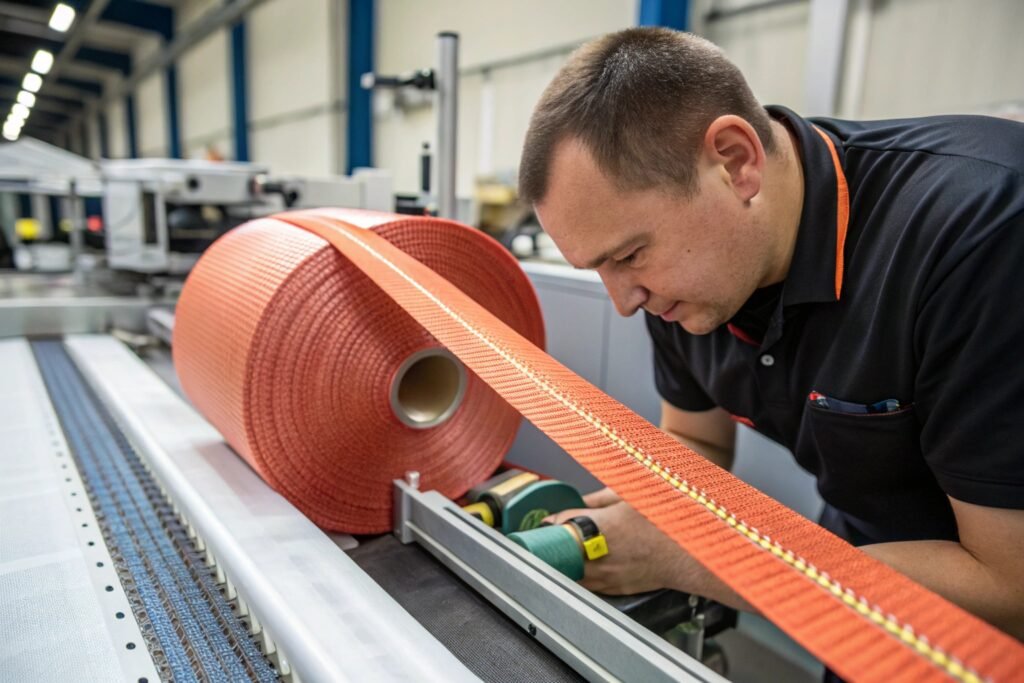
Step 5: Press the Warm Edge
One useful finishing technique is pressing the melted edge while it is still warm.
This helps:
- Flatten loose fibers
- Improve appearance
- Increase edge consistency
- Strengthen the seal
Benefits of Edge Pressing
| Benefit | Result |
|---|---|
| Better Fusion | Stronger Edge |
| Cleaner Surface | Professional Appearance |
| Reduced Fiber Exposure | Less Fraying |
| More Consistency | Better Quality |
This small step can significantly improve final results.
Best Tools for Cutting Webbing
Several cutting tools can be used depending on production requirements.
Scissors
Suitable for occasional cutting.
Utility Knives
Useful for straight cuts with proper guides.
Hot Knives
The preferred choice for synthetic webbing.
Industrial Web Cutters
Best for large-scale production.
Tool Comparison
| Tool | Edge Quality | Fraying Prevention | Production Speed |
|---|---|---|---|
| Scissors | Fair | Low | Medium |
| Utility Knife | Good | Low | Medium |
| Hot Knife | Excellent | Excellent | High |
| Industrial Cutter | Excellent | Excellent | Very High |
For most nylon and polyester webbing applications, hot cutting provides the best results.
Why Hot Knives Are So Popular
Hot knives combine cutting and sealing into a single operation.
Instead of cutting first and sealing later, both processes occur simultaneously.
Advantages of Hot Knife Cutting
- Faster production
- Reduced labor
- Better edge quality
- Less fraying
- Improved consistency
Because nylon and polyester are thermoplastic materials, they respond extremely well to hot cutting technology.
Industrial Webbing Cutting Solutions
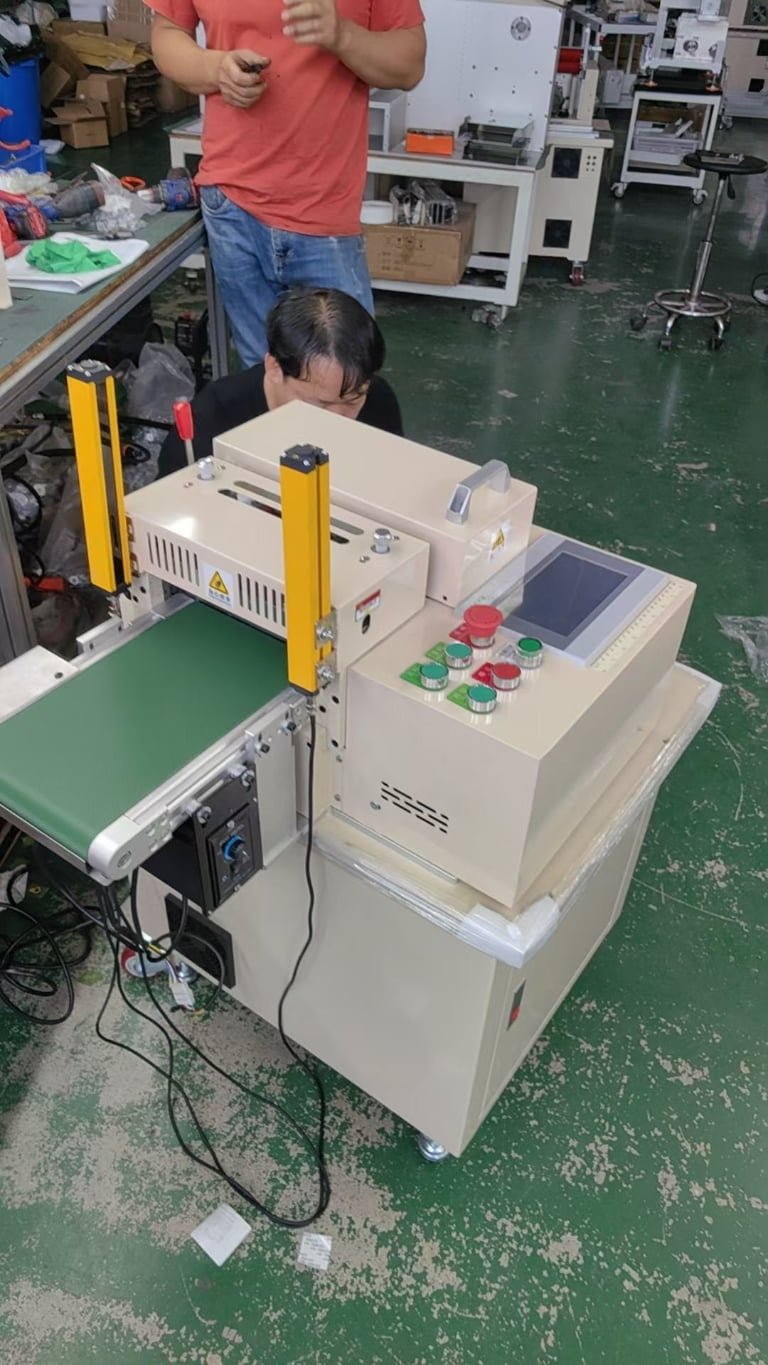
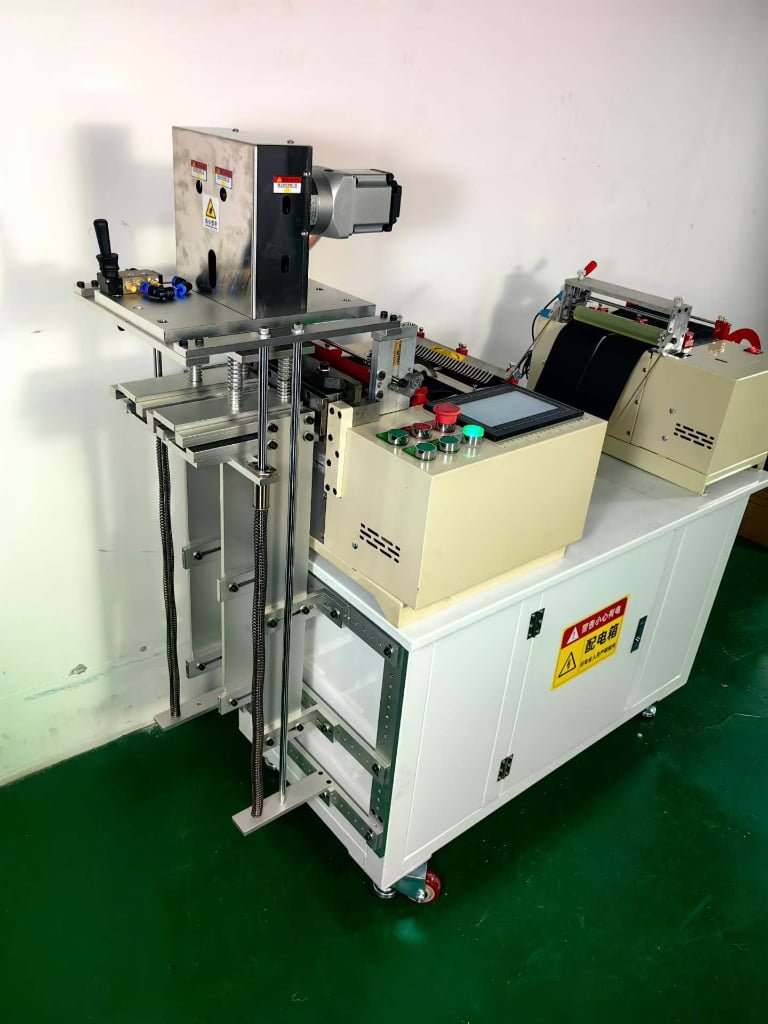
Manufacturers processing large quantities of webbing often use automated equipment.
These systems can:
- Feed material automatically
- Measure exact lengths
- Cut precisely
- Seal edges
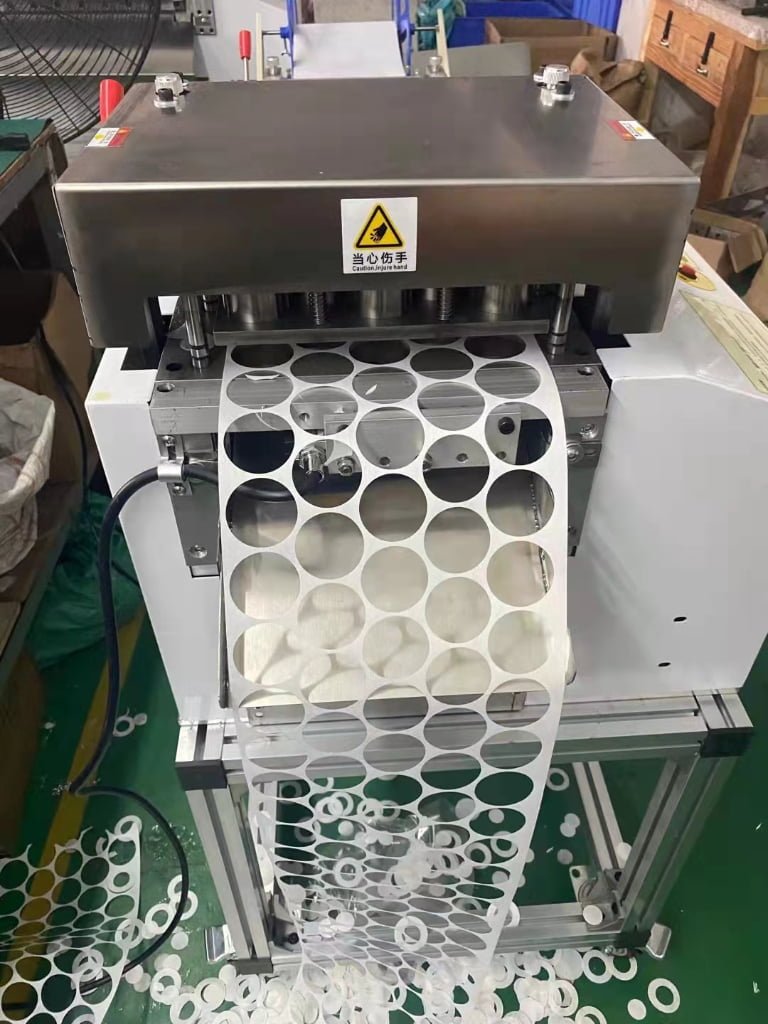
- Punch holes
- Create custom shapes
Common Webbing Cutting Machines
- Webbing tape cutting machine
- Hot and cold cutting machine
- High-speed trademark cutting machine
- Automatic punching cutting machine
- Round shape cutting machine
- Rotary bevel cutting machine
- Different shapes cutting machine
These machines dramatically increase efficiency and consistency.
What Machine Is Best for Cutting Fabric?
The best fabric cutting machine depends on the material, production volume, and required precision.
A machine that works perfectly for woven cotton may not be ideal for synthetic webbing or industrial textiles.
Factors to Consider
Before selecting a fabric cutting machine, I consider:
- Material type
- Cutting volume
- Edge quality requirements
- Production speed
- Automation level
Fabric Cutting Machine Categories
| Machine Type | Best Application |
|---|---|
| Rotary Cutter | General Fabric |
| Hot Knife Cutter | Synthetic Fabric |
| Ultrasonic Cutter | Technical Textiles |
| Automatic Fabric Cutter | High Volume Production |
| CNC Cutting Machine | Precision Cutting |
Each machine serves a different purpose.
Rotary Fabric Cutters
Rotary cutters are common in sewing and textile workshops.
They offer:
- Good speed
- Easy operation
- Low cost
However, they do not seal synthetic fibers.
Hot Knife Cutting Machines
For nylon, polyester, webbing, ribbons, and synthetic materials, hot knife systems are often the best option.
Advantages
| Benefit | Result |
|---|---|
| Cuts and Seals | One-Step Processing |
| Cleaner Edges | Better Appearance |
| Reduced Fraying | Improved Durability |
| Faster Production | Higher Efficiency |
This is why hot cutting machines are widely used in webbing manufacturing.
Ultrasonic Cutting Machines
Ultrasonic systems use vibration and heat to cut and seal materials.
They are commonly used for:
- Technical textiles
- Nonwoven fabrics
- Medical materials
Advantages
- Precise cutting
- Clean edges
- Minimal material distortion
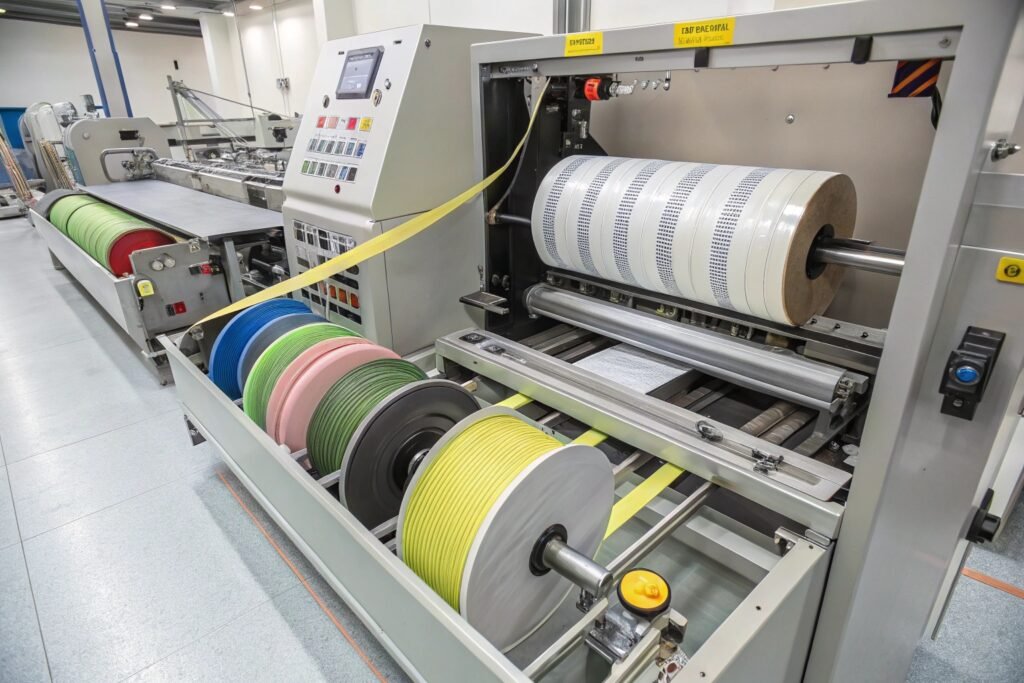
Automatic Fabric Cutting Machines
Large factories often use automated cutting systems.
These machines can process:
- Fabric rolls
- Webbing
- Labels
- Elastic materials
- Technical textiles
Benefits
| Benefit | Result |
|---|---|
| High Speed | Increased Output |
| Repeatability | Better Consistency |
| Reduced Labor | Lower Costs |
| High Precision | Better Quality |
For mass production, automation often provides the best return on investment.
Which Fabric Cutting Machine Is Best?
The answer depends on the application.
Quick Selection Guide
| Requirement | Recommended Machine |
|---|---|
| Home Sewing | Rotary Cutter |
| Synthetic Webbing | Hot Knife Cutter |
| Technical Textiles | Ultrasonic Cutter |
| Large Production Runs | Automatic Fabric Cutter |
| Maximum Precision | CNC Cutting Machine |
For nylon webbing and synthetic straps, hot cutting technology is usually the most practical solution because it combines cutting and sealing into a single operation.
Conclusion
The best way to cut webbing is to mark the cut line accurately, stabilize the material, make one smooth cut, and seal the edge immediately afterward. For synthetic materials such as nylon and polyester, a hot knife provides the cleanest results because it cuts and seals at the same time. When choosing a fabric cutting machine, the ideal solution depends on the material and production volume. Rotary cutters work well for general fabrics, while hot knife cutting machines are often the preferred choice for synthetic webbing because they improve edge quality, reduce fraying, and increase production efficiency.
Insights From HAOXINHE
At HAOXINHE, I work with manufacturers that process webbing, ribbons, hook-and-loop tape, elastic bands, technical textiles, foam materials, and other flexible products. Through years of experience, I have found that edge quality and cutting consistency are two of the biggest factors affecting production efficiency.
For companies producing webbing products in large quantities, investing in a professional webbing tape cutting machine, hot and cold cutting machine, high-speed trademark cutting machine, or automatic punching cutting machine can significantly improve output while reducing labor costs. These systems combine measuring, feeding, cutting, sealing, and punching functions into a single workflow, helping manufacturers achieve higher productivity and more consistent product quality.