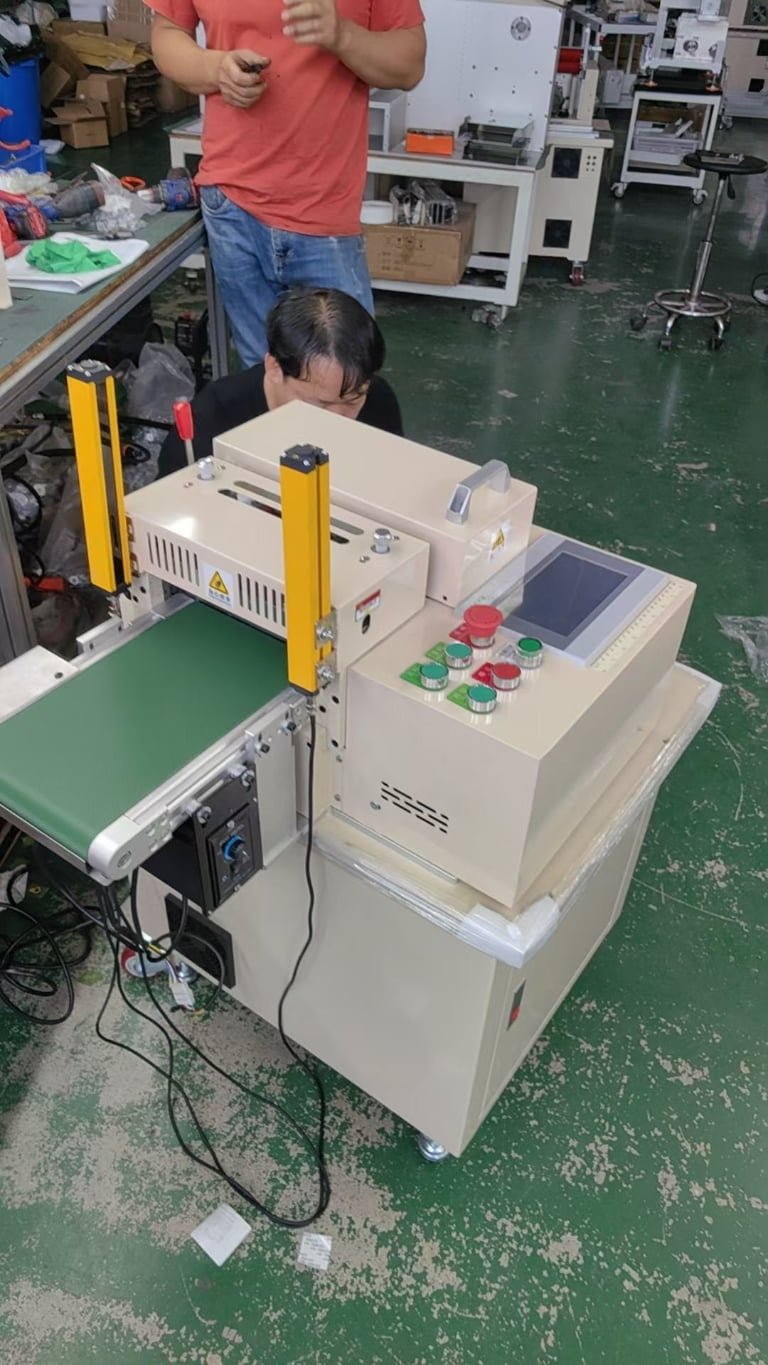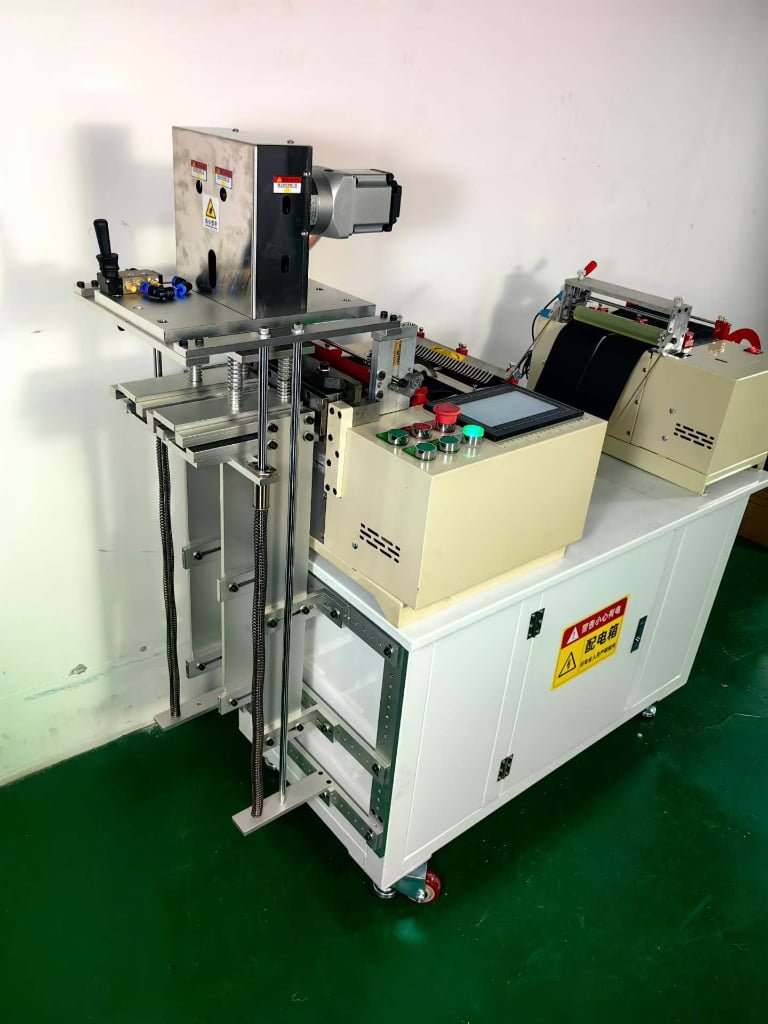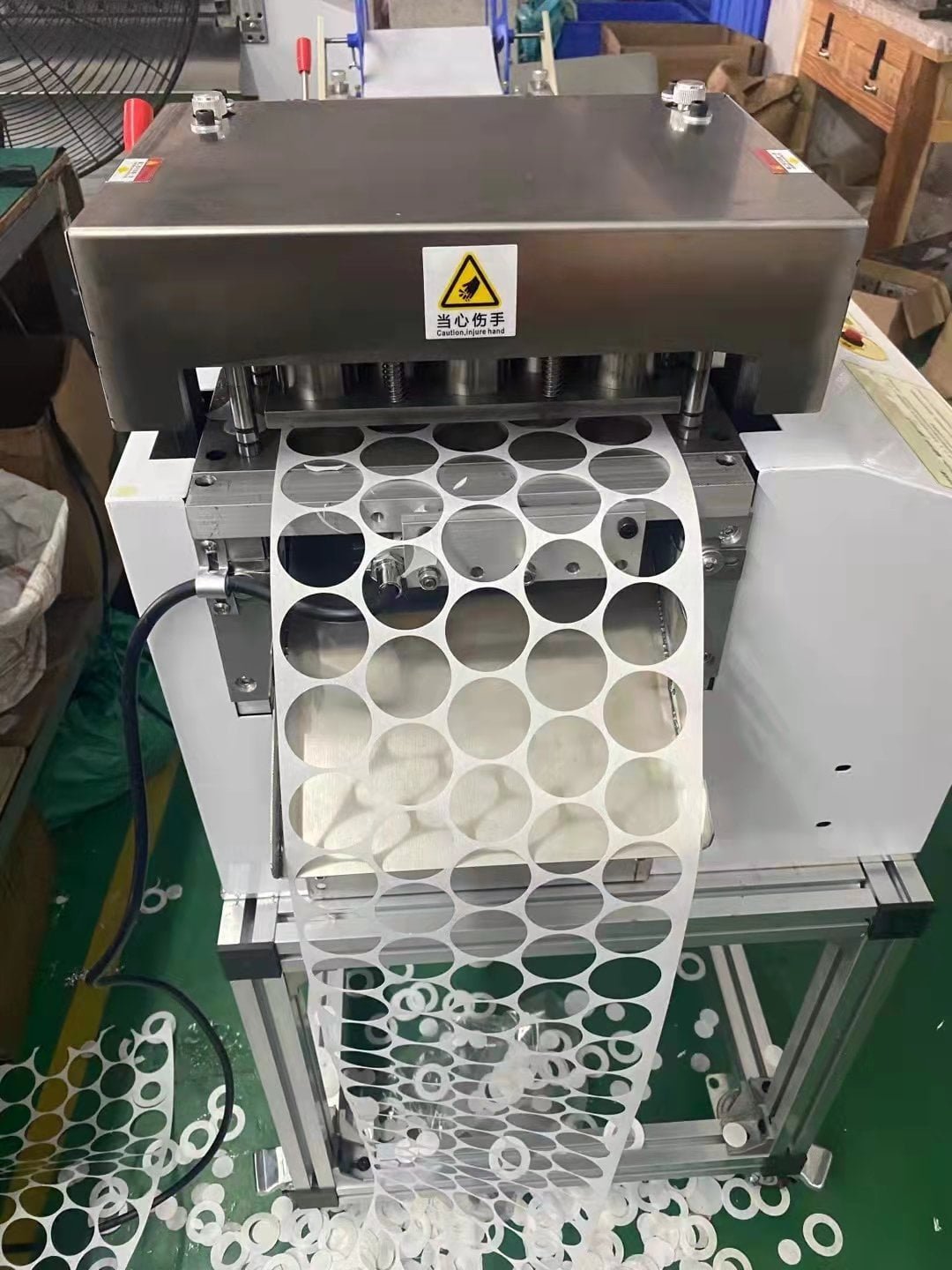
How much does a Solar Panel EVA Gasket Cutting Machine cost in the global market?
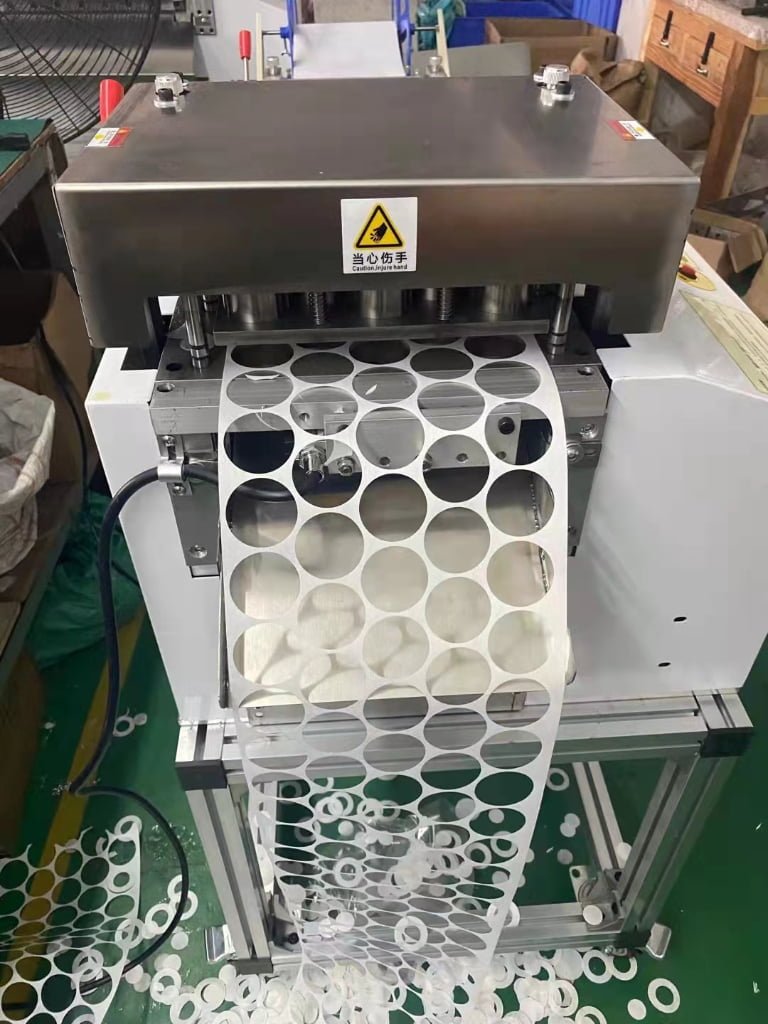
When photovoltaic manufacturers ask me about the price of a Solar Panel EVA Gasket Cutting Machine, they usually expect one simple number.
However, the real answer depends on many factors.
The price can range from several thousand US dollars for a simple EVA cutting solution to hundreds of thousands of US dollars for a complete automatic solar production system.1
The reason for this large price difference is that “EVA cutting machine” can describe different types of equipment.
Some machines only perform:
- EVA film cutting
- Sheet cutting
- Simple material preparation
Other machines can perform:
- Automatic unwinding
- Servo feeding
- Precision cutting
- Hole punching
- Vacuum transfer
- Automatic layup
- Production line integration
At HAOXINHE, I always explain to customers that the cheapest machine is not always the most economical choice.
The correct investment depends on:
- Production volume
- Module size
- Required accuracy
- Automation level
- Material type
- Future expansion plan
A factory producing a few hundred modules per month has different needs from a large solar manufacturer producing thousands of modules every day.2

What factors affect EVA gasket cutting machine prices including speed, precision, and customization?
The price of a Solar Panel EVA Gasket Cutting Machine is mainly affected by several technical factors.
The most important factors include:
- Machine type
- Automation level
- Production speed
- Cutting accuracy
- Module size capability
- Material compatibility
- Customization requirements
A buyer should compare the complete production value instead of only comparing machine prices.
1. Basic EVA cutting machines have lower investment costs
The simplest EVA cutting machines are designed for basic material preparation.
These machines usually include:
- Manual or semi-automatic feeding
- EVA cutting function
- Basic control system
Typical price range:
| Machine type | Approximate price |
|---|---|
| Basic CNC EVA cutter | US$8,000–15,000 |
| Basic automatic EVA cutter | US$20,000–30,000 |
These machines are suitable for:
- Small production lines
- Development projects
- Flexible production
However, they may not include:
- Automatic layup
- Vacuum transfer
- Production line communication
- Advanced material handling
A factory should confirm whether the machine only cuts EVA or also supports the complete module production process.
2. Automatic EVA cutting and layup systems require higher investment
For large photovoltaic factories, automatic EVA cutting and layup machines are usually preferred.
These systems combine multiple functions:
- Roll unwinding
- Servo feeding
- EVA cutting
- Position correction
- Vacuum transfer
- Automatic placement
Typical price range:
| Equipment level | Approximate investment |
|---|---|
| Automatic EVA cutter | US$20,000–30,000 |
| EVA cutting and layup system | US$100,000–200,000 |
| Complete solar production line | US$1,000,000+ |
The higher price comes from additional automation components.
These include:
- Servo motors
- Precision sensors
- Vacuum systems
- Industrial controllers
- Automatic handling equipment
For high-volume production, these systems can reduce labor cost and improve consistency.
3. Production speed affects machine price
Production speed is one of the most important price factors.
A faster machine requires:
- Stronger mechanical design
- Better control systems
- Faster feeding systems
- More accurate positioning
For example:
A low-speed machine may be enough for a small factory.
A large solar factory may require:
- Short cycle time
- Continuous operation
- Stable accuracy
| Speed requirement | Machine configuration |
|---|---|
| Low output | Basic cutting system |
| Medium output | Automatic feeding |
| High output | Servo-controlled production system |
| Continuous production | Fully integrated line |
Higher speed usually increases machine price.3
However, higher speed can reduce the cost per solar module.
4. Cutting accuracy influences equipment cost
Solar module production requires stable EVA dimensions.
Important accuracy requirements include:
- Cutting length
- Cutting width
- Diagonal accuracy
- Placement accuracy
| Accuracy factor | Production impact |
|---|---|
| Length accuracy | Correct module coverage |
| Position accuracy | Better layup quality |
| Repeatability | Lower rejection rate |
| Flatness | Better lamination |
Higher accuracy requires:
- Better sensors
- Servo systems
- Precision mechanical structures
- Advanced software control
These technologies increase machine cost.
5. Module size capability changes the price
Solar modules are becoming larger.4
A machine designed for large-format modules requires:
- Larger frame structure
- Wider conveyors
- Bigger vacuum systems
- Longer feeding travel
Large module capability increases:
- Material handling requirements
- Machine size
- Manufacturing cost
| Module requirement | Machine impact |
|---|---|
| Small module | Smaller system |
| Standard module | Medium configuration |
| Large format module | Larger machine structure |
When selecting a machine, I recommend customers consider future module sizes.
Buying a machine that is too small may limit future business growth.5
6. Automation level is a major price factor
Automation can significantly change machine cost.6
A manual machine requires operators to handle:
- Material feeding
- Position adjustment
- Sheet movement
An automatic machine can complete these steps automatically.
| Function | Manual/Semi-auto | Automatic |
|---|---|---|
| Material loading | Manual | Automatic |
| Positioning | Operator adjustment | Sensor control |
| Transfer | Manual | Vacuum system |
| Production data | Limited | Digital control |
| Labor requirement | Higher | Lower |
For large factories, automation usually provides better long-term value.
7. Multi-material capability increases machine complexity
Some solar manufacturers process different encapsulation materials.
Examples include:
- EVA
- POE
- PVB
- TPO
- Backsheet materials
A machine designed for multiple materials may require:
- Flexible feeding settings
- Different cutting parameters
- More advanced control systems
| Material capability | Cost impact |
|---|---|
| EVA only | Lower |
| EVA + backsheet | Medium |
| Multiple encapsulants | Higher |
This flexibility can be valuable for factories producing different module types.
8. Additional functions increase the total investment
A basic EVA cutter and a complete EVA preparation system are very different.
Additional functions may include:
- Hole punching
- Corner cutting
- Vacuum positioning
- Automatic unloading
- Conveyor connection
- MES communication
| Function | Production benefit |
|---|---|
| Punching | Removes extra processing |
| Vacuum transfer | Improves placement |
| Automatic unloading | Reduces labor |
| Line integration | Improves efficiency |
Each additional function increases machine cost.
However, it may also reduce production cost.
9. Installation and international project costs
The machine quotation is not always the final project cost.
International buyers should consider:
- Export packaging
- Shipping
- Insurance
- Customs fees
- Installation
- Training
- Electrical adaptation
- Spare parts
A realistic project budget may need an additional 15%–40% above the machine price.7
| Additional cost | Example |
|---|---|
| Logistics | Sea freight and inland transport |
| Installation | Technician service |
| Training | Operator education |
| Spare parts | Initial inventory |
| Electrical setup | Local standards |
A complete budget creates fewer surprises.
10. Compare suppliers by total production value
When comparing quotations, I recommend looking beyond the price.
Important comparison points include:
| Evaluation item | Why it matters |
|---|---|
| Production speed | Determines output |
| Accuracy | Determines quality |
| Scrap rate | Determines material cost |
| Maintenance | Determines downtime |
| Service response | Determines long-term reliability |
| Spare parts | Supports operation |
Before purchasing, I recommend a factory acceptance test.
The supplier should test:
- Customer EVA material
- Customer module size
- Target production speed
- Cutting accuracy
- Scrap rate
Real production testing is more valuable than only reviewing technical documents.8
What is the reasonable investment range for different solar manufacturers?
Different factories need different solutions.
| Factory type | Recommended equipment | Budget level |
|---|---|---|
| Research center | Basic EVA cutter | US$8,000–20,000 |
| Small solar factory | Automatic cutter | US$20,000–50,000 |
| Medium production line | Advanced EVA system | US$100,000+ |
| Large module manufacturer | Integrated automation | US$200,000+ |
The right investment depends on production goals.
A factory should calculate:
- Cost per module
- Labor savings
- Material savings
- Production stability
Insights: How HAOXINHE provides customized cutting solutions
At HAOXINHE, I understand that international customers need more than a machine quotation.
They need a reliable production solution.
My customers usually care about:
- Stable machine quality
- Competitive investment
- Fast communication
- Customization ability
- Long-term support
My factory provides customized cutting equipment solutions for different industries, including:
- Packaging
- Printing
- Labels
- Plastic products
- Foam products
- Photovoltaic-related materials
My related machines include:
- Webbing tape cutting machine
- Hot and cold cutting machine
- High-speed trademark cutting machine
- Automatic punching cutting machine
- Round shape cutting machine
- Rotary bevel cutting machine
- Different shapes cutting machine
- Computer tube cutting machine
- Wire cutting and stripping machine
- Metal pipe cutting and beveling machine
- Webbing ribbon cutting machine
- Bubble wrap cutting machine
- PVC Edge Banding cutting machine
- Protective Foam Cutting Machine
I believe the best EVA cutting machine is not the cheapest machine.
The best machine is the one that creates the lowest production cost while maintaining stable quality.
By selecting the correct speed, accuracy, automation level, and customization options, photovoltaic manufacturers can build a more efficient and competitive production line.9
-
"Solar and Storage Manufacturing Cost Analysis", https://www.nlr.gov/solar/market-research-analysis/solar-storage-manufacturing-cost-analysis. Market research reports or industry analyses often provide detailed price ranges for photovoltaic manufacturing equipment, including EVA cutting machines. Evidence role: statistic; source type: research. Supports: The source should provide data on the price range of EVA cutting machines in the global market.. Scope note: The price range may vary by region and supplier, so the data might not represent all global markets. ↩
-
"Solar Manufacturing | Department of Energy", https://www.energy.gov/cmei/systems/solar-manufacturing. Educational resources or case studies often discuss the relationship between production scale and equipment requirements in manufacturing. Evidence role: general_support; source type: education. Supports: The source should explain how production scale influences the choice of manufacturing equipment.. Scope note: The findings may be generalized and not specific to EVA cutting machines. ↩
-
"Additive Manufacturing and High Speed Machining", https://www.sciencedirect.com/science/article/pii/S2212827116305042. Research papers or industry reports often analyze the cost implications of higher-speed manufacturing equipment. Evidence role: mechanism; source type: research. Supports: The source should explain how higher speed in manufacturing equipment leads to increased costs.. Scope note: The correlation may vary depending on the specific technology or manufacturer. ↩
-
"End-of-Life Management for Solar Photovoltaics | Department of Energy", https://www.energy.gov/cmei/systems/end-life-management-solar-photovoltaics. Industry reports or research studies often track trends in solar module sizes and their implications for manufacturing. Evidence role: statistic; source type: research. Supports: The source should provide data or trends on the increasing size of solar modules.. Scope note: The trend may not apply universally across all regions or manufacturers. ↩
-
"Scaling Solar for a Renewable Energy Future", https://business.columbia.edu/insights/climate/CKI-solar-four-key-points. Educational resources or case studies often discuss the relationship between equipment size and business scalability. Evidence role: general_support; source type: education. Supports: The source should explain how equipment size can affect a business’s ability to scale operations.. Scope note: The findings may not be specific to EVA cutting machines. ↩
-
"Robotic Assembly of Photovoltaic Arrays | T2 Portal", https://technology.nasa.gov/patent/MFS-TOPS-105. Research studies or industry analyses often discuss the cost implications of automation in manufacturing. Evidence role: mechanism; source type: research. Supports: The source should explain how automation levels influence the cost of manufacturing equipment.. Scope note: The cost impact may vary depending on the specific automation technologies used. ↩
-
"Import Tariffs & Fees Overview and Resources", https://www.trade.gov/import-tariffs-fees-overview-and-resources. Institutional reports or industry guidelines often outline additional costs for international equipment purchases. Evidence role: statistic; source type: institution. Supports: The source should provide data on typical additional costs for importing and installing manufacturing equipment.. Scope note: The percentage range may vary depending on the country and specific project requirements. ↩
-
"Chapter 8: Machine Performance Evaluation", https://www.nist.gov/publications/chapter-8-machine-performance-evaluation. Educational or industry best practices often emphasize the importance of real production testing in equipment evaluation. Evidence role: expert_consensus; source type: education. Supports: The source should explain the benefits of real production testing over reviewing technical documents.. Scope note: The recommendation may depend on the specific type of equipment being evaluated. ↩
-
"Solar-cell efficiency", https://en.wikipedia.org/wiki/Solar-cell_efficiency. Research studies or industry reports often analyze the factors contributing to efficient and competitive manufacturing processes. Evidence role: general_support; source type: research. Supports: The source should explain how speed, accuracy, automation, and customization impact production efficiency and competitiveness.. Scope note: The analysis may not account for all possible configurations or industry-specific factors. ↩