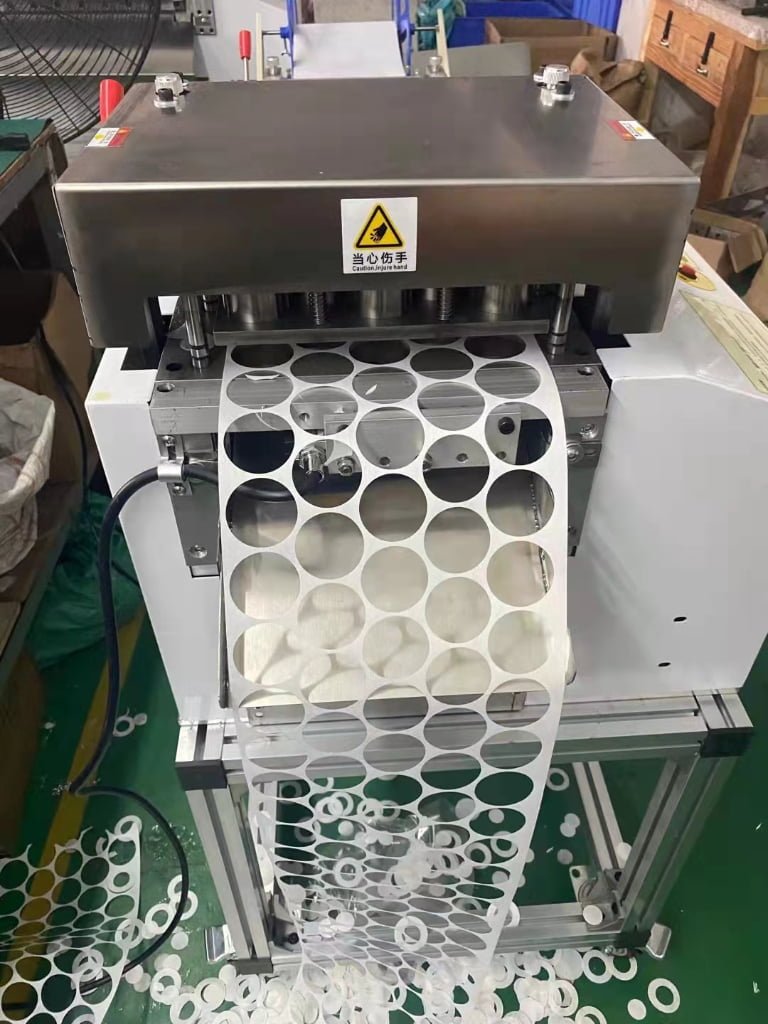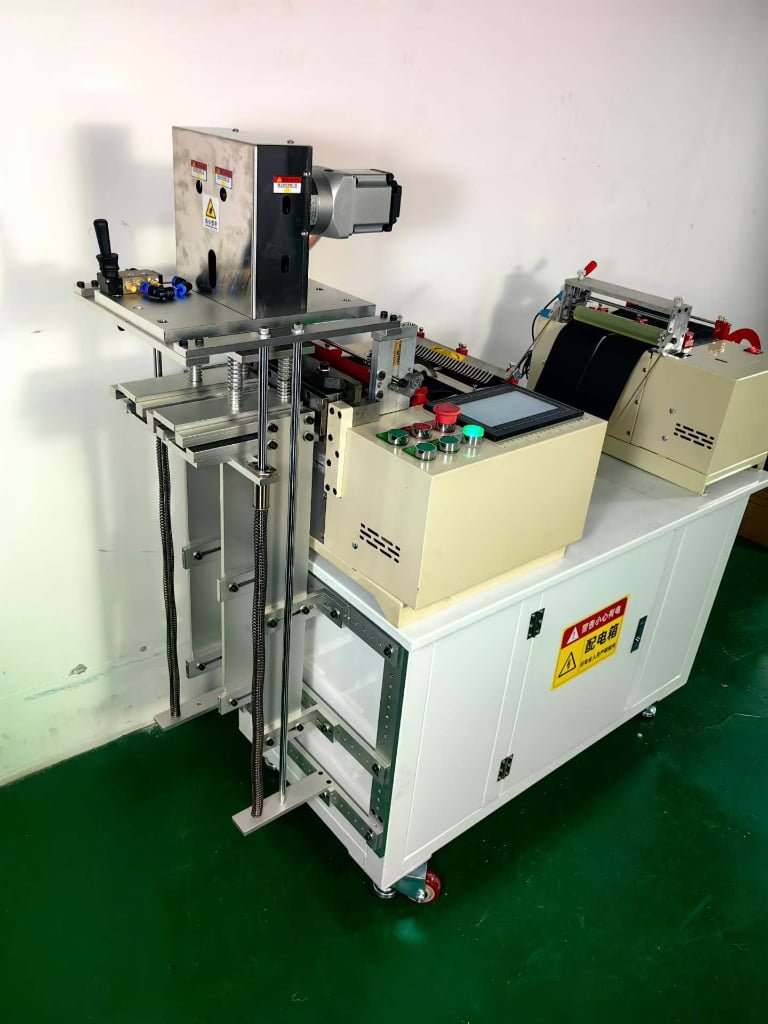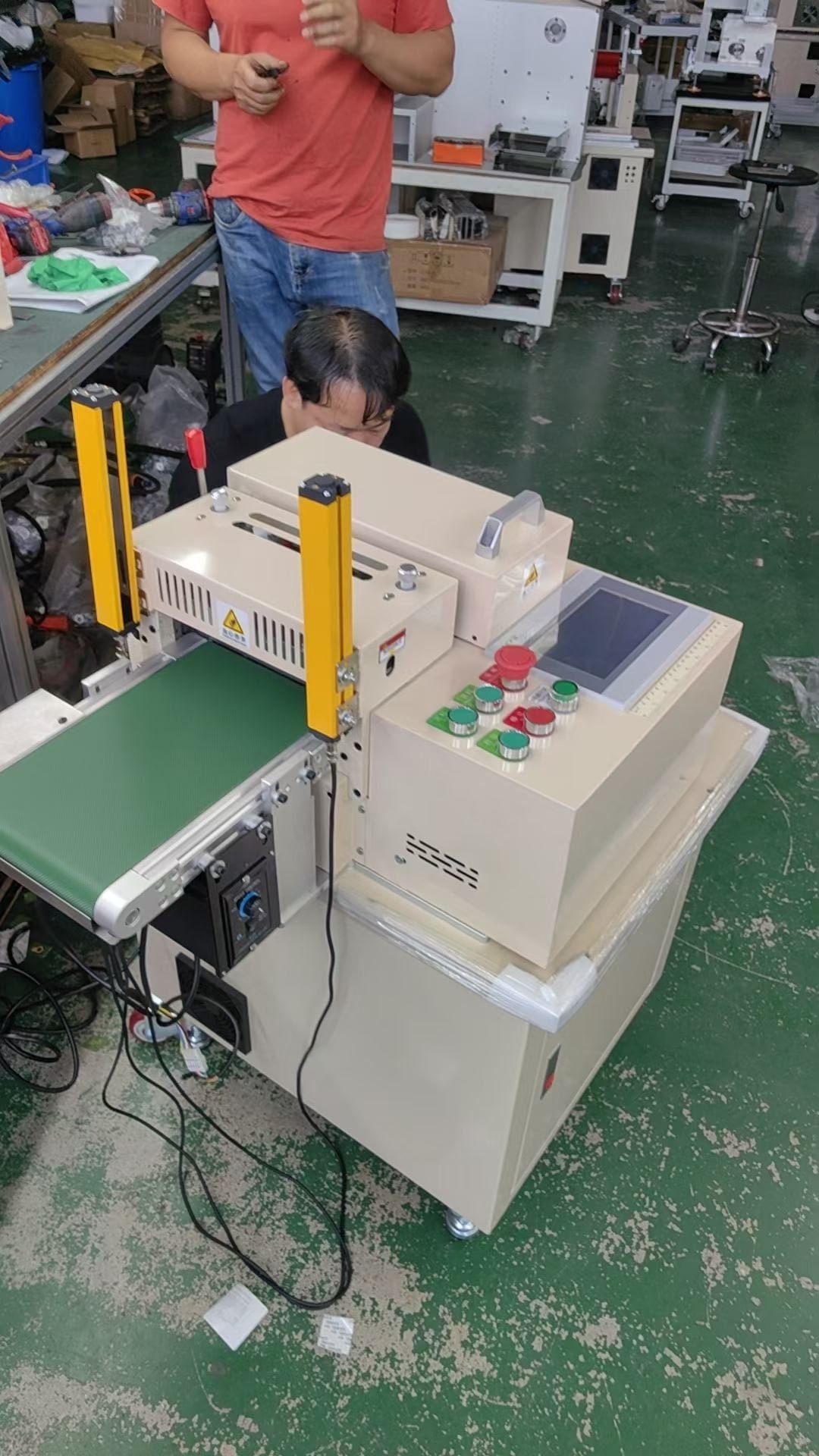
How to choose a Solar Panel EVA Gasket Cutting Machine for your manufacturing line?
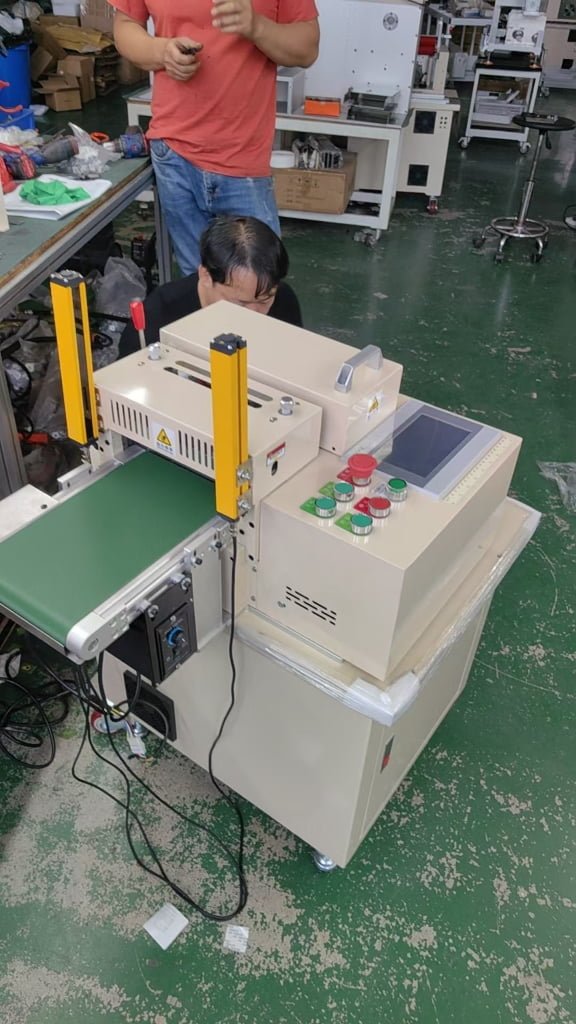
When photovoltaic manufacturers choose a Solar Panel EVA Gasket Cutting Machine, many buyers focus first on machine price and cutting speed.
However, choosing the correct EVA cutting machine requires a deeper understanding of the whole solar module production process.
In photovoltaic manufacturing, EVA is not simply a gasket material. EVA is mainly used as an encapsulation film that protects solar cells and improves module durability.1
The EVA cutting process affects:
- Module appearance
- Encapsulation quality
- Material usage
- Production speed
- Lamination performance
A wrong machine selection can create problems such as:2
- EVA size errors
- Material wrinkles
- Poor positioning
- More production waste
- Lower line efficiency
At HAOXINHE, I always suggest customers evaluate the complete production requirement before choosing equipment.
The important questions include:
- What type of EVA material is being processed?
- What are the module dimensions?
- What is the daily production capacity?
- Does the factory need automatic layup?
- How much flexibility is required?
A suitable machine should match the current production volume and support future expansion.3
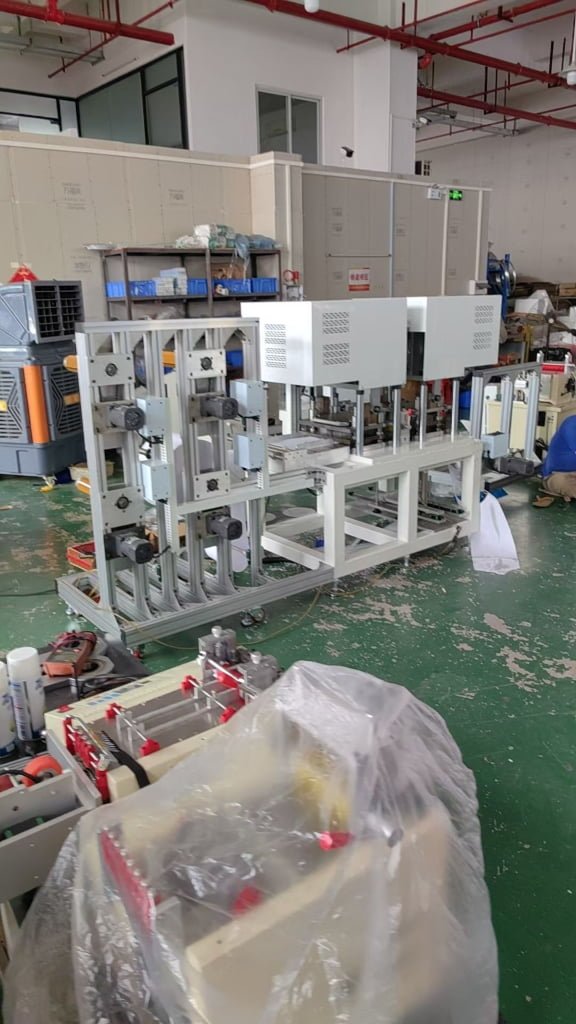
Automatic vs semi-automatic EVA gasket cutting machines: which one fits different production volumes?
The choice between automatic and semi-automatic EVA cutting machines depends mainly on production scale.
A small photovoltaic factory, pilot production line, or research facility may need flexibility.
A large solar module factory usually needs automation, speed, and stable output.
The machine selection should match:
- Production quantity
- Labor cost
- Module format changes
- Line automation level
- Investment budget
| Production situation | Recommended machine type |
|---|---|
| Laboratory testing | Manual or semi-automatic |
| Small batch production | Semi-automatic |
| Medium production line | Automatic cutting system |
| Large solar factory | Fully automatic EVA cutting and layup system |
There is no universal best machine.
The best machine is the one that fits the factory’s actual production needs.
1. Define the EVA material and production process first
Before selecting a machine, I always recommend customers define their material information.
Photovoltaic EVA cutting machines may process different EVA materials depending on the module design.
Important factors include:
| Material factor | Why it matters |
|---|---|
| EVA thickness | Determines cutting settings |
| Roll width | Determines feeding system size |
| Roll diameter | Determines unwinding capability |
| Material type | Determines cutting method |
| Backing film | Affects handling requirements |
The factory should also confirm what the machine needs to do.
Some customers only need:
- EVA roll cutting
Other customers need:
- Cutting
- Punching
- Positioning
- Automatic transfer
- Layup
A machine designed only for cutting may not replace a complete EVA preparation system.
2. Match machine capacity with solar module sizes
Solar manufacturers often produce different module formats.
The machine should support current products and possible future models.
Important specifications include:
- Maximum EVA width
- Minimum cutting length
- Maximum cutting length
- Roll weight capacity
- Material feeding speed
| Specification | Why it matters |
|---|---|
| Cutting width | Supports different module sizes |
| Cutting length | Determines production flexibility |
| Roll diameter | Affects production continuity |
| Feeding speed | Affects output |
A factory should avoid selecting a machine that only supports today’s product.
Future module expansion should also be considered.
3. Automatic EVA cutting systems for high-volume production
For large photovoltaic module factories, automatic EVA cutting systems are usually the preferred solution.
An automatic system can include:
- Automatic unwinding
- Servo feeding
- Length measurement
- EVA cutting
- Hole punching
- Automatic transfer
- Layup positioning
The main advantage is reducing manual handling.
| Automatic function | Production benefit |
|---|---|
| Automatic feeding | Stable material movement |
| Servo control | Accurate positioning |
| Automatic cutting | Higher output |
| Automatic transfer | Lower labor requirement |
| Integration | Better production flow |
For continuous solar production, automation helps maintain stable takt time.
4. Semi-automatic machines for flexible production
Semi-automatic EVA cutting machines still have important applications.4
They are suitable for:
- New production lines
- Prototype development
- Small factories
- Flexible production
Advantages include:
- Lower investment
- Easier operation
- Faster product changes
However, they require more manual work.
Operators may need to:
- Load material
- Align EVA
- Remove cut sheets
- Transfer materials
| Feature | Semi-automatic | Automatic |
|---|---|---|
| Investment | Lower | Higher |
| Labor need | Higher | Lower |
| Production speed | Medium | High |
| Flexibility | High | Medium |
| Large-scale production | Limited | Excellent |
5. Check EVA cutting accuracy requirements
Accuracy is one of the most important machine specifications.5
A photovoltaic module requires consistent EVA positioning.
Important accuracy factors include:
- Cutting length tolerance
- Width tolerance
- Diagonal accuracy
- Placement accuracy
- Repeatability
| Accuracy requirement | Production impact |
|---|---|
| Correct size | Better encapsulation |
| Stable position | Better module appearance |
| Repeatability | Lower rejection rate |
| Flat material | Better lamination |
I recommend customers ask suppliers to provide actual test results.
The supplier should demonstrate:
- EVA cutting accuracy
- Material flatness
- Production speed
- Scrap rate
6. Consider punching and special cutting requirements
Some photovoltaic module designs require additional EVA processing.
Examples include:
- Hole punching
- Corner cutting
- Special profiles
An integrated punching function can reduce additional processing steps.
| Function | Benefit |
|---|---|
| Cutting | Creates EVA sheet size |
| Punching | Creates special openings |
| Positioning | Improves assembly accuracy |
However, punching must not damage EVA.
The supplier should test:
- Wrinkle formation
- Material stretching
- Hole accuracy
- Edge quality
7. Evaluate EVA web handling performance
Cutting accuracy depends heavily on material handling.6
Before cutting, EVA must remain:
- Flat
- Stable
- Properly tensioned
Important systems include:
- Unwinding control
- Tension control
- Edge guiding
- Anti-wrinkle systems
| Web handling problem | Possible result |
|---|---|
| Too much tension | EVA stretching |
| Poor alignment | Cutting position error |
| Wrinkles | Lamination defects |
| Material movement | Scrap increase |
A good cutting system controls the material before the blade contacts it.
8. Confirm production line integration
Modern solar factories use automated production lines.7
The EVA cutting machine may need communication with:
- Glass loading systems
- Cell layup systems
- Laminators
- MES systems
- Barcode tracking systems
Before purchasing, buyers should confirm:
| Integration item | Importance |
|---|---|
| PLC system | Machine communication |
| Communication protocol | Line connection |
| Alarm system | Faster troubleshooting |
| Remote support | Easier maintenance |
A machine should fit into the factory system, not operate separately.
9. Choose cutting technology based on production needs
Different cutting technologies fit different applications.8
| Cutting method | Suitable application |
|---|---|
| Automatic roll cutting | High-volume solar production |
| Die cutting | Stable repeated products |
| CNC knife cutting | Development and flexible production |
For large photovoltaic factories with stable module designs, dedicated automatic systems usually provide better efficiency.
For research and development environments, flexible cutting systems may provide more value.
10. Compare total ownership cost, not only machine price
A machine purchase is a long-term investment.9
The lowest purchase price does not always create the lowest production cost.10
I recommend customers compare:
| Cost factor | Consideration |
|---|---|
| Machine price | Initial investment |
| Energy use | Daily operating cost |
| Maintenance | Long-term expense |
| Spare parts | Downtime risk |
| Scrap rate | Material cost |
| Labor cost | Production efficiency |
A factory acceptance test is also very important.
Before final payment, customers should test:
- Their EVA material
- Their module size
- Their production speed
- Their quality requirements
This confirms that the machine matches real production conditions.
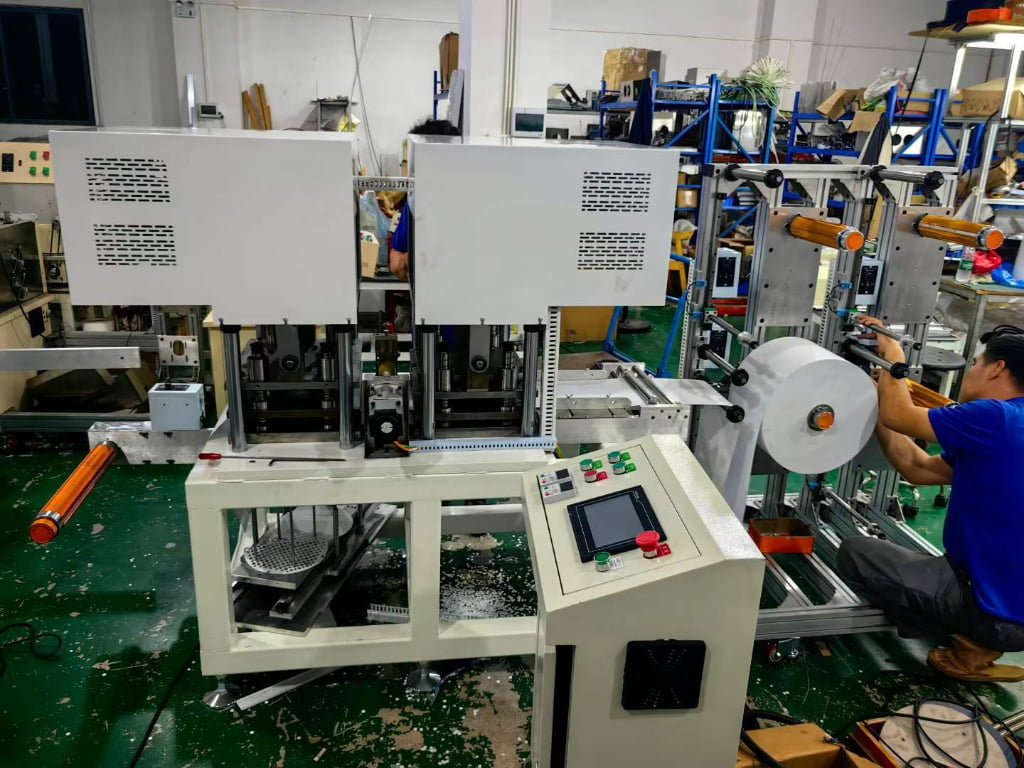
How does HAOXINHE help customers select the right EVA cutting solution?
At HAOXINHE, I understand that every photovoltaic manufacturer has different production requirements.
I do not recommend machines only based on specifications.
I first understand:
- Production volume
- EVA material type
- Module size
- Automation requirements
- Future expansion plans
Then I provide a suitable solution.
My factory provides customized cutting equipment for different industries, including:
- Packaging industry
- Printing industry
- Label industry
- Plastic industry
- Foam industry
- Photovoltaic-related materials
My related machines include:
- Webbing tape cutting machine
- Hot and cold cutting machine
- High-speed trademark cutting machine
- Automatic punching cutting machine
- Round shape cutting machine
- Rotary bevel cutting machine
- Different shapes cutting machine
- Computer tube cutting machine
- Wire cutting and stripping machine
- Metal pipe cutting and beveling machine
- Webbing ribbon cutting machine
- Bubble wrap cutting machine
- PVC Edge Banding cutting machine
- Protective Foam Cutting Machine
My international customers care about:
- Stable quality
- Competitive cost
- Reliable delivery
- Easy communication
- Long-term support
I believe the right EVA cutting machine should help factories achieve:
- Higher production efficiency
- Lower material waste
- Better module consistency
- More stable manufacturing
For solar panel production, EVA cutting is an important step before lamination.
Choosing the correct machine helps manufacturers build a more efficient and reliable photovoltaic production line.
-
"EVA (ethylene vinyl acetate) Film: composition and application", https://sinovoltaics.com/learning-center/materials/ethylene-vinyl-acetate-eva-film-composition-and-application/. EVA (ethylene-vinyl acetate) is widely used in photovoltaic modules as an encapsulation material to protect solar cells and enhance their durability by providing mechanical support and environmental protection. Evidence role: general_support; source type: encyclopedia. Supports: EVA is used as an encapsulation film to protect solar cells and improve module durability.. ↩
-
"Influence of Lamination Conditions of EVA Encapsulation on Photovoltaic …", https://pmc.ncbi.nlm.nih.gov/articles/PMC10650427/. Studies on photovoltaic manufacturing processes indicate that improper selection of EVA cutting machines can result in material defects, increased waste, and reduced production efficiency. Evidence role: general_support; source type: research. Supports: Incorrect EVA cutting machine selection can lead to production issues such as size errors, material wrinkles, and increased waste.. ↩
-
"Experience Scaling-Up Manufacturing of Emerging …", https://docs.nlr.gov/docs/fy07osti/39165.pdf. Educational resources on manufacturing systems emphasize the importance of selecting equipment that meets current production requirements while allowing for future scalability to accommodate growth. Evidence role: general_support; source type: education. Supports: EVA cutting machines should align with current production needs and allow for future scalability.. ↩
-
"Revolutionize Production with EVA Cutting Machines", https://www.zxtcutter.com/application/revolutionizing-production-with-eva-cutting-machines.html. Research on manufacturing equipment highlights the flexibility and cost-effectiveness of semi-automatic EVA cutting machines for small-scale and prototype production. Evidence role: general_support; source type: research. Supports: Semi-automatic EVA cutting machines are suitable for new production lines, prototype development, and small factories.. ↩
-
"7 Key Features to Look for in an EVA Foam Insert Cutting …", https://cncamor.com/7-features-to-look-for-in-eva-foam-insert-cutting-machine/. Research on photovoltaic manufacturing processes underscores the importance of cutting accuracy in ensuring proper encapsulation and reducing material waste. Evidence role: general_support; source type: research. Supports: Accuracy is a critical specification for EVA cutting machines in photovoltaic manufacturing.. ↩
-
"How does material handling impact productivity in hydraulic shearing …", https://www.ursviken.com/how-does-material-handling-impact-productivity-in-hydraulic-shearing-operations/. Studies on manufacturing systems indicate that proper material handling, including tension control and alignment, is essential for maintaining cutting accuracy in EVA processing. Evidence role: mechanism; source type: research. Supports: Material handling systems play a crucial role in ensuring cutting accuracy in EVA cutting machines.. ↩
-
"Robotic Assembly of Photovoltaic Arrays | T2 Portal", https://technology.nasa.gov/patent/MFS-TOPS-105. Research on photovoltaic manufacturing highlights the widespread adoption of automated production lines to improve efficiency and ensure seamless integration of processes. Evidence role: general_support; source type: research. Supports: Modern solar factories rely on automated production lines for efficiency and integration.. ↩
-
"EVA/TPT Cutting & Layup Machine | Solar Panel Manufacturing – Horad", https://solarpanelline.com/3-3-eva-tpt-cutting-layup.html. Educational resources on manufacturing processes describe the use of various cutting technologies, such as automatic roll cutting for high-volume production and CNC knife cutting for flexible applications. Evidence role: general_support; source type: education. Supports: Different cutting technologies are suited to specific applications in photovoltaic manufacturing.. ↩
-
"Solar and Storage Manufacturing Cost Analysis", https://www.nlr.gov/solar/market-research-analysis/solar-storage-manufacturing-cost-analysis. Educational materials on industrial equipment procurement emphasize evaluating long-term costs, including energy use, maintenance, and labor, when purchasing machinery. Evidence role: general_support; source type: education. Supports: Purchasing an EVA cutting machine is a long-term investment that requires consideration of various cost factors.. ↩
-
"Production Costs – an overview | ScienceDirect Topics", https://www.sciencedirect.com/topics/economics-econometrics-and-finance/production-costs. Research on manufacturing economics highlights that factors like energy efficiency, maintenance, and scrap rates often outweigh the initial purchase price in determining total production costs. Evidence role: general_support; source type: research. Supports: The initial purchase price of an EVA cutting machine does not always determine the overall production cost.. ↩