How to reduce material waste when using a PV EVA gasket die cutting machine?
When I talk with customers about PV EVA gasket production costs, material waste is usually one of their biggest concerns.
Many factories focus on machine speed because they want higher output. However, reducing EVA waste can often create a faster improvement in overall profit.
For PV EVA gasket production, raw material cost can represent a large part of the total manufacturing cost.
Every percentage of material improvement can create meaningful savings.
Material waste usually comes from:
- Poor nesting design
- Incorrect roll width
- Too much edge trim
- Bad cutting settings
- Product defects
- Stripping problems
- Incorrect die design
At HAOXINHE, I help customers improve production efficiency by looking at the complete cutting process.
A good PV EVA gasket die cutting system should not only cut faster.
It should also:
- Use more material effectively
- Reduce defective parts
- Improve product consistency
- Lower production costs
The most effective waste reduction methods usually happen before production starts.
The die layout, material selection, and machine settings all influence final material utilization.
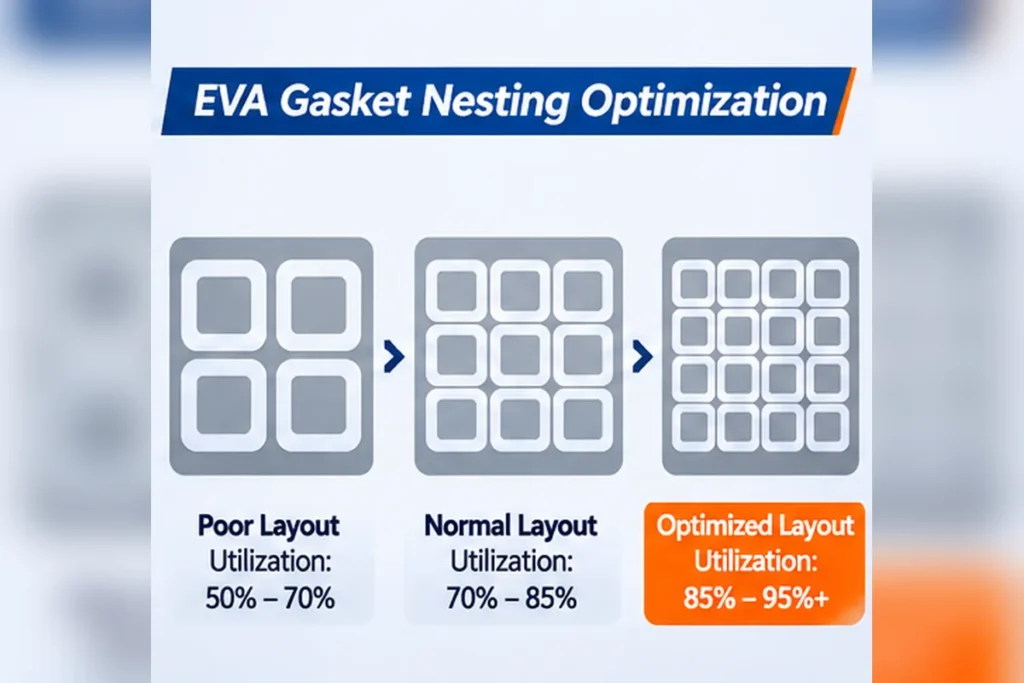
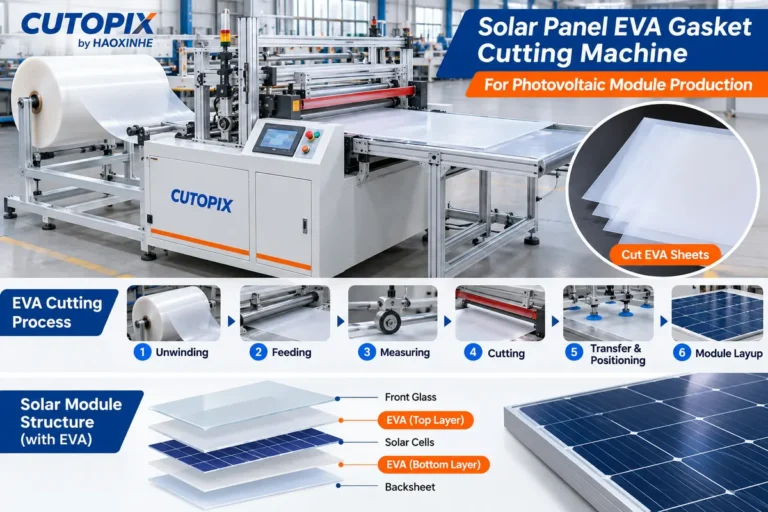
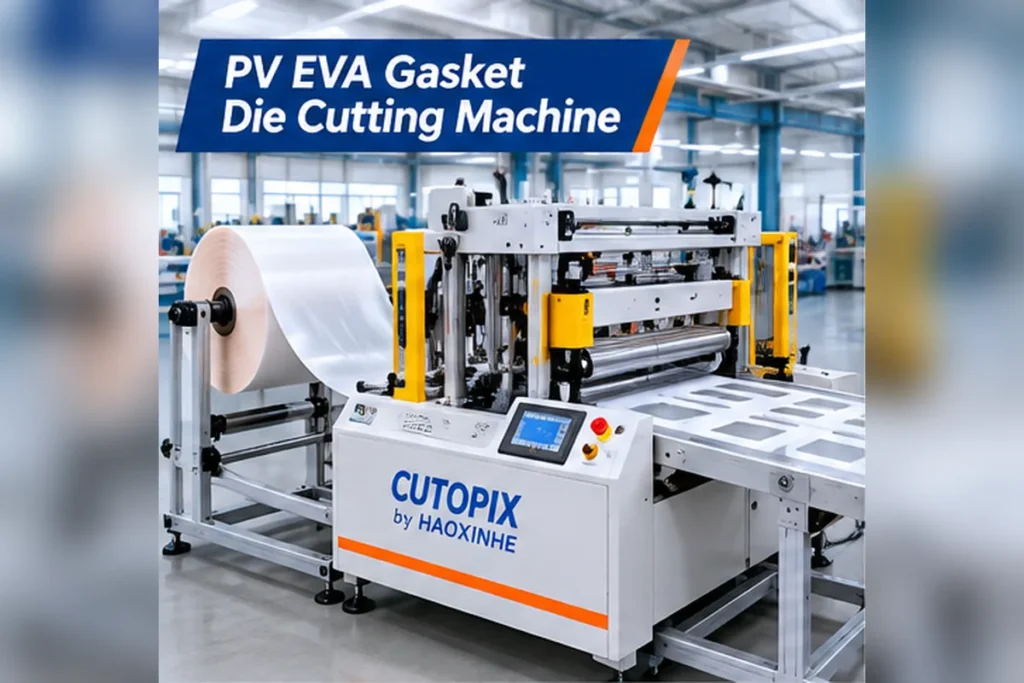
Illustrations are conceptual and do not depict a verified production machine or measured yield results.
What nesting methods improve EVA sheet utilization rates by percentage?
Nesting is one of the most important methods to reduce EVA material waste.
Nesting means arranging gasket shapes on EVA sheets or rolls to produce the highest number of usable parts from the available material.
A good nesting design can improve material utilization by reducing:
- Empty spaces
- Side trim
- Unnecessary gaps
- Production scrap
The exact improvement depends on gasket shape and material size.
The percentage improvement depends on the gasket geometry, die layout, roll width, and minimum spacing required for reliable stripping. Compare layouts using actual part and material dimensions rather than assuming a fixed savings percentage.
| Nesting condition | What to evaluate |
|---|---|
| Poor layout | Large unused areas or excessive edge trim |
| Normal layout | Acceptable spacing but opportunities remain |
| Optimized nesting | More usable parts per sheet while preserving reliable stripping |
The final result depends on:
- Product geometry
- Material width
- Die design
- Cutting method
1. Optimize die layout before making the tooling
The first step to reducing waste is planning the die layout before manufacturing the cutting die.
Many factories make the die first and only later discover that the material usage is not efficient.
I recommend checking:
- Product arrangement
- Cutting direction
- Space between parts
- Waste removal path
- Material feeding direction
A good layout should balance:
- Maximum product quantity
- Stable stripping
- Easy production operation
| Layout factor | Waste reduction effect |
|---|---|
| More parts per die | Higher output |
| Smaller unnecessary gaps | Less scrap |
| Correct direction | Better material use |
| Stable stripping space | Fewer damaged parts |
A layout that creates maximum parts but causes stripping problems is not a good solution.
Production stability is also important.
2. Match EVA roll width with the nesting pattern
For roll-fed EVA materials, roll width selection has a major impact on waste.
Using oversized rolls can create unnecessary side waste.
For example:
A factory may use a 1,000mm EVA roll, but the optimized die layout may only need 760mm.
The extra material becomes waste.
A better approach is to customize roll width based on production needs.
| Material strategy | Result |
|---|---|
| Standard oversized roll | More side waste |
| Correct slit width | Better utilization |
| Custom roll size | Higher yield |
Before ordering EVA material, I suggest customers review:
- Roll width
- Die size
- Product arrangement
This simple step can reduce long-term material cost.
3. Use multi-cavity dies for stable products
When a PV EVA gasket design is stable, a multi-cavity die can greatly improve efficiency.
A multi-cavity die allows multiple gaskets to be produced in one cutting stroke.
Example:
| Die type | Output per stroke |
|---|---|
| Single cavity | 1 gasket |
| 4 cavity | 4 gaskets |
| 8 cavity | 8 gaskets |
| 16 cavity | 16 gaskets |
More cavities usually improve material efficiency because:
- Edge waste is shared
- Cutting area is better used
- Production time decreases
However, too many cavities can create problems.
A poor design may cause:
- Difficult stripping
- Uneven cutting pressure
- Product damage
The best die design balances quantity and stability.
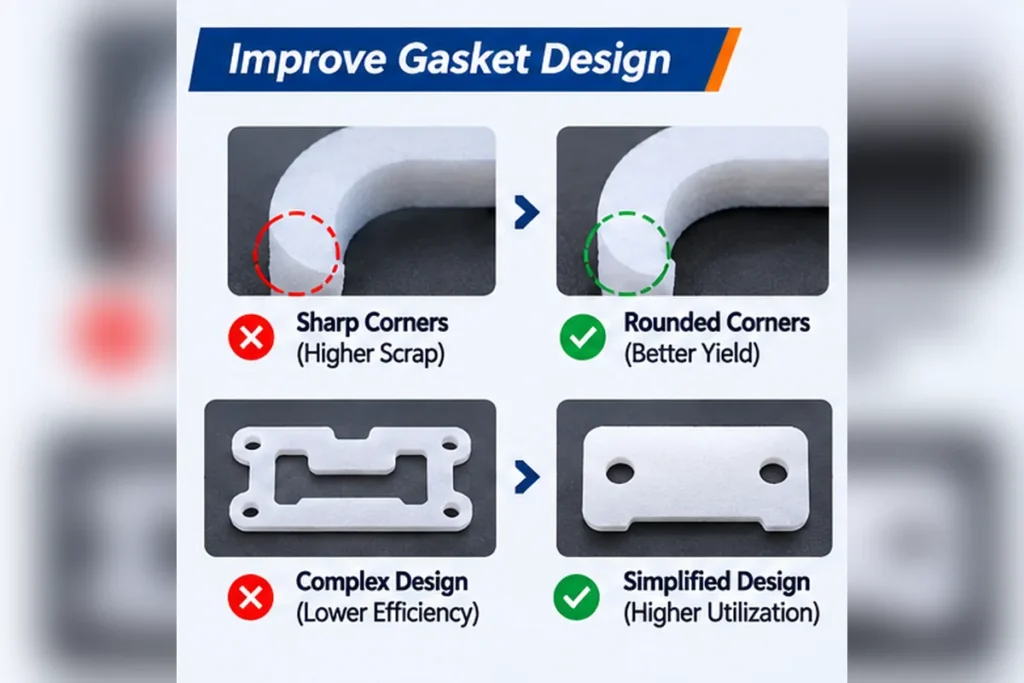
4. Improve gasket design for manufacturing
Product design directly affects material waste.
Some gasket features increase waste:
- Very small holes
- Narrow bridges
- Sharp corners
- Complex internal shapes
These features can create:
- More cutting stress
- More scrap
- Difficult waste removal
| Design feature | Production impact |
|---|---|
| Small holes | Higher scrap risk |
| Narrow bridges | Easy tearing |
| Sharp corners | More material stress |
| Complex shapes | Lower nesting efficiency |
I recommend reviewing gasket drawings before production.
A small design change may improve:
- Material utilization
- Cutting speed
- Tool life
without affecting product performance.
5. Use practical tolerances for EVA materials
EVA foam is a flexible material.
Unlike metal parts, EVA can compress and recover.
Very strict tolerances may create unnecessary waste.
Problems caused by excessive tolerance requirements include:
- More rejected parts
- More machine adjustment
- Higher inspection cost
A better approach is to define tolerances based on:
- EVA thickness
- Density
- Compression behavior
- Actual sealing requirement
| Tolerance decision | Result |
|---|---|
| Too strict | More rejects |
| Practical tolerance | Stable production |
| Material-based tolerance | Better efficiency |
A professional supplier should help customers balance quality and production cost.
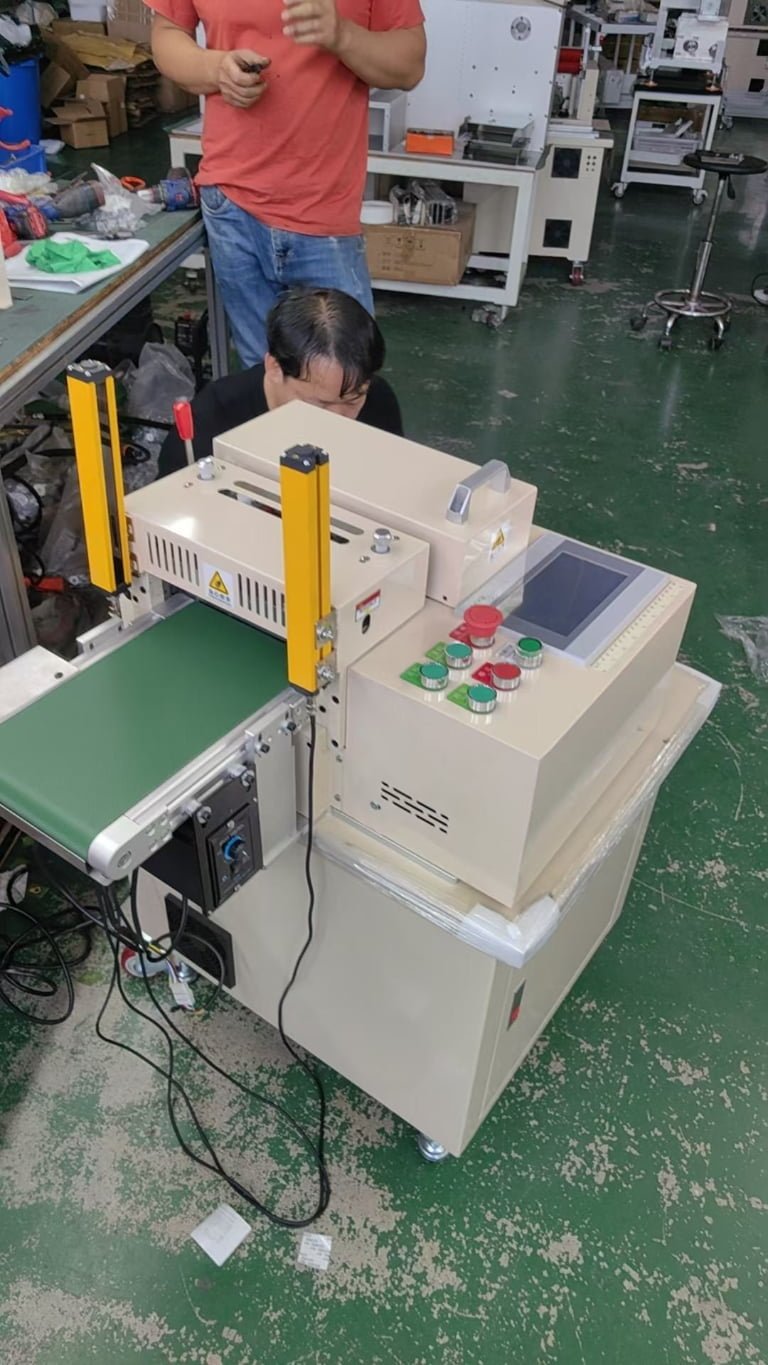
For the CUTOPIX HX-200DK-B2 EVA gasket punching and cutting machine, actual material thickness, finished dimensions, and tooling should be confirmed through sample testing rather than relying on a universal tolerance claim.
6. Use kiss cutting for adhesive-backed EVA
Many PV EVA gasket products include adhesive layers.
Traditional through cutting separates every layer.
Kiss cutting provides another option.
For adhesive-backed converting materials, kiss cutting is a process that cuts the face material and adhesive while leaving the release liner intact. See the 3M Production: Cutting technical bulletin for the distinction between kiss cutting and through cutting. [1]
Kiss cutting cuts:
- EVA material
- Adhesive layer
but keeps:
- Release liner
This method provides several advantages:
- Easier handling
- Better automation
- Lower damage risk
- Better storage
| Cutting method | Material effect |
|---|---|
| Through cutting | All layers separated |
| Kiss cutting | Carrier liner remains |
For roll-fed adhesive EVA products, kiss cutting can improve production efficiency.
7. Control cutting pressure to reduce rejected products
Incorrect cutting pressure creates hidden waste.
If pressure is too low:
- Products remain connected
- Operators remove parts manually
- Scrap increases
If pressure is too high:
- EVA becomes compressed
- Edges deform
- Liner may be damaged
The correct setting is the lowest pressure that creates complete cutting.
| Pressure problem | Waste result |
|---|---|
| Low pressure | Incomplete parts |
| High pressure | Deformed parts |
| Correct pressure | Stable quality |
I recommend saving approved settings for each product.
The production recipe should include:
- EVA type
- Thickness
- Die number
- Pressure
- Cutting depth
- Feeding speed
8. Maintain machine parts to prevent hidden waste
Material waste is not only caused by design.
Machine condition also affects material usage.
Important maintenance areas include:
- Cutting dies
- Cutting pads
- Feed rollers
- Sensors
- Waste removal systems
| Machine issue | Waste problem |
|---|---|
| Dull die | More defective parts |
| Dirty roller | Position errors |
| Worn pad | Uneven cutting |
| Sensor failure | Registration waste |
Regular maintenance reduces unexpected scrap.
Cutting depth and die condition matter for liner-backed materials: 3M notes that cutting too deeply can damage the liner and increase knife wear, while cutting too lightly can make waste removal difficult. [1]
A first-piece inspection after every die change is also important.
9. Automate waste stripping and product collection
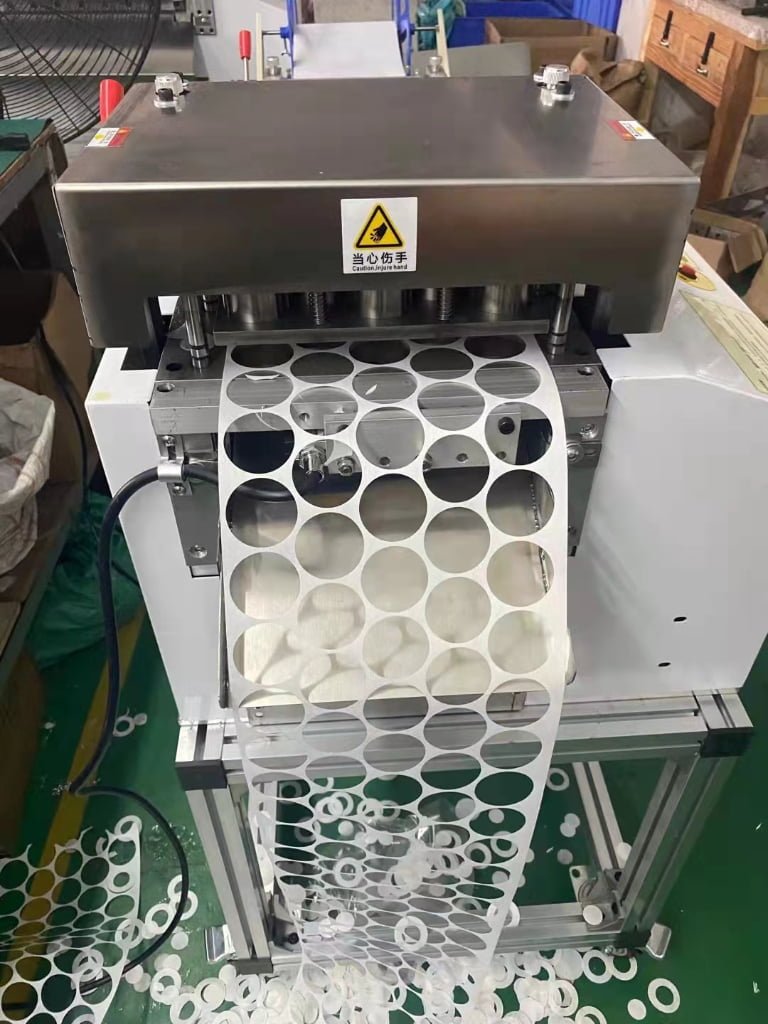
For complex EVA gaskets, waste removal can become a major problem.
Manual stripping may damage:
- Small gasket features
- Thin sections
- Adhesive surfaces
Automatic stripping systems can improve efficiency.
Possible solutions include:
- Matrix stripping
- Knock-out systems
- Conveyors
- Automatic stacking
| Automation function | Benefit |
|---|---|
| Automatic stripping | Less product damage |
| Automatic collection | Less manual work |
| Conveyor transfer | Faster production flow |
For large production orders, automation can significantly reduce waste.
10. Track material yield with production data
Many factories know how much EVA they purchase but do not measure exactly where waste happens.
I recommend tracking:
- Material input
- Good product output
- Side trim waste
- Startup scrap
- Defective products
- Stripping waste
A simple yield calculation is:
Material utilization rate = Good product area ÷ Total material input area × 100%
| Data item | Purpose |
|---|---|
| Material usage | Control raw material cost |
| Scrap amount | Find waste sources |
| Defect reason | Improve process |
| Die performance | Improve tooling |
Production data helps factories improve continuously.
Insights: How HAOXINHE helps customers reduce EVA material waste
At HAOXINHE, I understand that reducing waste is one of the most important goals for factory owners.
A machine with high speed is not enough.
Customers need a complete production solution.
I help customers improve:
- Machine selection
- Cutting method
- Die design
- Material arrangement
- Production settings
My factory provides customized cutting equipment solutions for many industries.
My related machines include:
- Webbing tape cutting machine
- Hot and cold cutting machine
- High-speed trademark cutting machine
- Automatic punching cutting machine
- Round shape cutting machine
- Rotary bevel cutting machine
- Different shapes cutting machine
- Computer tube cutting machine
- Wire cutting and stripping machine
- Metal pipe cutting and beveling machine
- Webbing ribbon cutting machine
- Bubble wrap cutting machine
- PVC Edge Banding cutting machine
- Protective Foam Cutting Machine
My international customers usually care about:
- Lower production cost
- Stable quality
- Fast delivery
- Long machine life
I know that EVA waste directly affects factory profit.
For small solar PV EVA gaskets requiring punching and cutting, see the HX-200DK-B2 product specifications and customization options. For other battery-film and insulation-material projects, browse CUTOPIX New Energy Material Cutting Machines.
By improving nesting design, selecting the correct die, controlling machine settings, and maintaining equipment properly, factories can achieve higher material utilization and stronger competitiveness.
A professional PV EVA gasket die cutting solution should help customers produce more good products from every piece of material.
Request a Material Waste Reduction Review
If you are comparing EVA gasket punching and cutting equipment, send CUTOPIX your gasket drawing, material thickness, roll width, adhesive/liner structure (if any), required quantity, and current scrap problem. We can review the tooling layout, feeding method, and suitable machine configuration before quoting.
Explore the HX-200DK-B2 EVA Gasket Punching & Cutting Machine | Contact CUTOPIX
References
- 3M, Production: Cutting, Instruction Bulletin, Revision A (December 2024). Provides general converting guidance on die cutting, kiss cutting, cutting depth and waste removal. The bulletin concerns 3M graphic films and is not a validation study of PV EVA gasket yields.
- 3M, Silicone Release Liner 4997. Describes an industrial release liner designed for kiss-cutting applications; relevance depends on the EVA product’s adhesive/liner structure.