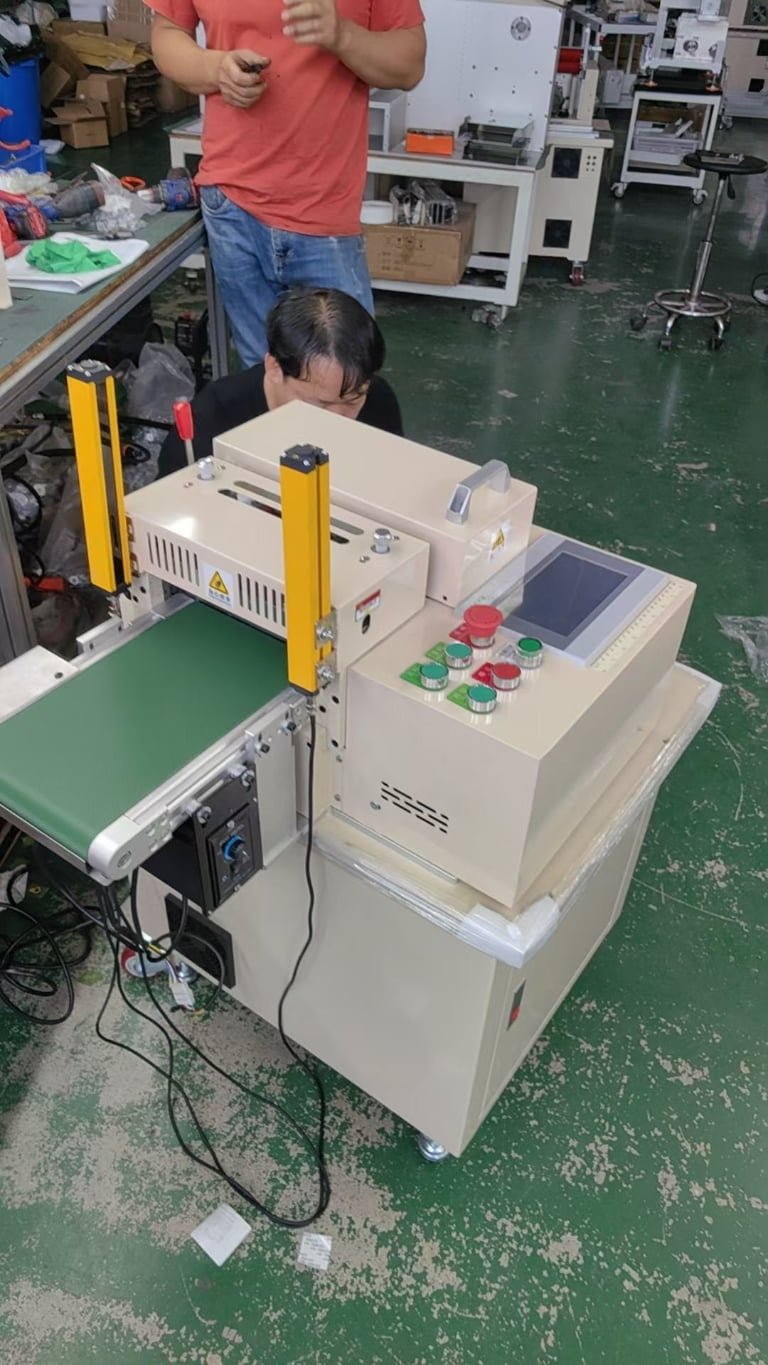
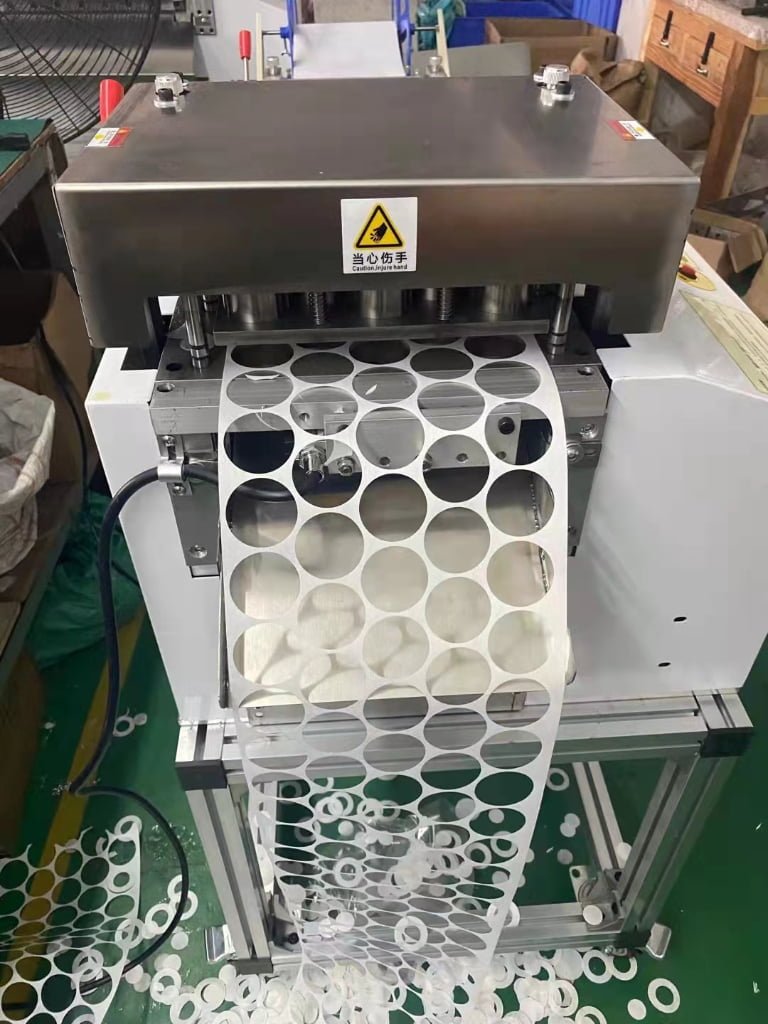
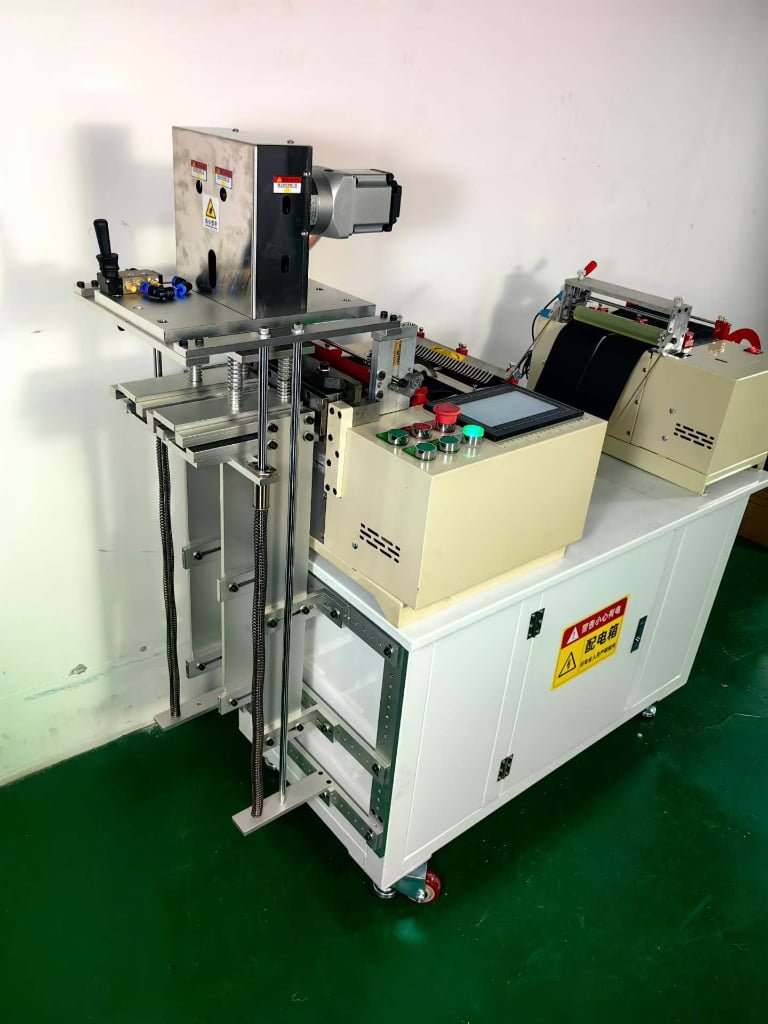
How to troubleshoot inaccurate cutting length on a nylon cutting machine?
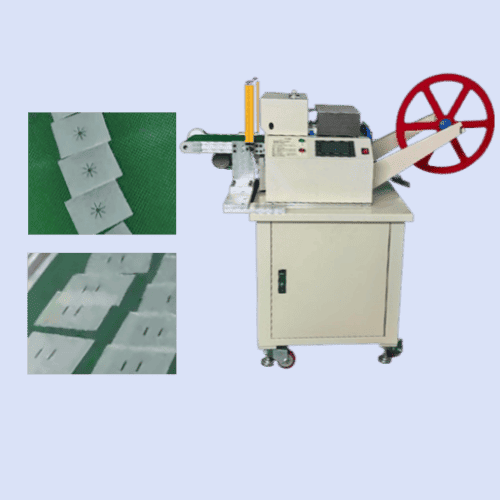
When I work with customers who use nylon cutting machines, I often hear the same problem: “The machine cuts well, but the length is not accurate.” This problem looks simple, but the real reason can come from many different areas. The cutting blade may not be the main problem. The feeding system, sensor, encoder, material condition, air pressure, or machine calibration can all affect the final cutting length.
I have worked with many customers from the packaging industry, label industry, textile industry, and plastic material industry. In these industries, accurate length control is very important. A small length error can create waste, reduce production efficiency, and increase labor costs.
For example, when a customer produces nylon straps, webbing tapes, ribbons, or plastic strips, every piece must have the same length. If a customer needs 100 mm pieces but the machine produces 98 mm or 103 mm pieces, the final product quality will not meet the market requirement.
I usually suggest checking the problem step by step. The fastest way is not to change random parts. The correct method is to check the feeding system first, then check the measurement system, and finally check the cutting system.
In this article, I will explain the main reasons why a nylon cutting machine produces inaccurate cutting length and how I solve these problems with customers.
Which sensor, feeding system, or calibration issues cause length errors?
When I troubleshoot nylon cutting length problems, I divide the possible causes into three main areas:
- Feeding problems
- Measurement and sensor problems
- Calibration and cutting parameter problems
A nylon cutting machine depends on accurate material movement. The machine does not know the real length by looking at the material. It depends on rollers, encoders, sensors, and software settings.
If one part gives the wrong information, the cutting result will also become inaccurate.
| Problem Area | Common Cause | Cutting Result |
|---|---|---|
| Feeding system | Roller slipping, weak pressure, worn belt | Random length errors |
| Encoder system | Dirty encoder wheel, wrong signal reading | Stable but incorrect length |
| Calibration | Wrong length parameter or offset | All pieces too long or too short |
| Blade system | Dull blade or wrong blade setting | Uneven cutting size |
| Material condition | Nylon stretching or bending | Different length after cutting |
Check the puller or take-off system first
The first thing I check is the material feeding system. Many customers think the blade causes the problem, but the real reason is often the puller system.
A nylon cutting machine needs stable feeding. The rollers must hold the material and move it forward at a consistent speed. If the rollers slip, the machine software may receive the correct signal, but the material movement is already wrong.
For example, if the feeding roller should move 100 mm but the nylon slips 3 mm during movement, the machine will cut a 97 mm product instead of a 100 mm product.
I normally ask customers to check these parts:
Feeding roller condition
The feeding roller needs enough grip. If the surface becomes smooth after long-term production, the roller cannot hold nylon properly.
I recommend checking:
- Roller surface wear
- Dust or oil contamination
- Pressure between rollers
- Roller alignment
Belt and transmission condition
Some machines use belts or gear systems to control feeding. A loose belt can create movement delay.
| Inspection Item | Normal Condition | Possible Problem |
|---|---|---|
| Roller surface | Clean and strong grip | Material slipping |
| Belt tension | Stable movement | Length difference |
| Roller pressure | Equal pressure | Uneven feeding |
| Material path | Straight movement | Material deviation |
At HAOXINHE, I always pay attention to feeding stability when designing cutting equipment. Whether it is a webbing tape cutting machine, hot and cold cutting machine, or high-speed trademark cutting machine, stable feeding is the foundation of accurate cutting.
A machine with a high-speed blade but unstable feeding cannot create consistent products.
Inspect the encoder and sensor system
The encoder is one of the most important parts for length measurement. It tells the machine how much material has moved.
If the encoder gives the wrong signal, the machine will cut the wrong length even when the mechanical parts are working well.
Common encoder problems
The most common issues I see are:
- Dust on the encoder wheel
- Oil or material residue
- Loose encoder connection
- Encoder wheel wear
- Incorrect encoder parameter setting
A small amount of contamination can change the measurement accuracy.
For example, if the encoder wheel normally measures 1 mm movement correctly, but dirt changes the contact condition, the machine may measure 0.98 mm or 1.02 mm. Over a long production cycle, this small error becomes a large difference.
| Encoder Problem | Customer Feeling | Solution |
|---|---|---|
| Dirty wheel | Random length error | Clean encoder surface |
| Wrong parameter | Same error every time | Reset calibration |
| Loose cable | Sudden abnormal cutting | Check connection |
| Damaged encoder | Unstable production | Replace encoder |
I often recommend customers create a regular cleaning schedule. Preventive maintenance is much cheaper than stopping production.
Check material slipping on the feed path
Nylon is flexible. Unlike metal or rigid plastic materials, nylon can stretch, bend, and move during feeding.
This creates another common problem.
If the material is not straight before entering the cutting area, the machine may cut different lengths even if the encoder is correct.
I usually check:
- Material tension
- Guide rollers
- Material support
- Feeding angle
A good nylon cutting machine needs a smooth material path.
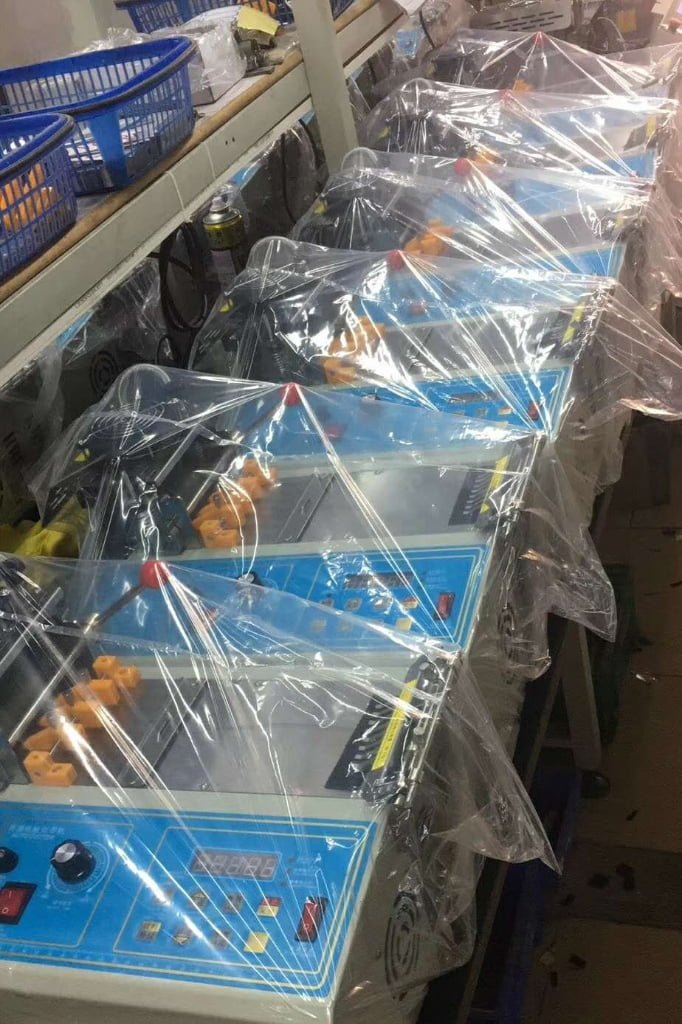
Verify blade condition and cutting method
The cutting blade also affects accuracy. A damaged blade can create problems, especially when customers use thick nylon materials.
A dull blade needs more pressure to cut. This extra pressure can push or move the material before the cut finishes.
I always recommend checking:
| Blade Condition | Effect |
|---|---|
| Sharp blade | Clean and accurate cut |
| Dull blade | Material movement and deformation |
| Wrong blade thickness | Different cutting position |
| Damaged blade | Uneven cutting quality |
Different materials also need different cutting methods.
For example:
| Material | Recommended Equipment |
|---|---|
| Nylon webbing | Webbing ribbon cutting machine |
| Plastic film | Hot and cold cutting machine |
| Labels | High-speed trademark cutting machine |
| Tubes | Computer tube cutting machine |
| Wires | Wire cutting and stripping machine |
| Metal pipes | Metal pipe cutting and beveling machine |
At HAOXINHE, I provide different cutting solutions because every material has different requirements.
Check heat problems during nylon cutting
Nylon can react to heat. During high-speed cutting, friction between the blade and material can create heat.
Too much heat can make nylon expand or deform.
This is especially important for customers using continuous production machines.
The possible causes include:
- Blade is not sharp enough
- Cutting speed is too slow
- Pressure is too high
- Cooling is not enough
I usually suggest customers test different speed settings.
The goal is not always the fastest speed. The goal is stable production with accurate length.
Review speed and feeding parameters
The software settings also affect cutting accuracy.
Many modern machines allow customers to adjust:
- Cutting speed
- Feeding speed
- Acceleration
- Deceleration
- Length compensation
If these settings are not correct, the machine may stop too early or too late.
| Parameter | Too Low | Too High |
|---|---|---|
| Feeding speed | Low production | Material movement problem |
| Cutting speed | More heat | Cutting vibration |
| Acceleration | Slow response | Material pulling |
| Length compensation | Short products | Long products |
When I help customers, I normally ask them to test three different lengths.
For example:
- 50 mm
- 100 mm
- 500 mm
This test helps identify whether the problem is a fixed error or a scaling error.
Understand calibration problems
Calibration is one of the most common reasons for inaccurate length.
If every product is 2 mm shorter, the machine does not have a random problem. It usually has a calibration offset problem.
For example:
Setting: 100 mm
Actual result: 98 mm
The customer can adjust the length compensation.
However, if:
Setting: 100 mm → actual 98 mm
Setting: 500 mm → actual 490 mm
The problem is different. This means the measurement scale may be wrong.
| Error Type | Example | Possible Reason |
|---|---|---|
| Fixed error | Always 2 mm short | Offset problem |
| Increasing error | Longer length creates bigger error | Encoder scale problem |
| Random error | Different every time | Feeding problem |
Check air pressure for pneumatic systems
Some nylon cutting machines use pneumatic cylinders for pressing, clamping, or cutting.
Low air pressure can create unstable movement.
I suggest checking:
- Air pressure level
- Air leakage
- Cylinder movement
- Pressure stability during operation
If the clamp cannot hold the material strongly, the material can move during cutting.
Keep nylon material straight and supported
The final point is material preparation.
Even the best automatic punching cutting machine or different shapes cutting machine cannot produce accurate results if the material itself is unstable.
Before production, I check:
- Is the material twisted?
- Is the roll stored correctly?
- Is the material tension stable?
- Are the guides supporting the material?
For customers producing protective foam, bubble wrap, PVC edge banding, or similar materials, material support is especially important.
A complete troubleshooting checklist for nylon cutting length problems
| Step | Check Point | Action |
|---|---|---|
| 1 | Feeding roller | Clean and check grip |
| 2 | Encoder | Remove dust and test signal |
| 3 | Material path | Keep material straight |
| 4 | Blade | Replace damaged blade |
| 5 | Parameters | Check speed and length settings |
| 6 | Calibration | Adjust length compensation |
| 7 | Air pressure | Confirm stable pressure |
How HAOXINHE helps customers improve cutting accuracy
At HAOXINHE, I understand that customers do not only need a cutting machine. They need stable production.
My customers usually care about:
- Cutting accuracy
- Machine reliability
- Delivery time
- Easy communication
- Custom solutions
I produce different cutting equipment for various industries, including:
- Webbing tape cutting machine
- Hot and cold cutting machine
- High-speed trademark cutting machine
- Automatic punching cutting machine
- Round shape cutting machine
- Rotary bevel cutting machine
- Different shapes cutting machine
- Computer tube cutting machine
- Wire cutting and stripping machine
- Metal pipe cutting and beveling machine
- Webbing ribbon cutting machine
- Bubble wrap cutting machine
- PVC edge banding cutting machine
- Protective foam cutting machine
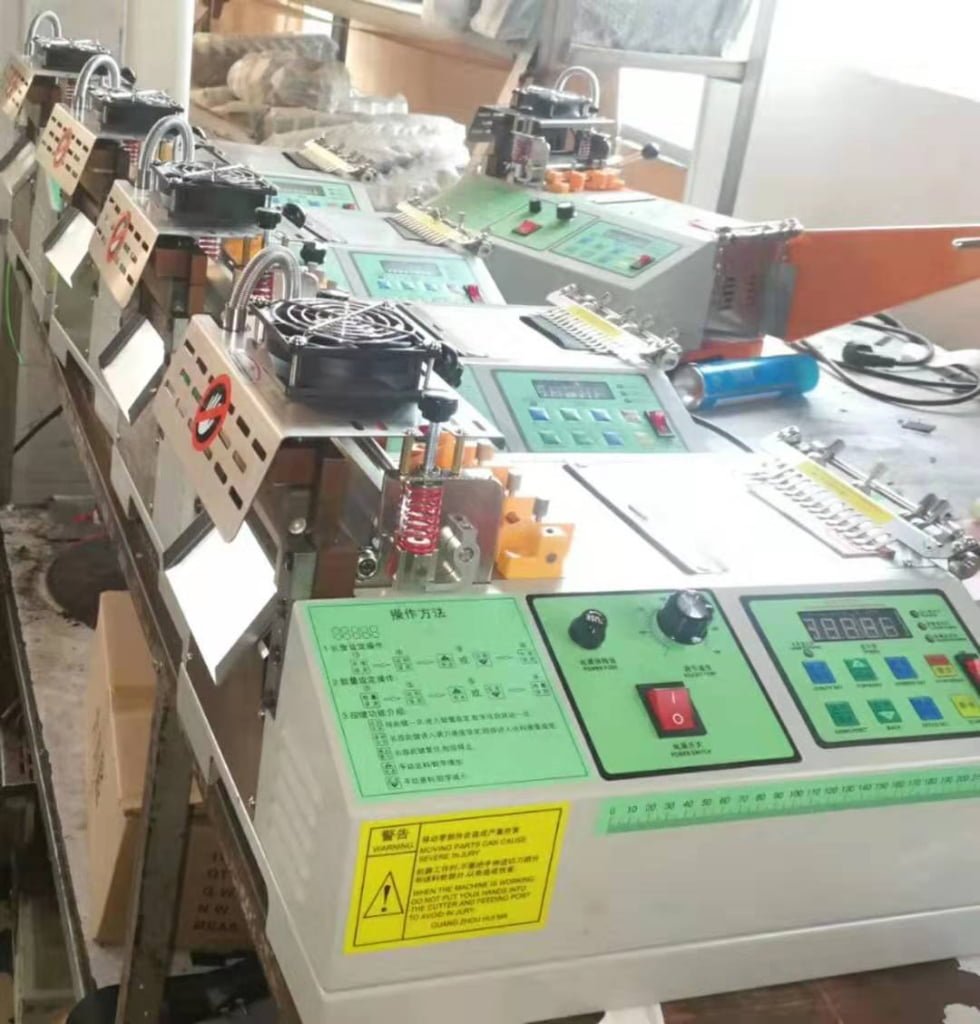
With multiple production lines, I focus on quality control from machine structure to final testing.
| HAOXINHE Advantage | Customer Benefit |
|---|---|
| Factory production | Better price control |
| Custom machine design | Suitable for special materials |
| Quality inspection | Stable machine performance |
| Export experience | Smooth international cooperation |
| Technical support | Faster problem solving |
Conclusion
When a nylon cutting machine has inaccurate cutting length, I do not recommend changing parts immediately. The best solution is to check the whole system step by step.
The feeding system, encoder, material condition, blade, air pressure, and calibration settings all work together.
In my experience, most length problems can be solved by finding the real cause instead of only adjusting the cutting blade.
A stable machine creates stable products. This is the goal I always focus on when I design and manufacture cutting equipment at HAOXINHE.
Insights from HAOXINHE
- Accurate cutting starts with stable feeding, not only with a sharp blade.
- Different materials require different cutting technologies.
- Regular maintenance can reduce production downtime.
- Customized cutting machines help customers improve efficiency.
- HAOXINHE focuses on reliable quality, flexible customization, and long-term cooperation with global customers.