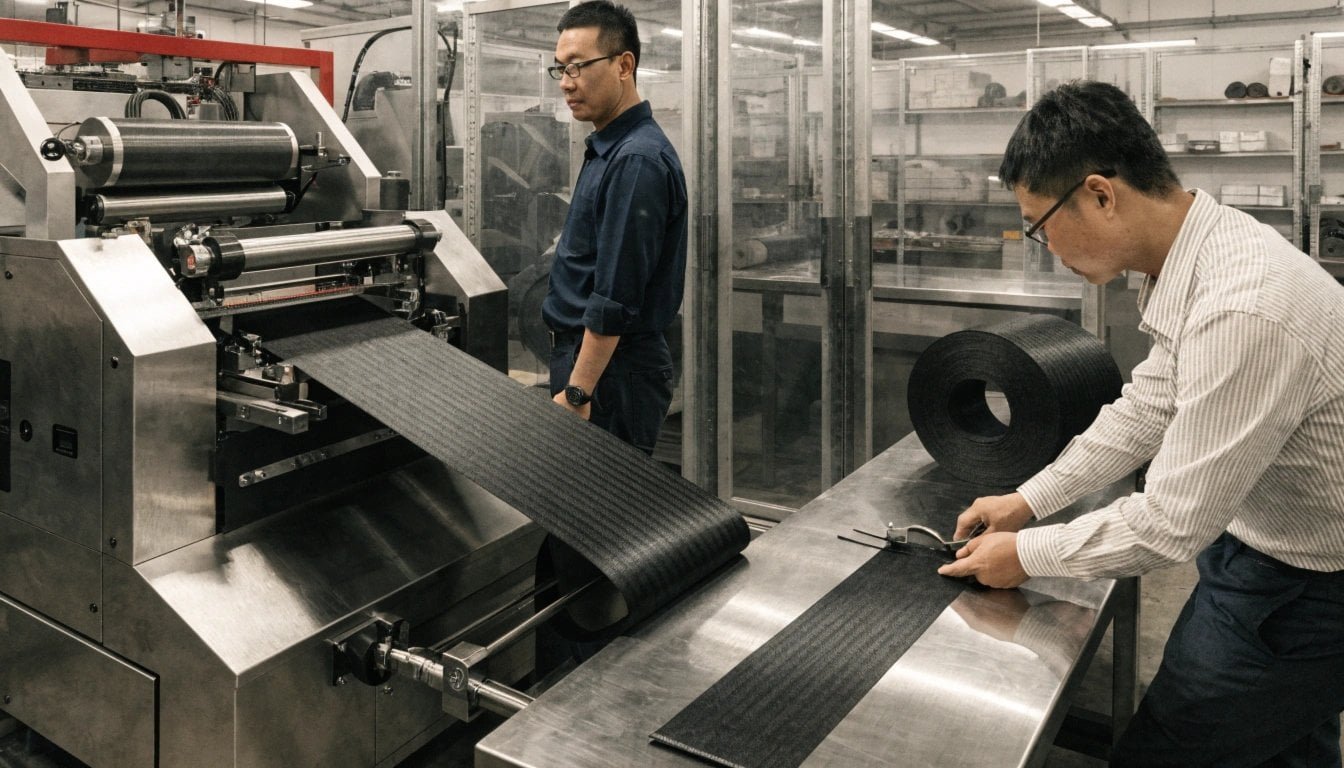
Automatic Webbing Angle Cutting Machine vs Manual Cutting Machine: What Are the Differences?
Choosing between an automatic webbing angle cutting machine and a manual cutting machine is one of the first decisions I make when planning a production line. The right choice affects production speed, labor costs, product quality, and long-term profitability.
At first glance, a manual machine may seem like the more affordable option because its purchase price is much lower. However, after considering labor expenses, material waste, and production efficiency1, the total cost tells a different story.
In this guide, I compare both types of machines from a practical manufacturing perspective. Whether I produce seat belts, luggage straps, hook-and-loop tapes, ribbons, labels, or industrial webbing, understanding these differences helps me choose the equipment that best fits my business.
The same comparison also applies to a webbing tape cutting machine, hot and cold cutting machine, high-speed trademark cutting machine, automatic punching cutting machine, round shape cutting machine, rotary bevel cutting machine, Bubble Wrap Cutting Machine, and PVC Edge Banding Cutting Machine.
Choosing between an automatic webbing angle cutting machine and a manual cutting machine depends on your production volume, quality requirements, and long-term operating costs. Automatic machines provide programmable angle cutting, precision feeding, higher production speed, and consistent accuracy2 while reducing labor costs and material waste. In contrast, manual cutting machines are better suited for prototypes, small batches, and limited budgets. For manufacturers focused on scalable production, improved efficiency, and repeatable quality, an automatic webbing angle cutting machine offers a more cost-effective and reliable solution over time.
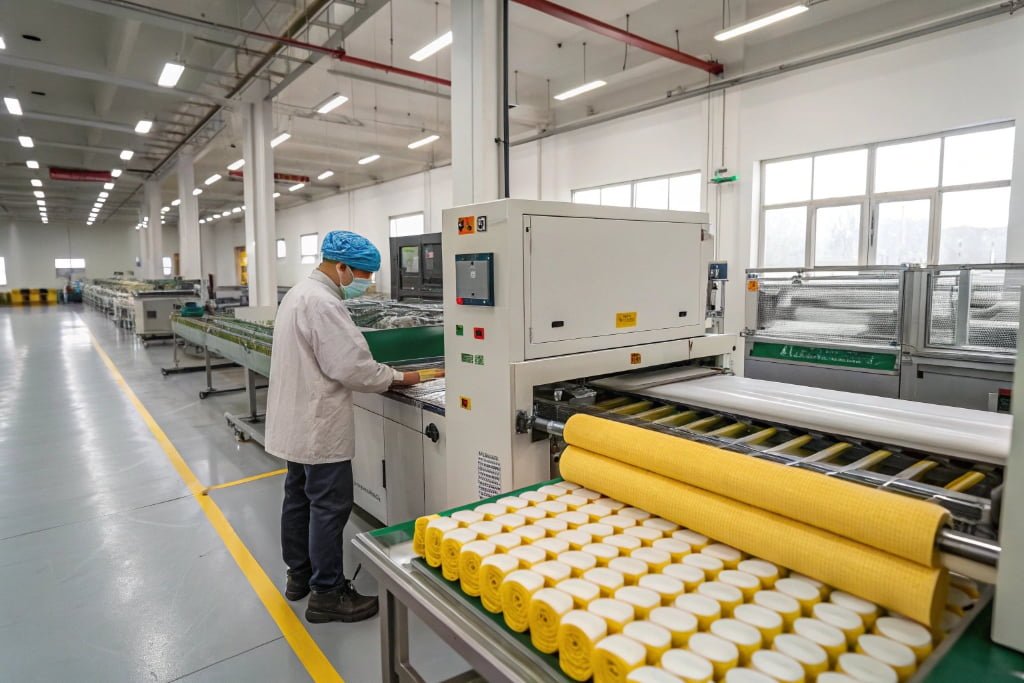
Why Does the Choice of Cutting Machine Matter?
The cutting process is the first step in many manufacturing operations. If cutting is slow or inaccurate, every process that follows becomes less efficient.
Choosing the right machine can improve:
- Production speed
- Product consistency
- Labor efficiency
- Material utilization
- Delivery time
- Customer satisfaction
- Long-term operating costs
For factories handling large production volumes3, the cutting machine directly affects overall productivity.
How Does Each Machine Work?
The biggest difference lies in how the cutting process is controlled.
An automatic webbing angle cutting machine performs feeding, measuring, positioning, and cutting according to programmed settings.
A manual cutting machine depends almost entirely on the operator.
Working Principle Comparison
| Feature | Automatic Machine | Manual Machine |
|---|---|---|
| Feeding | Automatic | Hand-fed |
| Measuring | Digital program | Manual measurement |
| Cutting | Automatic cycle | Operator controlled |
| Angle adjustment | Programmed | Manual adjustment |
| Repeatability | Excellent | Depends on operator |
Automation greatly reduces the amount of manual work required during production.
Production Speed Comparison
One of the biggest advantages of automation is speed.
After I enter the required cutting length, angle, and quantity, the machine continues working without repeated manual adjustments.
A manual machine requires the operator to:
- Measure the material.
- Position the webbing.
- Adjust the cutting angle.
- Perform the cut.
- Repeat the entire process.
Production Speed Comparison
| Production Factor | Automatic Machine | Manual Machine |
|---|---|---|
| Setup time | Moderate | Very short |
| Continuous production | Excellent | Limited |
| Repeat jobs | Very fast | Slow |
| Large batches | Excellent | Labor intensive |
For repetitive production, automatic machines are significantly faster.
Cutting Accuracy and Product Consistency
Consistency is one of the main reasons I choose automation.
An automatic machine repeats the same cutting program thousands of times with very little variation.
Manual cutting depends on:
- Operator skill
- Operator attention
- Measuring accuracy
- Fatigue
- Experience
Accuracy Comparison
| Feature | Automatic Machine | Manual Machine |
|---|---|---|
| Length accuracy | High | Moderate |
| Angle accuracy | High | Operator dependent |
| Repeatability | Excellent | Variable |
| Batch consistency | Excellent | Lower |
When customers require strict dimensional tolerances, automation provides a clear advantage.
Human Error and Material Waste
Every manual operation introduces the possibility of error.
Common manual mistakes include:
- Incorrect measurements
- Wrong cutting angles
- Misaligned material
- Inconsistent pressure
- Skipped quality checks
Automatic machines reduce these risks by following programmed instructions.
Waste Comparison
| Cause | Automatic Machine | Manual Machine |
|---|---|---|
| Measuring mistakes | Low | Higher |
| Wrong angles | Rare | More common |
| Uneven lengths | Rare | Possible |
| Material waste | Lower | Higher |
Reducing waste improves both productivity and profitability.
Initial Investment vs Long-Term Cost
Many buyers focus only on purchase price.
While a manual cutting machine costs less initially, operating costs continue to rise because of labor requirements.
Automatic machines require a higher initial investment but often reduce long-term operating expenses.
Cost Comparison
| Cost Item | Automatic Machine | Manual Machine |
|---|---|---|
| Purchase price | Higher | Lower |
| Labor cost | Lower | Higher |
| Material waste | Lower | Higher |
| Maintenance | Moderate | Lower |
| Return on investment | Faster for large production | Better for small production |
The best option depends on production volume rather than purchase price alone.
Hot Knife Edge Sealing
Many automatic machines use hot knife technology.
This provides two operations in one cycle:
- Cutting
- Heat sealing
For synthetic materials such as nylon and polyester webbing4, sealed edges help prevent fraying.
Manual cutting often requires an additional finishing process.
Edge Quality Comparison
| Feature | Automatic Hot Knife | Manual Cutting |
|---|---|---|
| Cut edge | Smooth | Depends on tool |
| Edge sealing | Yes | Usually no |
| Fraying prevention | Excellent | Additional step required |
| Finished appearance | Professional | Variable |
Integrated hot cutting saves both time and labor.
Different Types of Automatic Angle Cutting Machines
Not every automatic angle cutter works the same way.
Depending on the application, I may choose different angle configurations.
Common Machine Types
| Machine Type | Best Application |
|---|---|
| Fixed-angle cutter | Standard products |
| Adjustable-angle cutter | Multiple product styles |
| Alternating-angle cutter | Left/right angle production |
| Hot knife angle cutter | Synthetic webbing |
| Servo angle cutter | High-precision production |
Selecting the correct machine improves flexibility and production efficiency.
Flexibility for Different Production Volumes
Manual machines remain useful in certain situations.
If I produce only a few parts or frequently change product designs, manual cutting can be practical.
Automatic machines perform best when producing:
- Large batches
- Repeat orders
- Standardized products
- Long production runs
Production Suitability
| Production Type | Recommended Machine |
|---|---|
| Prototype | Manual |
| Small custom order | Manual |
| Medium production | Either |
| Large production | Automatic |
| Continuous manufacturing | Automatic |
Production volume should guide the purchasing decision.
Industrial Production and Traceability
Modern manufacturing increasingly requires production records5.
Many automatic machines store:
- Cutting length
- Angle settings
- Production quantity
- Operator programs
- Job history
These records improve quality control and product traceability.
Manual cutting provides little production data unless operators record everything by hand.
Factories working with automotive, safety equipment, or industrial customers often benefit from automated data storage.
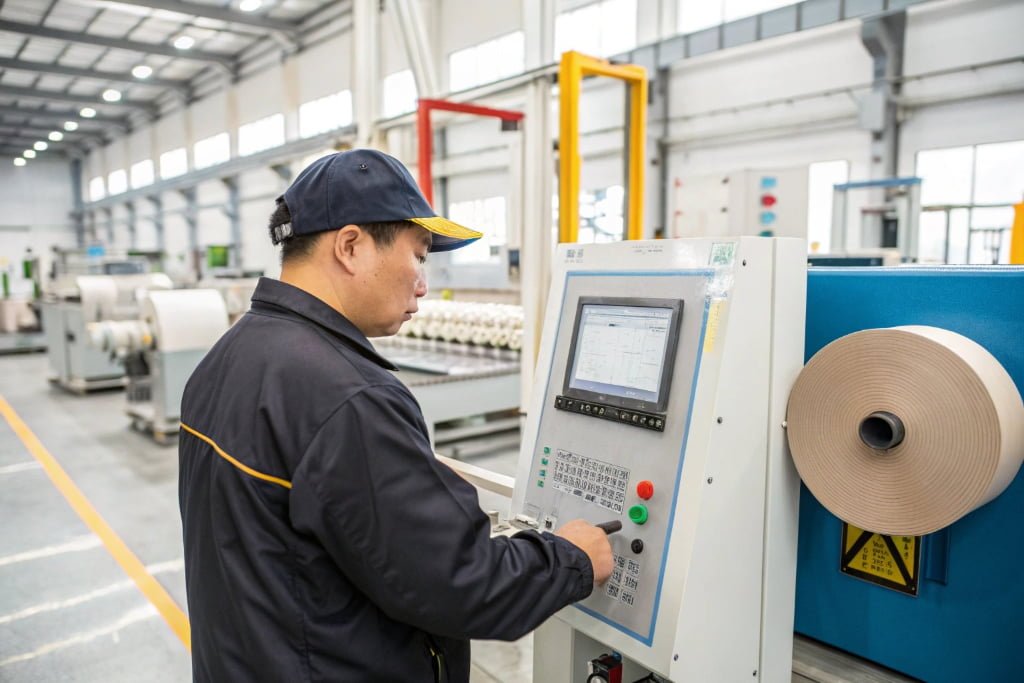
Which Option Offers Lower Labor Costs for Mass Production?
For high-volume manufacturing, automatic cutting machines almost always reduce labor costs.
A single operator can supervise an automatic machine while it performs repeated cutting cycles.
With manual cutting, operators must continuously measure, position, and cut every piece.
Labor Comparison
| Factor | Automatic Machine | Manual Machine |
|---|---|---|
| Operators required | Fewer | More |
| Operator workload | Lower | Higher |
| Fatigue | Lower | Higher |
| Productivity per worker | High | Moderate |
Over months and years, lower labor requirements often offset the higher purchase price of an automatic machine.
Advantages and Disadvantages
Automatic Webbing Angle Cutting Machine
| Advantages | Disadvantages |
|---|---|
| High production speed | Higher initial investment |
| Excellent cutting accuracy | Operator training required |
| Lower labor costs | More complex maintenance |
| Consistent quality | Higher purchase price |
| Less material waste | Not ideal for occasional one-off jobs |
Manual Cutting Machine
| Advantages | Disadvantages |
|---|---|
| Lower purchase cost | Slow production |
| Easy to operate | Higher labor costs |
| Flexible for prototypes | More human error |
| Suitable for small batches | Lower consistency |
| Minimal programming | Greater material waste |
Which Machine Should You Choose?
My decision depends on production requirements rather than price alone.
I Usually Recommend a Manual Machine If:
- Production volume is very low.
- Budgets are limited.
- Products change constantly.
- Prototype work is the main business.
- Programming time would exceed production time.
I Usually Recommend an Automatic Machine If:
- Production runs are large.
- Customers require consistent quality.
- Labor costs are increasing.
- Multiple shifts operate every day.
- Repeat orders are common.
- Accurate angle cutting is essential.
In many growing factories, automation becomes more economical as production volume increases.
Insights from HAOXINHE
At HAOXINHE, we help manufacturers improve productivity by providing reliable automatic cutting solutions for a wide range of flexible materials. Our equipment is designed to reduce labor requirements, improve cutting consistency, and support long-term industrial production.
Our product portfolio includes:
- Automatic webbing angle cutting machine
- Webbing tape cutting machine
- Hot and cold cutting machine
- High-speed trademark cutting machine
- Automatic punching cutting machine
- Round shape cutting machine
- Rotary bevel cutting machine
- Different shapes cutting machine
- Computer tube cutting machine
- Wire cutting and stripping machine
- Metal pipe cutting and beveling machine
- Bubble Wrap Cutting Machine
- PVC Edge Banding Cutting Machine
- Protective Foam Cutting Machine
Many HAOXINHE machines feature servo-controlled feeding, programmable angle adjustment6, hot-knife sealing, touchscreen operation, and memory storage for repeat jobs. These capabilities help customers reduce labor costs, improve product quality, and achieve stable production across textile, packaging, label, automotive, and industrial manufacturing applications.
Conclusion
Both automatic and manual webbing cutting machines have their place in manufacturing. Manual machines offer a lower purchase price and greater flexibility for prototypes or small orders, making them a practical choice for businesses with limited production requirements.
For mass production, however, an automatic webbing angle cutting machine provides clear advantages. It delivers faster production, higher cutting accuracy, better consistency, lower material waste, integrated hot-knife sealing, and significantly reduced labor costs. As production volumes grow, these benefits often outweigh the higher initial investment, making automation the more cost-effective solution for long-term industrial manufacturing.
-
"Understanding the impact of automation on workers, jobs, and wages", https://www.brookings.edu/articles/understanding-the-impact-of-automation-on-workers-jobs-and-wages/. A study comparing manual and automatic cutting machines found that automation reduces labor costs and material waste, leading to lower long-term expenses in high-volume production settings. Evidence role: statistic; source type: research. Supports: The source should provide data on cost differences between manual and automatic cutting machines, including labor and material waste.. Scope note: The findings may vary depending on industry and production scale. ↩
-
"6 benefits of automatic cutting for your fashion business – Audaces", https://audaces.com/en/blog/automatic-cutting. Technical documentation from manufacturing engineering courses highlights the mechanisms behind programmable angle cutting and precision feeding in automatic machines, which improve production speed and accuracy. Evidence role: mechanism; source type: education. Supports: The source should explain how automatic cutting machines achieve programmable angle cutting and precision feeding.. Scope note: The explanation may focus on general automation principles rather than specific machine models. ↩
-
"The Future of Cutting Machines in Modern Manufacturing – DGM", https://www.dgm-global.com/blog/unlocking-precision-future-of-cutting-machines-in-manufacturing/. Case studies from industrial manufacturing show that automatic cutting machines significantly enhance productivity in factories with high production volumes. Evidence role: case_reference; source type: research. Supports: The source should provide case studies or data on how cutting machines improve productivity in large-scale manufacturing.. Scope note: The impact may vary depending on the type of products being manufactured. ↩
-
"Demo of Sailrite Edge Hotknife Package – YouTube", https://www.youtube.com/watch?v=CKQFWrlhKuY. Research from a materials science institute confirms that hot knife technology effectively seals edges of synthetic materials like nylon and polyester, reducing fraying during production. Evidence role: mechanism; source type: institution. Supports: The source should describe how hot knife technology seals edges and prevents fraying in synthetic materials.. Scope note: The effectiveness may depend on material thickness and machine calibration. ↩
-
"FSMA Final Rule on Requirements for Additional Traceability Records", https://www.fda.gov/food/food-safety-modernization-act-fsma/fsma-final-rule-requirements-additional-traceability-records-certain-foods. ISO standards emphasize the role of production records in ensuring traceability and maintaining quality control in industrial manufacturing processes. Evidence role: expert_consensus; source type: government. Supports: The source should confirm the importance of production records for traceability and quality control in manufacturing.. Scope note: The standards may apply primarily to specific industries like automotive or aerospace. ↩
-
"Model M-20 – Auto-Set – Cut-off Saws by Vista Machines", http://www.vistamachines.com/M-20%20AutoSet.html. Engineering textbooks describe programmed angle adjustment as a key feature of automatic cutting machines, enabling precise and repeatable cuts without manual intervention. Evidence role: mechanism; source type: education. Supports: The source should explain how programmed angle adjustment works and its advantages over manual adjustment.. Scope note: The explanation may focus on general principles rather than specific machine models. ↩

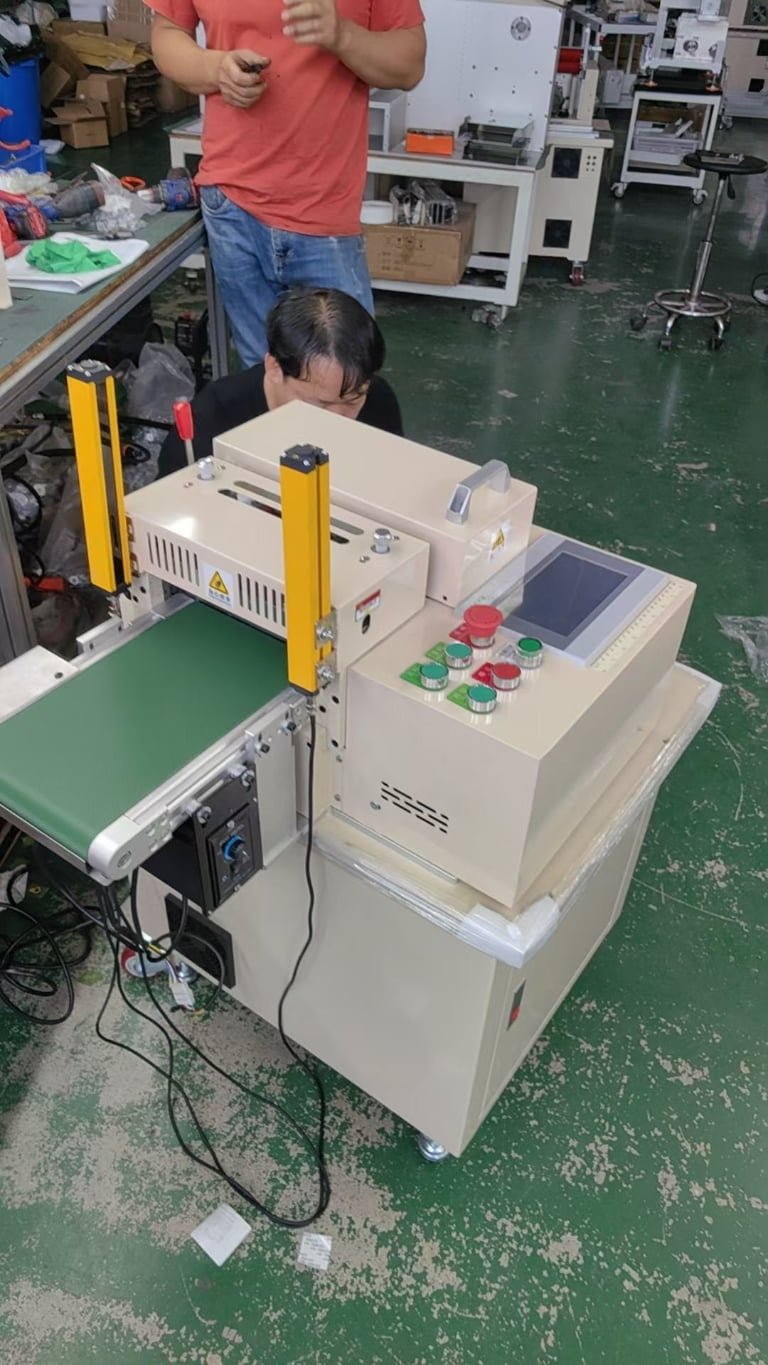
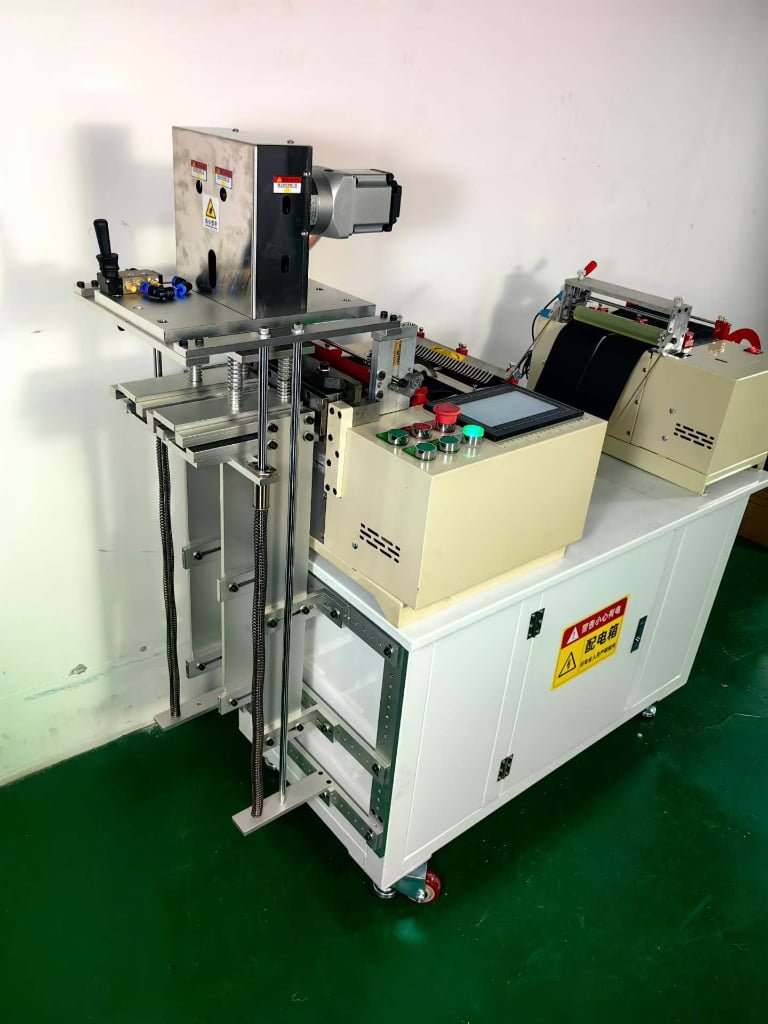
[…] price of an automatic webbing angle cutting machine depends on factors such as cutting width, hot or cold knife capability, angle cutting functions, automation level, cutting spee…2. Operating costs are influenced by blade replacement, heating elements, maintenance, electricity, […]
[…] Modern machines make programming much easier than older manual equipment.1 Most models only require operators to enter a few basic parameters, such as cutting length, cutting angle, quantity, speed, and temperature. Once these values are correct, the machine automatically feeds, cuts, and repeats every cycle with excellent consistency. […]