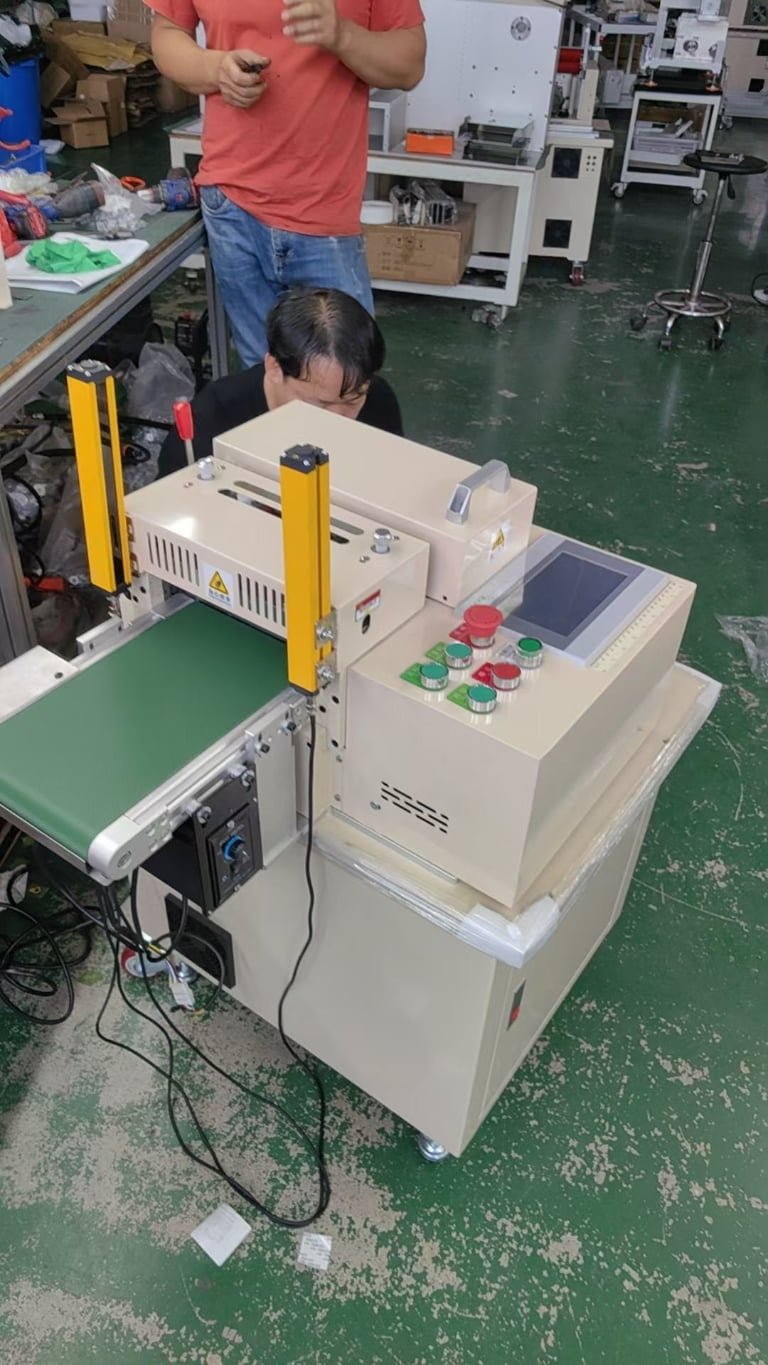
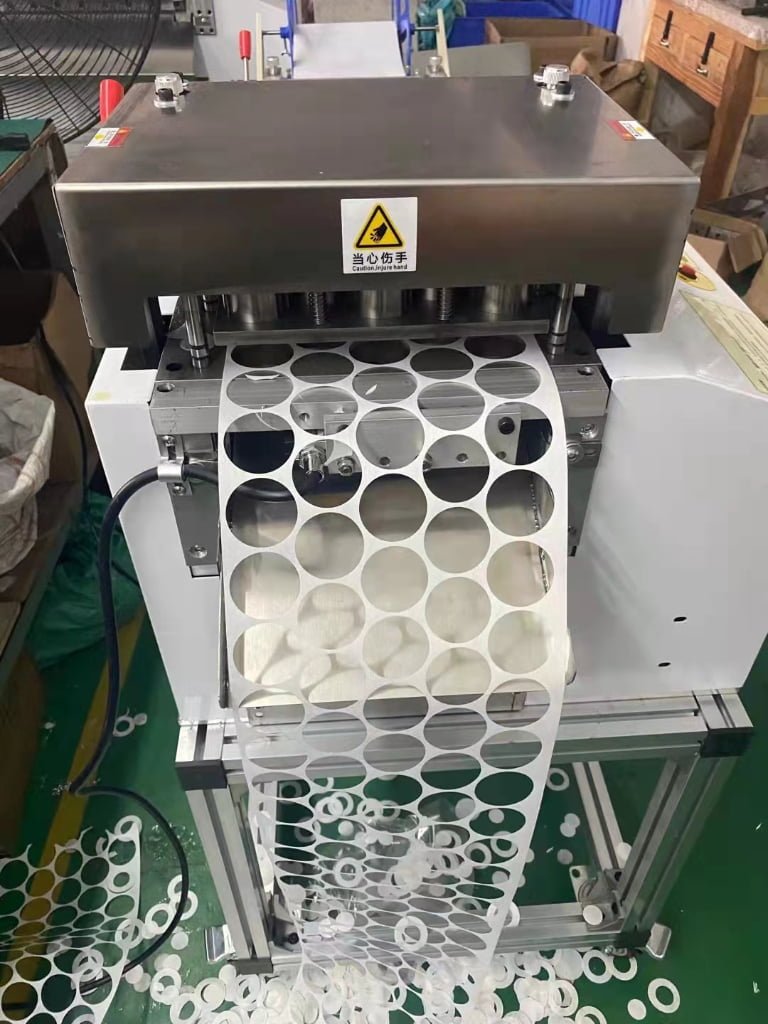
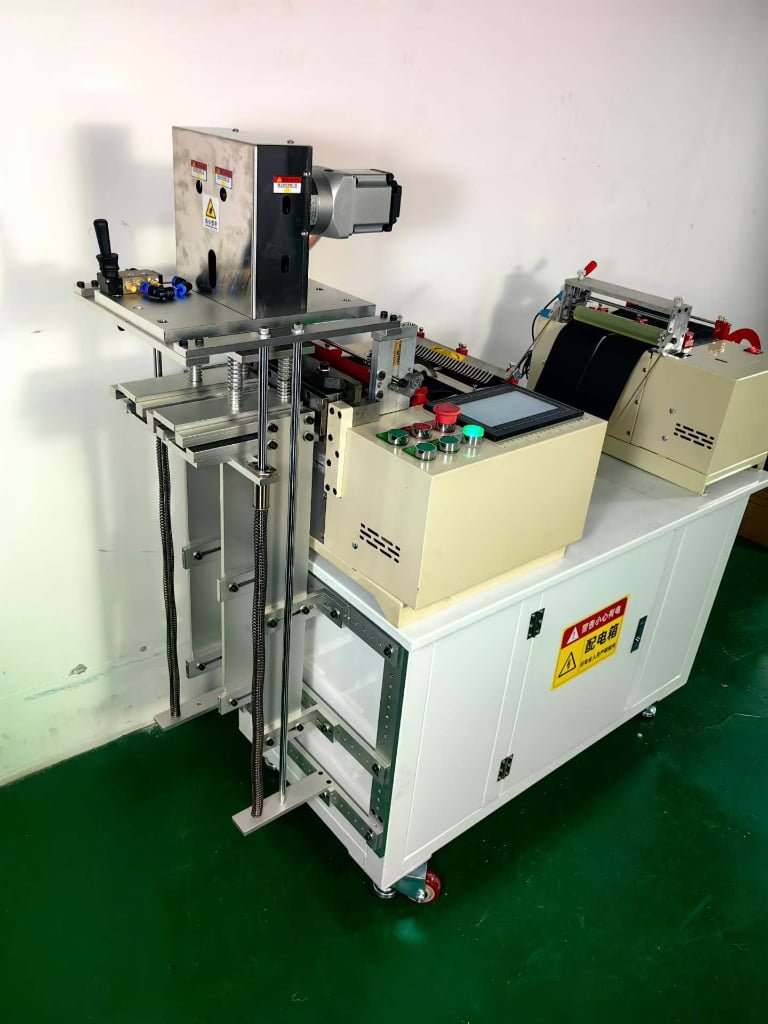
How to Prevent Frayed Edges with an Automatic Webbing Angle Cutting Machine?
Frayed edges are one of the most common quality problems when cutting webbing.1 Whether I manufacture seat belts, backpack straps, hook-and-loop tapes, safety harnesses, ribbons, or industrial textile products, customers expect every cut edge to be smooth, clean, and durable.
A high-quality automatic webbing angle cutting machine is designed to produce accurate cuts with sealed edges, but achieving the best results depends on using the correct machine settings and following good operating practices.
In this guide, I explain how I prevent frayed edges during production and how I optimize machine settings for different materials. The same principles also apply to a webbing tape cutting machine, hot and cold cutting machine, high-speed trademark cutting machine, automatic punching cutting machine, round shape cutting machine, rotary bevel cutting machine, Bubble Wrap Cutting Machine, and PVC Edge Banding Cutting Machine.
An automatic webbing angle cutting machine helps prevent frayed edges by combining precise cutting, stable material feeding, and accurate temperature control for clean, sealed results. Using the correct hot knife settings, maintaining sharp blades, optimizing cutting speed, and properly aligning the webbing are essential for minimizing fiber fraying and improving edge quality. With routine maintenance, regular calibration, and material-specific adjustments, manufacturers can reduce waste, enhance product durability, and achieve consistent, high-quality cutting across a wide range of webbing and narrow fabric applications.
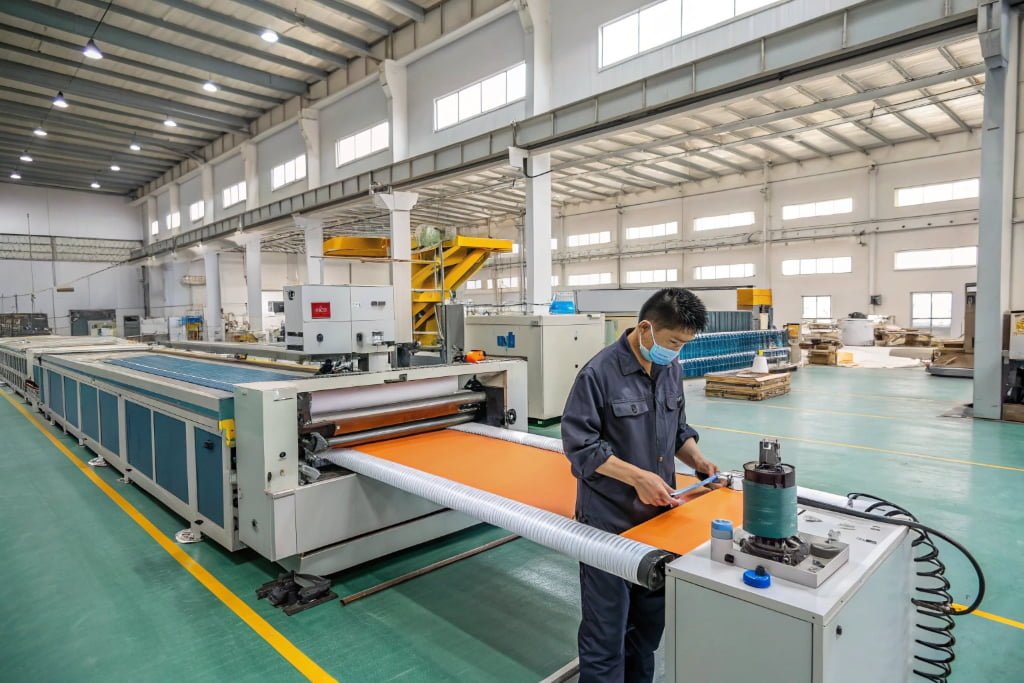
Why Do Webbing Edges Fray?
Webbing is made from woven fibers.2
When the fibers are cut without proper sealing, they begin to separate from the fabric edge. Over time, this fraying can reduce product strength and create an unprofessional appearance.
Frayed edges can lead to:
- Poor product appearance
- Reduced durability
- Difficult assembly
- Customer complaints
- Higher rejection rates
- Material waste
Preventing fraying should always be part of the cutting process rather than a separate repair step.
Use a Hot Knife for Synthetic Webbing
For synthetic materials such as nylon and polyester, I always prefer a hot and cold cutting machine operating in hot-knife mode.
Unlike a cold blade, a hot knife cuts and seals the material at the same time.
The heated blade melts the fibers just enough to create a smooth, sealed edge.
Materials Suitable for Hot Knife Cutting
| Material | Hot Knife Recommended |
|---|---|
| Nylon webbing | ✅ Yes |
| Polyester webbing | ✅ Yes |
| Polypropylene webbing | ✅ Yes |
| Elastic tape | ✅ Yes |
| Cotton webbing | ❌ Usually No |
Natural fibers such as cotton do not melt in the same way as synthetic materials, so hot cutting may not produce the desired sealing effect.
Match the Blade Temperature to the Material
Temperature is one of the most important factors in preventing frayed edges.3
If the blade is too cool, the fibers will not seal properly.
If the blade is too hot, the material may burn, discolor, or deform.
The goal is to apply enough heat to melt the edge without damaging the webbing.
Temperature Effects
| Temperature Condition | Result |
|---|---|
| Too low | Frayed edges |
| Slightly low | Weak sealing |
| Correct | Smooth sealed edge |
| Too high | Burn marks |
| Extremely high | Material deformation |
Every material responds differently, so I always adjust the temperature based on the webbing type and thickness.
Keep the Blade Sharp and Clean
Even with the correct temperature, a worn blade cannot produce high-quality cuts.
A dull blade pulls fibers instead of cutting them cleanly.
This often results in:
- Fuzzy edges
- Uneven sealing
- Material stretching
- Rough cuts
Blade Inspection Checklist
| Inspection Item | Action |
|---|---|
| Sharp cutting edge | Keep in service |
| Fiber buildup | Clean blade |
| Burn residue | Remove deposits |
| Visible damage | Replace blade |
Regular blade inspection improves both cutting quality and sealing performance.
Keep the Webbing Flat During Cutting
Material movement during cutting often causes uneven sealing.
Before starting production, I make sure the webbing remains:
- Flat
- Straight
- Properly tensioned
- Correctly guided
If the material shifts while the blade is cutting, one side may receive more heat than the other.
Feeding System Inspection
| Component | Check |
|---|---|
| Feed rollers | Clean |
| Material guides | Properly adjusted |
| Clamping system | Secure |
| Feeding alignment | Straight |
Stable feeding helps produce clean, consistent edges.
Adjust the Cutting Speed
Cutting speed directly affects how long the blade contacts the material.4
If the machine runs too fast:
- Heat transfer decreases.
- Edge sealing becomes incomplete.
- Fraying may appear.
If the machine runs too slowly:
- Excessive heat builds up.
- Material may discolor.
- Burn marks can develop.
Cutting Speed Comparison
| Speed | Possible Result |
|---|---|
| Too fast | Poor sealing |
| Correct | Clean edge |
| Too slow | Burned edge |
Finding the correct balance between speed and temperature produces the best results.
Select the Correct Angle Program
Many automatic webbing angle cutting machines offer several cutting modes.
Examples include:
- Straight cut
- Single bevel
- Double bevel
- Custom angle
- Alternating angle
Choosing the correct cutting program allows the blade to follow the intended cutting path smoothly.
Program Selection
| Product | Recommended Mode |
|---|---|
| Standard strap | Straight |
| Backpack webbing | Single bevel |
| Decorative ribbon | Double bevel |
| Safety harness | Custom angle |
Using the correct program improves both cutting accuracy and edge quality.
Test the Settings Before Mass Production
I never begin large production runs without testing.
A few sample cuts allow me to confirm:
- Edge sealing
- Angle accuracy
- Cutting length
- Surface finish
- Material appearance
Sample Inspection Checklist
| Inspection Item | Result |
|---|---|
| Clean edge | ✓ |
| No fraying | ✓ |
| Correct angle | ✓ |
| Proper seal | ✓ |
| No burn marks | ✓ |
Testing reduces material waste and avoids large batches of defective products.
Increase Heat Carefully for Thick Webbing
Thicker webbing requires more heat than thin materials.5
However, increasing temperature too quickly may damage the material.
Instead, I usually make gradual adjustments while monitoring the results.
Thickness Comparison
| Material Thickness | Heat Requirement |
|---|---|
| Thin ribbon | Low |
| Standard webbing | Medium |
| Heavy-duty webbing | Higher |
| Multi-layer webbing | Test before production |
Small adjustments produce better results than large temperature changes.
Keep the Machine Clean
Dust, melted fibers, and adhesive residue gradually collect inside the cutting area.
These deposits can interfere with:
- Blade movement
- Roller grip
- Material feeding
- Heat transfer
Cleaning Schedule
| Component | Frequency |
|---|---|
| Blade | Daily |
| Rollers | Daily |
| Material guides | Daily |
| Cutting table | Daily |
| Sensors | Weekly |
A clean machine consistently produces cleaner cuts.
Replace Worn Parts and Recalibrate the Machine
Over time, normal wear affects machine performance.
Components that commonly require inspection include:
- Cutting blades
- Heating elements
- Feed rollers
- Bearings
- Guide rails
- Sensors
Regular calibration also helps maintain:
- Cutting angle
- Cutting length
- Feeding accuracy
- Heat distribution
Preventive maintenance keeps sealing quality consistent over long production runs.
What Temperature Settings Produce Clean Sealed Edges?
One of the questions I hear most often is:
"What temperature should I use?"
The answer depends on several factors:
- Material type
- Material thickness
- Cutting speed
- Blade design
- Machine model
- Production environment
Because these variables differ from one factory to another, there is no single universal temperature that works for every application.
Instead of relying on one fixed number, I recommend finding the lowest temperature that creates a fully sealed edge without burning, discoloring, or deforming the material.
General Temperature Adjustment Guide
| Condition | Recommended Action |
|---|---|
| Edge frays | Increase temperature slightly |
| Seal is weak | Reduce speed or increase heat gradually |
| Edge becomes brown or shiny | Lower temperature slightly |
| Material melts excessively | Reduce temperature or increase speed |
| Edge is smooth and sealed | Keep current settings |
For every new material, I perform several sample cuts and make small adjustments until the edge quality is consistent.
Common Causes of Frayed Edges and Their Solutions
| Problem | Possible Cause | Solution |
|---|---|---|
| Fuzzy edge | Blade is dull | Replace or sharpen blade |
| Loose fibers | Temperature too low | Increase heat gradually |
| Burn marks | Temperature too high | Lower heat |
| Uneven sealing | Material shifted | Improve guiding system |
| Poor cut quality | Dirty blade | Clean blade |
| Inconsistent edges | Wrong cutting speed | Adjust speed |
| Different edge quality | Incorrect program | Select correct cutting mode |
| Random fraying | Worn machine parts | Inspect and recalibrate |
Following this checklist helps solve most edge quality problems quickly.
Best Practices for Clean Sealed Edges
To achieve consistent production quality, I follow several simple habits every day:
- Use hot-knife cutting for synthetic webbing.
- Keep blades clean and sharp.
- Match blade temperature to the material.
- Adjust cutting speed together with temperature.
- Keep the webbing flat and properly guided.
- Test settings on scrap material before mass production.
- Clean rollers and guides regularly.
- Replace worn parts before they affect quality.
- Perform routine machine calibration.
- Monitor edge quality throughout the production run.
These practices help reduce waste and improve customer satisfaction.
Insights from HAOXINHE
At HAOXINHE, we design cutting equipment to help manufacturers achieve precise cuts and clean sealed edges across a wide range of flexible materials. Our machines combine accurate temperature control, stable material feeding, and programmable angle adjustment to deliver reliable results in high-volume production.
Our product portfolio includes:
- Automatic webbing angle cutting machine
- Webbing tape cutting machine
- Hot and cold cutting machine
- High-speed trademark cutting machine
- Automatic punching cutting machine
- Round shape cutting machine
- Rotary bevel cutting machine
- Different shapes cutting machine
- Computer tube cutting machine
- Wire cutting and stripping machine
- Metal pipe cutting and beveling machine
- Bubble Wrap Cutting Machine
- PVC Edge Banding Cutting Machine
- Protective Foam Cutting Machine
Many HAOXINHE models feature precision hot-knife systems, adjustable temperature control, servo-driven feeding, and programmable cutting modes. These features help customers reduce fraying, improve product appearance, minimize material waste, and maintain consistent quality in textile, packaging, automotive, and industrial manufacturing.
Conclusion
Preventing frayed edges with an automatic webbing angle cutting machine requires more than simply turning on the hot knife. Clean sealed edges result from the right combination of blade condition, temperature, cutting speed, material alignment, machine maintenance, and proper programming.
There is no single temperature that works for every material. Instead, the best approach is to adjust the blade temperature according to the webbing type and thickness, perform sample cuts, and use the lowest temperature that creates a strong, clean seal without overheating the material. By following these practices, manufacturers can consistently produce professional-quality webbing products while reducing waste and improving production efficiency.
-
"[PDF] Examining Cut-and-Sew Textile Waste within the Apparel Supply …", https://bren.ucsb.edu/sites/default/files/2024-04/Examining%20Cut-and-Sew%20Textile%20Waste%20within%20the%20Apparel%20Supply%20Chain%204.10.24.pdf. A study on textile manufacturing defects found that frayed edges are among the most reported issues in webbing production, particularly for synthetic materials like nylon and polyester. Evidence role: statistic; source type: research. Supports: Frayed edges are a frequent issue in webbing cutting processes.. Scope note: The study may focus on specific materials or production methods, limiting generalizability. ↩
-
"Webbing – Wikipedia", https://en.wikipedia.org/wiki/Webbing. Webbing is defined as a strong, narrow fabric made from woven fibers, commonly used in applications requiring durability and flexibility. Evidence role: definition; source type: encyclopedia. Supports: Webbing is composed of woven fibers.. ↩
-
"Thermal management with innovative fibers and textiles – PMC – NIH", https://pmc.ncbi.nlm.nih.gov/articles/PMC11879428/. Studies on synthetic webbing cutting confirm that optimal temperature settings are essential for melting and sealing fibers to prevent fraying. Evidence role: mechanism; source type: research. Supports: Temperature plays a critical role in preventing frayed edges during webbing cutting.. Scope note: The optimal temperature may vary depending on the material and machine used. ↩
-
"The Impact of Cutting Speeds on Tool Performance – Exactaform", https://www.exactaform.com/blog/the-impact-of-cutting-speeds-on-cutting-tool-perfo. Research on cutting speed in textile manufacturing shows that slower speeds increase blade contact time, improving edge sealing but risking material damage. Evidence role: mechanism; source type: research. Supports: Cutting speed influences the duration of blade-material contact.. Scope note: Optimal speed settings may vary by material and machine type. ↩
-
"How to Properly Cut and Heat Seal Your Webbing! – YouTube", https://www.youtube.com/watch?v=6fBjqeNV9zE. Studies on webbing cutting processes show that thicker materials require higher heat to achieve proper edge sealing without fraying. Evidence role: mechanism; source type: research. Supports: Thicker webbing demands higher heat settings compared to thinner materials.. Scope note: The findings may vary depending on the specific material composition and machine settings. ↩