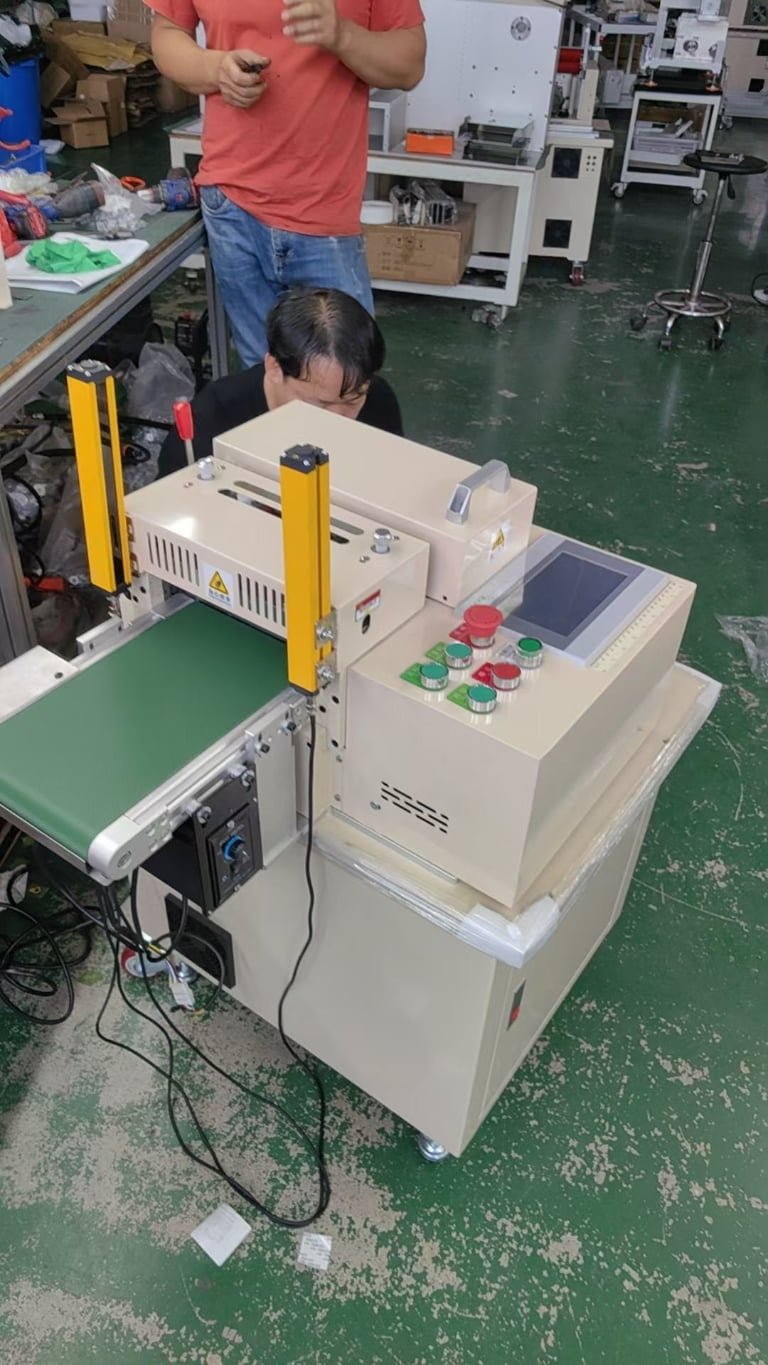
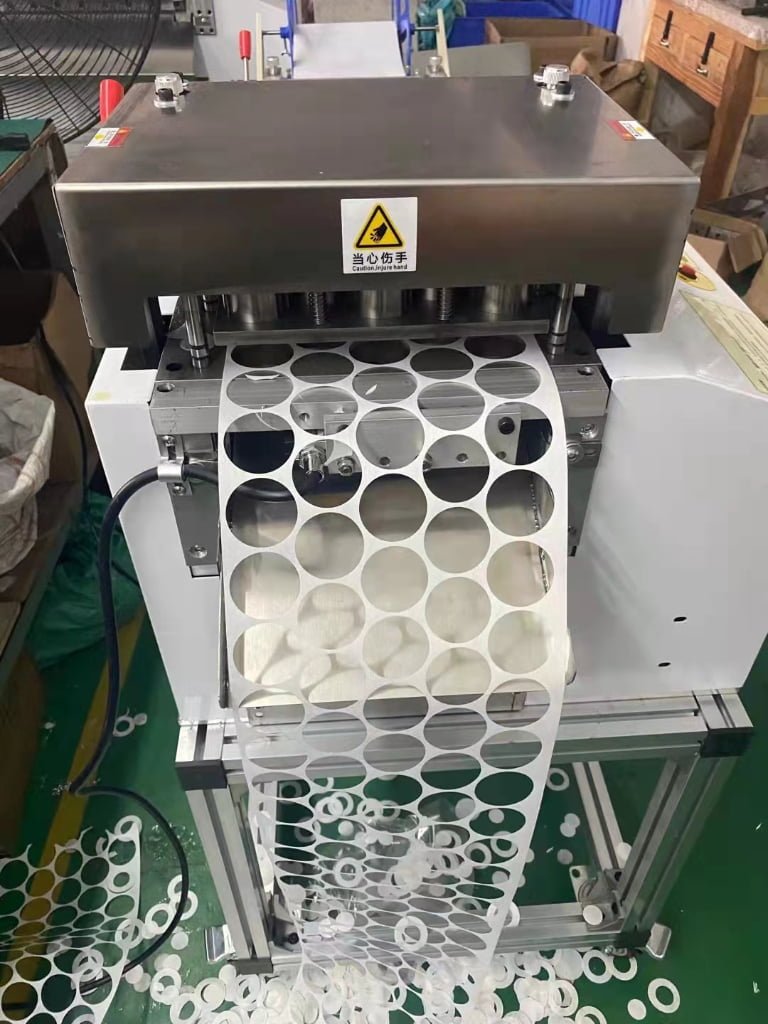
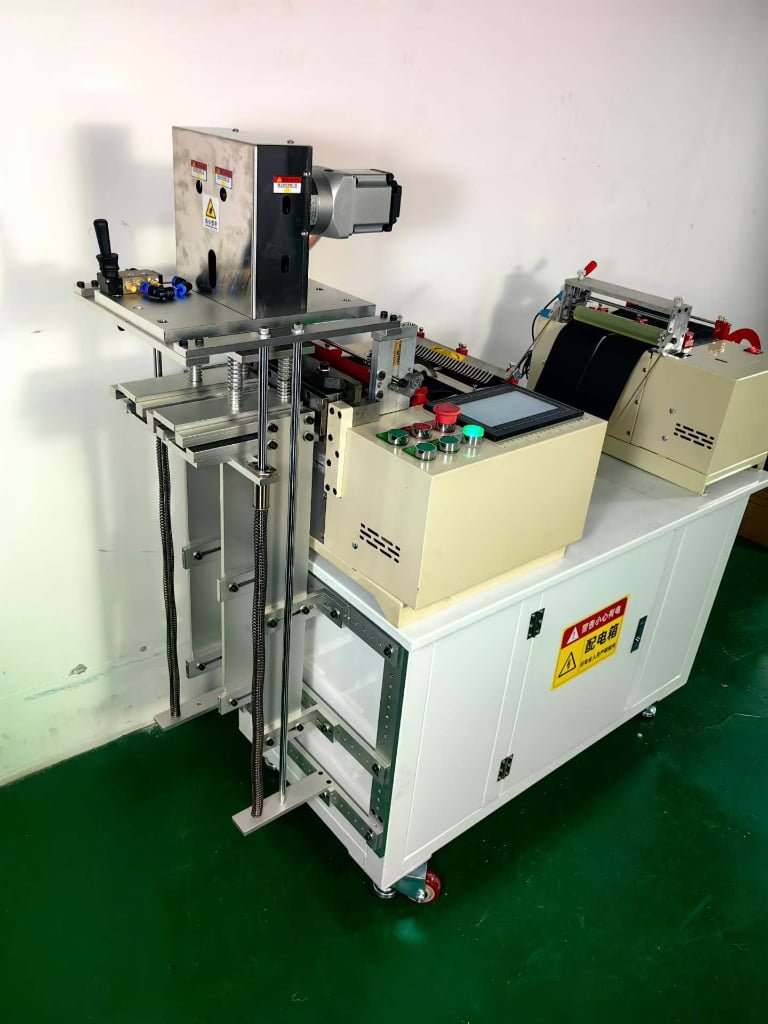
Hole Punching Machine for Webbing Nylon Straps
Nylon webbing straps are used in many industries, including automotive, outdoor equipment, pet products, luggage, military gear, medical devices, and safety equipment. Many of these products require one or more precisely positioned holes for sewing, riveting, buckles, or hardware installation.
In the past, hole punching was often completed manually after cutting. This process was slow, labor-intensive, and prone to positioning errors. Today, an automatic hole punching machine for webbing nylon straps can perform punching quickly and accurately, greatly improving production efficiency and product consistency.
Whether I manufacture safety belts, backpack straps, pet collars, or industrial lifting slings, choosing the right punching machine helps reduce labor costs, improve accuracy, and increase production capacity.
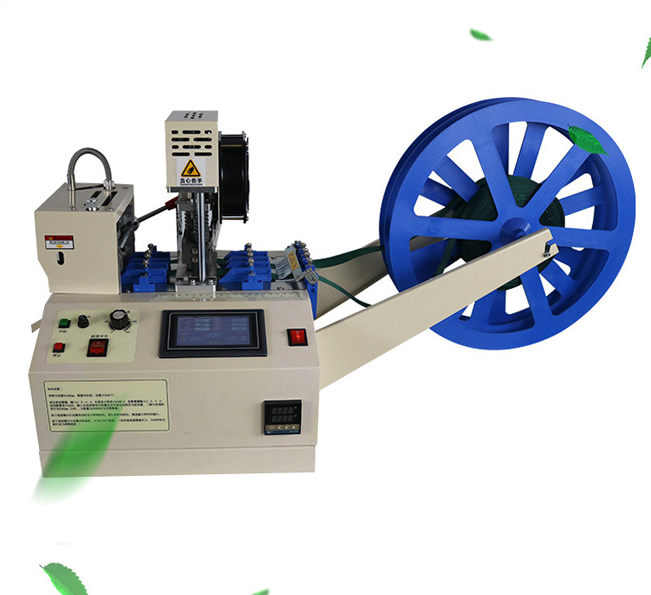
Why Use an Automatic Hole Punching Machine for Nylon Straps?
Manual punching may work for small production runs, but it becomes inefficient when production volumes increase.1
An automatic machine provides consistent hole positioning, repeatable punching quality, and much higher output.
Main Advantages
- High punching accuracy
- Fast production speed
- Lower labor costs
- Consistent hole spacing
- Reduced material waste
- Easy operation
- Suitable for continuous production
How Does a Webbing Hole Punching Machine Work?
The machine combines several automated processes into one production cycle.
Basic Working Process
- Automatic material feeding
- Webbing positioning
- Hole punching
- Optional angle cutting
- Automatic discharge
Because every step is controlled by a PLC or touchscreen system, operators only need to enter the production parameters once.
Main Machine Components
A modern automatic hole punching machine includes several important systems.
| Component | Function |
|---|---|
| Servo Feeding System | Accurate material positioning |
| PLC Controller | Stores production parameters |
| Punching Cylinder | Drives the punching die |
| Punch Die | Creates different hole shapes |
| Feeding Rollers | Transport the webbing |
| Safety Guard | Protects the operator |
High-quality components improve both punching accuracy and machine durability.2
Types of Hole Punches
Different products require different hole designs.
Common Hole Shapes
| Hole Type | Typical Application |
|---|---|
| Round Hole | Belts, Pet Collars |
| Oval Hole | Backpack Straps |
| Slot Hole | Safety Harnesses |
| Square Hole | Industrial Webbing |
| Custom Shape | OEM Products |
Most manufacturers can customize punch dies according to customer drawings.
Suitable Materials
Automatic punching machines process many flexible materials besides nylon.
Common materials include:
- Nylon webbing
- Polyester webbing
- Polypropylene (PP) straps
- Cotton webbing
- Elastic bands
- Hook and loop tape
- Seat belt webbing
- Reflective tape
- Luggage straps
- Military webbing
The correct punching pressure depends on the material thickness and density.
Industries That Use Hole Punching Machines
Automatic punching equipment is widely used across many industries.
| Industry | Typical Products |
|---|---|
| Automotive | Seat Belts |
| Outdoor Equipment | Backpack Straps |
| Pet Products | Dog Collars |
| Safety Equipment | Safety Harnesses |
| Luggage | Travel Straps |
| Military | Tactical Belts |
| Medical | Patient Support Straps |
| Sports Equipment | Protective Gear |
Because these industries require high precision, automatic punching machines have become standard production equipment.3
Important Features to Consider
When choosing a hole punching machine, I always evaluate the following features.
Servo Feeding
Servo feeding provides accurate positioning for every punching cycle.
PLC Touchscreen
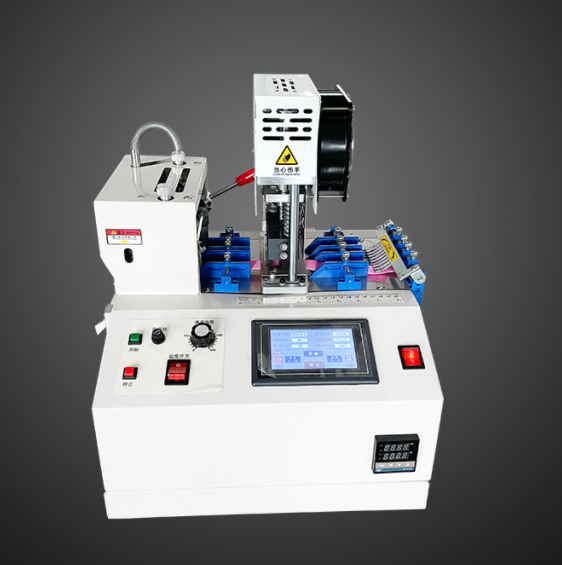
A touchscreen controller makes programming simple and allows operators to save production recipes.
Adjustable Punching Force
Different materials require different punching pressures.
Automatic Counting
The machine automatically counts completed products, improving production management.
Safety Protection
Emergency stop buttons and protective covers improve operator safety.
Hole Punching and Angle Cutting in One Machine
Many manufacturers prefer machines that combine punching and cutting.
The machine can automatically:
- Feed the material
- Punch the hole
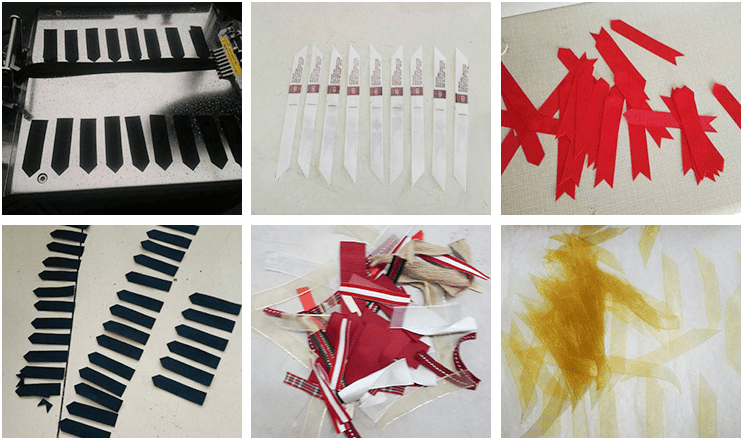
- Cut the required length
- Produce angled ends
- Seal the edge with a hot knife
This reduces handling and increases productivity.
Benefits
| Separate Machines | Integrated Machine |
|---|---|
| More labor | Less labor |
| More handling | One-step production |
| Longer production time | Faster cycle time |
| Higher error rate | Better consistency |
Integrated production is especially valuable for high-volume manufacturing.4
Common Applications
Automatic hole punching machines are commonly used to manufacture:
- Safety belts
- Cargo straps
- Ratchet straps
- Backpack shoulder straps
- Pet leashes
- Dog collars
- Military belts
- Medical straps
- Luggage belts
- Outdoor equipment
- Climbing harnesses
- Tactical gear
These products often require precise hole positioning to ensure proper assembly.5
Maintenance Tips
Regular maintenance improves machine performance and extends service life.
I recommend the following:
- Clean punching dies every day.
- Lubricate moving parts regularly.
- Replace worn punch tools promptly.
- Inspect servo feeding accuracy.
- Check air pressure before production.
- Calibrate positioning sensors periodically.
- Remove webbing dust after each shift.
Simple maintenance routines help maintain stable punching quality.
Frequently Asked Questions
Can the machine punch different hole sizes?
Yes. Changing the punch die allows the machine to produce different hole diameters and shapes.6
Can nylon webbing be punched without fraying?
Yes. High-quality punching dies produce clean holes with minimal fiber damage.7
Can cutting and punching be completed together?
Yes. Many automatic machines combine feeding, punching, angle cutting, and hot knife sealing into one continuous process.
Is the machine suitable for heavy-duty webbing?
Yes. Heavy nylon straps, polyester webbings, seat belts, lifting slings, and industrial straps can all be processed with the correct machine configuration.
Conclusion
An automatic hole punching machine for webbing nylon straps is an excellent investment for manufacturers seeking higher productivity, better accuracy, and lower labor costs. By integrating automatic feeding, precision punching, and optional cutting functions, these machines deliver consistent quality while reducing production time and material waste.8
Whether you produce automotive seat belts, outdoor equipment, pet products, luggage straps, or industrial safety webbings, selecting the right punching machine will improve manufacturing efficiency and help maintain high product standards.
HAOXINHE Insights
At HAOXINHE, we manufacture intelligent automation equipment designed for webbing, ribbon, tape, tubing, and other flexible materials. Our automatic punching solutions feature servo feeding, PLC touchscreens, programmable positioning, customizable punch dies, and optional hot knife angle cutting for maximum productivity and precision.
In addition to automatic punching cutting machines, our product range includes webbing tape cutting machines, hot and cold cutting machines, high-speed trademark cutting machines, round shape cutting machines, rotary bevel cutting machines, different shapes cutting machines, computer tube cutting machines, wire cutting and stripping machines, metal pipe cutting and beveling machines, bubble wrap cutting machines, PVC edge banding cutting machines, and protective foam cutting machines. We provide customized solutions to manufacturers worldwide, helping them improve efficiency, reduce waste, and achieve reliable, high-quality production.
-
"Automatic vs Manual Hole Punch: Which One Is Better?", https://www.eagle-stationery.com/news-center/automatic-vs-manual-hole-punch-which-one-is-better.html. Studies comparing manual and automatic punching processes highlight that manual methods are slower and more prone to errors, particularly in high-volume production scenarios. Evidence role: general_support; source type: research. Supports: Manual punching becomes inefficient for large production volumes.. Scope note: The support may vary depending on the specific industry and production setup. ↩
-
"Linking product design and durability: A review and research …", https://pmc.ncbi.nlm.nih.gov/articles/PMC9513616/. Studies on industrial machinery indicate that high-quality components reduce wear and improve precision over extended use. Evidence role: general_support; source type: research. Supports: High-quality components enhance punching accuracy and machine durability.. Scope note: The degree of improvement may vary based on the specific components and machine design. ↩
-
"Punching machine – Wikipedia", https://en.wikipedia.org/wiki/Punching_machine. Industry reports indicate that sectors requiring high precision, such as automotive and safety equipment, commonly use automatic punching machines. Evidence role: general_support; source type: institution. Supports: Industries like automotive and safety equipment rely on automatic punching machines for high precision.. Scope note: The adoption rate may vary across regions and company sizes. ↩
-
"Case Studies | Center of Excellence in Advanced and Sustainable …", https://www.rit.edu/advancedmanufacturing/case-studies. Research on manufacturing efficiency shows that integrated machines reduce handling time and improve consistency in high-volume production. Evidence role: general_support; source type: research. Supports: Integrated punching and cutting machines are particularly beneficial for high-volume manufacturing.. Scope note: The benefits may depend on the specific production setup and machine configuration. ↩
-
"Seat Belt Safety: Buckle Up America", https://www.nhtsa.gov/vehicle-safety/seat-belts. Educational resources on product assembly emphasize that precise hole positioning is essential for structural integrity and functionality. Evidence role: mechanism; source type: education. Supports: Products like safety belts and pet leashes require precise hole positioning for proper assembly.. Scope note: The specific precision requirements may vary by product type. ↩
-
"Custom Shape Punch, with Lever, Mechanical", https://onlineriver.com/custom-shape-punch-with-lever-mechanical/?srsltid=AfmBOoqGYpaLcZbVBnhW3BMP1MJQw0ISXUOET3W-KVm2kf77L4uXAAZs. Technical manuals on punching machines explain that interchangeable dies allow for flexibility in hole size and shape. Evidence role: mechanism; source type: education. Supports: Punch dies can be changed to create various hole sizes and shapes.. Scope note: The ease of changing dies may depend on the machine model. ↩
-
"Analysis of Impact Characteristics and Detection of Internal Defects …", https://pmc.ncbi.nlm.nih.gov/articles/PMC7826595/. Studies on material processing confirm that high-quality dies reduce fiber fraying and improve hole cleanliness. Evidence role: general_support; source type: research. Supports: High-quality punching dies minimize fiber damage when punching holes.. Scope note: The results may vary based on material type and punching conditions. ↩
-
"Advantages of punching machines", https://www.trumpf.com/en_US/solutions/advantages-of-trumpf-machines/advantages-of-punching-machines/. Research on automated manufacturing systems shows that integrated machines enhance efficiency and reduce material waste. Evidence role: general_support; source type: research. Supports: Integrated machines improve quality, reduce production time, and minimize material waste.. Scope note: The extent of these benefits may depend on the specific production setup. ↩