Angle Webbing Cutting Machine Setting Hole Punching
For many webbing products, cutting alone is not enough. Safety harnesses, backpack straps, pet collars, luggage belts, and industrial slings often require one or more holes for sewing, riveting, or assembly.1 If the hole position is inaccurate, the entire product may be rejected.
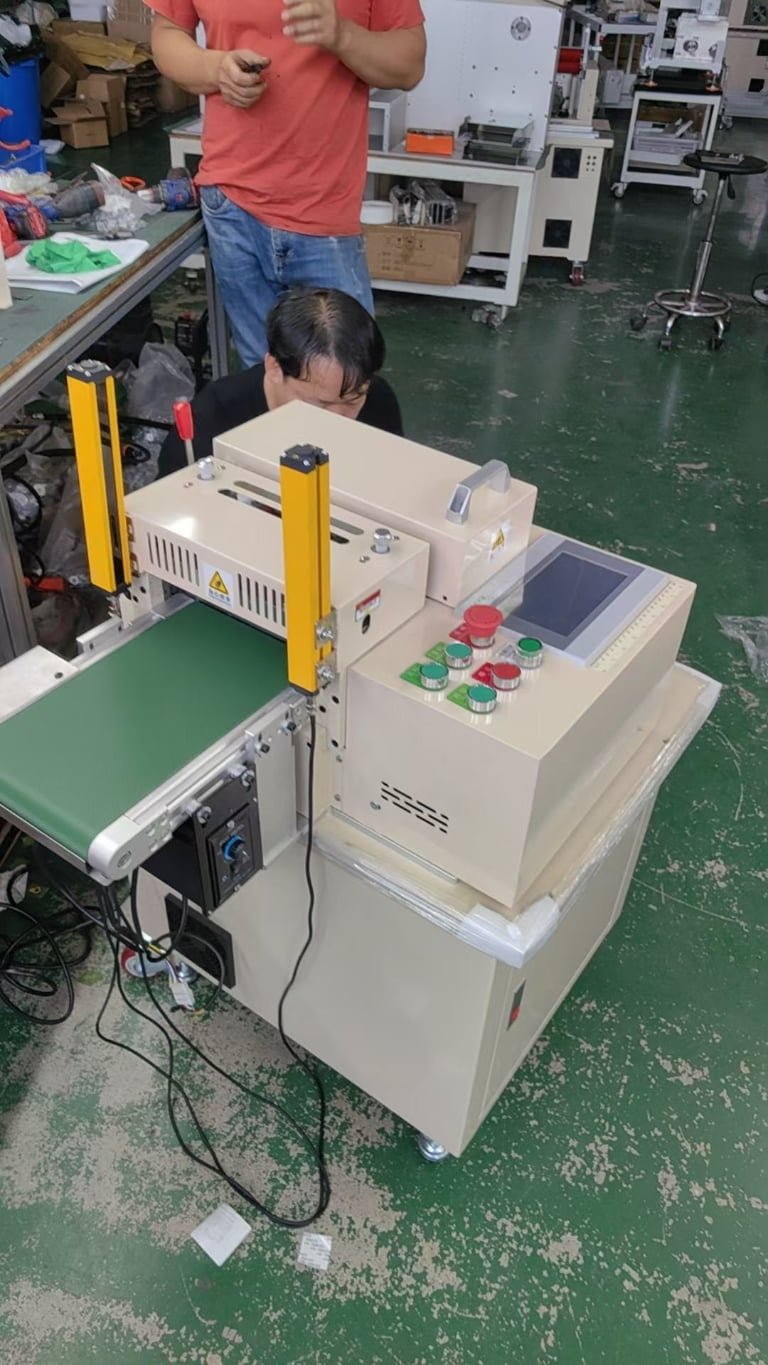
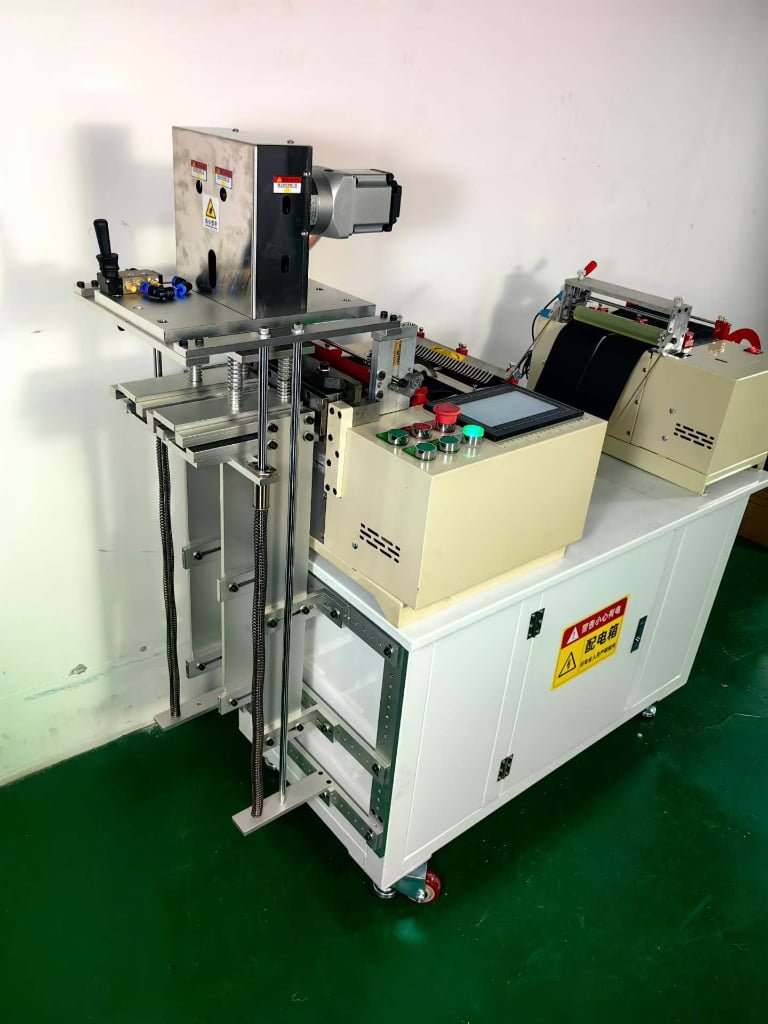
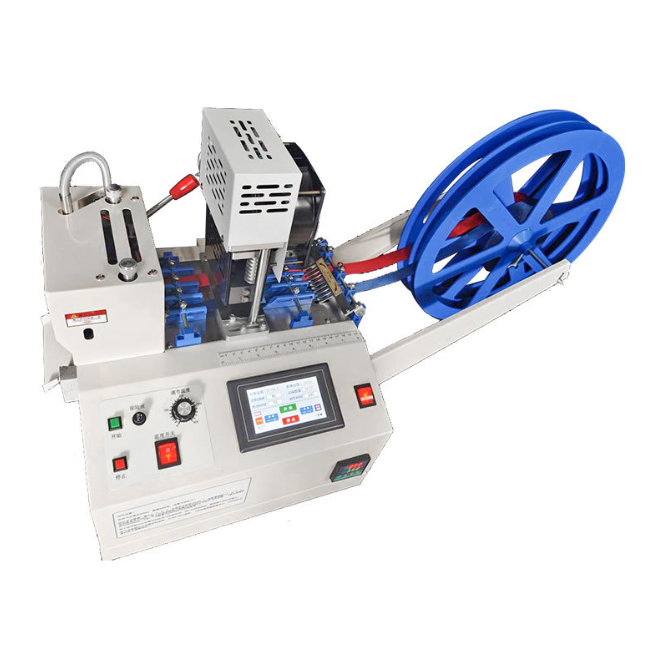
I always recommend using an automatic angle webbing cutting machine with hole punching instead of performing these operations separately. By combining feeding, angle cutting, and hole punching into one process, I can improve accuracy, reduce labor, and minimize material waste.
Whether I use a webbing tape cutting machine, hot and cold cutting machine, automatic punching cutting machine, or high-speed trademark cutting machine, proper hole punching settings are essential for consistent production.
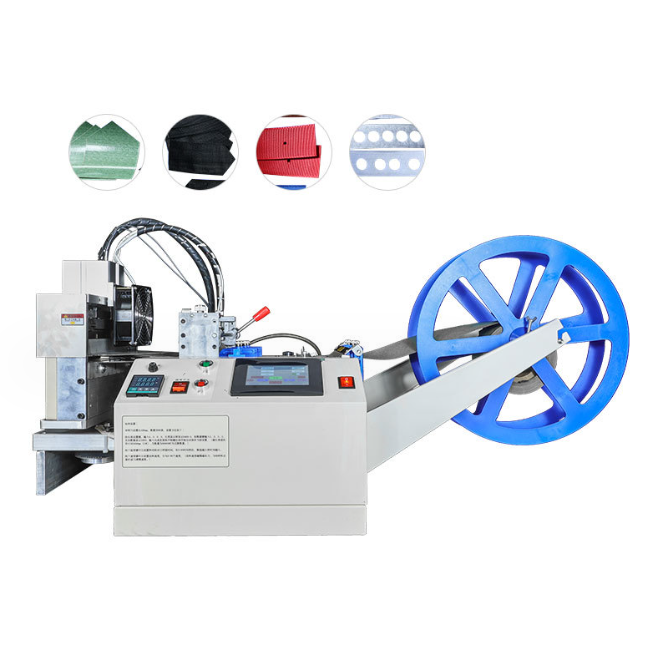
How Do You Set Hole Punching on an Automatic Angle Webbing Cutting Machine?
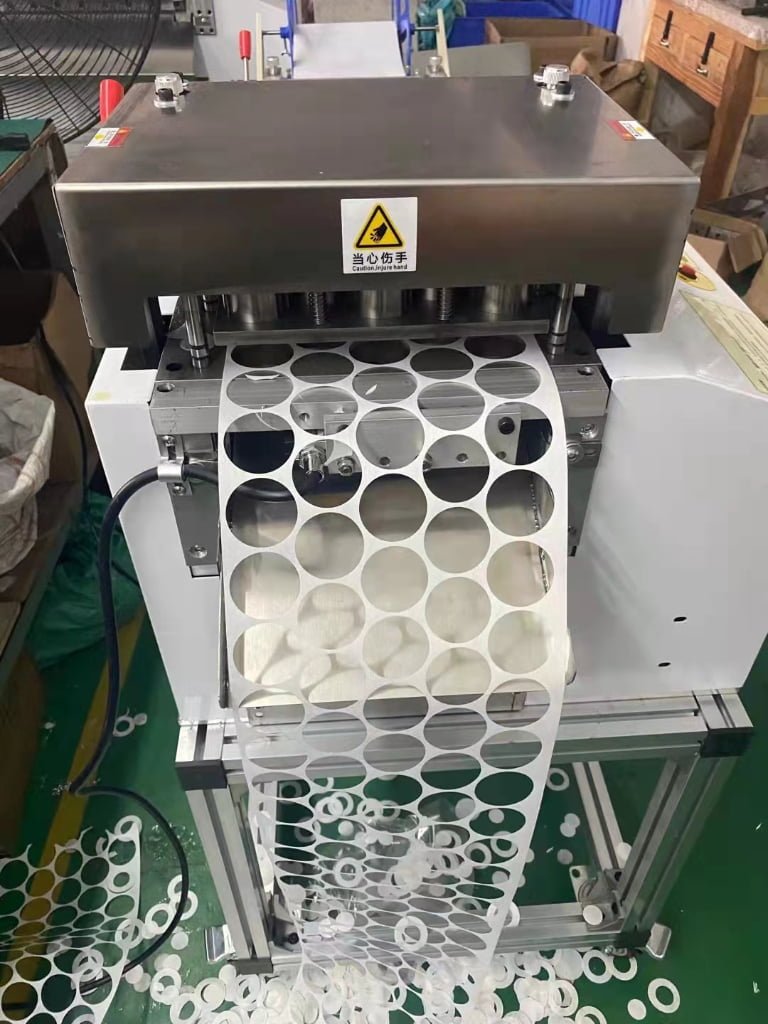
Setting up hole punching is straightforward if the machine is programmed correctly. The basic process includes entering the cutting length, selecting the cutting angle, setting the hole position, choosing the punch die, and testing several samples before mass production.
1. Set the Cutting Length First
Always enter the cutting length before programming the punching position.
For example:
| Product | Cutting Length |
|---|---|
| Pet Collar | 250 mm |
| Backpack Strap | 320 mm |
| Safety Belt | 500 mm |
Once the cutting length is confirmed, the controller can accurately calculate where the hole should be punched.
2. Program the Hole Position
The hole position is normally measured from one end of the webbing.
For example:
- Hole Position: 20 mm from the left end
- Second Hole: 80 mm from the left end
Modern PLC controllers allow these values to be entered directly on the touchscreen.
Accurate positioning eliminates manual marking and improves repeatability.2
3. Select the Correct Punch Die
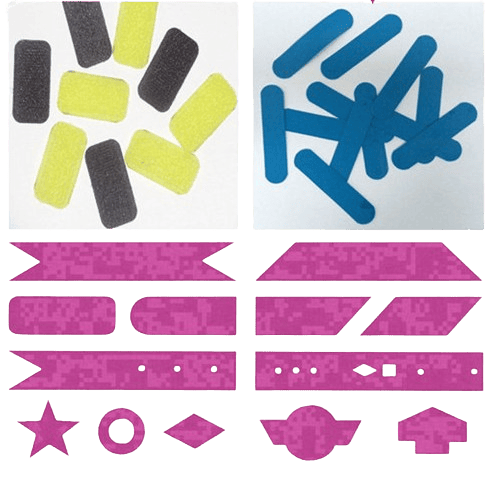
Different products require different hole shapes.
Common punch types include:
- Round hole
- Oval hole
- Slot hole
- Square hole
- Custom-shaped hole
| Hole Type | Typical Application |
|---|---|
| Round | Belts |
| Oval | Backpack Straps |
| Slot | Safety Harness |
| Square | Industrial Webbing |
Using the correct die improves both appearance and assembly accuracy.
4. Set the Cutting Angle
Many products require angled ends in addition to punched holes.
Common angle settings include:
- 0°
- 30°
- 45°
- 60°
The controller synchronizes the angle cutting and punching sequence automatically.3
This allows both operations to be completed in one production cycle.
5. Adjust Punching Pressure
The punching force should match the material thickness.
Too much pressure may damage the webbing.
Too little pressure may leave incomplete holes.
I always test the pressure using several samples before full production.
6. Synchronize Feeding, Cutting, and Punching
A good automatic machine performs three operations in sequence:
- Feed the webbing
- Punch the hole
- Cut the material
Everything is controlled by the PLC system, reducing operator intervention and improving consistency.
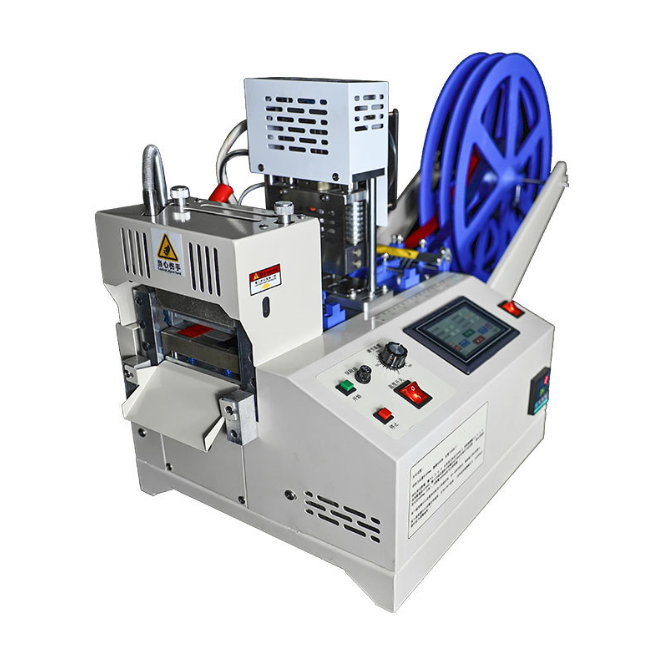
7. Save the Program as a Recipe
If I produce the same product regularly, I save all parameters as a production recipe.
Typical recipe information includes:
| Parameter | Example |
|---|---|
| Length | 300 mm |
| Angle | 45° |
| Hole Position | 25 mm |
| Speed | 80 Cuts/Min |
| Temperature | 420°C |
Recipe storage greatly reduces setup time and avoids programming errors.
8. Test Before Automatic Production
Before switching to automatic mode, I always inspect the first five to ten pieces.
I check:
- Cutting length
- Hole location
- Hole quality
- Angle accuracy
- Edge sealing
Correcting small errors early prevents expensive material waste.4
Common Hole Punching Mistakes
Many production problems come from incorrect setup rather than machine failure.
Common mistakes include:
- Incorrect hole position
- Wrong punch die
- Excessive punching pressure
- Poor sensor calibration
- Feeding errors
- Not checking sample parts
- Worn punch tools
- Incorrect angle settings
Regular maintenance and careful programming eliminate most of these issues.5
Benefits of Integrated Cutting and Hole Punching
Using one machine for both operations provides several advantages.
| Benefit | Result |
|---|---|
| Higher Accuracy | Better assembly |
| Faster Production | Less labor |
| Lower Waste | Better material utilization |
| Consistent Quality | Fewer rejected parts |
| Reduced Handling | Higher efficiency |
Manufacturers producing safety equipment, luggage, pet products, military gear, and outdoor products benefit the most from integrated systems.
Frequently Asked Questions
Can the machine punch multiple holes?
Yes. Many automatic machines can punch two or more holes in one cycle, depending on the machine configuration.
Can hole punching and angle cutting be completed together?
Yes. Modern automatic angle webbing cutting machines synchronize feeding, punching, and cutting for fully automatic production.
What materials can be punched?
Common materials include polyester, nylon, polypropylene, cotton webbing, hook-and-loop tape, elastic bands, and other synthetic materials.
Does punching reduce production speed?
Very little. Integrated punching systems complete the operation during the normal cutting cycle, maintaining high productivity.6
Conclusion
An automatic angle webbing cutting machine with integrated hole punching greatly improves production efficiency and product consistency. By correctly programming the cutting length, angle, hole position, and punching pressure, I can produce accurate parts with minimal waste and almost no manual intervention.
For manufacturers producing safety belts, luggage straps, backpacks, pet products, or industrial webbings, combining cutting and punching into one automated process reduces labor costs while improving overall quality.
HAOXINHE Insights
At HAOXINHE, we offer customized automatic cutting solutions that combine angle cutting, hot knife sealing, hole punching, marking, and automatic feeding into one efficient production system. Our PLC-controlled machines allow operators to save production recipes, quickly switch between products, and maintain consistent accuracy across large production batches.
Our product portfolio includes webbing tape cutting machines, hot and cold cutting machines, high-speed trademark cutting machines, automatic punching cutting machines, round shape cutting machines, rotary bevel cutting machines, different shapes cutting machines, computer tube cutting machines, wire cutting and stripping machines, metal pipe cutting and beveling machines, bubble wrap cutting machines, PVC edge banding cutting machines, and protective foam cutting machines. We help manufacturers worldwide improve productivity, reduce waste, and achieve reliable, high-precision cutting solutions.
-
"Webbing Strap Assemblies – MISC Products", https://miscproducts.com/products/narrow-textiles/webbing-strap-assemblies/. Research on webbing product manufacturing confirms that holes are often required for assembly processes such as sewing or riveting, particularly in safety harnesses, luggage belts, and similar products. Evidence role: general_support; source type: research. Supports: The need for holes in webbing products for sewing, riveting, or assembly.. Scope note: The source may not cover all webbing products or specific industry exceptions. ↩
-
"A comparison between manual and artificial intelligence–based …", https://pmc.ncbi.nlm.nih.gov/articles/PMC7975236/. Research on automated manufacturing highlights that precise positioning systems reduce the need for manual marking and enhance repeatability in production processes. Evidence role: mechanism; source type: research. Supports: How accurate positioning eliminates manual marking and improves repeatability.. Scope note: The source may not specifically address webbing machines but applies to automated systems in general. ↩
-
"How Accurate Is an Automatic Webbing Angle Cutting Machine?", https://cutopix.com/how-accurate-is-an-automatic-webbing-angle-cutting-machine/. Educational resources on automated machinery explain that modern PLC controllers are designed to synchronize multiple operations, such as cutting and punching, in a single production cycle. Evidence role: mechanism; source type: education. Supports: The ability of modern controllers to synchronize cutting and punching sequences.. Scope note: The explanation may not apply to all machine models or brands. ↩
-
"Artificial intelligence for waste management in smart cities – PMC", https://pmc.ncbi.nlm.nih.gov/articles/PMC10169138/. Studies on quality control in manufacturing emphasize that early detection and correction of errors significantly reduce material waste and production costs. Evidence role: mechanism; source type: research. Supports: The role of early error correction in preventing material waste.. Scope note: The source may not specifically address webbing production but applies to general manufacturing practices. ↩
-
"Factors Affecting the Programming Performance of Computer …", https://vtechworks.lib.vt.edu/items/81a535bc-22f9-45fe-9857-ebc8c64d0168. Educational resources on machine maintenance highlight that regular upkeep and precise programming are critical for minimizing operational issues in automated systems. Evidence role: expert_consensus; source type: education. Supports: The effectiveness of regular maintenance and careful programming in preventing production issues.. Scope note: The advice may vary depending on machine type and usage frequency. ↩
-
"Punching machine", https://en.wikipedia.org/wiki/Punching_machine. Studies on integrated manufacturing systems show that combining punching and cutting operations into a single cycle enhances productivity by reducing process time. Evidence role: mechanism; source type: research. Supports: The productivity benefits of integrated punching systems.. Scope note: The findings may depend on machine design and production settings. ↩