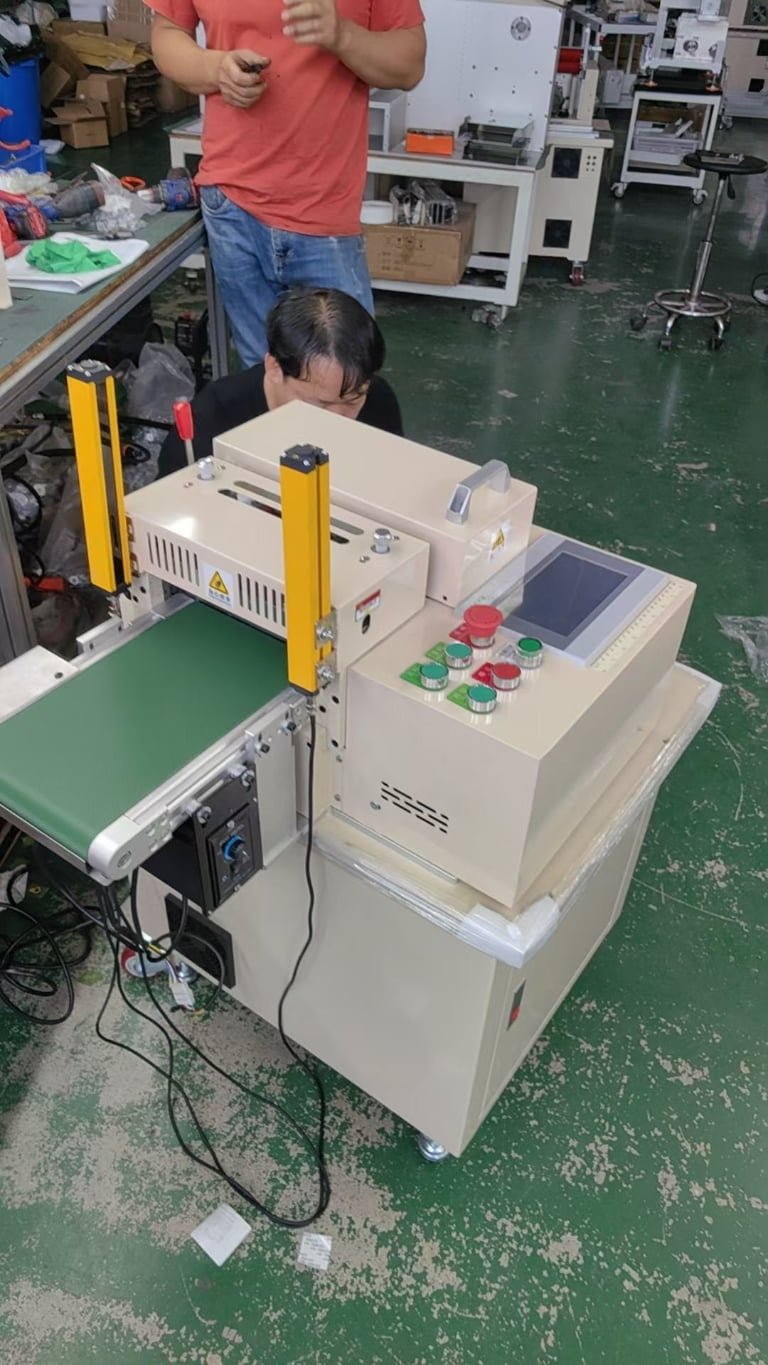
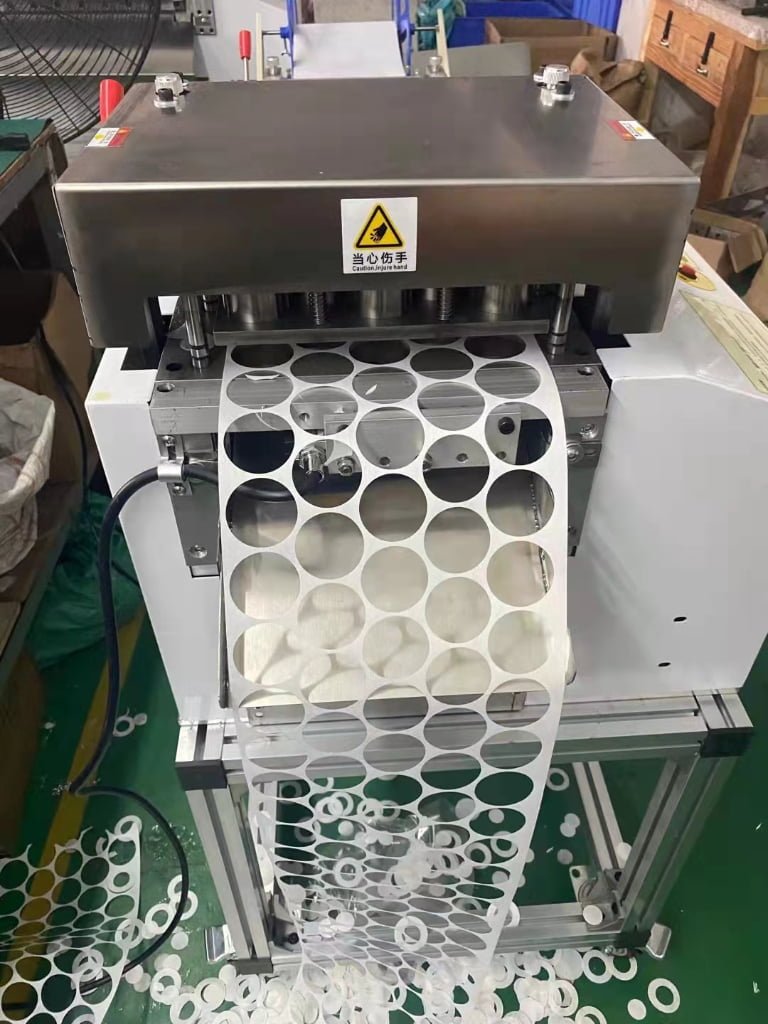
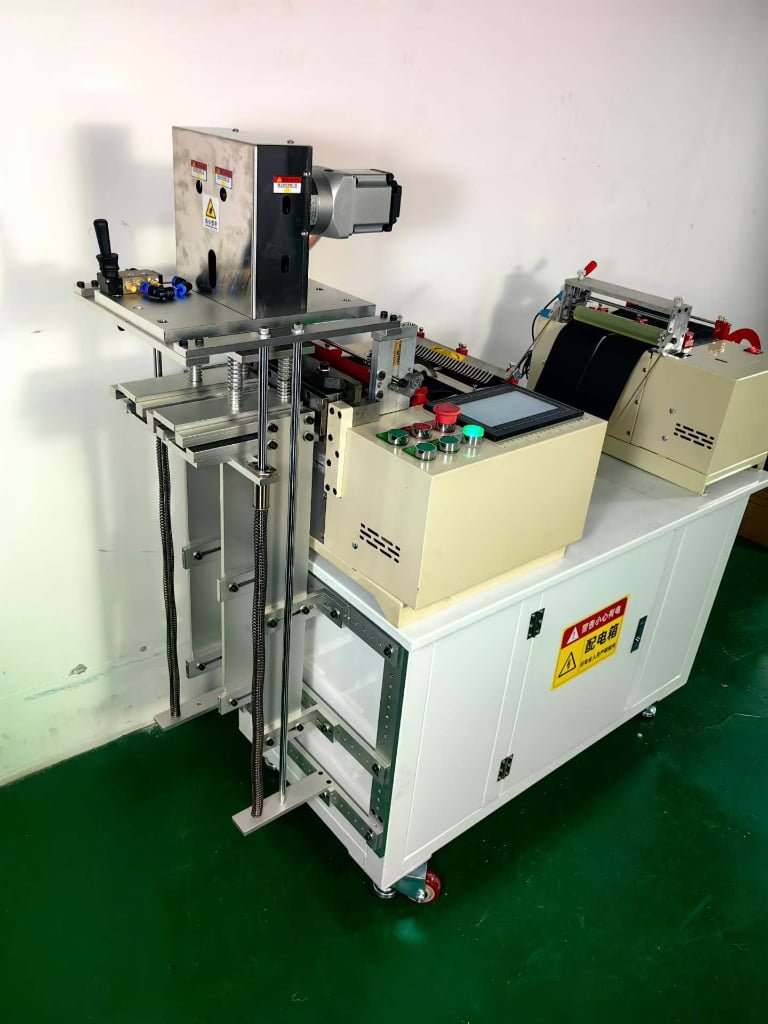
How much electricity does a nylon cutting machine consume during operation?
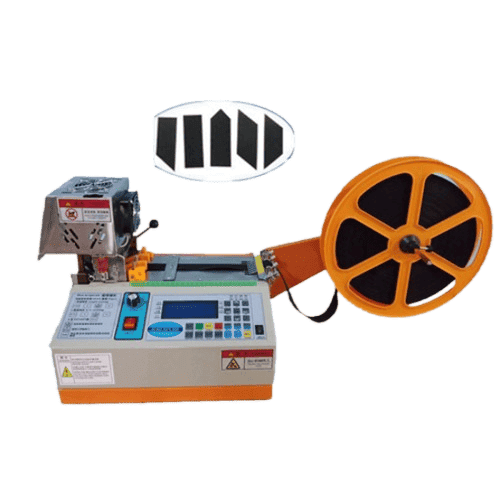
When customers choose a nylon cutting machine, they often focus on the purchase price, cutting speed, and machine quality.
However, more buyers are now asking another important question:
“How much electricity will this machine use every month?”
This question is important because electricity cost affects long-term production profit1.
A nylon cutting machine may run for many hours every day. Even a small difference in power consumption can create a noticeable cost difference after one year.
For example:
A factory producing nylon straps may run machines for:
- 8 hours per day
- 25 days per month
- 12 months per year
The total energy cost becomes an important part of production expenses.
The electricity consumption of a nylon cutting machine depends on many factors2:
- Machine size
- Cutting method
- Motor power
- Heating system
- Automation level
- Production speed
- Working hours
A small manual-assisted machine and a fully automatic high-speed production system can have very different energy requirements.
At HAOXINHE, I always help customers look at the complete operating cost, not only the purchase price.
A machine with slightly higher initial cost may save more money through:
- Lower electricity consumption
- Less material waste
- Higher production efficiency
- Lower labor cost
In this article, I will explain how much electricity a nylon cutting machine uses and how traditional models compare with energy-saving models.
What are the running cost differences between traditional and energy-saving models?
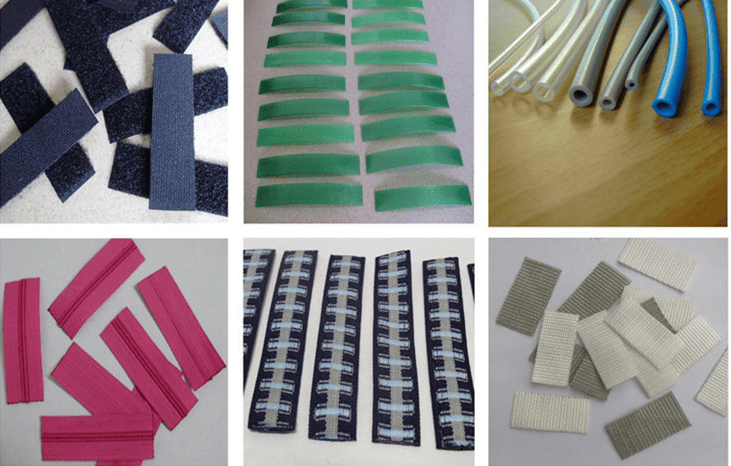
The power consumption of a nylon cutting machine is usually measured in kilowatts (kW).
The actual electricity usage is measured in kilowatt-hours (kWh).
The basic calculation is:
Electricity consumption = Machine power (kW) × Working time (hours)
For example:
A 1.5 kW machine running for 8 hours:
1.5 kW × 8 hours = 12 kWh per day
However, the real energy consumption may be lower because the machine does not always run at maximum power.
The machine may spend time on:
- Loading material
- Adjustment
- Product checking
- Standby operation
| Machine Type | Common Power Range | Main Energy Source |
|---|---|---|
| Small webbing cutter | 0.5–2 kW | Motor and control system |
| Hot knife cutter | 0.8–3 kW | Heater and motor |
| Automatic webbing cutter | Around 1.5 kW | Servo system and feeding |
| Large automatic cutting system | Higher power | Heating, motors, automation |
1. Small nylon cutting machines usually consume less electricity
For small production needs, customers often choose compact machines.
These machines are suitable for:
- Small workshops
- Customized orders
- Low and medium production volume
A small webbing tape cutting machine may use around 0.5 to 2 kW depending on:
- Cutting speed
- Blade type
- Heating function
- Automation level
The motor itself usually does not consume very high power.
The main energy difference often comes from the cutting method.
| Machine Function | Energy Impact |
|---|---|
| Feeding motor | Low to medium |
| Cutting motor | Medium |
| Heater | Higher |
| Servo system | Medium |
For example, a cold cutting system may use less electricity because it does not require heating.
2. Hot cutting machines usually consume more energy3
Nylon materials often need edge sealing because nylon can become loose or frayed after cutting.
A hot knife system solves this problem by using heat.
However, heating requires additional electricity.
The heater often becomes the largest energy consumer.
For example:
A hot knife nylon cutting machine may include:
- Heating element
- Temperature controller
- Feeding motor
- Control system
The motor may only need a small amount of energy, but the heater requires continuous power.
| Cutting Method | Energy Level | Advantage |
|---|---|---|
| Cold cutting | Lower | Less heat impact |
| Hot cutting | Higher | Seals nylon edges |
| Ultrasonic cutting | Medium | Clean cutting quality |
| Rotary cutting | Medium | High-speed production |
At HAOXINHE, I help customers select the cutting method based on product requirements.
A customer should not choose only based on electricity cost.
The cutting quality is also important.
3. Automatic machines may use more electricity but reduce total cost4
Many customers think:
“An automatic machine uses more electricity, so it must cost more.”
This is not always correct.
A fully automatic nylon cutting machine may consume more power because it includes:
- Servo motors
- Automatic feeding
- Sensors
- Control systems
However, it can also provide:
- Higher output
- Lower labor cost
- Less production waste
- Better consistency
For large factories, these benefits can be more valuable than small electricity savings.
| Cost Factor | Traditional Machine | Energy-Saving Automatic Machine |
|---|---|---|
| Electricity | Lower | Medium |
| Labor cost | Higher | Lower |
| Production speed | Lower | Higher |
| Accuracy | Depends on operator | More stable |
| Long-term ROI | Medium | Higher for large production |
4. Understand rated power versus actual working power
One common mistake is looking only at the machine nameplate.
The rated power shows the maximum possible power consumption.
The actual working power is often lower.
For example:
A machine may have:
Rated power: 2 kW
But during normal operation:
Average power: 1.2 kW
The difference depends on:
- Production speed
- Heating time
- Idle time
- Material feeding frequency
| Power Information | Meaning |
|---|---|
| Rated power | Maximum possible consumption |
| Working power | Real production consumption |
| Standby power | Idle consumption |
When customers ask me about electricity costs, I always recommend checking both values.
5. Calculate monthly electricity cost before purchase
Before buying a machine, customers can estimate running cost.
The formula is simple:
Monthly electricity cost = kW × working hours × electricity price
Example:
Machine power:
1.5 kW
Working time:
8 hours/day
Working days:
25 days/month
Monthly consumption:
1.5 × 8 × 25 = 300 kWh
The final cost depends on the local electricity price.
| Example Calculation | Value |
|---|---|
| Machine power | 1.5 kW |
| Daily operation | 8 hours |
| Monthly days | 25 days |
| Monthly consumption | 300 kWh |
This calculation helps buyers compare different machines.
6. Energy-saving features in modern nylon cutting machines
Modern cutting machines can reduce energy waste through better design.
Common energy-saving features include:
- Servo motor feeding
- Smart temperature control
- Automatic standby mode
- Efficient electrical components
- Optimized cutting speed
These functions help reduce unnecessary power consumption.
For example:
A traditional heating system may keep heating continuously.
A smart temperature control system can maintain only the required temperature.
This reduces energy waste.
| Energy-Saving Feature | Benefit |
|---|---|
| Servo feeding | Better efficiency |
| Temperature control | Less heater waste |
| Efficient motor | Lower consumption |
| Smart control | Reduced idle energy |
7. Production speed affects electricity consumption
Higher production speed usually requires more powerful systems5.
A high-speed trademark cutting machine may require:
- Faster feeding
- Stronger motor control
- More stable cutting performance
A basic machine may consume less electricity but produce fewer products.
The correct choice depends on production goals.
| Production Goal | Recommended Solution |
|---|---|
| Small quantity | Lower power machine |
| Medium production | Balanced system |
| Large production | Automatic high-speed machine |
8. Auxiliary systems can increase energy usage6
The cutting system is not always the only power consumer.
Some machines include additional systems:
- Vacuum holding
- Cooling systems
- Air compressors
- Automatic feeding equipment
These systems can increase total electricity usage.
For example, a machine with automatic feeding and air pressure systems may consume more than a simple cutting machine.
| Auxiliary System | Possible Energy Effect |
|---|---|
| Vacuum system | Additional power |
| Air system | Additional compressor load |
| Cooling system | Extra electricity |
| Automation system | More control components |
9. Compare traditional and energy-saving models
When customers compare machines, they should look at total cost.
The total cost includes:
- Purchase price
- Electricity
- Labor
- Maintenance
- Production efficiency
A cheaper machine is not always cheaper to operate.
| Cost Item | Traditional Model | Energy-Saving Model |
|---|---|---|
| Purchase price | Lower | Higher |
| Electricity | Higher | Lower |
| Labor | Higher | Lower |
| Efficiency | Medium | High |
| Long-term value | Medium | Better |
10. How HAOXINHE helps customers reduce operating costs
At HAOXINHE, I understand that customers care about production profit.
My goal is not only to provide a cutting machine.
I help customers choose equipment that fits their business.
My cutting solutions include:
- Webbing tape cutting machine
- Hot and cold cutting machine
- High-speed trademark cutting machine
- Automatic punching cutting machine
- Round shape cutting machine
- Rotary bevel cutting machine
- Different shapes cutting machine
- Computer tube cutting machine
- Wire cutting and stripping machine
- Metal pipe cutting and beveling machine
- Webbing ribbon cutting machine
- Bubble wrap cutting machine
- PVC Edge Banding Cutting Machine
- Protective Foam Cutting Machine
| HAOXINHE Advantage | Customer Benefit |
|---|---|
| Factory direct production | Better equipment cost |
| Customized solutions | Avoid unnecessary functions |
| Efficient machine design | Lower operating cost |
| Technical support | Better machine performance |
| Export experience | Reliable global service |
Electricity cost checklist before buying a nylon cutting machine7
| Question | Why It Matters |
|---|---|
| What is the rated power? | Estimate maximum usage |
| What is the actual working power? | Estimate real cost |
| Does it use heating? | Understand energy demand |
| How many hours will it run daily? | Calculate monthly cost |
| Is automation needed? | Balance cost and efficiency |
HAOXINHE Insights
At HAOXINHE, I believe the best machine is not always the machine with the lowest electricity consumption.
The best machine is the machine that creates the highest production value.
For small factories, a lower-power semi-automatic machine may provide better investment control.
For large factories, an automatic energy-efficient system may create better long-term profit.
When choosing a nylon cutting machine, buyers should consider:
- Electricity cost
- Labor cost
- Production speed
- Machine stability
- Product quality
A professional supplier should help customers calculate the complete production cost, not only the machine price.
-
"U.S. energy facts explained – consumption and production", https://www.eia.gov/energyexplained/us-energy-facts/. A study on industrial energy consumption highlights that electricity costs can account for a substantial portion of operational expenses, directly affecting profit margins in manufacturing sectors. Evidence role: general_support; source type: research. Supports: Electricity costs are a significant factor in determining the profitability of production operations.. Scope note: The study may focus on specific industries and not universally apply to all types of production. ↩
-
"Use of Energy Explained: Energy Use in Industry", https://www.eia.gov/energyexplained/use-of-energy/industry.php. Technical analyses of industrial machinery show that energy consumption is significantly affected by machine design, operational speed, and automation features. Evidence role: mechanism; source type: research. Supports: Various factors, including machine size and automation level, influence the electricity consumption of nylon cutting machines.. Scope note: The analysis may focus on general industrial machines rather than nylon-specific cutting systems. ↩
-
"𝐼𝑛𝑑𝑢𝑠𝑡𝑟𝑖𝑎𝑙 ℎ𝑒𝑎𝑡𝑖𝑛𝑔: 𝑎𝑛 𝑜𝑣𝑒𝑟𝑣𝑖𝑒𝑤", https://iac.msstate.edu/wp-content/uploads/2022/01/Industrial-Heating.pdf. Research on industrial cutting technologies shows that heating elements in hot cutting machines are the primary contributors to higher energy consumption. Evidence role: mechanism; source type: research. Supports: Hot cutting machines consume more energy primarily due to their heating systems.. Scope note: The research may focus on specific heating technologies and not cover all hot cutting systems. ↩
-
"The Role of Automation in Driving Productivity Growth", https://www.trade.gov/sites/default/files/2022-08/SelectUSAAutomationReport2020.pdf. Experts in industrial automation agree that increased efficiency and reduced labor costs often outweigh the higher energy consumption of automatic systems. Evidence role: expert_consensus; source type: research. Supports: Automatic machines can reduce total production costs despite higher energy consumption.. Scope note: The consensus may not apply to all industries or machine types. ↩
-
"U.S. energy production has increased faster than energy consumption over …", https://www.eia.gov/todayinenergy/detail.php?id=63544. Studies on industrial machinery show that faster production speeds require stronger motors and control systems, leading to higher energy usage. Evidence role: mechanism; source type: research. Supports: Higher production speeds necessitate more powerful systems, increasing energy consumption.. Scope note: The studies may focus on specific machine types and not universally apply to all production systems. ↩
-
"Use of Energy Explained: Energy Use in Industry", https://www.eia.gov/energyexplained/use-of-energy/industry.php. Research on industrial equipment shows that auxiliary systems like cooling and vacuum mechanisms can significantly add to overall energy usage. Evidence role: mechanism; source type: research. Supports: Auxiliary systems contribute to increased energy consumption in cutting machines.. Scope note: The research may focus on specific auxiliary systems and not cover all possible configurations. ↩
-
"Machinery Cost Calculator, File A3-29", https://www.extension.iastate.edu/agdm/crops/xls/a3-29machcostcalc.xlsx. Educational resources on industrial equipment purchasing recommend evaluating energy consumption, rated power, and automation needs to estimate operating costs. Evidence role: expert_consensus; source type: education. Supports: A checklist of electricity-related factors aids in estimating operating costs for industrial machines.. Scope note: The recommendations may not account for all variables specific to nylon cutting machines. ↩