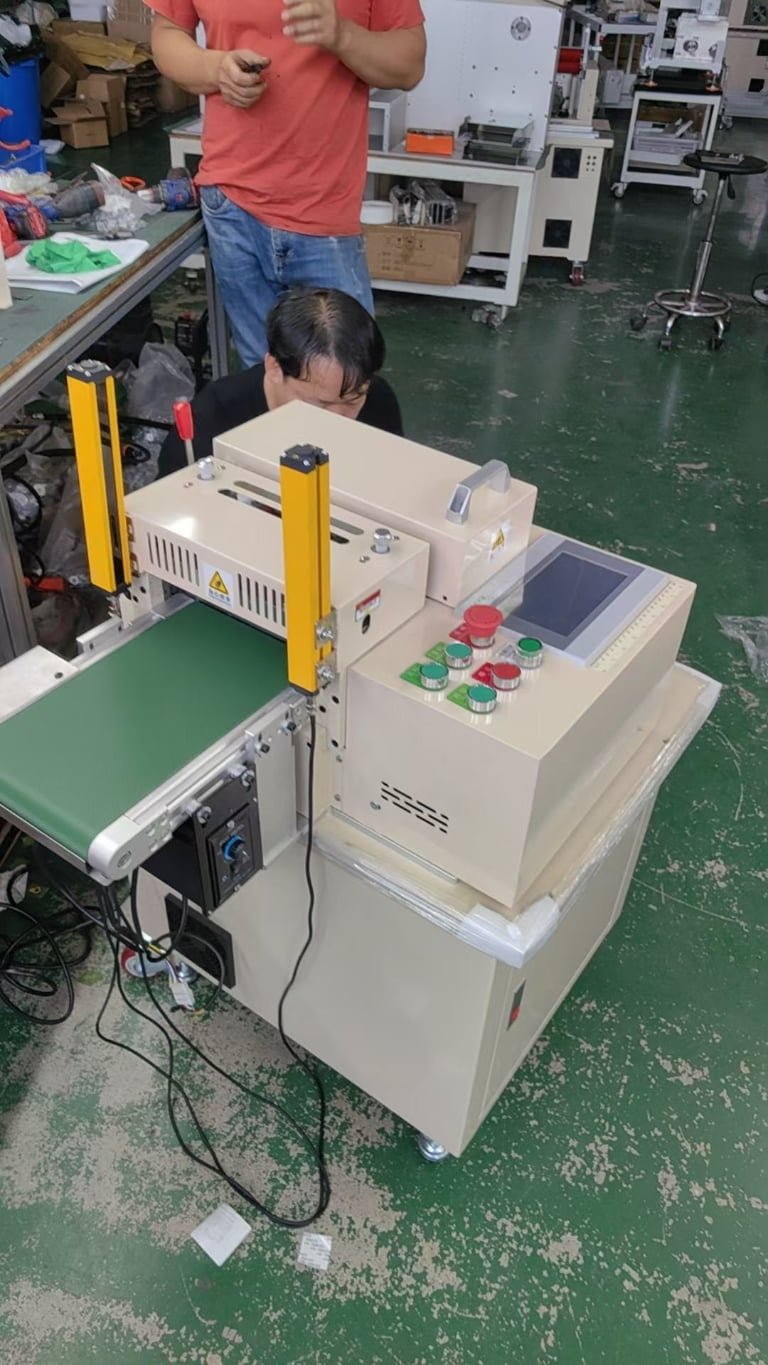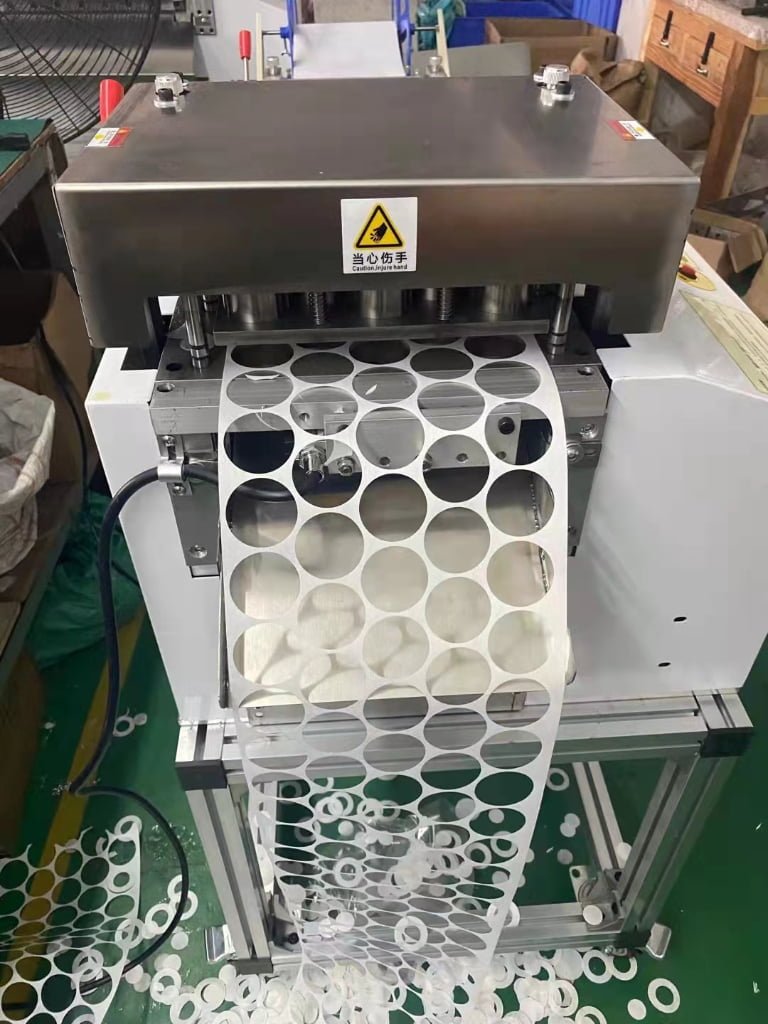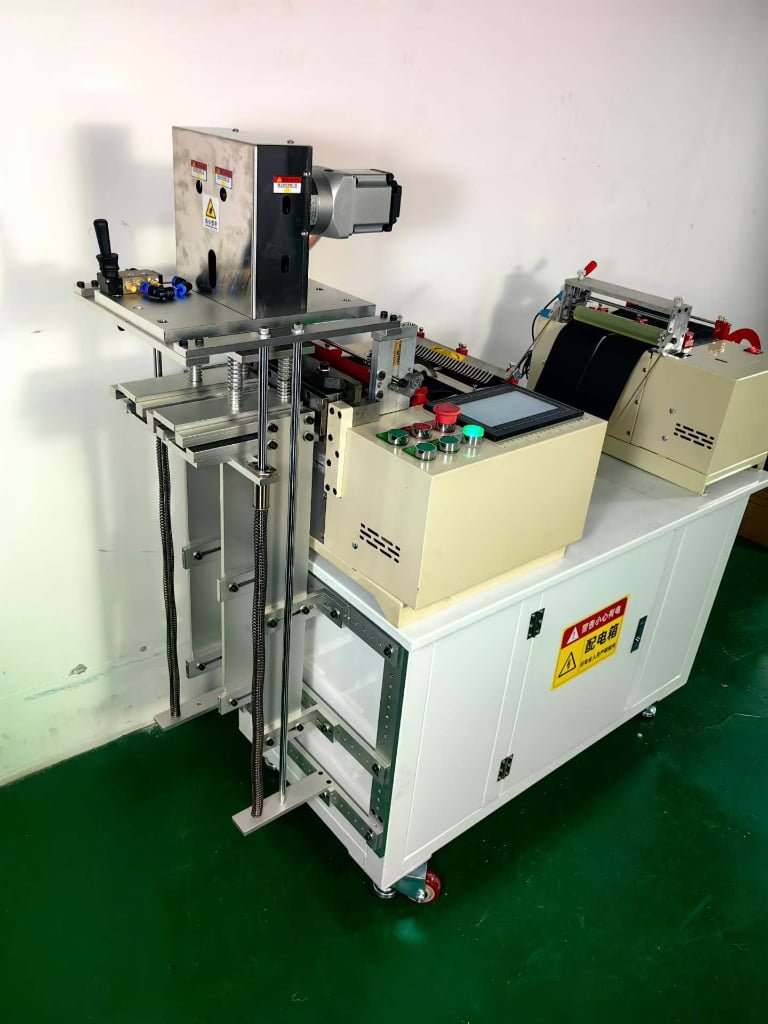
What is the difference between automatic and semi-automatic nylon cutting machines?
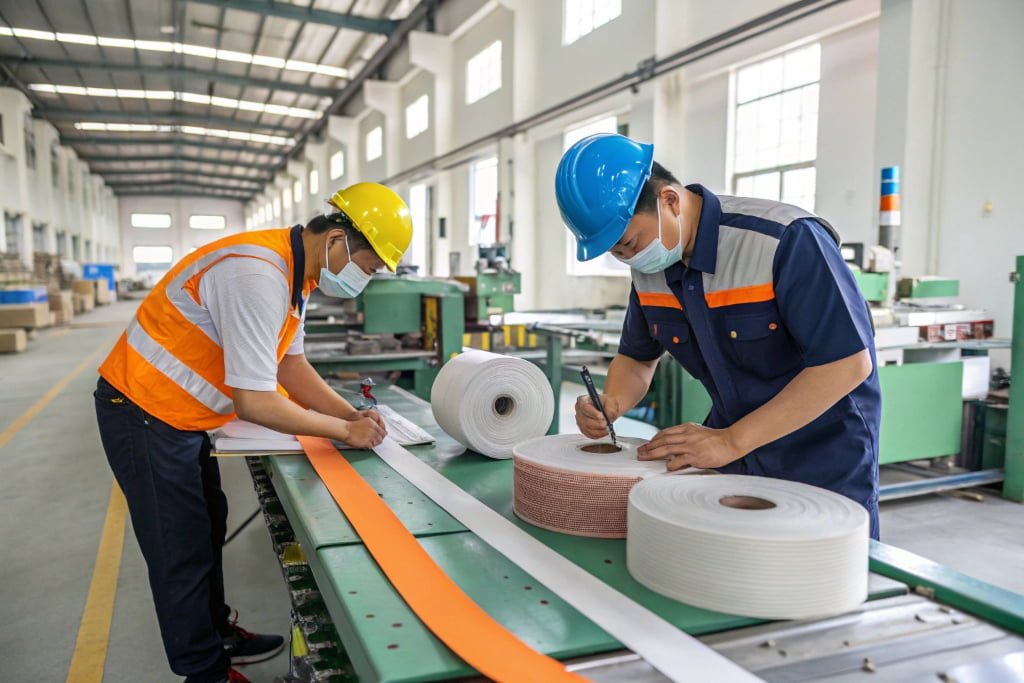
When customers choose a nylon cutting machine, one of the most common questions I receive is:
“Should I buy an automatic machine or a semi-automatic machine?”
This decision is important because the machine type directly affects:
- Production capacity
- Labor cost
- Investment budget
- Product consistency
- Future business growth
Many buyers think automatic machines are always better because they have more functions1. However, this is not always correct.
The best machine is not the machine with the most automation.
The best machine is the machine that matches the customer’s real production needs.
For example:
A small factory producing customized nylon straps with many product changes may benefit from a semi-automatic machine.
A large factory producing thousands of identical nylon pieces every day may receive a better return from a fully automatic system.
At HAOXINHE, I work with customers from different industries, including packaging, labels, textile products, plastic products, and industrial materials.
Different customers have different requirements.
Some customers need:
- Lower investment
- Simple operation
- Flexible production
Other customers need:
- High production speed
- Low labor dependence
- Stable quality
- Continuous operation
In this article, I will explain the differences between automatic and semi-automatic nylon cutting machines and help buyers choose the right model for their factory.
Which model provides better return on investment for small and large factories?
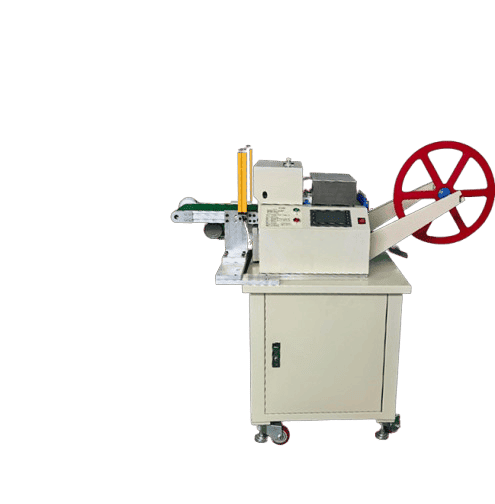
The return on investment (ROI) of a nylon cutting machine depends on more than the purchase price.
Buyers should consider:
- Machine cost
- Labor cost
- Production volume
- Product type
- Maintenance requirements
- Long-term production goals
A semi-automatic machine usually has a lower initial investment2.
An automatic machine usually requires a higher investment but can reduce labor costs and increase production capacity.
| Comparison | Semi-Automatic Nylon Cutting Machine | Automatic Nylon Cutting Machine |
|---|---|---|
| Initial cost | Lower | Higher |
| Operator requirement | More | Less |
| Production speed | Medium | High |
| Flexibility | High | Medium |
| Output consistency | Good | Excellent |
| Maintenance difficulty | Easier | More complex |
| Suitable factory size | Small and medium | Medium and large |
1. How semi-automatic nylon cutting machines work
A semi-automatic nylon cutting machine still uses machine control for cutting, but the operator participates in some production steps.
The operator may need to:
- Load material
- Adjust position
- Start cutting cycles
- Check finished products
The machine handles the main cutting process.
This design creates a balance between manual operation and automation.
Semi-automatic machines are commonly used by factories that:
- Produce different product sizes
- Have lower production volume
- Need frequent adjustments
- Have limited investment budgets
For example, a small factory producing different nylon straps for customers may change cutting lengths many times every day.
A semi-automatic machine gives the operator more control.
| Semi-Automatic Advantage | Customer Benefit |
|---|---|
| Lower investment | Easier business entry |
| Simple operation | Faster worker training |
| Flexible adjustment | Suitable for different products |
| Easy maintenance | Lower repair complexity |
2. How automatic nylon cutting machines work
An automatic nylon cutting machine reduces manual operation.
Depending on the configuration, it can automatically handle:
- Material feeding
- Length measurement
- Cutting
- Counting
- Production control
Some advanced models can also include:
- Servo feeding
- Automatic tension control
- Digital production settings
- Error alarms
Automatic machines are designed for continuous production.
They are suitable for factories that need:
- Large production volume
- Stable output
- Lower labor cost
- Repeated product production
For example, a manufacturer producing thousands of nylon webbing pieces every day may save significant labor costs with an automatic system.
| Automatic Function | Production Benefit |
|---|---|
| Automatic feeding | Less manual work |
| Servo control | Better accuracy |
| Counting system | Easier production management |
| Recipe memory | Faster product changes |
3. Production capacity difference
Production volume is one of the biggest factors when choosing between these two machines.
A semi-automatic machine may be enough for small production.
However, when orders increase, manual operation can become a bottleneck.
For example:
A factory produces 5,000 nylon pieces per day.
With manual loading and adjustment, workers may spend a lot of time repeating simple tasks.
An automatic nylon cutting machine can continue working with fewer interruptions.
| Production Scale | Recommended Machine |
|---|---|
| Small workshop | Semi-automatic |
| Medium factory | Semi-automatic or automatic |
| Large factory | Automatic |
| Mass production | Automatic |
4. Labor cost difference
Labor cost is becoming more important in many countries3.
A semi-automatic machine needs more operator involvement.
Workers may need to:
- Feed materials
- Monitor cutting
- Remove products
An automatic machine reduces these repeated tasks.
This helps factories:
- Reduce labor dependence
- Improve production planning
- Maintain stable output
| Labor Factor | Semi-Automatic | Automatic |
|---|---|---|
| Operator involvement | Higher | Lower |
| Training requirement | Simple | More technical |
| Labor saving | Medium | High |
| Production consistency | Depends on worker | Depends on machine |
At HAOXINHE, I often recommend customers calculate labor cost over several years, not only the machine purchase price.
A higher initial investment may create better long-term value.
5. Product flexibility difference
Semi-automatic machines have an advantage when product requirements change frequently4.
For example:
A factory may produce:
- Different nylon widths
- Different lengths
- Different materials
The operator can quickly adjust settings.
Automatic machines are better when production is stable5.
For example:
A factory produces one standard nylon strap size every day.
The machine can run with stored settings.
| Production Type | Better Choice |
|---|---|
| Many custom orders | Semi-automatic |
| Stable products | Automatic |
| Frequent size changes | Semi-automatic |
| Large repeated orders | Automatic |
6. Accuracy and consistency comparison
Automatic machines usually provide better consistency6 because the process depends less on operator experience.
They often use:
- Servo motors
- Encoders
- Automatic tension control
- Digital settings
This helps maintain the same cutting length across thousands of pieces.
Semi-automatic machines can also provide good accuracy, but operator skill has more influence.
| Accuracy Factor | Semi-Automatic | Automatic |
|---|---|---|
| Length consistency | Good | Excellent |
| Operator influence | Higher | Lower |
| Repeat production | Good | Very stable |
For customers producing high-quality products, automatic control can reduce waste and improve customer satisfaction.
7. Maintenance and troubleshooting difference
Maintenance is another important consideration7.
Semi-automatic machines usually have fewer automatic systems.
This means:
- Fewer sensors
- Simpler control
- Easier troubleshooting
Automatic machines have more components.
For example:
- PLC systems
- Servo drives
- Sensors
- Automatic feeding modules
These systems improve production but require better technical support.
| Maintenance Area | Semi-Automatic | Automatic |
|---|---|---|
| Troubleshooting | Easier | More technical |
| Spare parts | Fewer | More |
| Technician skill | Basic | Higher |
| Long-term efficiency | Good | Excellent |
8. Automation options for nylon cutting machines
At HAOXINHE, customers can choose different automation levels based on their production needs.
Possible options include:
- Automatic feeding system
- Servo motor control
- Automatic counting
- Digital length setting
- Production memory
- Material detection
- Automatic correction system
These options can be added to different machines, including:
- Webbing tape cutting machine
- Hot and cold cutting machine
- High-speed trademark cutting machine
- Automatic punching cutting machine
- Round shape cutting machine
- Different shapes cutting machine
| Automation Option | Suitable Customer |
|---|---|
| Basic automatic feeding | Medium production |
| Full automatic system | Large factories |
| Servo control | High accuracy production |
| Digital memory | Multiple product types |
9. How small factories should choose
Small factories usually focus on:
- Investment control
- Easy operation
- Flexible production
A semi-automatic machine may provide better ROI because:
- Lower purchase cost
- Lower maintenance cost
- Easier worker training
However, if the factory expects rapid growth, an automatic machine may be a better long-term choice.
The buyer should consider future orders, not only current production.
10. How large factories should choose
Large factories usually focus on:
- Production efficiency
- Labor reduction
- Stable quality
Automatic machines usually provide stronger advantages because they can:
- Run longer production cycles
- Reduce manual operation
- Improve consistency
- Support higher output
For large distributors and manufacturers, automatic equipment can create better long-term value.
How HAOXINHE helps customers choose the right cutting solution
At HAOXINHE, I do not recommend the most expensive machine first.
I recommend the machine that fits the customer’s production situation.
My factory provides different cutting equipment solutions:
- Webbing tape cutting machine
- Hot and cold cutting machine
- High-speed trademark cutting machine
- Automatic punching cutting machine
- Round shape cutting machine
- Rotary bevel cutting machine
- Different shapes cutting machine
- Computer tube cutting machine
- Wire cutting and stripping machine
- Metal pipe cutting and beveling machine
- Webbing ribbon cutting machine
- Bubble wrap cutting machine
- PVC Edge Banding Cutting Machine
- Protective Foam Cutting Machine
| HAOXINHE Advantage | Customer Benefit |
|---|---|
| Factory direct production | Better cost control |
| Custom automation options | Match different factories |
| Engineering support | Solve production problems |
| Quality inspection | Stable machine performance |
| Export experience | Easier international purchase |
Automatic vs semi-automatic nylon cutting machine selection checklist
| Question | Recommended Choice |
|---|---|
| Do you have large daily production? | Automatic |
| Do you need lower investment? | Semi-automatic |
| Do you change products often? | Semi-automatic |
| Do you produce the same product continuously? | Automatic |
| Do you want lower labor cost? | Automatic |
| Do you need simple maintenance? | Semi-automatic |
Cheryl Insights
At HAOXINHE, I believe the correct machine choice should follow the customer’s business stage.
A small factory does not always need the highest automation level.
A large factory does not always benefit from manual operation.
The best investment comes from matching:
- Production volume
- Product type
- Labor situation
- Future growth plan
For small factories, a semi-automatic nylon cutting machine can provide flexibility and lower investment risk.
For large factories, an automatic nylon cutting machine can improve efficiency and create stronger long-term returns.
My goal is to help customers choose reliable cutting equipment that supports their production growth.
-
"Preferences for Firearms and Their Implications for Regulation", https://bfi.uchicago.edu/wp-content/uploads/2022/08/BFI_WP_2022-115.pdf. A study on industrial equipment purchasing trends found that buyers often associate automatic machines with higher functionality, though this preference varies by industry and production needs. Evidence role: general_support; source type: research. Supports: The perception that buyers often favor automatic machines due to their additional functions.. Scope note: The study may not cover all industries or specific nylon cutting applications. ↩
-
"Comparative Study on Automatic Fabric Cutting Machine …", https://www.academia.edu/96795707/Comparative_Study_on_Automatic_Fabric_Cutting_Machine_and_Straight_Knife_Cutting_Machine. Educational resources on industrial machinery costs indicate that semi-automatic machines typically require less initial investment due to simpler designs and fewer automated components. Evidence role: statistic; source type: education. Supports: Semi-automatic machines generally have lower upfront costs compared to automatic machines.. Scope note: Cost differences may vary depending on the specific machine type and manufacturer. ↩
-
"ECI Home : U.S. Bureau of Labor Statistics", https://www.bls.gov/eci/. Government reports on global manufacturing trends highlight rising labor costs as a key factor influencing automation adoption in industries. Evidence role: statistic; source type: government. Supports: Labor costs are increasingly significant in manufacturing decisions across various countries.. Scope note: The data may not specifically address nylon cutting machine applications. ↩
-
"February 1984", https://quod.lib.umich.edu/b/busadwp/images/b/1/4/b1407223.0001.001.pdf. Research on production flexibility shows that semi-automatic machines allow quicker adjustments, making them ideal for factories with variable product requirements. Evidence role: mechanism; source type: research. Supports: Semi-automatic machines are more adaptable to frequent product changes.. Scope note: The adaptability may depend on operator skill and machine design. ↩
-
"The Importance of Reliability and Maintainability in …", https://rmc.utk.edu/the-importance-of-reliability-and-maintainability-in-manufacturing/. Research on manufacturing systems indicates that automatic machines excel in stable production scenarios due to their ability to maintain consistent output with minimal adjustments. Evidence role: general_support; source type: research. Supports: Automatic machines are more efficient for stable production environments.. Scope note: The findings may not apply to industries with highly variable production needs. ↩
-
"Milking in Conventional Systems vs. Automated … – Dairy", https://dairy.extension.wisc.edu/articles/milking-in-conventional-systems-vs-automated-systems-what-is-the-difference/. Studies in industrial automation confirm that automatic systems improve consistency by minimizing human error and standardizing processes. Evidence role: expert_consensus; source type: research. Supports: Automatic machines generally offer higher consistency due to reduced reliance on operator skill.. Scope note: Consistency improvements may vary depending on machine design and application. ↩
-
"Industrial Maintenance: A Comprehensive Guide | ATI", https://www.auto.edu/industrial-maintenance-comprehensive-guide/. Educational resources on industrial equipment emphasize the importance of maintenance in ensuring long-term machine efficiency and reliability. Evidence role: general_support; source type: education. Supports: Maintenance is a key factor in choosing between semi-automatic and automatic machines.. Scope note: The resources may not specifically address nylon cutting machines. ↩