How to Improve Nylon Cutting Machine Production Speed Without Losing Accuracy?
Every manufacturer wants to increase production capacity. However, simply running a nylon cutting machine faster does not always improve productivity. In fact, excessive speed often causes poor cutting quality, inaccurate lengths, material slipping, and higher scrap rates1.
The real goal is higher throughput with consistent precision.
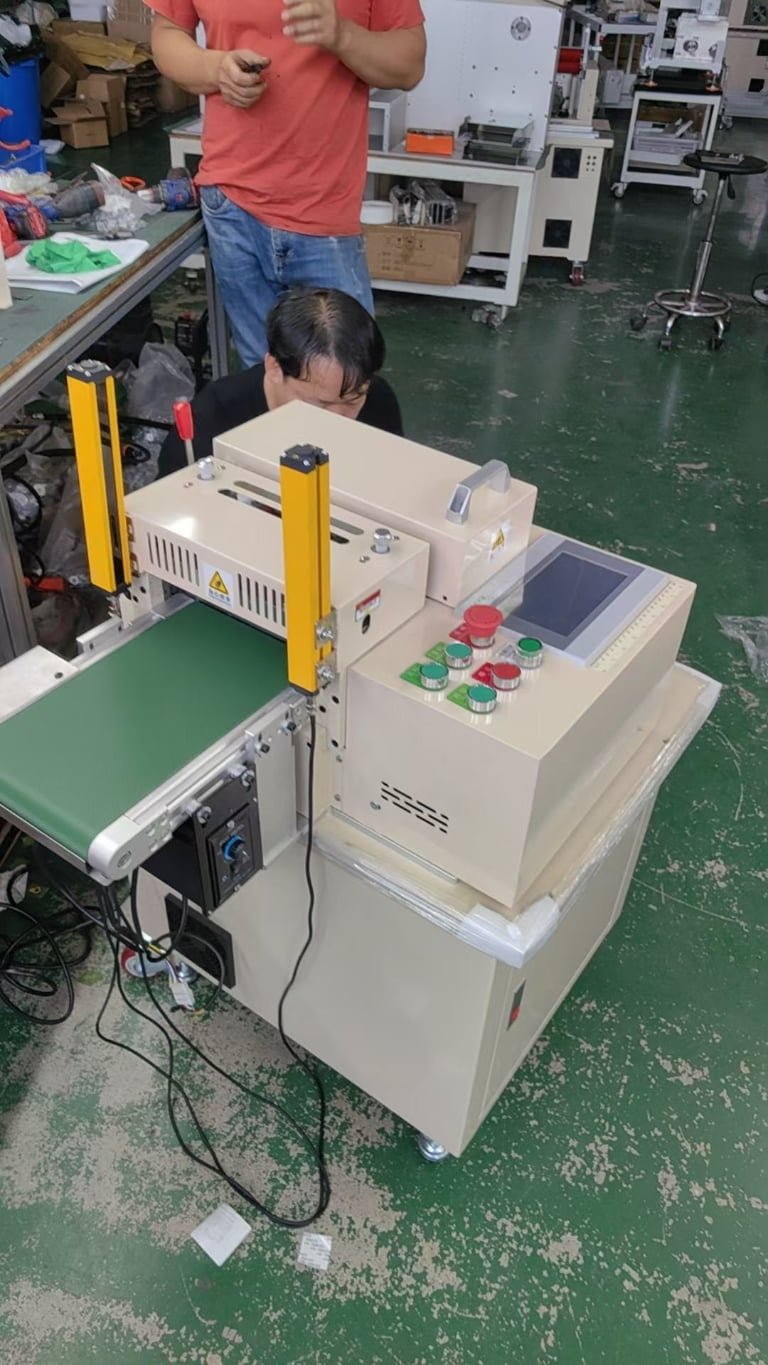
Modern automatic nylon cutting machines achieve this by combining servo feeding, precise temperature control, stable clamping, and intelligent automation. When properly configured, they can process several times more products than manual cutting while maintaining excellent repeatability.
In this guide, I will explain how to increase production speed without sacrificing accuracy and compare the output of automatic nylon cutting machines with manual models.
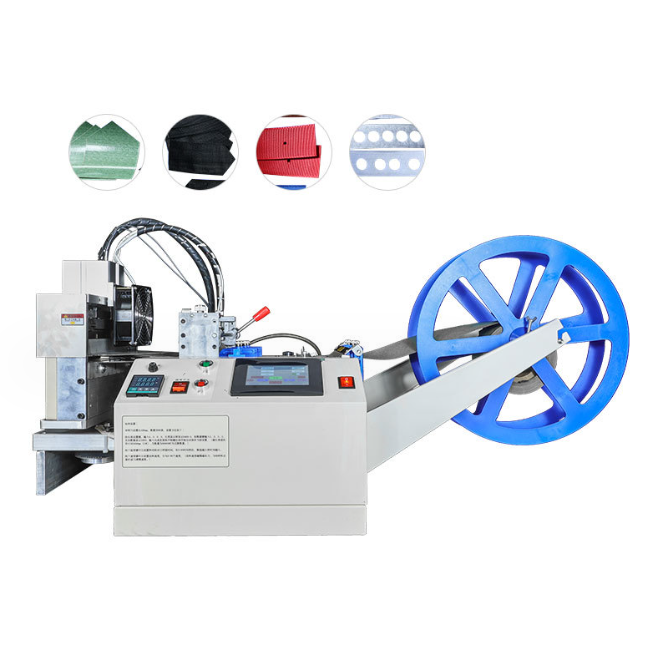
How Many Pieces Per Minute Can Automatic Nylon Cutting Machines Process Compared with Manual Models?
The exact production speed depends on:
- Material width
- Material thickness
- Cutting length
- Blade type
- Feeding distance
- Hot or cold cutting
- Operator experience
Because of these variables, there is no single production speed that applies to every machine.
However, the comparison below reflects typical industrial production.
| Cutting Method | Typical Output* | Accuracy | Labor Requirement |
|---|---|---|---|
| Manual Cutting | 8–20 pieces/min | Operator dependent | High |
| Semi-Automatic Machine | 20–60 pieces/min | Good | Medium |
| Fully Automatic Nylon Cutting Machine | 60–150+ pieces/min | Excellent | Low |
*Note: Actual production capacity varies depending on material type, cutting length, machine configuration, and production settings.
Automatic equipment not only increases production speed but also delivers far more consistent product dimensions throughout long production runs2.
Why Increasing Speed Alone Usually Fails
Many operators immediately increase machine speed when production demand grows.
Unfortunately, this often creates new problems.
Common symptoms include:
- Uneven cutting lengths
- Material slipping
- Burnt edges
- Incomplete cuts
- Feeding errors
- Higher reject rates
True productivity means producing more qualified parts, not simply running the machine faster.
A machine producing 120 accurate pieces per minute is much more productive than one producing 150 pieces with frequent defects.
Keep the Blade Razor Sharp
The blade has the greatest influence on both speed and accuracy.
A sharp blade cuts quickly with minimal resistance3.
A dull blade:
- Increases friction
- Generates more heat
- Slows production
- Produces fuzzy edges
- Requires more cutting force
As blade wear increases, operators often compensate by reducing speed, lowering overall productivity.
Blade Maintenance Schedule
| Blade Condition | Production Impact | Recommended Action |
|---|---|---|
| Sharp | Maximum speed | Continue production |
| Slight wear | Small quality loss | Monitor closely |
| Moderate wear | Lower accuracy | Sharpen or replace |
| Heavy wear | Poor quality | Replace immediately |
Replacing blades before they become excessively worn keeps production stable.
Optimize Feed Rate Before Increasing Speed
Many people focus only on blade movement.
In reality, feeding stability often determines cutting accuracy.
If the material feed fluctuates, increasing cutting speed simply magnifies the errors.
Before raising production speed, verify:
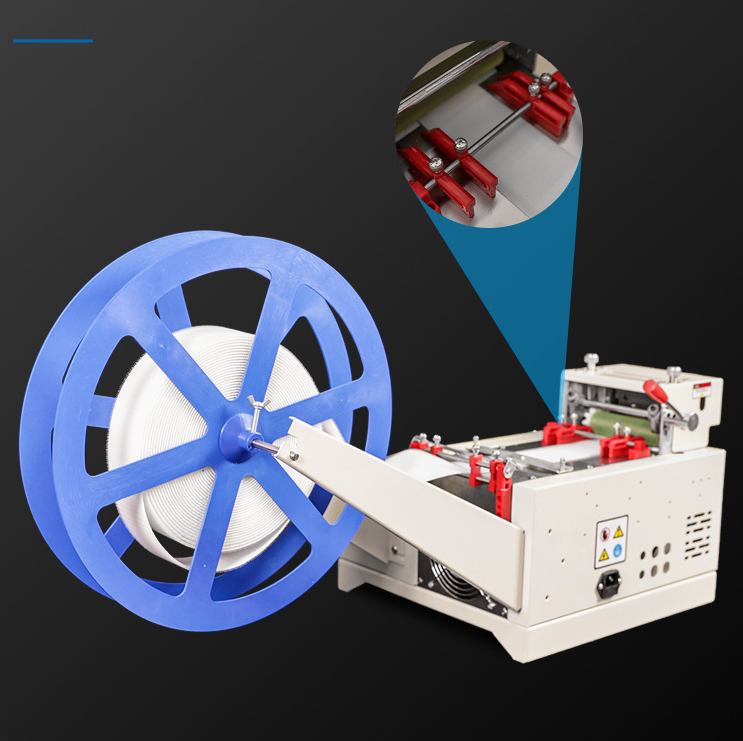
- Feed roller grip
- Servo synchronization
- Encoder accuracy
- Material guide alignment
- Feeding pressure
Stable feeding allows higher cutting speeds without losing dimensional accuracy4.
Balance Speed and Pressure
For webbing and strip materials, pressure is just as important as speed.
If clamping pressure is too low:
- Material slips
- Cutting length changes
- Angled cuts appear
If pressure is too high:
- Soft nylon compresses
- Material deforms
- Feeding becomes inconsistent
Pressure Optimization
| Pressure Setting | Result |
|---|---|
| Too Low | Material slipping |
| Too High | Material deformation |
| Proper Setting | Stable feeding and accurate cuts |
The best results come from increasing speed only after pressure has been optimized.
Control Heat Instead of Simply Slowing Down
Higher production speed does not automatically create more heat.
Poor process settings do.
Heat increases when:
- Blade contact time is too long
- Blade becomes dull
- Feed rate is unstable
- Chips or melted residue remain on the blade
Reducing unnecessary heat helps maintain clean edges even during high-speed production5.
Good practices include:
- Short blade contact time
- Clean blade surfaces
- Proper temperature settings
- Effective air cooling
- Stable production rhythm
These adjustments improve both cutting quality and machine efficiency.
Use Air Assist Instead of Heavy Cooling
Unlike metals, nylon can absorb moisture.
Heavy liquid cooling is usually unnecessary for webbing cutting applications.
Many manufacturers instead use:
- Air nozzles
- Cooling fans
- Compressed air
- Natural airflow
These methods remove heat while avoiding moisture-related dimensional changes.
Benefits include:
- Cleaner cutting
- Better dimensional stability
- Less blade contamination
- Faster production recovery
Improve Clamping Stability
Soft materials like nylon move easily during production.
Weak clamping causes vibration and inconsistent feeding.
Good clamping systems provide:
- Uniform pressure
- Stable positioning
- Repeatable feeding
- Reduced vibration
Clamping Inspection
| Component | Inspection Item |
|---|---|
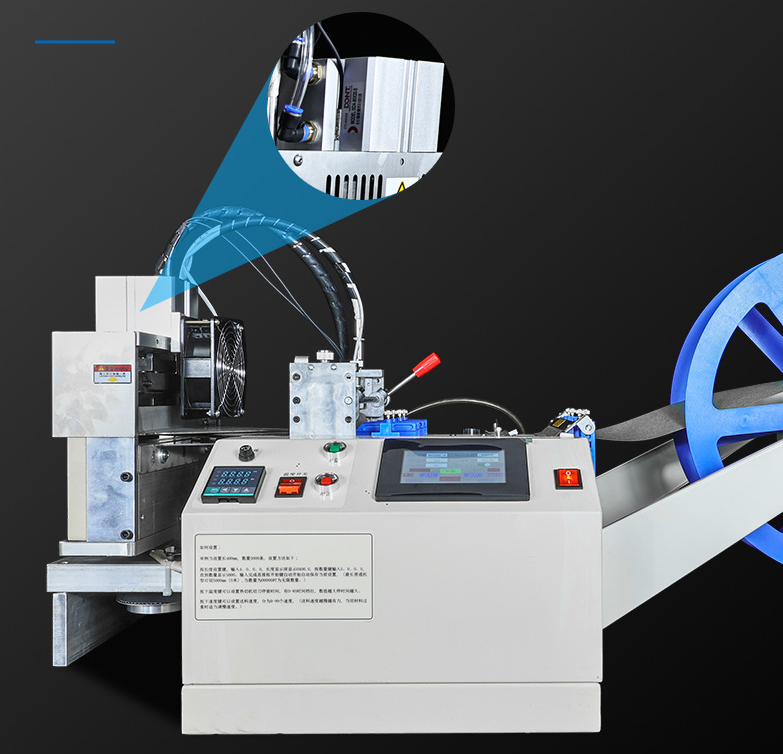
| Pneumatic Clamp | Pressure consistency |
| Roller Surface | Wear |
| Guide Rails | Alignment |
| Material Path | Smooth feeding |
Reliable clamping allows faster production without sacrificing precision.
Adjust Parameters for Different Nylon Grades
Not all nylon materials behave the same.
For example:
- PA6
- PA66
- Reinforced nylon
- Coated nylon webbing
- Thick industrial straps
Each material responds differently to:
- Temperature
- Feed rate
- Cutting speed
- Pressure
Rather than using one universal setting, modern machines allow operators to save multiple production recipes.
Example Parameter Differences
| Material | Typical Speed | Temperature | Pressure |
|---|---|---|---|
| PA6 Webbing | High | Medium | Medium |
| PA66 Webbing | Medium | Slightly Higher | Medium |
| Thick Nylon Strap | Lower | Higher | Higher |
| Coated Nylon | Medium | Lower | Medium |
Saving optimized parameters reduces setup time and improves production consistency6.
Use a Rough-Cut and Finish-Cut Strategy When Necessary
For thicker nylon materials, one heavy cut may reduce both speed and quality7.
Instead, some applications benefit from:
- Rough cutting to remove most material.
- Light finishing to achieve final accuracy.
Advantages include:
- Lower cutting force
- Better edge quality
- Reduced heat buildup
- Longer blade life
Although this method adds a second operation, overall productivity often improves because fewer defective parts require rework.
Reduce Setup Time
Production speed depends on more than cutting speed.
Long setup times also reduce factory output.
Good production management includes:
- Standard blade alignment
- Quick blade replacement
- Saved cutting recipes
- Fast material loading
- Automatic length calibration
Setup Optimization
| Improvement | Production Benefit |
|---|---|
| Quick-change blade | Less downtime |
| Saved programs | Faster changeover |
| Automatic calibration | Better repeatability |
| Standard fixtures | Consistent setup |
Reducing setup losses increases daily output without changing machine speed.
Verify Accuracy During Production
Running faster is only valuable if the finished products remain within tolerance.
Regular quality checks should include:
- Length measurement
- Edge inspection
- Seal quality
- Surface appearance
- Cutting angle
Many factories perform periodic sampling rather than inspecting every piece.
This approach detects process drift before large amounts of material are wasted.
Production Sampling
| Inspection Item | Suggested Frequency |
|---|---|
| Cutting Length | Every production batch |
| Edge Quality | Hourly |
| Blade Condition | Daily |
| Temperature | Continuous monitoring |
Consistent monitoring supports stable, high-speed production.
Upgrade to Servo-Controlled Automation
The biggest productivity improvement usually comes from automation8.
Compared with manual cutting, automatic machines provide:
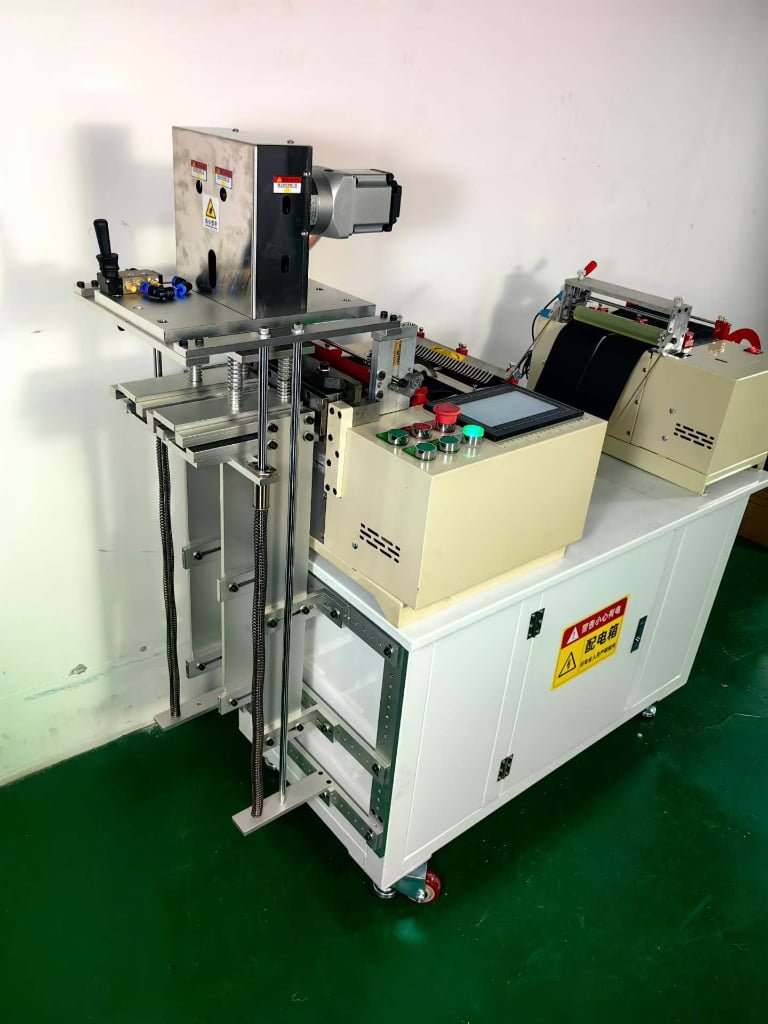
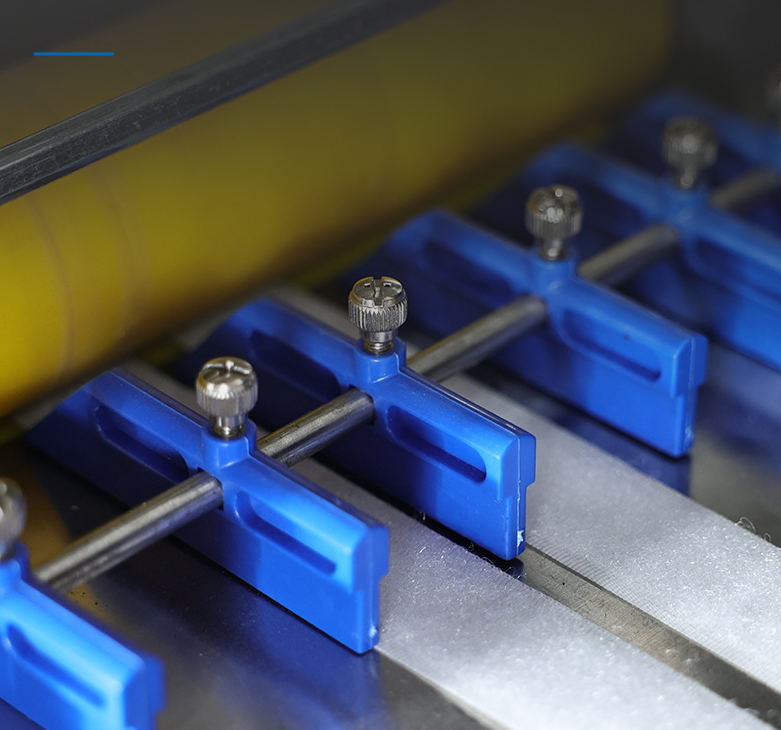
- Servo feeding
- Automatic measuring
- Programmable cutting
- Stable temperature control
- Automatic counting
- Material sensors
- Continuous production
These features reduce human error while increasing output.
Typical benefits include:
- Higher productivity
- Better repeatability
- Lower labor costs
- Reduced material waste
- Consistent product quality
For manufacturers with growing production volumes, automation delivers much greater gains than simply increasing manual cutting speed.
Choose the Right Machine for High-Speed Production
When selecting new equipment, I always look beyond the maximum cutting speed shown in the brochure.
The following features have a much greater impact on real production efficiency:
- Precision servo feeding
- Stable digital temperature control
- High-speed pneumatic clamping
- Automatic material feeding
- Quick-change blade system
- Intelligent touch-screen controller
- Parameter memory
- Automatic fault diagnosis
These functions allow the machine to maintain high accuracy even during continuous operation.
Whether I purchase a webbing tape cutting machine, hot and cold cutting machine, high-speed trademark cutting machine, automatic punching cutting machine, rotary bevel cutting machine, different shapes cutting machine, computer tube cutting machine, Bubble Wrap Cutting Machine, Protective Foam Cutting Machine, PVC Edge Banding Cutting Machine, wire cutting and stripping machine, or metal pipe cutting and beveling machine, I always evaluate overall production efficiency instead of focusing only on maximum cutting speed.
Conclusion
Improving production speed without losing accuracy requires a balanced approach. A sharp blade, stable servo feeding, proper clamping pressure, optimized cutting parameters, effective heat control, reduced setup time, and regular quality checks all contribute to higher throughput. While manual cutting may still be suitable for small batches, fully automatic nylon cutting machines provide significantly higher productivity, better consistency, lower labor requirements, and more reliable long-term performance for industrial manufacturing.
HAOXINHE Insights
At HAOXINHE, we focus on helping manufacturers increase production efficiency without compromising product quality. Our webbing tape cutting machines, hot and cold cutting machines, high-speed trademark cutting machines, automatic punching cutting machines, rotary bevel cutting machines, different shapes cutting machines, computer tube cutting machines, Bubble Wrap Cutting Machines, Protective Foam Cutting Machines, PVC Edge Banding Cutting Machines, wire cutting and stripping machines, and metal pipe cutting and beveling machines are engineered with precision servo systems, programmable touch-screen controls, stable temperature management, and intelligent feeding technology.
Based on our experience with customers in packaging, textile, automotive, and industrial webbing industries, the greatest productivity gains come from optimizing the entire cutting process rather than simply increasing machine speed. By combining reliable automation with easy parameter adjustment and consistent cutting performance, our equipment helps factories achieve higher output, lower labor costs, and dependable product quality across a wide range of materials.
-
"The Importance of Cutting Speed in Fiber Laser Machines", https://shop.adhmt.com/the-importance-of-cutting-speed-in-fiber-laser-machines-factors-to-consider/. Studies on industrial cutting processes indicate that higher operational speeds often lead to increased material defects and scrap rates due to reduced precision and stability in feeding mechanisms. Evidence role: general_support; source type: research. Supports: Excessive speed in nylon cutting machines can negatively impact cutting quality and increase scrap rates.. Scope note: Findings may vary depending on machine type and material properties. ↩
-
"Dimensional Accuracy and Measurement Variability in CNC …", https://pmc.ncbi.nlm.nih.gov/articles/PMC12194426/. Studies comparing manual and automated cutting systems indicate that automation significantly improves dimensional accuracy and reduces variability over extended production runs. Evidence role: general_support; source type: research. Supports: Automatic cutting machines provide higher speed and dimensional consistency compared to manual methods.. Scope note: Results may vary based on operator skill and machine maintenance. ↩
-
"A Comprehensive Understanding of Knife Cutting – PMC – NIH", https://pmc.ncbi.nlm.nih.gov/articles/PMC10420138/. Technical analyses of cutting tools show that blade sharpness directly affects cutting resistance, speed, and edge quality. Evidence role: mechanism; source type: research. Supports: Sharp blades reduce resistance and improve cutting speed and accuracy.. Scope note: Effectiveness depends on material type and cutting conditions. ↩
-
"Research on Influence of Tool Deformation in the Direction of …", https://pmc.ncbi.nlm.nih.gov/articles/PMC10490623/. Research on material feeding systems in cutting machines highlights that consistent feed rates reduce dimensional errors and support higher operational speeds. Evidence role: mechanism; source type: research. Supports: Stable feeding improves cutting speed and dimensional accuracy.. Scope note: Findings may depend on machine design and material properties. ↩
-
"Review of Cutting Temperature Measurement Methods – PMC", https://pmc.ncbi.nlm.nih.gov/articles/PMC10573455/. Studies on thermal effects in cutting processes show that excessive heat can degrade edge quality, while controlled temperatures maintain clean cuts. Evidence role: mechanism; source type: research. Supports: Lower heat during cutting improves edge quality and precision.. Scope note: Specific temperature thresholds vary by material and machine type. ↩
-
"Energy efficient cutting parameter optimization", https://rdw.rowan.edu/context/engineering_facpub/article/1247/viewcontent/Tang2021_FrontMechEng_Energy.pdf. Studies on automated cutting systems show that saved production recipes minimize setup time and improve repeatability across batches. Evidence role: mechanism; source type: research. Supports: Optimized parameters reduce setup time and enhance production consistency.. Scope note: Benefits depend on machine software capabilities. ↩
-
"Study of the Influence of Cutting Edge on Micro … – PMC – NIH", https://pmc.ncbi.nlm.nih.gov/articles/PMC9317438/. Technical studies on cutting processes for thick materials show that rough-cut and finish-cut methods enhance precision and reduce defects. Evidence role: mechanism; source type: research. Supports: Multi-step cutting strategies improve edge quality and reduce heat buildup for thicker nylon materials.. Scope note: Effectiveness may depend on material type and blade condition. ↩
-
"A Guide to Automated Cutting Systems and their Benefits", https://www.oxygenservicecompany.com/automated-cutting-systems-efficiency-waste-reduction/. Studies on automated manufacturing systems show that automation reduces labor costs and increases output consistency compared to manual methods. Evidence role: general_support; source type: research. Supports: Automation significantly improves productivity in cutting machines.. Scope note: Productivity gains depend on initial investment and machine capabilities. ↩