How to Maintain an Automatic Webbing Angle Cutting Machine for Long-Term Use?
An automatic webbing angle cutting machine is a valuable investment for any manufacturer. Whether I produce seat belts, luggage straps, hook-and-loop tapes, ribbons, labels, or industrial webbing, I want my machine to deliver accurate cuts every day for many years.
In my experience, the difference between a machine that lasts three years and one that lasts more than ten years often comes down to maintenance. Regular cleaning, lubrication, inspection, and timely replacement of wear parts help prevent costly breakdowns and keep production running smoothly.1
The same maintenance principles also apply to a webbing tape cutting machine, hot and cold cutting machine, high-speed trademark cutting machine, automatic punching cutting machine, and other automatic cutting equipment.
Proper maintenance of an automatic webbing angle cutting machine is essential for ensuring long-term reliability, consistent cutting accuracy, and maximum production efficiency. Regular cleaning, lubrication, blade inspection, sensor maintenance, calibration, and preventive servicing help reduce unexpected downtime, extend equipment lifespan, and improve product quality. By following a structured maintenance schedule and replacing wear components when needed, manufacturers can minimize repair costs, optimize machine performance, and maintain stable, high-volume production across a wide range of webbing and narrow fabric applications.
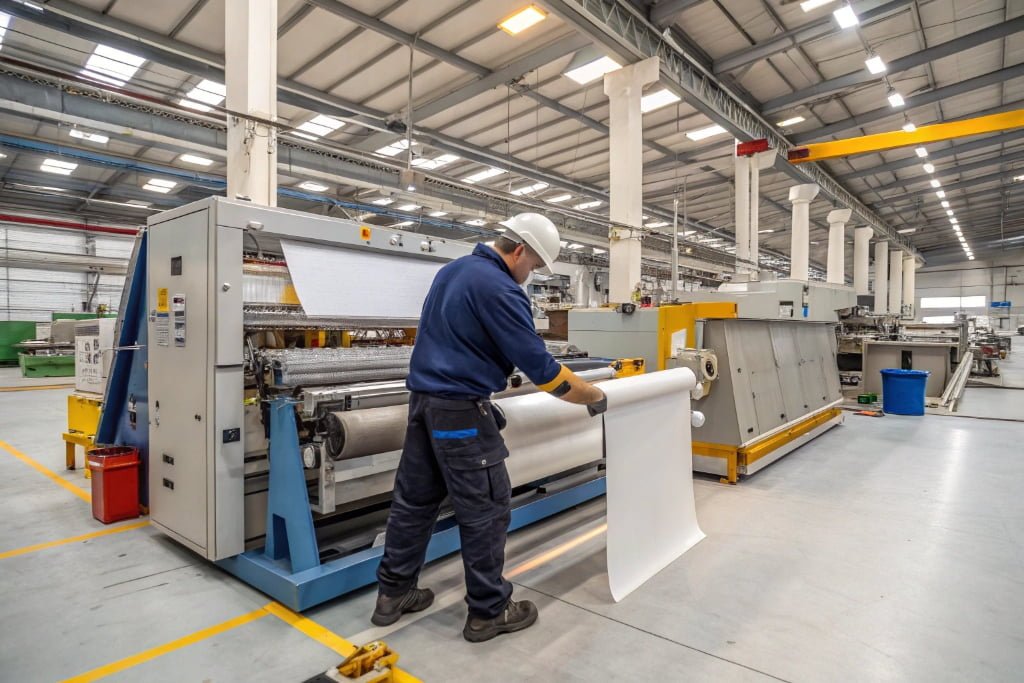
Why Is Regular Maintenance Important?
Many operators only think about maintenance after a machine breaks down. I prefer a preventive approach because it saves both time and money.
A well-maintained machine offers several advantages:
- Longer machine life
- Better cutting accuracy
- Lower maintenance costs
- Fewer unexpected breakdowns
- More stable production
- Longer blade life
- Improved product quality
- Higher production efficiency
Preventive maintenance is always less expensive than emergency repairs.2
Create a Daily Maintenance Routine
The easiest way to extend machine life is to perform small maintenance tasks every day.
These tasks usually take only a few minutes, but they help prevent dust, residue, and worn components from causing bigger problems.
Daily Maintenance Checklist
| Maintenance Task | Purpose |
|---|---|
| Clean cutting area | Remove debris |
| Wipe blades | Prevent residue buildup |
| Clean rollers | Improve material feeding |
| Remove dust | Protect sensors |
| Check emergency stop | Confirm safety |
| Inspect power cable | Prevent electrical faults |
Making daily maintenance a habit helps keep the machine operating at peak performance.
Clean the Blades, Rollers, and Cutting Area Regularly
Dust, melted fibers, adhesive residue, and small pieces of webbing naturally build up during production.
If I ignore this buildup, it can affect:
- Cutting accuracy
- Material feeding
- Blade movement
- Sensor performance
- Product appearance
I clean the machine after every production shift.
Areas That Need Regular Cleaning
| Component | Cleaning Frequency |
|---|---|
| Cutting blade | Daily |
| Feed rollers | Daily |
| Cutting table | Daily |
| Material guides | Daily |
| Waste collection area | Daily |
| Cooling vents | Weekly |
Keeping these parts clean reduces wear and improves cutting consistency.
Keep the Machine Properly Lubricated
Moving parts create friction.
Without proper lubrication, components wear much faster.
I always use the lubricant recommended by the machine manufacturer.
Parts That Usually Require Lubrication
| Component | Typical Interval |
|---|---|
| Guide rails | Weekly |
| Bearings | Monthly |
| Gears | Monthly |
| Sliding mechanisms | Weekly |
| Rotary shafts | Monthly |
Using the wrong oil may damage seals or attract excessive dust, so I never substitute lubricants without checking the manual.3
Inspect the Cutting Blade Frequently
The cutting blade is one of the most important wear parts.
A dull blade can cause:
- Rough edges
- Uneven angles
- Material pulling
- Poor heat sealing
- Increased machine load
I inspect the blade regularly instead of waiting until product quality declines.
Signs the Blade Needs Replacement
| Symptom | Possible Cause |
|---|---|
| Burrs on edges | Blade wear |
| Uneven cuts | Damaged blade |
| Material tearing | Dull edge |
| Increased cutting force | Blade wear |
| Poor sealing | Worn hot knife |
Replacing the blade early often saves both material and production time.4
Check Alignment and Calibration
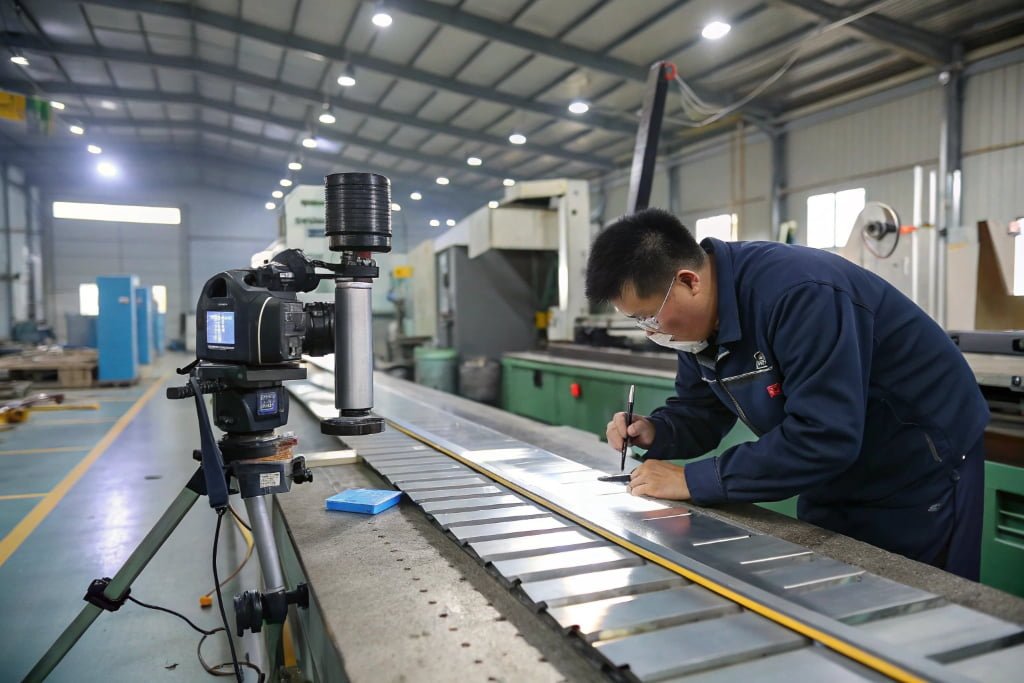
Even a high-quality machine gradually shifts due to vibration and long production hours.
I regularly verify:
- Cutting angle
- Cutting length
- Blade position
- Material alignment
- Feeding accuracy
Calibration Checklist
| Inspection Item | Frequency |
|---|---|
| Cutting angle | Weekly |
| Cutting length | Weekly |
| Servo position | Monthly |
| Feeding alignment | Weekly |
| Machine level | Every 6 months |
Proper calibration keeps every production batch consistent.
Clean Sensors and Electrical Components
Automatic cutting machines rely on sensors to detect material position and machine movement.
Dirty sensors may cause:
- Missed cuts
- Feeding errors
- False alarms
- Production interruptions
I carefully clean:
- Optical sensors
- Material detection sensors
- Encoder wheels
- Electrical connectors
Electrical Maintenance Tips
- Disconnect power before cleaning.
- Remove dust with clean compressed air.
- Inspect cables for damage.
- Tighten loose electrical connections.
- Keep the control cabinet dry.
Reliable sensors improve automation accuracy.
Lubricate Guide Rails, Bearings, and Gears
Mechanical components operate continuously during production.
Without lubrication, friction increases rapidly.
Common Lubrication Schedule
| Component | Recommended Interval |
|---|---|
| Guide rails | Every week |
| Bearings | Every month |
| Drive gears | Every month |
| Ball screws | Every month |
| Rotary assemblies | Every month |
I also wipe away old grease before applying new lubricant.
Clean lubrication performs much better than adding grease over dirt.
Avoid Overloading the Machine
Every automatic webbing angle cutting machine has design limits.
Running materials beyond those limits may damage:
- Motors
- Bearings
- Blades
- Heating systems
- Feed rollers
I always check:
- Maximum material width
- Maximum thickness
- Material type
- Maximum cutting speed
- Heating capacity
Using the machine within its specifications extends its service life.
Perform Test Cuts After Every Maintenance
Whenever I replace parts or adjust settings, I never begin full production immediately.
Instead, I cut several sample pieces.
Sample Inspection Items
| Item | Check |
|---|---|
| Cutting length | Accurate |
| Angle | Correct |
| Edge quality | Smooth |
| Heat seal | Uniform |
| Material feeding | Stable |
Test cuts help identify problems before they affect large production batches.
Back Up Machine Programs Regularly
Many modern cutting machines use computerized control systems.
These machines often store:
- Cutting programs
- Angle settings
- Length parameters
- Production quantities
- Product recipes
I regularly back up this information.
Benefits of Data Backup
| Benefit | Description |
|---|---|
| Faster recovery | Restore settings quickly |
| Reduced downtime | Less programming time |
| Consistent quality | Repeat previous jobs |
| Data protection | Prevent information loss |
A simple backup can save many hours after unexpected system failures.
Schedule Professional Preventive Maintenance
Daily maintenance is important, but professional servicing is also necessary.
Qualified technicians can identify problems before they become serious.
Professional inspections often include:
- Servo motor testing
- Electrical inspection
- Control system diagnostics
- Bearing wear measurement
- Pneumatic inspection
- Heating system testing
- Calibration verification
I usually schedule professional maintenance according to machine usage rather than waiting for failures.
How Often Should Blades and Heating Elements Be Replaced?
This is one of the most common questions operators ask.
The answer depends on several factors:
- Material type
- Production volume
- Machine speed
- Blade quality
- Operating temperature
- Daily maintenance
There is no universal replacement interval.
Instead of replacing parts on a fixed calendar schedule, I monitor their actual condition.
When Should Cutting Blades Be Replaced?
A blade should be replaced when cutting quality begins to decline.
Common Blade Replacement Indicators
| Symptom | Action |
|---|---|
| Burrs appear | Replace blade |
| Material tears | Replace blade |
| Uneven angle | Inspect or replace blade |
| Increased cutting force | Replace blade |
| Visible damage | Replace immediately |
For factories running multiple shifts every day, blade inspections should become part of the daily maintenance routine.
Replacing a blade before complete failure helps prevent material waste.
When Should Heating Elements Be Replaced?
Machines with hot knife systems also require periodic inspection of heating components.
Unlike blades, heating elements usually fail gradually.
Common warning signs include:
- Slow heating
- Unstable temperature
- Uneven sealing
- Burn marks
- Temperature fluctuations
- Longer warm-up time
Heating Element Inspection Guide
| Condition | Recommendation |
|---|---|
| Stable heating | Continue operation |
| Slow heating | Inspect element |
| Uneven sealing | Test heating system |
| Temperature instability | Replace if necessary |
| Visible damage | Replace immediately |
Regular temperature checks help identify heating problems early.
Factors That Affect Blade and Heating Element Life
Several operating conditions directly influence component lifespan.
Blade Life Factors
| Factor | Effect |
|---|---|
| Material hardness | Faster wear |
| Production speed | Increased wear |
| Poor lubrication | Higher friction |
| Incorrect alignment | Uneven wear |
| Dirt buildup | Reduced performance |
Heating Element Life Factors
| Factor | Effect |
|---|---|
| High operating temperature | Shorter lifespan |
| Continuous operation | More thermal stress |
| Poor ventilation | Overheating |
| Voltage fluctuations | Electrical damage |
| Dust accumulation | Reduced efficiency |
Good maintenance practices help both blades and heating elements last longer.5
Build a Preventive Maintenance Schedule
Instead of repairing machines only after failures occur, I follow a planned maintenance schedule.
Preventive Maintenance Plan
| Interval | Maintenance Tasks |
|---|---|
| Daily | Clean machine, inspect blade, remove debris |
| Weekly | Lubricate guide rails, inspect alignment |
| Monthly | Check bearings, gears, sensors, electrical connections |
| Every 6 Months | Full calibration, inspect heating system |
| Annually | Professional preventive maintenance and comprehensive inspection |
A structured schedule reduces downtime and extends equipment life.
Common Maintenance Mistakes to Avoid
Even experienced operators sometimes overlook simple maintenance tasks.
I avoid these common mistakes:
| Mistake | Possible Result |
|---|---|
| Skipping daily cleaning | Poor cutting quality |
| Using incorrect lubricant | Component wear |
| Ignoring blade wear | Material waste |
| Delaying calibration | Inaccurate cuts |
| Running overloaded materials | Motor damage |
| Ignoring sensor cleaning | Feeding errors |
| Not backing up programs | Lost production data |
| Waiting for machine failure | Expensive repairs |
Avoiding these mistakes helps maintain reliable production.
Insights from HAOXINHE
At HAOXINHE, we believe that excellent machine performance depends not only on precision manufacturing but also on proper maintenance. Our cutting equipment is designed for long service life with easy access to wear parts, user-friendly maintenance procedures, and reliable automation.
Our product range includes:
- Automatic webbing angle cutting machine
- Webbing tape cutting machine
- Hot and cold cutting machine
- High-speed trademark cutting machine
- Automatic punching cutting machine
- Round shape cutting machine
- Rotary bevel cutting machine
- Different shapes cutting machine
- Computer tube cutting machine
- Wire cutting and stripping machine
- Metal pipe cutting and beveling machine
- Bubble Wrap Cutting Machine
- PVC Edge Banding Cutting Machine
- Protective Foam Cutting Machine
We recommend combining daily cleaning, scheduled lubrication, regular calibration, and preventive inspections to maximize equipment life. HAOXINHE also provides technical support, maintenance guidance, and spare parts to help customers maintain consistent production quality and reduce unexpected downtime.
Conclusion
Maintaining an automatic webbing angle cutting machine is a continuous process rather than a one-time task. By cleaning the machine regularly, lubricating moving parts, inspecting blades, calibrating cutting systems, maintaining sensors, backing up production data, and scheduling preventive servicing, I can significantly extend machine life and improve production reliability.
Blades and heating elements should not be replaced according to a fixed timetable alone. Instead, I monitor cutting quality, edge condition, temperature stability, and overall machine performance. Replacing these wear parts when clear signs of deterioration appear helps maintain precise cuts, reduces material waste, and keeps production running efficiently for years.
-
"Maintenance Costs and Advanced Maintenance Techniques …", https://pmc.ncbi.nlm.nih.gov/articles/PMC9890517/. A study on industrial equipment maintenance highlights that regular cleaning, lubrication, and timely inspections significantly reduce the likelihood of machine failures and extend operational lifespan. Evidence role: expert_consensus; source type: research. Supports: Regular maintenance practices improve equipment reliability and reduce breakdowns.. Scope note: The findings may vary depending on the type of equipment and industry. ↩
-
"[PDF] The Costs and Benefits of Advanced Maintenance in Manufacturing", https://nvlpubs.nist.gov/nistpubs/ams/NIST.AMS.100-18.pdf. Research on maintenance economics shows that preventive strategies can lower repair costs by up to 30% compared to reactive approaches. Evidence role: statistic; source type: paper. Supports: Preventive maintenance reduces overall costs compared to emergency repairs.. Scope note: The percentage savings may vary depending on the industry and equipment type. ↩
-
"Consequences of poor lubrication in industry", https://gmsystem.net/en/consequences-of-poor-lubrication-in-industry/. Educational materials on machinery maintenance explain that improper lubrication can degrade seals and increase debris accumulation. Evidence role: mechanism; source type: education. Supports: Using incorrect lubricants can lead to seal damage and increased dust attraction.. Scope note: The explanation may not include specific examples for webbing angle cutting machines. ↩
-
"Effects of Hardness, Blade Angle and the Micro-Geometry of …", https://pmc.ncbi.nlm.nih.gov/articles/PMC10420138/. Case studies on cutting equipment show that timely blade replacement minimizes material waste and operational delays. Evidence role: case_reference; source type: paper. Supports: Replacing blades before complete wear reduces material waste and improves production efficiency.. Scope note: The case studies may not specifically address webbing angle cutting machines. ↩
-
"Energy Related Life Cycle Impact and Cost Reduction Opportunities …", https://www.academia.edu/2280292/Energy_Related_Life_Cycle_Impact_and_Cost_Reduction_Opportunities_in_Machine_Design_The_Laser_Cutting_Case. Research on wear part maintenance demonstrates that regular care significantly extends the lifespan of critical components. Evidence role: general_support; source type: research. Supports: Maintenance practices improve the durability of machine components like blades and heating elements.. Scope note: The research may focus on general wear parts rather than webbing-specific equipment. ↩