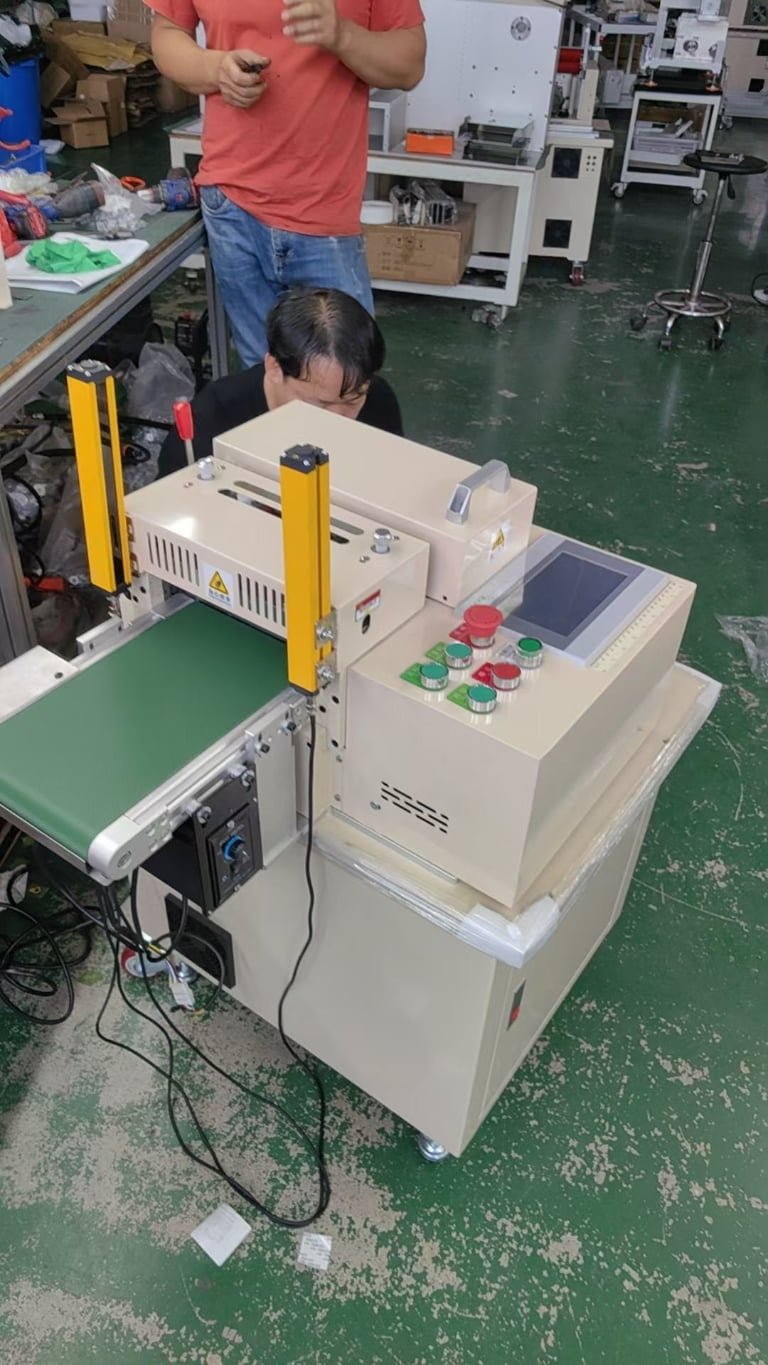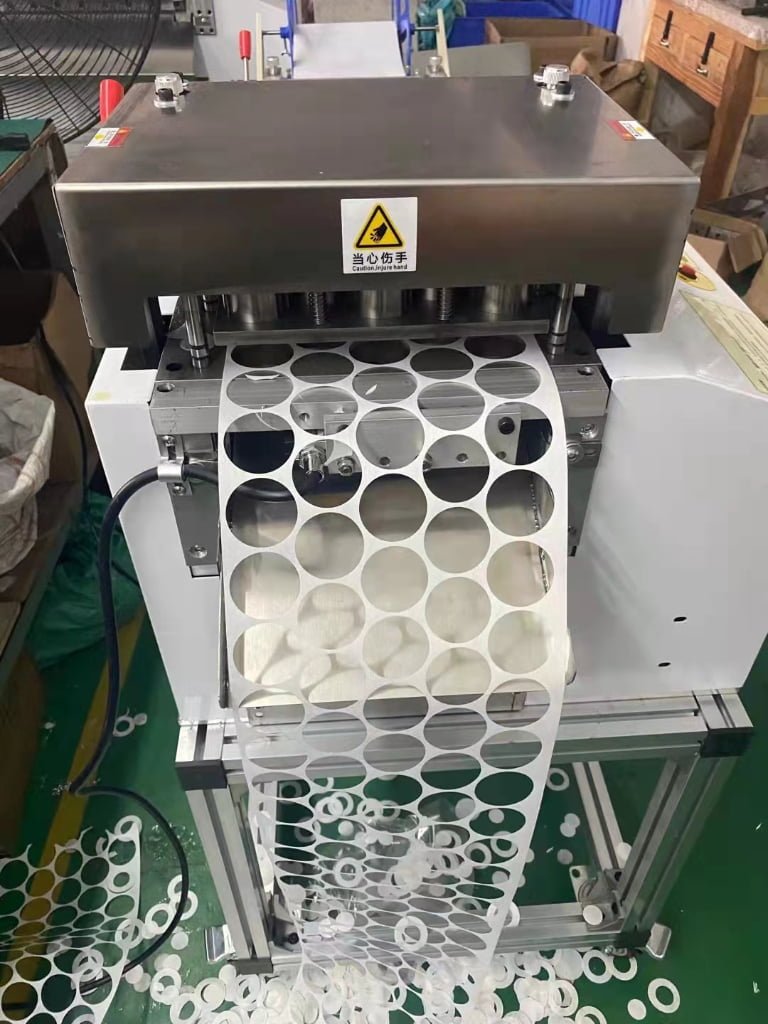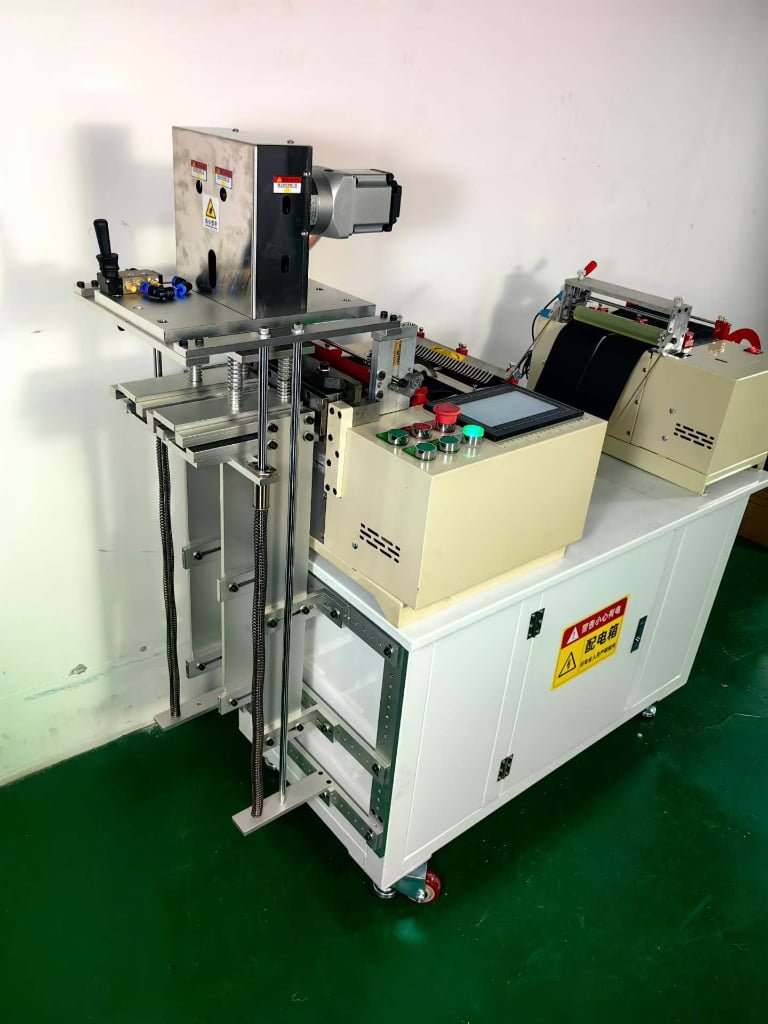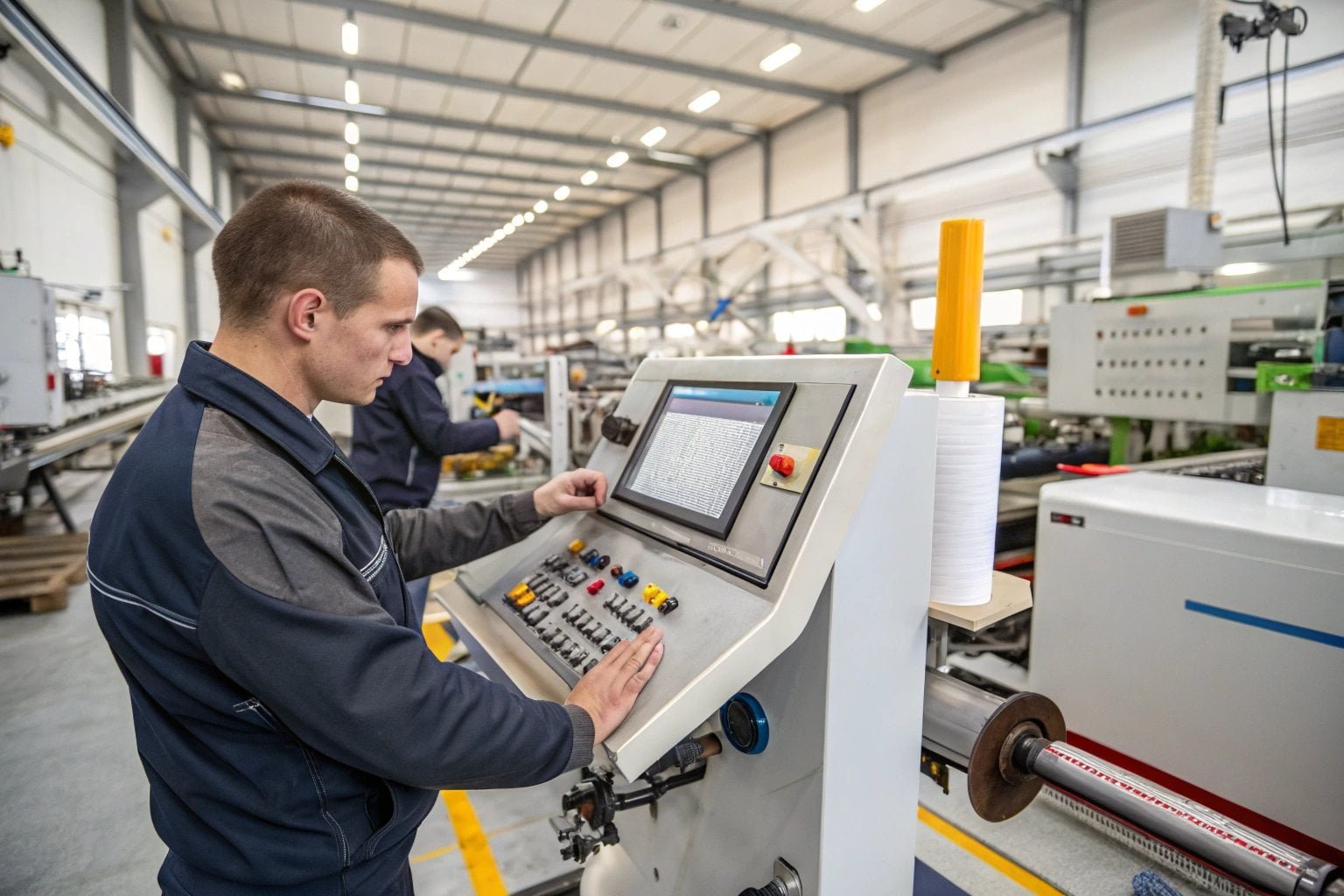
How to Adjust the Cutting Angle on an Automatic Webbing Angle Cutting Machine?
Accurate cutting angles are one of the biggest advantages of an automatic webbing angle cutting machine. Whether I produce safety belts, luggage straps, hook-and-loop fasteners, ribbons, or industrial webbing, the cutting angle directly affects product appearance, assembly, and quality.
Many customers focus only on cutting length, but I have learned that angle accuracy is just as important. Even a small angle error can cause parts to fit poorly, increase material waste, or slow down assembly.1
The good news is that most modern machines make angle adjustment simple. Once I understand the machine settings and follow a few basic steps, I can achieve highly consistent results throughout long production runs.
The same principles also apply to a webbing tape cutting machine, hot and cold cutting machine, high-speed trademark cutting machine, and many other automatic cutting systems.
Adjusting the cutting angle on an automatic webbing angle cutting machine is essential for achieving precise cuts, consistent product quality, and efficient production. Modern machines with digital angle programming, servo-controlled blade positioning, and programmable settings allow operators to quickly configure cutting angles for different webbing materials and product designs. By verifying parameters, testing sample cuts, calibrating the machine regularly, and maintaining proper material alignment, manufacturers can reduce waste, improve cutting accuracy, and ensure reliable performance in both small-batch and high-volume production.
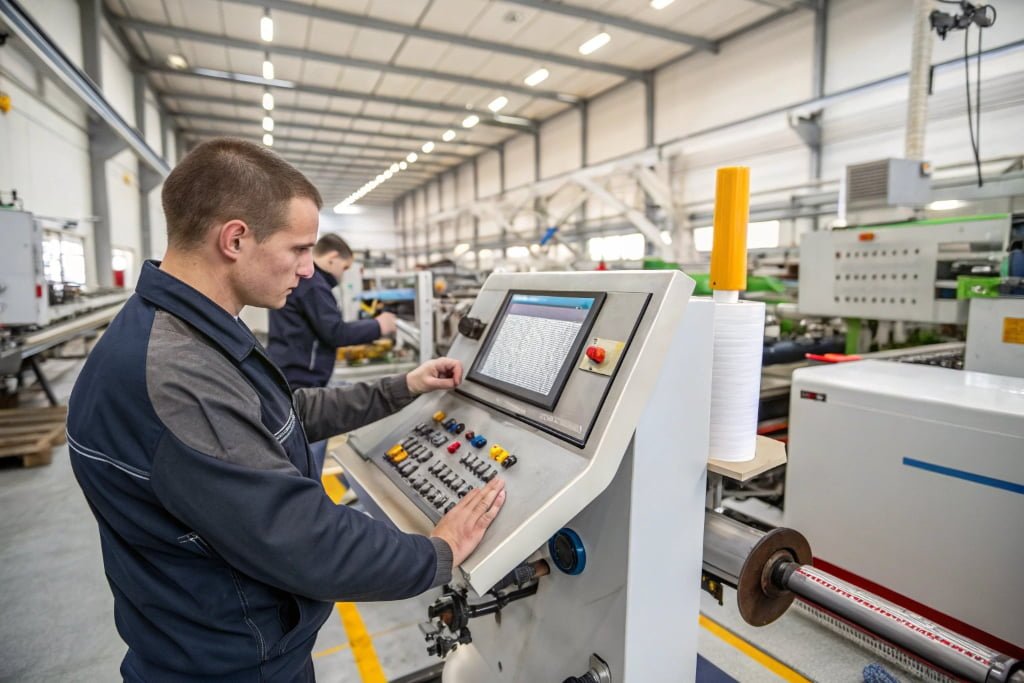
Why Is Accurate Cutting Angle Important?
Every product has its own cutting requirements.
Some products require straight cuts, while others need 30°, 45°, 60°, or custom bevel angles. If the angle is incorrect, finished products may not assemble properly or may look unprofessional.
Accurate angle cutting helps me achieve:
- Better product appearance
- Higher assembly accuracy
- Reduced material waste
- Faster production
- Better sealing quality on hot-cut materials
- More consistent batch production
- Higher customer satisfaction
For manufacturers producing thousands of pieces every day, even a one-degree error can become a costly problem.
Understand Your Machine’s Angle Adjustment System
Before making any adjustments, I first understand how my machine controls the cutting angle.
Different automatic cutting machines use different systems.
Some use:
- Digital angle input
- Servo-controlled rotary knives
- Stepping motors
- Pneumatic rotary heads
- Mechanical angle positioning
Modern CNC-controlled machines usually provide much higher accuracy and easier adjustment than older manual systems.2
Common Angle Adjustment Methods
| Machine Type | Adjustment Method |
|---|---|
| Basic machine | Manual positioning |
| Servo machine | Digital angle input |
| CNC machine | Touchscreen programming |
| Rotary knife machine | Motor-controlled rotation |
| Hot knife machine | Servo angle control |
Knowing which system my machine uses makes setup much easier.
Enter the Desired Angle Using the Digital Display
Many modern automatic webbing angle cutting machines allow direct angle input through the touchscreen or digital control panel.
This is the fastest and most accurate method.
Instead of manually adjusting the blade, I simply enter the required angle into the machine.
For example:
| Product | Cutting Angle |
|---|---|
| Safety strap | 45° |
| Bag handle | 30° |
| Hook-and-loop tape | 60° |
| Decorative ribbon | 90° |
| Industrial webbing | Custom angle |
Once I confirm the settings, the machine automatically rotates the blade to the programmed position.
Digital input greatly reduces operator error.
Set Left and Right Angles Independently
Some advanced machines allow separate adjustment of the left and right cutting angles.
This provides much greater flexibility.
Single-Sided Bevel
If I need one straight end and one angled end, I can set:
| End | Angle |
|---|---|
| Left | 90° |
| Right | 45° |
This creates a clean single-sided bevel.
Double-Sided Symmetrical Cut
For products requiring both ends to match perfectly, I set identical angles.
| End | Angle |
|---|---|
| Left | 45° |
| Right | 45° |
This produces symmetrical parts that fit together consistently.
Independent angle control allows one machine to produce many different product styles.3
Use the Stepping Motor or Rotary Knife Control
Many machines use a stepping motor or servo motor to rotate the cutting blade.
When I enter the target angle, the motor moves the blade automatically.
Compared with manual adjustment, motor-controlled positioning offers several advantages.
Benefits of Automatic Blade Positioning
| Feature | Benefit |
|---|---|
| High precision | Accurate angle |
| Fast adjustment | Less setup time |
| Repeatability | Consistent production |
| Lower operator error | Better quality |
I always allow the blade to complete its movement before starting production.
Interrupting the positioning process may affect accuracy.4
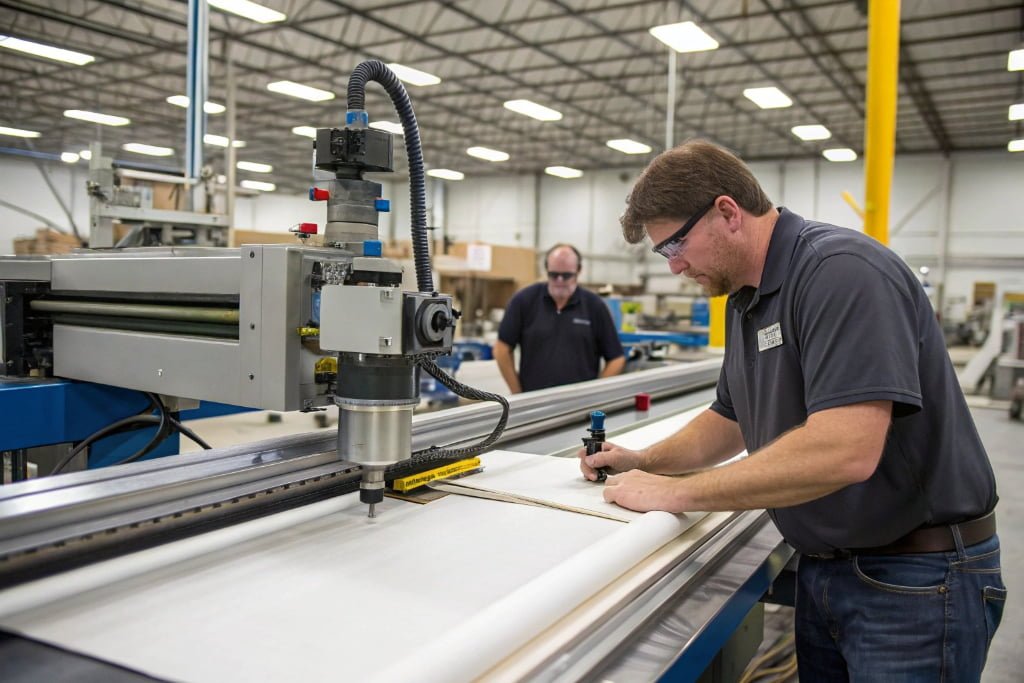
Select the Correct Cutting Mode Before Adjusting the Angle
Some automatic cutting machines combine angle settings with preset cutting shapes.
This means I first choose the product type or cutting mode before entering angle values.
For example, the machine may include programs such as:
- Straight cut
- Single bevel
- Double bevel
- V-shape
- Triangle
- Custom profile
Choosing the correct program ensures the angle settings work as expected.
Example Preset Modes
| Mode | Application |
|---|---|
| Straight | Standard straps |
| Single bevel | Belt ends |
| Double bevel | Decorative webbing |
| V-cut | Assembly parts |
| Custom | Special products |
Selecting the correct cutting mode reduces programming errors.
Adjust the Angle Based on Product Design
Different products require different angle combinations.
I always check the product drawing before changing machine settings.
Common Applications
| Product | Recommended Angle |
|---|---|
| Backpack strap | 45° |
| Seat belt | 45° |
| Hook-and-loop tape | 30° |
| Decorative ribbon | 60° |
| Industrial belt | Customer drawing |
Following the design drawing helps ensure the finished product meets customer specifications.
Test the New Angle Before Full Production
I never begin mass production immediately after changing angle settings.
Instead, I produce several sample pieces first.
During testing, I inspect:
- Cutting angle
- Length accuracy
- Edge sealing
- Material deformation
- Surface quality
- Burrs
- Heat marks
Testing takes only a few minutes but can prevent thousands of defective parts.
Sample Inspection Checklist
| Inspection Item | Result |
|---|---|
| Angle accuracy | ✓ |
| Cutting length | ✓ |
| Edge finish | ✓ |
| Heat sealing | ✓ |
| Appearance | ✓ |
Only after passing inspection do I begin continuous production.
Adjust the Angle According to the Material
Different materials behave differently during cutting.
For example:
- Nylon webbing
- Polyester webbing
- Cotton tape
- Elastic bands
- Hook-and-loop material
- Reflective webbing
Heat causes each material to shrink differently.
Some materials seal cleanly during hot cutting, while others may slightly deform.
Material Comparison
| Material | Angle Stability | Heat Sealing |
|---|---|---|
| Nylon | Excellent | Excellent |
| Polyester | Very Good | Very Good |
| Cotton | Good | Not suitable for hot sealing |
| Elastic | Moderate | Depends on temperature |
| Reflective webbing | Good | Requires testing |
I often make small angle adjustments after changing material types to maintain consistent results.
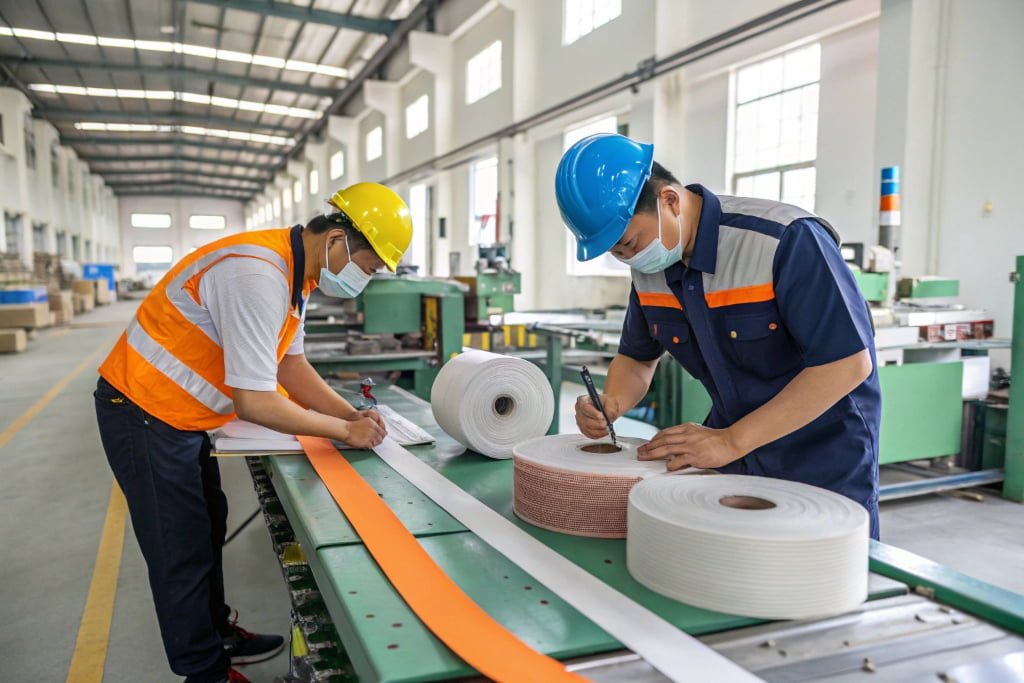
Recheck the Angle After Changing Webbing Width
Changing material width may also affect cutting performance.5
Wider webbing can create slightly different feeding behavior than narrow material.
Whenever I change:
- Webbing width
- Thickness
- Product style
- Material supplier
I always verify the cutting angle again.
This simple step helps maintain stable production quality.
Save the Program for Future Production
Most modern automatic webbing angle cutting machines include program memory.
After I finish adjusting:
- Cutting length
- Quantity
- Feeding speed
- Cutting temperature
- Left angle
- Right angle
I save the entire job into memory.
Advantages of Program Storage
| Feature | Benefit |
|---|---|
| Faster setup | Less downtime |
| Repeat accuracy | Same quality every order |
| Reduced operator error | Easier operation |
| Multiple products | Quick product changeover |
For repeat orders, I simply load the saved program instead of entering all settings again.
Why Is the Cutting Angle Inaccurate After Machine Setup?
Even after careful setup, cutting angles sometimes become inaccurate.
Fortunately, most causes are easy to identify.
Incorrect Angle Programming
The simplest reason is incorrect parameter input.
Common mistakes include:
- Wrong angle entered
- Left and right angles reversed
- Wrong cutting mode selected
- Incorrect product program loaded
I always double-check all settings before production begins.
Blade Position Did Not Reach the Target Angle
Servo motors and stepping motors must complete positioning before cutting.
If movement is interrupted, the blade may stop at the wrong angle.
Possible causes include:
- Servo alarm
- Low air pressure
- Mechanical obstruction
- Motor calibration error
Restarting the positioning sequence usually solves the problem.
Material Feeding Is Not Straight
Even if the blade angle is correct, poor feeding can create an incorrect cut.
I always inspect:
- Guide rollers
- Material alignment
- Feeding tension
- Feeding wheel pressure
Straight feeding produces consistent cutting angles.
Blade Wear
A dull blade affects cutting quality.
Symptoms include:
- Rough edges
- Material pulling
- Uneven angle
- Poor sealing
- Burr formation
Replacing worn blades restores cutting accuracy.
Machine Components Become Loose
After long production runs, vibration may loosen mechanical parts.
I regularly inspect:
- Blade holder
- Rotary shaft
- Guide rails
- Fasteners
- Motor couplings
Routine maintenance keeps angle positioning stable.6
Material Characteristics Change
Different suppliers often produce webbing with slight variations.
Possible differences include:
- Thickness
- Hardness
- Coating
- Fiber density
- Heat shrinkage
Whenever I receive new material, I perform a fresh sample test before mass production.
Calibration Is Needed
Like any precision equipment, automatic cutting machines require periodic calibration.
Calibration ensures:
- Accurate blade rotation
- Correct servo positioning
- Consistent angle measurement
- Stable repeatability
Regular calibration keeps long-term production accurate.7
Common Causes of Angle Errors
| Problem | Possible Cause | Solution |
|---|---|---|
| Wrong angle | Programming error | Check settings |
| Uneven angle | Material misalignment | Realign webbing |
| Different left/right angle | Incorrect parameter | Reset angles |
| Rough cut | Blade wear | Replace blade |
| Angle changes during production | Loose parts | Tighten components |
| Inconsistent cuts | Material variation | Test new material |
| Random angle error | Calibration issue | Recalibrate machine |
Best Practices for Maintaining Angle Accuracy
I follow several habits to keep every production run consistent:
- Verify machine settings before every order.
- Perform sample cutting after every adjustment.
- Keep the feeding system clean.
- Replace blades before excessive wear develops.
- Inspect servo motors and rotary mechanisms regularly.
- Recheck angles after changing materials or product styles.
- Save verified programs for repeat orders.
- Schedule routine calibration and preventive maintenance.
These practices help reduce waste and improve production efficiency.
Insights from HAOXINHE
At HAOXINHE, we understand that accurate angle cutting is critical for manufacturers producing webbing, straps, ribbons, labels, and industrial textile products. Our equipment is designed with intelligent control systems that make angle adjustment fast, precise, and repeatable.
Our product portfolio includes:
- Automatic webbing angle cutting machine
- Webbing tape cutting machine
- Hot and cold cutting machine
- High-speed trademark cutting machine
- Automatic punching cutting machine
- Round shape cutting machine
- Rotary bevel cutting machine
- Different shapes cutting machine
- Computer tube cutting machine
- Wire cutting and stripping machine
- Metal pipe cutting and beveling machine
- Bubble Wrap Cutting Machine
- PVC Edge Banding Cutting Machine
- Protective Foam Cutting Machine
Many HAOXINHE models support digital angle programming, independent left and right angle adjustment, servo-driven rotary blades, and program memory. These features help customers reduce setup time, improve cutting consistency, and achieve reliable results during both small-batch and high-volume production.
Conclusion
Adjusting the cutting angle on an automatic webbing angle cutting machine becomes straightforward once I understand the machine’s control system and follow a consistent setup process. By entering the correct angle, selecting the proper cutting mode, positioning the blade accurately, testing sample pieces, adjusting for different materials, and saving verified programs, I can achieve highly consistent production results.
If the cutting angle becomes inaccurate after setup, the cause is usually related to programming errors, blade wear, material alignment, machine calibration, or mechanical looseness. Regular inspections, preventive maintenance, and careful setup allow me to maintain precise angle cutting, reduce waste, improve product quality, and maximize the performance of every automatic cutting machine.
-
"[PDF] Examining Cut-and-Sew Textile Waste within the Apparel Supply …", https://bren.ucsb.edu/sites/default/files/2024-04/Examining%20Cut-and-Sew%20Textile%20Waste%20within%20the%20Apparel%20Supply%20Chain%204.10.24.pdf. Research on textile manufacturing processes shows that even minor cutting inaccuracies can result in significant material waste and assembly challenges. Evidence role: case_reference; source type: paper. Supports: Angle errors in cutting processes can lead to inefficiencies such as material waste and assembly difficulties.. Scope note: The findings may be specific to certain types of materials or production setups. ↩
-
"Manual vs. CNC : r/Machinists – Reddit", https://www.reddit.com/r/Machinists/comments/8wbw4s/manual_vs_cnc/. Research comparing CNC and manual cutting systems highlights the precision and user-friendly features of CNC technology. Evidence role: general_support; source type: research. Supports: CNC-controlled machines are widely recognized for their superior accuracy and ease of adjustment.. Scope note: The comparison may depend on specific machine models or user expertise. ↩
-
"Influences of viewing angle, product position, and consumers … – PMC", https://pmc.ncbi.nlm.nih.gov/articles/PMC9605035/. Educational materials on machine design explain how independent angle adjustment supports diverse production requirements. Evidence role: mechanism; source type: education. Supports: Independent angle control enhances the versatility of cutting machines for different product styles.. Scope note: The explanation may not include all machine configurations or product types. ↩
-
"Accuracy Evaluation Method for Blade Vibration Measurement in …", https://pmc.ncbi.nlm.nih.gov/articles/PMC11991160/. Research on servo motor systems indicates that incomplete positioning cycles can result in angle deviations. Evidence role: mechanism; source type: research. Supports: Interruptions in blade positioning can lead to inaccuracies in cutting angles.. Scope note: The findings may depend on specific motor types or machine designs. ↩
-
"Cutting soft materials: how material differences shape the response", https://pmc.ncbi.nlm.nih.gov/articles/PMC12789027/. Research on textile feeding systems highlights the influence of material width on cutting precision. Evidence role: mechanism; source type: research. Supports: Material width variations can alter feeding behavior and cutting accuracy.. Scope note: The findings may depend on specific machine designs or material types. ↩
-
"The Impact of Probe Angle and Swivel Length on Contact Point …", https://pmc.ncbi.nlm.nih.gov/articles/PMC11991424/. Educational materials on machine upkeep emphasize the importance of regular inspections and adjustments for stable performance. Evidence role: expert_consensus; source type: education. Supports: Routine maintenance is critical for maintaining the stability of angle positioning mechanisms.. Scope note: The explanation may not cover all maintenance practices or machine types. ↩
-
"Calibration – an under-appreciated component in the analytical …", https://pmc.ncbi.nlm.nih.gov/articles/PMC11206179/. Educational resources on machine maintenance emphasize the role of calibration in ensuring long-term precision. Evidence role: expert_consensus; source type: education. Supports: Regular calibration is essential for maintaining cutting accuracy in automated systems.. Scope note: The explanation may not address all machine types or calibration methods. ↩