Which PV EVA gasket die cutting machine brands are reliable for international buyers?
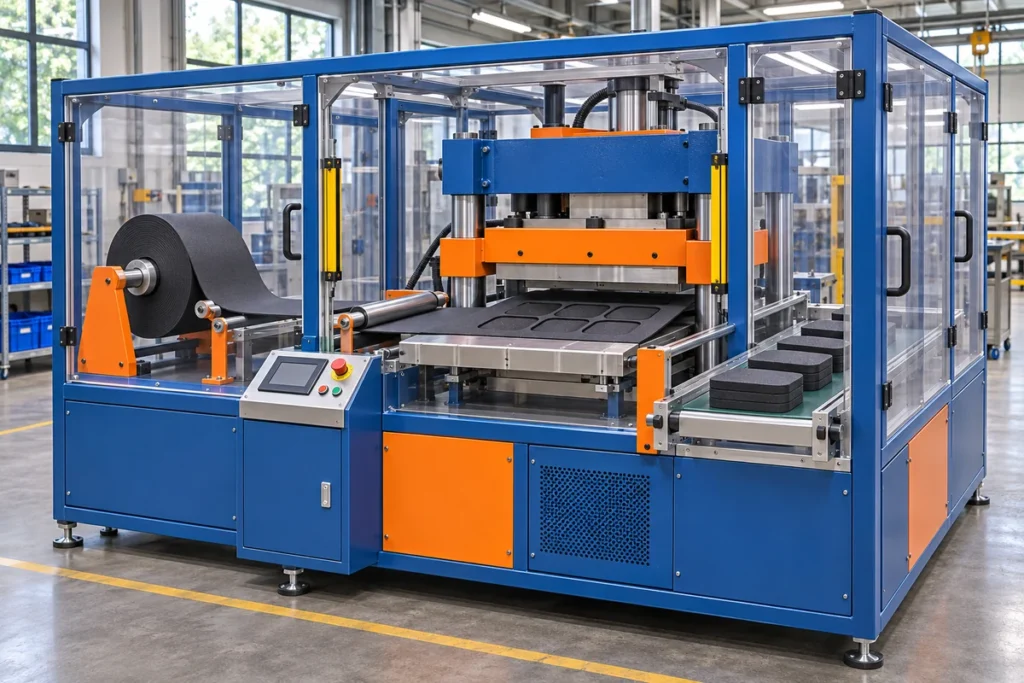
For international buyers, CUTOPIX / HAOXINHE, Freeman Schwabe, Preco, Delta ModTech and ATOM are worth shortlisting according to the cutting process. Start with CUTOPIX for compact roll-fed punching and cut-off of small, thin EVA gasket parts. Compare Freeman Schwabe, Preco and ATOM when a flatbed or hydraulic press suits the sheet and die. Consider Delta ModTech or Preco for roll-to-roll converting, especially if lamination, kiss cutting or scrap rewind matters. These are candidates with publicly documented capabilities. Long-term reliability for your plant should be evaluated through a run on your own material, written acceptance criteria and a service plan that covers your installation location.
Which brands belong on your shortlist?
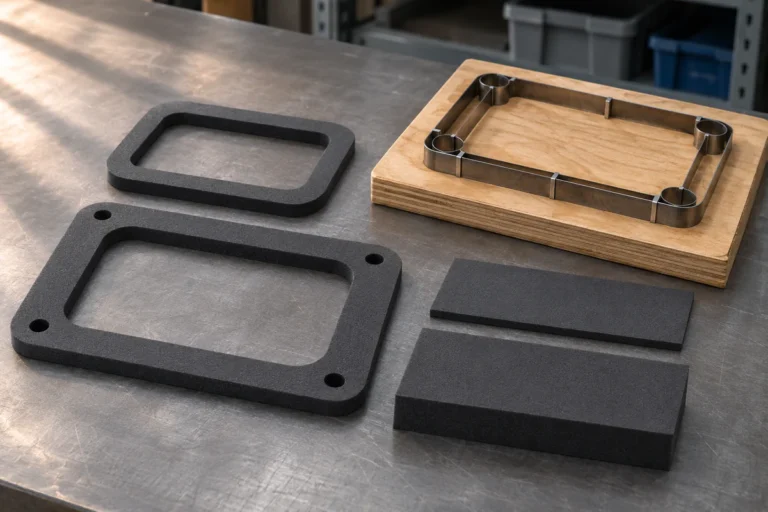
Ask every candidate to quote against the same drawing, material specification and finished delivery format. A rectangular strip with two punched holes may only need accurate indexing, a punch and a straight cut-off. A frame gasket with a shaped outer edge and an internal window requires tooling for both contours and a way to clear the center slug. A liner-backed roll that goes directly to an applicator adds another set of requirements, including liner integrity, part pitch and finished reel handling. Comparing three machines before agreeing on the desired output can leave you with three prices for three different production jobs.
| Brand | Publicly documented capability | What to verify before shortlisting the exact machine |
|---|---|---|
| CUTOPIX / HAOXINHE | HX-200DK-B2 for automatic roll feeding, punching and cutting of thin flexible gasket material.[1] | Test your outside profile and hole pattern. Confirm whether the quoted tool forms a shaped perimeter or uses straight cut-off. |
| Freeman Schwabe | Industrial die-cutting presses for gasket converting.[2] | Confirm press and feed configuration, die support, parts collection and local service availability. |
| Preco | Flatbed and rotary systems, with foam and gasket applications and controlled-depth cutting options.[3] | Ask the supplier to compare flatbed and rotary tooling costs for your annual volume and part mix. |
| Delta ModTech | Foam and gasket converting platforms with rotary die cutting, lamination and web handling.[4] | Demonstrate the full material stack, including liner integrity, waste removal and winding at the agreed output. |
| ATOM | Swing-beam and travelling-head die-cutting equipment within its broader cutting range, with published foam and elastomer applications.[5][6] | Confirm the quotation identifies the chosen die press and material-handling method for the job. |
Those public sources show the product categories each supplier offers. Comparable uptime, spare-parts lead times and local response data were unavailable across the five brands. Ask for relevant customer references where available, especially a facility using a similar configuration. A useful reference can explain how the supplier handled installation, operator training and the first tooling or parts replacement. This guide is published by CUTOPIX, a brand of Suzhou Haoxinhe Electrical Equipment Co., Ltd.
Match the machine to the EVA construction and part design
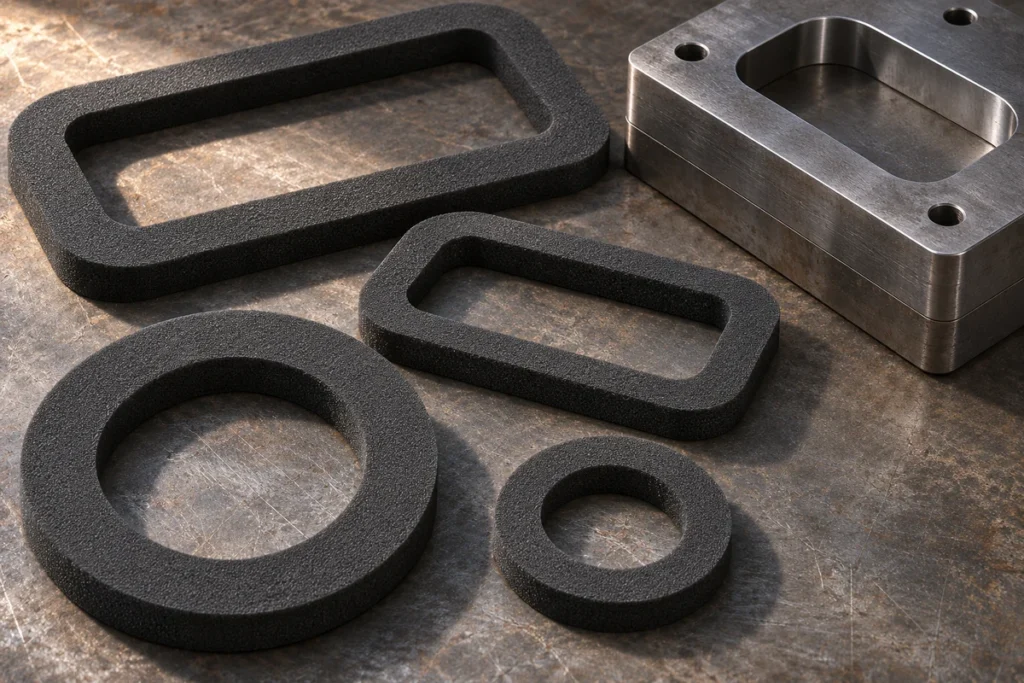
EVA describes a polymer family. For this purchase, identify the exact grade and construction of the gasket stock. A soft closed-cell foam, a thin flexible sheet and a foam laminated with pressure-sensitive adhesive can compress and feed differently. Record thickness and its tolerance, plus density or hardness if available. For laminated material, identify every layer and mark which layers the die should cut. If the stock arrives on a roll, provide the web width, roll diameter, core size and roll weight. For sheet stock, provide the sheet dimensions and whether the operator needs to load pieces individually or in a stack.
EVA encapsulant film serves a different role inside a laminated PV module.[7] If your operation trims that film, provide a film-trimming specification. If your part is a gasket, identify where it fits and what the finished part must do. A cutting demonstration verifies how the machine produces the part. Qualification for module sealing or another end use requires its own assembly and material evidence.
| Job | Process to discuss | Main trial checks |
|---|---|---|
| Thin strip with punched holes and straight ends | Indexed roll feed, punching and cut-off | Hole-to-edge location, cut length and slug removal |
| Through-cut rings and irregular frames from sheets | Flatbed press with a profile die | Complete cuts around all contours, even edges and release from the die |
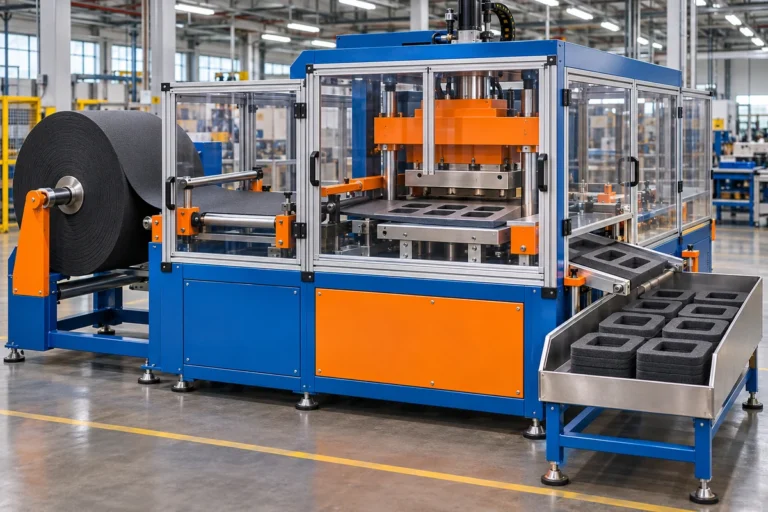
| Repeated liner-backed parts supplied on a reel | Controlled-depth flatbed or rotary converting | Liner integrity, repeat pitch, matrix stripping and winding |
| Foam parts with several hole patterns or short runs | Interchangeable tooling and documented setup procedure | Die change time, setup scrap and repeatability after restart |
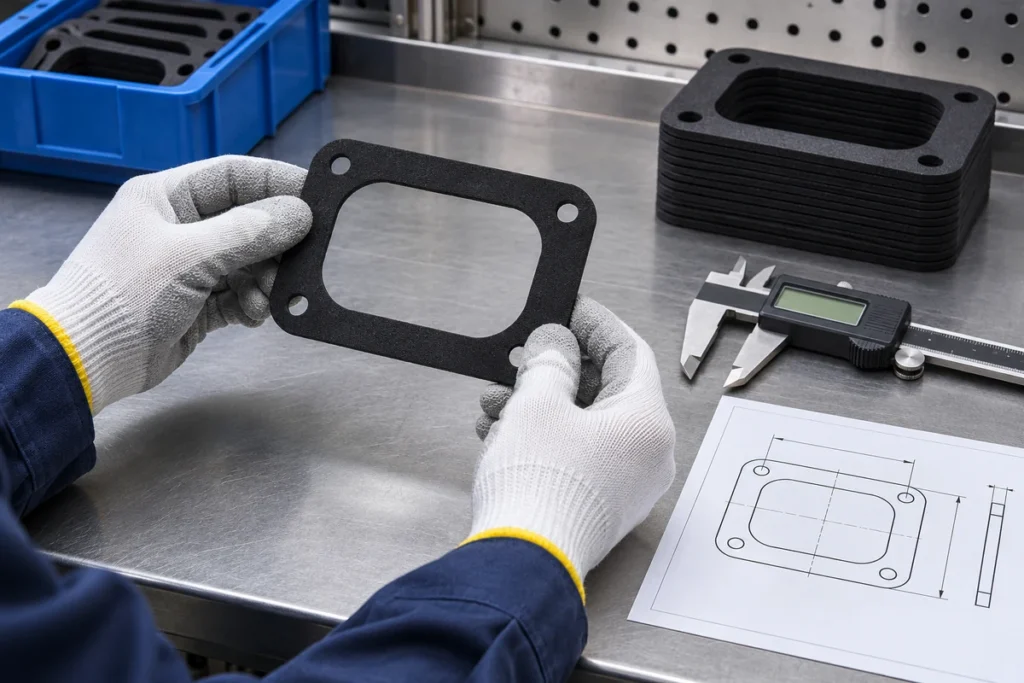
A thick or easily compressed material can spring back after cutting. Agree on when and how to measure the part, including whether it lies flat and how much pressure the gauge applies. Include hole position and the minimum width of narrow bridges on the drawing. Those dimensions can determine whether the part survives ejection and handling. Send an approved physical reference sample if you have one. It can help communicate an edge finish or handling requirement that is hard to describe in a drawing.
Use a production trial to verify quality and output
Start with a sample cut to review the geometry and edge quality. Then schedule a continuous trial using material from your production supply. Test the proposed model and tooling, or ask the supplier to identify every difference between the demonstration machine and the quoted one. Have the supplier show the material label, threading, punching, cut-off or part release, waste path and collection. Include a planned stop and restart. If you regularly change materials or shapes, time a representative changeover and include the parts produced while the machine settles back into production.
| Acceptance item | What to record | When to check |
|---|---|---|
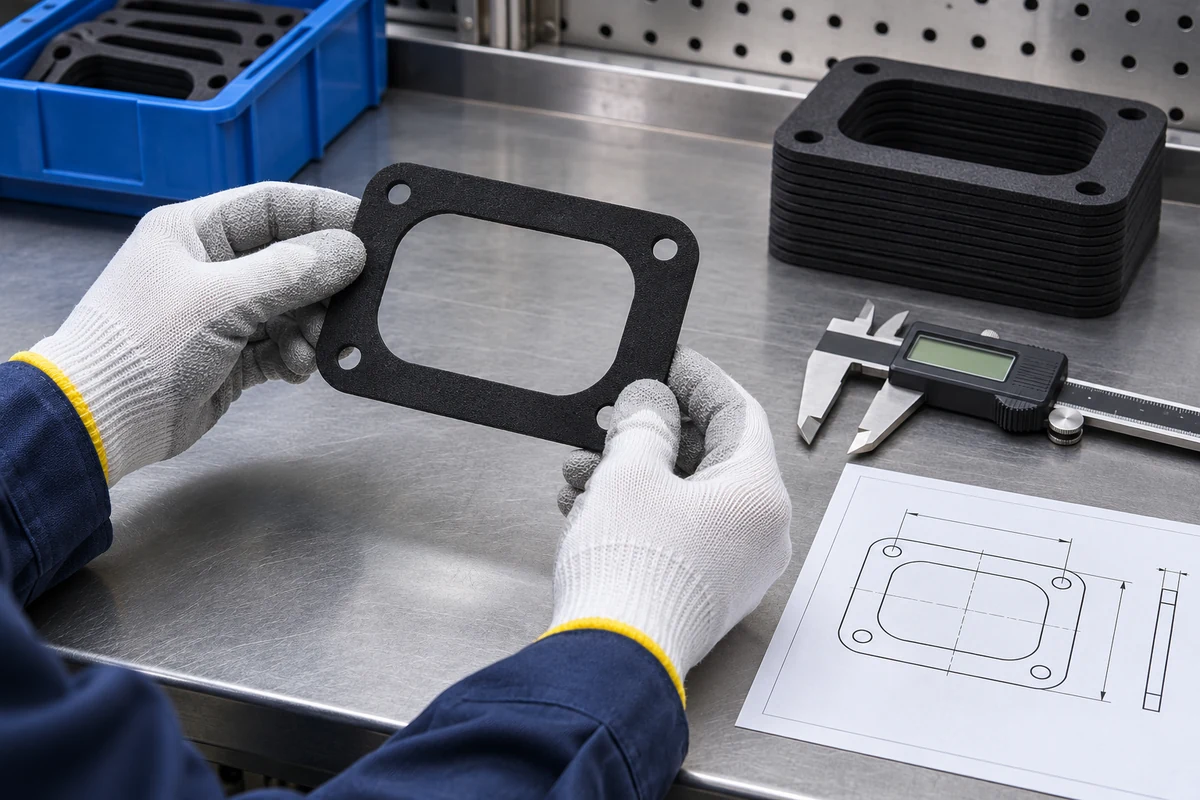
| Overall size, hole diameter and hole position | Individual measurements against the drawing and agreed measurement method | Samples from the start, middle and end of the run |
| Edge and surface quality | Photos and counts for incomplete cuts, tears, dents or marks | At startup and after the equipment reaches normal operating conditions |
| Accepted output | Count of conforming parts, elapsed time and reason for each stop | Across the entire agreed run |
| Waste removal and handling | Trapped slugs, waste breaks, damaged liners and manual interventions | During continuous operation and after restart |
| Changeover | Time to first conforming part and quantity scrapped during setup | During a representative die or material change |
Compare accepted parts per hour using a common method. Divide the accepted count by elapsed trial hours, and agree in advance how to handle scheduled checks and stoppages. For example, 4,800 accepted parts in a 30-minute trial equal 9,600 accepted parts per hour over that test window. Treat the figure as a trial result. Estimating shift output also requires allowances for roll changes, planned breaks, maintenance and the actual product mix. Ask for physical parts from the recorded run so your quality team can check fit in the receiving fixture.
Turn the results into a factory acceptance test (FAT) plan before finalizing the purchase. State the material lot, tool revision, production run length, sampling intervals, failure criteria and action if a criterion is missed. If your plant adds its own unwind or connects the machine to another operation, define which interface checks will happen after delivery. Distinguishing factory and site checks lets both teams plan a realistic handover.
Compare landed cost, tooling and overseas service
Ask for an itemized quotation with the base machine, die sets, feed and discharge modules, guards, critical spares, packing, freight and any commissioning charges. List the destination and applicable delivery term with the named place. The ICC’s Incoterms® rules explain how the selected term allocates delivery tasks, costs and risk.[8] Record installation, training, acceptance and warranty obligations separately in the purchase agreement.
Tooling economics depend on production volume and changes to the drawing. A part run every day may justify a multi-cavity die if the layout improves practical output and material use. For several low-volume SKUs, the time and cost of replacing or changing dies may matter more than peak running speed. Ask who owns the tooling drawings, which components can be sharpened or replaced, and whether another set can be ordered from an agreed revision. Capture startup scrap, the retained web or matrix, and any rejected parts when comparing material yield.
Service readiness can be checked before ordering. Confirm who answers technical requests in your time zone and which tasks require on-site help. Ask for a sample English manual, a spare-parts list with part numbers and a description of the troubleshooting process. Ask how the supplier handles PLC and HMI backups, access for maintenance and long-term parts availability. Confirm the power supply, compressed air if required, machine footprint and electrical documentation against your site requirements. If the destination requires conformity documents, request documents for the configuration being purchased and have your team verify their applicability before shipment.
Insights: How HAOXINHE Supports PV EVA Gasket Projects
HAOXINHE reviews the material and part drawing together. For a small roll-fed gasket with punched holes, start with the CUTOPIX HX-200DK-B2. The public product page describes a cold-cut machine for thin, flexible gasket materials, with automatic roll feeding and integrated punch-and-cut operations.[1] Final feasibility depends on the stock, the die layout and the shape. A large gasket frame, a wide sheet or a laminated construction with a liner calls for its own configuration review. You can also browse the CUTOPIX punching and die-cutting range.
For application review, send your drawing with tolerances, the material type, thickness, roll width or sheet dimensions, finished length or profile, hole pattern and target accepted output. State how the parts must be delivered: loose, stacked or on a liner. Include photos and let us know whether you can send physical material for a cut trial. We can review the required die and feed configuration, arrange sample testing where suitable, and discuss pre-shipment video and remote technical support. Use the CUTOPIX contact page or email cherryhaoxinhesz@gmail.com.
Frequently asked questions
Can a single machine run different gasket shapes?
Often a press can accept more than one die, provided the tooling interface, working area, material handling and part removal support the alternate shapes. Ask the supplier to show the change procedure. Changing the programmed feed length alone will not change a punched hole diameter or shaped contour. Include each important SKU in the quotation and identify which dies are included.
Is rotary die cutting always preferable for a high-volume operation?
Rotary converting is worth evaluating when you have stable roll stock, repeated geometry and continuous downstream handling. A flatbed configuration can also suit industrial throughput, especially for sheet stock or when production runs include frequent geometry changes. Compare conforming output, tooling cost and changeover using the same parts and material over a representative production schedule.
What is the strongest proof that a supplier can handle my application?
A successful run on your production stock gives you the most direct evidence about the proposed configuration. Combine the accepted samples and recorded output with a signed test plan, a spares and tooling quote and a named support contact. If only a short test is possible, document which acceptance checks are still due and agree when they will take place.
Which supplier should you contact first?
For small thin roll-fed gaskets, start with the HX-200DK-B2 and have CUTOPIX check your actual drawing. For sheet-fed frame gaskets, send the same job to a flatbed press supplier. For liner-backed parts that must ship on a roll, ask a converting-system supplier to demonstrate the full process including waste removal and winding. Make the order decision using accepted samples, sustained output, total delivered cost and written support terms.
References
- CUTOPIX — Solar PV EVA Gasket Punching & Cutting Machine HX-200DK-B2. Source
- Freeman Schwabe — Industrial Die Cutting & Molding Presses for the Gaskets Industry. Source
- Preco — Rotary and Flat Bed Die Cutting. Source
- Delta ModTech — Foams & Gaskets. Source
- ATOM — Continuous Cutting Machines and Die-Cutting Range. Source
- ATOM — Plastic Cutting Machines. Source
- National Laboratory of the Rockies Research Hub — Encapsulant Materials for PV Modules. Source
- International Chamber of Commerce — Incoterms® 2020. Source