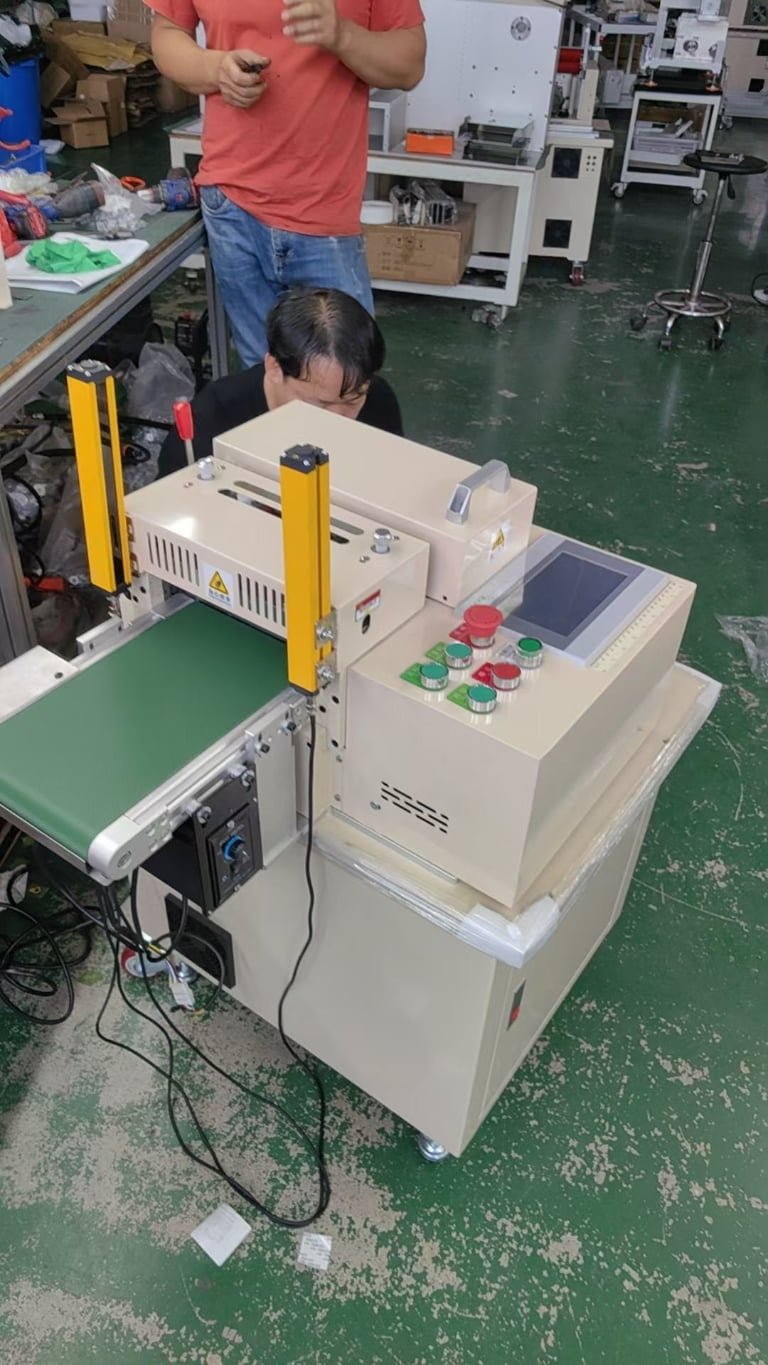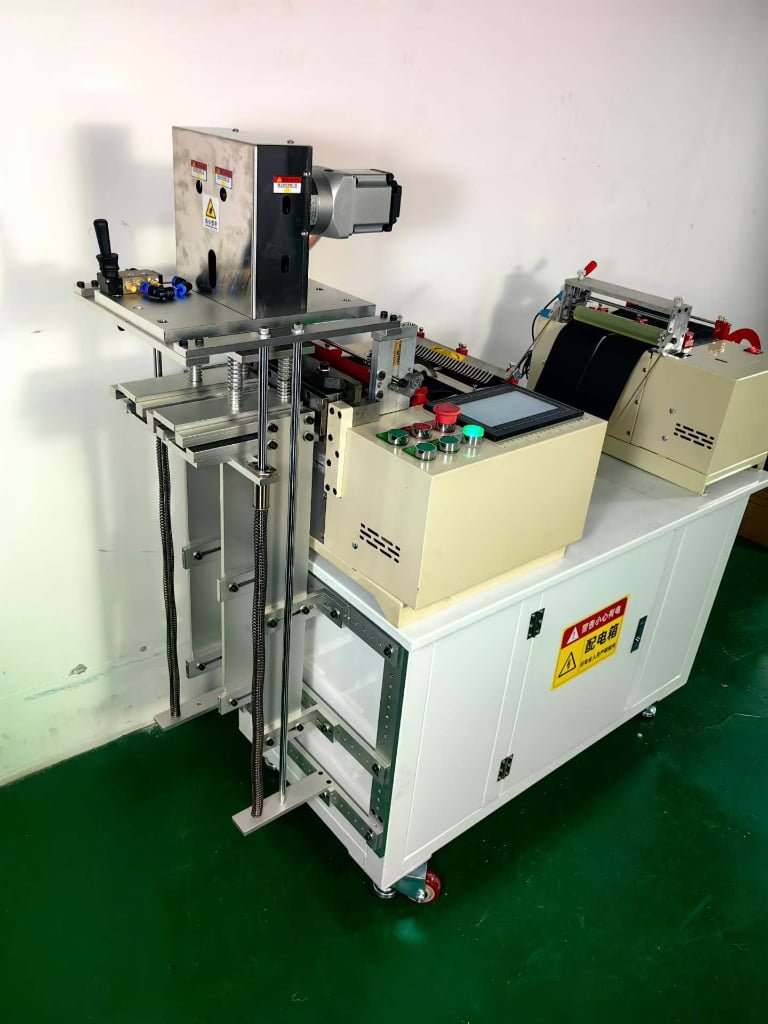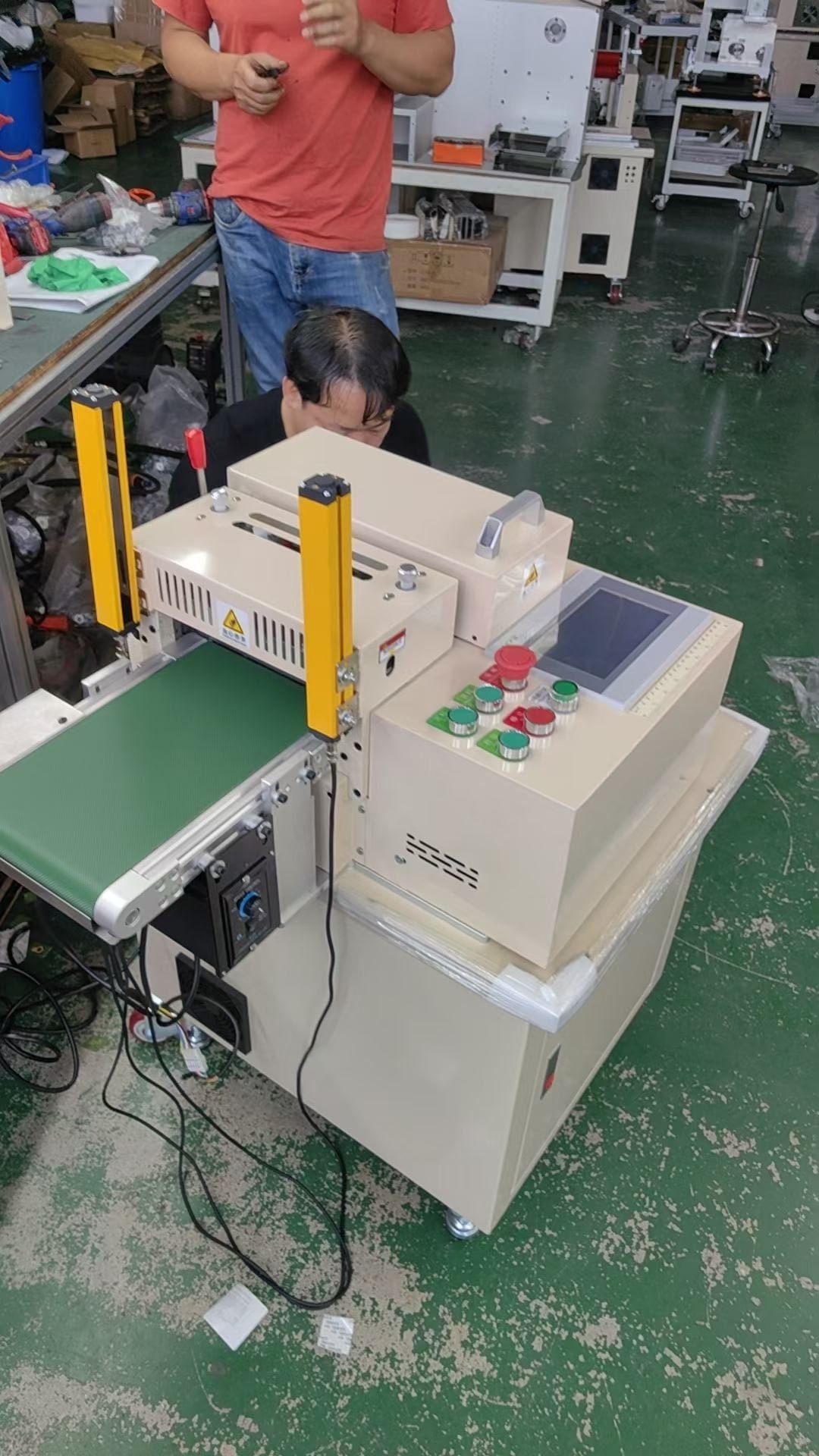
Why does a Solar Panel EVA Gasket Cutting Machine have cutting accuracy problems?
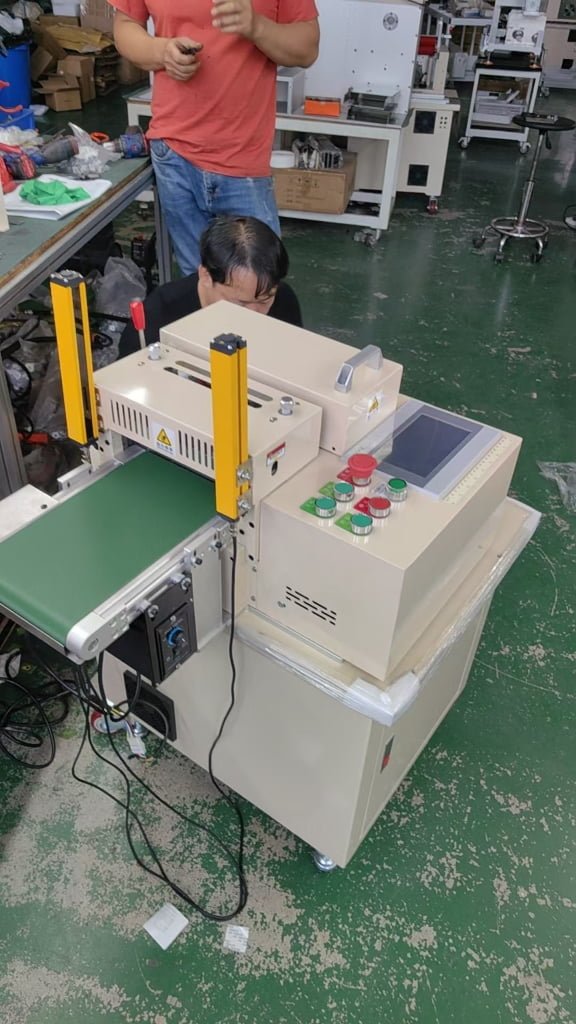
When photovoltaic factories use a Solar Panel EVA Gasket Cutting Machine, cutting accuracy is one of the most important production indicators1.
Accurate EVA cutting directly affects:
- Solar module assembly
- EVA coverage area
- Lamination quality
- Material utilization
- Final product reliability
Many factories think cutting accuracy problems only come from the blade2.
However, the actual causes are usually more complex.
Cutting precision can be affected by:
- Blade condition
- Machine calibration
- EVA material properties3
- Feeding stability
- Software parameters
- Operator settings
- Maintenance quality
A small cutting error may create larger problems later.
For example:
- Incorrect EVA size may affect edge sealing4.
- Position deviation may affect module appearance.
- Material stretching may increase scrap5.
- Poor cutting quality may create lamination defects.
At HAOXINHE, I always recommend customers analyze the complete cutting process instead of changing one parameter randomly.
A stable cutting process requires:
- Correct machine settings
- Stable material feeding
- Regular calibration
- Proper maintenance
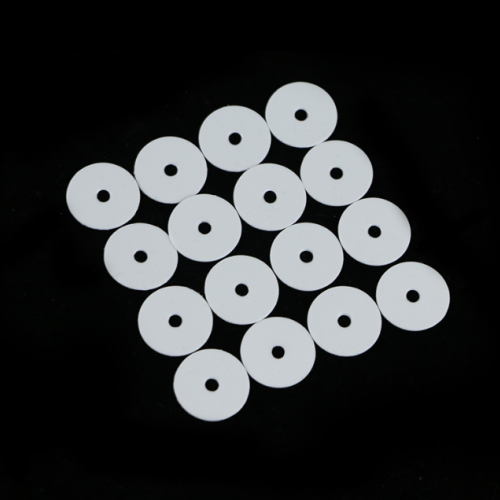
How do blade quality, machine calibration, and EVA material properties affect cutting precision?
A Solar Panel EVA Gasket Cutting Machine achieves accuracy through cooperation between multiple systems.
The cutting result depends on:
| Factor | Influence on accuracy |
|---|---|
| Blade quality | Determines cutting edge quality |
| Machine calibration | Controls dimensional accuracy |
| EVA material | Affects stretching and deformation |
| Feeding system | Controls positioning |
| Software recipe | Controls production parameters |
When one part becomes unstable, the final cutting result may change.
1. Confirm the correct accuracy requirement
The first step is understanding the required accuracy.
Many factories expect zero error, but every machine has a designed tolerance range.
A PV EVA cutting machine should be evaluated according to:
- Machine specification
- Module design requirement
- EVA overhang requirement
- Production process tolerance
| Accuracy factor | Why it matters |
|---|---|
| Cut length | Controls EVA size |
| Width accuracy | Controls edge coverage |
| Diagonal accuracy | Controls sheet shape |
| Position accuracy | Controls module alignment |
Before purchasing or adjusting a machine, factories should confirm whether the accuracy level matches the production requirement.
2. Check EVA film tension stability
EVA film is a flexible material.
During feeding, unstable tension can create:
- Film stretching
- Film shrinking
- Length variation
- Diagonal errors
Common causes include:
- Incorrect unwind tension
- Poor dancer control
- Roller problems
- Wrong speed setting
| Tension condition | Possible result |
|---|---|
| Too loose | Wrinkles and unstable feeding |
| Too tight | Film stretching |
| Stable tension | Better accuracy |
Before adjusting cutting parameters, operators should first confirm that the EVA film moves smoothly.
3. Inspect edge guiding and feeding rollers
The EVA film must move straight before cutting.
Problems may come from:
- Dirty rollers
- Worn rollers
- Incorrect guide position
- Uneven roller pressure
These problems can create:
- Side deviation
- Slanted cutting
- Incorrect punching position
| Problem | Effect |
|---|---|
| Roller contamination | Material slipping |
| Guide deviation | Film movement |
| Roller wear | Feeding instability |
Regular cleaning and inspection help maintain stable feeding accuracy6.
4. Maintain good blade condition
The cutting blade directly affects EVA cutting quality.
A damaged blade may cause:
- Rough edges
- Incomplete cutting
- Material pulling
- Film deformation
Common blade problems include:
- Dull edge
- Blade damage
- Adhesive buildup
- Incorrect installation
| Blade condition | Cutting result |
|---|---|
| Sharp blade | Clean cutting |
| Slight wear | Reduced quality |
| Damaged blade | High scrap rate |
Factories should replace blades according to actual production usage instead of waiting until defects appear.
5. Adjust cutting pressure and blade depth correctly
Incorrect cutting force is another common cause of accuracy problems7.
Too much pressure may:
- Compress EVA
- Deform material
- Damage the cutting surface
Too little pressure may:
- Leave incomplete cuts
- Create tearing problems
| Setting problem | Result |
|---|---|
| Excess pressure | EVA deformation |
| Low pressure | Incomplete cutting |
| Correct pressure | Stable cutting |
Each EVA type may require different settings.
Important parameters include:
- Blade depth
- Cutting pressure
- Feeding speed
- Acceleration
6. Check encoder and servo calibration
Modern EVA cutting machines use servo systems and encoders to control feeding accuracy.
Calibration problems may create:
- Consistent length errors
- Position deviation
- Increasing production variation
Possible causes include:
- Encoder drift
- Roller diameter changes
- Belt wear
- Servo parameter changes
| Symptom | Possible cause |
|---|---|
| Every sheet too long | Feed calibration error |
| Every sheet too short | Encoder setting problem |
| Random variation | Material or mechanical issue |
After maintenance or component replacement, the machine should be recalibrated.
7. Use correct production recipes
Different EVA materials and module sizes require different parameters.
A production recipe may include:
- Material type
- Thickness
- Module size
- Feeding speed
- Cutting parameters
- Transfer position
| Recipe item | Function |
|---|---|
| Material setting | Controls film behavior |
| Size setting | Controls dimensions |
| Speed setting | Controls stability |
| Position setting | Controls alignment |
Factories should lock approved recipes and require first-piece approval after every change.
8. Separate cutting problems from layup problems
Sometimes the EVA sheet is cut correctly but becomes inaccurate during transfer.
The problem may come from:
- Weak vacuum
- Dirty vacuum cups
- Incorrect pickup timing
- Transfer frame calibration
A simple diagnostic method is:
- Measure EVA after cutting.
- Measure EVA after transfer.
- Compare the results.
| Measurement location | Purpose |
|---|---|
| After cutting | Check cutter accuracy |
| After transfer | Check placement system |
This method helps identify the real problem.
9. Control EVA material variation
EVA film properties may change between batches.
Important material differences include:
- Thickness
- Hardness
- Surface treatment
- Shrinkage behavior
- Storage condition
Material variation can affect:
- Feeding stability
- Cutting force
- Final size
| Material variation | Possible impact |
|---|---|
| Thickness change | Cutting difference |
| Surface change | Feeding difference |
| Shrinkage change | Dimension variation |
Factories should control incoming material quality8.
10. Build a continuous accuracy monitoring system
Accuracy should not be checked only when problems appear9.
A professional factory should create a monitoring system.
The inspection should include:
- Cut length
- Width
- Diagonal
- Punch position
- Placement offset
- Film flatness
| Inspection frequency | Purpose |
|---|---|
| First piece | Confirm setup |
| Hourly check | Detect drift |
| Batch check | Confirm stability |
Production data should be recorded by:
- Machine
- Material batch
- Product model
- Operator
- Shift
This helps factories find repeated problems quickly.
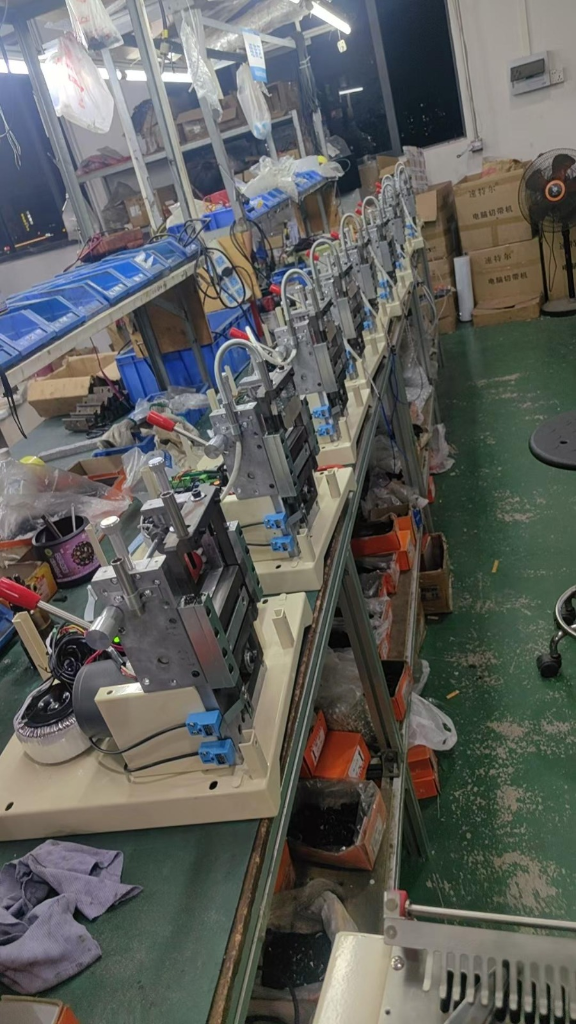
How can factories improve EVA cutting accuracy?
A stable accuracy improvement plan should include four steps.
Step 1: Control material
Factories should check:
- EVA quality
- Roll condition
- Storage environment
Step 2: Maintain equipment
Factories should regularly inspect:
- Blade condition
- Rollers
- Sensors
- Servo system
Step 3: Standardize operation
Factories should define:
- Production recipes
- Inspection methods
- Operator training
Step 4: Analyze production data
Factories should track:
- Scrap rate
- Accuracy trend
- Machine alarms
- Maintenance history
A data-based approach creates continuous improvement.
Insights: How HAOXINHE helps customers achieve stable cutting accuracy
At HAOXINHE, I understand that international buyers need more than a cutting machine.
They need equipment that can provide:
- Stable precision
- Reliable operation
- Easy adjustment
- Long service life
My factory provides customized cutting solutions for different industries, including:
- Packaging
- Printing
- Labels
- Plastic products
- Foam products
- Photovoltaic-related materials
My related machines include:
- Webbing tape cutting machine
- Hot and cold cutting machine
- High-speed trademark cutting machine
- Automatic punching cutting machine
- Round shape cutting machine
- Rotary bevel cutting machine
- Different shapes cutting machine
- Computer tube cutting machine
- Wire cutting and stripping machine
- Metal pipe cutting and beveling machine
- Webbing ribbon cutting machine
- Bubble wrap cutting machine
- PVC Edge Banding cutting machine
- Protective Foam Cutting Machine
I believe cutting accuracy comes from the complete production system.
A reliable Solar Panel EVA Gasket Cutting Machine combined with correct material control, calibration, and maintenance can help factories achieve:
- Lower waste
- Better module quality
- Higher production efficiency
- More stable long-term operation
-
"Influence of Lamination Conditions of EVA Encapsulation on Photovoltaic …", https://pmc.ncbi.nlm.nih.gov/articles/PMC10650427/. Research studies highlight that cutting accuracy directly impacts the assembly, efficiency, and durability of photovoltaic modules, making it a key production parameter. Evidence role: general_support; source type: research. Supports: Cutting accuracy is a critical factor in the production of solar panels.. ↩
-
"Revolutionize Production with EVA Cutting Machines", https://www.zxtcutter.com/application/revolutionizing-production-with-eva-cutting-machines.html. Industry surveys indicate that operators often attribute cutting inaccuracies to blade conditions, though other factors like calibration and material properties also play significant roles. Evidence role: general_support; source type: research. Supports: Many factories believe that cutting accuracy problems in EVA gasket cutting machines are solely caused by blade issues.. ↩
-
"Mechanical Behavior of Closed-Cell Ethylene-Vinyl Acetate Foam … – PMC", https://pmc.ncbi.nlm.nih.gov/articles/PMC10780418/. Studies on polymer materials like EVA show that their flexibility and stretchability can lead to dimensional variations during cutting processes. Evidence role: mechanism; source type: research. Supports: EVA material properties, such as flexibility and stretchability, can affect cutting precision.. ↩
-
"Influence of Lamination Conditions of EVA Encapsulation on …", https://pmc.ncbi.nlm.nih.gov/articles/PMC10650427/. Research on photovoltaic module assembly indicates that improper EVA dimensions can lead to inadequate edge sealing, potentially reducing module durability. Evidence role: mechanism; source type: research. Supports: Incorrect EVA size can compromise the edge sealing of solar panels.. ↩
-
"Why Complex Die-Cut EVA Foam Shapes Create High Scrap …", https://diecut123.com/why-complex-die-cut-eva-foam-shapes-create-high-scrap-rates-and-what-buyers-should-check/. Studies on flexible material processing show that stretching during cutting can result in dimensional inaccuracies, leading to higher scrap rates. Evidence role: mechanism; source type: research. Supports: Material stretching during the cutting process can lead to increased scrap rates.. ↩
-
"Dairy Sense: Precision Feeding’s Positive Environmental …", https://extension.psu.edu/dairy-sense-precision-feedings-positive-environmental-impact/. Educational resources on machine maintenance emphasize that regular cleaning and inspection of rollers can prevent feeding deviations and ensure consistent accuracy. Evidence role: general_support; source type: education. Supports: Regular cleaning and inspection of rollers and guides are essential for maintaining stable feeding accuracy in EVA cutting machines.. ↩
-
"Effect of Cutting Conditions on Roughness and Cutting Force …", https://pmc.ncbi.nlm.nih.gov/articles/PMC12985697/. Studies on cutting processes highlight that improper cutting force can lead to material deformation and dimensional inaccuracies, affecting overall precision. Evidence role: general_support; source type: research. Supports: Incorrect cutting force is a frequent cause of accuracy issues in EVA cutting machines.. ↩
-
"Effect of ethylene vinyl acetate (EVA) closed cell foam on … – PubMed", https://pubmed.ncbi.nlm.nih.gov/12055116/. Educational resources on manufacturing processes highlight that consistent material quality is critical for achieving precise cutting results. Evidence role: general_support; source type: education. Supports: Controlling the quality of incoming EVA material is essential for maintaining cutting accuracy.. ↩
-
"What Is Real-Time Monitoring In Manufacturing – P3 Adaptive", https://p3adaptive.com/what-is-real-time-monitoring-in-manufacturing/. Educational materials on quality control emphasize that continuous monitoring helps identify and address accuracy issues before they escalate. Evidence role: general_support; source type: education. Supports: Accuracy in EVA cutting should be monitored continuously, not just when issues arise.. ↩