Can a Nylon Cutting Machine Cut Nylon Rope and Nylon Tape Effectively?
Many buyers assume that a nylon cutting machine is designed only for flat webbing or nylon straps. In reality, many modern machines can process both nylon rope and nylon tape, provided the machine is matched to the material dimensions and cutting method.
The key difference is that nylon rope is a round material, while nylon tape is a flat material. These two product types require different feeding systems, clamping methods, blade settings, and cutting parameters. A machine that performs perfectly on flat tape may not achieve the same results on thick braided rope unless it is properly configured.
In this guide, I will explain how nylon cutting machines handle both materials and discuss the adjustments required for round nylon rope versus flat nylon tape.
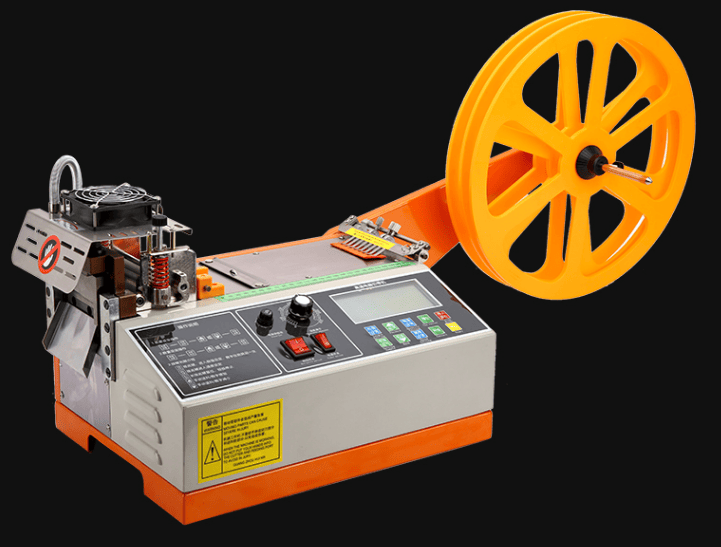
What Adjustments Are Needed for Round Materials Versus Flat Nylon Materials?
The most important difference is how the material is supported and fed into the cutting area.
Flat materials are guided by their width, while round materials are controlled by their diameter.
As a result, the feeding pressure, guide system, blade force, and cutting parameters should all be adjusted according to the material shape.
The following table summarizes the main differences.
| Material Type | Primary Dimension | Main Machine Adjustment |
|---|---|---|
| Nylon Tape | Width | Guide alignment and feed rollers |
| Nylon Webbing | Width and thickness | Feeding pressure and blade temperature |
| Nylon Rope | Diameter | Clamping pressure and blade force |
| Braided Nylon Cord | Diameter | Feeding stability and hot sealing |
Note: Machine capacity varies by model. Always confirm the supported rope diameter, tape width, material thickness, and cutting method before selecting equipment.
Can One Machine Cut Both Nylon Rope and Nylon Tape?
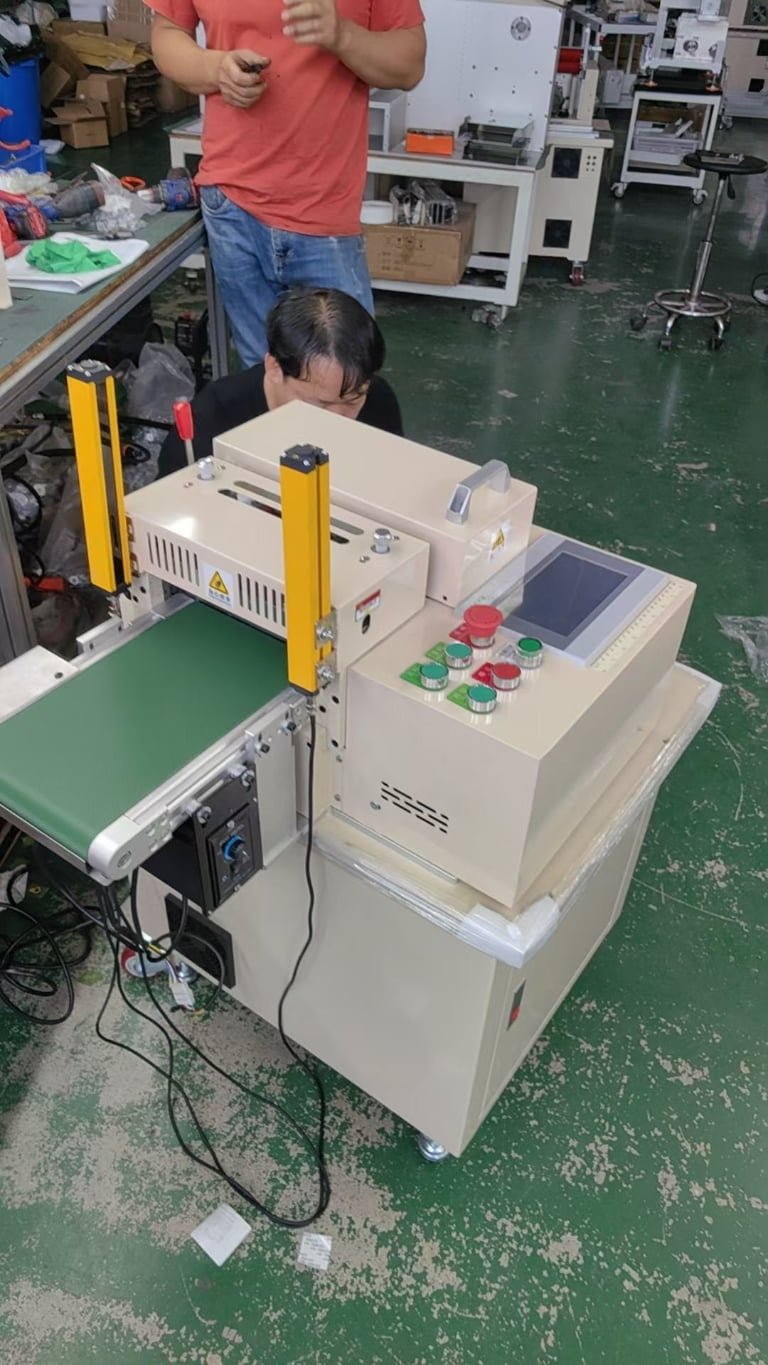
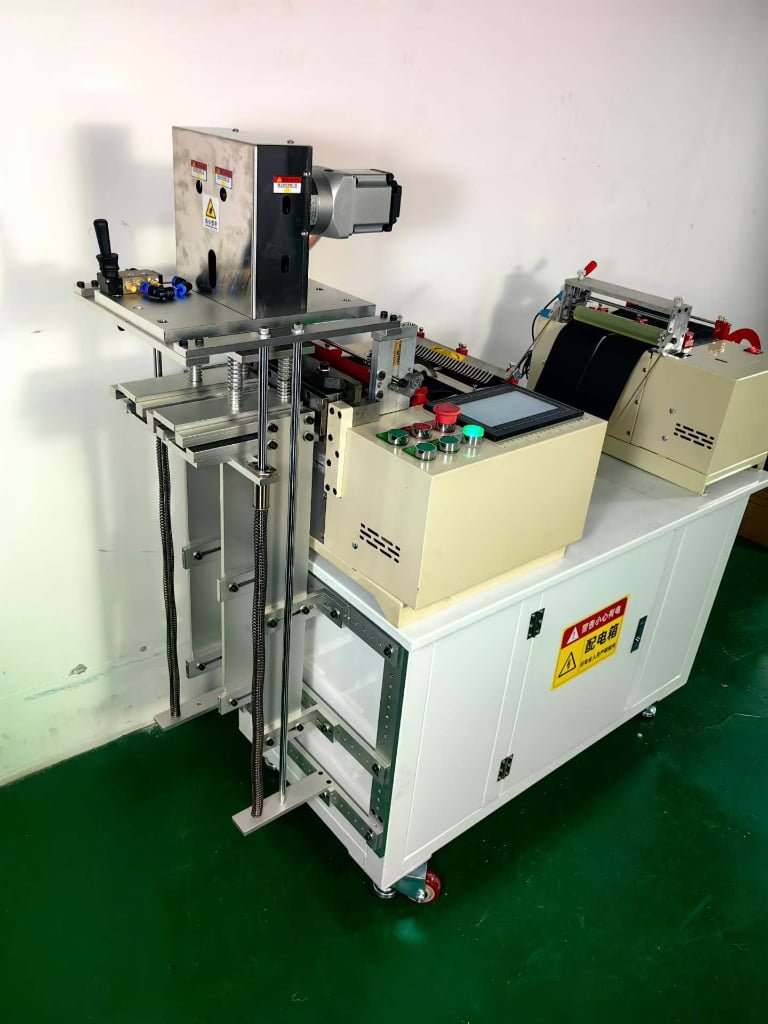
Yes, many automatic nylon cutting machines are designed to process both products.
Machines equipped with:
- Automatic feeding
- PLC or touch-screen control
- Adjustable guides
- Hot knife systems
- Servo-driven feeding
can often switch between rope and tape simply by changing the machine settings and replacing the material guides if necessary.
This flexibility allows manufacturers to use one machine for multiple production tasks.
Why Hot Knife Cutting Works Well for Nylon
Nylon is a thermoplastic material.
When heated, the fibers soften and melt slightly.
A hot knife cuts through the material while sealing the edge at the same time.
This process helps prevent:
- Fraying
- Loose fibers
- Edge unraveling
- Product defects
The same principle works for both nylon rope and nylon tape.
However, because rope has a much thicker cross-section, it generally requires more cutting force1 and more carefully controlled heating than flat tape.
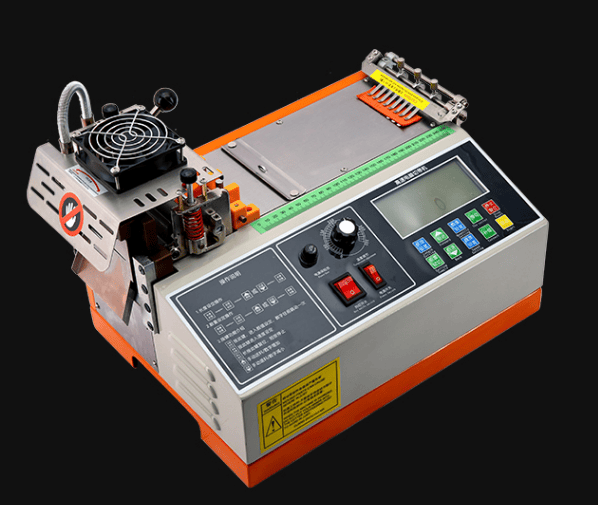
Nylon Rope Requires Diameter-Based Machine Selection
When choosing a machine for rope production, width is not the most important specification.
Instead, manufacturers should focus on maximum rope diameter.
Thicker rope requires:
- Greater cutting force
- Stronger feeding system
- Higher clamping stability
- More durable blades
Before purchasing a machine, always verify the supported rope diameter range.
Rope Selection Guide
| Rope Diameter | Recommended Machine Features |
|---|---|
| Small Diameter | Standard feeding system |
| Medium Diameter | Stronger clamping |
| Large Diameter | Heavy-duty cutting mechanism |
| Braided Industrial Rope | High-rigidity frame and powerful hot knife |
Selecting a machine with sufficient capacity improves cutting quality and production reliability.
Nylon Tape Is Easier to Feed
Compared with rope, nylon tape is much more stable during feeding.
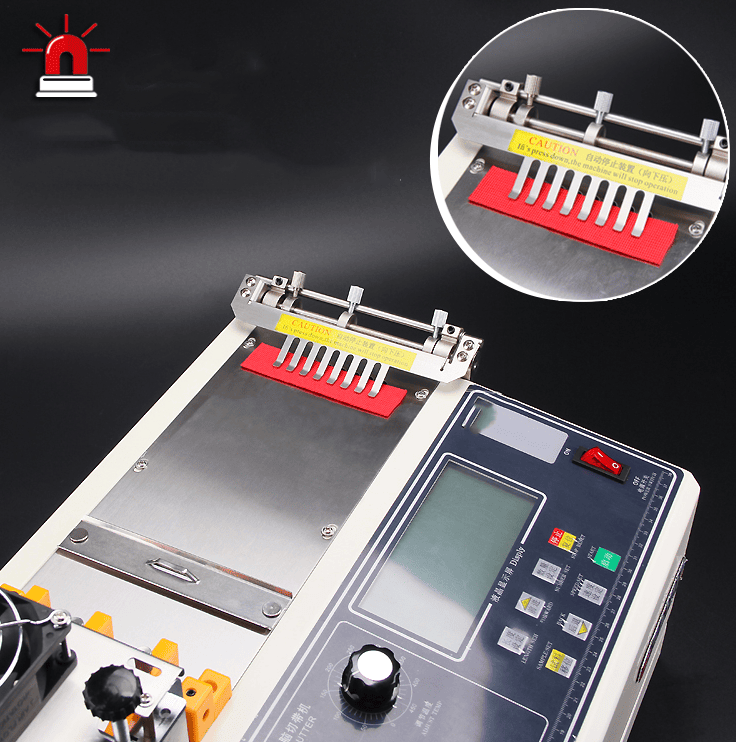
Flat material naturally stays aligned between the guide rails and rollers.
Benefits include:
- Better length accuracy
- Less material movement
- More consistent cutting
- Higher production speed
Because tape does not roll inside the feeding path like rope, automatic machines usually achieve more stable batch production2.
Stable Feeding Is Critical for Narrow Tape
Although tape is generally easier to process, narrow products still require precise feeding.
If the guide system is not adjusted correctly, the tape may:
- Shift sideways
- Slip between rollers
- Produce uneven lengths
- Create angled cuts
Feeding Adjustment
| Problem | Recommended Adjustment |
|---|---|
| Tape drifting | Adjust side guides |
| Feeding slip | Increase roller pressure |
| Length variation | Calibrate servo feeding |
| Angled cuts | Check guide alignment |
Proper guide adjustment significantly improves repeatability.
Rope Needs Stronger Feeding Pressure
Round rope behaves differently during production.
Because the contact area with the feeding rollers is much smaller, the rope is more likely to rotate or slip.
For this reason, rope cutting often requires:
- Higher roller pressure
- Better clamping stability
- More durable feed rollers
- Accurate guide positioning
Rope Feeding Challenges
| Challenge | Solution |
|---|---|
| Rope rotation | Improve guide alignment |
| Feeding slip | Increase clamping pressure |
| Diameter variation | Adjust roller spacing |
| Uneven feeding | Use servo-controlled feeding |
Consistent feeding is the foundation of accurate rope cutting.
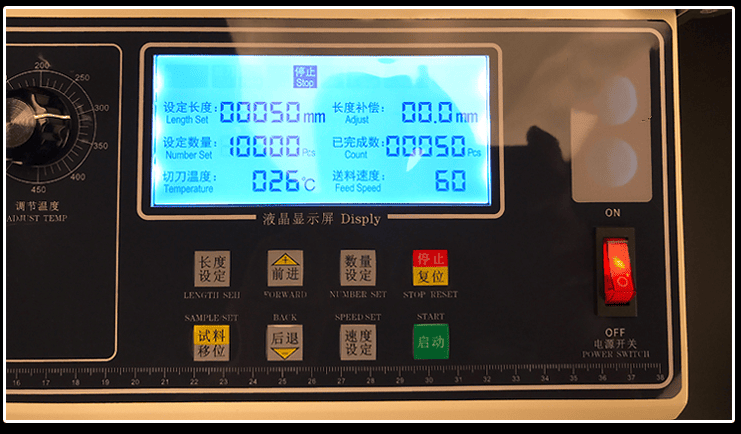
Blade Settings Are Different for Rope and Tape
The blade experiences different cutting loads depending on the material shape3.
Nylon Tape
Generally requires:
- Lower cutting force
- Faster cutting speed
- Moderate blade temperature
- Less dwell time
Nylon Rope
Usually requires:
- Higher cutting force
- More durable blade
- Stable heating
- Slightly longer dwell time when hot cutting
Rather than increasing blade temperature dramatically, manufacturers should optimize heat, pressure, and feed speed together.
Automatic Feeding and PLC Control Improve Both Applications
Modern automatic machines reduce operator error through:
- Servo motors
- PLC programming
- Electronic length measurement
- Automatic counting
- Parameter storage
These functions allow manufacturers to switch between rope and tape production quickly.
Automation Benefits
| Feature | Production Benefit |
|---|---|
| Servo Feeding | Stable material movement |
| PLC Control | Repeatable production |
| Automatic Length Control | Better accuracy |
| Recipe Storage | Faster product changeover |
Automation is particularly valuable when producing multiple product sizes every day.
Hot Knife or Ultrasonic Cutting?
Both technologies can cut nylon rope and nylon tape.
Hot Knife Cutting
Advantages include:
- Lower equipment cost
- Simple maintenance
- Excellent edge sealing
- Ideal for standard nylon products
Ultrasonic Cutting
Advantages include:
- Cleaner edge appearance
- Reduced mechanical drag
- Better performance on delicate technical textiles
- Lower localized heat compared with a continuously heated blade
For most nylon rope and nylon tape manufacturers, hot knife cutting remains the most common and economical solution4 because it provides reliable edge sealing with a simpler machine structure.
Which Machine Should Webbing Manufacturers Choose?
Before selecting a machine, I always evaluate:
- Rope diameter
- Tape width
- Material thickness
- Daily production volume
- Required edge quality
- Hot or cold cutting requirements
- Future product expansion
If production includes both rope and tape, I recommend selecting a machine that offers:
- Adjustable feeding guides
- Servo-controlled feeding
- Programmable hot knife temperature
- Digital length control
- PLC or touch-screen operation
- Parameter memory for different products
This flexibility reduces setup time and increases overall production efficiency.
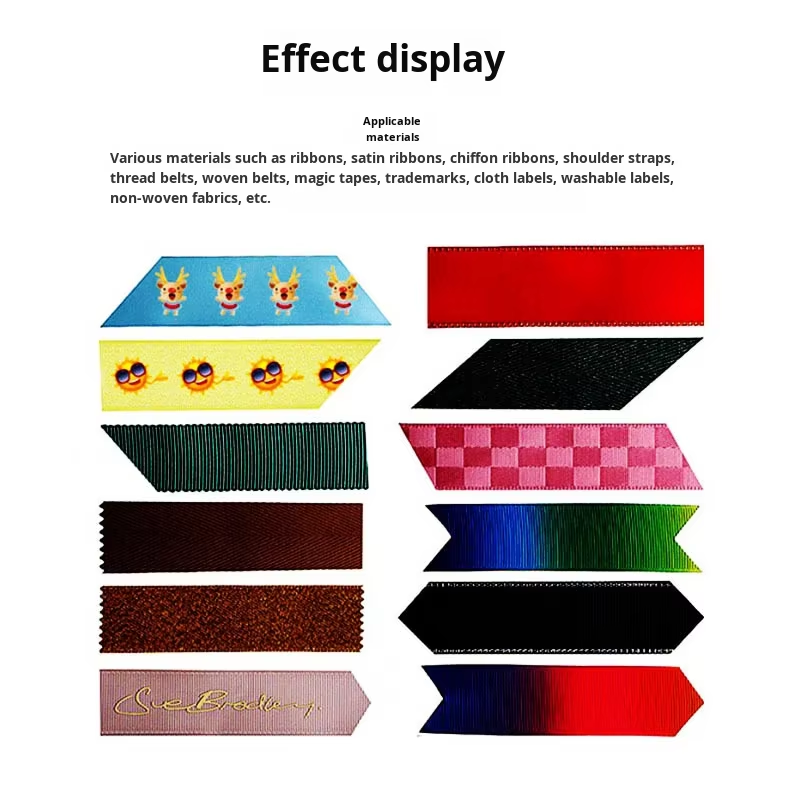
Choosing the Right Machine for Long-Term Production
A machine should not only meet today’s production needs but also support future business growth.
Features that provide long-term value include:
- Precision servo feeding
- Programmable touch-screen control
- Adjustable guide systems
- Stable hot knife temperature control
- Automatic counting
- End-of-roll detection
- Easy blade replacement
- Quick product changeover
Whether I invest in a webbing tape cutting machine, hot and cold cutting machine, high-speed trademark cutting machine, automatic punching cutting machine, round shape cutting machine, rotary bevel cutting machine, different shapes cutting machine, computer tube cutting machine, Bubble Wrap Cutting Machine, Protective Foam Cutting Machine, PVC Edge Banding Cutting Machine, wire cutting and stripping machine, or metal pipe cutting and beveling machine, I always choose equipment based on the actual material dimensions, required edge quality, automation level, and future production plans rather than on price alone.
Conclusion
A nylon cutting machine can cut both nylon rope and nylon tape effectively5 when it is matched to the material size and application. Nylon tape is generally easier to process because its flat shape allows stable feeding and excellent length accuracy. Nylon rope requires additional attention to diameter, feeding pressure, clamping stability, and blade durability6 because its round profile creates different cutting conditions. By selecting the correct hot knife settings, adjusting the feeding system, and using programmable automation, manufacturers can achieve clean, sealed, and consistent cuts for both rope and tape while maintaining high production efficiency.
HAOXINHE Insights
At HAOXINHE, we design cutting solutions that help manufacturers process a wide variety of nylon products with consistent quality. Our webbing tape cutting machines, hot and cold cutting machines, high-speed trademark cutting machines, automatic punching cutting machines, round shape cutting machines, rotary bevel cutting machines, different shapes cutting machines, computer tube cutting machines, Bubble Wrap Cutting Machines, Protective Foam Cutting Machines, PVC Edge Banding Cutting Machines, wire cutting and stripping machines, and metal pipe cutting and beveling machines are engineered with precision servo feeding, programmable touch-screen controls, adjustable guides, and stable hot knife temperature management.
Whether customers produce flat nylon tape, heavy-duty webbing, or round nylon rope, we help them optimize machine configuration for the correct material width, thickness, or diameter. This approach improves cutting accuracy, reduces waste, minimizes setup time, and supports reliable high-volume production across a wide range of industrial applications.
-
"Cut resistance of climbing ropes – A comparative analysis of existing …", https://www.sciencedirect.com/science/article/pii/S1350630723008609. A technical study or industry report detailing the cutting force and heating requirements for processing nylon rope. Evidence role: general_support; source type: research. Supports: Supports the claim that nylon rope requires higher cutting force and controlled heating due to its thicker cross-section.. Scope note: The findings may vary based on rope diameter and material composition. ↩
-
"China Nylon Tape Cutting Machine Manufacturers Suppliers", https://www.yizemachinery.com/textile-machinery/cutting-machinery/nylon-tape-cutting-machine.html. A technical report or study on the performance of automatic machines in processing flat nylon tape. Evidence role: general_support; source type: research. Supports: Supports the claim that automatic machines improve batch production stability for nylon tape due to its flat shape.. Scope note: The support may focus on specific machine models rather than generalizing across all automatic machines. ↩
-
"Guidance on Safe Sling Use – Natural and Synthetic Fiber Rope Slings", https://www.osha.gov/safe-sling-use/nat-synth-fiber. A technical paper or study analyzing the impact of material shape on cutting blade performance. Evidence role: mechanism; source type: research. Supports: Explains how the shape of nylon materials affects the cutting loads experienced by blades.. Scope note: The analysis may focus on specific blade types or cutting methods. ↩
-
"Is anyone using an ultrasonic cutter? : r/3Dprinting", https://www.reddit.com/r/3Dprinting/comments/1efjt8a/is_anyone_using_an_ultrasonic_cutter/. An industry report or expert analysis comparing hot knife cutting with other methods for nylon materials. Evidence role: expert_consensus; source type: research. Supports: Supports the claim that hot knife cutting is widely used and economical for nylon rope and tape manufacturing.. Scope note: The preference for hot knife cutting may depend on specific manufacturing contexts and cost considerations. ↩
-
"Heavy Duty Automatic Hot Knife Webbing Cutter for 300mm Wide …", https://www.youtube.com/watch?v=gEQZMBM4aGM. A study or technical specification document detailing the capabilities of nylon cutting machines for processing both rope and tape effectively under different configurations. Evidence role: general_support; source type: research. Supports: Supports the claim that nylon cutting machines can process both rope and tape effectively when properly configured.. Scope note: The support may depend on specific machine models and configurations rather than universally applying to all nylon cutting machines. ↩
-
"Rope", https://en.wikipedia.org/wiki/Rope. A technical study or industry guideline detailing the processing requirements for nylon rope. Evidence role: general_support; source type: research. Supports: Supports the claim that nylon rope requires specific adjustments in diameter, feeding pressure, clamping stability, and blade durability.. Scope note: The findings may vary based on rope diameter and machine design. ↩