Can an Automatic Webbing Angle Cutting Machine Cut Multiple Layers of Webbing?
Many manufacturers want to increase production efficiency by cutting multiple layers of webbing in a single cycle. Instead of processing one strap at a time, stacking several layers together can significantly improve output and reduce labor costs.
The good news is that many industrial automatic webbing angle cutting machines are designed to handle multi-layer cutting. However, the maximum cutting capacity depends on the machine’s power, blade type, feeding system, clamping force, and the properties of the webbing itself1.
In this guide, I will explain when multi-layer cutting is practical, what limits the maximum cutting thickness, and how to achieve clean, accurate cuts without damaging the material.
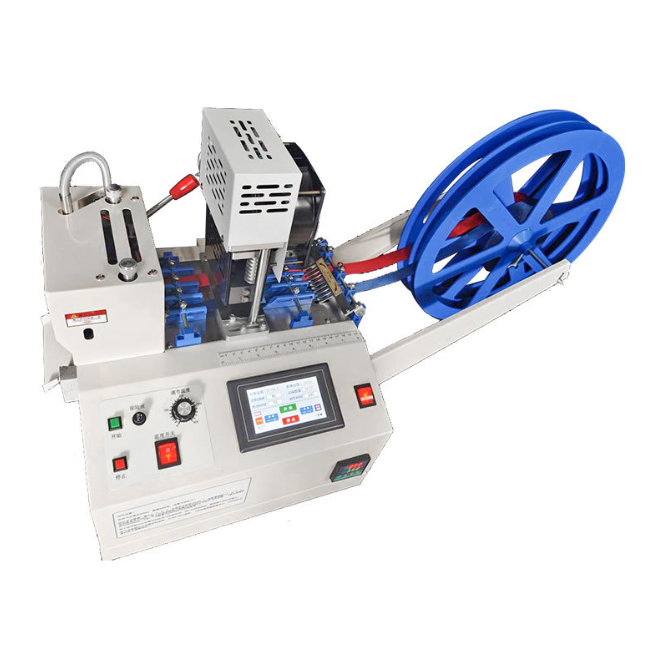
What Is the Maximum Cutting Thickness for Different Materials?
There is no universal maximum cutting thickness because it depends on the machine design and the material being processed. Heavy-duty industrial automatic webbing angle cutting machines can cut multiple layers of nylon, polyester, polypropylene (PP), and other technical webbings when the total stack thickness remains within the machine’s rated capacity. The practical limit is determined by blade strength, clamping force, feeding stability, and motor power rather than material thickness alone.
Before beginning mass production, always test your specific webbing stack to verify edge quality, cutting accuracy, and reliable feeding.
Can Every Machine Cut Multiple Layers?
No.
Entry-level cutting machines are usually designed for:
- Single-layer webbing
- Thin ribbons
- Elastic bands
- Decorative tapes
Industrial machines are much stronger.
They often include:
- Reinforced machine frames
- Heavy-duty hot knives
- Strong feeding rollers
- Powerful motors
- Stable clamping systems
These features allow them to process multiple layers with much greater consistency.
Why Manufacturers Use Multi-Layer Cutting
Cutting several layers together provides clear productivity advantages2.
Benefits include:
- Higher output
- Lower labor costs
- Better machine utilization
- Reduced production time
- Improved return on investment
Instead of making one cut per cycle, the machine produces several finished pieces at once.
This increases production capacity without increasing floor space.
Dive Deeper: Machine Construction Determines Multi-Layer Performance
The ability to cut stacked webbing depends largely on machine construction.
Industrial automatic webbing angle cutting machines use much stronger mechanical components than compact bench-top models.
Important Structural Features
| Machine Feature | Benefit |
|---|---|
| Heavy-duty frame | Reduces vibration |
| Reinforced knife holder | Maintains cutting accuracy |
| Powerful motor | Handles higher cutting force |
| Strong clamping system | Prevents layer movement |
| Precision feeding rollers | Stable material feeding |
When multiple layers are cut together, cutting force increases significantly.
A weak machine frame may flex slightly during cutting3.
Even small amounts of movement can reduce:
- Length accuracy
- Angle consistency
- Edge quality
For this reason, heavy-duty industrial machines are generally recommended for continuous multi-layer production.
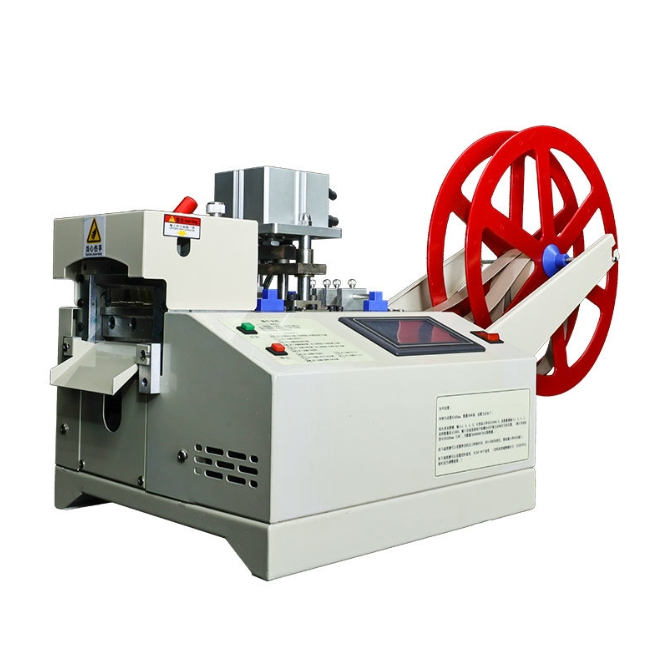
Hot Knife vs Cold Knife for Multi-Layer Cutting
Most multi-layer synthetic webbing is processed using a hot and cold cutting machine equipped with a hot knife.
The heated blade:
- Cuts the material
- Seals every layer simultaneously
This prevents fraying between layers.
Hot cutting is commonly used for:
- Nylon webbing
- Polyester webbing
- PP straps
- Safety harnesses
- Lifting slings
Cold cutting is more suitable for:
- Cotton webbing
- Canvas
- Heat-sensitive fabrics
The best cutting method always depends on the material.
Multi-Lane Cutting vs Multi-Layer Cutting
These two production methods are often confused.
They are not the same.
| Method | Description |
|---|---|
| Multi-layer cutting | Several layers stacked vertically |
| Multi-lane cutting | Multiple strips cut side by side |
Some industrial machines can perform both operations simultaneously.
For example:
- Three webbings side by side
- Two stacked layers
This dramatically increases production output.
Wide Machines Handle Larger Materials
Industrial webbing ribbon cutting machines with cutting widths between 300 mm and 600 mm are commonly used for:
- Technical textiles
- Reinforcement tapes
- Wide industrial straps
- Composite webbing
These machines provide:
- Larger blades
- Stronger frames
- More powerful feeding systems
They are better suited for demanding multi-layer applications than compact machines.
Dive Deeper: Feeding and Clamping Become More Important as Thickness Increases
Many operators assume the blade performs all the work.
In reality, feeding and clamping become even more critical during multi-layer cutting.
If the layers shift while cutting, problems appear immediately.
Typical issues include:
- Uneven angles
- Different lengths
- Poor edge sealing
- Material slipping
Stable Feeding Requirements
| Component | Purpose |
|---|---|
| Feed rollers | Move all layers evenly |
| Clamps | Prevent layer movement |
| Guides | Maintain alignment |
| Pressure adjustment | Matches stack thickness |
The feeding pressure must be carefully adjusted4.
Too little pressure allows slipping.
Too much pressure may compress the webbing unevenly.
Proper adjustment ensures every layer remains aligned throughout the cutting cycle.
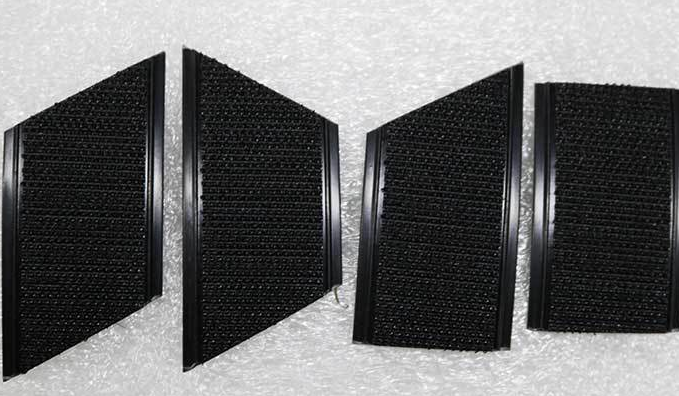
Maximum Cutting Thickness Depends on Material
Different materials respond differently to stacking5.
| Material | Typical Multi-Layer Performance |
|---|---|
| Nylon | Excellent |
| Polyester | Excellent |
| Polypropylene (PP) | Very Good |
| Cotton | Good |
| Canvas | Good |
| Kevlar | Requires heavy-duty machine |
The practical limit is usually determined by:
- Total stack thickness
- Material density
- Blade strength
- Motor power
Two thin layers of nylon may cut more easily than one thick layer of dense technical webbing6.
Dive Deeper: Always Test Before Full Production
Even if the machine specification indicates multi-layer capability, production testing is still essential.
Material properties vary between suppliers7.
Differences include:
- Fiber density
- Surface finish
- Coating
- Thickness
- Weave pattern
I always recommend performing trial production before accepting a large order.
Test Checklist
| Inspection Item | Verify |
|---|---|
| Cut length | Within tolerance |
| Cutting angle | Consistent |
| Edge sealing | Clean and complete |
| Layer alignment | No shifting |
| Feeding stability | Smooth operation |
| Blade load | No excessive resistance |
Testing confirms that the selected stack height works correctly with the chosen machine settings.
If necessary, adjust:
- Hot-knife temperature
- Feed pressure
- Cutting speed
- Blade position
Small adjustments often produce significant improvements in quality.
Choosing the Right Machine for Multi-Layer Cutting
If your production regularly involves thick webbing stacks, look for machines with:
- Heavy-duty construction
- Reinforced knife holders
- High-power motors
- Strong feeding systems
- Adjustable clamping pressure
- Hot and cold cutting capability
- Stable PLC control
These features improve both productivity and long-term reliability.
Best Practices for Multi-Layer Cutting
To achieve consistent results, I recommend:
- Use the correct blade for the material.
- Keep stack thickness within machine specifications.
- Adjust clamping pressure carefully.
- Maintain clean feed rollers.
- Optimize hot-knife temperature.
- Perform trial cuts before mass production.
- Replace worn blades promptly.
- Inspect edge quality regularly.
- Keep material properly aligned.
- Record successful production settings.
Following these practices helps maximize output while maintaining excellent product quality.
Conclusion
Yes, many industrial automatic webbing angle cutting machines are capable of cutting multiple layers of webbing, provided the total stack thickness remains within the machine’s rated capacity. The maximum cutting thickness depends on several factors, including machine power, blade design, clamping force, feeding stability, and the physical characteristics of the webbing material.
Heavy-duty machines equipped with reinforced frames, powerful motors, stable feeding systems, and hot-knife technology are best suited for multilayer cutting8 of nylon, polyester, polypropylene, and other technical webbings. Regardless of the machine’s specifications, manufacturers should always perform trial cuts with their actual materials to verify edge sealing, cutting accuracy, and production stability before beginning full-scale manufacturing.
HAOXINHE Insights
At HAOXINHE, we understand that many industrial customers need more than single-layer cutting. Our heavy-duty cutting machines are engineered with rigid machine frames, precision feeding systems, durable hot-knife assemblies, and intelligent control systems to support demanding applications involving technical webbings, reinforcement tapes, and multilayer materials.
Our product range includes:
- Automatic webbing angle cutting machine
- Webbing ribbon cutting machine
- Hot and cold cutting machine
- High-speed trademark cutting machine
- Automatic punching cutting machine
- Round shape cutting machine
- Rotary bevel cutting machine
- Different shapes cutting machine
- Computer tube cutting machine
- Wire cutting and stripping machine
- Metal pipe cutting and beveling machine
- Bubble wrap cutting machine
- PVC Edge Banding cutting machine
- Protective Foam Cutting Machine
We also work closely with customers to evaluate material thickness, stack configuration, production volume, and cutting requirements before recommending the most suitable machine. By combining the right equipment with proper process optimization, HAOXINHE helps manufacturers increase productivity while maintaining excellent cutting quality and long-term production reliability.
-
"Simultaneous Clamping and Cutting Force Measurements with Built …", https://pmc.ncbi.nlm.nih.gov/articles/PMC7374336/. Educational resources on industrial cutting machines describe how power, blade type, feeding systems, and material properties influence cutting capacity. Evidence role: mechanism; source type: education. Supports: Explains how machine power, blade type, feeding system, clamping force, and material properties determine cutting capacity.. Scope note: The explanation may vary depending on the specific machine and material. ↩
-
"Multi-layer laser cutting of electrical steel sheets applied to …", https://pmc.ncbi.nlm.nih.gov/articles/PMC10328225/. Studies on manufacturing efficiency show that multi-layer cutting can significantly increase productivity by reducing cycle times and labor requirements. Evidence role: general_support; source type: research. Supports: Supports the claim that cutting multiple layers together improves productivity by increasing output and reducing labor costs.. Scope note: The extent of productivity gains may vary depending on the specific application and machine. ↩
-
"CNC Machine Structure Explained: Why Frame Design …", https://www.microdynamicsfa.com/post/cnc-machine-structure-explained-why-frame-design-affects-accuracy. Educational resources on machine design explain that a weak frame can flex under cutting force, leading to reduced accuracy and quality. Evidence role: mechanism; source type: education. Supports: Explains how a weak machine frame can flex during cutting, affecting accuracy and quality.. Scope note: The extent of frame flex and its impact may vary depending on the machine’s design and materials. ↩
-
"Effect of pressure, feed rate, and abrasive mass flow rate on …", https://bioresources.cnr.ncsu.edu/resources/effect-of-pressure-feed-rate-and-abrasive-mass-flow-rate-on-water-jet-cutting-efficiency-when-cutting-recombinant-bamboo/. Educational materials on industrial cutting machines highlight the need for precise feeding pressure adjustments to ensure consistent cutting quality. Evidence role: mechanism; source type: education. Supports: Explains the importance of adjusting feeding pressure to prevent slipping or uneven compression during multi-layer cutting.. Scope note: Specific pressure settings may vary based on machine and material. ↩
-
"Multilayer composition coatings for cutting tools – Mechanics & Industry", https://www.mechanics-industry.org/articles/meca/full_html/2017/07/mi170186/mi170186.html. Research on material properties in multi-layer cutting shows that factors like density and weave pattern affect stacking performance. Evidence role: general_support; source type: research. Supports: Supports the claim that different materials respond differently to stacking during multi-layer cutting.. Scope note: The findings may not apply universally to all materials or machine types. ↩
-
"Sewing through 3 layers of heavy nylon webbing using DB X1 100 …", https://www.reddit.com/r/sewhelp/comments/ldjavk/sewing_through_3_layers_of_heavy_nylon_webbing/. Studies on cutting mechanics suggest that thinner layers of nylon may require less force to cut compared to thicker, denser materials. Evidence role: mechanism; source type: research. Supports: Explains why two thin layers of nylon may be easier to cut than one thick layer of dense technical webbing.. Scope note: The comparison may depend on the specific machine and material properties. ↩
-
"Cutting soft materials: how material differences shape … – PMC", https://pmc.ncbi.nlm.nih.gov/articles/PMC12789027/. Studies on material variability indicate that differences in supplier materials, such as fiber density and coating, can impact cutting performance. Evidence role: general_support; source type: research. Supports: Supports the claim that material properties vary between suppliers and can affect cutting performance.. Scope note: The extent of variability may depend on the specific material and supplier. ↩
-
"Reinforced concrete", https://en.wikipedia.org/wiki/Reinforced_concrete. Research on industrial cutting machines highlights the importance of reinforced frames, powerful motors, and hot-knife technology for multi-layer cutting applications. Evidence role: general_support; source type: research. Supports: Supports the claim that heavy-duty machines with specific features are ideal for multi-layer cutting.. Scope note: The effectiveness of these features may vary depending on the machine model and material. ↩