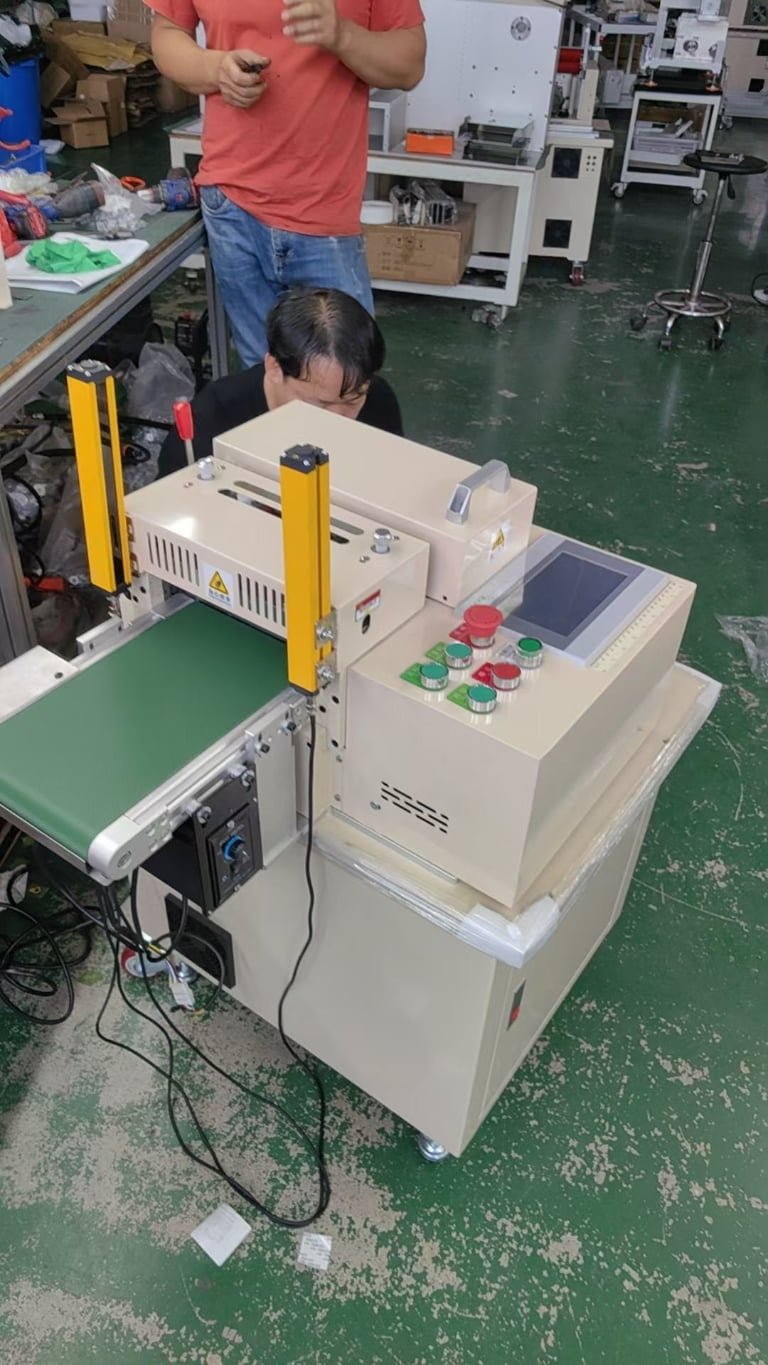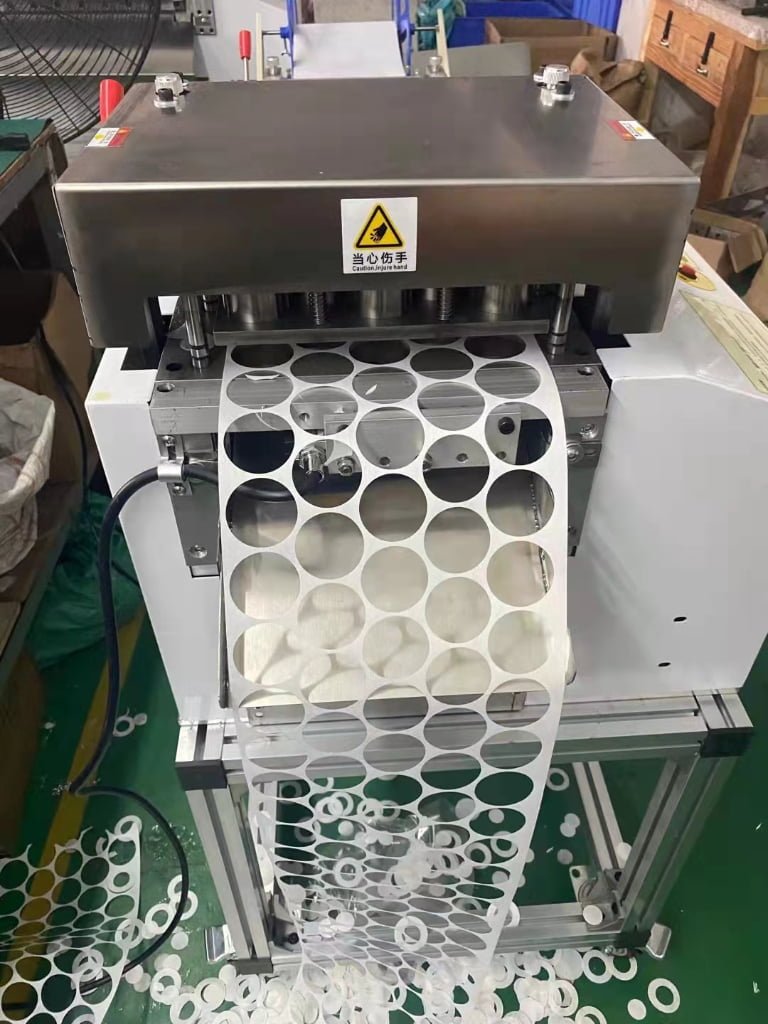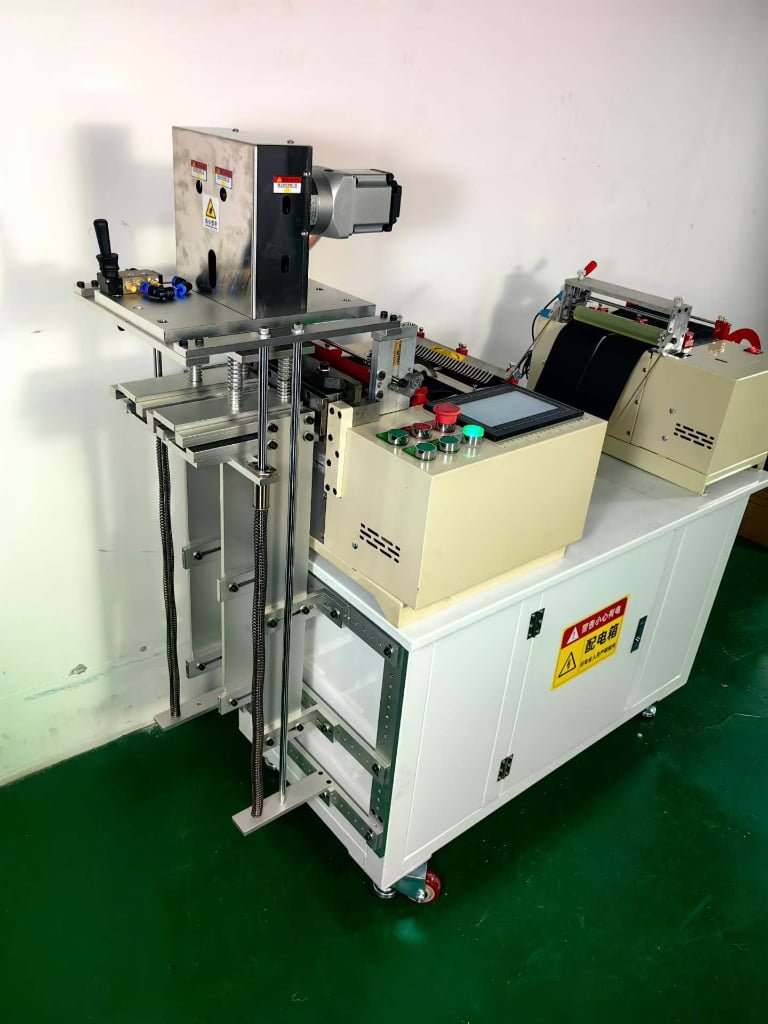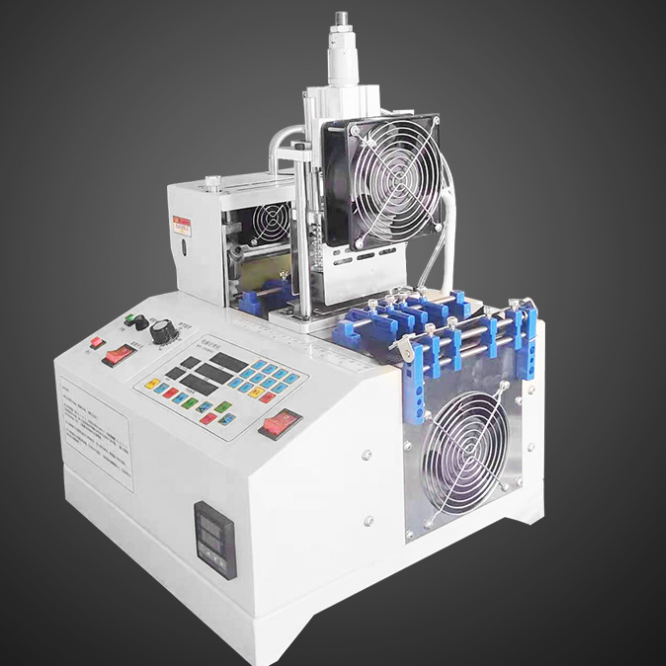
Why Is the Cutting Edge Burnt on an Automatic Webbing Angle Cutting Machine?
A clean, sealed cutting edge is one of the biggest advantages of an automatic webbing angle cutting machine equipped with a hot knife. However, if the cutting edge becomes burnt, blackened, brittle, or discolored, the finished product may fail quality inspection and create unnecessary material waste.
Fortunately, burnt edges are usually not caused by machine defects1. In most cases, they result from incorrect temperature settings, excessive heating time, poor feeding conditions, or process parameters that are not properly matched to the webbing material.
In this guide, I will explain the most common causes of burnt cutting edges and show you how to prevent overheating during continuous production.
How Can Overheating Be Prevented During Continuous Operation?
Overheating can be prevented by setting the correct hot-knife temperature, reducing blade contact time, increasing cutting speed when appropriate, cleaning carbon buildup from the blade, maintaining accurate temperature calibration, ensuring stable feeding, improving cooling between cycles, and optimizing machine settings for each webbing material.
A properly adjusted hot-knife system should melt and seal the edge without scorching or weakening the material.
Why Burnt Edges Occur
A hot knife is designed to apply just enough heat to seal synthetic fibers.
Problems occur when the material receives more heat than necessary.
Excessive heat can cause:
- Black edges
- Brown discoloration
- Brittle fibers
- Smoke
- Material shrinkage
- Poor appearance
In nearly every case, burnt edges are the result of poor heat management rather than poor cutting performance.
Hot-Knife Temperature Is Too High
The most common cause of burning is excessive blade temperature.
If the blade operates above the material’s ideal sealing temperature, the webbing surface begins to scorch instead of simply melting.
Different materials require different temperatures.
| Material | Relative Heat Requirement |
|---|---|
| Nylon | Medium |
| Polyester | Medium to High |
| Polypropylene (PP) | Lower |
| Cotton | Cold cutting recommended |
| Laminated webbing | Lower than standard synthetic materials |
Always begin with the lowest temperature that produces a clean sealed edge.
Increasing temperature should be the last adjustment—not the first.
Dive Deeper: Dwell Time Is Just as Important as Temperature
Many operators focus only on knife temperature.
However, dwell time is equally important.
Dwell time refers to how long the hot blade remains in contact with the webbing2.
Even a correctly heated blade can burn the material if it stays in contact for too long.
Effects of Excessive Dwell Time
| Condition | Result |
|---|---|
| Proper dwell time | Clean sealed edge |
| Slightly too long | Minor discoloration |
| Excessively long | Burnt edge |
| Very long | Brittle material and smoke |
To reduce dwell time:
- Increase cutting speed.
- Improve feeding accuracy.
- Reduce unnecessary blade pauses.
- Verify controller timing.
The goal is a quick cutting motion with minimal heat transfer.
A fast, controlled cut seals the fibers while avoiding excessive heating.
This is especially important when processing thin webbings or lightweight synthetic tapes.
Cutting Speed Also Affects Heat Exposure
Temperature and cutting speed work together.
If cutting speed is too slow:
- Material remains under the blade longer.
- Heat continues transferring.
- Burn marks appear.
Higher cutting speed reduces heat exposure.
However, speed should always remain within the machine’s recommended operating range.
Excessive speed may reduce cutting quality if feeding becomes unstable.
The correct balance depends on:
- Material thickness
- Blade temperature
- Machine capability
Heat-Sensitive Materials Require Different Settings
Not all synthetic webbings behave the same.
Some materials include:
- PVC coatings
- Rubber coatings
- Laminated surfaces
- Decorative finishes
These coatings often burn before the core material reaches its sealing temperature.
For these materials, reduce:
- Blade temperature
- Dwell time
Sometimes cold cutting provides better results than hot cutting.
Always test a new material before beginning mass production.
Carbon Buildup on the Blade
After long production runs, melted fibers accumulate on the blade3.
This carbonized residue creates uneven heating.
Hot spots develop on the blade surface.
These hot spots produce:
- Burn streaks
- Uneven sealing
- Rough edges
- Increased smoke
Regular blade cleaning restores uniform heat distribution4.
Never allow heavy residue to accumulate.
Dive Deeper: Temperature Calibration Is Often Overlooked
The controller display does not always represent the actual blade temperature.
Temperature sensors gradually drift over time.
Heating elements also change as they age.
As a result, a controller displaying 400°C may actually be heating the blade well above that value.
Temperature Calibration Checklist
| Inspection Item | Recommended Action |
|---|---|
| Temperature sensor | Verify accuracy |
| Heater element | Inspect for wear |
| Controller settings | Confirm calibration |
| Display value | Compare with actual temperature |
| Test cuts | Verify edge quality |
If burnt edges appear suddenly without changing machine settings, I recommend checking the temperature control system before adjusting other parameters.
Proper calibration often solves overheating problems immediately.
Feeding Problems Can Increase Burning
Stable feeding reduces blade contact time.
Poor feeding increases it.
Common feeding problems include:
- Roller slipping
- Misalignment
- Uneven tension
- Material dragging
If the webbing hesitates while passing through the blade, additional heat transfers into the material.
The result is often localized burning.
Maintaining a stable feeding system is just as important as controlling blade temperature.
Dive Deeper: Continuous Production Generates More Heat
During continuous industrial production, heat gradually accumulates inside the machine.
Factors that increase overheating include:
- High production speed5
- Thick webbing
- Poor ventilation
- Long operating hours
- Limited cooling time
Continuous Operation Heat Sources
| Heat Source | Effect |
|---|---|
| Heater element | Constant heat generation |
| Blade | Stores thermal energy |
| Thick materials | Retain heat longer |
| Limited airflow | Slower cooling |
Some factories improve cooling by:
- Increasing airflow around the machine.
- Installing cooling fans.
- Cleaning ventilation openings.
- Allowing short cooling intervals during very long production runs.
Good thermal management helps maintain consistent cutting quality throughout the workday.
Material Batches May Require New Settings
Even the same material purchased from different suppliers may behave differently.
Variations include:
- Fiber density
- Surface coating
- Weave pattern
- Thickness
- Color additives
Dark-colored materials often absorb heat differently from light-colored materials6.
Whenever a new material batch arrives:
- Perform several test cuts.
- Inspect the edge.
- Adjust temperature if necessary.
- Record the successful settings.
Never assume previous settings will always produce identical results.
Best Practices to Prevent Burnt Cutting Edges
I recommend the following routine:
- Use the lowest effective hot-knife temperature.
- Minimize blade contact time.
- Increase cutting speed when appropriate.
- Clean blade residue regularly.
- Calibrate temperature sensors.
- Maintain stable feeding.
- Improve machine cooling.
- Test every new material batch.
- Record successful production parameters.
- Replace worn heating elements when necessary.
These simple practices dramatically reduce overheating problems.
Common Causes and Solutions
| Problem | Likely Cause | Solution |
|---|---|---|
| Black edge | Temperature too high | Reduce blade temperature |
| Brown edge | Dwell time too long | Increase cutting speed |
| Uneven burning | Carbon buildup | Clean blade |
| Burn after blade replacement | Temperature calibration error | Recalibrate controller |
| Random burn marks | Feeding instability | Check rollers and guides |
| Burning only on new material | Different heat tolerance | Optimize process settings |
Using a systematic troubleshooting process helps identify the root cause quickly.
Conclusion
Burnt cutting edges on an automatic webbing angle cutting machine are almost always caused by excessive heat rather than poor cutting performance. High blade temperature, long dwell time, slow cutting speed, carbon buildup, inaccurate temperature control, unstable feeding, poor cooling, and changes in webbing material are the most common causes of overheating.
Preventing burnt edges requires balancing temperature, cutting speed, and contact time while maintaining a clean blade, accurate temperature calibration, and stable material feeding. Regular testing and process optimization for each webbing type ensure clean, sealed edges without discoloration or material damage.
With proper heat management, manufacturers can maintain excellent edge quality, reduce scrap, and achieve consistent production even during long periods of continuous operation.
HAOXINHE Insights
At HAOXINHE, we understand that stable heat control is essential for producing clean, professional webbing products. Our hot and cold cutting machines are designed with intelligent temperature control systems, reliable heating elements, and precision feeding mechanisms that help minimize overheating while maintaining excellent edge sealing quality.
Our product portfolio includes:
- Automatic webbing angle cutting machine
- Webbing ribbon cutting machine
- Hot and cold cutting machine
- High-speed trademark cutting machine
- Automatic punching cutting machine
- Round shape cutting machine
- Rotary bevel cutting machine
- Different shapes cutting machine
- Computer tube cutting machine
- Wire cutting and stripping machine
- Metal pipe cutting and beveling machine
- Bubble wrap cutting machine
- PVC Edge Banding cutting machine
- Protective Foam Cutting Machine
We also help customers optimize cutting temperature, blade configuration, feeding speed, and production parameters for different webbing materials. By combining the right machine settings with proper maintenance, HAOXINHE helps manufacturers achieve clean sealed edges, lower scrap rates, and reliable long-term production performance.
-
"Effects of Hardness, Blade Angle and the Micro-Geometry of …", https://pmc.ncbi.nlm.nih.gov/articles/PMC10420138/. Studies on hot knife cutting processes indicate that burnt edges are primarily caused by improper temperature settings, excessive dwell time, or feeding issues rather than inherent machine defects. Evidence role: general_support; source type: research. Supports: Burnt edges on hot knife cutting machines are more often caused by operational or process issues than by machine defects.. Scope note: The source may not address all possible machine-related defects that could contribute to burnt edges. ↩
-
"Guidance on Safe Sling Use – Synthetic Web Slings", http://www.osha.gov/safe-sling-use/synth-web. Research on thermal cutting processes highlights that excessive dwell time can lead to material scorching and degradation. Evidence role: mechanism; source type: research. Supports: Dwell time is a key factor in determining the quality of hot knife cuts and preventing burnt edges.. Scope note: The source may focus on general thermal cutting rather than specific to webbing materials. ↩
-
"Fix 4 Synthetic Fabric Cutting Mistakes with a Hot Knife", https://www.carolinaknife.com/4-common-mistakes-to-avoid-when-cutting-synthetic-fabrics-and-how-a-hot-knife-fixes-them/?srsltid=AfmBOop-pxq93jJTdjz9snKah1Po4wxC25PCglVKJm_3hIGLyTumzuaY. Studies on hot knife maintenance show that carbonized residue from melted fibers creates hot spots, leading to uneven cutting and burning. Evidence role: mechanism; source type: research. Supports: Melted fiber accumulation on hot knife blades can cause uneven heating and lead to burn marks.. Scope note: The source may focus on general cutting tools rather than specific machines. ↩
-
"How are you supposed to clean the hotknife? : r/puffco – Reddit", https://www.reddit.com/r/puffco/comments/1dfhla5/how_are_you_supposed_to_clean_the_hotknife/. Research on cutting tool maintenance indicates that residue buildup can cause uneven heating, which cleaning mitigates. Evidence role: mechanism; source type: research. Supports: Regular cleaning of hot knife blades restores uniform heat distribution and reduces burning issues.. Scope note: The source may not focus exclusively on hot knife blades. ↩
-
"Managing Heat in High-Speed CNC Machining – C. Thorrez Industries", https://thorrez.com/managing-heat-in-high-speed-cnc-machining/. Studies on industrial machine operation confirm that increased production speeds can lead to heat buildup, affecting machine performance. Evidence role: mechanism; source type: research. Supports: High production speeds can contribute to heat accumulation in industrial cutting machines.. Scope note: The source may not focus specifically on hot knife cutting machines. ↩
-
"[PDF] absorbing light: dark versus bright", https://sealevel.jpl.nasa.gov/files/archive/activities/ts1enac1.pdf. Research on material thermal properties shows that darker colors absorb more heat, which can influence their performance under thermal processes. Evidence role: mechanism; source type: research. Supports: Dark-colored materials absorb more heat than light-colored materials, affecting their thermal behavior during cutting.. Scope note: The source may not specifically address webbing materials. ↩