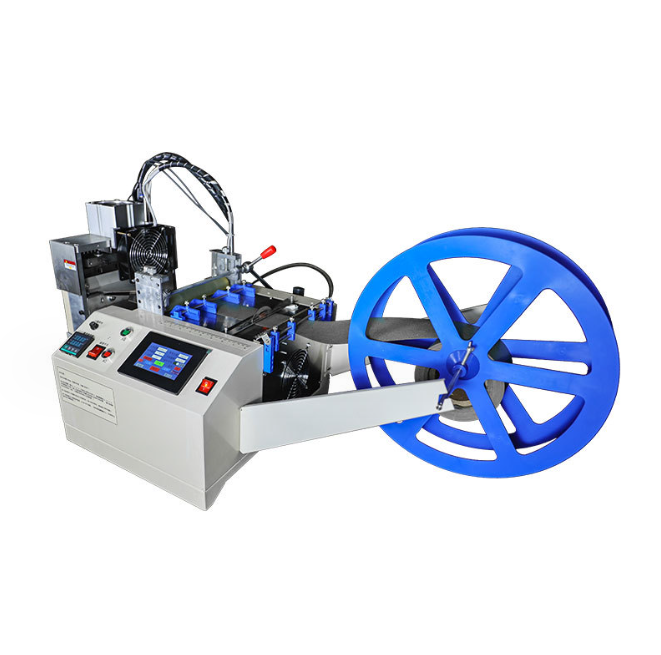
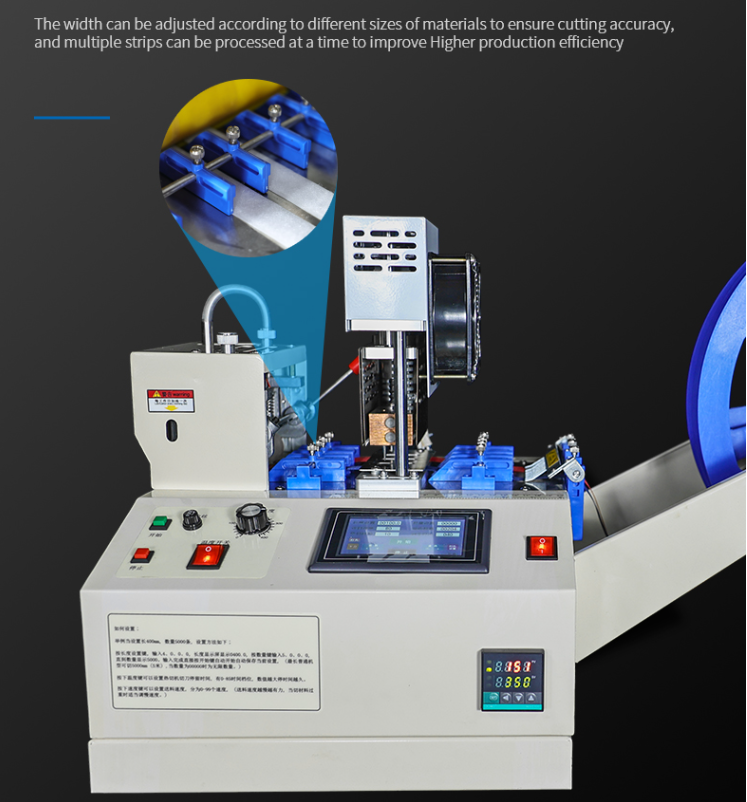
Hot Knife Nylon Cutting Machine vs Ultrasonic Cutting Machine: Which Should Manufacturers Choose?
When manufacturers invest in new cutting equipment, one of the most common questions is:
Should I choose a hot knife nylon cutting machine or an ultrasonic cutting machine?
Both technologies are designed to cut synthetic materials while reducing fraying, but they achieve this in very different ways.
A hot knife nylon cutting machine uses a heated blade to cut and seal the material at the same time. An ultrasonic cutting machine uses high-frequency vibration combined with localized heat generated by friction to separate and seal the material with minimal mechanical force.
Neither technology is universally better. The right choice depends on your materials, production volume, quality requirements, and budget.
In this guide, I will compare both technologies in terms of cutting quality, edge sealing, operating cost, maintenance, and the applications where each machine performs best.
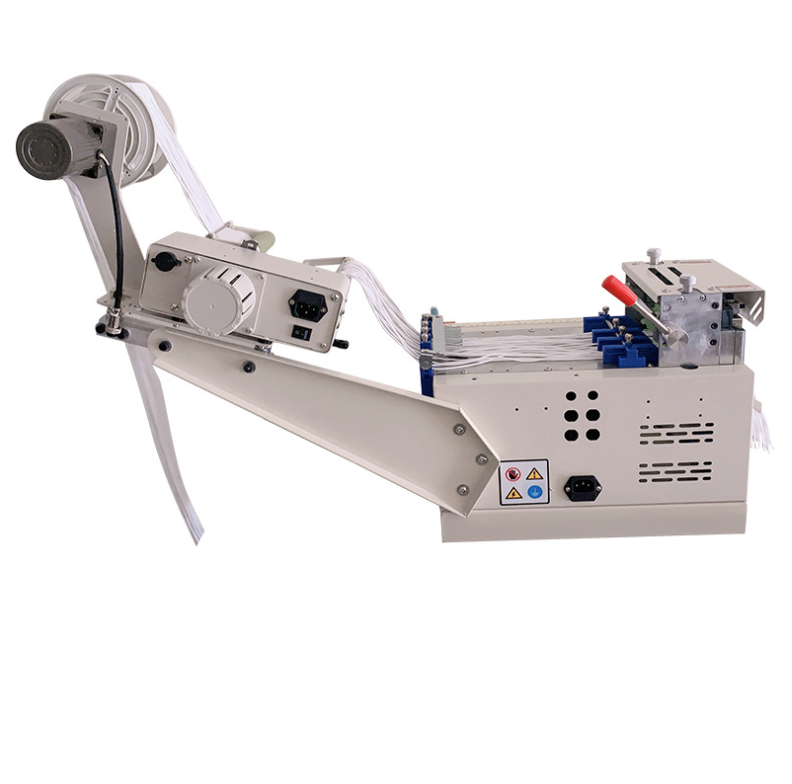
Which Technology Provides Better Edge Sealing for Nylon Webbing Production?
For most nylon webbing, straps, belts, and narrow fabrics, both technologies provide sealed edges.
However, they excel in different situations.
- Hot knife cutting is usually the better choice for heavy-duty nylon webbing, cost-sensitive production, and standard industrial applications.
- Ultrasonic cutting is often preferred for premium synthetic textiles, multilayer materials, delicate fabrics, and applications that demand an exceptionally clean edge.
The best solution depends on your production priorities rather than on one technology alone.
How Does a Hot Knife Nylon Cutting Machine Work?
A hot knife machine uses a heated metal blade to cut through synthetic material.
As the blade passes through the nylon, it melts the fibers along the cutting line.
The melted edge cools immediately after cutting and forms a sealed finish.
This process helps prevent:
- Fraying
- Loose fibers
- Edge unraveling
- Material waste
Because nylon is a thermoplastic material, hot knife cutting has become one of the most common production methods for:
- Nylon webbing
- Polyester webbing
- PP straps
- Hook-and-loop tape
- Ribbon
- Elastic tape
Modern hot and cold cutting machines also allow operators to switch between heated and unheated cutting modes for different materials.
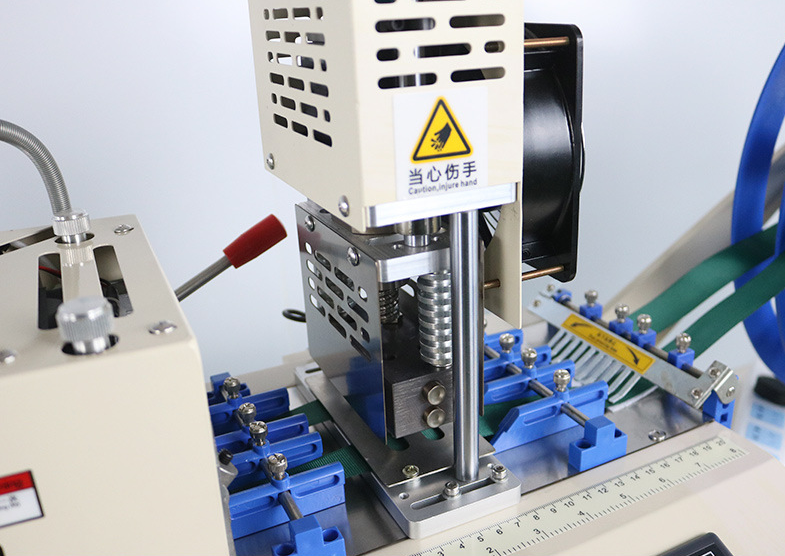
How Does an Ultrasonic Cutting Machine Work?
An ultrasonic cutting machine operates differently.
Instead of relying on a continuously heated blade, the cutting tool vibrates at ultrasonic frequencies.
These high-frequency vibrations reduce cutting resistance while generating localized heat at the contact point.
As a result:
- The material separates smoothly.
- The edge seals during cutting.
- Mechanical drag is reduced.
- Heat is concentrated only near the cutting line.
Because the heat is more localized than in many hot knife systems, ultrasonic cutting often produces cleaner edges on delicate synthetic materials1.
Typical applications include:
- Technical textiles
- Medical fabrics
- Automotive fabrics
- Composite fabrics
- Fine synthetic ribbons
- Multilayer textile assemblies
Edge Sealing Comparison
The primary purpose of both technologies is to prevent fraying.
However, the finished edge looks slightly different.
Hot Knife Edge
Characteristics include:
- Strong thermal seal
- Slightly rounded edge
- Excellent durability
- Ideal for heavy webbing
Ultrasonic Edge
Characteristics include:
- Smooth finish
- Minimal edge deformation
- Reduced melted appearance
- Excellent appearance on fine fabrics
Edge Quality Comparison
| Feature | Hot Knife | Ultrasonic |
|---|---|---|
| Edge Sealing | Excellent | Excellent |
| Heavy Nylon Webbing | Excellent | Good |
| Fine Technical Fabrics | Good | Excellent |
| Visible Heat Marks | Possible | Less Likely |
| Edge Appearance | Slightly Rounded | Cleaner |
For standard nylon webbing production, both methods provide reliable edge sealing.
Which Machine Handles Thick Nylon Webbing Better?
For thick industrial materials, hot knife cutting generally has the advantage.
Examples include:
- Safety harnesses
- Seat belts
- Cargo straps
- Backpack straps
- Industrial lifting slings
These materials require:
- Strong cutting force
- Stable feeding
- Reliable edge sealing
Hot knife systems are specifically designed for this type of production.
Their simple structure also supports continuous operation in high-volume manufacturing environments.
Which Machine Is Better for Delicate Synthetic Materials?
When cutting:
- Lightweight synthetic fabrics
- Stretch fabrics
- Thin ribbons
- Technical textiles
- Laminated materials
Ultrasonic technology often produces a cleaner appearance.
Because ultrasonic vibration reduces mechanical resistance, delicate materials experience less pulling during cutting.
This helps maintain:
- Flat edges
- Consistent dimensions
- Better appearance
For products where cosmetic quality is a key selling point, ultrasonic cutting is often preferred.
Production Speed Comparison
Both technologies support high-speed automation.
However, production speed depends on:
- Material thickness
- Cutting length
- Machine design
- Feeding system
- Automation level
In many textile applications, ultrasonic systems can achieve very high cutting speeds while maintaining consistent edge quality2.
Hot knife systems also provide excellent productivity, especially when processing continuous rolls of webbing.
Production Comparison
| Feature | Hot Knife | Ultrasonic |
|---|---|---|
| Continuous Webbing Production | Excellent | Excellent |
| Heavy Material Speed | Excellent | Good |
| Fine Textile Speed | Good | Excellent |
| Long Production Runs | Excellent | Excellent |
For most industrial webbing factories, both technologies easily meet production requirements.
Equipment Cost Comparison
Budget is one of the biggest factors in machine selection.
Hot Knife Machines
Advantages include:
- Lower purchase price
- Lower spare part cost
- Simple machine structure
- Easy installation
Ultrasonic Machines
Higher investment is usually required because the system includes:
- Ultrasonic generator
- Transducer
- Booster
- Sonotrode
- Precision control system
Investment Comparison
| Cost Factor | Hot Knife | Ultrasonic |
|---|---|---|
| Initial Investment | Lower | Higher |
| Spare Parts | Lower | Higher |
| Installation | Simple | More Complex |
| Operator Training | Easier | More Advanced |
For manufacturers with limited budgets, hot knife equipment is often easier to justify3.
Maintenance Requirements
Maintenance requirements differ significantly.
Hot Knife Machines
Routine maintenance usually includes:
- Blade replacement
- Blade cleaning
- Temperature inspection
- Roller maintenance
- Servo inspection
Ultrasonic Machines
Additional maintenance includes:
- Sonotrode inspection
- Generator monitoring
- Frequency tuning
- Transducer maintenance
- Amplitude adjustment
Ultrasonic systems generally require more technical expertise.
Maintenance Comparison
| Maintenance Item | Hot Knife | Ultrasonic |
|---|---|---|
| Blade Cleaning | Yes | No |
| Blade Replacement | Yes | No Traditional Blade |
| Frequency Calibration | No | Yes |
| Temperature Control | Yes | Minimal |
| Technical Complexity | Lower | Higher |
Factories without experienced maintenance technicians often prefer the simplicity of hot knife equipment.
Which Machine Is More Flexible?
Production flexibility depends on your product mix.
Hot Knife Machines
Best suited for:
- Nylon webbing
- Polyester straps
- Hook-and-loop tape
- Belts
- Industrial tapes
Ultrasonic Machines
Better suited for:
- Technical fabrics
- Medical textiles
- Composite materials
- Fine synthetic fabrics
- Multilayer textiles
If your production changes frequently between different soft textile materials, ultrasonic technology may offer greater versatility4.
Which Machine Provides Better Long-Term Value?
The answer depends on your production priorities.
Choose a Hot Knife Nylon Cutting Machine If You Need:
- Heavy-duty nylon webbing production
- Strong edge sealing
- Lower equipment cost
- Easier maintenance
- Stable high-volume production
- Simple operator training
Choose an Ultrasonic Cutting Machine If You Need:
- Premium edge appearance
- Fine synthetic textiles
- Technical fabric processing
- Reduced thermal marks
- High-precision textile production
- Greater flexibility for delicate materials
Decision Guide
| Production Requirement | Recommended Technology |
|---|---|
| Nylon Straps | Hot Knife |
| Seat Belts | Hot Knife |
| Industrial Webbing | Hot Knife |
| Technical Fabrics | Ultrasonic |
| Medical Textiles | Ultrasonic |
| Decorative Synthetic Fabrics | Ultrasonic |
| Cost-Sensitive Production | Hot Knife |
| Premium Appearance | Ultrasonic |
How Should Manufacturers Choose?
Before selecting equipment, I always consider these questions:
- What materials make up most of my production?
- How thick is the webbing or fabric?
- Is edge appearance more important than cost?
- How many production shifts will the machine run each day?
- Does my maintenance team have experience with ultrasonic equipment?
- How often will I change materials?
- Is the return on investment more important than maximum edge quality?
For manufacturers focused on nylon webbing, straps, belts, and industrial narrow fabrics, a hot knife nylon cutting machine is usually the most practical and economical solution.
For manufacturers producing technical textiles, medical fabrics, or premium synthetic products, the additional investment in ultrasonic cutting may be justified by the improved edge finish and greater flexibility.
Whether I choose a webbing tape cutting machine, hot and cold cutting machine, high-speed trademark cutting machine, automatic punching cutting machine, rotary bevel cutting machine, different shapes cutting machine, computer tube cutting machine, Bubble Wrap Cutting Machine, Protective Foam Cutting Machine, PVC Edge Banding Cutting Machine, wire cutting and stripping machine, or metal pipe cutting and beveling machine, I always evaluate the equipment based on my materials, production goals, and long-term operating costs rather than focusing on a single cutting technology.
Conclusion
Hot knife and ultrasonic cutting technologies both deliver reliable edge sealing for synthetic materials, but they serve different manufacturing priorities. Hot knife cutting remains the preferred solution for nylon webbing, straps, belts, and other heavy-duty materials because it offers strong edge sealing, lower equipment costs, simpler maintenance, and dependable high-volume production. Ultrasonic cutting provides cleaner edge appearance, reduced mechanical drag, and greater flexibility for delicate technical textiles and multilayer synthetic materials. The best choice depends on your product mix, quality expectations, production volume, and budget.
HAOXINHE Insights
At HAOXINHE, we work with manufacturers across the textile, packaging, automotive, and industrial webbing industries, and we have found that most customers producing nylon webbing, safety belts, straps, ribbons, and hook-and-loop tapes achieve the best balance of performance and investment with hot knife cutting technology. Our webbing tape cutting machines, hot and cold cutting machines, high-speed trademark cutting machines, automatic punching cutting machines, rotary bevel cutting machines, different shapes cutting machines, computer tube cutting machines, Bubble Wrap Cutting Machines, Protective Foam Cutting Machines, PVC Edge Banding Cutting Machines, wire cutting and stripping machines, and metal pipe cutting and beveling machines are engineered to provide stable edge sealing, precision servo feeding, programmable controls, and reliable long-term operation.
For customers with specialized applications, we also help evaluate whether ultrasonic technology offers meaningful advantages. By recommending equipment based on actual production requirements rather than trends, we help manufacturers maximize productivity, control operating costs, and achieve consistent product quality.
-
"Ultrasonic Textile Cutting: The Future of Precision Fabrication", https://www.sabreplas.com/ultrasonic-textile-cutting-the-future-of-precision-fabrication/. Ultrasonic cutting technology is recognized for its ability to produce clean edges on delicate synthetic materials, minimizing deformation and thermal marks. Research highlights its suitability for fine textiles and technical fabrics. Evidence role: general_support; source type: research. Supports: Confirms ultrasonic cutting’s ability to produce cleaner edges on delicate synthetic materials.. Scope note: Edge quality may depend on material type and machine calibration. ↩
-
"Development of ultrasonic elliptical vibration cutting and its …", https://ui.adsabs.harvard.edu/abs/2025ACME…25..140L/abstract. Studies show that ultrasonic cutting systems can achieve high speeds while maintaining consistent edge quality, particularly for synthetic and technical textiles. Performance may vary based on material thickness and machine design. Evidence role: statistic; source type: research. Supports: Confirms ultrasonic systems’ ability to maintain edge quality at high cutting speeds.. Scope note: Performance metrics may depend on specific machine configurations. ↩
-
"Hot Knives & Foam Cutting Tools Hot Knife Foam Cutter", https://www.goldstartool.com/hot-knives-and-foam-cutters/. Hot knife cutting machines are generally more affordable than ultrasonic systems, with lower initial investment and maintenance costs. Industry analyses confirm their suitability for cost-sensitive production environments. Evidence role: statistic; source type: institution. Supports: Supports the claim that hot knife equipment is more cost-effective for manufacturers with limited budgets.. Scope note: Cost-effectiveness may vary based on production scale and material requirements. ↩
-
"Comparative study of ultrasonic and laser assisted machining …", https://pmc.ncbi.nlm.nih.gov/articles/PMC12219600/. Ultrasonic cutting technology is recognized for its adaptability to various soft textile materials, enabling frequent production changes without compromising edge quality. Research highlights its suitability for technical and multilayer fabrics. Evidence role: general_support; source type: research. Supports: Supports the claim that ultrasonic technology offers greater versatility for diverse textile materials.. Scope note: Versatility may depend on machine configuration and material compatibility. ↩