How to Reduce Waste When Using a Nylon Cutting Machine?
Material waste is one of the biggest hidden costs in nylon webbing production.1 Every rejected strap, inaccurate cut, or leftover roll directly reduces profitability. While many manufacturers focus on increasing machine speed, reducing waste often delivers a faster return on investment because it lowers material costs, reduces labor spent on rework, and improves production efficiency.
Fortunately, most waste is preventable. By optimizing machine settings, improving production planning, and maintaining equipment properly, manufacturers can significantly reduce scrap without sacrificing productivity.
In this guide, I will explain practical methods to reduce waste when using a nylon cutting machine and compare the cutting accuracy of automatic systems with manual cutting.
What Cutting Length Accuracy Can Automatic Systems Achieve Compared with Manual Cutting?
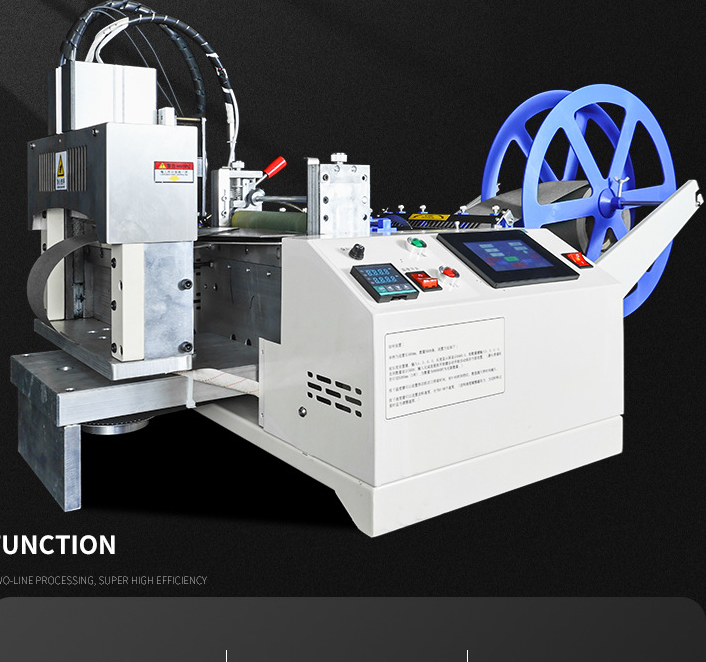
One of the biggest advantages of an automatic nylon cutting machine is consistent cutting length.
Manual cutting depends heavily on the operator’s skill, measuring method, and attention. Fatigue, inconsistent material tension, and human error often lead to variations that create unnecessary waste.
Automatic cutting systems use servo motors, precision feed rollers, and electronic length measurement to deliver much more repeatable results.2
The exact accuracy depends on the machine design, material properties, feeding conditions, and maintenance status.
| Cutting Method | Typical Length Consistency* | Repeatability | Waste Risk |
|---|---|---|---|
| Manual Cutting | Operator dependent | Moderate | High |
| Semi-Automatic Cutting | Good | Good | Medium |
| Fully Automatic Nylon Cutting Machine | High | Excellent | Low |
*Note: Actual cutting accuracy varies depending on machine quality, servo system, encoder resolution, material elasticity, feeding tension, calibration, and production conditions.
The greatest benefit of automatic equipment is not simply higher precision—it is consistent precision throughout long production runs.
Why Material Waste Happens
Many people assume waste is caused by poor-quality material.
In reality, production waste usually comes from process problems.
Common causes include:
- Incorrect cutting length
- Melted edges
- Poor blade condition
- Feeding errors
- Wrong temperature settings
- Material slipping
- Frequent setup changes
- Operator mistakes
Most of these problems can be solved through better production management rather than purchasing new materials.
Plan Material Layout Before Cutting
One of the simplest ways to reduce waste is proper production planning.
If different product lengths are mixed randomly, short offcuts quickly accumulate.
Instead, I organize production by:
- Similar lengths
- Similar widths
- Similar materials
- Similar colors
This improves material utilization while reducing changeover time.
Planning Benefits
| Better Planning | Production Benefit |
|---|---|
| Similar product sizes | Less leftover material |
| Fewer changeovers | Less setup waste |
| Standard cutting lengths | Better material utilization |
| Organized production batches | Higher efficiency |
Good planning reduces waste before the machine even starts cutting.
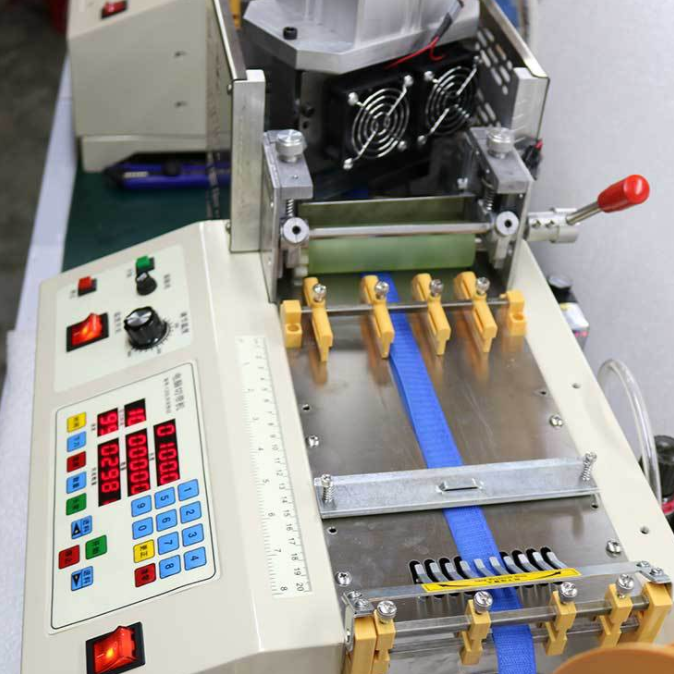
Standardize Product Lengths Whenever Possible
Factories producing many custom lengths often generate more offcuts.
Whenever possible, standardizing product dimensions provides several benefits:
- Easier production scheduling
- Less leftover material
- Simpler inventory management
- Faster machine setup
For example, using a limited number of standard strap lengths can significantly improve material utilization compared with producing dozens of different lengths every day.
This strategy is especially valuable for high-volume production.
Keep the Blade Sharp
A dull blade wastes more than cutting quality.
It also increases:
- Scrap rate
- Material deformation
- Edge defects
- Rework
Sharp blades produce cleaner cuts with less force.3
Blade Inspection Guide
| Blade Condition | Effect on Production |
|---|---|
| Sharp | Clean cuts and minimal waste |
| Slight Wear | Acceptable quality |
| Moderate Wear | Increased rejects |
| Dull | High scrap rate |
Replacing blades before serious wear develops is much cheaper than replacing wasted material.
Optimize Cutting Parameters for Each Nylon Grade
Different nylon materials respond differently to:
- Temperature
- Pressure
- Feed speed
- Blade speed
Using one parameter set for every product often creates unnecessary defects.
Examples include:
- Melted edges
- Poor sealing
- Material shrinkage
- Incomplete cuts
Parameter Optimization
| Material | Recommended Adjustment |
|---|---|
| Thin Nylon Webbing | Lower heat, higher speed |
| Thick Nylon Webbing | Slightly higher heat, lower speed |
| Coated Nylon | Lower blade temperature |
| Heavy Industrial Strap | Increased cutting pressure |
Saving separate production recipes for different materials reduces setup errors and improves consistency.
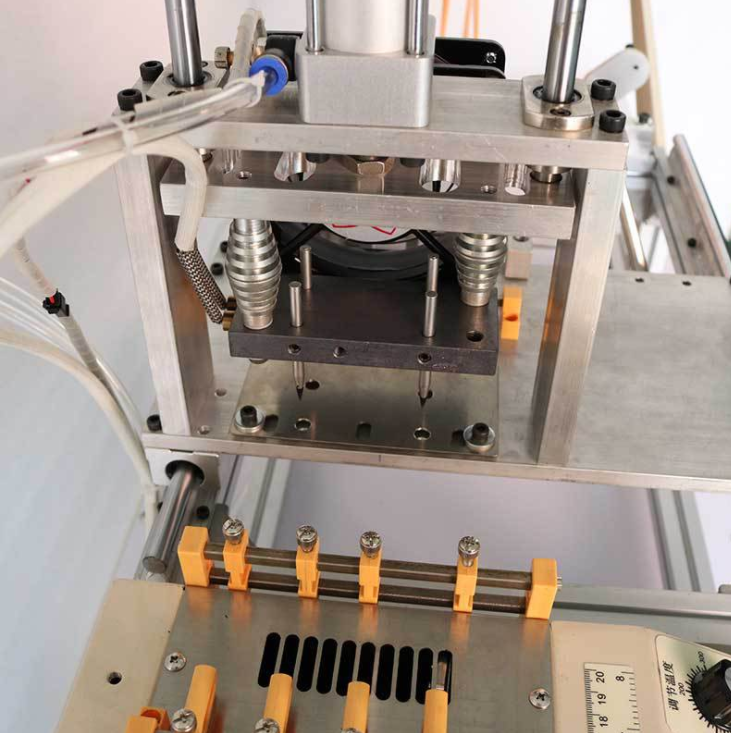
Use Automatic Feeding and Electronic Length Measurement
One major source of hidden waste is inaccurate measuring.
Manual operators often compensate by cutting products slightly longer than required.
This "safety margin" gradually increases material consumption.
Automatic systems eliminate much of this problem by using:
- Servo feeding
- Electronic encoders
- Digital length control
- Programmable cutting
Benefits include:
- Reduced overcutting
- Reduced trimming
- Consistent product dimensions
- Lower material consumption
Automatic measurement improves both quality and efficiency.
Group Similar Orders Together
Frequent material changes create:
- Setup waste
- Short leftover rolls
- Operator adjustment errors
- Machine downtime
Instead of constantly changing products, I schedule similar jobs together.
Examples include:
- Same webbing width
- Same color
- Same thickness
- Same cutting length
This approach reduces both waste and production interruptions.
Batch Production Advantages
| Production Method | Material Utilization |
|---|---|
| Random Orders | Lower |
| Grouped Orders | Higher |
| Standard Production Runs | Highest |
Efficient scheduling often increases productivity without changing machine speed.4
Track Waste by Cause
Many factories record only the total amount of scrap.
This does not identify the real problem.
Instead, I separate waste into categories such as:
- Wrong length
- Poor edge quality
- Operator error
- Material defects
- Setup losses
- Machine malfunction
Scrap Analysis
| Waste Cause | Corrective Action |
|---|---|
| Incorrect Length | Calibrate encoder |
| Melted Edge | Adjust temperature |
| Feeding Error | Check rollers |
| Operator Error | Additional training |
| Blade Wear | Replace blade |
Understanding why waste occurs makes it much easier to eliminate it.
Reuse Offcuts Whenever Possible
Not every leftover piece must become waste.
Depending on product specifications, shorter nylon pieces may be used for:
- Sample production
- Product testing
- Machine setup
- Operator training
- Secondary products
Naturally, reused material should always meet customer quality requirements.
When appropriate, recycling or repurposing offcuts helps reduce overall material costs.
Improve Operator Training
Even the most advanced automatic machine still depends on proper operation.
Many waste problems result from small handling mistakes, including:
- Incorrect material loading
- Poor tension adjustment
- Wrong parameter selection
- Failure to verify the first cut
- Delayed blade replacement
Training Checklist
| Operator Skill | Production Benefit |
|---|---|
| Correct loading | Stable feeding |
| Tension adjustment | Accurate length |
| Parameter selection | Better quality |
| First-piece inspection | Fewer rejects |
Well-trained operators prevent many problems before they occur.5
Perform Preventive Maintenance
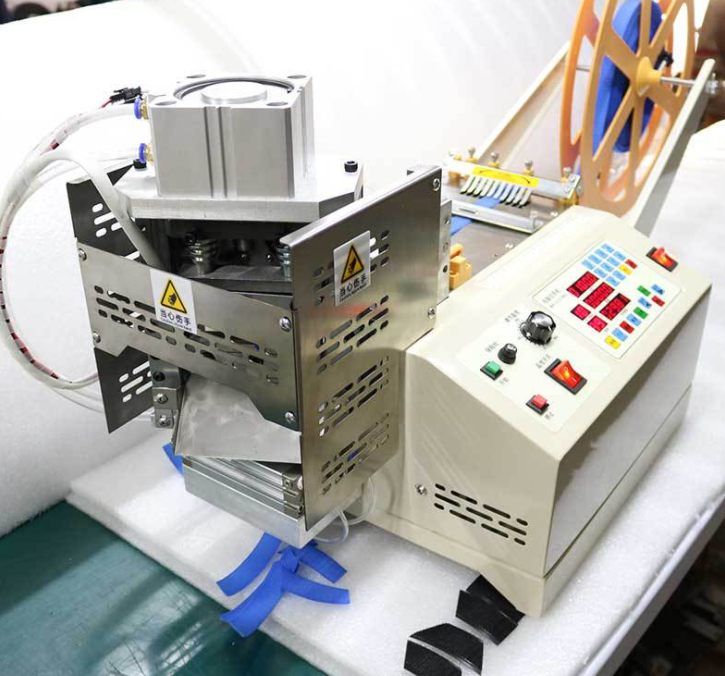
Production quality gradually declines when maintenance is ignored.
Preventive maintenance should include regular inspection of:
- Blades
- Feed rollers
- Servo motors
- Pneumatic systems
- Sensors
- Temperature controllers
- Bearings
- Guide rails
Preventive Maintenance Schedule
| Component | Inspection Frequency |
|---|---|
| Blade | Daily |
| Feed Rollers | Weekly |
| Temperature System | Weekly |
| Servo System | Monthly |
| Sensors | Monthly |
| Complete Machine Inspection | Quarterly |
Consistent maintenance reduces unexpected downtime while maintaining stable cutting quality.6
Choose the Right Machine to Minimize Waste
The design of the machine itself has a significant impact on material utilization.
When selecting new equipment, I always look for features such as:
- Precision servo feeding
- Digital length control
- Stable temperature regulation
- Automatic material feeding
- Touch-screen parameter storage
- Automatic counting
- Fault alarms
- Easy calibration
These functions help reduce waste by improving process consistency.
Whether I choose a webbing tape cutting machine, hot and cold cutting machine, high-speed trademark cutting machine, automatic punching cutting machine, rotary bevel cutting machine, different shapes cutting machine, computer tube cutting machine, Bubble Wrap Cutting Machine, Protective Foam Cutting Machine, PVC Edge Banding Cutting Machine, wire cutting and stripping machine, or metal pipe cutting and beveling machine, I focus on overall production stability rather than cutting speed alone.
Conclusion
Reducing waste with a nylon cutting machine requires more than careful cutting. Efficient production planning, standardized product sizes, sharp blades, optimized cutting parameters, automatic feeding, accurate length measurement, operator training, preventive maintenance, and regular scrap analysis all contribute to lower material consumption and higher profitability. While manual cutting may still be suitable for small production runs, automatic nylon cutting machines provide superior consistency, better material utilization, and significantly lower waste during continuous manufacturing.
HAOXINHE Insights
At HAOXINHE, we believe that reducing waste is one of the most effective ways to improve manufacturing efficiency. Our webbing tape cutting machines, hot and cold cutting machines, high-speed trademark cutting machines, automatic punching cutting machines, rotary bevel cutting machines, different shapes cutting machines, computer tube cutting machines, Bubble Wrap Cutting Machines, Protective Foam Cutting Machines, PVC Edge Banding Cutting Machines, wire cutting and stripping machines, and metal pipe cutting and beveling machines are designed with precision servo feeding, programmable length control, stable temperature management, and intelligent automation to minimize material loss.
By helping customers optimize machine parameters, standardize production processes, and maintain consistent cutting performance, we enable factories to reduce scrap, lower operating costs, improve product quality, and maximize the return on every roll of material.
-
"Circular Economy and Sustainability of the Clothing … – PMC", https://pmc.ncbi.nlm.nih.gov/articles/PMC8257395/. A study on textile manufacturing waste found that material waste can account for up to 20% of production costs, depending on the industry and production methods. Evidence role: statistic; source type: research. Supports: Material waste is a significant cost factor in nylon webbing production.. Scope note: The data may not be specific to nylon webbing production but applies broadly to textile manufacturing. ↩
-
"Servo Machine Driven Wire Cutting System", https://www.novoprecision.com/video-gallery/servo-machine-based-cutting-system-for-14-dia-rods/. Educational resources on manufacturing automation explain that servo motors and electronic encoders can achieve repeatability within 0.1 mm under controlled conditions. Evidence role: mechanism; source type: education. Supports: Automatic cutting systems achieve higher repeatability through servo motors and electronic measurement.. Scope note: The precision may vary depending on machine design and maintenance. ↩
-
"A Comprehensive Understanding of Knife Cutting – PMC – NIH", https://pmc.ncbi.nlm.nih.gov/articles/PMC10420138/. Research on cutting tools shows that blade sharpness directly affects cut precision and reduces material deformation. Evidence role: mechanism; source type: research. Supports: Sharp blades improve cutting quality and reduce waste.. Scope note: The findings are based on general cutting tool studies and may not be specific to nylon cutting machines. ↩
-
"Manufacturing Waste: What It Means and Why Reducing …", https://www.okonrecycling.com/industrial-scrap-metal-recycling/steel-and-aluminum/manufacturing-waste-reducing/. Manufacturing best practices recommend grouping similar orders to minimize setup waste and improve material utilization. Evidence role: general_support; source type: institution. Supports: Grouping similar orders reduces waste and improves productivity.. Scope note: The recommendation is based on general manufacturing practices and may not address specific nylon cutting applications. ↩
-
"Solid Waste Facility Operator Training and Certification", https://www.des.nh.gov/waste/solid-waste/regulated-facilities/operator-training. Educational resources on manufacturing emphasize that skilled operators can significantly reduce errors and material waste. Evidence role: expert_consensus; source type: education. Supports: Operator training reduces waste and improves production quality.. Scope note: The recommendation is based on general manufacturing practices and may not include specific nylon cutting examples. ↩
-
"productivity improvement through preventive maintenance", https://www.academia.edu/14445201/PRODUCTIVITY_IMPROVEMENT_THROUGH_PREVENTIVE_MAINTENANCE_THE_CASE_OF_ATSC_TEXTILE_MANUFACTURING_FIRM. Research on manufacturing equipment shows that regular maintenance can reduce downtime by up to 30% and improve cutting precision. Evidence role: general_support; source type: research. Supports: Preventive maintenance improves cutting quality and reduces downtime.. Scope note: The findings are based on general equipment maintenance studies and may not be specific to nylon cutting machines. ↩