How Does an Automatic Webbing Angle Cutting Machine Improve Production Efficiency?
Modern manufacturers face constant pressure to produce more products in less time while keeping quality high and costs under control. This challenge is common in industries that process webbing, ribbon, hook and loop tape, elastic bands, belts, safety straps, luggage accessories, pet products, and many other textile materials.
I have worked with many manufacturers that struggled with slow manual cutting. Their operators measured each piece by hand, adjusted the angle manually, and checked every finished product one by one. This process took time, increased labor costs, and often caused inconsistent quality.
After switching to an automatic webbing angle cutting machine, many of these companies saw significant improvements in productivity, material utilization, and product consistency.
In this article, I will explain how an automatic webbing angle cutting machine improves production efficiency, how many pieces different machine models can produce per minute, and why automation has become an important investment for modern factories.
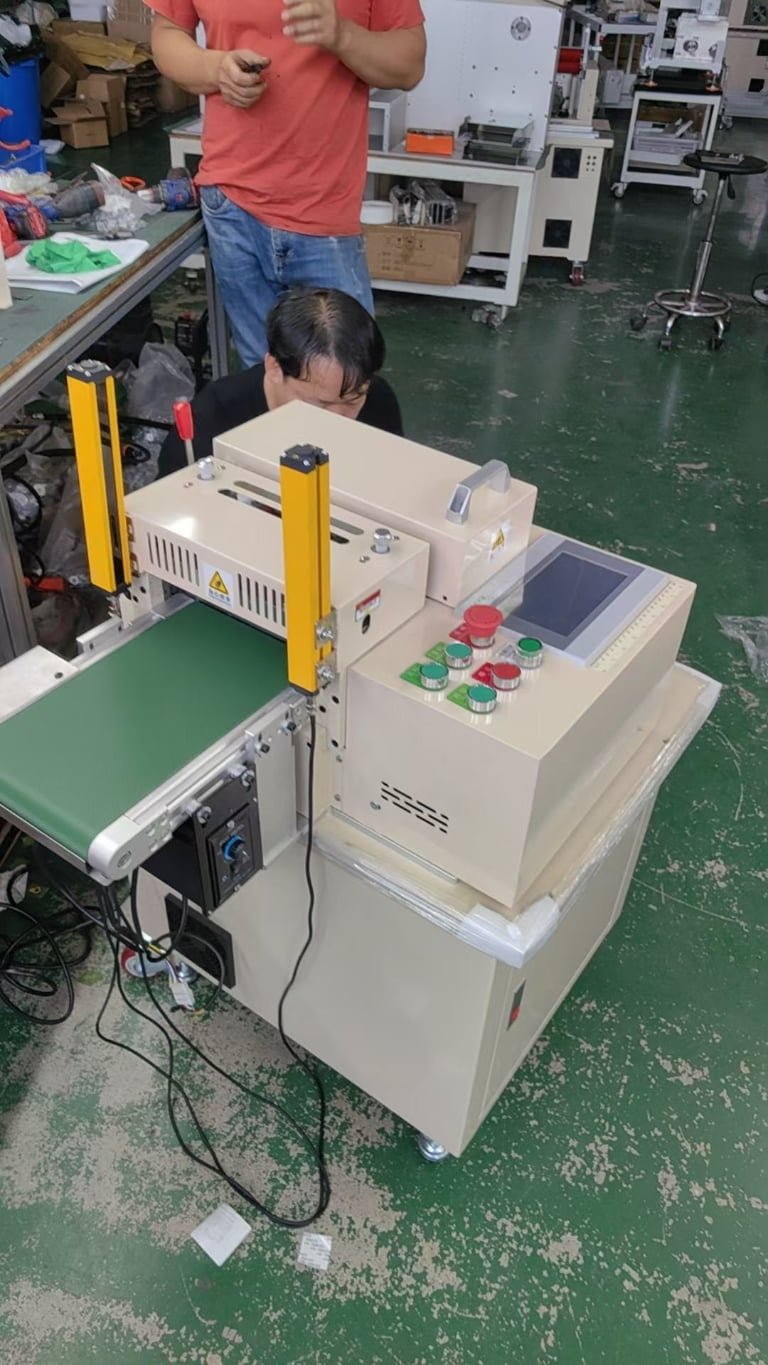
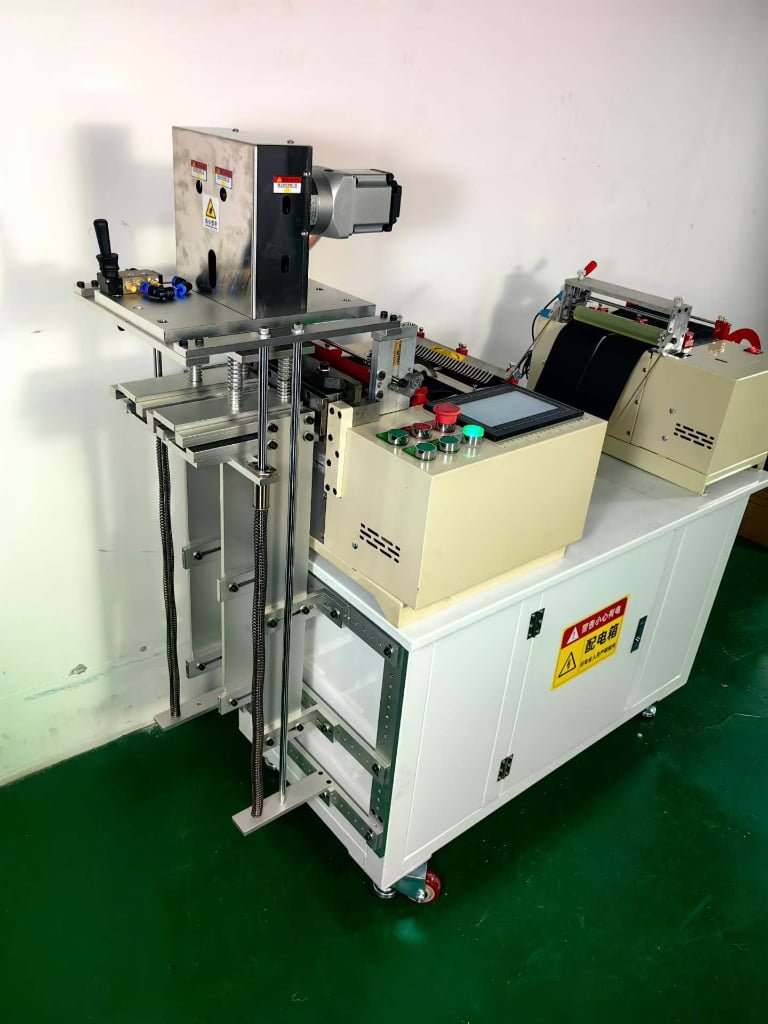
An automatic webbing angle cutting machine improves production efficiency by automating material feeding, precision measuring, angle cutting, counting, and edge sealing in one continuous process.1 Equipped with programmable controls, servo feeding, and optional hot knife cutting, it delivers consistent cutting accuracy, minimizes material waste, reduces labor costs, and increases production speed. Suitable for webbing, ribbons, straps, elastic bands, and other narrow fabrics, this automated solution helps manufacturers achieve higher productivity, reliable product quality, and scalable output for modern industrial manufacturing.
Why Is Production Efficiency So Important in Webbing Cutting?
Production efficiency affects almost every part of manufacturing.
Higher efficiency means:
- Lower production cost
- Faster delivery times
- Better product consistency
- Less material waste
- Higher customer satisfaction
- More profit per production shift
Factories that still rely on manual cutting often experience problems such as:
- Different cutting lengths
- Inconsistent cutting angles
- High labor costs
- Slow production speed
- Frequent operator fatigue
- Material waste caused by inaccurate measurements
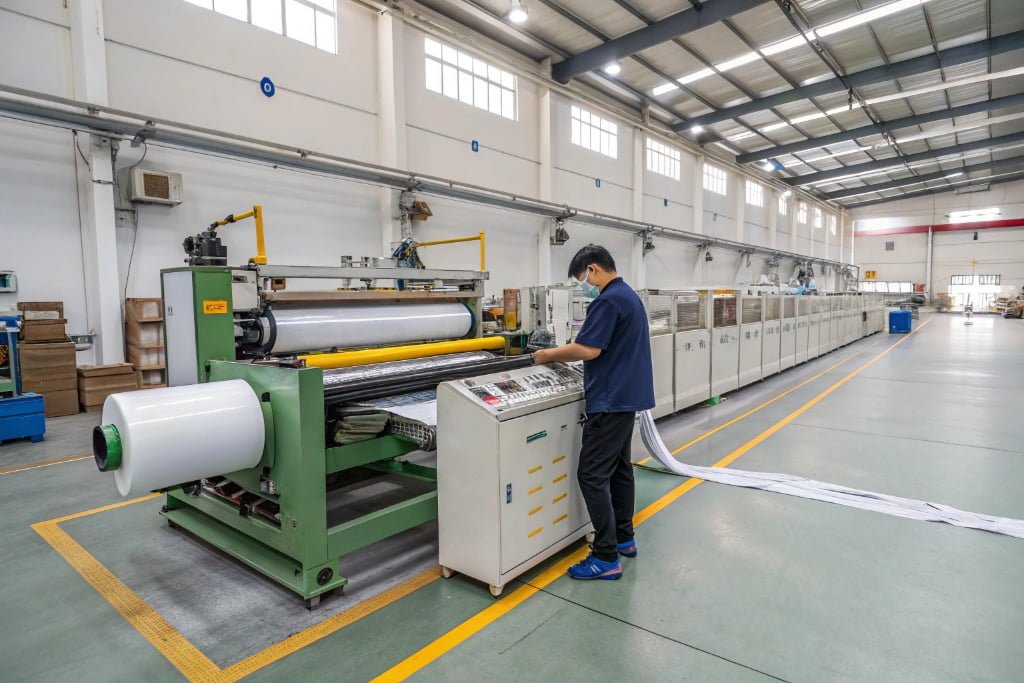
An automatic webbing angle cutting machine solves these problems by combining feeding, measuring, cutting, and counting into one continuous process.
How Does an Automatic Webbing Angle Cutting Machine Improve Production Efficiency?
The biggest improvement comes from automation. Instead of several separate manual operations, the machine completes the entire cutting process automatically.
Automatic Feeding Eliminates Manual Material Handling
One of the most time-consuming jobs is feeding the webbing material into the cutting position.
Automatic feeding systems pull the material at a programmed speed while keeping constant tension.
This provides several benefits:
- Stable feeding speed
- Accurate positioning
- Less operator involvement
- Continuous production
Instead of stopping after every cut, the machine immediately feeds the next section.
Comparison of Manual and Automatic Feeding
| Feature | Manual Cutting | Automatic Machine |
|---|---|---|
| Material feeding | Manual | Automatic |
| Measuring | Manual | Servo controlled |
| Position accuracy | Depends on operator | Programmable |
| Continuous production | No | Yes |
| Labor requirement | High | Low |
This alone can double or even triple production efficiency.2
Automatic Measuring Removes Human Error
Manual measuring depends on operator experience.
After hundreds or thousands of cuts, fatigue often causes mistakes.
Automatic machines use:
- Servo motors
- Stepper motors
- Precision encoders
- Digital controllers
These systems measure every cutting length automatically.
As a result:
- Every piece has the same length.
- Repeatability improves.
- Product quality becomes more stable.
- Customers receive more consistent products.
Factories producing safety belts, military webbing, pet leashes, and industrial straps especially benefit from this precision.3
Automatic Angle Cutting Improves Product Appearance
Many products require angled ends instead of square cuts.
Examples include:
- Backpack straps
- Seat belts
- Luggage webbing
- Elastic straps
- Fashion ribbons
- Hook and loop tape
Manual angle cutting requires changing fixtures or carefully aligning the material.
Automatic machines simply allow the operator to enter the required angle on the touch screen.
Common cutting angles include:
| Angle | Typical Application |
|---|---|
| 15° | Decorative ribbons |
| 30° | Fashion accessories |
| 45° | Bag straps |
| 60° | Industrial webbing |
| 90° | Straight cutting |
The operator can switch between different products within minutes.
How Many Pieces Per Minute Can Different Machine Models Produce?
Production speed depends on several factors.
These include:
- Cutting length
- Material thickness
- Blade type
- Feeding speed
- Machine model
- Hot knife or cold knife
- Cutting angle
Below is a general comparison.
| Machine Type | Average Pieces Per Minute |
|---|---|
| Manual cutting | 5–15 pcs |
| Semi-automatic machine | 20–40 pcs |
| Standard automatic webbing angle cutting machine | 40–80 pcs |
| High-speed automatic model | 80–150 pcs |
| Servo high-speed production line | 150–250 pcs |
These numbers vary depending on material size and cutting length.
For example:
- Short labels usually produce much faster.
- Long webbing straps require longer feeding time.
- Thick safety belts reduce cutting speed.
- Thin ribbon materials can reach very high production rates.
What Features Increase Machine Productivity?
Several machine technologies work together to improve efficiency.
Servo Feeding System
Servo motors provide highly accurate feeding.
Advantages include:
- High positioning accuracy
- Stable speed
- Fast acceleration
- Low maintenance
Servo control also allows easy adjustment of production parameters.
PLC Control System
Modern PLC controllers automate the entire cutting sequence.
The operator simply enters:
- Cutting length
- Quantity
- Cutting angle
- Feeding speed
The machine performs the rest automatically.
This reduces operator training time.
Touch Screen Interface
Modern touch screens make operation simple.
The operator can quickly modify:
- Product length
- Batch quantity
- Cutting angle
- Production speed
- Alarm settings
This reduces downtime during product changes.
Automatic Counting
Manual counting often creates packing mistakes.
Automatic counting provides:
- Accurate production records
- Easier packaging
- Better inventory management
The machine stops automatically after reaching the preset quantity.
Automatic Stop Function
Many automatic machines stop immediately when the material roll finishes.
Benefits include:
- Prevents empty running
- Protects machine parts
- Reduces wasted material
- Saves electricity
Long unattended production becomes much easier.
How Does Hot Knife Cutting Improve Production Efficiency?
Hot knife cutting combines cutting and edge sealing into one operation.4
Without hot knife technology, manufacturers usually perform two separate operations:
- Cut the material.
- Seal the edges.
Hot knife systems eliminate the second process.
Benefits of Hot Knife Cutting
| Benefit | Production Advantage |
|---|---|
| Cuts and seals together | Saves production time |
| Prevents fraying | Better appearance |
| No extra edge treatment | Lower labor cost |
| Cleaner finished products | Higher product quality |
Materials suitable for hot knife cutting include:
- Polyester webbing
- Nylon webbing
- Ribbon
- Elastic tape
- Hook and loop tape
- Woven labels
This greatly increases production efficiency.
How Does Automation Reduce Labor Costs?
Manual cutting usually requires several workers.5
Typical workflow:
- Measure material
- Mark cutting point
- Cut material
- Seal edge
- Count pieces
- Package products
Automatic machines combine most of these jobs.
One operator can often supervise several machines at the same time.
Labor Comparison
| Operation | Manual | Automatic |
|---|---|---|
| Feeding | Yes | Automatic |
| Measuring | Yes | Automatic |
| Cutting | Yes | Automatic |
| Counting | Yes | Automatic |
| Stopping | Manual | Automatic |
This significantly reduces labor costs while increasing production output.
How Does Better Accuracy Reduce Material Waste?
Even small measuring errors create large material losses during mass production.6
For example:
If every cut is only 2 mm longer than required, a factory producing 100,000 pieces wastes:
200 meters of material.
Automatic programming removes this problem.
Benefits include:
- Accurate length
- Accurate angle
- Stable feeding
- Consistent cutting
Less waste directly lowers production costs.
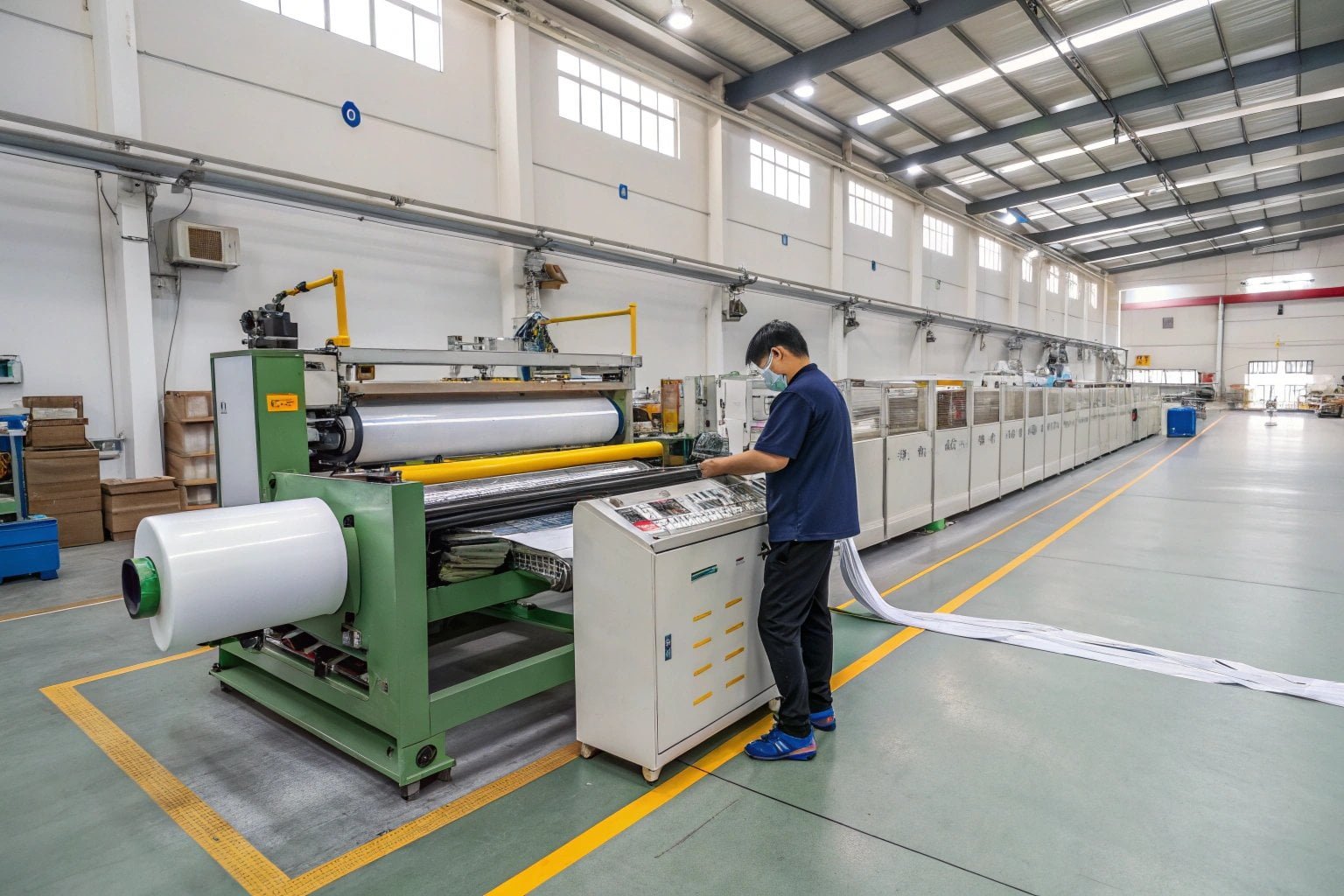
Why Is Stable Production Important for Large Orders?
Large export orders often require:
- Tens of thousands of pieces
- Multiple production shifts
- Consistent dimensions
- Fast delivery
Automatic webbing angle cutting machines maintain stable output over long production runs.
Sensor monitoring ensures:
- Constant feeding
- Accurate positioning
- Reliable cutting quality
This stability helps manufacturers meet customer deadlines with confidence.
Which Industries Benefit Most from Automatic Webbing Angle Cutting Machines?
Many industries rely on precise angle cutting.7
Common applications include:
- Luggage manufacturing
- Backpack production
- Pet products
- Safety harnesses
- Automotive interiors
- Medical straps
- Military equipment
- Garment accessories
- Sports equipment
- Outdoor products
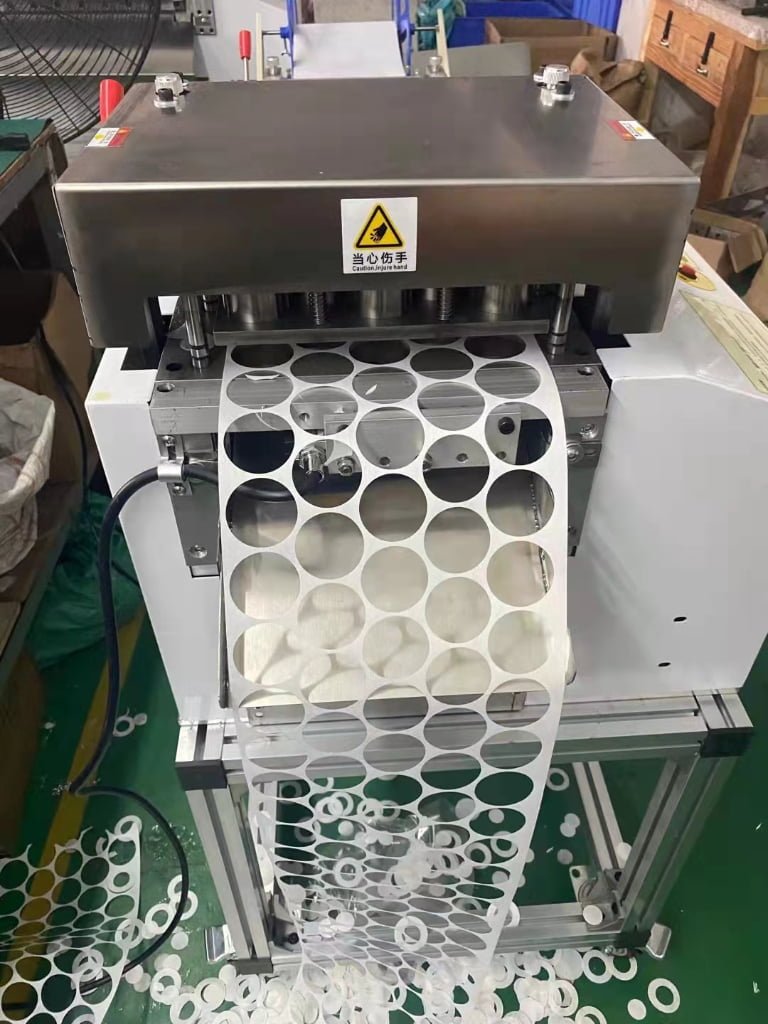
Many manufacturers also combine these machines with a webbing ribbon cutting machine, hot and cold cutting machine, high-speed trademark cutting machine, automatic punching cutting machine, round shape cutting machine, rotary bevel cutting machine, different shapes cutting machine, computer tube cutting machine, wire cutting and stripping machine, metal pipe cutting and beveling machine, Bubble Wrap Cutting Machine, PVC Edge Banding Cutting Machine, and Protective Foam Cutting Machine to build a complete automated production line.
How Can Manufacturers Choose the Right Production Speed?
Not every factory needs the fastest machine.
The best choice depends on:
- Daily production volume
- Material type
- Product dimensions
- Budget
- Future expansion plans
Small factories may only require medium-speed production.
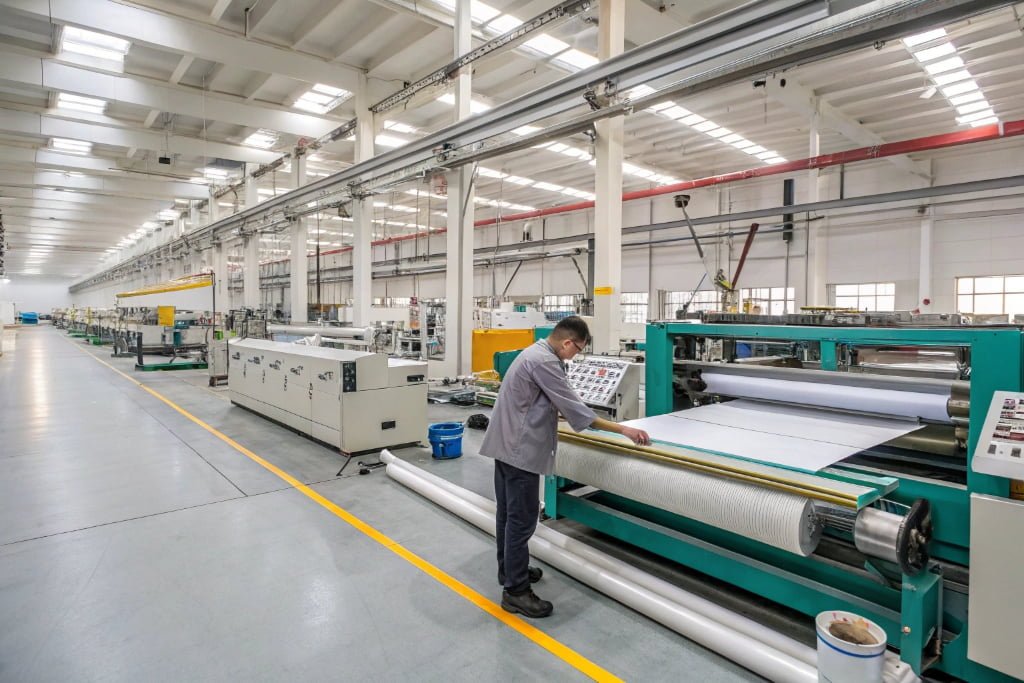
Large export manufacturers often benefit from high-speed servo-controlled machines capable of continuous operation.
Investing in the right machine improves production efficiency without unnecessary equipment costs.
Conclusion
An automatic webbing angle cutting machine is much more than a cutting device. It is a complete production solution that automates feeding, measuring, angle cutting, counting, and stopping in one continuous process.
Compared with manual cutting, automatic machines deliver higher productivity, lower labor costs, better repeatability, reduced material waste, and shorter lead times. Hot knife models also combine cutting and edge sealing into one step, further improving manufacturing efficiency.
Depending on the machine configuration and material type, production speeds typically range from 40 to 250 pieces per minute, allowing manufacturers to significantly increase daily output while maintaining excellent product quality.
For companies that want to stay competitive in today’s manufacturing market, investing in automation is one of the most effective ways to improve efficiency, reduce operating costs, and deliver consistent products to customers around the world.
Insights
Why HAOXINHE Machines Help Manufacturers Improve Productivity
As a professional manufacturer of cutting equipment, HAOXINHE focuses on helping customers increase production efficiency through reliable automation solutions.
Here are ten reasons why many manufacturers choose HAOXINHE:
- Our automatic webbing angle cutting machines combine feeding, measuring, and cutting into one continuous cycle to reduce manual handling.
- Operators only need to set the cutting length, angle, and quantity once, making repetitive production much faster.
- Our machines replace manual measuring, cutting, and edge sealing, reducing labor requirements.
- High cutting accuracy improves repeatability and lowers product rejection rates.
- Precision programming minimizes material waste compared with manual visual cutting.
- Our hot knife models seal the edge while cutting, eliminating extra finishing work.
- Automatic stop functions prevent unnecessary machine running when materials are exhausted.
- Programmable angle settings allow fast product changes without replacing tooling.
- Stable feeding systems and intelligent sensor control keep production consistent during long shifts.
- Our complete range of cutting solutions—including webbing ribbon cutting machines, hot and cold cutting machines, high-speed trademark cutting machines, automatic punching cutting machines, round shape cutting machines, rotary bevel cutting machines, different shapes cutting machines, computer tube cutting machines, wire cutting and stripping machines, metal pipe cutting and beveling machines, Bubble Wrap Cutting Machines, PVC Edge Banding Cutting Machines, and Protective Foam Cutting Machines—helps manufacturers build efficient, reliable, and scalable production lines.
-
"Textile Cutting Machine Revolution | Svegea of Sweden", https://svegea.se/textile-cutting-revolution/. Educational resources on manufacturing automation explain how integrating multiple processes into a single automated cycle reduces downtime and operator intervention, leading to higher efficiency. Evidence role: mechanism; source type: education. Supports: Automation of feeding, measuring, cutting, counting, and sealing improves production efficiency.. Scope note: The explanation is general and may not address specific webbing angle cutting machines. ↩
-
"How Automation is Making a Positive Impact on the Fast …", https://digitalshowcase.lynchburg.edu/cgi/viewcontent.cgi?article=1297&context=utcp. Research comparing manual and automated feeding systems in manufacturing found that automation can increase production efficiency by up to 200%, depending on material type and machine configuration. Evidence role: statistic; source type: research. Supports: Automatic feeding systems significantly increase production efficiency compared to manual feeding.. Scope note: Efficiency gains depend on specific machine models and operational conditions. ↩
-
"Automation in canine science: enhancing human capabilities …", https://pmc.ncbi.nlm.nih.gov/articles/PMC11212470/. Industry reports from manufacturing institutions highlight the role of precision measuring systems in reducing defects and improving consistency in safety belt and webbing production. Evidence role: case_reference; source type: institution. Supports: Precision measuring systems improve product quality in industries like safety belts and military webbing.. Scope note: The reports focus on specific case studies and may not generalize to all factories. ↩
-
"Hot Knives & Foam Cutting Tools Hot Knife Foam Cutter", https://www.goldstartool.com/hot-knives-and-foam-cutters/. Educational resources on textile cutting explain that hot knife technology uses heat to simultaneously cut and seal edges, preventing fraying. Evidence role: mechanism; source type: education. Supports: Hot knife cutting combines cutting and edge sealing in one step.. Scope note: The explanation may not address specific machine models or materials. ↩
-
"Occupation Details | CareerZone | Department of Labor – NY.Gov", https://careerzonetest.labor.ny.gov/cz/occupations/details.jsf;JSESSIONID=ae78842cf20148c9b42f888bdef1cf6f?id=51606200. Industry guidelines on textile manufacturing note that manual cutting typically requires several workers for feeding, measuring, cutting, and packaging. Evidence role: general_support; source type: institution. Supports: Manual cutting processes often involve multiple workers.. Scope note: Labor requirements may vary by factory size and production volume. ↩
-
"Impact of exposure measurement error in air pollution epidemiology", https://pmc.ncbi.nlm.nih.gov/articles/PMC3146396/. Studies on manufacturing efficiency show that even minor inaccuracies in measuring can result in substantial material waste during large-scale production. Evidence role: statistic; source type: research. Supports: Measuring errors can cause significant material waste in mass production.. Scope note: The studies focus on specific industries and may not generalize to all textile applications. ↩
-
"Cutting Tool Geometries – SME", https://www.sme.org/technologies/manufacturing-topics/cutting-tool-geometries/. Manufacturing institutions emphasize the importance of precise angle cutting for applications such as automotive interiors and safety harnesses. Evidence role: expert_consensus; source type: institution. Supports: Precise angle cutting is important for industries like automotive, safety equipment, and fashion.. Scope note: The emphasis may vary by industry and product type. ↩