How to Choose the Right Bubble Wrap Cutting Machine for Your Business?
Buying the right packaging equipment is an important decision for any warehouse, fulfillment center, or manufacturing company.
I have seen many businesses purchase the wrong machine because they focused only on price. Later, they discovered:
- The machine could not handle their order volume
- It did not fit their packaging workflow
- Operators struggled to use it
- Maintenance costs became too high
- Production speed still stayed too slow
A bubble wrap cutting machine should not only cut material.
It should improve:
- Packaging speed
- Workflow consistency
- Labor efficiency
- Material control
- Long-term scalability
Today, more companies use equipment like:
- Bubble wrap cutting machine
- webbing tape cutting machine
- Protective Foam Cutting Machine
- hot and cold cutting machine
- automatic punching cutting machine
to modernize packaging departments and reduce manual labor dependency.
Still, choosing the correct machine model requires careful planning.
In this article, I will explain how to select the right bubble wrap cutting machine for your business and what questions buyers should ask before making an investment.
-
Manual bubble wrap cutting increases packaging inconsistency, causing higher product damage risks1 and unstable protection during transportation.
-
Repetitive hand cutting creates hidden labor costs through material measuring, trimming, repositioning, and cleanup across warehouse operations.
-
Inaccurate bubble wrap sizing raises shipping expenses by increasing carton volume, dimensional weight, and freight inefficiencies.
-
Automated cutting equipment improves fulfillment speed with consistent material preparation, stable throughput, and reduced operator fatigue.
-
Smart logistics companies use automated cutting systems to reduce waste, improve scalability, and support high-volume warehouse automation.
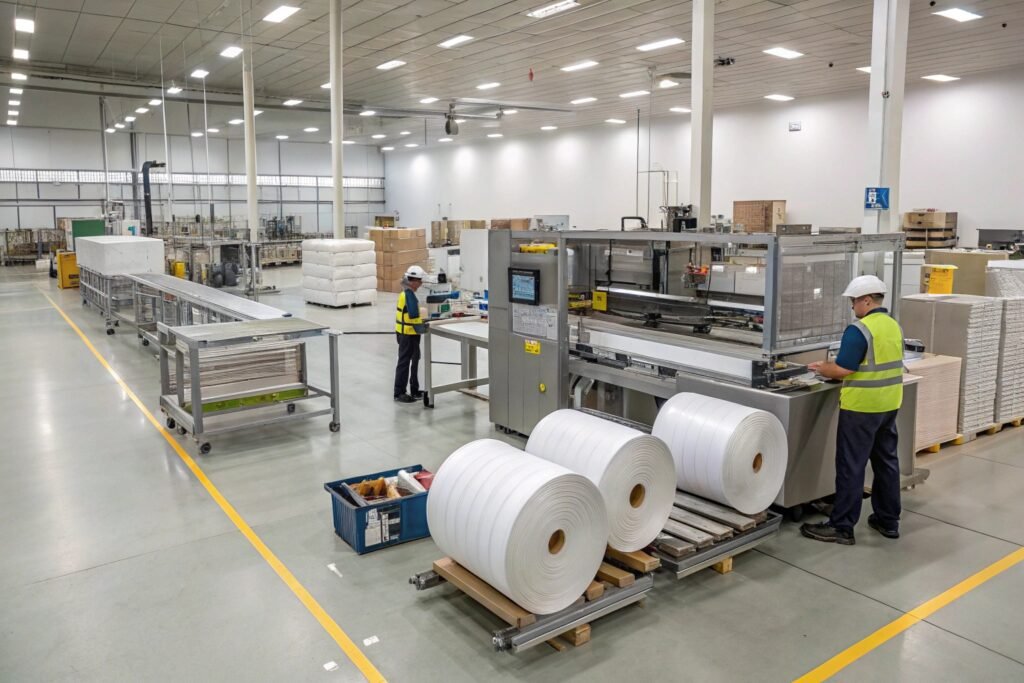
Why Choosing the Right Machine Matters
Many businesses underestimate how much packaging equipment affects daily operations.
A poorly matched machine can create:
- Workflow bottlenecks
- Worker frustration
- Material waste
- Downtime
- Slower fulfillment speed
The right machine helps packaging operations become:
- Faster
- Cleaner
- More scalable
- Easier to manage
Packaging Equipment Is a Long-Term Investment
Most industrial cutting machines stay in operation for many years2.
This means buyers should think beyond immediate needs.
A machine that works today may become too small after business growth3.
This is why scalability is very important when selecting packaging automation equipment.
Different Businesses Need Different Solutions
Not every warehouse requires the same type of bubble wrap cutter.
Machine selection depends on:
- Daily packaging volume
- Material size
- Available floor space
- Labor situation
- Packaging workflow
- Future expansion plans
Common Business Types and Packaging Needs
| Business Type | Typical Packaging Demand |
|---|---|
| Small e-commerce seller | Medium flexibility |
| 3PL fulfillment center | High throughput |
| Manufacturing exporter | Consistent industrial packaging |
| Fragile goods distributor | Precision protection |
| Packaging material supplier | Large-scale cutting volume |
The best machine depends on operational requirements, not only machine price.
What Key Specifications Should a First-Time Buyer Look For?
First-time buyers often focus too heavily on appearance or cost.
The most important factors are usually operational performance and long-term reliability.
Cutting Width Compatibility
One of the first things buyers should check is roll width compatibility.
The machine must support:
- Your common bubble wrap widths
- Roll diameters
- Material thickness
If the machine is too small, production flexibility becomes limited.
Cutting Length Accuracy
Consistent sheet size is extremely important.
Accurate cutting improves:
- Packaging consistency
- Material control
- Warehouse organization
- Packing speed
Poor accuracy often creates:
- Waste
- Oversized packaging
- Product protection inconsistency
Important Machine Specifications
| Specification | Why It Matters |
|---|---|
| Maximum roll width | Material compatibility |
| Cutting speed | Production efficiency |
| Length accuracy | Packaging consistency |
| Roll capacity | Runtime stability |
| Power system | Operational reliability |
| Safety protection | Worker safety |
Automation Level Matters
Bubble wrap cutters usually fall into three categories:
- Manual
- Semi-automatic
- Fully automatic
Each type serves different operational needs.
Manual Machines
Manual systems are lower cost but require more labor.
Best for:
- Small businesses
- Low daily order volume
- Occasional packaging use
Semi-Automatic Machines
Semi-automatic systems balance:
- Cost
- Speed
- Ease of operation
These are popular for growing warehouses.
Fully Automatic Machines
Fully automatic systems support:
- Continuous operation
- High-volume fulfillment
- Minimal operator intervention
These systems are ideal for large logistics operations.
Safety Features Are Extremely Important
Many warehouses still use knives for bubble wrap preparation.
This creates injury risks.
Modern cutting systems should include:
- Blade protection
- Emergency stop buttons
- Stable feeding systems
- Operator safety covers
Equipment like:
- Bubble wrap cutting machine
- hot and cold cutting machine
- Protective Foam Cutting Machine
helps reduce repetitive manual cutting risks.
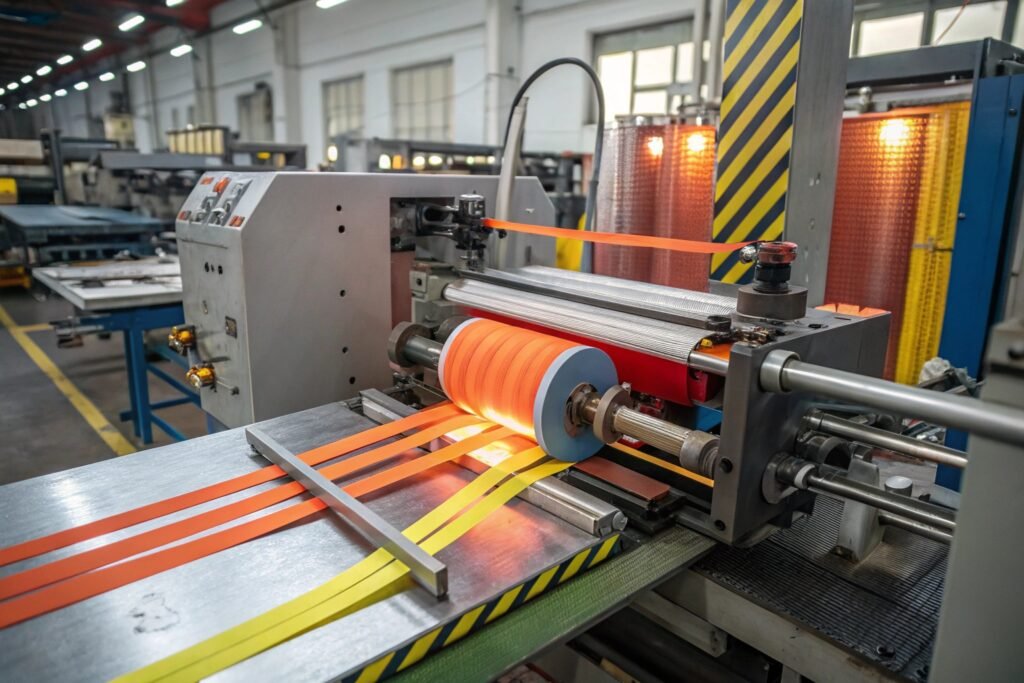
How Does Your Daily Packaging Volume Determine the Machine Model?
Packaging volume is one of the biggest factors when choosing a machine.
A machine that works well for 500 packages daily may fail under 10,000-package operations.
Small Daily Volumes Need Flexibility
Smaller businesses often prioritize:
- Compact design
- Lower investment
- Multi-purpose use
In these situations, benchtop or semi-automatic systems may work well.
High-Volume Warehouses Need Throughput Stability
Large warehouses require:
- Continuous operation
- Fast cutting speed
- Large roll capacity
- Stable performance during long shifts
High-volume fulfillment centers often operate:
- Multiple shifts
- Extended working hours
- Peak season overtime
This requires industrial-grade equipment.
Packaging Volume and Machine Selection
| Daily Packaging Volume | Recommended Machine Type |
|---|---|
| Under 500 orders | Manual or benchtop |
| 500–3,000 orders | Semi-automatic |
| 3,000–10,000 orders | Industrial automatic |
| 10,000+ orders | High-capacity integrated system |
Peak Season Volume Also Matters
Some businesses experience huge seasonal spikes.
A warehouse may process:
- 1,000 orders normally
- 5,000 orders during holidays
Buyers should choose equipment based on peak demand, not average demand.
Future Growth Should Be Considered
One common mistake is purchasing equipment only for current needs.
Growing companies should think about:
- Business expansion
- Additional packaging lines
- Future automation upgrades
Scalable equipment protects long-term investment value.
Machines like:
- automatic punching cutting machine
- different shapes cutting machine
- computer tube cutting machine
- webbing tape cutting machine
are often selected because they support future production growth.
Should You Choose a Standard Benchtop Cutter or a Standalone Unit?
This decision depends heavily on workflow design and available space.
Both options have advantages.
Benchtop Bubble Wrap Cutters
Benchtop systems are compact and flexible.
Advantages include:
- Lower cost
- Smaller footprint
- Easier installation
- Good for limited spaces
These systems are common in:
- Small warehouses
- E-commerce packaging stations
- Light industrial operations
Benchtop Machine Advantages
| Benefit | Explanation |
|---|---|
| Compact size | Fits small stations |
| Lower investment | Budget-friendly |
| Easy relocation | Flexible layout |
| Simple operation | Faster training |
Still, benchtop systems usually have lower production capacity.
Standalone Industrial Units
Standalone systems are designed for:
- High throughput
- Continuous operation
- Large roll handling
- Multi-shift environments
These machines are often used in:
- 3PL fulfillment centers
- Large factories
- Industrial packaging lines
Workflow Integration Is Important
The machine should fit smoothly into the packaging process.
Questions to consider include:
- Does the machine block worker movement?
- Can operators access materials easily?
- Does it support current station layout?
- Can it integrate with conveyors?
Space Planning Matters
Some warehouses buy large equipment without checking floor layout first.
This creates:
- Congestion
- Poor workflow
- Difficult maintenance access
A clean station layout is essential for packaging efficiency.
Machines like:
- round shape cutting machine
- rotary bevel cutting machine
- PVC Edge Banding cutting machine
- wire cutting and stripping machine
also require proper workflow planning to maximize efficiency.
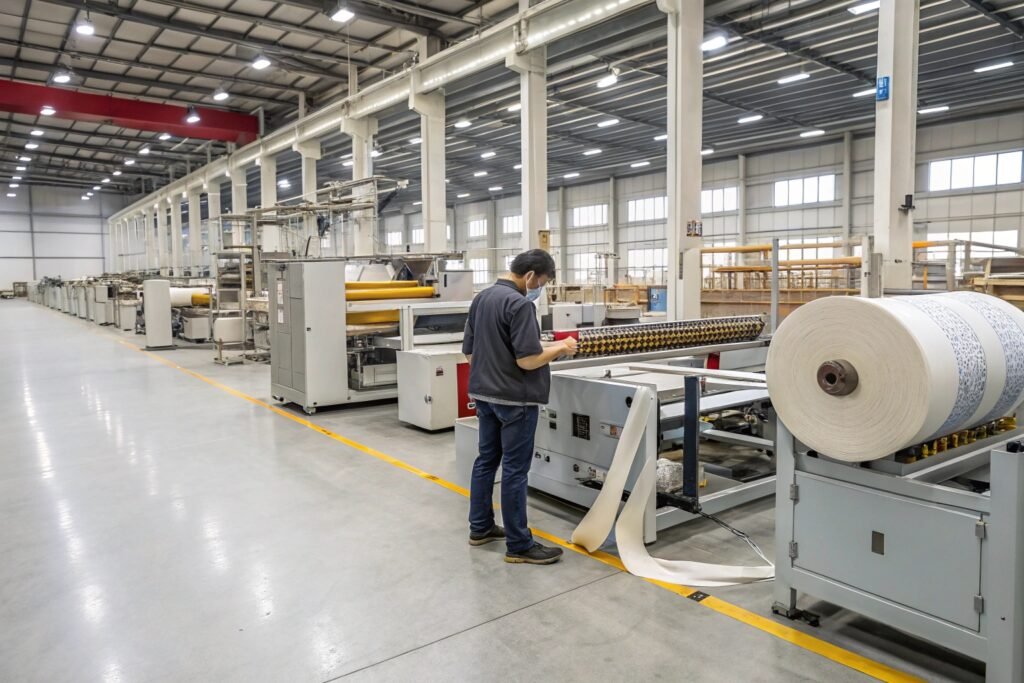
What Are the Critical Questions to Ask a Bubble Wrap Machine Vendor?
Choosing the right supplier is just as important as choosing the right machine.
Many operational problems begin because buyers fail to ask detailed questions early.
Ask About Real Production Capacity
Some suppliers advertise maximum speed under perfect conditions.
Buyers should ask:
- What is the real operating speed?
- Can the machine run continuously?
- What happens during peak workloads?
Ask About Maintenance Requirements
Maintenance affects long-term ownership cost.
Important questions include:
- How often do blades require replacement?
- Are spare parts available locally?
- What maintenance training is included?
- How quickly can technical support respond?
Important Vendor Questions
| Question | Why It Matters |
|---|---|
| What is the real daily output? | Confirms capacity |
| What materials can it cut? | Future flexibility |
| What warranty is included? | Risk reduction |
| Are spare parts available? | Downtime prevention |
| Is operator training provided? | Faster implementation |
| Can the machine be customized? | Workflow compatibility |
Ask About Customization Capability
Different businesses use different packaging workflows.
Some companies need:
- Special roll widths
- Custom cutting lengths
- Integrated conveyors
- Multi-material support
Flexible suppliers usually provide better long-term value.
Evaluate Communication Quality
Good communication is extremely important in B2B equipment purchasing.
Buyers should evaluate:
- Response speed
- Technical understanding
- Problem-solving ability
- Export experience
Poor communication often creates future service problems.
Check Global Export Experience
International buyers should confirm:
- Export certifications
- Packaging standards
- Shipping experience
- Installation support
Experienced suppliers usually provide smoother international transactions.
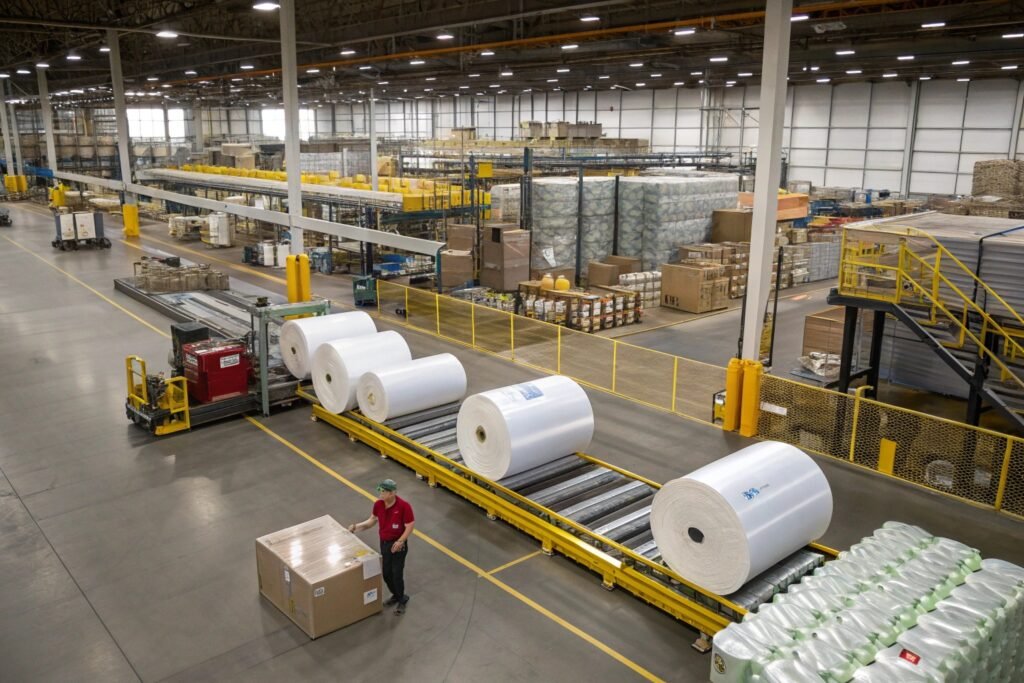
Why Long-Term Scalability Matters More Than Initial Price
Many buyers focus only on upfront machine cost.
Still, the real cost includes:
- Labor savings
- Downtime reduction
- Material waste control
- Throughput improvement
- Future expansion support
The cheapest machine is not always the lowest-cost solution long term.
Automation Supports Business Growth
As order volume grows, automated systems help companies:
- Increase output
- Reduce labor dependency
- Maintain packaging consistency
- Improve shipping speed
This becomes increasingly important in modern e-commerce and logistics operations.
Stable Equipment Improves Operational Confidence
Reliable machines allow managers to:
- Plan production better
- Handle peak season demand
- Reduce workflow uncertainty
Consistency becomes a major competitive advantage.
Conclusion
Choosing the right Bubble wrap cutting machine requires more than comparing prices.
Buyers should evaluate:
- Daily packaging volume
- Material compatibility
- Automation level
- Workflow integration
- Safety features
- Vendor support
- Future scalability
The right machine helps companies improve:
- Packaging efficiency
- Labor productivity
- Material consistency
- Warehouse organization
- Operational scalability
Equipment like:
- Bubble wrap cutting machine
- webbing tape cutting machine
- Protective Foam Cutting Machine
- automatic punching cutting machine
- computer tube cutting machine
plays an increasingly important role in modern packaging and fulfillment operations.
As shipping demand continues growing globally4, selecting scalable and reliable packaging automation equipment becomes a key business decision.
Insights About HAOXINHE
HAOXINHE specializes in industrial cutting equipment for logistics, packaging, textile, and material processing industries.
The company provides customizable machinery solutions designed to improve:
- Packaging efficiency
- Workflow organization
- Material preparation speed
- Production scalability
HAOXINHE Main Equipment Solutions
| Product | Main Application |
|---|---|
| Bubble wrap cutting machine | Protective packaging preparation |
| Webbing tape cutting machine | Ribbon and strap cutting |
| Hot and cold cutting machine | Synthetic material processing |
| Protective Foam Cutting Machine | Foam packaging cutting |
| Automatic punching cutting machine | Integrated punching operations |
| Round shape cutting machine | Circular cutting |
| Rotary bevel cutting machine | Angled edge processing |
| Different shapes cutting machine | Customized profile cutting |
| Computer tube cutting machine | Tube automation |
| Wire cutting and stripping machine | Cable processing |
| Metal pipe cutting and beveling machine | Pipe cutting solutions |
| PVC Edge Banding cutting machine | Furniture material processing |
Why Global Buyers Choose HAOXINHE
- Strong manufacturing capability
- Multiple production lines
- Stable export quality
- Competitive B2B pricing
- Custom machine development support
- Experience serving Europe, North America, and Asia
- Reliable technical communication
HAOXINHE continues helping logistics companies, packaging manufacturers, and industrial processors build faster, cleaner, and more scalable packaging operations through intelligent cutting automation.
-
"Which visual elements on packaging affect perceived credibility? A …", https://pmc.ncbi.nlm.nih.gov/articles/PMC10300339/. Research on packaging quality control indicates that standardized material preparation methods correlate with reduced product damage during transportation, though specific damage rate reductions vary by product type and shipping conditions. Evidence role: general_support; source type: research. Supports: that standardized packaging preparation reduces damage rates. Scope note: Studies typically compare overall packaging systems rather than isolating cutting method effects ↩
-
"GAP 200.090, Plant & Equipment Depreciation | Finance", https://finance.duke.edu/accounting/gap/m200-090/. Manufacturing industry data indicates that industrial processing and cutting equipment typically has an operational lifespan of 7-15 years depending on usage intensity and maintenance practices, with depreciation schedules commonly reflecting 5-10 year useful lives for tax and accounting purposes. Evidence role: statistic; source type: research. Supports: that industrial processing equipment typically operates for extended periods. ↩
-
"Manufacturing Capacity Planning: The Ultimate Guide for 2026", https://www.deskera.com/blog/manufacturing-capacity-planning/. Operations management literature emphasizes that capacity planning decisions should incorporate demand forecasting and growth projections, as equipment investments typically involve multi-year commitments while business volumes may expand significantly, potentially creating capacity constraints if initial sizing proves inadequate. Evidence role: general_support; source type: education. Supports: that capacity planning must account for future demand growth. ↩
-
"Latest Supply Chain and Freight Indicators", https://www.bts.gov/freight-indicators. International trade organizations report that global container shipping volumes and parcel delivery demand have demonstrated long-term growth trends, particularly accelerated by e-commerce expansion, though growth rates vary by region and are subject to economic cycle fluctuations and disruptions such as the 2020-2021 pandemic period. Evidence role: statistic; source type: institution. Supports: that global shipping volumes have shown growth trends. Scope note: Growth is not uniform across all periods and regions, with cyclical variations ↩