What Problems Occur When Cutting Thick Nylon Materials with a Nylon Cutting Machine?
Cutting thick nylon materials is much more challenging than cutting standard nylon webbing or thin synthetic fabrics. As the material becomes thicker, cutting resistance increases, more heat builds up around the blade, and dimensional stability becomes harder to maintain. If the machine settings are not optimized, manufacturers may experience melted edges, rough surfaces, blade wear, slow production speeds, and excessive material waste.1
The good news is that these problems can usually be solved by selecting the right blade power, heating temperature, feed speed, and cutting parameters. With proper machine setup, manufacturers can achieve clean, sealed, and consistent cuts even on heavy-duty nylon products.
In this guide, I will explain the most common problems encountered when cutting thick nylon and discuss suitable blade power and heating settings for heavy-duty applications.
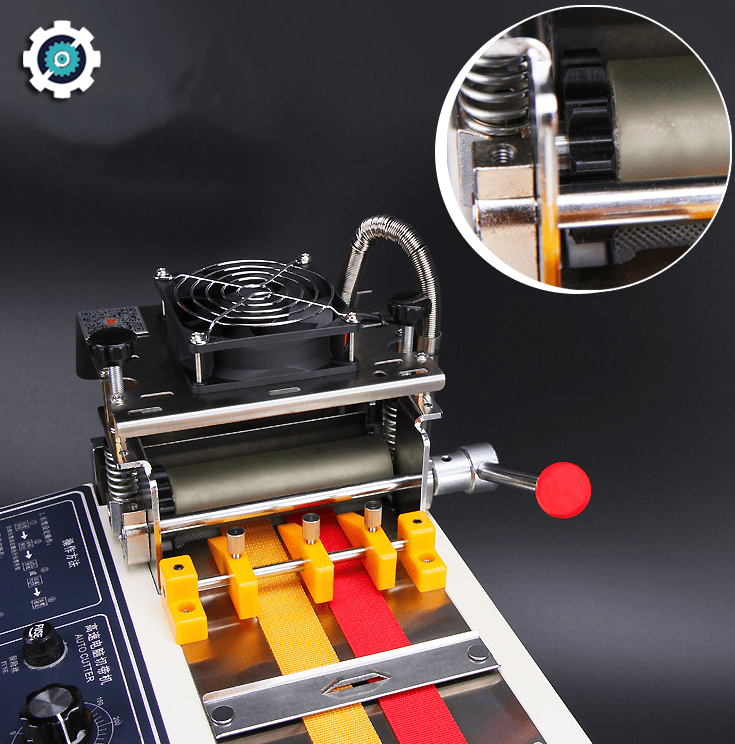
Which Blade Power and Heating Settings Are Required for Heavy-Duty Nylon Products?
There is no single blade power or heating temperature that works for every thick nylon product.
The ideal settings depend on several factors, including:
- Nylon grade (PA6, PA66, reinforced nylon, coated nylon)
- Material thickness
- Webbing density
- Blade design
- Production speed
- Hot knife or cold knife process
As a general rule:
- Thicker nylon requires more cutting force than thin materials.
- Blade temperature should only be increased enough to create a clean sealed edge, not excessive melting.
- Feed speed and dwell time should be adjusted together with temperature rather than relying on heat alone.
The table below provides a general starting point.
| Material Thickness | Blade Power Requirement | Suggested Heating Strategy* |
|---|---|---|
| Thin Nylon Webbing | Standard | Lower temperature, faster feed |
| Medium Nylon Webbing | Medium | Moderate temperature |
| Thick Nylon Strap | High | Moderate to higher temperature with slower feed |
| Heavy-Duty Industrial Webbing | High | Stable temperature with controlled dwell time |
*Note: These are starting guidelines only. Actual settings should always be verified through sample production because material formulation, weave structure, coatings, and machine design all affect the optimum cutting parameters.
Why Thick Nylon Is More Difficult to Cut
Many manufacturers expect thick nylon to behave like standard webbing.
It does not.
As thickness increases:
- Cutting resistance increases.
- More heat remains inside the material.
- Blade pressure rises.
- Feeding becomes more difficult.
- Cooling becomes slower.
All of these factors make process control more important.
Instead of simply increasing blade temperature, operators should balance heat, pressure, and cutting speed.
Excess Heat Can Reduce Cutting Accuracy
One of the biggest challenges is heat accumulation.
Thick nylon absorbs more energy than thin material, and because nylon has relatively low thermal conductivity, that heat stays near the cutting area longer.2
If the blade temperature is too high or the feed speed is too slow, the material may begin to soften before the cut is complete.
Common symptoms include:
- Rounded edges
- Dimension changes
- Material shrinkage
- Uneven cutting length
Heat-Related Problems
| Problem | Possible Cause | Recommended Solution |
|---|---|---|
| Melted edge | Blade too hot | Reduce temperature |
| Dimensional change | Heat buildup | Increase feed speed slightly |
| Material shrinkage | Long dwell time | Reduce blade contact time |
| Glossy edge | Excessive friction | Use a sharper blade |
Proper heat management is essential for maintaining dimensional accuracy.
Thick Nylon Holds Heat Longer
Thin nylon cools quickly after cutting.
Thick nylon behaves differently.
Heat remains inside the material for a longer time, which can lead to:
- Continued melting after the cut
- Edge deformation
- Poor sealing consistency
- Surface discoloration
This is why heavy-duty webbing often requires:
- Stable blade temperature
- Controlled dwell time
- Adequate cooling between cuts
Rather than increasing heat, many manufacturers achieve better results by improving process stability.
Higher Cutting Resistance Can Affect Accuracy
As material thickness increases, blade resistance also increases.
If the cutting system lacks sufficient power or rigidity, the blade may begin to:
- Deflect
- Wander
- Vibrate
- Slow down
These problems can produce:
- Uneven lengths
- Angled cuts
- Poor repeatability
Signs of Excessive Tool Drag
| Symptom | Likely Cause |
|---|---|
| Crooked cut | Blade deflection |
| Rough surface | High cutting resistance |
| Inconsistent length | Feed instability |
| Slow production | Insufficient cutting power |
Machines with rigid frames and precision servo feeding generally perform better when processing thick materials.3
Thick Nylon May Warp During Cutting
Heat and pressure can cause deformation.4
This is especially true when using a hot knife with excessive dwell time.
Common deformation includes:
- Curved edges
- Twisting
- Local shrinkage
- Surface distortion
To reduce warping:
- Use the lowest effective blade temperature.
- Minimize blade contact time.
- Maintain consistent material tension.
- Avoid unnecessary pauses during cutting.
Balanced process settings are more effective than simply lowering or raising the temperature.
Friction Can Produce Rough Edges
A dull blade increases friction.
When cutting thick nylon, that friction becomes much more noticeable.
Possible edge defects include:
- Burrs
- Melt marks
- Surface cracks
- Uneven sealing
Edge Quality Troubleshooting
| Defect | Possible Cause | Solution |
|---|---|---|
| Burrs | Worn blade | Replace blade |
| Rough edge | Excess friction | Reduce cutting resistance |
| Excess melting | High temperature | Lower blade setting |
| Weak seal | Temperature too low | Increase heat slightly |
Regular blade inspection helps maintain consistent quality.
Blade Wear Increases Faster
Thicker material places greater stress on the blade.5
Compared with standard webbing, heavy-duty nylon causes:
- Faster edge wear
- Increased cutting force
- More friction
- Higher maintenance requirements
Replacing blades before they become excessively worn helps prevent:
- Scrap
- Poor sealing
- Machine overload
- Production interruptions
Blade Maintenance
| Blade Condition | Production Effect |
|---|---|
| Sharp | Smooth cutting |
| Slight Wear | Acceptable quality |
| Moderate Wear | Lower accuracy |
| Heavy Wear | High reject rate |
Preventive blade replacement is often less expensive than the cost of wasted material.
Static Electricity and Dust Can Affect Production
Thick nylon often generates static electricity during processing.6
Static attracts:
- Dust
- Fibers
- Small nylon particles
As debris accumulates near the cutting zone, operators may find it more difficult to inspect the finished edge accurately.
Possible solutions include:
- Air blow-off systems
- Regular cleaning
- Anti-static devices
- Clean production environments
Keeping the cutting area clean also improves machine reliability.
Moisture Can Influence Dimensional Stability
Nylon naturally absorbs moisture from the surrounding environment.
For thick materials, this effect becomes more noticeable because larger cross-sections require more time to reach moisture equilibrium.
Possible consequences include:
- Small dimensional changes
- Variations in cutting length
- Different cutting behavior between batches
Good storage practices include:
- Stable humidity
- Stable room temperature
- Proper material conditioning before production
Consistent material conditions improve repeatability.
Poor Scrap Removal Can Reduce Cutting Quality
Heavy-duty cutting produces larger pieces of scrap.
If these scraps remain near the blade, they may interfere with the next cutting cycle.
Possible results include:
- Uneven cuts
- Material movement
- Feeding errors
- Reduced productivity
Scrap Removal Checklist
| Inspection Item | Benefit |
|---|---|
| Clear scrap chute | Smooth operation |
| Remove loose fibers | Cleaner cutting area |
| Clean guide rails | Stable feeding |
| Check air flow | Better debris removal |
Good housekeeping is an important part of maintaining cutting quality.7
Choosing the Right Machine for Thick Nylon
When purchasing equipment for heavy-duty nylon production, I always focus on machine stability rather than maximum cutting speed.
The most valuable features include:
- High-rigidity frame
- Precision servo feeding
- Stable digital temperature control
- Powerful cutting mechanism
- Adjustable blade pressure
- Programmable parameter storage
- Automatic fault detection
- Easy blade replacement
These features allow the machine to process thick materials efficiently while maintaining consistent product quality.
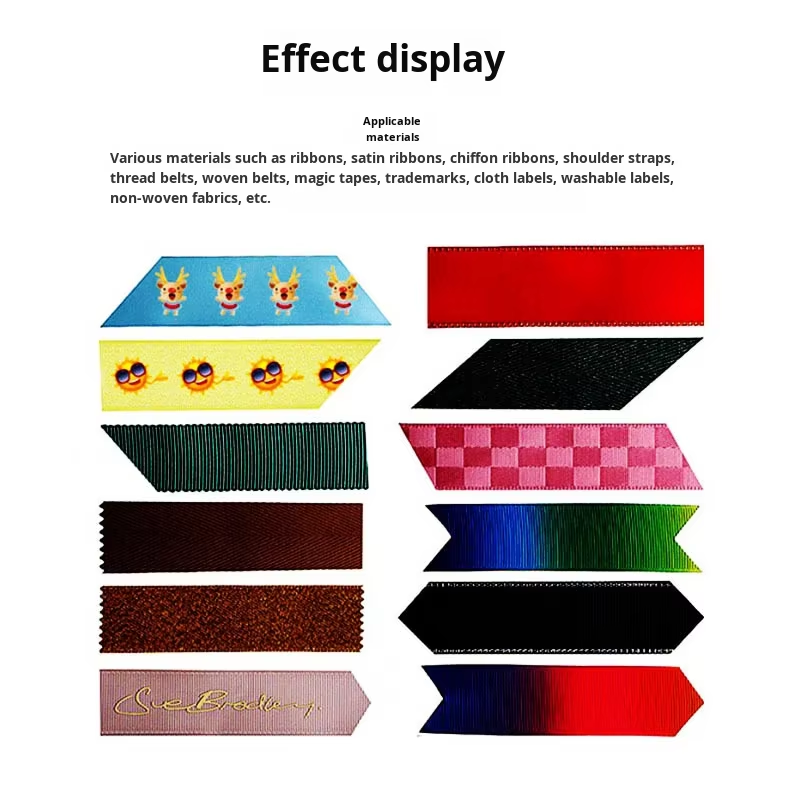
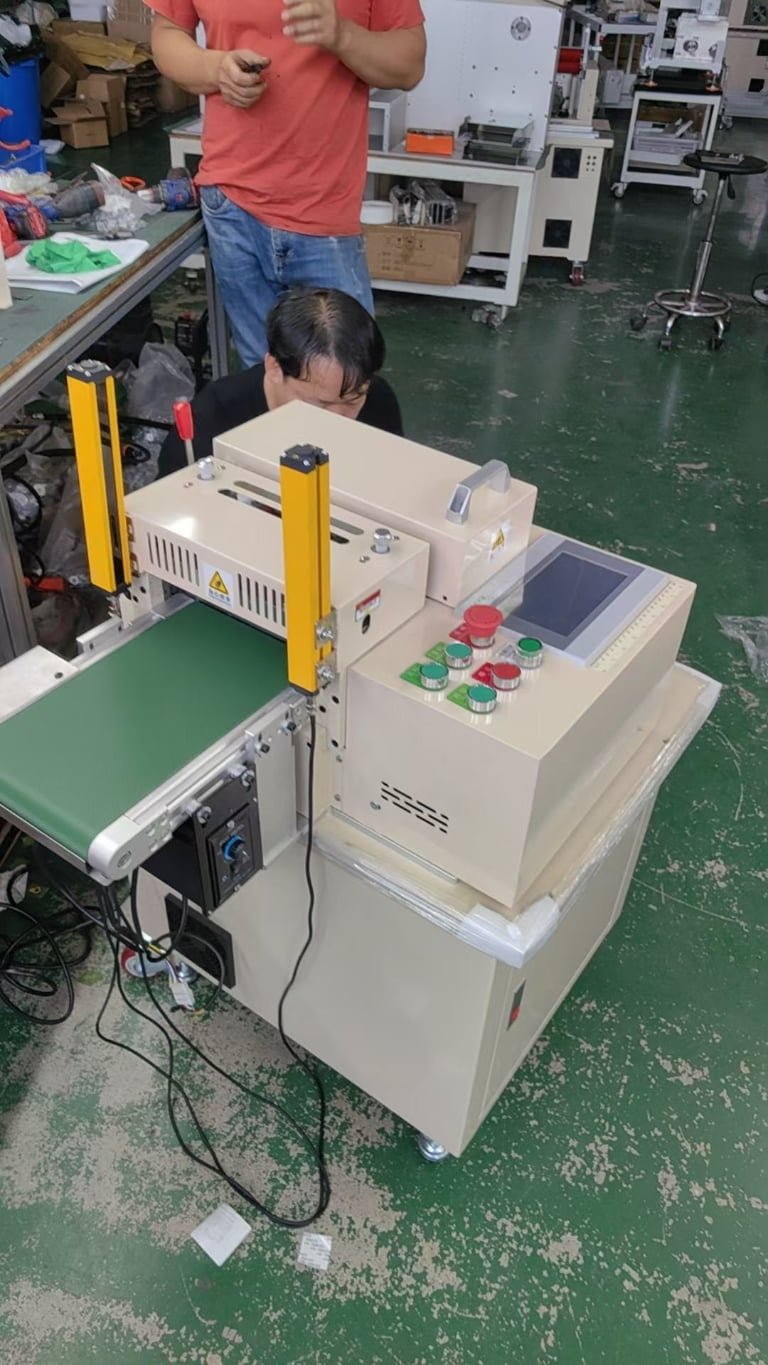
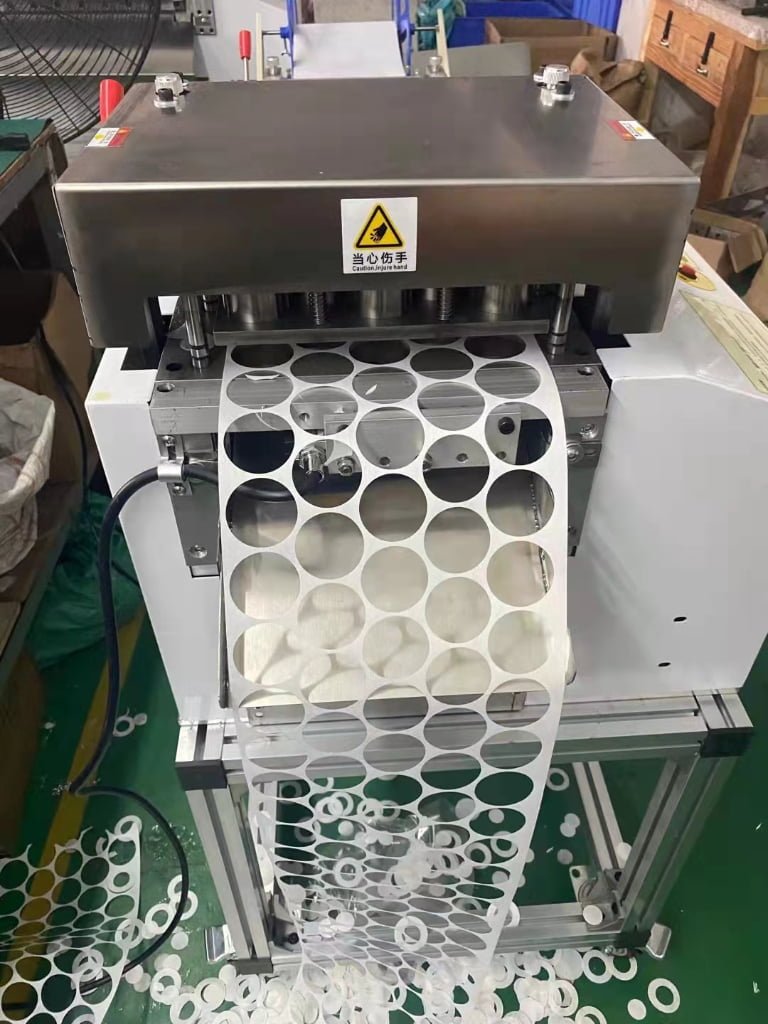
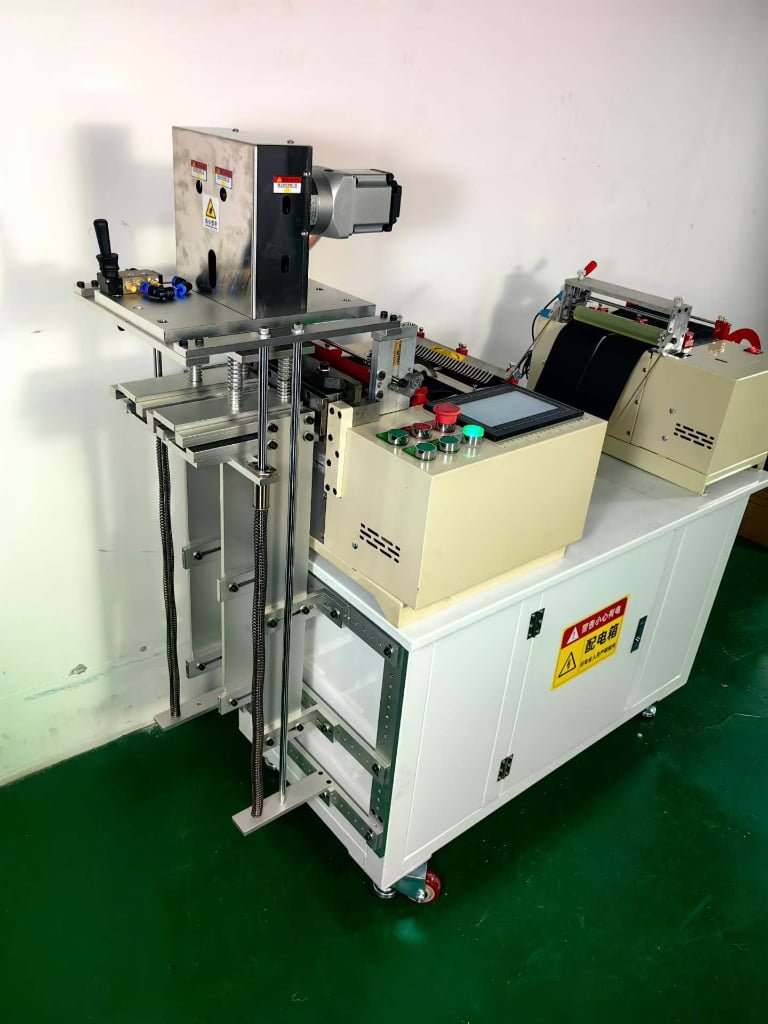
Whether I choose a webbing tape cutting machine, hot and cold cutting machine, high-speed trademark cutting machine, automatic punching cutting machine, round shape cutting machine, rotary bevel cutting machine, different shapes cutting machine, computer tube cutting machine, Bubble Wrap Cutting Machine, Protective Foam Cutting Machine, PVC Edge Banding Cutting Machine, wire cutting and stripping machine, or metal pipe cutting and beveling machine, I evaluate how well the equipment controls heat, feeding stability, and cutting consistency under heavy-duty production conditions.
Conclusion
Cutting thick nylon materials presents unique challenges because increased thickness generates more cutting resistance, retains heat longer, accelerates blade wear, and makes dimensional stability more difficult to maintain. Problems such as melted edges, rough surfaces, tool deflection, warping, static buildup, and poor scrap removal can all reduce production quality if machine settings are not optimized. Instead of relying on higher temperatures alone, manufacturers should balance blade power, heating, feed speed, and dwell time while maintaining sharp blades and stable machine conditions. With the right process control, thick nylon webbing and industrial straps can be cut efficiently with clean, durable, and consistent edges.
HAOXINHE Insights
At HAOXINHE, we understand that heavy-duty nylon production requires much more than a powerful cutter. Our webbing tape cutting machines, hot and cold cutting machines, high-speed trademark cutting machines, automatic punching cutting machines, round shape cutting machines, rotary bevel cutting machines, different shapes cutting machines, computer tube cutting machines, Bubble Wrap Cutting Machines, Protective Foam Cutting Machines, PVC Edge Banding Cutting Machines, wire cutting and stripping machines, and metal pipe cutting and beveling machines are engineered with precision servo feeding, stable digital temperature control, robust machine frames, and programmable cutting parameters.
By helping customers optimize blade selection, heating strategies, and process settings for different nylon grades and thicknesses, we enable factories to reduce scrap, improve edge quality, extend blade life, and achieve reliable high-volume production of heavy-duty nylon straps, belts, and industrial webbing.
-
"My saw hates cutting thick Nylon… ideas?", https://www.practicalmachinist.com/forum/threads/my-saw-hates-cutting-thick-nylon-ideas.322245/. Industry reports highlight melted edges, rough surfaces, and blade wear as frequent challenges in cutting thick nylon materials under suboptimal machine settings. Evidence role: case_reference; source type: institution. Supports: Documents common production issues encountered when cutting thick nylon materials.. Scope note: The issues may depend on the specific machine type and nylon grade used. ↩
-
"Energy Absorption in Polymer Composite Materials for …", https://energy.ornl.gov/composites/reports/jocm01.pdf. Educational resources on polymer science describe nylon’s low thermal conductivity as a factor that contributes to heat retention during cutting processes. Evidence role: mechanism; source type: education. Supports: Explains how nylon’s thermal conductivity affects heat retention during cutting.. Scope note: The explanation may not account for variations in nylon grades or coatings. ↩
-
"Rigid Frame Automatic Compression Machines", https://www.globalgilson.com/blog/rigid-frame-automatic-compression-machines?srsltid=AfmBOorQq4a32lqvSy5ypWPSEMrmqnhTyM9bMHdqdiLzTBmBaToaybCe. Industry experts agree that machines with rigid frames and precision servo feeding offer better stability and accuracy when processing thick nylon materials. Evidence role: expert_consensus; source type: institution. Supports: Highlights the advantages of rigid frames and precision servo feeding in cutting thick materials.. Scope note: The benefits may depend on the specific machine model and cutting application. ↩
-
"The Influence of Cutting Parameters on Plastic Deformation and Chip …", https://pmc.ncbi.nlm.nih.gov/articles/PMC8781824/. Research on polymer processing indicates that heat and pressure can cause localized deformation in thick nylon materials during cutting. Evidence role: mechanism; source type: research. Supports: Explains how heat and pressure contribute to deformation in nylon cutting.. Scope note: The extent of deformation may vary based on material composition and cutting conditions. ↩
-
"Cutting soft materials: how material differences shape the response", https://pmc.ncbi.nlm.nih.gov/articles/PMC12789027/. Studies on cutting tool wear show that thicker nylon materials significantly increase blade stress and wear rates due to higher cutting resistance. Evidence role: statistic; source type: paper. Supports: Provides data on the increased stress and wear rates experienced by blades when cutting thick nylon materials.. Scope note: The data may vary based on blade material and cutting conditions. ↩
-
"How to Remove Static from Clothes", https://www.whirlpool.com/blog/washers-and-dryers/how-to-remove-static-from-clothes.html. Research on polymer processing identifies static electricity as a common issue in nylon cutting, leading to dust and fiber attraction. Evidence role: mechanism; source type: research. Supports: Explains how static electricity is generated during nylon processing and its effects.. Scope note: The extent of static buildup may depend on environmental conditions and material properties. ↩
-
"Sewing Machine Maintenance | New Mexico State University", https://pubs.nmsu.edu/_c/C102/index.html. Industry guidelines recommend regular cleaning of cutting areas to prevent scrap interference and maintain consistent quality in nylon processing. Evidence role: expert_consensus; source type: institution. Supports: Highlights the role of cleanliness in improving cutting quality and machine reliability.. Scope note: The effectiveness of cleaning practices may depend on the specific cutting setup and material type.

[…] When customers use a nylon cutting machine for continuous production, feeding problems are one of the most common issues I hear about1. […]