How to Select the Right Blade for an Automatic Webbing Angle Cutting Machine?
The blade is one of the most important components of an automatic webbing angle cutting machine. Even the most advanced machine cannot deliver clean, accurate, and consistent cuts if the wrong blade is installed.
Many manufacturers focus on machine speed, servo motors, or automation features, but overlook blade selection. In reality, the blade directly affects cut quality, edge appearance, production efficiency, maintenance costs, and product lifespan1.
The right blade depends on several factors, including the webbing material, thickness, required cutting angle, production speed, and whether the edges need to be sealed.
In this guide, I will explain how I select the right blade for different applications and help you decide whether a hot knife or cold knife is the better solution for your production.
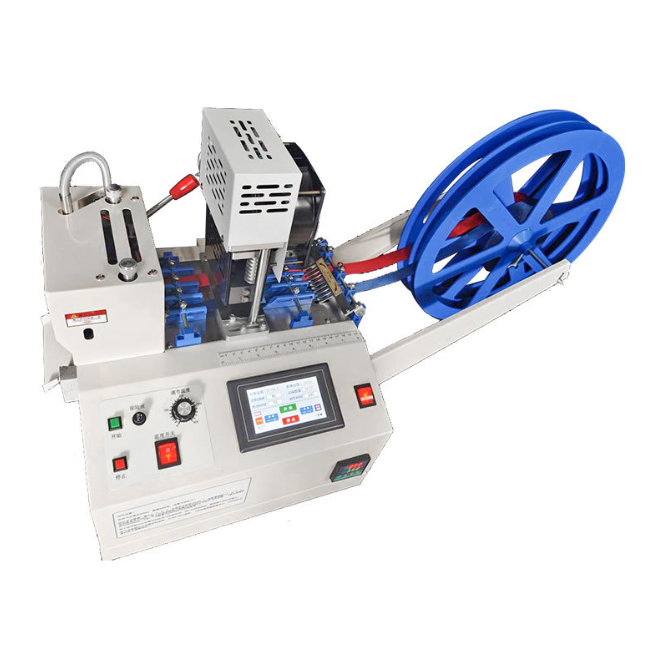
Hot Knife vs Cold Knife: Which Cutting Method Suits Your Application?
A hot knife is the best choice for synthetic materials such as nylon, polyester, polypropylene (PP), and other thermoplastic webbings because it cuts and seals the edge simultaneously, preventing fraying. A cold knife is better for natural fibers like cotton, canvas, and heat-sensitive materials where sealing is unnecessary or heat may damage the material.
Choosing the correct cutting method improves product quality, reduces waste, and extends blade life.
Why Blade Selection Matters
Many people think every industrial blade performs the same job.
That is not true.
Different blades are designed for different materials and production requirements.
A properly selected blade provides:
- Cleaner cuts
- Better angle accuracy
- Longer blade life
- Lower maintenance costs
- Higher production speed
- Better finished product appearance
Using the wrong blade often leads to rough edges, material deformation, excessive wear, and poor cutting consistency.
Understand Your Webbing Material First
The first step is identifying the material you plan to cut.
Different materials respond differently to cutting.
| Webbing Material | Recommended Cutting Method |
|---|---|
| Nylon | Hot knife |
| Polyester | Hot knife |
| Polypropylene (PP) | Hot knife |
| Cotton | Cold knife |
| Canvas | Cold knife |
| Kevlar | Cold knife or specialty blade |
| Elastic webbing | Depends on composition |
Synthetic materials melt when heated, making them ideal for hot cutting.
Natural fibers do not melt. Instead, they may scorch or discolor if exposed to excessive heat.
Understanding the material is the foundation of blade selection.
Dive Deeper: Choosing the Right Blade Material
The blade itself is made from different grades of steel or alloy.
Each material offers different advantages.
Standard carbon steel blades are economical and suitable for light-duty applications.
High-speed steel (HSS) provides better wear resistance for continuous production2.
Tungsten carbide blades offer exceptional hardness and long service life but cost more.
Common Blade Materials
| Blade Material | Advantages | Best Applications |
|---|---|---|
| Carbon steel | Low cost | Light production |
| High-speed steel (HSS) | Durable | General industrial use |
| Alloy steel | Good balance of toughness and wear resistance | Continuous production |
| Tungsten carbide | Extremely long life | Heavy-duty cutting |
I usually recommend choosing blade material based on the type of webbing being processed.
For example, abrasive webbings wear blades much faster than soft polyester tape.
Investing in a higher-quality blade often reduces total operating costs because blade replacement becomes less frequent3.
A premium blade also maintains sharper cutting edges longer, improving cut consistency throughout production.
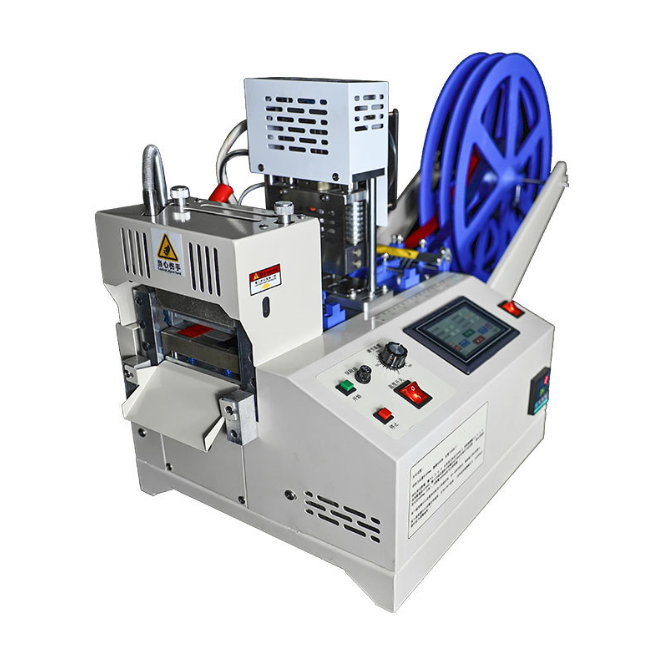
Match Blade Angle to the Material
Blade angle affects cutting performance.
A sharper angle reduces cutting force but may wear faster.
A steeper angle increases blade strength but requires more cutting force.
General recommendations include:
| Blade Angle | Suitable Application |
|---|---|
| Around 45° | Standard webbing |
| Around 60° | Thick webbing |
| Specialty angles | Custom angle cutting |
For most webbing ribbon cutting machines, a 45-degree blade provides an excellent balance between durability and cutting quality.
Thicker industrial webbings often benefit from stronger blade geometries.
Blade Thickness Also Matters
Blade thickness affects rigidity.
Thin blades:
- Require less cutting force
- Produce smoother cuts
- Reduce friction
Thicker blades:
- Resist bending
- Improve stability
- Handle dense materials better
The correct blade thickness depends on:
- Material hardness
- Cutting width
- Production speed
- Machine capacity
A blade that is too thin may flex during cutting.
A blade that is too thick creates unnecessary resistance.
Select the Correct Blade Length
Blade length should match the material being processed.
The blade only needs to extend slightly beyond the maximum cutting thickness.
Excessively long blades reduce rigidity.
Short blades may not completely penetrate thicker materials.
Always consider:
- Maximum webbing thickness
- Multiple-layer cutting
- Stack height
- Machine specifications
Choosing the proper blade length improves both accuracy and blade life.
Dive Deeper: Surface Finish Has a Bigger Impact Than Many Buyers Realize
Many buyers compare blade material but overlook surface finish.
The finish determines how smoothly the blade passes through the webbing.
High-quality industrial blades usually feature:
- Precision grinding
- Multi-facet edge geometry
- Burr-free cutting edges
- Smooth polished surfaces
These features reduce friction during cutting.
Lower friction produces several important benefits.
Benefits of High-Quality Blade Finishing
| Blade Feature | Production Benefit |
|---|---|
| Polished surface | Less friction |
| Precision grinding | Cleaner cuts |
| Burr-free edge | Reduced fraying |
| Multi-facet grind | Longer sharpness |
A rough blade surface increases heat generation.
Excessive heat can distort synthetic materials or increase blade wear.
High-quality finishing also reduces fiber buildup on the blade, which lowers cleaning frequency during production.
For companies running multiple production shifts, blade finish can significantly influence maintenance costs over time.
Hot Knife Cutting Advantages
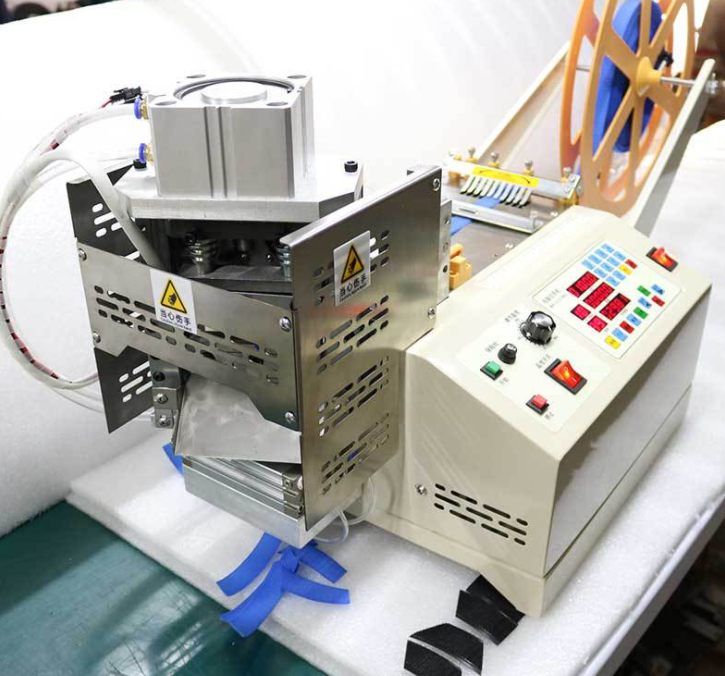
A hot and cold cutting machine equipped with a hot knife is the preferred solution for most synthetic webbings.
The heated blade melts the material while cutting.
This seals the edge immediately.
Advantages include:
- Prevents fraying
- Cleaner appearance
- No additional sealing process
- Higher production efficiency
- Better durability of finished products
Common applications include:
- Nylon straps
- Polyester belts
- PP webbing
- Luggage straps
- Pet collars
- Safety harnesses
Hot cutting combines cutting and edge finishing into one operation4.
Cold Knife Cutting Advantages
A cold knife cuts without heat.
Instead of melting the material, it shears through the fibers.
Cold cutting is ideal for:
- Cotton webbing
- Canvas
- Heat-sensitive fabrics
- Decorative ribbons
- Materials requiring post-processing
Advantages include:
- No heat discoloration
- No material melting
- Lower energy consumption
- Simple maintenance
If the edge will later be sewn inside a product, sealing may not be necessary.
Dive Deeper: Match the Blade to the Machine
Even the best blade performs poorly if it is not compatible with the machine.
Before purchasing replacement blades, I always verify machine specifications.
Important compatibility factors include:
- Blade dimensions
- Mounting hole size
- Blade thickness
- Maximum cutting width
- Angle rotation range
- Knife holder design
Compatibility Checklist
| Item | Why It Matters |
|---|---|
| Blade size | Proper installation |
| Blade thickness | Stable cutting |
| Knife holder compatibility | Secure mounting |
| Angle range | Accurate angle cutting |
| Machine capacity | Prevents overload |
I also recommend following the manufacturer’s recommendations for blade extension.
Only expose enough blade to cut completely through the material.
Too much blade exposure increases vibration and reduces cutting precision.
Proper blade offset is equally important.
Correct offset improves angle accuracy while reducing unnecessary blade wear.
Simple Blade Selection Checklist
Before purchasing a blade, I always review these factors.
| Selection Factor | Questions to Ask |
|---|---|
| Material | Nylon, polyester, cotton, or canvas? |
| Blade material | Carbon steel, HSS, alloy, or carbide? |
| Blade angle | Standard or thick material? |
| Blade thickness | Enough rigidity? |
| Blade length | Matches stack height? |
| Surface finish | Precision ground? |
| Cutting method | Hot knife or cold knife? |
| Machine compatibility | Correct size and mounting? |
This checklist helps avoid expensive mistakes and improves production efficiency.
Hot Knife vs Cold Knife Comparison
| Feature | Hot Knife | Cold Knife |
|---|---|---|
| Edge sealing | Excellent | None |
| Fraying prevention | Excellent | Limited |
| Best materials | Nylon, polyester, PP | Cotton, canvas |
| Heat required | Yes | No |
| Production speed | High | High |
| Edge appearance | Sealed and smooth | Clean but unsealed |
| Energy consumption | Higher | Lower |
| Maintenance | Heater inspection required | Simpler maintenance |
Neither cutting method is universally better.
The right choice depends entirely on the material and final product requirements.
Best Practices for Maximizing Blade Life
Regardless of blade type, good maintenance extends service life.
I recommend:
- Clean blades regularly.
- Replace dull blades promptly.
- Keep blade mounting tight.
- Use proper cutting temperatures.
- Avoid excessive blade exposure.
- Inspect blade alignment frequently.
- Match blade type to material.
- Store spare blades in a dry environment.
Small maintenance habits greatly improve cutting quality and reduce operating costs5.
Conclusion
Selecting the right blade for an automatic webbing angle cutting machine is just as important as selecting the machine itself. Blade material, angle, thickness, length, surface finish, and compatibility all influence cutting quality, productivity, and operating costs.
For synthetic materials such as nylon, polyester, and polypropylene, a hot knife is generally the best solution because it cuts and seals the edge in one operation, preventing fraying and improving product durability. For cotton, canvas, and other heat-sensitive materials, a cold knife provides clean cuts without risking heat damage.
By carefully matching the blade to the material, machine specifications, and production requirements, manufacturers can achieve better cutting accuracy, longer blade life, lower maintenance costs, and more consistent product quality.
HAOXINHE Insights
At HAOXINHE, I understand that blade selection is a key factor in achieving reliable cutting performance. That is why our machines are designed to support multiple blade configurations, allowing customers to process a wide variety of materials with excellent precision and efficiency.
Our equipment includes:
- Automatic webbing angle cutting machine
- Webbing ribbon cutting machine
- Hot and cold cutting machine
- High-speed trademark cutting machine
- Automatic punching cutting machine
- Round shape cutting machine
- Rotary bevel cutting machine
- Different shapes cutting machine
- Computer tube cutting machine
- Wire cutting and stripping machine
- Metal pipe cutting and beveling machine
- Bubble wrap cutting machine
- PVC Edge Banding cutting machine
- Protective Foam Cutting Machine
We also help customers choose the most suitable blade type, cutting method, and machine configuration based on their materials, production volume, and quality requirements. By combining the right blade with a well-designed cutting system, HAOXINHE helps manufacturers improve edge quality, reduce blade replacement costs, and achieve stable, high-efficiency production.
-
"Advanced Manufacturing Initiative Improves Turbine Blade Productivity", https://www.energy.gov/cmei/systems/articles/advanced-manufacturing-initiative-improves-turbine-blade-productivity. Research has shown that blade material and design significantly influence cutting quality, production efficiency, and maintenance costs in industrial applications. Evidence role: general_support; source type: research. Supports: The claim that blade selection affects cut quality, edge appearance, production efficiency, maintenance costs, and product lifespan.. Scope note: The findings may vary depending on specific machine types and materials being processed. ↩
-
"High-Speed Steel: Definition, Compositions, Properties, and Uses", https://www.xometry.com/resources/materials/high-speed-steel/. Studies on high-speed steel indicate its superior wear resistance and durability, making it suitable for continuous industrial applications. Evidence role: general_support; source type: research. Supports: The claim that high-speed steel provides better wear resistance for continuous production.. Scope note: The performance of HSS may vary depending on the specific cutting conditions and materials. ↩
-
"Industrial Blades Ultimate Cutting Guide 2026 – Edgemills", https://edgemills.com/powerful-industrial-blades/. Studies on industrial cutting tools show that premium blades, while more expensive initially, reduce long-term costs by lasting longer and maintaining performance. Evidence role: statistic; source type: research. Supports: The claim that higher-quality blades reduce total operating costs by requiring less frequent replacement.. Scope note: The cost savings depend on the specific production environment and blade usage. ↩
-
"What Can You Cut with a Hotknife?", https://www.youtube.com/watch?v=eX78zZzspH0. Hot cutting uses heat to melt and seal the edges of synthetic materials during the cutting process, preventing fraying and improving edge durability. Evidence role: mechanism; source type: education. Supports: The claim that hot cutting combines cutting and edge finishing into one operation.. Scope note: This process is effective primarily for thermoplastic materials. ↩
-
"Maintenance Costs and Advanced Maintenance Techniques … – PMC", https://pmc.ncbi.nlm.nih.gov/articles/PMC9890517/. Research in industrial maintenance practices highlights that regular blade cleaning and alignment significantly enhance cutting quality and reduce downtime costs. Evidence role: general_support; source type: research. Supports: The claim that small maintenance habits improve cutting quality and reduce operating costs.. Scope note: The effectiveness of maintenance practices may depend on the specific machine and production environment. ↩