How to Troubleshoot Feeding Problems in an Automatic Webbing Angle Cutting Machine?
If you operate an automatic webbing angle cutting machine, sooner or later you may experience feeding problems. The webbing may slip, feed unevenly, or stop unexpectedly. These issues can reduce cutting accuracy, increase material waste, and slow down production.
The good news is that most feeding problems have simple causes. In many cases, the solution is not replacing expensive parts but inspecting the feeding system, adjusting machine settings, or performing regular maintenance.
In this guide, I will explain the most common causes of feeding problems, how to diagnose them, and what you can do to restore stable production.
Why Does the Webbing Slip or Feed Unevenly?
Webbing usually slips or feeds unevenly because the feeding system cannot maintain consistent control of the material. The most common causes include worn feed rollers1, incorrect roller pressure2, transmission misalignment, faulty sensors3, poor calibration, inconsistent webbing material, environmental conditions4, or inadequate maintenance.
Finding the real cause requires checking the machine step by step rather than replacing parts randomly.
Why Stable Feeding Is So Important
Every automatic cutting cycle begins with material feeding.
Before the blade cuts, the machine must move the webbing to the exact programmed position. If the feeding distance changes even slightly, every finished product will have a different length.
Stable feeding affects:
- Cutting length accuracy
- Angle positioning
- Product consistency
- Production speed
- Material waste
- Overall machine reliability
Even the best webbing ribbon cutting machine cannot produce accurate parts if the feeding system is unstable.
Common Symptoms of Feeding Problems
Different feeding issues often produce different symptoms.
| Symptom | Possible Cause |
|---|---|
| Webbing slips during feeding | Worn or dirty rollers |
| Feeding length changes randomly | Sensor or encoder problem |
| Material moves sideways | Guide rail or roller misalignment |
| Machine occasionally stops feeding | Electrical or motor issue |
| Uneven cut lengths | Feeding instability |
| Intermittent feeding | Loose wiring or poor motor control |
Recognizing the symptom helps identify the correct solution much faster.
Dive Deeper: Inspect the Feed Rollers First
Whenever I troubleshoot an automatic webbing angle cutting machine, I always inspect the feed rollers before checking anything else.
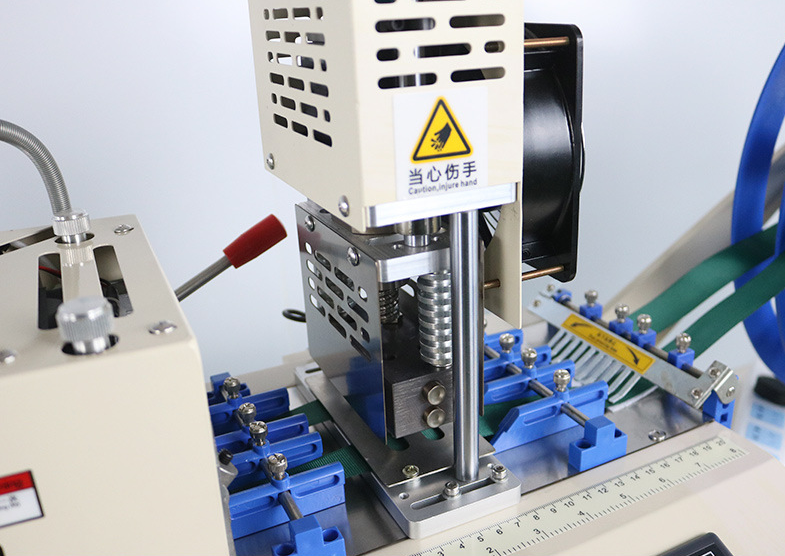
Feed rollers provide the friction needed to pull the webbing through the machine. Over time, the roller surface becomes smooth, glazed, dirty, or worn. Oil, dust, adhesive residue, and textile fibers can also reduce grip.
Once the rollers lose friction, the webbing begins to slip. The feeding motor continues turning, but the material no longer moves the correct distance. The result is inconsistent feeding and uneven cutting lengths.
Signs That Feed Rollers Need Attention
- Roller surface looks shiny or polished
- Dust or adhesive buildup
- Visible wear or cracks
- Material slips during acceleration
- Feeding becomes inconsistent
Roller Maintenance Checklist
| Inspection Item | Recommended Action |
|---|---|
| Dust or fibers | Clean with approved cleaner |
| Oil contamination | Remove completely |
| Worn rubber | Replace roller |
| Loose roller bearings | Tighten or replace |
| Roller surface damage | Install new roller |
Cleaning the rollers is often enough to restore stable feeding. However, if the rubber has become hard or smooth, replacement is usually the best solution.
For high-volume production, I recommend inspecting feed rollers every week and replacing them before excessive wear affects production quality.
Check Feed Roller Pressure
Even perfectly clean rollers cannot feed material correctly if the pressure is wrong.
Most industrial hot and cold cutting machines use spring-loaded or pneumatic pressure systems to press the upper roller against the lower roller.
If the pressure is too low:
- Webbing slips
- Feeding length changes
- Rollers lose traction
If the pressure is too high:
- Material becomes deformed
- Roller wear increases
- Feeding resistance becomes excessive
The correct pressure depends on:
- Webbing thickness
- Material hardness
- Surface texture
- Width
Always adjust pressure according to the material being processed.
Inspect the Transmission System
The feeding motor transfers power through gears, timing belts5, shafts, and guide rails.
If one part becomes loose or misaligned, feeding becomes unstable.
Check the following components:
- Timing belts
- Gear engagement
- Couplings
- Bearings
- Guide rails
- Shaft alignment
A loose timing belt may not fail completely, but it can create small feeding errors that become obvious during continuous production.
Dive Deeper: Sensors and Encoders Control Feeding Accuracy
Modern automatic webbing angle cutting machines rely heavily on sensors and encoders.
These electronic components tell the controller exactly where the material is and how far it has moved.
If a sensor becomes dirty or misaligned, it may send incorrect information to the PLC controller.
Instead of stopping at the correct position, the machine may feed too far or not far enough.
Common Sensor Problems
| Problem | Result |
|---|---|
| Dust on sensor | Missed detection |
| Sensor misalignment | Incorrect positioning |
| Loose wiring | Intermittent signals |
| Damaged encoder | Incorrect feed distance |
| Electrical interference | Unstable readings |
When troubleshooting feeding problems, I always clean the sensors first.
Dust from textile production can easily cover optical sensors and reduce their accuracy.
If cleaning does not solve the issue, check:
- Sensor mounting
- Cable connections
- Encoder alignment
- PLC input signals
Many feeding problems that appear mechanical are actually caused by faulty electronic feedback.
Recalibrate the Machine
Sometimes every mechanical component works correctly, but the machine still feeds inaccurately.
This usually means the controller requires recalibration.
Modern industrial machines allow operators to adjust:
- Feed length
- Motor parameters
- Sensor reference position
- Encoder values
- Motion settings
If these values change accidentally, feeding performance may become unstable.
Always follow the manufacturer’s calibration procedure.
After recalibration, perform several test cuts before restarting production.
Material Differences Can Cause Feeding Problems
Not every feeding problem comes from the machine.
Different webbing materials behave differently.
Examples include:
- Nylon webbing
- Polyester webbing
- Cotton tape
- Elastic webbing
- Kevlar straps
- Reflective webbing
Some materials stretch.
Some compress.
Some have smooth surfaces with less friction.
Others have rough woven textures.
Even small differences between production batches can affect feeding consistency.
For best results, keep material specifications as consistent as possible.
Dive Deeper: Environmental Conditions Also Affect Feeding Stability
Many operators overlook the production environment when troubleshooting feeding issues.
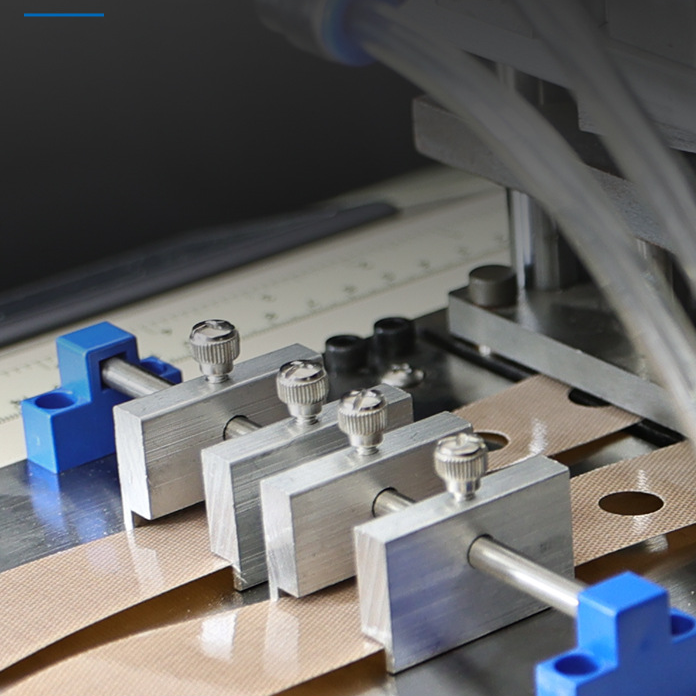
Temperature, humidity, dust, and static electricity all influence machine performance.
For example, dry air increases static electricity.
Static can cause lightweight webbing to cling to machine surfaces or interfere with optical sensors.
High humidity may change the friction between rollers and the material.
Temperature changes can slightly affect rubber roller hardness and electronic sensor performance.
Environmental Factors
| Factor | Possible Effect |
|---|---|
| Static electricity | Material sticks or shifts |
| High humidity | Reduced roller grip |
| Dust | Sensor contamination |
| Temperature changes | Roller performance changes |
Large factories often install anti-static equipment and maintain controlled environmental conditions to improve feeding consistency.
Keeping the machine clean also reduces the chance of sensor contamination6.
Electrical Problems Can Interrupt Feeding
Mechanical systems are not always responsible.
Loose electrical connections can interrupt motor signals.
Inspect:
- Feed motor wiring
- PLC connectors
- Power supply
- Terminal blocks
- Motor drivers
- Emergency stop circuits
A loose connector may only fail occasionally, making the problem difficult to diagnose.
Always disconnect power before inspecting electrical components.
Preventive Maintenance Prevents Most Feeding Problems
The easiest way to avoid feeding issues is regular maintenance.
A preventive maintenance schedule keeps every component working correctly before failures occur.
| Maintenance Task | Recommended Frequency |
|---|---|
| Clean feed rollers | Daily |
| Remove textile dust | Daily |
| Inspect sensors | Weekly |
| Check belt tension | Monthly |
| Lubricate moving parts | Monthly |
| Verify calibration | Every 3–6 months |
| Replace worn rollers | As needed |
Preventive maintenance reduces downtime, improves cutting accuracy, and extends machine life.
Relationship Between Feeding Problems and Uneven Cuts
Many operators focus on the cutting blade when they see uneven cuts.
However, the blade is often not the real problem.
If the material does not arrive at exactly the programmed position, even a perfectly sharp blade cannot produce consistent results.
Typical chain of events:
- Feed rollers slip.
- Feeding distance changes.
- Material reaches the blade incorrectly.
- Cut length varies.
- Finished products fail inspection.
That is why feeding stability should always be checked before replacing blades or adjusting cutting angles.
Best Practices for Stable Feeding
To keep your automatic webbing angle cutting machine operating smoothly, I recommend these practices:
- Clean feed rollers every day.
- Inspect roller pressure regularly.
- Replace worn rollers before slipping begins.
- Check timing belts and gears monthly.
- Keep sensors clean.
- Verify encoder operation.
- Use consistent material specifications.
- Calibrate the machine periodically.
- Inspect electrical connections during maintenance.
- Follow the manufacturer’s maintenance schedule.
These simple steps greatly reduce unexpected downtime and improve production consistency.
Conclusion
Feeding problems in an automatic webbing angle cutting machine usually have straightforward causes. Worn rollers, incorrect roller pressure, transmission misalignment, faulty sensors, poor calibration, inconsistent material, environmental factors, and electrical issues are responsible for most cases of webbing slipping or uneven feeding.
A systematic troubleshooting process helps identify the root cause quickly and avoids unnecessary replacement of expensive parts. Regular cleaning, proper calibration, preventive maintenance, and consistent material quality are the most effective ways to maintain stable feeding performance.
Because feeding accuracy directly determines cutting accuracy, solving feeding problems not only improves machine reliability but also reduces waste, increases productivity, and ensures every webbing piece meets the required quality standards.
HAOXINHE Insights
At HAOXINHE, I believe that reliable feeding is the foundation of precise cutting. That is why our machines are designed with durable feed rollers, precision stepper or servo feeding systems, stable guide mechanisms, and intelligent control systems that maintain consistent material movement even during high-speed production.
Our cutting equipment includes:
- Automatic webbing angle cutting machine
- Webbing ribbon cutting machine
- Hot and cold cutting machine
- High-speed trademark cutting machine
- Automatic punching cutting machine
- Round shape cutting machine
- Rotary bevel cutting machine
- Different shapes cutting machine
- Computer tube cutting machine
- Wire cutting and stripping machine
- Metal pipe cutting and beveling machine
- Bubble wrap cutting machine
- PVC Edge Banding cutting machine
- Protective Foam Cutting Machine
In addition to manufacturing equipment, we help customers optimize machine setup, troubleshoot feeding issues, and establish preventive maintenance routines. Our goal is to help every customer achieve stable feeding, accurate cutting, reduced downtime, and long-term production efficiency.
-
"Die Cutting Machine: 7 Common Problems and How to Fix Them", https://www.oyang-group.com/blog/die-cutting-machine-7-common-problems-and-how-to-fix-them.html. Studies on industrial cutting machines indicate that worn feed rollers often lead to material slipping and uneven feeding due to reduced friction between the rollers and the material. Evidence role: general_support; source type: research. Supports: Worn feed rollers are a common cause of webbing slipping or feeding unevenly in automatic cutting machines.. Scope note: The support is based on general findings in industrial machinery and may not apply to all machine models. ↩
-
"Effects of Pressure Rollers with Variable Compliance in the … – PMC", https://pmc.ncbi.nlm.nih.gov/articles/PMC11051116/. Research on material feeding systems shows that improper roller pressure can lead to slippage or deformation of materials, affecting feeding accuracy. Evidence role: mechanism; source type: research. Supports: Incorrect roller pressure can cause webbing to slip or deform during feeding.. Scope note: The findings are based on general principles of material handling and may vary with specific machine designs. ↩
-
"Advanced Sensor Technologies in Cutting Applications – PMC", https://pmc.ncbi.nlm.nih.gov/articles/PMC12899726/. Research on automated cutting systems shows that sensor malfunctions can lead to inaccurate feeding lengths and intermittent operation due to incorrect positional feedback. Evidence role: mechanism; source type: research. Supports: Faulty sensors can cause feeding length changes or intermittent feeding in automatic webbing angle cutting machines.. Scope note: The findings are based on general sensor technology and may not address specific sensor types used in all machines. ↩
-
"181 Effect of Temperature and Humidity on Daily Feeding Behavior …", https://pmc.ncbi.nlm.nih.gov/articles/PMC10158051/. Studies on industrial environments indicate that temperature, humidity, and static electricity can influence material handling and feeding stability in automated systems. Evidence role: general_support; source type: research. Supports: Environmental conditions like temperature, humidity, and static electricity can affect feeding stability in automatic webbing angle cutting machines.. Scope note: The evidence is based on general industrial conditions and may not apply to all machine types or environments. ↩
-
"Do I lose precision, speed or torque if I drive leadscrew with timing …", https://www.reddit.com/r/hobbycnc/comments/uxitd7/do_i_lose_precision_speed_or_torque_if_i_drive/. Mechanical engineering studies indicate that loose timing belts can lead to minor feeding inaccuracies due to inconsistent power transmission. Evidence role: mechanism; source type: research. Supports: Loose timing belts can create small feeding errors during continuous production.. Scope note: The evidence is based on general mechanical principles and may not address specific machine designs. ↩
-
"Recent Trends in Chemical Sensors for Detecting Toxic … – PMC", https://pmc.ncbi.nlm.nih.gov/articles/PMC10821350/. Research on sensor technology in industrial environments shows that dust and fibers can obstruct optical sensors, leading to reduced positional accuracy. Evidence role: mechanism; source type: research. Supports: Dust and textile fibers can contaminate sensors, reducing their accuracy in detecting material position.. Scope note: The findings are based on general sensor behavior and may not account for specific sensor designs. ↩