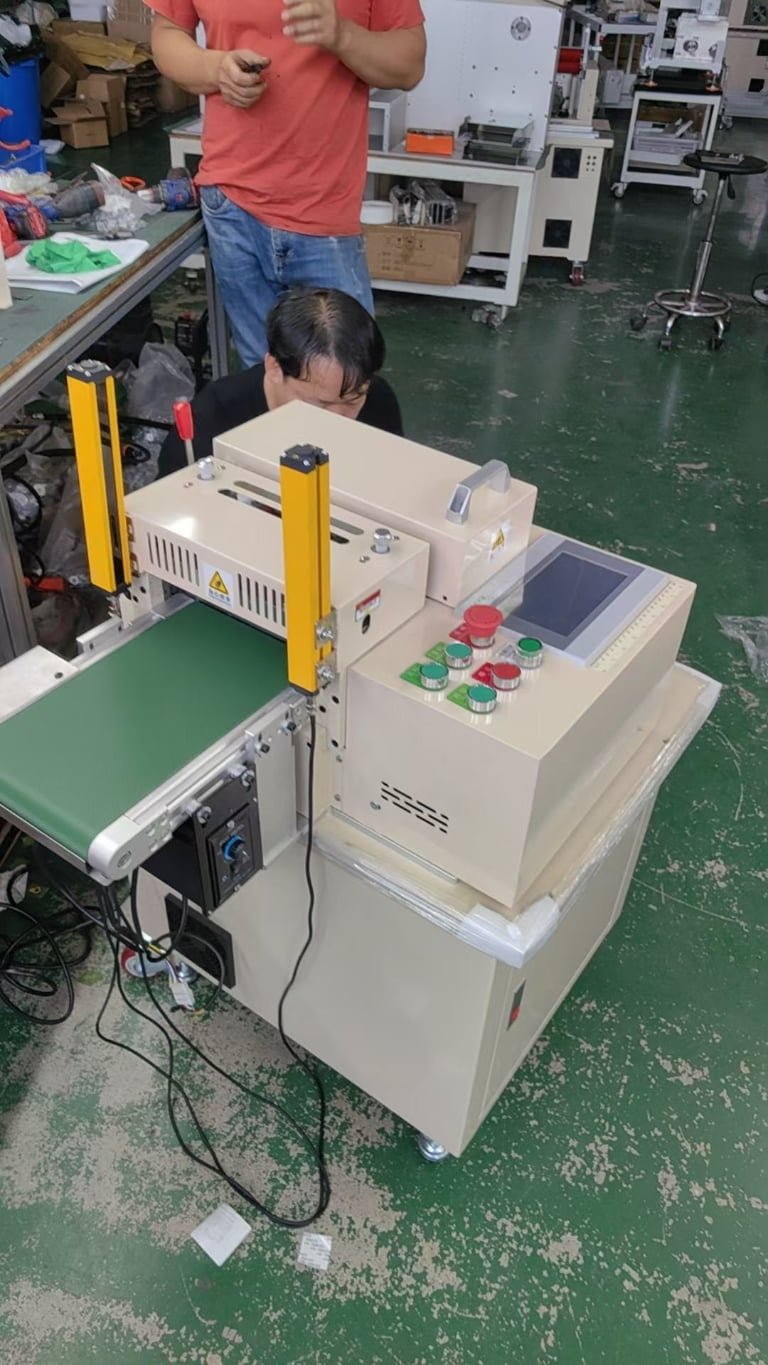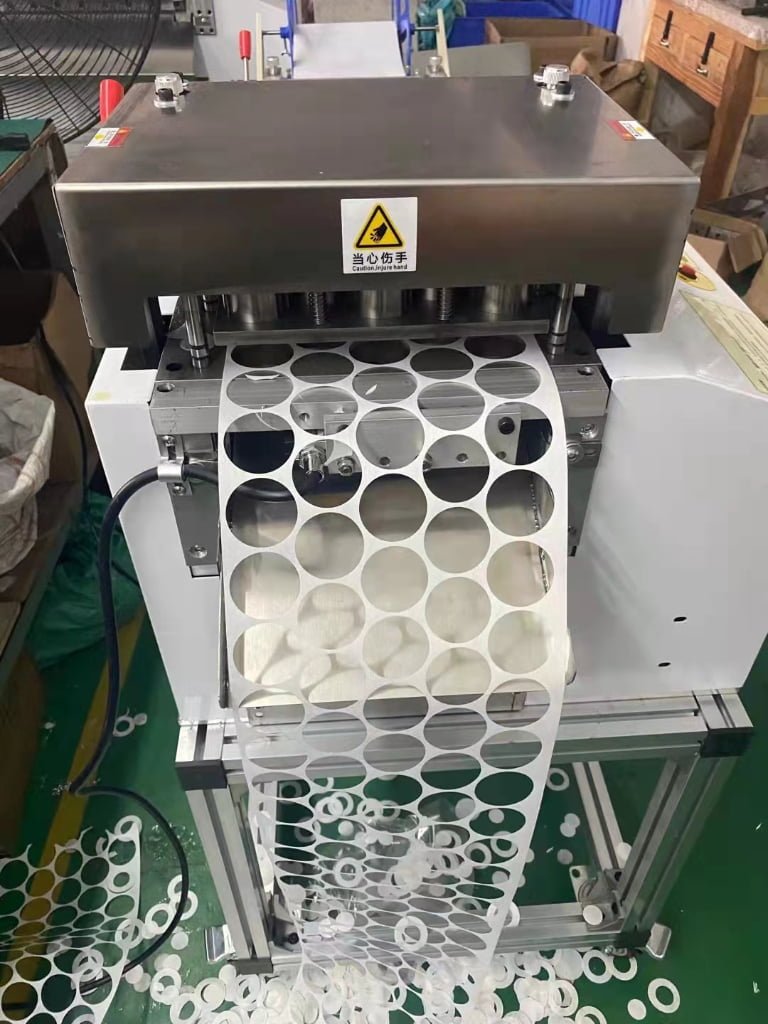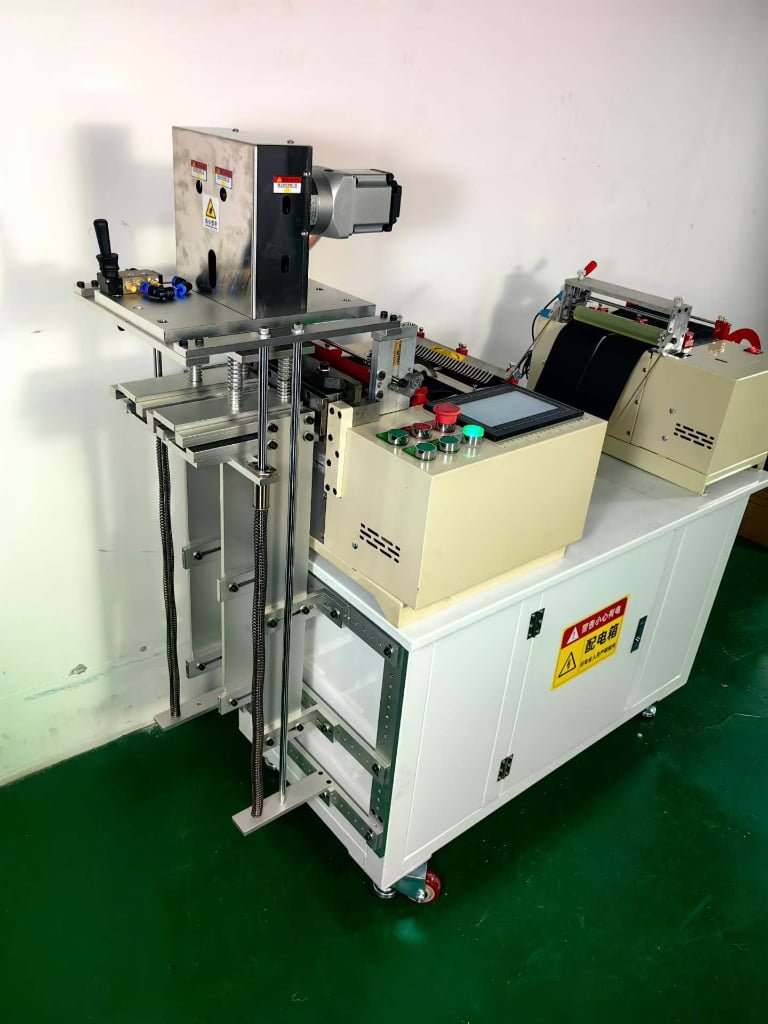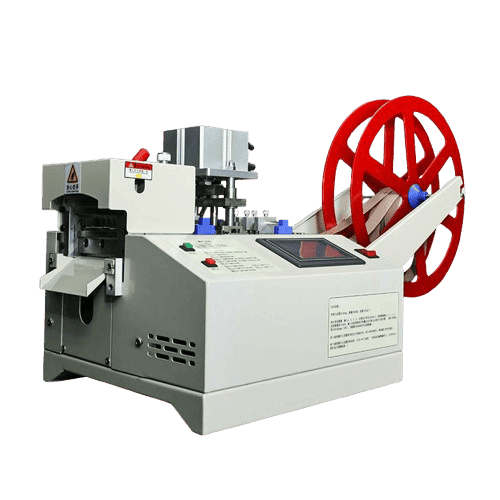
How to solve feeding problems in a nylon cutting machine?
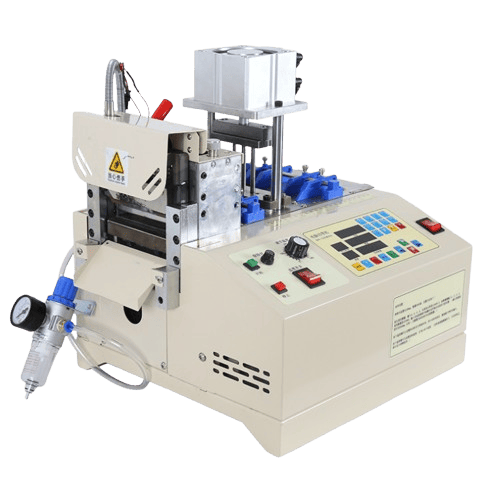
When customers use a nylon cutting machine for continuous production, feeding problems are one of the most common issues I hear about1.
The machine may still have a sharp blade and a strong motor, but if the material does not move smoothly, the final cutting quality will not be stable.
A feeding problem can create many production issues:
- Incorrect cutting length
- Material slipping
- Uneven cutting position
- Machine stopping
- Increased material waste
- Lower production efficiency
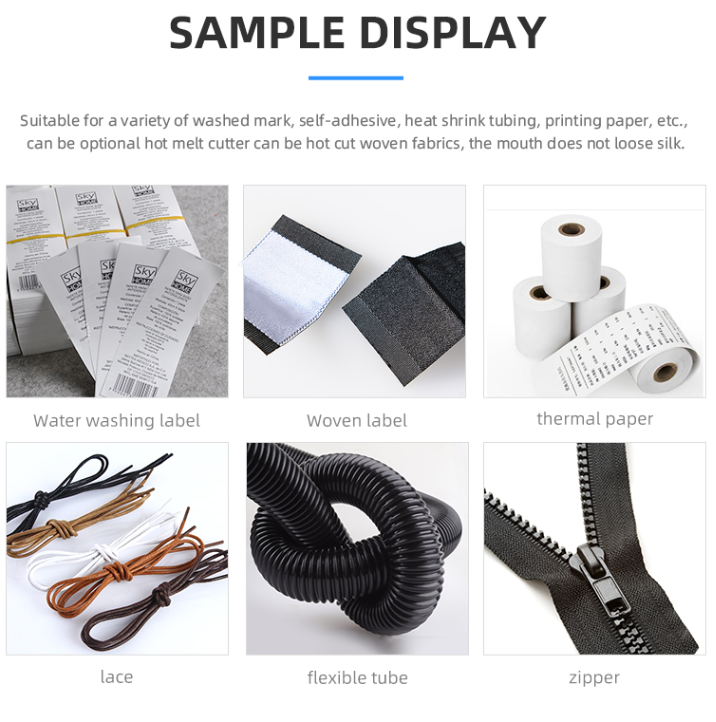
This problem is especially common when customers process flexible materials such as:
- Nylon webbing
- Nylon ribbon
- Polyester tape
- Plastic film
- Packaging strips
- Composite materials
Unlike rigid materials, nylon can stretch, move, and change shape during feeding2.
This means the feeding system must control:
- Material tension
- Roller pressure
- Feeding speed
- Material alignment
At HAOXINHE, I often help customers solve feeding problems by checking the entire material path instead of only adjusting one part.
A stable cutting process starts before the blade.
The feeding system is the foundation of cutting accuracy.
In this article, I will explain why nylon rolls slip or move during automatic feeding processes and how manufacturers can solve these problems.
Why do nylon rolls slip or move during automatic feeding processes?
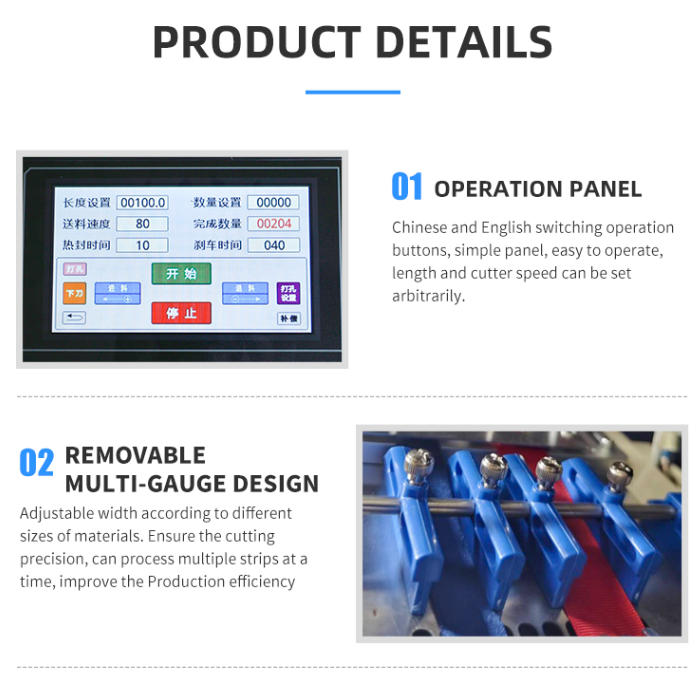
Nylon rolls usually slip or move because the feeding system cannot maintain stable contact with the material.
The most common causes include:
- Incorrect roller pressure
- Worn feeding rollers
- Wrong tension settings
- Material thickness differences
- Poor alignment
- Dirty feeding path
A nylon cutting machine depends on precise material movement.
If the feeding distance changes by only a few millimeters, the final product length may become inaccurate.
| Feeding Problem | Result |
|---|---|
| Roller slipping | Short or uneven cuts |
| Material deviation | Wrong cutting position |
| Incorrect tension | Stretching or wrinkles |
| Dirty rollers | Unstable feeding |
| Wrong settings | Production interruption |
1. Check and align the feeding system before operation
The first step I recommend is checking the complete feeding path.
The nylon material should enter the machine:
- Straight
- Centered
- With stable tension
If the roll is not aligned correctly, the material may move sideways during feeding.
This creates:
- Uneven pressure
- Roller slipping
- Cutting position errors
Before production, operators should check:
| Inspection Point | Normal Condition |
|---|---|
| Material direction | Straight |
| Roll position | Centered |
| Guide rollers | Proper alignment |
| Material tension | Stable |
For example, a webbing tape cutting machine requires stable material movement because the cutting length depends directly on feeding accuracy.
2. Clean the feeding path and rollers regularly
Many feeding problems are caused by contamination.
During long production periods, the feeding area may collect:
- Nylon dust
- Material residue
- Oil
- Small scraps
These materials reduce friction between the roller and nylon.
When the roller cannot hold the material properly, slipping happens.
I recommend checking:
- Feeding wheels
- Guide rollers
- Pressure rollers
- Material channels
| Dirty Part | Possible Problem |
|---|---|
| Feeding roller | Material slipping |
| Guide roller | Material deviation |
| Cutting area | Material blockage |
| Sensor area | Wrong detection |
Regular cleaning is a simple step but can greatly improve machine stability3.
3. Inspect and replace worn feeding rollers
The feeding roller is one of the most important parts in a nylon cutting machine.
The roller must provide enough grip without damaging the material.
After long-term operation, the roller surface may become:
- Smooth
- Damaged
- Uneven
A worn roller cannot move nylon consistently4.
Common signs include:
- Different cutting lengths
- Material movement pauses
- Slipping sounds
- Uneven feeding speed
| Roller Condition | Solution |
|---|---|
| Slight wear | Adjust pressure |
| Dirty surface | Clean roller |
| Heavy wear | Replace roller |
| Uneven surface | Check alignment |
At HAOXINHE, I pay attention to roller quality because stable feeding directly affects machine performance.
4. Adjust nylon tension correctly
Nylon is flexible.
If tension is too low:
- Material may become loose
- Feeding may become unstable
- Wrinkles may appear
If tension is too high:
- Nylon may stretch
- Length accuracy may change
- Material may deform
The correct tension creates smooth movement.
| Tension Condition | Result |
|---|---|
| Too low | Slipping and wrinkles |
| Too high | Stretching and size error |
| Correct | Stable feeding |
For customers using automatic feeding systems, tension control is especially important.
5. Confirm material thickness and machine compatibility
Not every nylon material has the same characteristics.
Different materials have different:
- Thickness
- Hardness
- Surface friction
- Elasticity
A machine designed for thin nylon ribbon may not work well with thick industrial webbing.
Before purchasing, buyers should confirm:
| Material Information | Why It Matters |
|---|---|
| Thickness | Determines roller pressure |
| Width | Determines feeding structure |
| Surface | Determines grip requirement |
| Flexibility | Determines tension control |
For example:
A protective foam cutting machine and a webbing ribbon cutting machine may require completely different feeding designs.
6. Remove jams and foreign materials immediately
When the feeding system stops suddenly, operators should check for blockage.
Common causes include:
- Material overlap
- Nylon scraps
- Foreign objects
- Incorrect threading
The correct process is:
- Stop the machine
- Remove the blockage
- Check material path
- Restart production
Do not force the machine to continue running.
Forced operation can damage:
- Rollers
- Motors
- Sensors
- Blade systems
7. Calibrate feeder parameters regularly
Modern nylon cutting machines often allow adjustment of:
- Feeding speed
- Roller pressure
- Length compensation
- Acceleration
Incorrect parameters can create unstable feeding5.
For example:
If feeding acceleration is too fast, soft nylon may move suddenly.
If pressure is too low, the material may slip.
| Parameter | Possible Adjustment |
|---|---|
| Feeding speed | Match material type |
| Roller pressure | Improve grip |
| Acceleration | Reduce material movement |
| Length setting | Improve accuracy |
At HAOXINHE, I recommend customers record successful parameters for different materials.
This makes future production easier.
8. Check pressure rollers and hold-down systems
Pressure rollers keep the material in contact with the feeding system6.
If pressure is too weak:
- Nylon slips
- Feeding becomes unstable
If pressure is too strong:
- Material may be damaged
- Surface marks may appear
The correct pressure depends on:
- Material thickness
- Material softness
- Roller design
| Pressure Condition | Effect |
|---|---|
| Too weak | Slipping |
| Too strong | Material damage |
| Correct | Stable movement |
9. Check roll brake and material release settings
The material roll itself can create feeding problems.
If the roll releases too freely:
- Material becomes loose
- Feeding becomes inconsistent
If the roll brake is too strong:
- Feeding motor must work harder
- Material may stretch
The roll system should provide smooth and controlled release7.
| Roll Problem | Solution |
|---|---|
| Too much movement | Adjust brake |
| Too much resistance | Reduce tension |
| Uneven release | Check roll support |
10. Consider automatic correction and advanced feeding systems
For high-volume production, basic feeding may not be enough.
Customers with demanding production requirements may need:
- Servo feeding
- Automatic tension control
- Edge correction
- Digital monitoring
These systems improve:
- Length accuracy
- Production speed
- Material stability
They are useful for:
- High-speed trademark cutting machine
- Automatic punching cutting machine
- Different shapes cutting machine
Common nylon feeding problem checklist
| Problem | Possible Cause | Solution |
|---|---|---|
| Material slips | Weak roller grip | Adjust pressure |
| Length error | Feeding instability | Calibrate system |
| Material moves sideways | Poor alignment | Adjust guides |
| Machine stops | Feeding blockage | Remove waste |
| Uneven cutting | Wrong tension | Adjust tension |
How HAOXINHE improves feeding stability
At HAOXINHE, I understand that feeding stability directly affects customer production profit.
My customers need machines that can run continuously with reliable performance.
I provide cutting solutions including:
- Webbing tape cutting machine
- Hot and cold cutting machine
- High-speed trademark cutting machine
- Automatic punching cutting machine
- Round shape cutting machine
- Rotary bevel cutting machine
- Different shapes cutting machine
- Computer tube cutting machine
- Wire cutting and stripping machine
- Metal pipe cutting and beveling machine
- Webbing ribbon cutting machine
- Bubble wrap cutting machine
- PVC Edge Banding Cutting Machine
- Protective Foam Cutting Machine
| HAOXINHE Advantage | Customer Benefit |
|---|---|
| Factory production | Better quality control |
| Customized feeding system | Handles different materials |
| Engineering support | Faster problem solving |
| Multiple production lines | Stable delivery |
| Export experience | Easier global cooperation |
Feeding system selection checklist
Before buying a nylon cutting machine, customers should confirm:
| Question | Reason |
|---|---|
| What material will you cut? | Determines feeding design |
| Is the material flexible or slippery? | Determines roller system |
| What accuracy is required? | Determines control system |
| What is your production volume? | Determines automation level |
| Do you need continuous operation? | Determines feeding upgrade |
HAOXINHE Insights
At HAOXINHE, I believe cutting accuracy starts from feeding accuracy.
A perfect blade cannot solve an unstable feeding system.
For nylon cutting applications, customers should focus on the complete process:
- Material preparation
- Feeding control
- Tension management
- Roller performance
- Cutting technology
A stable feeding system helps customers reduce waste, improve production efficiency, and maintain consistent product quality.
My goal is to help global customers choose reliable cutting equipment that matches their real production needs.
-
"What Problems Occur When Cutting Thick Nylon Materials with a Nylon …", https://cutopix.com/what-problems-occur-when-cutting-thick-nylon-materials-with-a-nylon-cutting-machine/. A study or industry report on common issues in nylon cutting machines could provide statistical evidence for the prevalence of feeding problems. Evidence role: statistic; source type: research. Supports: Feeding problems are a frequent issue in nylon cutting machines.. Scope note: The data may vary depending on the specific type of nylon cutting machine or production environment. ↩
-
"Nylon", https://en.wikipedia.org/wiki/Nylon. Educational resources on the mechanical properties of nylon could explain its behavior under tension and movement. Evidence role: mechanism; source type: education. Supports: Nylon materials are prone to stretching, movement, and shape changes during feeding processes.. Scope note: The explanation may focus on general properties of nylon rather than specific feeding system scenarios. ↩
-
"Linking microbial contamination to food spoilage and food waste – PMC", https://pmc.ncbi.nlm.nih.gov/articles/PMC10325786/. Research on maintenance practices in industrial machines could support the claim that cleaning improves stability. Evidence role: general_support; source type: research. Supports: Regular cleaning of the feeding path and rollers significantly improves machine stability.. Scope note: The evidence may focus on general maintenance rather than specific cleaning practices for nylon cutting machines. ↩
-
"Assessment of the Impact of Wear of the Working Surface of Rolls … – PMC", https://pmc.ncbi.nlm.nih.gov/articles/PMC8954804/. Educational resources on machine component wear could explain how worn rollers affect feeding consistency. Evidence role: mechanism; source type: education. Supports: Worn rollers lead to inconsistent movement of nylon materials in cutting machines.. Scope note: The explanation may not include specific examples related to nylon materials. ↩
-
"Incorrect Feeding Practices, Dietary Diversity Determinants …", https://pmc.ncbi.nlm.nih.gov/articles/PMC10871086/. Educational resources on machine parameter settings could explain their impact on feeding stability. Evidence role: mechanism; source type: education. Supports: Incorrect feeder parameters lead to unstable feeding in nylon cutting machines.. Scope note: The explanation may focus on general feeding systems rather than nylon-specific machines. ↩
-
"A Study on the Pressure Mechanism Improvement of a Roller … – PMC", https://pmc.ncbi.nlm.nih.gov/articles/PMC10004224/. Research on roller systems in industrial machines could validate the claim. Evidence role: mechanism; source type: research. Supports: Pressure rollers are essential for maintaining material contact with the feeding system.. Scope note: The findings may apply broadly to feeding systems, not exclusively to nylon cutting machines. ↩
-
"Stability of Medications Administered via Enteral Feeding Tubes", https://pmc.ncbi.nlm.nih.gov/articles/PMC12737946/. Research on roll system design in industrial machines could support the claim. Evidence role: mechanism; source type: research. Supports: A properly designed roll system ensures smooth and controlled material release.. Scope note: The evidence may focus on general roll systems rather than those specific to nylon cutting machines. ↩