What Industries Use Automatic Webbing Angle Cutting Machines?
Automatic webbing angle cutting machines are widely used in industries that manufacture products made from woven straps, tapes, belts, and technical textiles. These machines deliver precise length control, consistent angle cutting, and high production efficiency, making them essential for companies that require large-volume production with strict quality standards.
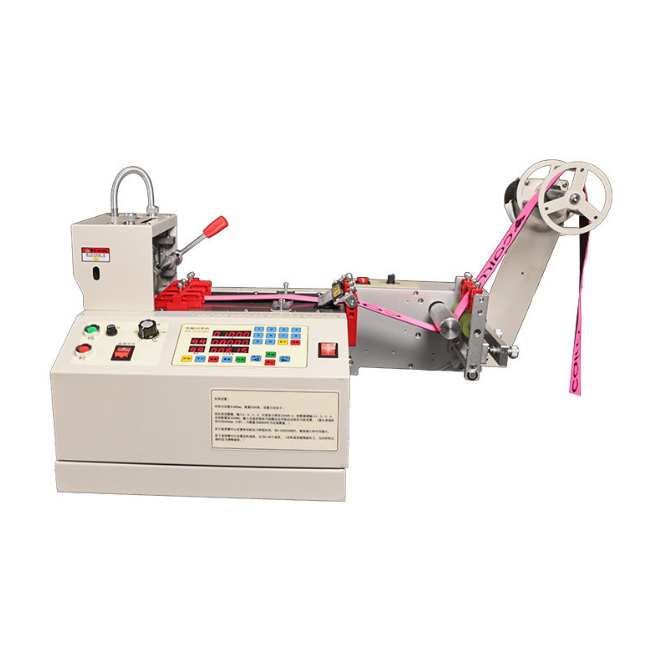
I have worked with manufacturers serving many different markets, and I have found that almost every industry using webbing products benefits from automated cutting. Manual cutting is slow, inconsistent, and difficult to maintain at high production speeds.1 An automatic Webbing Angle Cutting Machine solves these problems by combining servo feeding, PLC control, and precision cutting into one efficient system.
In this article, I will explain which industries rely on automatic webbing angle cutting machines and what manufacturers should consider when producing automotive seat belts, safety harnesses, and other critical products.
Why Automatic Webbing Cutting Is Important
Webbing materials are used in thousands of products.2
Each piece must be cut to the correct length and angle before sewing or assembly begins.
Accurate cutting provides several advantages:
- Better product consistency
- Faster production
- Lower material waste
- Easier downstream sewing
- Reduced labor costs
- Improved product appearance
Modern automatic machines perform these tasks much faster than manual cutting while maintaining excellent repeatability.
Industries That Use Automatic Webbing Angle Cutting Machines
Automatic webbing cutting equipment supports many manufacturing sectors.
1. Automotive Industry
The automotive industry is one of the largest users of precision webbing cutting equipment.
Applications include:
- Seat belts
- Child safety seats
- Cargo restraint straps
- Interior fastening straps
- Battery securing belts
- Airbag restraint components
These products require extremely consistent cutting lengths because they are assembled using automated sewing equipment.
2. Safety Equipment Manufacturing
Safety products demand high precision and reliable quality.3
Common products include:
- Fall protection harnesses
- Industrial safety belts
- Rescue equipment
- Firefighter harnesses
- Construction safety straps
Small cutting errors may affect assembly efficiency and product performance.
For this reason, manufacturers often choose servo-controlled automatic cutting systems.
3. Luggage and Bag Manufacturing
Backpacks, handbags, travel luggage, and laptop bags all use webbing.
Typical components include:
- Shoulder straps
- Carry handles
- Compression straps
- Buckle straps
- Decorative webbing
Automatic cutting improves production speed while ensuring every strap matches the product design.
4. Outdoor Sports Equipment
Outdoor products require durable webbing materials.
Examples include:
| Product | Webbing Application |
|---|---|
| Climbing harness | Safety straps |
| Camping equipment | Fastening belts |
| Tactical backpacks | MOLLE webbing |
| Pet harness | Adjustable straps |
| Life jackets | Shoulder straps |
Consistent cutting helps maintain product quality across large production batches.
5. Medical Equipment
Medical manufacturers use webbing for:
- Patient lifting slings
- Wheelchair restraints
- Hospital bed straps
- Rehabilitation equipment
Medical products require clean cuts with minimal fraying to support safe assembly.4
6. Military and Tactical Equipment
Military products often use heavy-duty nylon webbing.
Applications include:
- Tactical belts
- Equipment carriers
- Backpack systems
- Ammunition pouches
- Load-bearing harnesses
These products often require custom cutting angles and high-strength materials.
7. Pet Products
The pet industry is another fast-growing market.5
Manufacturers produce:
- Dog collars
- Leashes
- Harnesses
- Adjustable straps
Automated cutting improves consistency while supporting high-volume production.
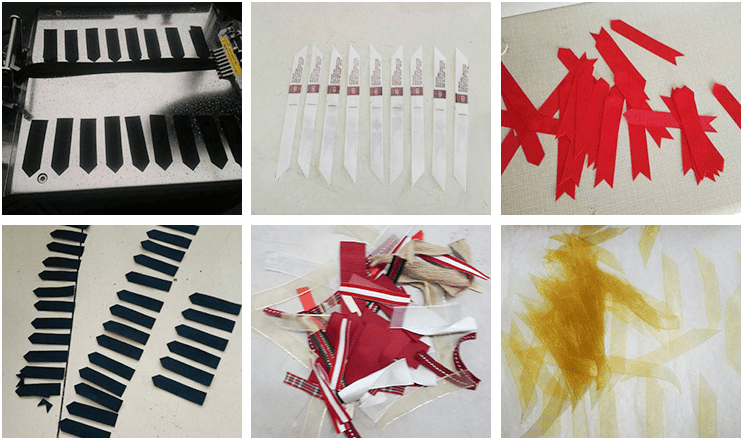
What Should Manufacturers Consider for Automotive and Safety Belt Production?
Automotive seat belts and industrial safety belts have much higher quality requirements than ordinary textile products.
Manufacturers should carefully evaluate several important factors before selecting an automatic webbing angle cutting machine.
Precision Cutting Accuracy
Seat belts require highly consistent lengths.
A high-quality servo feeding system typically provides cutting tolerances suitable for automated sewing and assembly.
Stable cutting accuracy helps reduce rejected products and simplifies quality inspection.
Heat Sealing Performance
Most seat belt webbings are woven from synthetic fibers such as polyester or nylon.6
A Hot and Cold Cutting Machine or hot knife system helps:
- Seal the cut edge
- Reduce fraying
- Improve appearance
- Extend product life
Choosing the correct cutting method depends on the webbing material.
Material Feeding Stability
Seat belt webbing is thick and strong.
The feeding system should provide:
- Stable tension
- Anti-slip rollers
- Servo positioning
- Accurate length control
Stable feeding directly improves production consistency.
Machine Durability
Automotive factories often operate continuously.
The cutting machine should include:
| Machine Feature | Production Benefit |
|---|---|
| Heavy steel frame | Reduced vibration |
| Servo motor | Precise positioning |
| Industrial PLC | Stable operation |
| High-quality sensors | Reliable control |
| Durable blade system | Longer service life |
A robust machine reduces maintenance and supports long production runs.
Integration with Automated Production
Many automotive manufacturers connect cutting machines directly with:
- Automatic sewing machines
- Conveyor systems
- Material feeders
- Inspection stations
- Packaging equipment
Easy integration increases production efficiency and reduces manual handling.
Materials Commonly Processed
Automatic webbing angle cutting machines can process many flexible materials.
| Material | Typical Industry |
|---|---|
| Nylon webbing | Automotive |
| Polyester webbing | Safety equipment |
| Cotton tape | Apparel |
| Elastic webbing | Sportswear |
| Hook and loop tape | Medical |
| Reflective tape | Safety clothing |
| Seat belt webbing | Automotive |
| Woven straps | Luggage |
Many manufacturers also process laminated materials and specialty industrial tapes.
Why Automation Improves Production
Compared with manual cutting, automation offers significant advantages.
| Manual Cutting | Automatic Cutting |
|---|---|
| Slower production | Higher throughput |
| Operator dependent | Repeatable accuracy |
| Higher labor cost | Reduced labor |
| More material waste | Better material utilization |
| Greater cutting variation | Consistent quality |
These improvements help manufacturers lower operating costs while increasing production capacity.
How HAOXINHE Supports Multiple Industries
At HAOXINHE, we design cutting equipment for customers across many industries.
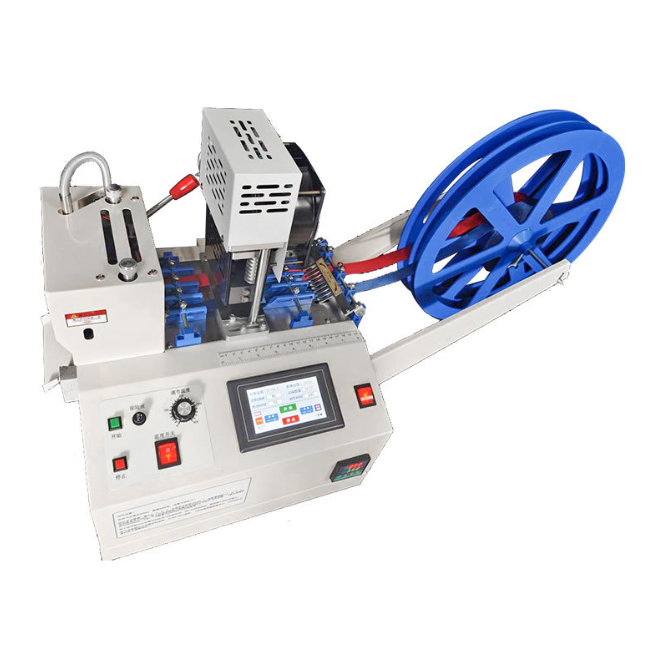
Our Automatic Webbing Angle Cutting Machines provide:
- Servo-controlled feeding
- PLC touchscreen operation
- Adjustable cutting angles
- Automatic length control
- High-speed production
- Stable cutting accuracy
- Optional hot knife cutting
- Custom machine configurations
In addition to webbing cutting equipment, we also manufacture:
- Webbing Ribbon Cutting Machines
- Hot and Cold Cutting Machines
- High-Speed Trademark Cutting Machines
- Automatic Punching Cutting Machines
- Round Shape Cutting Machines
- Rotary Bevel Cutting Machines
- Different Shapes Cutting Machines
- Computer Tube Cutting Machines
- Wire Cutting and Stripping Machines
- Metal Pipe Cutting and Beveling Machines
- Bubble Wrap Cutting Machines
- Protective Foam Cutting Machines
- PVC Edge Banding Cutting Machines
This wide product range allows manufacturers to source multiple cutting solutions from one experienced factory.
Conclusion
Automatic webbing angle cutting machines are used in a wide range of industries, including automotive, safety equipment, luggage, outdoor products, medical devices, military gear, and pet accessories. Their ability to deliver precise cutting lengths, accurate angles, and consistent production quality makes them an essential part of modern manufacturing.
For automotive seat belt and safety harness production, manufacturers should focus on cutting accuracy, stable material feeding, heat sealing capability, machine durability, and compatibility with automated production lines. Choosing the right machine not only improves production efficiency but also helps ensure consistent product quality and long-term manufacturing reliability.
Insights
HAOXINHE Industry Insights
-
HAOXINHE automatic webbing angle cutting machines are widely used by manufacturers in the automotive, safety equipment, luggage, outdoor, medical, and industrial textile sectors.
-
Our servo-driven feeding systems provide stable cutting accuracy for demanding applications such as automotive seat belts and industrial safety harnesses.
-
Optional hot knife cutting technology helps seal synthetic webbing edges, reducing fraying and improving finished product quality.
-
Our machines support multiple materials, including nylon webbing, polyester straps, cotton tape, elastic bands, reflective tape, and hook-and-loop fasteners.
-
PLC touchscreen controls allow operators to quickly adjust cutting length, angle, production speed, and batch quantity.
-
Heavy-duty machine frames and industrial electrical components provide reliable performance during continuous factory operation.
-
We offer customized machine solutions for different webbing widths, thicknesses, cutting angles, and automation requirements.
-
HAOXINHE machines can be integrated with automatic sewing systems, conveyors, and packaging lines to improve overall manufacturing efficiency.
-
In addition to Webbing Ribbon Cutting Machines, we manufacture Bubble Wrap Cutting Machines, Protective Foam Cutting Machines, PVC Edge Banding Cutting Machines, Wire Cutting and Stripping Machines, and many other industrial cutting solutions.
-
As an experienced OEM and export manufacturer, HAOXINHE helps customers improve productivity, reduce material waste, and achieve consistent product quality with reliable, customizable cutting equipment.
-
"Understanding the impact of automation on workers, jobs, …", https://www.brookings.edu/articles/understanding-the-impact-of-automation-on-workers-jobs-and-wages/. Studies comparing manual and automated cutting processes highlight that manual methods are generally slower, less precise, and more labor-intensive, particularly in high-volume production environments. Evidence role: general_support; source type: research. Supports: Manual cutting is slower, less consistent, and harder to maintain at high production speeds compared to automated systems.. Scope note: The findings may vary depending on the specific industry and materials involved. ↩
-
"Webbing", https://en.wikipedia.org/wiki/Webbing. Webbing is a versatile material used in applications ranging from safety equipment to fashion accessories, as documented in industry and material science references. Evidence role: general_support; source type: encyclopedia. Supports: Webbing materials are widely used across various industries and in numerous products.. Scope note: The exact number of products or industries may not be specified. ↩
-
"1910.140 – Personal fall protection systems.", http://www.osha.gov/laws-regs/regulations/standardnumber/1910/1910.140. Government safety standards, such as those from OSHA or ISO, emphasize the need for precision and reliability in safety equipment manufacturing. Evidence role: expert_consensus; source type: government. Supports: Safety products require high precision and quality to meet regulatory and performance standards.. Scope note: The citation may focus on specific types of safety products. ↩
-
"Right approach: improvement in cleaning and disinfection of …", https://pmc.ncbi.nlm.nih.gov/articles/PMC12015705/. Regulatory guidelines for medical device manufacturing emphasize the need for precision and clean cuts in materials to ensure safety and functionality. Evidence role: expert_consensus; source type: government. Supports: Medical products require clean cuts with minimal fraying to ensure safe and effective assembly.. Scope note: The guidelines may apply to specific types of medical products. ↩
-
"Pet Industry Market Size, Trends & Statistics", https://americanpetproducts.org/industry-trends-and-stats. Market research reports indicate consistent growth in the pet industry, driven by rising pet ownership and spending on pet products. Evidence role: statistic; source type: research. Supports: The pet industry is experiencing significant growth, leading to increased demand for pet-related products.. Scope note: The growth rate may vary by region and product category. ↩
-
"Seat belt – Wikipedia", https://en.wikipedia.org/wiki/Seat_belt. Material science studies confirm that polyester and nylon are widely used in seat belt manufacturing for their high tensile strength and resistance to wear. Evidence role: general_support; source type: research. Supports: Synthetic fibers like polyester and nylon are commonly used in seat belt webbing due to their strength and durability.. Scope note: The citation may not specify the percentage of seat belts using these materials. ↩