What to Expect in the Lead Time and Shipping of a Bubble Roll Sheeting Machine?
When I buy a Bubble Roll Sheeting Machine from overseas, one of my biggest concerns is not only the machine quality but also how long it will take to receive the equipment. A delayed delivery can affect production schedules, customer commitments, and overall business planning.
I have learned that the total delivery timeline includes much more than manufacturing. It also includes machine testing, export packaging, documentation preparation, customs clearance, international transportation, and local delivery.
In this guide, I will explain what buyers should expect regarding production lead time, shipping methods, export packaging, customs documents, and factory testing procedures before shipment.
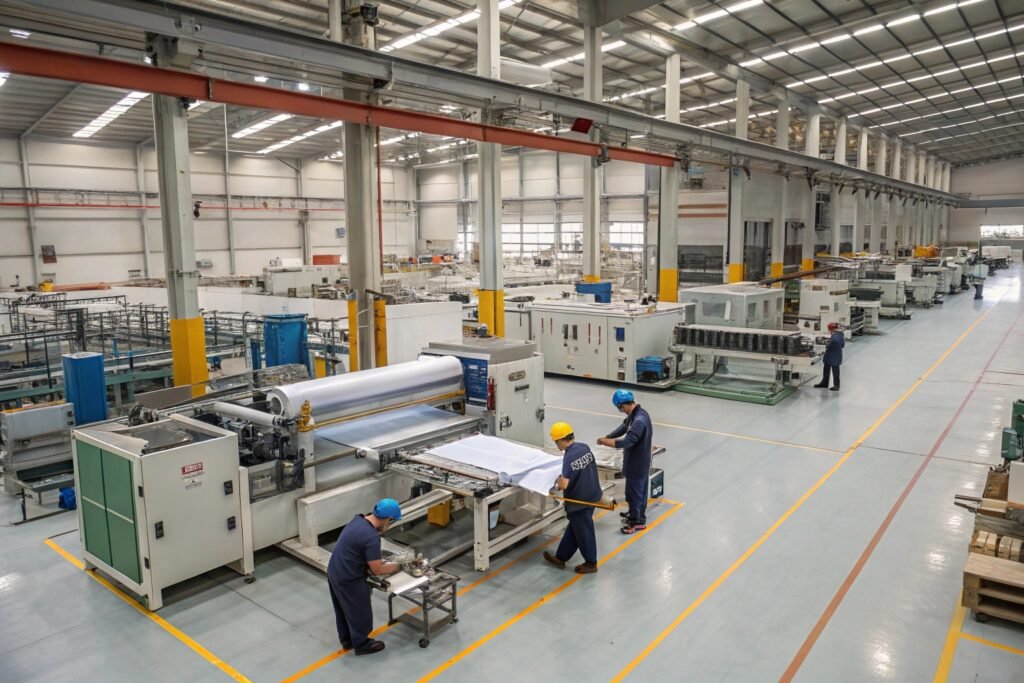
How Long Does It Take to Manufacture a Bubble Roll Sheeting Machine?
The manufacturing lead time depends on whether the machine is a standard model or a customized configuration.
Many buyers assume every machine is built from scratch. In reality, many experienced manufacturers keep standard models in stock or maintain semi-finished inventory to shorten delivery times.
Typical Production Lead Times
| Machine Type | Production Time |
|---|---|
| Standard Machine in Stock | 3-7 Days |
| Standard Machine Build-to-Order | 2-4 Weeks |
| Semi-Customized Machine | 4-6 Weeks |
| Fully Customized Machine | 6-8 Weeks or Longer |
For a standard Bubble Roll Sheeting Machine, most factories can complete production within 4 to 8 weeks after order confirmation.
However, many factories that specialize in cutting equipment often have standard machines available. In some cases, the machine can be shipped within one week after receiving the deposit payment.
I often advise buyers to ask suppliers the following questions:
- Is the machine currently in stock?
- Are major components already available?
- Is assembly required after payment?
- What is the expected FAT (Factory Acceptance Test) date?
These questions help reveal the real production timeline.
Factors That Increase Lead Time
Several customization requests can extend production time:
| Custom Feature | Impact on Lead Time |
|---|---|
| Custom Roll Width | Medium |
| Special Punching Holes | Medium |
| Additional Tension Control System | High |
| Servo Feeding System | High |
| Special Voltage Requirements | Medium |
| Custom Safety Protection | Medium |
| PLC Program Modification | High |
If I request special electrical standards such as 220V 60Hz, UL-compliant components, or unique operating software, the manufacturer may need additional engineering and testing time.
As a result, customized machines often require several additional weeks before shipment.
Dive Deeper: Why Standard Machines Can Ship Much Faster Than Customized Machines
Many first-time buyers believe every machine follows the same production schedule. This is usually not true.
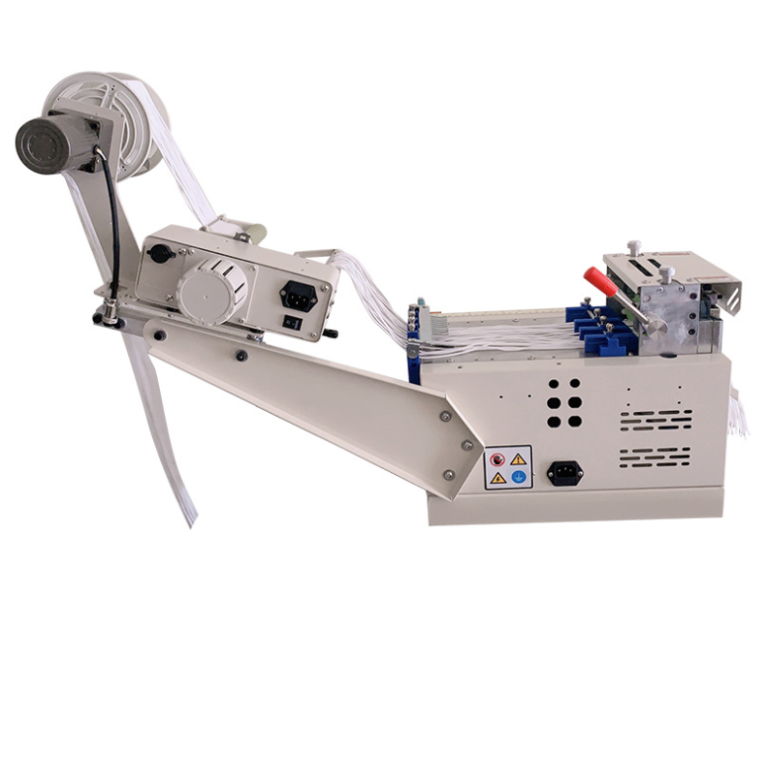
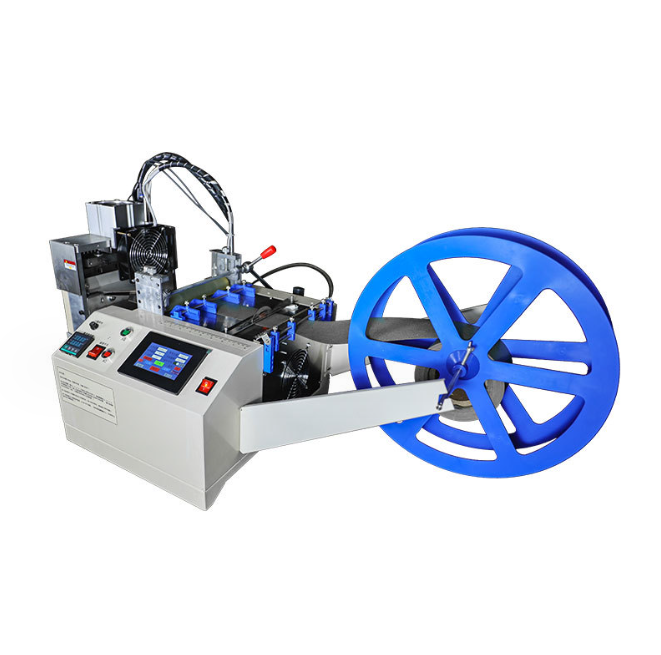
Most established cutting machine manufacturers produce popular models continuously throughout the year. Machines such as the Bubble Roll Sheeting Machine, webbing tape cutting machine, hot and cold cutting machine, automatic punching cutting machine, and computer tube cutting machine often have stable market demand.
How Factories Reduce Delivery Time
Factories usually prepare:
- Machine frames
- Electrical cabinets
- Standard motors
- Pneumatic components
- PLC systems
before receiving actual customer orders.
This means the supplier only needs final assembly and testing after payment.
Example Delivery Comparison
| Stage | Standard Machine | Customized Machine |
|---|---|---|
| Component Procurement | Ready | Required |
| Assembly | 3-5 Days | 10-20 Days |
| Programming | Standard | Customized |
| Testing | Standard FAT | Extended FAT |
| Total Lead Time | 1-4 Weeks | 6-10 Weeks |
From my experience, buyers who need urgent delivery should select standard configurations whenever possible.
If air freight is selected, some customers can receive the machine within one week after shipment.
For buyers who are not under time pressure, sea freight usually offers the lowest overall logistics cost.
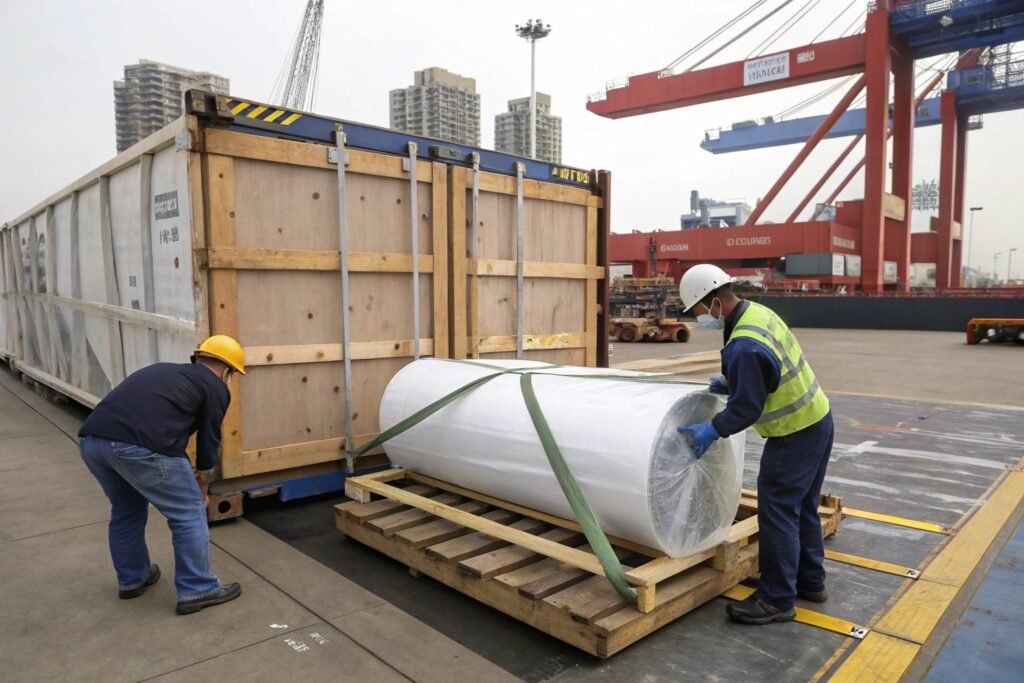
What Export Packaging Is Used to Prevent Rust and Shipping Damage?
Industrial machinery faces many risks during international transportation.
These risks include:
- Humidity
- Salt air exposure
- Container movement
- Shock and vibration
- Long storage periods at ports
Professional manufacturers use export-grade packaging to minimize these risks.
Common Export Packaging Materials
| Packaging Material | Purpose |
|---|---|
| Rust-Proof Oil | Corrosion Protection |
| VCI Film | Moisture Control |
| Stretch Film | Dust Protection |
| Foam Padding | Shock Absorption |
| Wooden Crate | Structural Protection |
| Steel Fastening Straps | Movement Prevention |
| Desiccant Bags | Moisture Removal |
For sea freight shipments, anti-rust treatment is extremely important.
The machine’s metal surfaces are usually coated with rust preventive oil before wrapping.
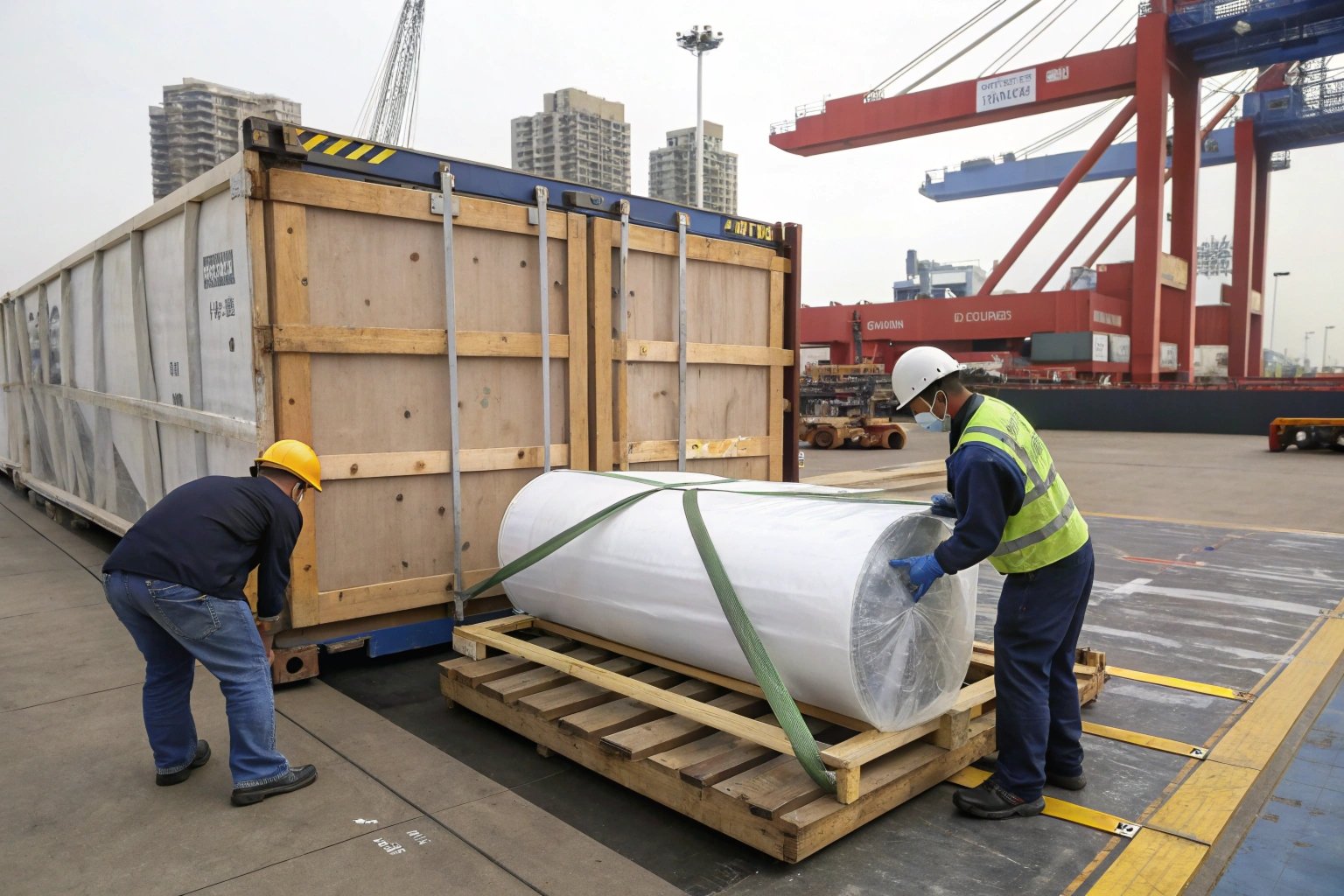
Afterward, the machine is covered with waterproof plastic film and packed into fumigation-free wooden crates.
Why Wooden Crates Are Important
Heavy industrial equipment can shift inside containers during ocean transportation.
A properly designed wooden crate helps:
- Prevent frame deformation
- Protect electrical components
- Reduce vibration damage
- Simplify forklift handling
Some manufacturers also install shock indicators on the crate to monitor handling conditions throughout transit.
Dive Deeper: How Sea Freight Conditions Affect Machine Safety
Many buyers focus only on shipping cost. However, packaging quality often matters more than transportation cost.
A machine traveling from China to Europe or North America may spend several weeks at sea.
During this period, the machine experiences:
Environmental Risks
| Risk | Potential Damage |
|---|---|
| High Humidity | Rust |
| Salt Air | Corrosion |
| Temperature Changes | Condensation |
| Container Movement | Mechanical Damage |
Condensation is one of the biggest threats.
When containers move between different climate zones, moisture can form inside the container.
Without proper moisture protection, electronic parts may become damaged before arrival.
Packaging Practices Used by Professional Factories
High-quality manufacturers usually follow a layered protection process:
- Rust preventive treatment
- VCI anti-corrosion wrapping
- Waterproof film protection
- Foam protection
- Wooden crate packaging
- Container securing
This system greatly reduces transportation risks.
When I compare suppliers, I always ask for packaging photos from previous shipments.
The quality of export packaging often reflects the overall professionalism of the manufacturer.
What Shipping Documents Are Required for Customs Clearance?
Missing shipping documents can cause expensive delays.
Before shipment, buyers should verify that all required paperwork is prepared correctly.
Essential Export Documents
| Document | Purpose |
|---|---|
| Commercial Invoice | Customs Valuation |
| Packing List | Cargo Verification |
| Bill of Lading | Ownership and Transport |
| Certificate of Origin | Tariff Benefits |
| CE Certificate (If Applicable) | Compliance Verification |
| Insurance Certificate | Cargo Protection |
| User Manual | Installation Support |
The exact documentation requirements vary by country.
For example:
North America
- Commercial Invoice
- Packing List
- Bill of Lading
- Certificate of Origin
Europe
- Commercial Invoice
- Packing List
- Bill of Lading
- CE Documentation
- Declaration of Conformity
Southeast Asia
- Commercial Invoice
- Packing List
- Bill of Lading
- Certificate of Origin
I always recommend confirming customs requirements before production begins.
This helps avoid delays after the machine arrives.
How Does the Manufacturer Test the Machine Before Delivery?
Factory testing is one of the most important stages before shipment.
Professional manufacturers perform Factory Acceptance Testing (FAT) before packaging.
The purpose is simple:
The machine must work properly before leaving the factory.
Common FAT Procedures
| Test Item | Objective |
|---|---|
| Power-On Test | Electrical Verification |
| Feeding Test | Material Handling Check |
| Cutting Accuracy Test | Dimension Verification |
| Speed Test | Performance Validation |
| Safety System Test | Operator Protection |
| Continuous Running Test | Reliability Verification |
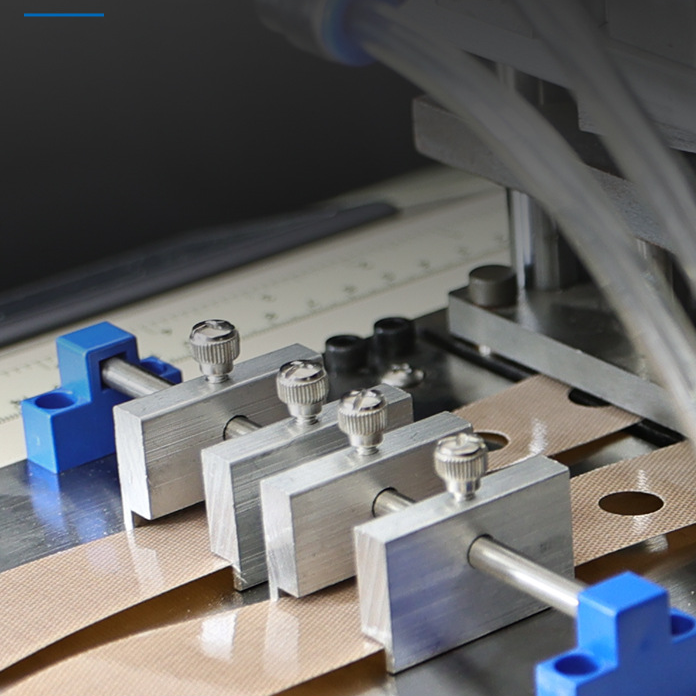
For a Bubble Roll Sheeting Machine, the factory typically loads actual bubble film material and performs multiple production cycles.
The machine must demonstrate:
- Accurate feeding
- Stable tension control
- Clean cutting quality
- Consistent sheet length
Only after passing all inspections will the machine proceed to packaging.
Dive Deeper: Why FAT Testing Protects Overseas Buyers
When buying overseas equipment, buyers cannot easily return machines after delivery.
This makes FAT testing extremely valuable.
What Happens During FAT?
The machine is assembled completely.
Operators then run production simulations using real materials.
The testing process usually includes:
Mechanical Inspection
- Frame stability
- Roller alignment
- Bearing condition
- Pneumatic systems
Electrical Inspection
- PLC operation
- Sensor response
- Servo motor performance
- Emergency stop functions
Production Inspection
- Cutting accuracy
- Feeding precision
- Production speed
- Finished product quality
Many factories now provide FAT videos before shipment.
Some suppliers also offer live video inspections through Zoom, Teams, or WhatsApp.
Questions I Always Ask Before Shipment
| Question | Reason |
|---|---|
| Can I receive FAT videos? | Verify performance |
| Can I review test results? | Confirm specifications |
| Will spare parts be included? | Reduce downtime |
| Can operators receive training? | Faster installation |
A supplier that openly shares FAT results usually demonstrates greater confidence in its machine quality.
Conclusion
The delivery timeline of a Bubble Roll Sheeting Machine involves much more than manufacturing alone.
A typical project includes production, testing, export packaging, documentation preparation, international transportation, customs clearance, and local delivery.
Standard machines may be available for shipment within a few days, while customized machines often require 4 to 8 weeks or more.
Professional suppliers protect equipment with rust prevention treatment, waterproof wrapping, and wooden crate packaging. They also perform Factory Acceptance Testing before shipment and provide the necessary export documents for smooth customs clearance.
By understanding each step in advance, buyers can plan installation schedules more accurately, avoid unexpected delays, and ensure a successful machine import process.
Insights from HAOXINHE
At HAOXINHE, we understand that delivery speed is often as important as machine quality.
Many of our standard cutting machines, including Bubble Roll Sheeting Machines, Webbing Ribbon Cutting Machines, Hot and Cold Cutting Machines, Automatic Punching Cutting Machines, Computer Tube Cutting Machines, Wire Cutting and Stripping Machines, Rotary Bevel Cutting Machines, PVC Edge Banding Cutting Machines, and Protective Foam Cutting Machines, are available from stock or semi-finished inventory.
For standard configurations, we can often arrange shipment within one week after receiving payment.
For customers who need the machine urgently, air freight may allow delivery within approximately one week after dispatch.
For larger machines, many customers choose sea freight or tax-included shipping channels. Although transit takes longer, transportation costs can be reduced significantly, making it a cost-effective solution for distributors and wholesalers.
We also provide:
- FAT testing videos before shipment
- Export-grade wooden crate packaging
- Rust prevention protection
- CE-compliant configurations when required
- Operator training support
- Spare parts packages
- Complete export documentation
Our goal is to help customers receive reliable cutting equipment with minimal risk and maximum efficiency.