Streamlining Peak Season Shipping with an Automatic Bubble Roll Cutter
Peak season is one of the most stressful times for any warehouse or fulfillment center.
Every year, during Black Friday, Cyber Monday, holiday sales, and year-end promotions, shipping volumes can suddenly explode. Some warehouses process two or three times their normal daily orders within only a few days.1
I have seen many packaging departments struggle during these periods.
Workers rush to prepare materials. Packing stations become crowded. Bubble wrap rolls pile up beside tables. Managers push overtime. Shipping deadlines become harder to meet every hour.
In many warehouses, the real bottleneck is not picking or labeling.
The real bottleneck is packaging preparation.
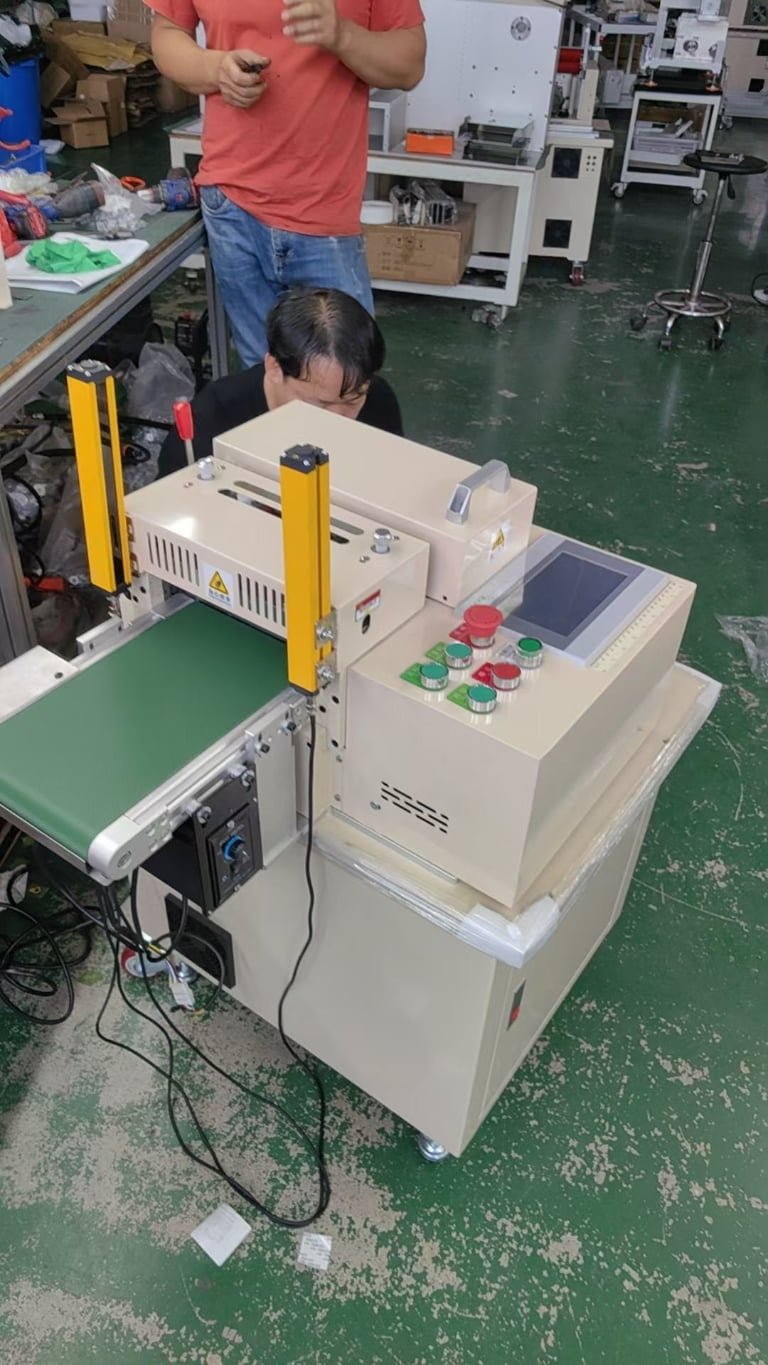
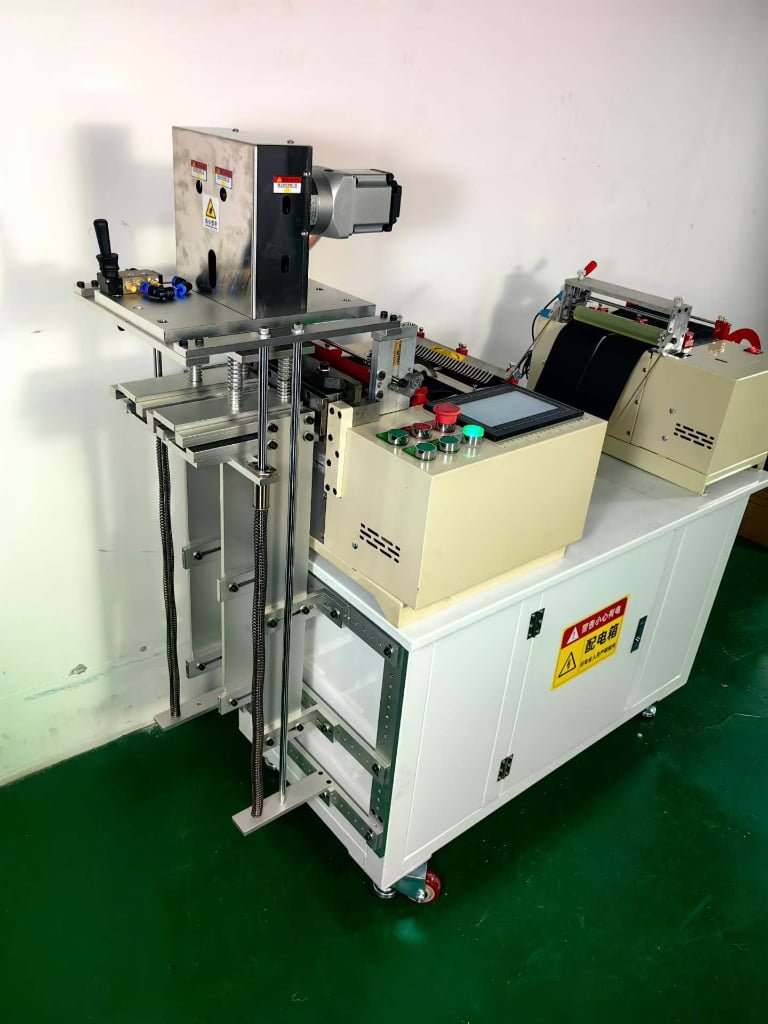
This is why more logistics companies now use automated systems like a Bubble wrap cutting machine, hot and cold cutting machine, Protective Foam Cutting Machine, and other smart material handling equipment to stabilize operations during peak demand periods.
An automatic bubble roll cutter helps warehouses maintain speed, consistency, and packaging flow even when order volume suddenly triples overnight.
In this article, I will explain how automated bubble wrap cutting systems help companies survive peak season shipping pressure while improving long-term warehouse scalability.
-
Manual packaging processes reduce fulfillment efficiency by creating delays, inconsistent workflows, and slower shipping preparation in busy warehouses.
-
Hand-cut bubble wrap often causes uneven protection, increasing product damage risks2, return costs, and customer dissatisfaction during transit.
-
Automated cutting equipment improves material accuracy, helping companies reduce waste3, lower freight costs4, and optimize packaging performance.
-
Smart logistics centers integrate automated cutting systems with conveyor lines, barcode workflows, and warehouse management operations.
-
Packaging automation helps e-commerce and 3PL companies scale faster with stable throughput, standardized quality, and lower labor dependency.
Why Peak Season Creates Major Packaging Problems
Peak season places enormous pressure on every part of warehouse operations.
Most fulfillment centers prepare months in advance. Still, packaging departments often become overwhelmed once order surges begin.
Order Growth Happens Faster Than Labor Growth
One major problem is that order volume can increase almost instantly.
A warehouse may suddenly experience:
- 200% more daily orders
- More fragile products
- Faster shipping deadlines
- More packaging material usage
- Longer operating hours
Still, hiring and training workers takes time.
This creates a dangerous gap between operational demand and labor capacity.
Common Peak Season Packaging Problems
| Problem | Operational Impact |
|---|---|
| Manual bubble wrap cutting | Slow packing speed |
| Material shortages | Shipping interruptions |
| Worker fatigue | Higher error rates |
| Packaging inconsistency | Product damage |
| Shared cutting stations | Workflow congestion |
| Overtime overload | Reduced productivity |
Many managers underestimate how quickly manual material preparation becomes a bottleneck during high-volume fulfillment periods.
How to Prepare Your Packaging Line for Black Friday and Cyber Monday
Peak season preparation should begin long before order surges arrive.
Warehouses that wait until Black Friday week are usually already too late.
Focus on Packaging Flow First
Many operations focus heavily on:
- Inventory
- Picking
- Shipping software
- Carrier scheduling
But packaging flow is equally important.
If packers cannot prepare materials fast enough, the entire fulfillment process slows down.
This is why automated material handling systems are becoming essential in modern logistics operations.
Automate Repetitive Packaging Tasks
Manual cutting consumes huge amounts of labor during peak season.
Workers repeatedly:
- Pull bubble wrap rolls
- Measure material
- Cut manually
- Reposition rolls
- Clean scraps
This wastes valuable packing time.
An automatic Bubble wrap cutting machine removes much of this repetitive work by:
- Feeding material automatically
- Measuring fixed lengths
- Producing consistent cuts
- Supporting continuous workflow
This allows workers to focus on packing accuracy and shipment completion instead of material preparation.
Standardize Packaging Procedures
Peak season usually involves temporary workers.
Standardized packaging processes reduce training complexity.
Automation helps maintain:
- Consistent sheet lengths
- Stable packaging quality
- Faster onboarding
- Lower material waste
Packaging Standardization Benefits
| Standardization Area | Benefit |
|---|---|
| Fixed material sizes | Faster packing |
| Automated cutting | Reduced worker variation |
| Centralized preparation | Better workflow |
| Consistent packaging quality | Lower damage risk |
| Predictable material usage | Better inventory planning |
Equipment like:
- Bubble wrap cutting machine
- webbing tape cutting machine
- automatic punching cutting machine
- Protective Foam Cutting Machine
helps companies simplify packaging operations before peak demand begins.
Reorganize Packing Stations
During peak season, even small layout improvements matter.
Smart warehouses:
- Reduce worker walking distance
- Centralize packaging materials
- Improve station accessibility
- Separate material preparation zones
This increases throughput without adding more workers.
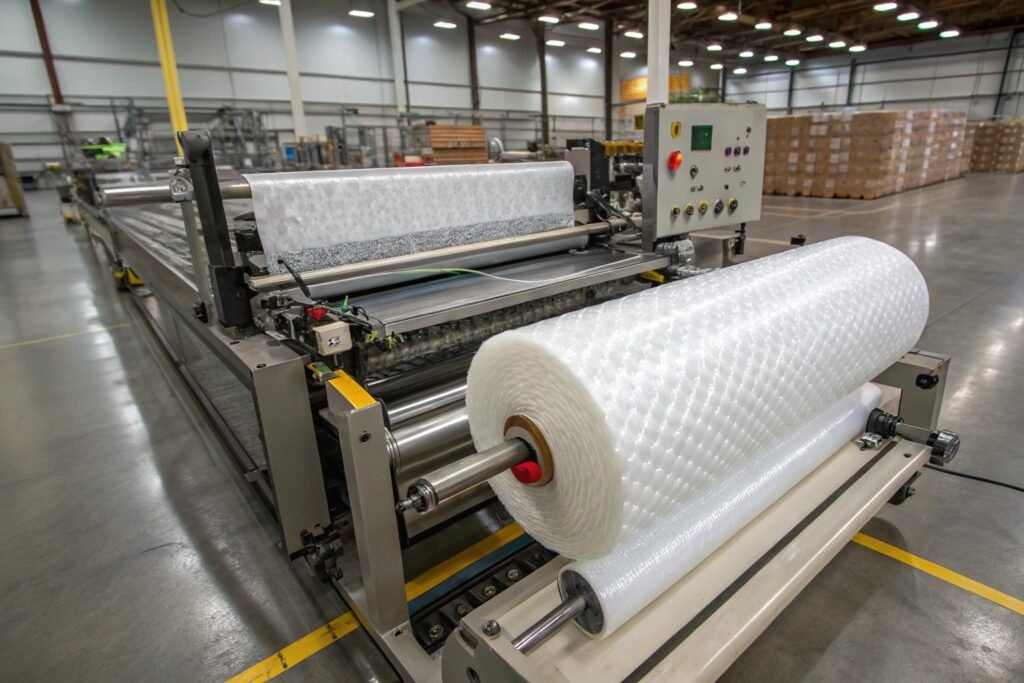
Can an Automatic Cutter Handle 24/7 Continuous Warehouse Operations?
One of the biggest questions warehouse managers ask is whether automated cutters can survive nonstop operation during peak season.
The answer depends heavily on equipment quality and production design.
Industrial Equipment Is Built for Continuous Operation
Professional industrial cutting machines are designed for:
- Long operating hours
- Continuous feeding
- Stable cutting precision
- High daily throughput
Many warehouses now operate packaging departments:
- 16 hours per day
- 20 hours per day
- Even 24/7 during peak season
High-quality automation equipment is built to support this demand.
Stable Performance Reduces Operational Stress
Unlike manual cutting operations, machines do not:
- Get tired
- Lose concentration
- Slow down late at night
- Create inconsistent cuts under pressure
This creates stable packaging output throughout all shifts.
Manual vs Automated Peak Season Performance
| Factor | Manual Cutting | Automatic Cutting |
|---|---|---|
| Output consistency | Variable | |
| Worker fatigue | High | |
| Continuous operation | Difficult | |
| Material precision | Inconsistent | |
| Scaling capability | Limited | |
| Throughput stability | Lower |
Preventive Maintenance Is Important
Even high-quality machines require proper maintenance during peak season.
Smart warehouses prepare by:
- Inspecting blades early
- Stocking spare parts
- Training operators
- Scheduling preventive checks
This minimizes downtime during critical shipping periods.
Multi-Shift Operations Become Easier
Automated cutting systems help companies manage:
- Day shifts
- Night shifts
- Weekend operations
without major differences in packaging quality.
Machines like:
- hot and cold cutting machine
- round shape cutting machine
- rotary bevel cutting machine
- computer tube cutting machine
are increasingly used in industrial environments requiring stable high-volume operation.
How to Prevent Packing Delays When Order Volumes Triple Overnight
Peak season delays usually begin at packaging stations.
Once packers fall behind, the entire fulfillment system starts slowing down.
Material Preparation Is Often the Hidden Bottleneck
Many warehouses focus on shipping software and carrier coordination.
Still, packaging material preparation often becomes the real operational bottleneck.
Workers may spend:
- Too much time cutting materials
- Waiting for shared tools
- Recutting uneven sheets
- Managing cluttered workstations
This creates packing delays very quickly during order surges.
Centralized Automation Improves Workflow
Instead of each worker manually preparing bubble wrap individually, centralized cutting systems supply prepared materials continuously.
This creates:
- Faster packing flow
- Less worker movement
- Better workstation balance
- Reduced interruptions
Common Peak Season Delay Causes
| Delay Source | Effect |
|---|---|
| Manual bubble wrap cutting | Slow order completion |
| Material shortages | Packing interruptions |
| Inconsistent prep speed | Workflow imbalance |
| Shared cutting stations | Worker congestion |
| Excessive overtime fatigue | Reduced productivity |
Batch Processing Improves Throughput
Many warehouses improve speed by batching similar orders together.
This reduces:
- Packaging setup changes
- Material switching
- Operator confusion
Automation works especially well in batch-based fulfillment environments.
Real-Time Packaging Monitoring Helps
Some advanced fulfillment centers track:
- Orders packed per hour
- Material usage rates
- Machine utilization
- Downtime frequency
This helps managers identify bottlenecks early before shipping delays become serious.
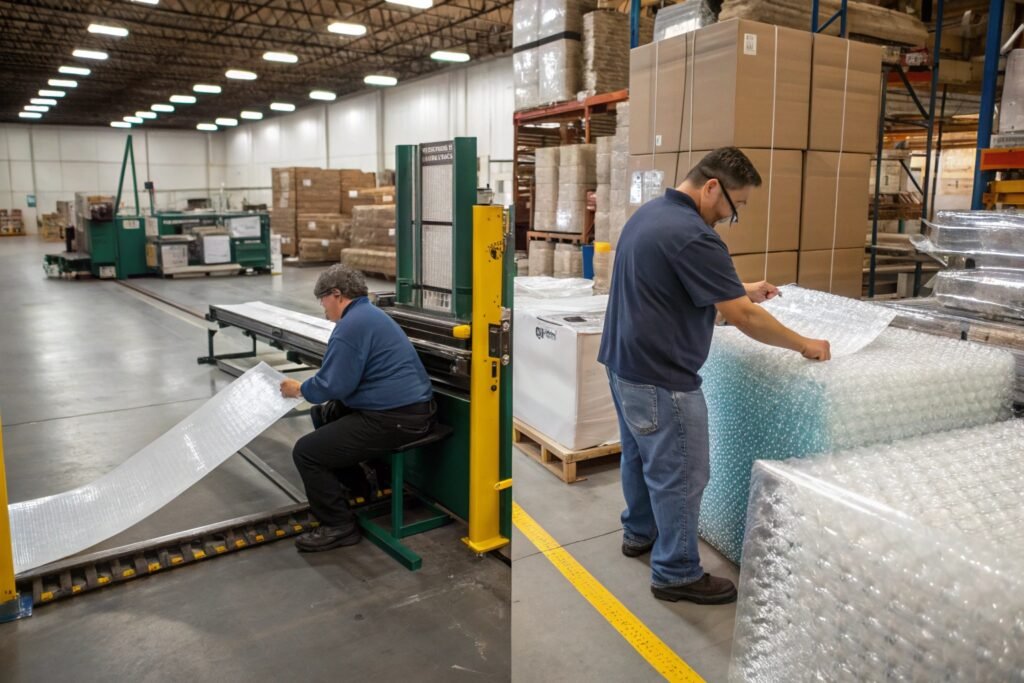
What Is the Maximum Capacity of a Roll Cutter During Peak Demands?
The capacity of a bubble roll cutter depends on:
- Machine design
- Material type
- Roll width
- Cutting speed
- Automation level
Still, industrial systems are capable of extremely high output.
Capacity Is Usually Higher Than Manual Operations
Even semi-automatic systems can dramatically outperform manual cutting.
A properly configured Bubble wrap cutting machine can continuously:
- Feed material
- Measure length
- Perform precise cuts
- Support multiple packing stations
This creates stable production speed during heavy order periods.
Throughput Depends on Workflow Integration
Machine speed alone is not enough.
Total packaging efficiency also depends on:
- Operator coordination
- Material replenishment
- Packing station layout
- Conveyor synchronization
The best results come when automation is integrated into the full packaging workflow.
Factors Affecting Roll Cutter Capacity
| Factor | Influence on Capacity |
|---|---|
| Roll diameter | Longer continuous runtime |
| Automation level | Reduced manual interruptions |
| Material thickness | Cutting speed variation |
| Operator training | Better workflow coordination |
| Maintenance quality | Reduced downtime |
Scalability Is One Major Advantage
Unlike manual labor, automated systems scale more predictably.
Companies can:
- Add additional cutting stations
- Expand packaging cells
- Upgrade automation modules
- Integrate conveyors
This allows gradual expansion as shipping demand grows.
Packaging Predictability Improves Customer Service
Stable packaging operations help companies:
- Meet carrier deadlines
- Reduce late shipments
- Improve delivery reliability
- Maintain customer satisfaction
This becomes extremely important during high-pressure retail seasons.
Machines like:
- Bubble wrap cutting machine
- Protective Foam Cutting Machine
- PVC Edge Banding cutting machine
- different shapes cutting machine
- wire cutting and stripping machine
support scalable industrial material preparation across multiple industries.
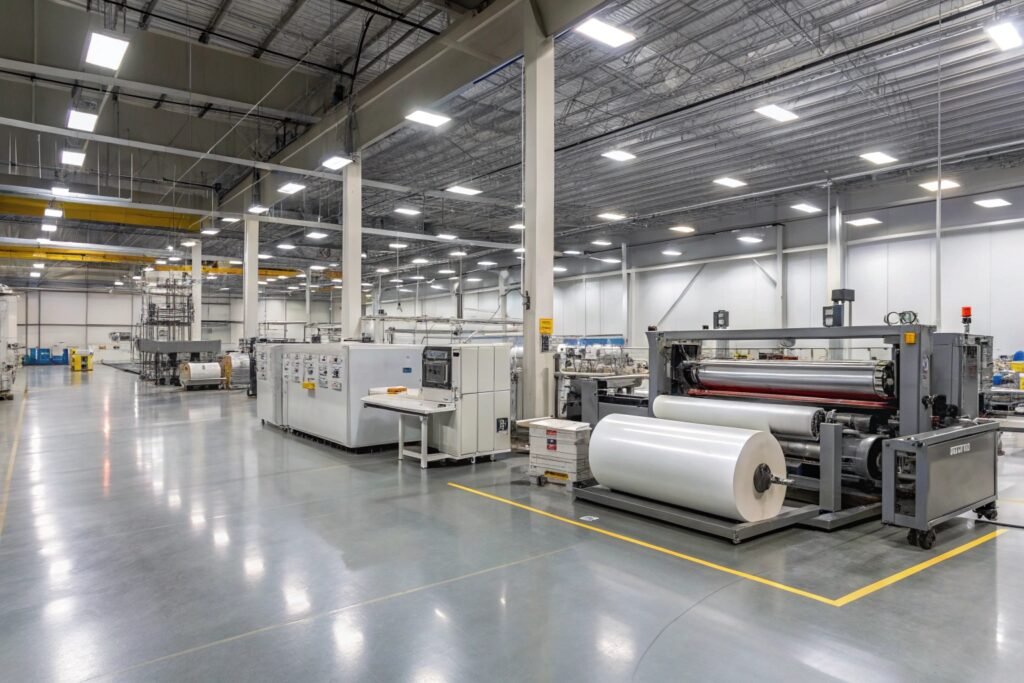
Why Packaging Automation Is Becoming Essential for Modern Fulfillment
E-commerce growth continues increasing every year5.
Customers now expect:
- Faster delivery
- Better packaging quality
- Same-day fulfillment
- Accurate shipments
Manual packaging systems struggle to meet these expectations consistently during peak demand.
Automation Improves Packaging Stability
Automation helps warehouses maintain:
- Consistent speed
- Stable quality
- Predictable material usage
- Lower labor dependency
This reduces operational risk during high-volume periods.
Worker Safety Also Improves
Manual cutting during stressful peak seasons increases:
- Fatigue
- Cutting injuries
- Repetitive motion strain
Automated cutting systems reduce repeated knife handling and improve workplace safety.
Material Waste Becomes Easier to Control
On-demand cutting improves material utilization.
This reduces:
- Overcutting
- Scrap waste
- Oversized packaging
- Freight inefficiency
Over time, these savings become significant for large-scale fulfillment operations.
Conclusion
Peak season shipping places enormous pressure on warehouse packaging operations.
Manual bubble wrap cutting often becomes a major bottleneck during Black Friday, Cyber Monday, and holiday fulfillment periods.
An automatic Bubble wrap cutting machine helps companies:
- Maintain packaging speed
- Reduce labor bottlenecks
- Improve packaging consistency
- Reduce material waste
- Support 24/7 operations
- Prevent shipping delays
As order volumes continue growing worldwide, packaging automation is becoming a critical part of scalable logistics operations.
Equipment like:
- Bubble wrap cutting machine
- hot and cold cutting machine
- Protective Foam Cutting Machine
- automatic punching cutting machine
- computer tube cutting machine
helps warehouses improve throughput while maintaining operational stability during even the busiest shipping seasons.
Insights About HAOXINHE
HAOXINHE specializes in industrial cutting equipment designed for modern packaging, logistics, and material processing industries.
The company helps customers improve:
- Packaging efficiency
- Material preparation speed
- Production consistency
- Labor utilization
- Workflow scalability
HAOXINHE Main Equipment Solutions
| Product | Main Application |
|---|---|
| Bubble wrap cutting machine | Protective packaging automation |
| Hot and cold cutting machine | Synthetic material cutting |
| Webbing tape cutting machine | Strap and ribbon processing |
| Protective Foam Cutting Machine | Foam material preparation |
| Automatic punching cutting machine | Precision punching |
| Round shape cutting machine | Circular cutting applications |
| Rotary bevel cutting machine | Angled edge processing |
| Different shapes cutting machine | Customized material cutting |
| Computer tube cutting machine | Tube automation processing |
| Wire cutting and stripping machine | Cable preparation |
| Metal pipe cutting and beveling machine | Pipe processing automation |
| PVC Edge Banding cutting machine | Furniture edge material cutting |
Why Global Buyers Choose HAOXINHE
- Strong factory manufacturing capability
- Multiple production lines
- Stable export quality
- Competitive wholesale pricing
- Custom machine development support
- Experience serving Europe and North America
- Reliable communication for B2B projects
HAOXINHE continues helping logistics companies and packaging manufacturers build faster, more scalable, and more efficient packaging operations for long-term growth.
-
"Warehouse Optimization during Peak Season: Strategic Guide", https://www.autostoresystem.com/insights/warehouse-optimization-during-peak-season-strategic-guide. Industry research documents that fulfillment centers commonly experience order volume surges of 200-300% during peak retail periods including Black Friday and holiday seasons, creating significant operational strain on packaging and shipping departments. Evidence role: statistic; source type: research. Supports: quantified order volume increases during retail peak seasons. Scope note: Specific multipliers vary by industry sector, retailer size, and geographic market ↩
-
"Which visual elements on packaging affect perceived credibility? A …", https://pmc.ncbi.nlm.nih.gov/articles/PMC10300339/. Packaging engineering research demonstrates that inconsistent protective material application creates variable cushioning performance, with inadequate coverage zones correlating to higher damage rates during transit and handling, particularly for fragile items subjected to drop and vibration stresses. Evidence role: mechanism; source type: research. Supports: the relationship between packaging consistency and product protection effectiveness. Scope note: Damage risk depends on product fragility, shipping conditions, and handling practices beyond packaging alone ↩
-
"Reducing Waste in Manufacturing Through Automation", https://www.motiondrivesandcontrols.co.uk/blog/reducing-waste-in-manufacturing-through-automation. Manufacturing engineering studies document that automated cutting systems typically achieve 5-15% better material utilization compared to manual methods through consistent measurement, reduced operator variation, and optimized cut planning, with savings magnitude depending on material type and cutting complexity. Evidence role: statistic; source type: research. Supports: waste reduction achieved through automated versus manual cutting processes. Scope note: Actual waste reduction depends on material characteristics, cutting patterns, and baseline manual process efficiency ↩
-
"How to Tackle Unexpected Shipping Costs Due to Box Size Variance", https://www.transvirtual.com/us/blog/tackle-shipping-costs-box-size/. Logistics research confirms that dimensional weight pricing models used by major carriers create direct cost relationships between package size and shipping expenses, with optimized packaging reducing billable weight and yielding measurable freight savings, particularly for lightweight items in oversized containers. Evidence role: mechanism; source type: research. Supports: how packaging dimensions affect freight pricing under dimensional weight systems. Scope note: Savings depend on carrier pricing structures, shipment profiles, and baseline packaging practices ↩
-
"eCommerce Sales & Size Forecast – International Trade Administration", https://www.trade.gov/ecommerce-sales-size-forecast. International trade and commerce organizations report consistent annual growth in global e-commerce sales over the past decade, with online retail representing an expanding share of total retail activity across major markets, driving corresponding increases in fulfillment and logistics infrastructure demands. Evidence role: statistic; source type: institution. Supports: sustained growth trends in e-commerce market size and transaction volumes. Scope note: Growth rates vary by region, product category, and economic conditions ↩