What Are the Top 10 Features Every Automatic Roll to Sheet Cutting Machine Should Have?
Choosing an automatic roll to sheet cutting machine is not simply about finding the fastest machine on the market. Industrial buyers must consider a wide range of factors that directly affect production efficiency, cut quality, labor costs, machine reliability, and long-term return on investment.
Today’s manufacturers process a variety of materials, including paper, film, labels, foam, bubble wrap, webbing, nonwoven fabrics, PVC edge banding, and other flexible substrates. As production requirements become more demanding, buyers need equipment that combines automation, precision, flexibility, and durability.
I have worked with many packaging converters, printing companies, and material processors that initially focused only on machine speed. However, after comparing different production lines, they often discovered that other features had a greater impact on productivity and profitability.
The best automatic roll to sheet cutting machines are designed to reduce operator workload, improve consistency, and support continuous industrial production.
In this guide, I will explain the ten most important features every industrial buyer should evaluate before investing in a roll-to-sheet cutting machine.
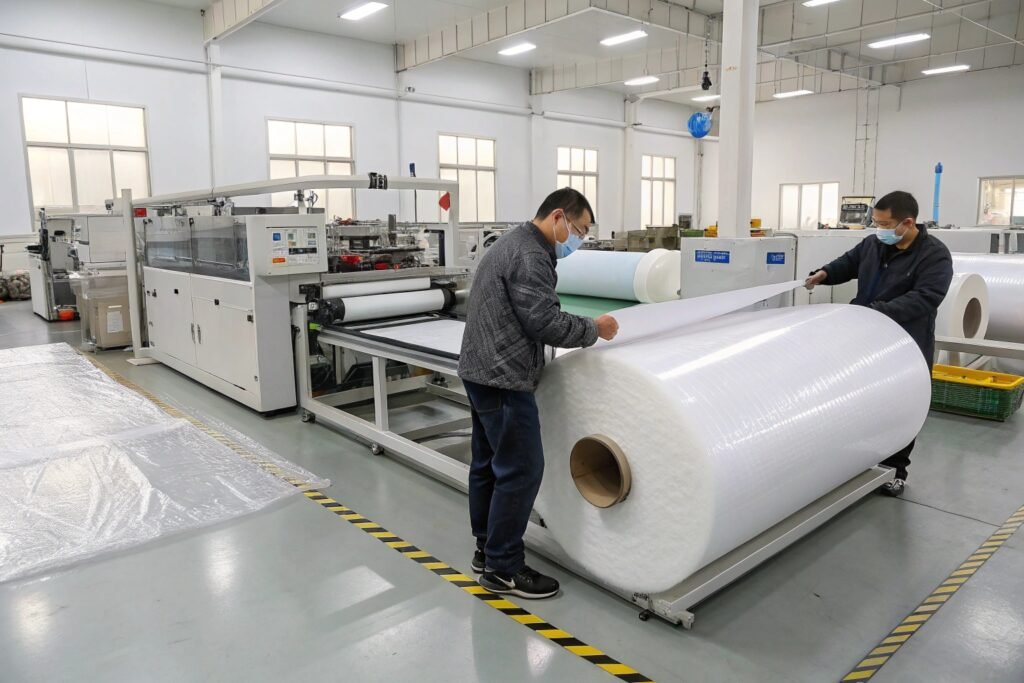
Which Functions Deliver the Highest Value for Industrial Production Lines?
The most valuable functions include automatic multi-piece cutting, high-accuracy control, programmable operation, material compatibility, durable cutting components, safety protection, and easy maintenance. These features directly improve productivity, reduce labor requirements, and increase machine uptime.
Quick Overview of the Top 10 Features
| Feature | Main Benefit |
|---|---|
| Automatic Multi-Piece Cutting | Higher throughput |
| High-Accuracy Control | Better quality |
| Fully Automatic Operation | Reduced labor |
| Durable Cutting Blades | Longer service life |
| User-Friendly Interface | Faster setup |
| Programmable Length Settings | Consistent production |
| Material Compatibility | Greater flexibility |
| Slitting Functions | More applications |
| Safety Protection Systems | Improved workplace safety |
| Easy Maintenance | Reduced downtime |
These features work together to maximize production efficiency while minimizing operating costs.
1. Automatic Multi-Piece Cutting for Higher Throughput
One of the most valuable productivity features is automatic multi-piece cutting.
Traditional machines often process one strip of material at a time. Modern industrial systems can process multiple lanes simultaneously.
Why Multi-Piece Cutting Matters
Increased Output
More material is processed during each cutting cycle.
Better Machine Utilization
The machine spends less time handling individual cuts.
Lower Production Cost
Higher output reduces cost per finished sheet.
Throughput Comparison
| Cutting Method | Relative Output |
|---|---|
| Single-Lane Cutting | Standard |
| Multi-Lane Cutting | Significantly Higher |
For high-volume packaging and converting operations, this feature can dramatically improve overall productivity.
2. High-Accuracy Control Improves Product Quality
Precision is critical in roll-to-sheet cutting.
Even small dimensional variations can create problems in downstream printing, packaging, laminating, or assembly processes.
Modern machines use servo-driven systems and advanced control technology to achieve highly accurate length control.
Benefits of High Accuracy
| Benefit | Impact |
|---|---|
| Consistent Sheet Length | Better Product Quality |
| Reduced Scrap | Lower Material Cost |
| Better Registration | Improved Printing Results |
| Higher Customer Satisfaction | Fewer Complaints |
Some advanced systems advertise positioning accuracy as fine as 0.01 mm under controlled operating conditions.
Why Precision Matters
Manufacturers serving industries such as labels, medical packaging, electronics, and specialty printing often require extremely tight tolerances.
Without precise control systems, maintaining these standards becomes difficult.
3. Fully Automatic Cutting Reduces Labor Requirements
Automation is one of the primary reasons manufacturers invest in roll-to-sheet cutting equipment.
A fully automatic machine performs feeding, measuring, cutting, counting, and sometimes stacking with minimal operator involvement.
Advantages of Full Automation
Reduced Labor Costs
Fewer operators are required.
Consistent Production
Human error becomes less significant.
Improved Efficiency
Machines maintain stable performance throughout long shifts.
Labor Comparison
| Production Method | Operator Requirement |
|---|---|
| Manual Cutting | High |
| Semi-Automatic | Moderate |
| Fully Automatic | Low |
For many manufacturers, labor savings alone justify the investment in automation.
4. Durable Hardened Steel Blades Extend Machine Life
Blade quality directly affects cut performance.
Low-quality blades wear quickly and create inconsistent cuts.
Industrial buyers should prioritize machines equipped with hardened steel cutting blades designed for long production runs.
Benefits of Durable Blades
Consistent Cut Quality
Cleaner edges throughout production.
Reduced Replacement Frequency
Lower maintenance costs.
Better Machine Reliability
Fewer production interruptions.
Blade Performance Factors
| Blade Characteristic | Benefit |
|---|---|
| Hardened Steel | Longer Life |
| Wear Resistance | Stable Quality |
| Precision Grinding | Cleaner Cuts |
A high-quality blade system often delivers long-term savings that exceed the initial investment.
5. User-Friendly Controls Reduce Setup Time
A machine can have excellent performance specifications, but if operators struggle to use it, productivity suffers.
Modern machines should provide intuitive control interfaces.
Features of a Good User Interface
Clear Display
Operators can quickly view settings.
Easy Programming
Production jobs can be entered efficiently.
Reduced setup time between jobs.
Error Notifications
Operators receive immediate feedback.
Production Benefits
| Interface Quality | Impact |
|---|---|
| Complicated | Slower Setup |
| User-Friendly | Faster Production Changes |
Easy operation reduces training requirements and improves workforce efficiency.
6. Programmable Length and Quantity Settings
Programmable controls are essential for repeatable production.
Instead of manually adjusting settings for every job, operators can store production parameters and reuse them later.
Benefits of Programmable Controls
Faster Changeovers
Jobs switch quickly.
Better Consistency
Repeat orders remain identical.
Reduced Operator Errors
Stored programs eliminate guesswork.
Typical Programmable Functions
| Function | Benefit |
|---|---|
| Length Setting | Accurate Sheets |
| Quantity Setting | Production Control |
| Job Storage | Faster Repeat Orders |
This feature becomes especially valuable in operations with multiple product sizes.
7. Broad Material Compatibility Increases Flexibility
Every production facility processes different materials.
Some handle paper and cardboard. Others process film, labels, foam, textiles, or industrial substrates.
Common Materials
- Paper Rolls
- PET Film
- PE Film
- Label Stock
- Foam Materials
- Bubble Wrap
- PVC Edge Banding
- Webbing Tape
Why Compatibility Matters
| Limited Compatibility | Broad Compatibility |
|---|---|
| Fewer Applications | More Applications |
| Reduced Flexibility | Greater Flexibility |
| More Equipment Needed | Fewer Machines Required |
The broader the material range, the greater the machine’s long-term value.
8. Slitting and Splitting Functions Add Production Flexibility
Many industrial buyers require more than simple sheet cutting.
Integrated slitting functions allow machines to divide wide rolls into narrower strips before cutting.
Benefits of Slitting
More Product Options
One machine can handle multiple applications.
Improved Workflow
Fewer secondary processes are required.
Better Equipment Utilization
Production flexibility increases.
Application Examples
| Application | Benefit |
|---|---|
| Label Production | Narrow Width Processing |
| Packaging Films | Multiple Roll Widths |
| Industrial Materials | Customized Sizes |
Machines with combined cutting and slitting capabilities often provide greater long-term value.
9. Advanced Safety Features Protect Operators
Safety should never be treated as an optional feature.
Automatic machines should reduce operator exposure to moving blades and mechanical hazards.
Important Safety Features
Blade Guards
Prevent accidental contact.
Emergency Stop Systems
Allow rapid shutdown.
Safety Interlocks
Protect operators during maintenance.
Enclosed Cutting Areas
Reduce operational risks.
Safety Benefits
| Safety Feature | Benefit |
|---|---|
| Blade Protection | Reduced Injury Risk |
| Emergency Stops | Faster Response |
| Safety Sensors | Better Protection |
A safe machine protects both employees and production continuity.
10. Easy Maintenance and Quick Blade Changes Reduce Downtime
Machine uptime directly affects profitability.
Equipment that is difficult to maintain often experiences longer production interruptions.
Features That Improve Maintenance Efficiency
Quick Blade Replacement
Reduces service time.
Easy Component Access
Simplifies inspections.
Modular Design
Speeds repairs.
Diagnostic Systems
Help identify issues quickly.
Maintenance Impact
| Maintenance Quality | Downtime Impact |
|---|---|
| Difficult Access | Longer Downtime |
| Easy Access | Faster Recovery |
The best industrial machines are designed with maintenance efficiency in mind.
How Industrial Buyers Should Prioritize Features
Not every feature carries the same importance for every application.
Recommended Priority Ranking
| Priority | Feature |
|---|---|
| Very High | Accuracy |
| Very High | Automation |
| Very High | Material Compatibility |
| High | Blade Durability |
| High | Safety Features |
| High | Maintenance Accessibility |
| Medium | Slitting Functions |
| Medium | Advanced Interface Features |
Buyers should evaluate machines based on actual production requirements rather than marketing claims alone.
Conclusion
The best automatic roll-to-sheet cutting machines combine multiple features that improve productivity, quality, safety, and reliability. Automatic multi-piece cutting, high-accuracy control, programmable operation, durable blades, broad material compatibility, and easy maintenance all contribute to better production performance.
Rather than focusing on a single specification, industrial buyers should evaluate how these features work together within their production environment.
A machine that balances automation, precision, flexibility, and reliability will typically deliver the highest long-term return on investment.
Insights: Why HAOXINHE Machines Include the Features Industrial Buyers Need Most
At HAOXINHE, we design our cutting equipment around the real challenges manufacturers face every day. Our goal is not simply to provide cutting machines, but to help customers improve productivity, reduce labor costs, and maintain consistent product quality.
HAOXINHE Product Portfolio
- Webbing Tape Cutting Machine
- Hot and Cold Cutting Machine
- High-Speed Trademark Cutting Machine
- Automatic Punching Cutting Machine
- Round Shape Cutting Machine
- Rotary Bevel Cutting Machine
- Different Shapes Cutting Machine
- Computer Tube Cutting Machine
- Wire Cutting and Stripping Machine
- Metal Pipe Cutting and Beveling Machine
- Webbing Ribbon Cutting Machine
- Bubble Wrap Cutting Machine
- PVC Edge Banding Cutting Machine
- Protective Foam Cutting Machine
HAOXINHE Equipment Advantages
| Feature | Customer Benefit |
|---|---|
| Servo-Controlled Feeding | Higher Precision |
| Programmable Operation | Faster Changeovers |
| Multi-Material Support | Greater Flexibility |
| Automatic Counting | Reduced Labor |
| Durable Blade Systems | Longer Service Life |
| Custom Machine Design | Better Production Fit |
My Personal Experience as the Owner of HAOXINHE
As the owner of HAOXINHE, I have spent many years talking directly with factory owners, production managers, and equipment buyers from Europe, North America, and Southeast Asia. One thing I have learned is that customers rarely regret buying a machine with too many useful features. What they regret is buying a machine that cannot grow with their business.
I remember a customer from Germany who initially focused only on cutting speed when comparing suppliers. During our discussions, we spent more time talking about material compatibility, programmable controls, maintenance access, and future production plans. In the end, he selected a machine with stronger automation features instead of the fastest model available. A year later, he told me that the easier setup process and reduced downtime had saved more money than the additional speed would have.
This experience reinforced something I often tell customers: the best cutting machine is not the one with the highest speed specification. It is the one that delivers stable production, consistent quality, simple operation, and reliable performance every day. At HAOXINHE, we focus on building equipment that helps customers achieve exactly that balance.