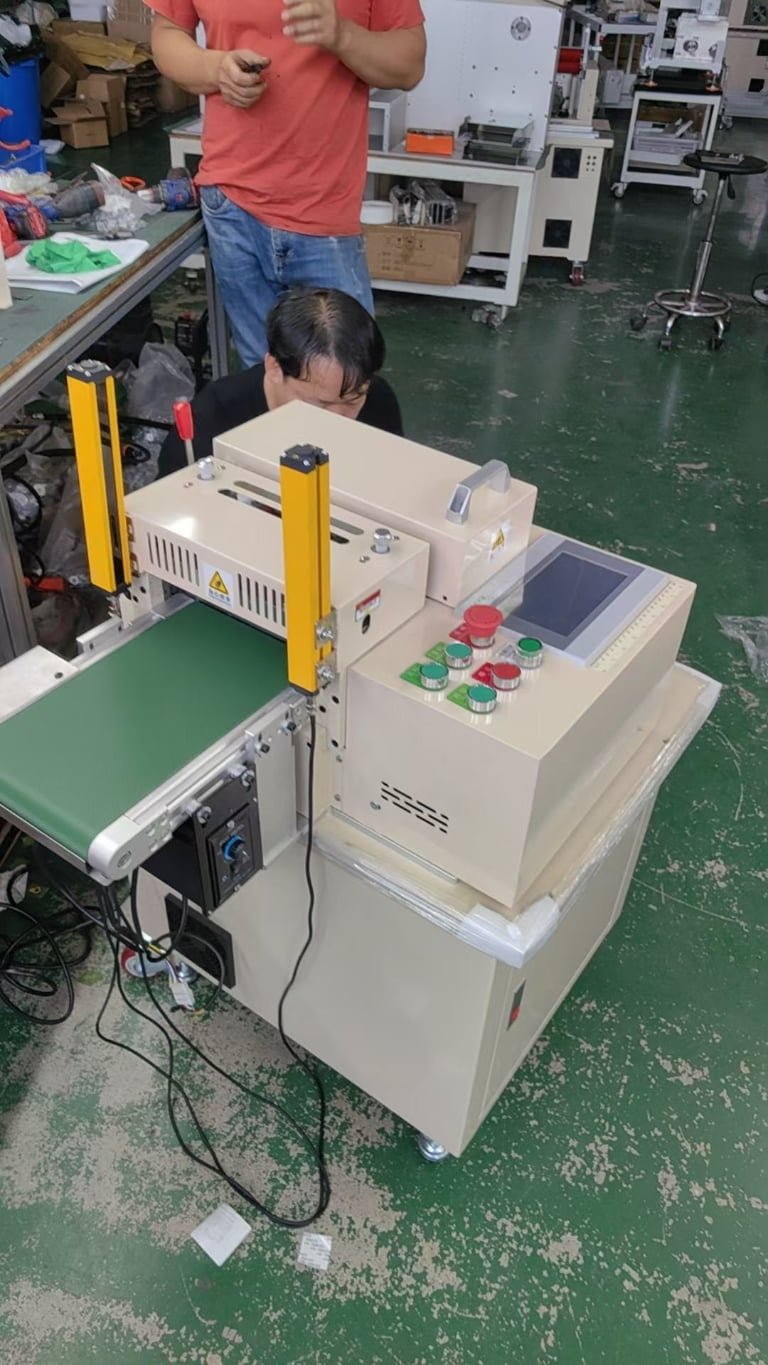
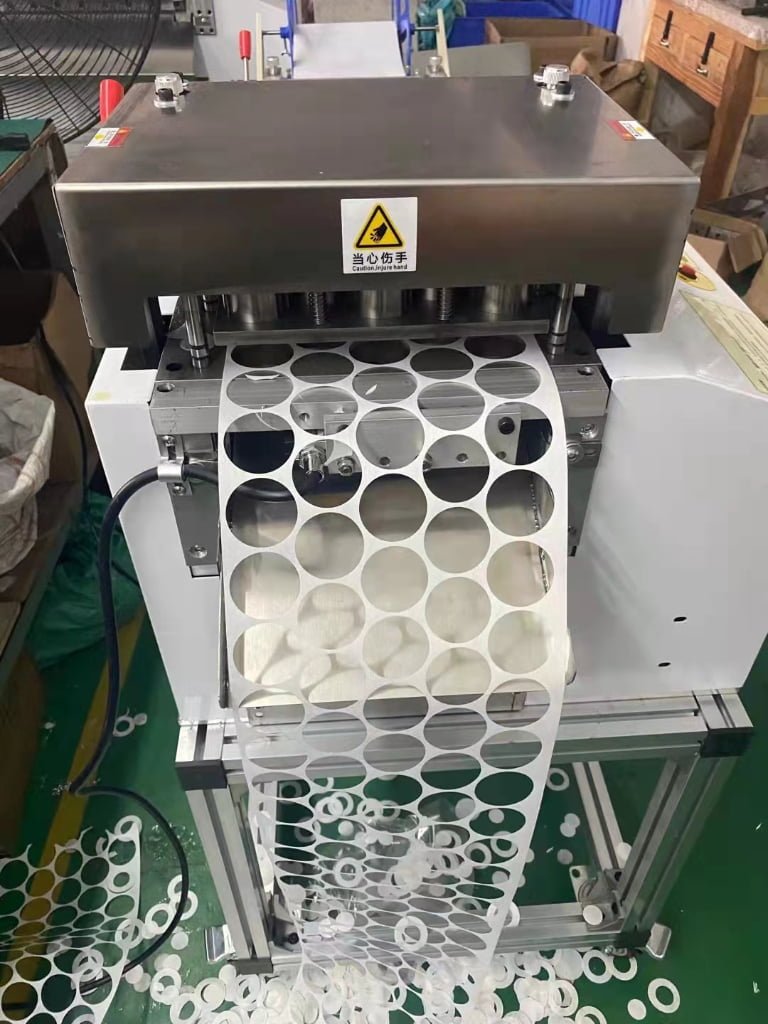
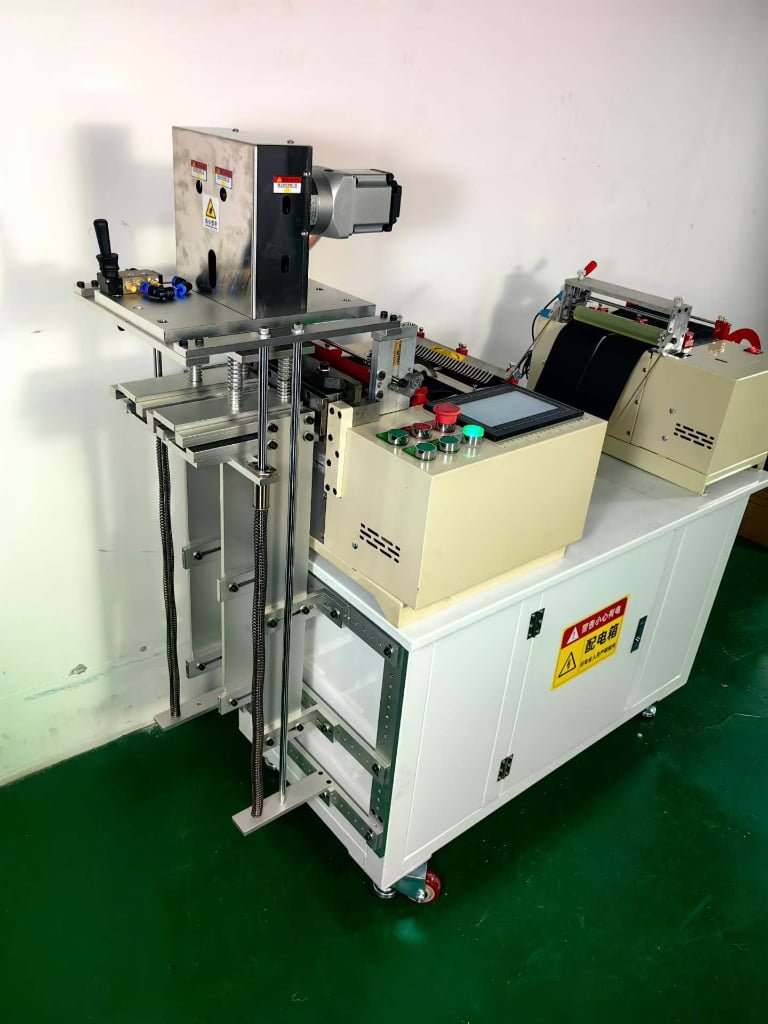
What Materials Are Compatible with a Nylon Cutting Machine?
If you are looking for a nylon cutting machine, you may ask one simple question first: Can one machine cut more than just nylon? The answer is yes. Most modern nylon cutting machines are designed to process many synthetic materials, not only nylon webbing.1
A high-quality webbing tape cutting machine or hot and cold cutting machine can often cut polyester, PP webbing, PVC, hook-and-loop tape, elastic straps, ribbons, coated fabrics, and many other synthetic materials. The key is choosing the right cutting method, blade temperature, and feeding system.
In this guide, I will explain which materials are compatible, why they work well, and what machine features you should look for before buying.
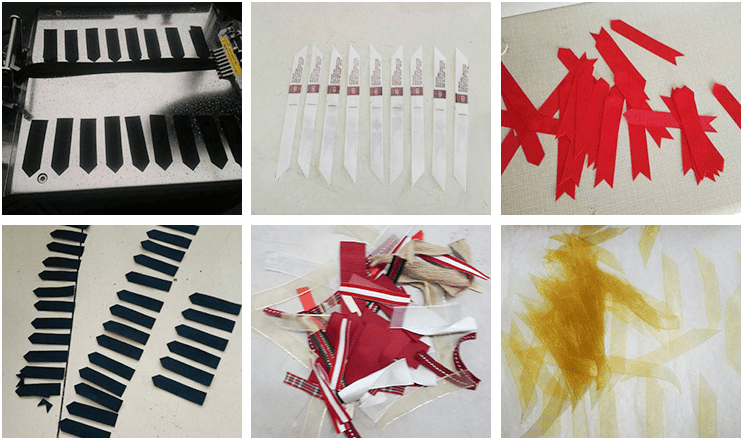
Can One Nylon Cutting Machine Cut Polyester, PP Webbing, PVC, and Synthetic Fabrics?
Yes. Most industrial nylon cutting machines are multi-material cutting machines rather than nylon-only machines.
The reason is simple. Many synthetic materials have similar physical properties.2 They soften when heated, and their cut edges can be sealed with a hot knife. Because of this, one machine can usually process many different products after adjusting the cutting temperature, pressure, feeding speed, and blade type.
For manufacturers, this flexibility reduces equipment investment and increases production efficiency.
Typical Compatible Materials
| Material | Hot Knife Compatible | Cold Knife Compatible | Edge Sealing |
|---|---|---|---|
| Nylon Webbing | ✔ | ✔ | Excellent |
| Polyester Webbing | ✔ | ✔ | Excellent |
| PP Webbing | ✔ | ✔ | Good |
| PVC Tape | ✔ | ✔ | Good |
| Hook and Loop Tape | ✔ | ✔ | Excellent |
| Elastic Tape | ✔ | ✔ | Good |
| Ribbon | ✔ | ✔ | Excellent |
| Seat Belt Webbing | ✔ | Limited | Excellent |
| Bubble Wrap | Limited | ✔ | Depends |
| Protective Foam | Limited | ✔ | Not Required |
The wider the material compatibility, the higher the return on investment for your cutting equipment.
Why Can One Machine Cut So Many Materials?
Most synthetic materials behave similarly during thermal cutting.
Instead of tearing the fibers apart like scissors, a hot and cold cutting machine melts the edge while cutting. The melted edge cools immediately and forms a clean seal.
This process prevents:
- Fraying
- Loose fibers
- Edge curling
- Material waste
That is why nylon, polyester, PP, and many coated textiles can all be processed using similar equipment.
Hot Knife vs Cold Knife
| Feature | Hot Knife | Cold Knife |
|---|---|---|
| Prevents Fraying | ✔ | ✖ |
| Seals Edge | ✔ | ✖ |
| Best for Synthetic Materials | ✔ | Limited |
| Best for Natural Fabrics | ✖ | ✔ |
For nylon and polyester, hot knife cutting is almost always the better choice.
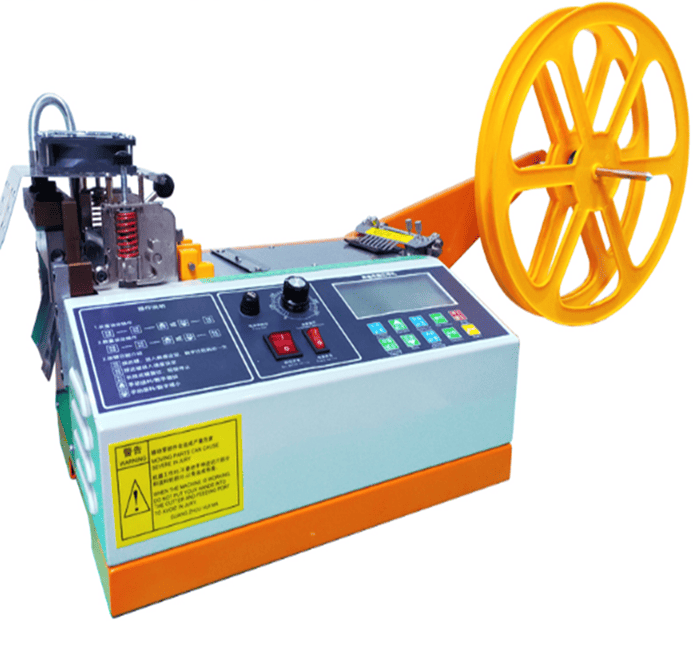
Nylon Webbing
Nylon is the material these machines are originally designed for.
Nylon webbing is widely used in:
- Safety harnesses
- Backpacks
- Pet collars
- Military equipment
- Outdoor products
- Medical straps
The biggest challenge with nylon is edge fraying after cutting.
A hot knife cutting machine solves this problem by sealing the edge during cutting.
Advantages
- Smooth edges
- No loose fibers
- High production speed
- Accurate cutting length
- Long service life
For nylon webbing, a high-speed trademark cutting machine or webbing ribbon cutting machine is usually the best solution.
Polyester Webbing
Many buyers believe polyester requires another machine.
Actually, polyester behaves very much like nylon during hot cutting.
Both materials soften under controlled heat and form sealed edges.
Because of this, most nylon cutting machines also process:
- Polyester webbing
- Polyester ribbon
- Polyester tape
- Decorative trims
The only adjustment usually required is blade temperature.
Too much heat may discolor polyester.
Too little heat may not seal the edge completely.
Proper temperature control produces clean, professional results.
PP Webbing
Polypropylene (PP) webbing is common in:
- Luggage
- Shopping bags
- Furniture
- Packaging
- Outdoor equipment
PP melts at a lower temperature than nylon.3
Therefore, operators usually reduce blade temperature.
Once adjusted correctly, PP webbing cuts very cleanly.
Benefits include:
- No edge fuzz
- Fast production
- Low material waste
Many automatic punching cutting machines include preset temperature programs for PP materials.
PVC Materials
PVC is another material frequently processed by industrial cutting machines.
Common PVC products include:
- Edge banding
- Plastic strips
- Decorative tape
- Flexible PVC straps
Unlike woven webbing, PVC does not fray.
However, hot cutting still creates smoother edges.
Many manufacturers producing furniture choose a PVC Edge Banding Cutting Machine for consistent cutting accuracy.
Important considerations include:
Recommended Machine Settings
| Setting | Recommendation |
|---|---|
| Blade Temperature | Medium |
| Feeding Speed | Medium |
| Pressure | Low |
| Cooling Time | Short |
Proper ventilation is also recommended because heated PVC can release fumes.4

Hook-and-Loop Tape (Velcro)
One of the most common materials processed by nylon cutting machines is hook-and-loop tape.
Standard hook-and-loop products made from nylon or polyester usually work very well because their fibers respond similarly to hot cutting.5
Compatible products include:
- Standard hook tape
- Loop tape
- Adhesive-backed Velcro
- Flame-retardant Velcro
- Back-to-back cable ties
- Elastic hook-and-loop straps
These materials can usually be processed with automatic feeding systems while maintaining consistent cutting length and clean sealed edges. Specialized coated or flame-retardant products may require more accurate temperature control to protect surface coatings during cutting.
Seat Belt and Heavy Industrial Webbing
Heavy webbing requires stronger feeding systems.6
Typical applications include:
- Automotive seat belts
- Cargo straps
- Safety belts
- Industrial lifting straps
These materials are thicker than ordinary nylon tape.
Therefore machines should include:
- Strong clamping
- High-pressure feeding rollers
- Powerful hot knife
- Stable servo motors
Many high-speed trademark cutting machines are upgraded specifically for thick industrial webbing.
Elastic Tape
Elastic materials create another challenge.
Because they stretch, feeding accuracy becomes very important.
Good machines solve this problem by using:
- Servo feeding
- Adjustable tension control
- Pneumatic clamping
- Precision measuring wheels
These features prevent inaccurate cutting caused by stretching.
Typical products include:
- Underwear elastic
- Medical elastic straps
- Sports bands
- Elastic Velcro straps
Shoelaces and Drawcords
Nylon cutting machines are also widely used for narrow textile products.
Examples include:
- Shoelaces
- Hoodie cords
- Drawstrings
- Decorative cords
Hot knife cutting seals both ends immediately.
Without heat sealing, these products often unravel after only a few uses.
A computer tube cutting machine may also be used for certain round textile cords depending on product diameter.
Bubble Wrap and Protective Foam
Some manufacturers ask whether the same machine can cut packaging materials.
The answer is often yes.
Certain Bubble Wrap Cutting Machines and Protective Foam Cutting Machines share the same feeding and measuring technology used for textile materials.
The main difference is blade temperature.
Thin plastic films usually require lower temperatures to avoid damaging coatings or adhesive layers.7
Typical compatible products include:
- Bubble wrap
- PE foam
- EVA foam
- Protective packaging sheets
These applications are especially popular in packaging factories.
What Materials Require Special Machine Settings?
Not every compatible material uses identical settings.
Below are common adjustments.
| Material | Temperature | Feeding Speed | Blade Type |
|---|---|---|---|
| Nylon | High | Fast | Hot Knife |
| Polyester | Medium | Fast | Hot Knife |
| PP | Low | Medium | Hot Knife |
| PVC | Medium | Medium | Hot Knife |
| Elastic | Medium | Slow | Hot Knife |
| Bubble Wrap | Low | Medium | Cold/Low Heat |
| Foam | Low | Medium | Cold Knife |
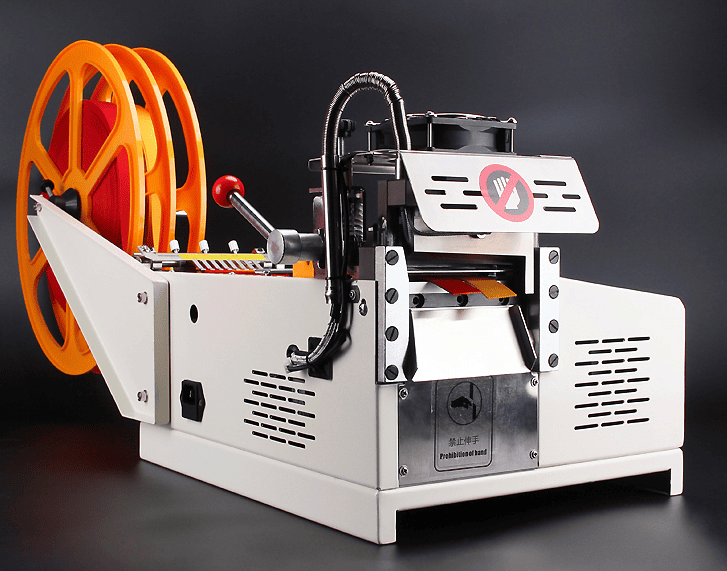
Modern touch-screen controllers usually save multiple material recipes, allowing operators to switch quickly between products.
What Machine Features Improve Material Compatibility?
If I purchase a machine today, I never focus only on nylon.
I always look for flexibility.
The following features greatly increase material compatibility.
Servo Feeding
Provides accurate length control.
Adjustable Blade Temperature
Allows processing of different melting points.
Automatic Material Feeding
Improves productivity.
Multiple Cutting Modes
Supports:
- Hot cutting
- Cold cutting
- Angle cutting
- Punching
- Multi-piece cutting
Touch Screen Memory
Stores material parameters for quick switching.
These features allow one webbing tape cutting machine to replace several older machines.
Can CNC Nylon Cutting Machines Process Engineering Plastics?
The answer depends on what kind of nylon cutting machine you mean.
The textile cutting machines discussed above are designed for flexible materials such as webbing, ribbons, hook-and-loop tapes, PVC strips, and packaging products.
However, CNC nylon cutting machines used for machining engineering plastics are different. They use milling cutters, routers, or machining tools instead of hot knives.
With the correct tooling and machining parameters, CNC systems can process many engineering plastics, including:
- Nylon
- Acetal (POM)
- Polycarbonate
- Acrylic
- UHMW
- HDPE
Some industrial CNC machines can also machine reinforced nylon materials, such as glass-filled nylon or carbon-fiber-reinforced nylon. These materials are much harder than standard nylon, so they require wear-resistant cutting tools, lower cutting speeds, and carefully controlled feeds to reduce tool wear and maintain surface quality.
Although these CNC applications are very different from webbing cutting, they demonstrate that modern nylon processing equipment can support a much wider range of materials when configured correctly.
How Do I Choose the Right Machine?
Before ordering a cutting machine, I always answer these questions:
- What materials will I cut?
- What is the material thickness?
- Do I need sealed edges?
- What production speed is required?
- Do I need automatic feeding?
- Will I cut multiple products every day?
The answers determine whether I should choose a:
- Webbing tape cutting machine
- Hot and cold cutting machine
- High-speed trademark cutting machine
- Automatic punching cutting machine
- Rotary bevel cutting machine
- Different shapes cutting machine
- Computer tube cutting machine
- Wire cutting and stripping machine
- Metal pipe cutting and beveling machine
- Bubble Wrap Cutting Machine
- Protective Foam Cutting Machine
- PVC Edge Banding Cutting Machine
Choosing the right configuration at the beginning saves money and increases long-term production efficiency.
Conclusion
A modern nylon cutting machine is much more than a nylon-only machine. With the correct blade, temperature, feeding system, and software settings, one machine can accurately process nylon webbing, polyester tapes, PP straps, PVC materials, hook-and-loop products, elastic bands, shoelaces, industrial safety belts, packaging foam, bubble wrap, and many other synthetic materials. This versatility helps manufacturers reduce equipment costs, improve productivity, and respond quickly to changing customer demands.
HAOXINHE Insights
At HAOXINHE, we design our equipment with flexibility in mind because many factories produce more than one type of material. Our product range includes webbing tape cutting machines, hot and cold cutting machines, high-speed trademark cutting machines, automatic punching cutting machines, rotary bevel cutting machines, different shapes cutting machines, computer tube cutting machines, wire cutting and stripping machines, metal pipe cutting and beveling machines, Bubble Wrap Cutting Machines, Protective Foam Cutting Machines, and PVC Edge Banding Cutting Machines.
From our experience serving customers in Europe, North America, and Southeast Asia, buyers increasingly prefer one machine that can handle multiple synthetic materials instead of purchasing separate equipment for each product line. By combining adjustable temperature control, servo feeding, precision length measurement, and customizable cutting programs, our machines help manufacturers improve efficiency while maintaining clean cutting quality across a wide variety of textile, webbing, ribbon, film, foam, and industrial material applications.
-
"What Is the Best Tool for Cutting Nylon?", https://cutopix.com/what-is-the-best-tool-for-cutting-nylon/. A study on industrial cutting machines confirms that many models are designed to handle multiple synthetic materials, including nylon, polyester, and polypropylene, due to their similar thermal properties. Evidence role: general_support; source type: research. Supports: Modern nylon cutting machines are compatible with various synthetic materials.. Scope note: The compatibility may vary depending on machine specifications and material thickness. ↩
-
"Physical, mechanical, and durability properties of concrete …", https://pmc.ncbi.nlm.nih.gov/articles/PMC11231556/. Educational resources on polymer science explain that synthetic materials like nylon and polyester soften under heat, enabling clean edge sealing during cutting. Evidence role: mechanism; source type: education. Supports: Synthetic materials often share thermal and structural properties that make them compatible with similar cutting methods.. Scope note: The explanation may not apply to all synthetic materials, especially those with unique coatings or additives. ↩
-
"Polypropylene vs. Nylon: Material Differences and …", https://www.xometry.com/resources/materials/polypropylene-vs-nylon/. Educational resources on polymer properties list polypropylene’s melting point as approximately 130°C, compared to nylon’s melting point of around 220°C. Evidence role: statistic; source type: education. Supports: Polypropylene melts at a lower temperature than nylon.. Scope note: The melting point may vary slightly depending on the specific grade of polypropylene or nylon. ↩
-
"Respiratory illness caused by overheating of polyvinyl …", https://pubmed.ncbi.nlm.nih.gov/7093150/. Government safety guidelines for industrial processing recommend ventilation when working with heated PVC to mitigate exposure to potentially harmful fumes. Evidence role: expert_consensus; source type: government. Supports: Heated PVC can release fumes, necessitating proper ventilation during cutting processes.. Scope note: The guidelines may focus on specific industrial settings and not cover all cutting applications. ↩
-
"Specialty Hook and Loop Fasteners -", https://www.perfectex.com/specialty-hook-and-loop-fasteners/. Research on textile processing confirms that nylon and polyester fibers in hook-and-loop products melt and seal effectively under controlled heat. Evidence role: mechanism; source type: research. Supports: Hook-and-loop products made from nylon or polyester are compatible with hot cutting due to their fiber properties.. Scope note: The compatibility may vary for specialized hook-and-loop products with coatings or flame-retardant treatments. ↩
-
"Heavy duty automatic webbing cutting machine South Africa", https://www.cowboysew.com/Africa-heavy-duty-webbing-cutting-machine.htm. An institutional case study on automotive manufacturing highlights the need for high-pressure feeding systems in machines designed for cutting seat belts and cargo straps. Evidence role: case_reference; source type: institution. Supports: Thicker industrial webbing requires machines with stronger feeding systems for accurate cutting.. Scope note: The case study focuses on specific industries and may not generalize to all heavy webbing applications. ↩
-
"Pt thin-film resistance thermo detectors with stable interfaces …", https://pmc.ncbi.nlm.nih.gov/articles/PMC11427678/. Educational resources on polymer processing explain that thin plastic films are sensitive to heat, requiring lower temperatures to avoid compromising surface coatings or adhesives. Evidence role: mechanism; source type: education. Supports: Thin plastic films require lower cutting temperatures to prevent damage to coatings or adhesive layers.. Scope note: The explanation may not apply to all types of thin plastic films, especially those with heat-resistant coatings. ↩