Everything You Need to Know About Multi-Roll Bubble Wrap Cutters
Bubble wrap is one of the most important protective packaging materials in modern shipping and warehouse operations1. I often see packaging companies struggle with slow manual cutting methods, wasted material, and messy workstations. Many businesses still use scissors, hand tearing, or box cutters to prepare bubble wrap sheets. This process wastes time, creates uneven cuts, and increases labor costs.
That is why many factories and packaging operations now use multi-roll bubble wrap cutters. These machines improve cutting speed, save floor space, reduce operator fatigue, and deliver consistent cutting quality. A modern multi-roll system also helps companies increase productivity while keeping packaging stations clean and organized.
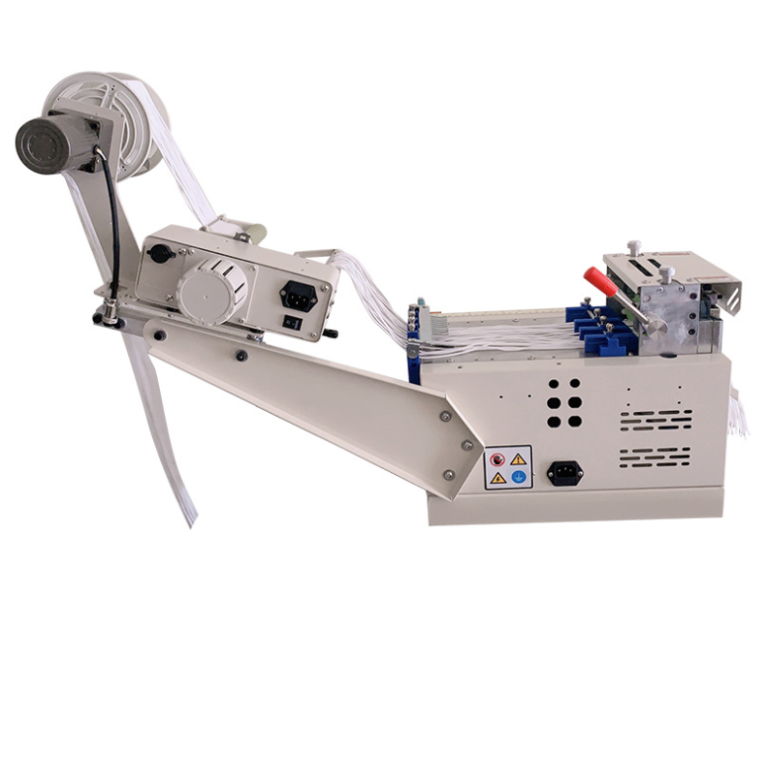
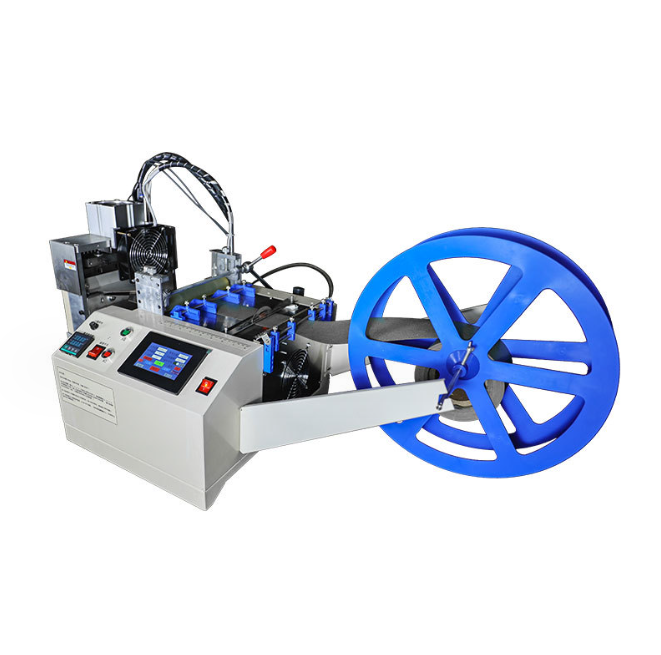
At HAOXINHE, I focus on developing advanced cutting equipment for industrial materials. My product range includes webbing ribbon cutting machine systems, hot and cold cutting machine models, automatic punching cutting machine equipment, PVC Edge Banding cutting machine solutions, Protective Foam Cutting Machine systems, Bubble wrap cutting machine machines, and many other industrial cutting solutions for flexible materials, sheets, and tubular products.
In this guide, I will explain how multi-roll bubble wrap cutters work, why they are more efficient than traditional methods, and how they help packaging companies improve workflow efficiency.
Multi-roll bubble wrap cutters improve packaging efficiency by reducing reload time, saving floor space, and supporting multiple materials in one workstation.
- Load two to five rolls simultaneously for continuous cutting.
- Use tension control and separator systems to maintain straight, accurate feeding.
- Integrate bubble wrap, kraft paper, and foam processing into one compact station.
Compared with manual cutting, multi-roll systems increase throughput, reduce labor movement, minimize material waste, and deliver more consistent industrial packaging results2.
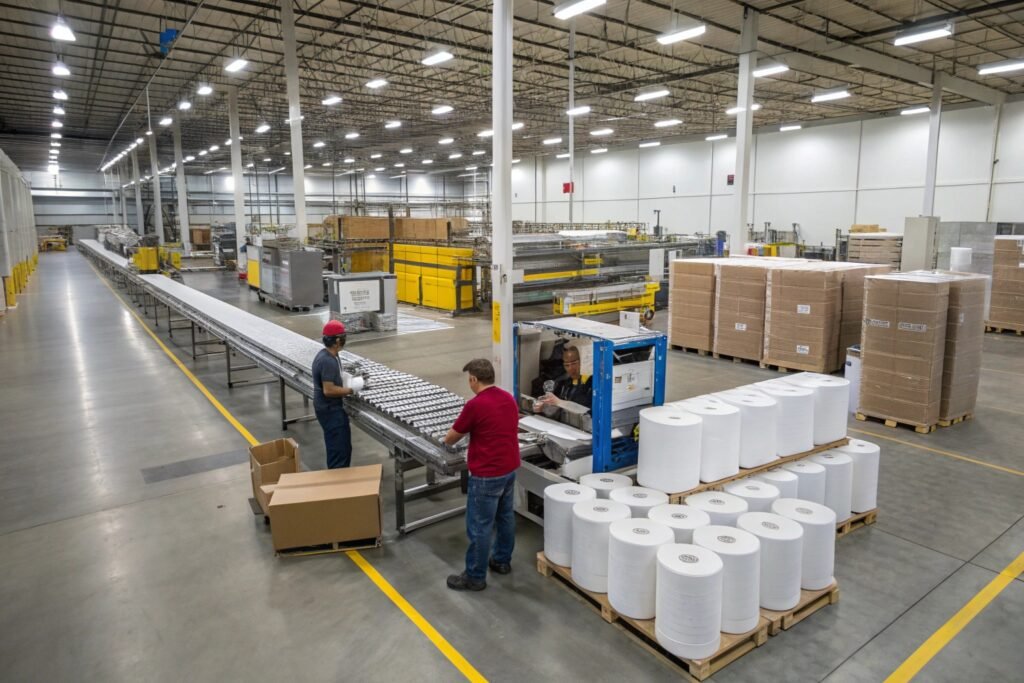
What Is a Multi-Roll Bubble Wrap Cutter?
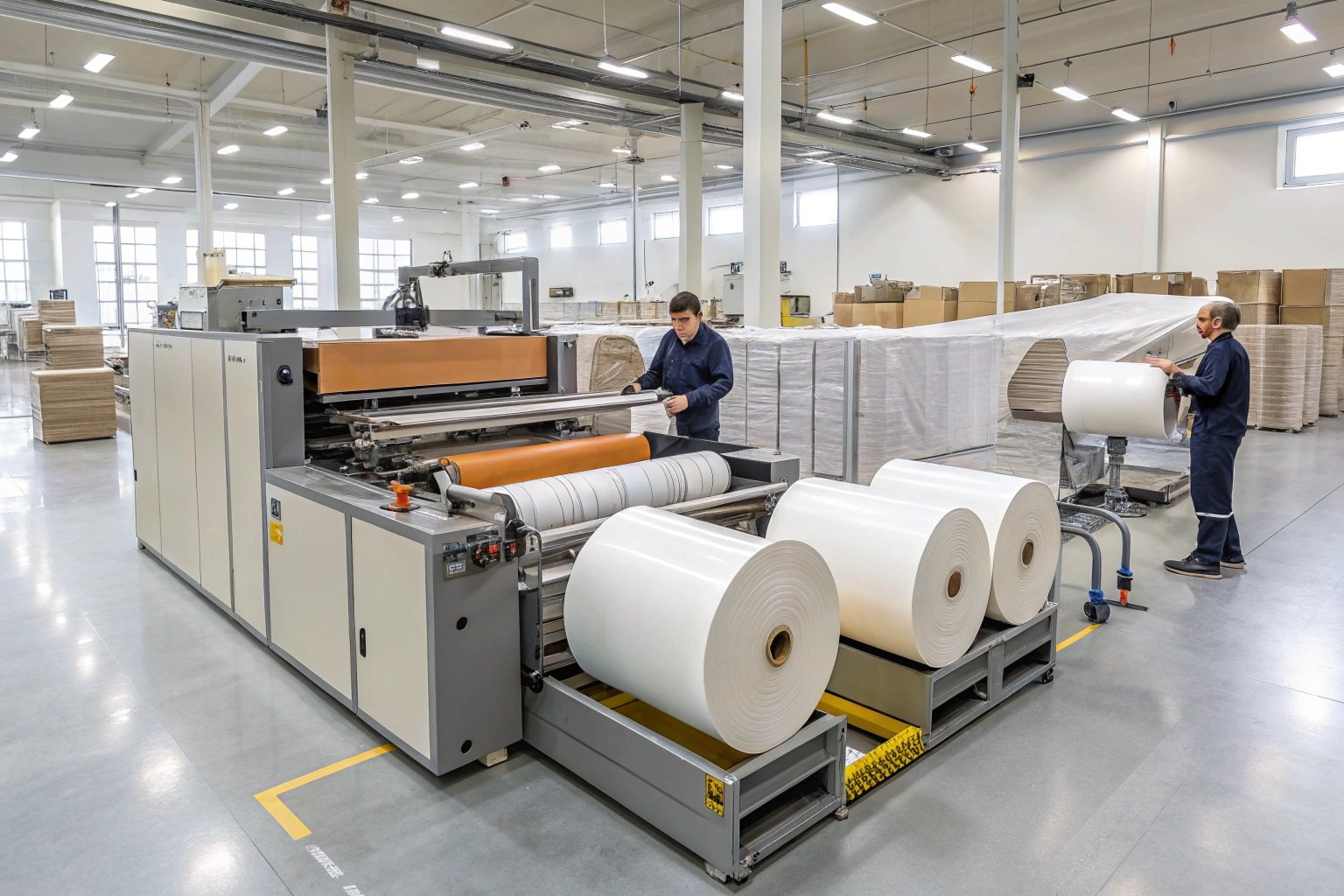
A multi-roll bubble wrap cutter is a packaging cutting system designed to feed and cut multiple rolls of bubble wrap or paper materials at the same time. These machines usually include a built-in roller feeding structure, separator system, tension control mechanism, and industrial cutting blade.
Unlike traditional single-roll systems, a multi-roll machine allows operators to load two, three, or even five rolls simultaneously. This setup reduces reload frequency and supports continuous production during high-volume packaging operations.
Most modern Bubble wrap cutting machine systems support:
- Bubble wrap
- Kraft paper
- Foam sheets
- Protective packaging film
- Corrugated wrap
- Thin plastic sheeting
- Packaging paper rolls
Some advanced systems also integrate with automatic pneumatic drives or fully automatic sheeting systems for industrial automation.
Can a Multi-Roll Machine Cut Different Materials at the Same Time?
The short answer is yes.
Many modern multi-roll cutting systems can process different materials simultaneously, as long as the materials fall within the machine’s supported thickness and feeding specifications.
For example, one roll position may hold bubble wrap, while another position holds kraft paper or protective foam material. This setup allows operators to switch materials quickly without unloading and reloading rolls repeatedly.
Why This Matters in Packaging Operations
Many packaging companies use multiple protective materials for different products. Fragile electronics may need bubble wrap, while furniture parts may need foam sheets or kraft paper protection.
Without a multi-roll system, workers waste time changing rolls constantly.
A dual-roll or triple-roll Bubble wrap cutting machine solves this problem by allowing operators to keep several materials ready at all times.
Example Workflow
| Material Type | Purpose | Roll Position |
|---|---|---|
| Bubble Wrap | Shock protection | Roll 1 |
| Kraft Paper | Surface protection | Roll 2 |
| Foam Sheet | Corner protection | Roll 3 |
This setup improves workflow speed dramatically.
Dive Deeper: Material Compatibility in Multi-Roll Systems
One of the biggest advantages of a multi-roll cutter is flexibility. In real packaging environments, companies rarely use only one protective material. Different products require different packaging methods. A warehouse shipping glassware may use bubble wrap for cushioning, kraft paper for wrapping, and foam for corner protection. If operators must manually change materials every few minutes, production speed slows down quickly.
A modern multi-roll system eliminates this issue. The built-in separator system keeps materials aligned independently while the feeding rollers maintain stable movement for each roll. Operators can switch between materials instantly without stopping the machine.
Common Compatible Materials
| Compatible Material | Typical Industry |
|---|---|
| Bubble Wrap | E-commerce |
| Kraft Paper | Furniture |
| Foam Sheet | Electronics |
| Corrugated Wrap | Industrial Shipping |
| PVC Protective Film | Construction |
| Thin Plastic Film | Logistics |
The feeding system is designed to support stable tension across different materials. This is important because bubble wrap stretches differently compared to kraft paper or foam sheets.
Many HAOXINHE cutting systems also allow customized tension adjustments for different roll types. This feature helps prevent wrinkles, uneven feeding, and inaccurate cuts.
Another important benefit is operator efficiency. Workers no longer walk between multiple cutting stations. One machine handles several materials together. This reduces labor movement and improves workstation organization.
For factories running continuous packaging operations, this flexibility becomes a major productivity advantage. Companies save labor time, reduce downtime, and improve packaging consistency across all shipping departments.
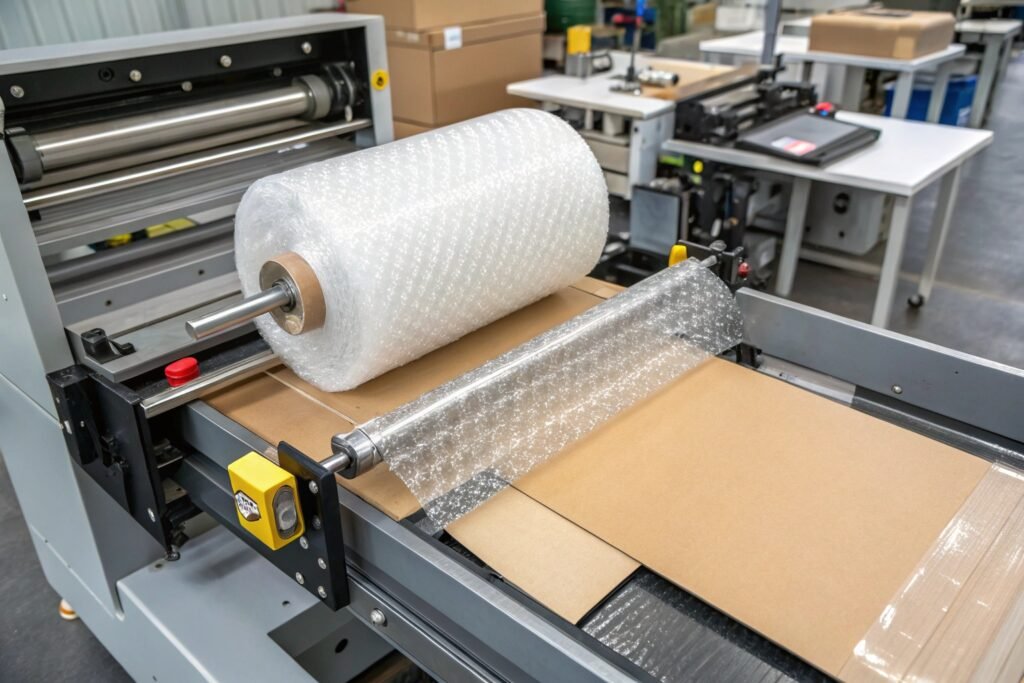
How Much Floor Space Do You Save With a Dual-Roll Cutting System?
Floor space is expensive in warehouses and packaging facilities. Every machine must justify its footprint.
A dual-roll or multi-roll Bubble wrap cutting machine helps companies save space because it combines multiple cutting functions into one compact unit.
Instead of installing:
- Separate bubble wrap stations
- Separate kraft paper dispensers
- Multiple cutting tables
- Independent roll holders
A multi-roll system integrates everything into one machine.
Typical Space Savings
| Setup Type | Approximate Space Used |
|---|---|
| Multiple Manual Stations | Large |
| Single Roll Cutter + Storage | Medium |
| Dual-Roll Cutter System | Compact |
| Integrated Multi-Roll System | Very Compact |
Many units can also mount directly onto packing tables or integrate into existing roll storage systems.
Some models support wall mounting or inline conveyor integration.
Dive Deeper: Why Space Efficiency Matters in Modern Warehouses
Warehouse efficiency is not only about speed. Space utilization also affects operating cost, worker movement, safety, and inventory flow.
I often see companies using several manual cutting stations spread across the packing area. Workers move between tables searching for bubble wrap, scissors, tape, or foam material. This creates unnecessary walking and wasted labor hours.
A multi-roll Bubble wrap cutting machine centralizes the entire packaging process.
Key Space-Saving Features
Inline Installation
Many machines mount directly into existing packing stations.
Integrated Roll Storage
Operators can store multiple rolls inside the same machine structure.
Compact Roll Feeding
The built-in roller system keeps materials organized vertically instead of spreading rolls across the floor.
Multi-Function Design
One machine replaces several separate tools.
Example Comparison
| Packaging Setup | Equipment Count | Floor Space |
|---|---|---|
| Manual Packaging Area | 5–7 tools | High |
| Multi-Roll Integrated Station | 1 machine | Low |
Another major benefit is workplace cleanliness. Loose rolls placed on floors create clutter and safety hazards. Integrated roll systems keep materials organized and easy to access.
Some advanced systems include revolving 5-roll racks for even higher capacity while still maintaining a compact design.
This is especially valuable for:
- E-commerce fulfillment centers
- Packaging manufacturers
- Industrial shipping departments
- Furniture exporters
- Electronics factories
When floor space becomes limited, an integrated Bubble wrap cutting machine provides a practical and cost-effective solution.
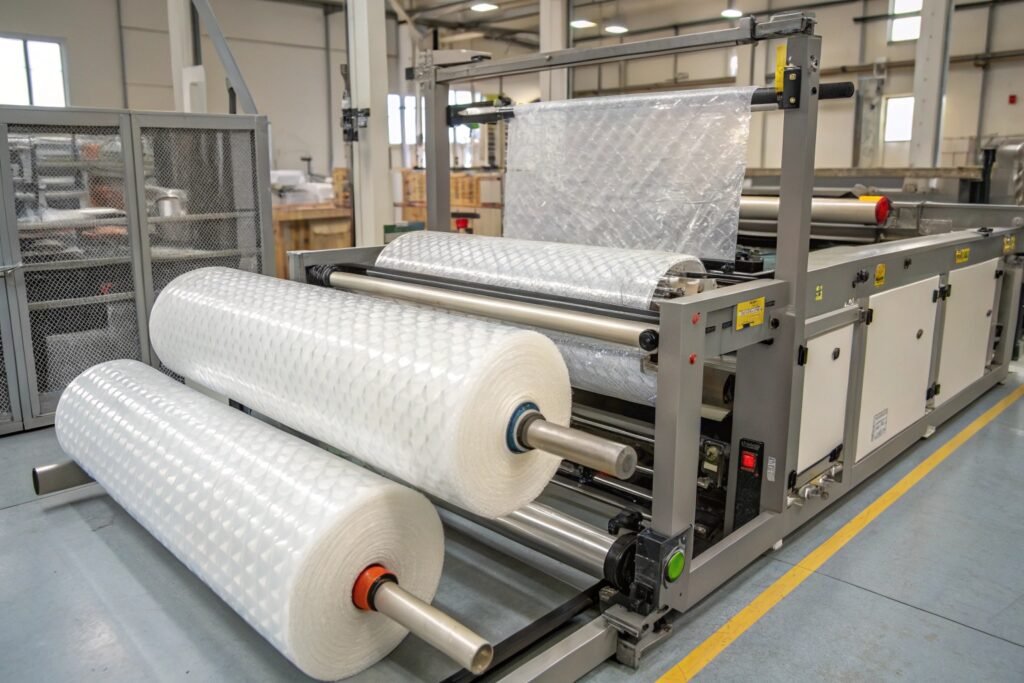
How Does the Tension Control Work When Feeding Multiple Rolls Simultaneously?
Tension control is one of the most important features in any multi-roll cutting system3.
Without proper tension management, materials may:
- Feed unevenly
- Drift sideways
- Wrinkle
- Stretch
- Jam inside the cutter
A professional multi-roll Bubble wrap cutting machine uses tension rollers and separator systems to keep each material roll feeding smoothly and consistently.
Main Components of Tension Control
| Component | Function |
|---|---|
| Feed Rollers | Pull material evenly |
| Tension Bars | Stabilize material movement |
| Separators | Prevent overlap |
| Braking System | Control roll speed |
| Alignment Guides | Maintain straight feeding |
The machine balances roll resistance automatically or manually depending on the machine model.
Dive Deeper: Why Stable Tension Improves Cutting Quality
Many people underestimate the importance of tension control. However, stable feeding directly affects cutting accuracy, operator safety, and material waste.
Bubble wrap behaves differently from paper. It compresses easily and may stretch during feeding4. Foam materials also react differently under pressure. If the feeding tension is unstable, the final cut becomes uneven.
Common Problems Without Tension Control
| Problem | Result |
|---|---|
| Uneven Feeding | Crooked Cuts |
| Material Slack | Jamming |
| Excessive Pull Force | Material Stretching |
| Roll Drift | Misalignment |
| Inconsistent Pressure | Waste Material |
A professional Bubble wrap cutting machine solves these issues using carefully balanced roller systems.
How the System Works
Step 1: Roll Loading
Operators load each material roll onto independent shafts.
Step 2: Separation
The separator system prevents materials from touching or overlapping.
Step 3: Controlled Feeding
Feed rollers pull each material evenly toward the cutting blade.
Step 4: Stabilization
Tension bars maintain consistent pressure during movement.
Step 5: Precision Cutting
The cutting blade delivers a clean and straight cut.
Advanced HAOXINHE systems can also integrate servo feeding systems and automatic pneumatic drives for higher precision and industrial automation.
This technology becomes especially important during high-speed operation because tension instability increases rapidly as feeding speed rises.
Stable tension means:
- Cleaner cuts
- Less operator adjustment
- Reduced downtime
- Lower material waste
- Better production consistency
These advantages directly improve packaging productivity and reduce operating costs.
What Are the Efficiency Gains of a Multi-Roll System vs. a Single-Roll?
The efficiency improvement is significant.
A multi-roll Bubble wrap cutting machine reduces downtime, reload frequency, labor movement, and manual handling.
Single-roll systems require frequent operator intervention because workers constantly reload material.
Multi-roll systems keep production moving continuously.
Main Efficiency Advantages
| Feature | Single Roll | Multi-Roll |
|---|---|---|
| Reload Frequency | High | Low |
| Material Switching | Slow | Fast |
| Operator Movement | More | Less |
| Packaging Speed | Moderate | High |
| Labor Efficiency | Lower | Higher |
| Workspace Organization | Basic | Professional |
Many packaging operations report major productivity improvements after upgrading to multi-roll systems5.
Dive Deeper: Real Productivity Improvements in Industrial Packaging
Efficiency is not only about machine speed. True productivity improvement comes from reducing interruptions across the entire workflow.
Manual cutting methods create several hidden inefficiencies:
- Workers search for tools
- Rolls require constant replacement
- Material tears unevenly
- Packaging stations become cluttered
- Operators become fatigued
A multi-roll Bubble wrap cutting machine removes many of these problems.
Labor Savings
One operator can handle multiple materials without moving between stations. This reduces labor fatigue and improves consistency.
Faster Material Changes
Instead of unloading rolls repeatedly, operators simply switch feeding positions.
Reduced Downtime
Machines holding multiple rolls operate longer between reloads.
Better Cut Accuracy
Consistent cutting reduces wasted packaging material.
Safer Operation
Industrial cutting systems are safer than manual knives or scissors.
Example Productivity Comparison
| Operation Type | Manual Method | Multi-Roll Machine |
|---|---|---|
| Average Cutting Speed | Slow | Fast |
| Material Waste | High | Low |
| Operator Fatigue | High | Low |
| Workflow Consistency | Variable | Stable |
| Packaging Appearance | Uneven | Professional |
Many modern systems also support programmable cutting lengths. Operators can preset the number of cuts and sheet sizes required.
This feature helps maintain consistent packaging quality for every shipment.
Some HAOXINHE machines also integrate with:
- Automatic punching cutting machine systems
- High-speed trademark cutting machine solutions
- Rotary bevel cutting machine technology
- Different shapes cutting machine systems
- Protective Foam Cutting Machine equipment
- PVC Edge Banding cutting machine solutions
- Webbing ribbon cutting machine systems
This integration supports complete industrial automation across multiple packaging and material processing applications.
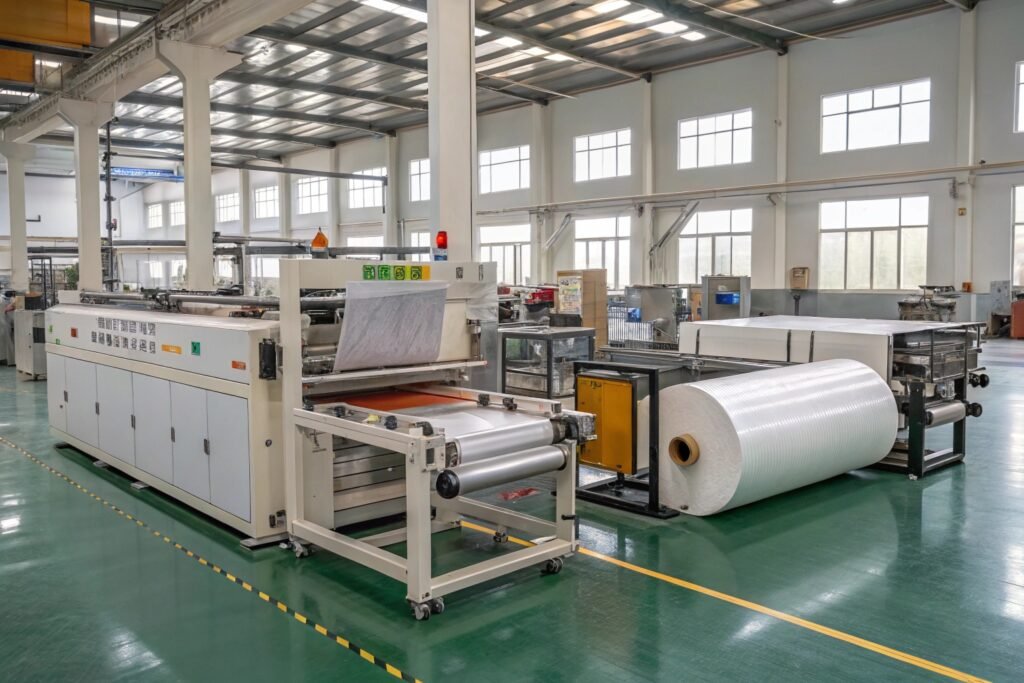
Why Multi-Roll Bubble Wrap Cutters Are Better Than Manual Cutting Methods
Traditional cutting methods may appear cheaper initially, but they create long-term inefficiencies.
Manual methods often involve:
- Scissors
- Box cutters
- Hand tearing
- Utility knives
These methods create inconsistent cuts and increase injury risk.
Multi-roll Bubble wrap cutting machine systems provide:
- Faster operation
- Cleaner cuts
- Better safety
- Lower labor cost
- Professional packaging appearance
Many industrial models also include durable blades that can be sharpened multiple times, reducing maintenance costs and minimizing downtime.
Key Features to Look for in a Multi-Roll Bubble Wrap Cutter
When selecting a machine, I recommend focusing on these features:
| Feature | Why It Matters |
|---|---|
| Multiple Roll Capacity | Reduces reload frequency |
| Adjustable Tension Control | Improves feeding stability |
| Durable Blade System | Ensures long service life |
| Pneumatic Automation | Increases production speed |
| Compact Design | Saves floor space |
| Adjustable Cut Width | Supports different packaging sizes |
| Safety Protection | Reduces injury risk |
The best system depends on your production volume, material type, and packaging workflow.
Conclusion
A multi-roll Bubble wrap cutting machine is more than a simple cutting tool. It is a complete productivity solution for modern packaging operations.
These systems reduce downtime, improve organization, save labor, minimize material waste, and create professional packaging results. They also help companies save floor space while supporting high-volume operations with multiple packaging materials.
For businesses handling continuous shipping and packaging tasks, upgrading from manual cutting methods to a multi-roll system can dramatically improve workflow efficiency and operational consistency.
At HAOXINHE, I continue developing advanced cutting equipment solutions for industrial applications. My product range includes:
- Bubble wrap cutting machine
- Webbing ribbon cutting machine
- Hot and cold cutting machine
- High-speed trademark cutting machine
- Automatic punching cutting machine
- Rotary bevel cutting machine
- Different shapes cutting machine
- Protective Foam Cutting Machine
- PVC Edge Banding cutting machine
- Computer tube cutting machine
- Wire cutting and stripping machine
- Metal pipe cutting and beveling machine
These systems are designed to help manufacturers improve efficiency, reduce labor costs, and achieve stable high-quality production results.
HAOXINHE Insights
Why Packaging Companies Choose HAOXINHE
HAOXINHE focuses on practical industrial cutting solutions designed for real factory environments. I understand that packaging operations require machines that are reliable, easy to operate, and capable of long continuous working hours.
That is why HAOXINHE cutting systems emphasize:
| HAOXINHE Advantage | Customer Benefit |
|---|---|
| Rugged Construction | Longer machine life |
| Customizable Design | Better workflow matching |
| Industrial Blade Quality | Stable cutting performance |
| Automation Integration | Higher productivity |
| Compact Layout | Space savings |
| Easy Maintenance | Reduced downtime |
Our Bubble wrap cutting machine systems can integrate into existing packaging tables, inline storage systems, and automatic sheeting lines.
We also support customized industrial cutting projects for various materials including:
- Bubble wrap
- Foam
- Webbing
- PVC edge banding
- Tubular materials
- Protective films
- Paper rolls
- Flexible industrial materials
For factories seeking higher packaging efficiency and professional cutting performance, HAOXINHE continues to provide reliable industrial cutting equipment solutions for global customers.
-
"Bubble Wrap Packaging Market Size, Share, Growth | Report, 2035", https://www.marketresearchfuture.com/reports/bubble-wrap-packaging-market-1796. Bubble wrap remains a dominant protective packaging material in logistics and e-commerce operations, though its relative importance varies by industry segment and product type. Evidence role: general_support; source type: research. Supports: the widespread use and importance of bubble wrap in protective packaging. Scope note: Sources may describe market presence rather than ranking bubble wrap as ‘most important’ compared to alternatives ↩
-
"[PDF] Calculating Utilization Rates for Rubber Tired Grapple Skidders in …", https://research.fs.usda.gov/download/treesearch/9017.pdf. Manufacturing studies show that automated cutting systems typically achieve higher material utilization rates than manual methods due to improved cut precision and consistency, though specific waste reduction percentages vary by material type and operator skill. Evidence role: statistic; source type: research. Supports: that automated cutting systems reduce material waste compared to manual methods. Scope note: General manufacturing efficiency data rather than bubble wrap-specific waste measurements ↩
-
"What is Web Tension Control? Systems & Concepts Explained", https://www.montalvo.com/what-is-tension-control/. In web handling and roll-fed processing systems, tension control is essential for maintaining material alignment, preventing defects, and ensuring consistent processing quality, particularly when handling multiple materials simultaneously. Evidence role: mechanism; source type: education. Supports: the critical role of tension control in web handling and roll-fed material processing. ↩
-
"Bubble wrap – Wikipedia", https://en.wikipedia.org/wiki/Bubble_wrap. Polyethylene bubble wrap exhibits viscoelastic behavior with significant compressibility under pressure and elastic deformation during tension, properties that distinguish it from paper-based packaging materials. Evidence role: mechanism; source type: research. Supports: the compressibility and elastic properties of polyethylene bubble wrap. ↩
-
"Improving Packaging Line Efficiency with Automated Technologies", https://www.foodengineeringmag.com/articles/103632-improving-packaging-line-efficiency-with-automated-technologies. Industry case studies indicate that packaging automation, including automated cutting and material handling systems, typically yields measurable productivity gains, though specific improvement percentages depend on baseline processes and implementation scope. Evidence role: general_support; source type: other. Supports: productivity improvements from packaging automation. Scope note: General packaging automation benefits rather than multi-roll cutter-specific data ↩