How Can AI-Based Predictive Maintenance Reduce Machine Downtime?
Machine downtime is one of the most expensive problems in modern manufacturing. Whether a company operates paper converting equipment, roll-to-sheet cutting machines, label production lines, packaging machinery, or industrial cutting systems, every minute of unexpected downtime can result in lost production, delayed deliveries, and higher operating costs.
Traditionally, maintenance teams relied on scheduled inspections or reactive repairs. In many cases, machines were serviced after a failure occurred. While this approach may keep equipment running for a period of time, it often leads to unexpected breakdowns that interrupt production and increase maintenance expenses.
Today, artificial intelligence is changing how manufacturers manage equipment health. AI-based predictive maintenance uses sensors, machine learning, and real-time monitoring to identify warning signs before equipment failures occur.
Instead of reacting to problems, manufacturers can prevent them.
In this article, I will explain how AI-based predictive maintenance reduces machine downtime and what benefits smart monitoring systems bring to converting operations.
What Benefits Do Smart Monitoring Systems Bring to Converting Operations?
Smart monitoring systems help converting operations reduce downtime, improve maintenance planning, extend equipment life, and increase overall production efficiency by detecting problems before they cause machine failures.
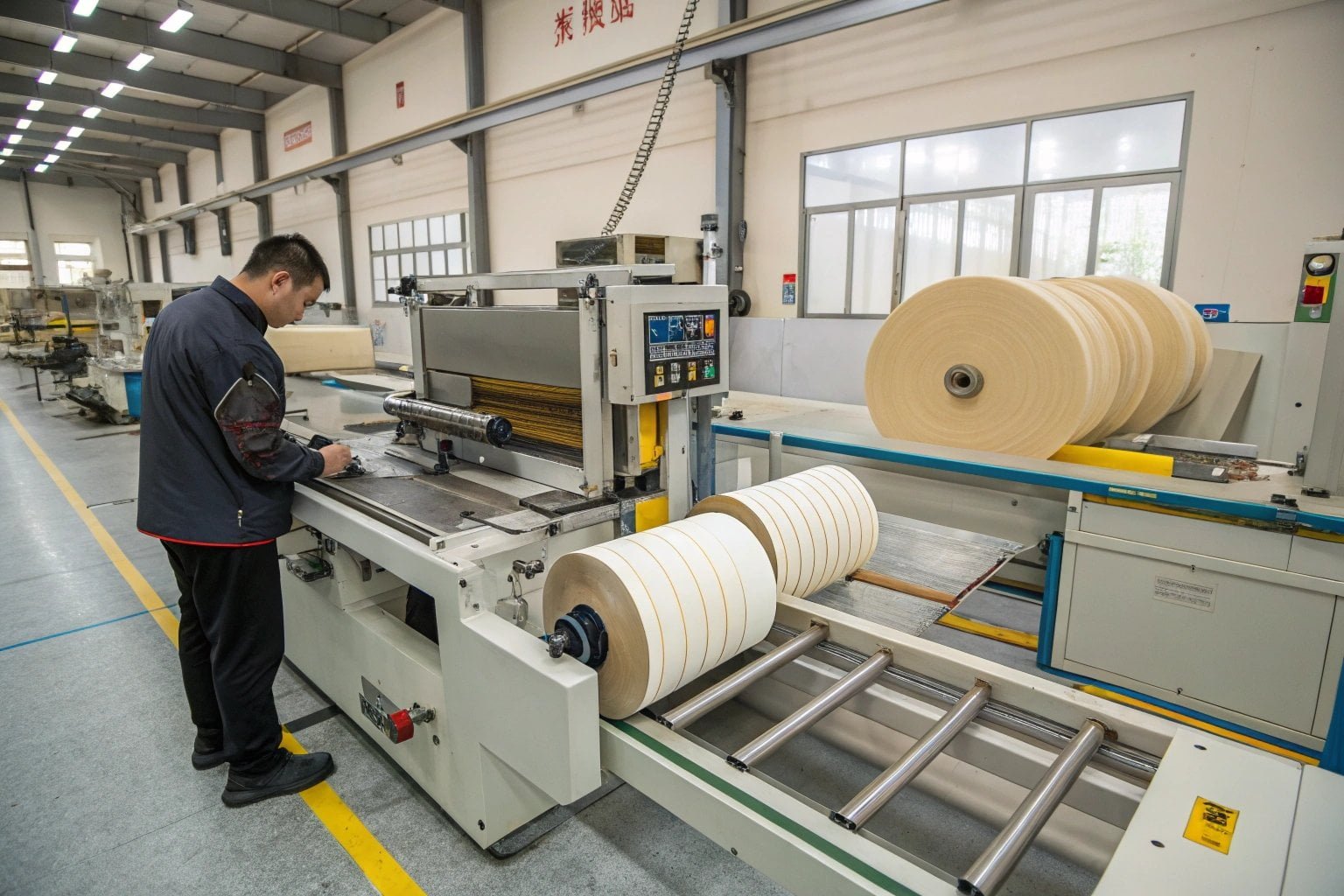
Modern converting lines often operate continuously for long periods. A single unexpected breakdown can stop an entire production schedule. AI-powered monitoring systems provide real-time visibility into machine conditions, allowing maintenance teams to make informed decisions before failures occur.
Key Benefits of Smart Monitoring
| Benefit | Impact on Operations |
|---|---|
| Early Fault Detection | Reduced downtime |
| Predictive Maintenance | Lower repair costs |
| Better Scheduling | Improved production planning |
| Faster Diagnosis | Reduced troubleshooting time |
| Equipment Protection | Longer machine lifespan |
| Improved Reliability | Higher customer satisfaction |
By combining sensor data and AI analytics, manufacturers gain a deeper understanding of machine performance than traditional maintenance methods can provide.
AI Identifies Failure Patterns Before Breakdowns Occur
One of the biggest advantages of predictive maintenance is the ability to identify failure trends before equipment stops working.
Every machine generates operating data. Motors, bearings, cutting systems, servo drives, gearboxes, and feeding mechanisms all produce measurable signals during operation.
AI systems analyze these signals continuously.
How Pattern Recognition Works
Data Collection
Sensors gather information from machine components.
Historical Comparison
The system compares current performance with past operating data.
Failure Prediction
AI identifies patterns that often appear before a breakdown.
Maintenance Recommendation
Maintenance teams receive alerts before serious damage occurs.
Instead of waiting for equipment to fail, operators receive warnings days or even weeks earlier.
This proactive approach dramatically reduces unexpected downtime.
Continuous Sensor Monitoring Detects Problems in Real Time
Modern predictive maintenance systems rely heavily on sensors.
These sensors monitor critical machine conditions around the clock.
Common Monitoring Parameters
| Sensor Type | What It Measures |
|---|---|
| Vibration Sensors | Bearing and motor condition |
| Temperature Sensors | Overheating risks |
| Current Sensors | Electrical performance |
| Pressure Sensors | Pneumatic and hydraulic systems |
| Speed Sensors | Operational stability |
| Position Sensors | Motion control accuracy |
Continuous monitoring allows the system to identify unusual behavior immediately.
For example, increasing vibration levels may indicate bearing wear. Rising temperatures may signal lubrication problems or motor overload.
Without sensors, these issues often remain hidden until equipment failure occurs.
With real-time monitoring, maintenance teams gain valuable time to respond.
Machine Learning Learns What Normal Operation Looks Like
Traditional alarm systems often use fixed limits.
For example, an alert may trigger whenever a motor temperature exceeds a predetermined threshold.
AI-based systems are more intelligent.
Machine learning algorithms continuously analyze equipment behavior and learn what normal operation looks like for each individual machine.
Advantages of Machine Learning
| Traditional Monitoring | AI Monitoring |
|---|---|
| Fixed Alarm Limits | Adaptive Analysis |
| Limited Context | Pattern Recognition |
| More False Alarms | Greater Accuracy |
| Reactive Response | Predictive Response |
Every machine has unique operating characteristics.
AI systems adapt to those differences and improve prediction accuracy over time.
This allows manufacturers to identify genuine problems while avoiding unnecessary maintenance activities.
Early Alerts Give Teams Time to Act
Unexpected failures create production chaos.
Maintenance teams often scramble to locate replacement parts, diagnose issues, and coordinate repairs while production schedules suffer.
Predictive maintenance changes this situation completely.
Benefits of Early Warning Systems
Better Preparation
Maintenance personnel know about issues before breakdowns occur.
Spare Parts Planning
Replacement components can be ordered in advance.
Reduced Downtime
Repairs are performed before catastrophic failures occur.
Improved Resource Allocation
Maintenance teams can prioritize work more effectively.
When maintenance becomes proactive rather than reactive, overall production reliability improves significantly.
Predictive Maintenance Reduces Emergency Repairs
Emergency repairs are usually the most expensive type of maintenance.
They often require overtime labor, urgent parts shipments, production interruptions, and rapid troubleshooting.
Comparing Maintenance Approaches
| Maintenance Type | Cost | Downtime Risk |
|---|---|---|
| Reactive Maintenance | Highest | Highest |
| Preventive Maintenance | Moderate | Moderate |
| Predictive Maintenance | Lowest Long-Term | Lowest |
Predictive maintenance minimizes emergency situations by identifying developing problems before failure occurs.
As a result, maintenance activities become more organized and less disruptive.
Manufacturers can maintain higher equipment availability while reducing repair costs.
Maintenance Can Be Scheduled Around Production Needs
One major challenge for manufacturers is finding the right time to perform maintenance.
Stopping a machine during peak production periods can be costly.
AI-based forecasting helps companies plan maintenance during periods that minimize operational impact.
Maintenance Scheduling Advantages
Reduced Production Disruption
Maintenance can occur during planned downtime.
Better Workforce Planning
Teams can prepare resources in advance.
Improved Delivery Performance
Unexpected production delays become less common.
Higher Equipment Availability
Machines spend more time producing.
This strategic scheduling improves both productivity and customer satisfaction.
AI Reduces False Alarms and Unnecessary Maintenance
False alarms waste time.
Many traditional monitoring systems generate alerts that do not represent actual equipment problems.
Maintenance personnel investigate the issue, only to discover that the machine is operating normally.
Why AI Reduces False Alarms
| Traditional Systems | AI Systems |
|---|---|
| Threshold-Based | Context-Aware |
| More False Positives | Better Accuracy |
| Frequent Unnecessary Inspections | Targeted Interventions |
| Increased Labor Cost | Lower Labor Cost |
AI analyzes multiple operating variables simultaneously.
This broader understanding helps distinguish genuine faults from normal operational fluctuations.
As a result, maintenance resources are used more effectively.
Faster Diagnosis Accelerates Repairs
Finding the root cause of a machine problem often consumes more time than the actual repair.
AI-powered systems help shorten the diagnostic process.
How AI Improves Diagnosis
Automated Data Analysis
The system evaluates thousands of operating parameters.
Fault Identification
Potential causes are ranked automatically.
Historical Reference
Past failures provide useful repair guidance.
Faster Decision Making
Maintenance teams receive actionable information immediately.
This reduces the time between problem detection and problem resolution.
The result is less downtime and faster recovery.
Predictive Maintenance Extends Machine Lifespan
Equipment failures rarely happen suddenly.
Most failures begin as small problems that gradually worsen.
Examples include:
- Bearing wear
- Misalignment
- Lubrication issues
- Motor overload
- Component fatigue
When these problems are identified early, corrective actions can be taken before major damage occurs.
Long-Term Equipment Benefits
| Benefit | Result |
|---|---|
| Early Wear Detection | Longer Component Life |
| Reduced Mechanical Stress | Improved Reliability |
| Fewer Major Repairs | Lower Capital Costs |
| Better Machine Health | Extended Equipment Lifespan |
Over time, this approach improves return on investment and delays costly equipment replacement.
The Best Results Come from Combining AI, Sensors, and Action
Installing sensors alone will not eliminate downtime.
Similarly, AI software alone cannot improve machine reliability without accurate data.
The most successful predictive maintenance programs combine three critical elements:
The Three-Part Success Formula
High-Quality Sensor Data
Reliable measurements provide the foundation.
Advanced AI Analytics
Machine learning identifies patterns and predicts failures.
Consistent Maintenance Response
Teams must act on the information provided.
Downtime Reduction Framework
| Component | Purpose |
|---|---|
| Sensors | Data Collection |
| AI Analytics | Failure Prediction |
| Maintenance Team | Corrective Action |
When all three elements work together, downtime reductions can be significant.
This integrated approach delivers the greatest operational benefits.
How Predictive Maintenance Supports Converting Operations
Converting operations often involve high-speed equipment that must maintain precise performance.
Examples include:
- Roll-to-Sheet Cutting Machines
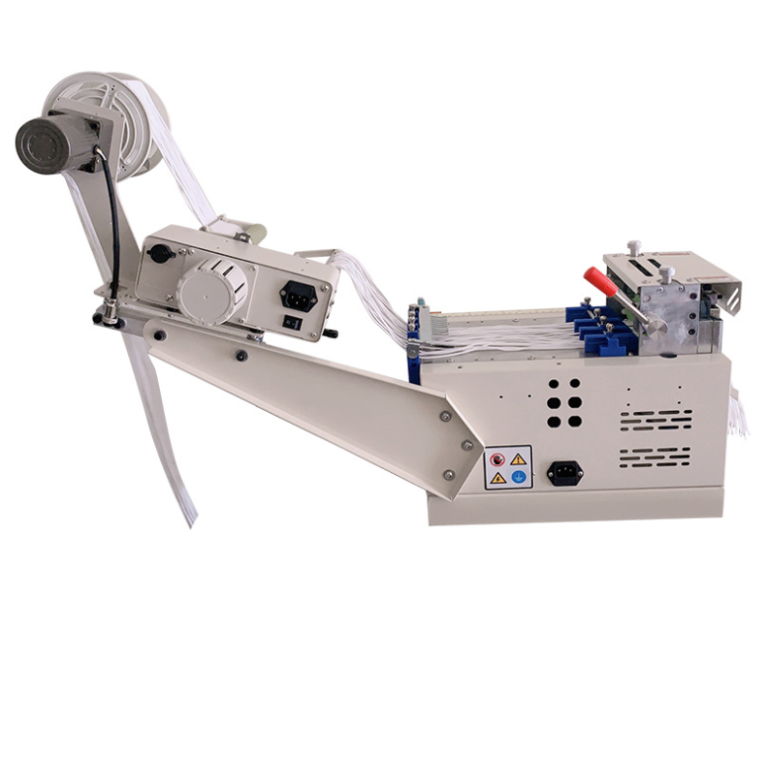
- Webbing Tape Cutting Machines
- High-Speed Trademark Cutting Machines
- Bubble Wrap Cutting Machines
- PVC Edge Banding Cutting Machines
- Protective Foam Cutting Machines
- Automatic Punching Cutting Machines
For these systems, even small mechanical issues can affect cutting accuracy, product quality, and production efficiency.
Predictive maintenance helps manufacturers maintain stable performance while reducing costly interruptions.
Conclusion
AI-based predictive maintenance reduces machine downtime by identifying failure patterns before breakdowns occur. Through continuous sensor monitoring, machine learning analysis, and real-time alerts, manufacturers gain valuable insight into equipment health.
These systems improve maintenance planning, reduce emergency repairs, minimize false alarms, accelerate fault diagnosis, and extend equipment lifespan.
For converting operations, predictive maintenance provides a powerful tool for increasing machine availability and protecting production schedules.
As AI technology continues to advance, predictive maintenance will become an increasingly important part of efficient manufacturing operations.
Insights: How HAOXINHE Views Predictive Maintenance in Modern Cutting Equipment
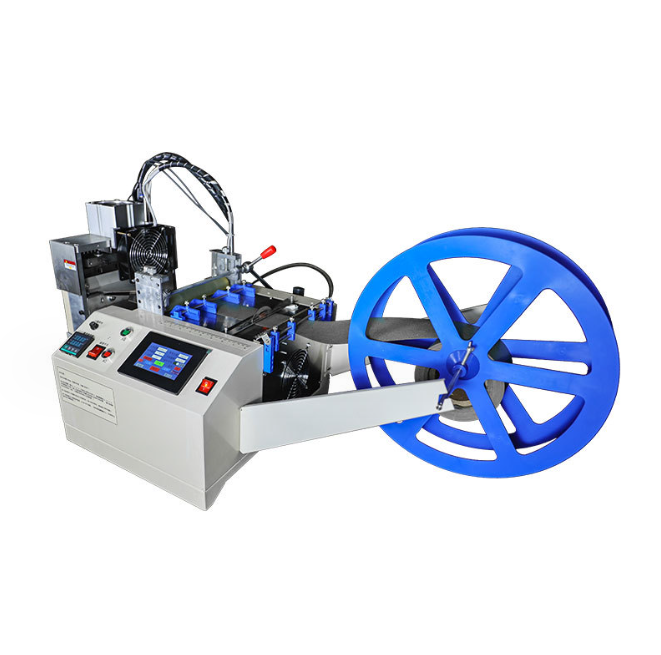
At HAOXINHE, we understand that machine performance is not only determined by cutting speed or accuracy. Long-term reliability is equally important. That is why we continue to improve machine control systems, servo technology, and equipment stability across our product range, including Webbing Ribbon Cutting Machines, Bubble Wrap Cutting Machines, PVC Edge Banding Cutting Machines, Protective Foam Cutting Machines, and other automated cutting solutions.
HAOXINHE Equipment Advantages
| Feature | Customer Benefit |
|---|---|
| Servo Motion Control | Stable Operation |
| Precision Feeding Systems | Reduced Wear |
| Intelligent Control Programs | Better Monitoring |
| Durable Mechanical Design | Longer Service Life |
| Automated Production Functions | Lower Downtime Risk |
My Personal Experience as the Owner of HAOXINHE
As the owner of HAOXINHE, I have visited many customer factories across Europe, Southeast Asia, and North America. One thing I notice repeatedly is that most machine failures do not happen without warning. In many cases, operators can hear unusual sounds, notice small accuracy changes, or feel increased vibration long before a breakdown occurs. The problem is that these signs are often missed because production remains the top priority.
From my experience, the companies that achieve the highest productivity are not necessarily those with the newest machines. They are the companies that pay close attention to machine health and respond quickly to small problems before they become major failures. I believe AI-based predictive maintenance will become a standard feature in future converting equipment because it helps manufacturers make maintenance decisions based on data rather than guesswork.
At HAOXINHE, we see predictive maintenance not as a replacement for experienced technicians but as a tool that helps maintenance teams work smarter. When machine data, intelligent monitoring, and skilled personnel work together, manufacturers can achieve higher uptime, lower operating costs, and more stable long-term production.