How Can Automatic Roll to Sheet Cutting Machines Reduce Labor Costs?
In today’s manufacturing industry, labor costs continue to rise. Many factories face challenges such as worker shortages, increasing wages, inconsistent production quality, and lower efficiency during long shifts. These problems are especially common in industries that process paper, film, labels, packaging materials, foam, webbing, and other roll materials.
I have worked with manufacturers that relied heavily on manual cutting operations. In many cases, several operators were required to complete tasks that could now be handled by a single automatic roll to sheet cutting machine. As production volumes increased, labor expenses grew faster than profits.
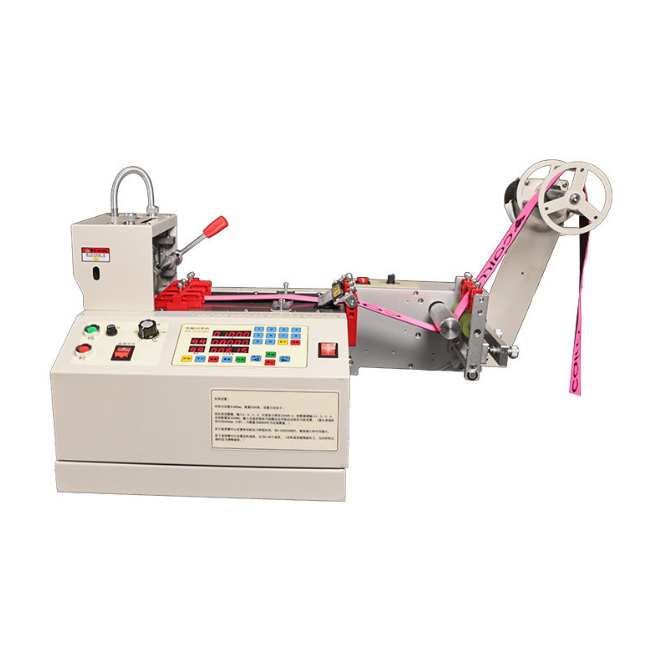
This is why more manufacturers are investing in automated cutting equipment. An automatic roll to sheet cutting machine can perform feeding, measuring, cutting, counting, and stacking with minimal human intervention. The result is lower labor requirements, higher output, and better consistency.
In this article, I will explain exactly how automatic roll to sheet cutting machines reduce labor costs and what labor savings manufacturers can realistically expect from automated operations.
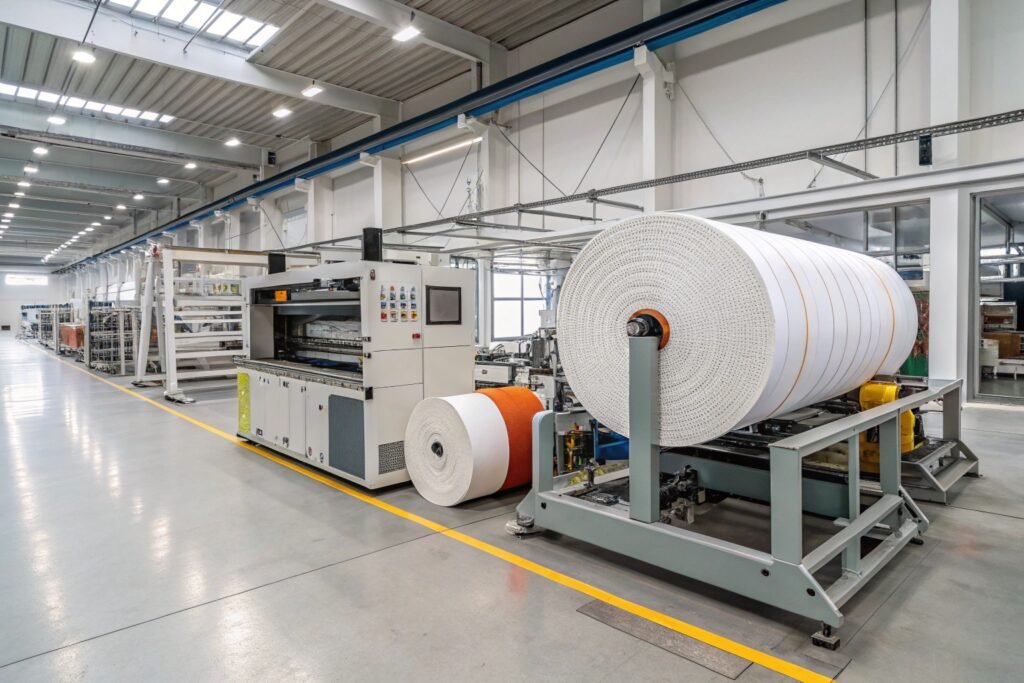
What Labor Savings Can Manufacturers Expect from Automated Operations?
The biggest labor savings come from reducing manual work, increasing production speed, minimizing errors, and allowing fewer operators to manage larger production volumes. Most manufacturers can significantly reduce direct labor hours while improving output and product quality.
A modern automatic roll to sheet cutting machine does much more than simply cut material. It automates several tasks that previously required multiple workers. These include material feeding, length measurement, cutting, counting, sorting, and stacking.
As a result, manufacturers often experience labor savings across several areas of production.
Direct Comparison Between Manual and Automated Operations
| Production Activity | Manual Operation | Automated Operation |
|---|---|---|
| Material Feeding | Multiple operators | Automatic feeding system |
| Length Measurement | Manual measuring | Automatic programmable control |
| Cutting Process | Continuous operator involvement | Fully automated cutting |
| Counting Sheets | Manual counting | Automatic counting |
| Stacking Products | Manual stacking | Automatic stacking |
| Quality Consistency | Depends on operator skill | Highly consistent |
When several manual tasks become automated, labor demand decreases immediately.
Fewer Operators Are Needed on the Production Line
One of the most obvious benefits of automation is reducing the number of workers required for cutting operations.
In traditional production environments, manufacturers often assign separate workers for feeding materials, measuring lengths, operating cutters, counting finished sheets, and organizing finished products. Each step consumes labor hours.
An automatic roll to sheet cutting machine combines all these tasks into one integrated system. The machine continuously feeds material from the roll, measures the required length, performs precise cuts, and collects finished sheets automatically.
Example of Workforce Reduction
| Production Setup | Operators Required |
|---|---|
| Manual Cutting Line | 4-6 Workers |
| Semi-Automatic System | 2-3 Workers |
| Fully Automatic Roll to Sheet Machine | 1 Operator |
In many factories, one operator can supervise multiple machines simultaneously. This creates substantial labor savings without reducing production capacity.
I once visited a packaging manufacturer that replaced two manual cutting stations with one automated system. The company reduced labor requirements by more than half while increasing daily output.
This type of workforce optimization is becoming common across paper converting, packaging, printing, and labeling industries.
Higher Production Speed Allows More Output Per Employee
Labor cost is not only about employee numbers. It is also about how much output each worker can produce.
Manual cutting operations are limited by human speed. Workers become tired. Productivity slows throughout the day. Breaks and shift changes create additional downtime.
Automatic roll to sheet cutting machines operate at much higher speeds and maintain consistent performance throughout the entire shift.
Productivity Comparison
| Factor | Manual Cutting | Automatic Cutting |
|---|---|---|
| Cutting Speed | Low | High |
| Consistency | Variable | Stable |
| Shift Productivity | Declines over time | Remains constant |
| Output Per Worker | Limited | Significantly higher |
Because production output increases, labor cost per finished product decreases.
For example, if one worker operating an automated machine can produce three times the output of a manual cutting team, the labor cost attached to each sheet becomes dramatically lower.
This improvement directly impacts profitability and competitiveness.
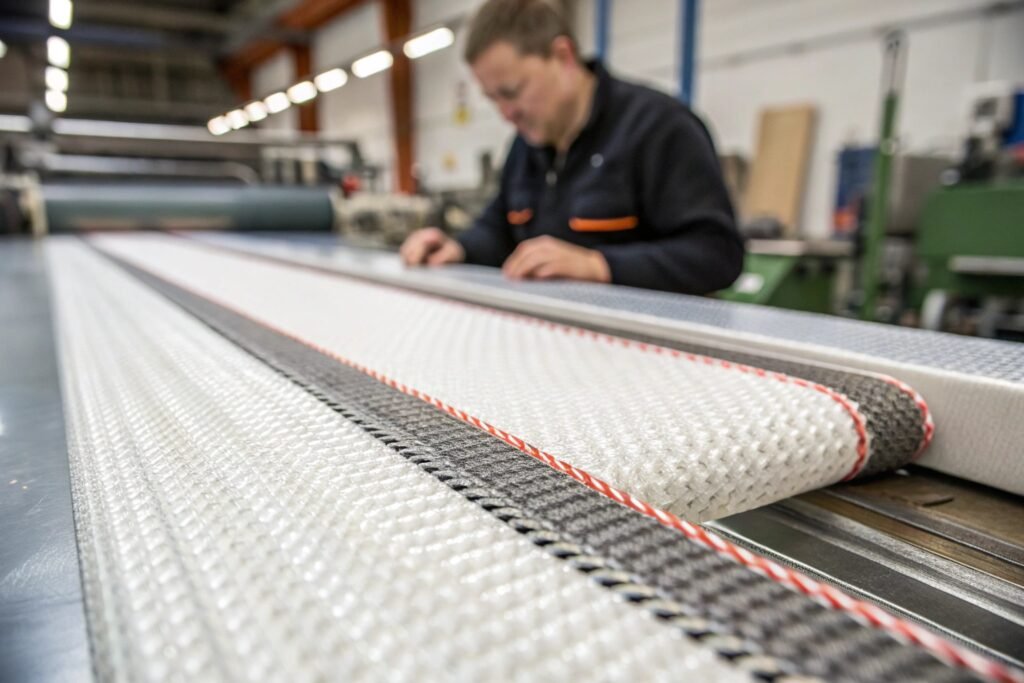
Standardized Programming Reduces Training Costs
Training new workers can be expensive and time-consuming.
Traditional cutting operations often depend heavily on operator experience. New employees must learn measuring methods, machine adjustments, material handling procedures, and quality control techniques.
The learning process may take weeks or even months.
Automatic roll to sheet cutting machines simplify this challenge through programmable controls.
Benefits of Standardized Automation
Easy Recipe Storage
Operators can save production settings for future jobs.
Faster Employee Training
New operators only need to learn machine controls rather than manual cutting techniques.
Reduced Human Dependency
Production quality becomes less dependent on individual skill levels.
Faster Job Changeovers
Stored programs allow quick transitions between products.
When processes become standardized, manufacturers spend less money on training and experience fewer disruptions when workers leave or retire.
This is especially valuable in regions facing skilled labor shortages.
Better Cutting Accuracy Reduces Rework Labor
Every production error creates additional labor costs.
When cuts are inaccurate, workers must inspect defective products, separate scrap materials, perform rework, or restart production batches.
These activities consume labor without creating new value.
Automatic roll to sheet cutting machines use precise servo controls and computerized measurement systems to achieve highly accurate cuts.
Common Sources of Manual Cutting Errors
| Error Type | Labor Impact |
|---|---|
| Incorrect Length | Rework Required |
| Uneven Cuts | Product Rejection |
| Counting Errors | Additional Inspection |
| Material Waste | Additional Production Runs |
Automation reduces these mistakes significantly.
When cut quality remains consistent, fewer workers are needed for correction activities. Quality control teams can focus on process monitoring rather than defect management.
This reduction in rework often creates hidden labor savings that many manufacturers overlook during equipment evaluations.
Reduced Worker Fatigue Improves Long-Shift Productivity
Human performance naturally declines during long production shifts.
Workers performing repetitive cutting operations often experience physical fatigue and mental exhaustion. As concentration decreases, mistakes become more frequent.
Production speed may also decline.
Automatic roll to sheet cutting machines eliminate much of this repetitive workload.
How Automation Minimizes Fatigue
Less Repetitive Motion
Operators monitor machines instead of performing repetitive cutting actions.
Reduced Physical Strain
Automatic feeding and stacking reduce lifting and handling.
Stable Production Rates
Machines maintain the same performance level throughout the shift.
Fewer Mistakes
Operator fatigue has less impact on product quality.
This consistency helps manufacturers maintain predictable production schedules while reducing labor inefficiencies.
Continuous Operation Reduces Additional Shift Labor
Many factories add extra shifts simply because manual production cannot meet demand.
Hiring additional workers increases wages, overtime expenses, supervision costs, and training requirements.
Automatic roll to sheet cutting machines support continuous production for extended periods.
Continuous Production Benefits
| Benefit | Labor Impact |
|---|---|
| Extended Runtime | Fewer Additional Shifts |
| Faster Throughput | Less Overtime |
| Predictable Scheduling | Reduced Labor Planning Issues |
| Higher Capacity | Delayed Hiring Requirements |
By increasing output during existing shifts, manufacturers can often avoid hiring additional employees even as demand grows.
This creates long-term labor savings while improving overall factory efficiency.
Automatic Feeding, Counting, and Stacking Reduce Material Handling Labor
Cutting is only one part of the production process.
Material handling before and after cutting often consumes significant labor hours.
Modern automatic roll to sheet cutting machines frequently include:
- Automatic roll feeding
- Automatic sheet counting
- Automatic stacking
- Automatic collection systems
- Conveyor integration
Labor Savings Beyond Cutting
| Process | Manual Labor Requirement | Automated Solution |
|---|---|---|
| Roll Loading | High | Reduced |
| Sheet Counting | High | Automatic |
| Stacking | High | Automatic |
| Product Collection | High | Automated |
When these secondary processes become automated, manufacturers achieve labor savings throughout the entire workflow rather than only at the cutting stage.
Improved Workplace Safety Lowers Indirect Labor Costs
Workplace injuries create hidden labor expenses.
When employees are injured, manufacturers face:
- Lost work hours
- Temporary staffing requirements
- Training replacement workers
- Administrative costs
- Production interruptions
Automatic cutting systems reduce operator exposure to cutting blades and repetitive motion activities.
Safety Improvements Through Automation
Reduced Blade Contact
Operators spend less time near cutting components.
Lower Repetitive Motion Risk
Fewer repetitive manual tasks reduce strain injuries.
Less Material Handling
Automatic stacking minimizes lifting activities.
Better Work Environment
Employees perform monitoring and control functions rather than physically demanding cutting work.
Improved safety often translates into lower labor-related disruptions and greater workforce stability.
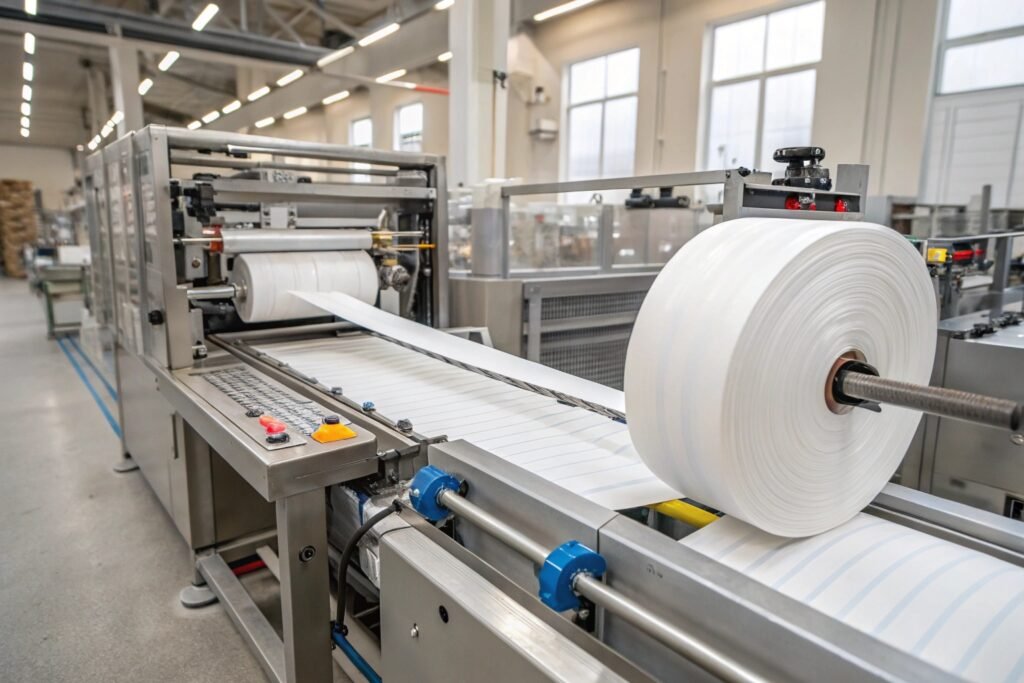
Skilled Workers Can Focus on Higher-Value Tasks
One major advantage of automation is not simply reducing labor. It is using labor more effectively.
When workers no longer spend hours performing repetitive cutting operations, they can focus on higher-value responsibilities.
Better Use of Skilled Employees
| Routine Task Eliminated | Higher-Value Activity |
|---|---|
| Manual Cutting | Quality Control |
| Manual Measuring | Process Improvement |
| Manual Counting | Production Planning |
| Material Handling | Preventive Maintenance |
This shift improves overall factory performance and increases the return on labor investment.
Manufacturers gain more value from experienced employees while reducing dependence on repetitive manual work.
Predictable Operation Reduces Emergency Maintenance Labor
Manual systems often experience inconsistent operation due to human error.
Incorrect adjustments, improper handling, and operator mistakes can contribute to equipment problems.
Modern automatic roll to sheet cutting machines operate using predefined settings and controlled production parameters.
Maintenance Advantages
Consistent Machine Operation
Predictable operation reduces excessive wear.
Scheduled Maintenance
Problems are identified before major failures occur.
Fewer Emergency Repairs
Reduced downtime means fewer urgent maintenance interventions.
Better Production Planning
Maintenance teams can work more efficiently.
These improvements reduce labor hours associated with unexpected machine failures and production disruptions.
Conclusion
Automatic roll to sheet cutting machines reduce labor costs through several connected improvements. They replace repetitive manual cutting work, reduce the number of operators required, increase production speed, improve cutting consistency, lower rework rates, and support continuous operation.
Manufacturers also benefit from reduced training expenses, lower fatigue-related productivity losses, improved workplace safety, and more efficient use of skilled workers.
For companies processing paper, film, labels, packaging materials, foam, webbing, tubing, and other roll materials, automation provides both immediate and long-term labor savings.
As labor shortages and wage pressures continue to affect manufacturers worldwide, investing in automated cutting technology is becoming one of the most effective ways to improve profitability while maintaining consistent production quality.
Insights: Why HAOXINHE Cutting Equipment Helps Reduce Labor Costs
HAOXINHE specializes in advanced automated cutting solutions designed to help manufacturers increase efficiency while lowering labor dependence.
Our product range includes:
- Webbing Tape Cutting Machine
- Hot and Cold Cutting Machine
- High-Speed Trademark Cutting Machine
- Automatic Punching Cutting Machine
- Round Shape Cutting Machine
- Rotary Bevel Cutting Machine
- Different Shapes Cutting Machine
- Computer Tube Cutting Machine
- Wire Cutting and Stripping Machine
- Metal Pipe Cutting and Beveling Machine
- Webbing Ribbon Cutting Machine
- Bubble Wrap Cutting Machine
- PVC Edge Banding Cutting Machine
- Protective Foam Cutting Machine
How HAOXINHE Supports Labor Reduction
| HAOXINHE Feature | Labor Benefit |
|---|---|
| Automatic Feeding | Fewer Operators Required |
| Programmable Controls | Reduced Training Time |
| High-Speed Operation | Higher Output Per Employee |
| Precision Cutting | Less Rework Labor |
| Automatic Counting | Lower Inspection Labor |
| Automatic Collection Systems | Reduced Material Handling |
| Stable Machine Performance | Lower Maintenance Labor |
With over five production lines and extensive export experience across Europe, Singapore, and North America, HAOXINHE helps manufacturers modernize their production processes while controlling labor costs and improving operational efficiency.
For businesses seeking long-term competitiveness, automated cutting equipment is no longer just a productivity upgrade—it is a strategic investment in sustainable manufacturing growth.