How Does an Automatic Roll to Sheet Cutting Machine Improve Nonwoven Fabric Processing?
Nonwoven fabrics have become essential materials in many industries. They are widely used in medical products, hygiene products, disposable garments, wipes, filtration materials, packaging, and industrial applications.
As demand for these products continues to grow, manufacturers face increasing pressure to improve productivity, maintain consistent quality, and reduce production costs.
One of the most important processes in nonwoven manufacturing is converting large rolls into accurately sized sheets. Traditionally, this process required manual measuring and cutting, which was labor-intensive, time-consuming, and prone to errors.
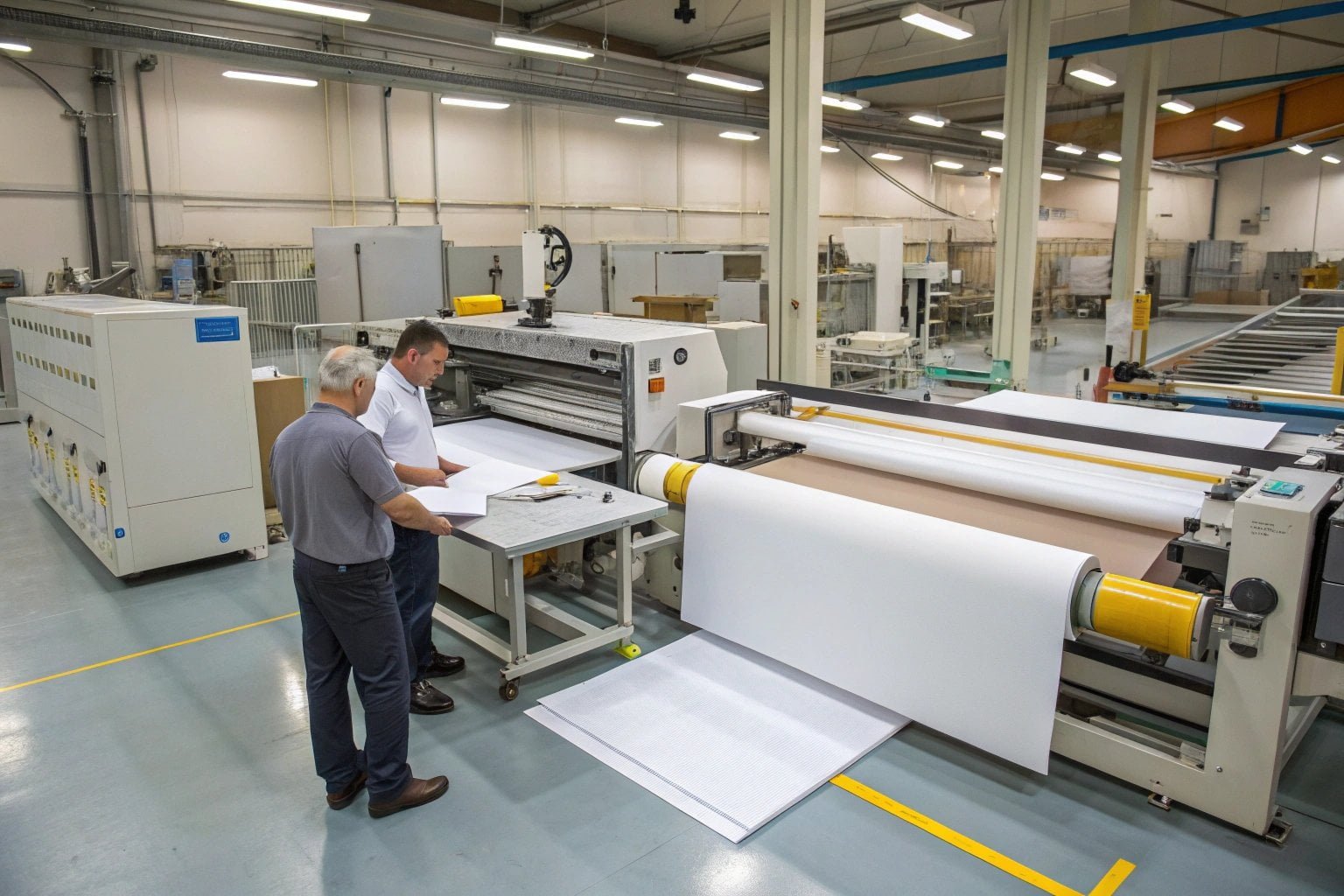
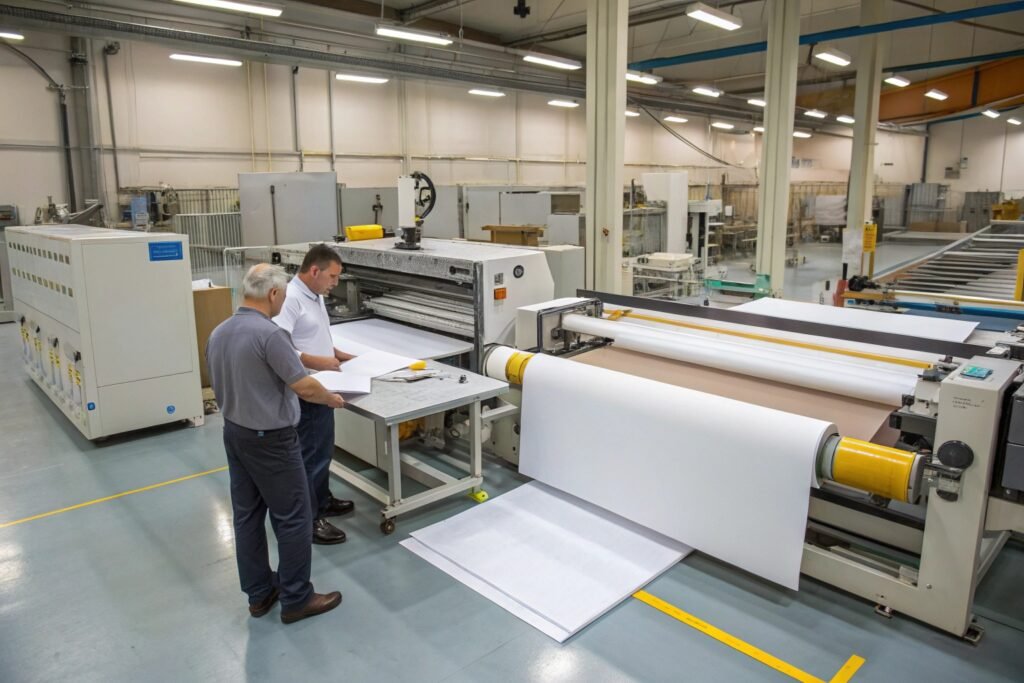
Today, automatic roll to sheet cutting machines have transformed nonwoven fabric processing. These systems automate feeding, measuring, cutting, counting, and stacking, allowing manufacturers to produce high-quality sheets with greater speed and consistency.
I have worked with many manufacturers producing medical masks, surgical gowns, disposable bedsheets, hygiene products, and industrial nonwoven materials. In nearly every case, automation has helped improve production efficiency while reducing waste and labor costs.
In this article, I will explain how automatic roll-to-sheet cutting machines improve nonwoven fabric processing and which machine features are most critical for medical and hygiene product manufacturing.
Which Machine Features Are Critical for Medical and Hygiene Product Manufacturing?
The most important features include servo-controlled length accuracy, automatic tension control, programmable cutting settings, integrated stacking systems, high-speed operation, and specialized cutting technologies that protect fabric quality. These features help manufacturers produce consistent nonwoven sheets while maintaining efficiency and cleanliness.
Quick Overview of Critical Features
| Feature | Main Benefit |
|---|---|
| Servo Length Control | Consistent sheet size |
| Automatic Tension Control | Stable fabric feeding |
| Programmable Settings | Faster job changes |
| Integrated Stacking | Better material handling |
| High-Speed Operation | Higher productivity |
| Specialized Cutting Systems | Improved edge quality |
| Low-Noise Design | Better working environment |
| Large Roll Capacity | Continuous production |
For medical and hygiene applications, precision and consistency are often more important than raw cutting speed.
Automatic Cutting Eliminates Manual Measuring and Improves Productivity
One of the biggest advantages of automatic roll-to-sheet cutting machines is the elimination of manual measuring.
In traditional production environments, operators must continuously measure material lengths before cutting. This process is slow and introduces opportunities for human error.
Automatic systems perform these tasks automatically.
Benefits of Automated Length Control
Faster Production
Material moves continuously through the machine.
Reduced Labor Requirements
Operators spend less time measuring and handling material.
Better Consistency
Every sheet is cut according to programmed settings.
Productivity Comparison
| Process | Manual Cutting | Automatic Cutting |
|---|---|---|
| Measuring | Manual | Automatic |
| Length Control | Operator Dependent | Program Controlled |
| Production Speed | Lower | Higher |
| Labor Requirement | Higher | Lower |
For high-volume nonwoven production, automation significantly increases throughput.
Servo Control Improves Constant-Length Accuracy
Medical and hygiene products often require strict dimensional consistency.
Small length variations can affect downstream assembly processes and product performance.
Servo-driven control systems provide the precision needed for these applications.
Why Servo Systems Matter
Accurate Positioning
The machine controls material movement precisely.
Consistent Length Control
Every sheet matches programmed dimensions.
Better Repeatability
Results remain stable across long production runs.
Accuracy Benefits
| Quality Factor | Servo-Controlled Machine |
|---|---|
| Length Consistency | Excellent |
| Repeatability | Excellent |
| Waste Reduction | High |
| Product Uniformity | Excellent |
This level of precision is particularly important for disposable medical products and hygiene materials.
Automatic Tension Control Protects Nonwoven Fabric Quality
Nonwoven fabrics are often softer and more flexible than traditional paper or plastic materials.
Without proper tension control, the material can stretch, wrinkle, or drift during processing.
How Automatic Tension Control Works
Continuous Monitoring
The system monitors web tension throughout production.
Automatic Adjustment
Feed rates are adjusted when tension changes.
Stable Material Flow
Fabric remains properly aligned.
Benefits for Nonwoven Processing
| Challenge | Automatic Tension Control Solution |
|---|---|
| Feed Drift | Reduced |
| Wrinkles | Minimized |
| Material Stretching | Controlled |
| Sheet Variation | Reduced |
Maintaining fabric integrity is essential in medical and hygiene applications.
Higher Precision Reduces Material Waste
Nonwoven materials can represent a significant production cost.
Reducing waste directly improves profitability.
How Precision Reduces Waste
Accurate Length Control
Prevents overcutting and undercutting.
Better Alignment
Reduces rejected sheets.
Stable Production
Minimizes process variation.
Waste Reduction Impact
| Production Factor | Standard Process | Precision Process |
|---|---|---|
| Scrap Rate | Higher | Lower |
| Rework | More Frequent | Less Frequent |
| Material Utilization | Lower | Higher |
Even small improvements in accuracy can generate significant savings over time.
Integrated Stacking Systems Improve Workflow Efficiency
After cutting, sheets must be collected and prepared for packaging or downstream processing.
Manual collection creates bottlenecks and increases labor requirements.
Integrated stacking systems solve this problem.
Advantages of Automatic Stacking
Reduced Manual Handling
Operators perform fewer repetitive tasks.
Better Sheet Organization
Products remain neatly arranged.
Faster Packaging
Finished sheets are easier to process.
Workflow Comparison
| Task | Manual Collection | Automatic Stacking |
|---|---|---|
| Sheet Collection | Manual | Automatic |
| Labor Requirement | Higher | Lower |
| Packaging Speed | Slower | Faster |
| Product Consistency | Variable | Consistent |
Automatic stacking becomes increasingly valuable as production volumes increase.
Large Roll Capacity Supports Continuous Production
Medical and hygiene manufacturers often operate around the clock.
Frequent roll changes reduce efficiency.
Machines designed for large roll capacity help solve this problem.
Benefits of Large Roll Handling
Longer Production Runs
Fewer interruptions.
Higher Productivity
More output per shift.
Reduced Labor
Less operator involvement.
Production Impact
| Factor | Small Roll Capacity | Large Roll Capacity |
|---|---|---|
| Roll Changes | Frequent | Less Frequent |
| Downtime | Higher | Lower |
| Productivity | Lower | Higher |
Continuous production is especially important in high-demand markets.
Programmable Controls Improve Repeatability
Medical and hygiene products often require repeat production of the same dimensions.
Programmable controls simplify this process.
Key Advantages
Stored Job Recipes
Production settings can be recalled instantly.
Faster Changeovers
Less setup time.
Reduced Human Error
Settings remain consistent.
Benefits of Programmable Operation
| Function | Benefit |
|---|---|
| Length Programming | Consistent Output |
| Quantity Programming | Accurate Production Counts |
| Job Storage | Faster Repeat Orders |
This feature is especially useful for manufacturers producing multiple product formats.
Specialized Cutting Systems Improve Edge Quality
Certain nonwoven materials require more than standard mechanical cutting.
Depending on the application, specialized cutting technologies may improve edge quality.
Examples of Specialized Systems
Ultrasonic Cutting
Seals some synthetic fibers during cutting.
Heated Cutting Systems
Reduce fraying in specific materials.
Precision Rotary Cutting
Improves consistency during high-speed production.
Edge Quality Comparison
| Cutting Method | Edge Quality |
|---|---|
| Standard Blade | Good |
| Rotary Cutting | Excellent |
| Ultrasonic Cutting | Excellent |
| Heated Cutting | Application Specific |
The appropriate cutting technology depends on material composition and end-use requirements.
Low-Noise Operation Creates a Better Working Environment
Noise levels are often overlooked during machine selection.
However, quieter equipment can significantly improve workplace conditions.
Benefits of Low-Noise Equipment
Better Operator Comfort
Improves working conditions.
Reduced Fatigue
Supports productivity during long shifts.
Improved Workplace Safety
Communication becomes easier.
Workplace Impact
| Noise Level | Working Environment |
|---|---|
| High Noise | Less Comfortable |
| Low Noise | More Comfortable |
Many modern nonwoven processing facilities now prioritize low-noise equipment designs.
Why Automation Is Essential for Medical and Hygiene Manufacturing
Medical and hygiene product markets demand:
- Consistent quality
- High production volume
- Tight dimensional accuracy
- Clean processing
- Low defect rates
Automatic roll-to-sheet cutting